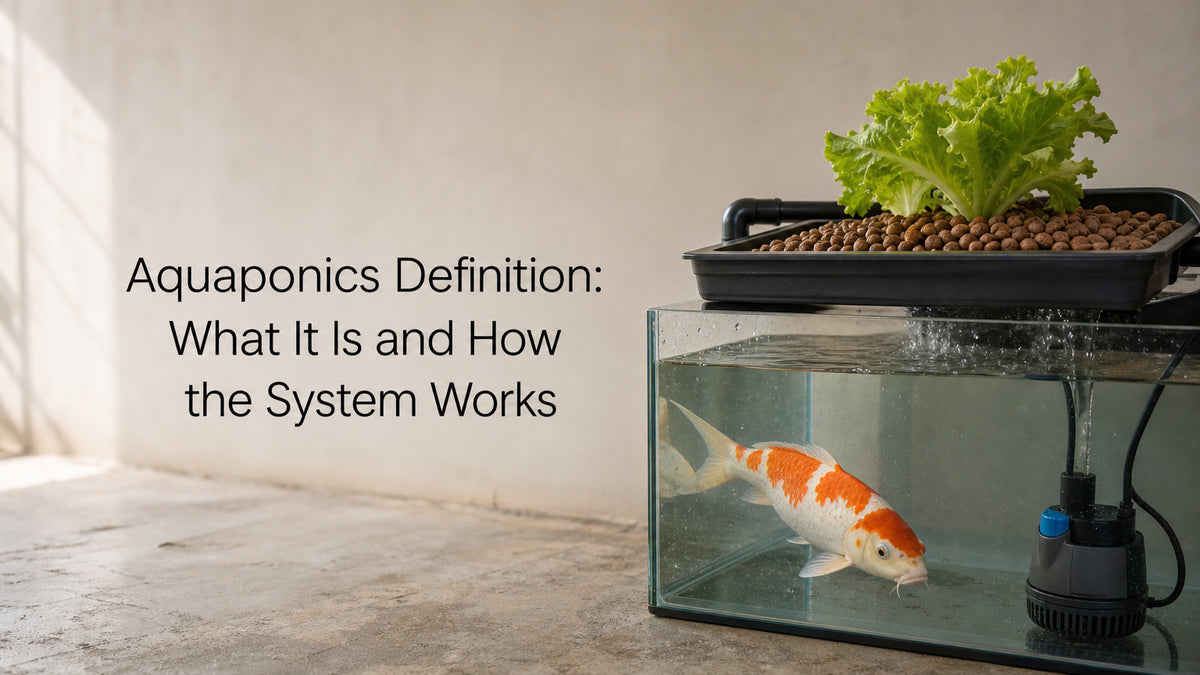
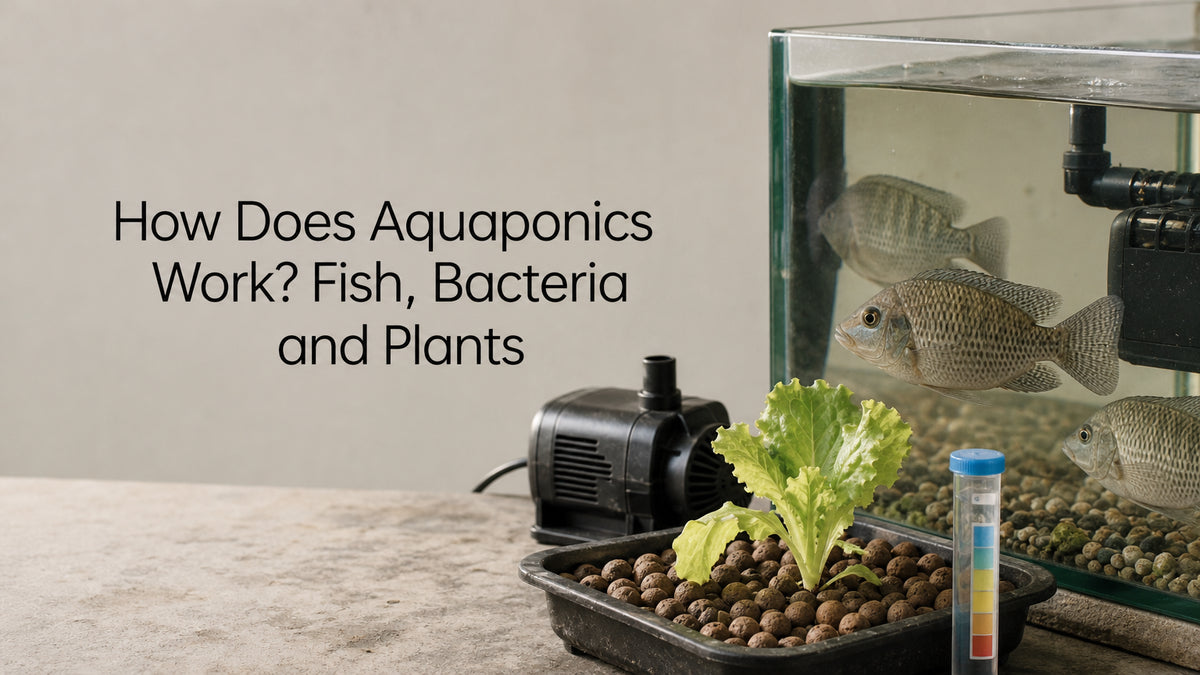
The short answer to how does aquaponics work is that fish, bacteria and plants share one loop of water. Fish eat feed and release waste rich in ammonia. Bacteria convert that ammonia into nitrite and then into nitrate. Plants absorb the nitrate as fertilizer, and the cleaned water flows back to the fish. The only regular inputs are fish feed, light, power and a little top-up water.
The word aquaponics joins aquaculture (raising fish) and hydroponics (growing plants in water without soil). This article covers why the loop is worth understanding, how each step works, which system designs exist, how to start and balance a first system, and what typically goes wrong. It also covers a few points that matter in Malaysia's warm climate.
At Konzept Garden we design and build garden koi ponds. The biology that keeps a koi pond healthy is the same nitrogen cycle that powers aquaponics, so we know where it works and where it fails.
Why the aquaponics loop is worth understanding
Every aquaponics decision, from how many fish you keep to which plants you grow, follows from how the three living parts depend on each other. If you understand the loop, you can predict problems before they appear.
What a closed loop gives you
A closed loop recycles water and nutrients instead of throwing them away. In a well-run system you never dump the water. You only replace what the plants take up and what evaporates. Soil gardens lose water to drainage and runoff, and hydroponic reservoirs must be flushed when mineral salts build up. You will often see the claim that aquaponics uses up to 90% less water than soil gardening. Treat that as the best case, not a promise.
The nutrient side works the same way. Fish feed becomes fish growth and plant fertilizer, so you skip bottled nutrient solutions. Because the plants do not depend on soil or seasons, you can also harvest through the year, which suits a climate with steady warmth.
How it compares with hydroponics and soil gardening
Aquaponics differs from its neighbors in where the nutrients come from and what happens to the water. The table sets the four methods side by side.
| Method | Where nutrients come from | What happens to the water | What you harvest |
|---|---|---|---|
| Aquaponics | Fish waste, converted by bacteria | Recirculated, topped up for evaporation and plant uptake | Plants and fish |
| Hydroponics | Bottled mineral nutrient solution | Replaced when salts build up | Plants |
| Soil gardening | Soil, compost, fertilizer | Lost to drainage, runoff and evaporation | Plants |
| Fish farming alone | Fish feed | Filtered heavily or replaced often, waste is discharged | Fish |
What you give up
Aquaponics is not free of cost or effort. The pump and air supply cannot stop, because the fish and the bacteria both need oxygen, and a long power cut can harm both. You also have to learn two skills at once, keeping fish and growing plants, and the fish feed becomes a running cost.
Still, the trade is a fair one for many growers. You exchange soil work and bottled fertilizer for electricity, feed and regular water tests.
Aquaponics trades soil and bottled fertilizer for electricity, fish feed and steady attention to water quality.
How aquaponics works, step by step
Aquaponics runs as a four-stage loop: fish excrete, bacteria convert, plants absorb, and clean water returns to the tank. The stages repeat continuously, as long as water and air keep moving.
The nitrogen cycle in four stages
The cycle is the same nitrogen cycle that occurs in soil, lakes and rivers. Aquaponics simply packs it into a tank, a filter and a plant bed.
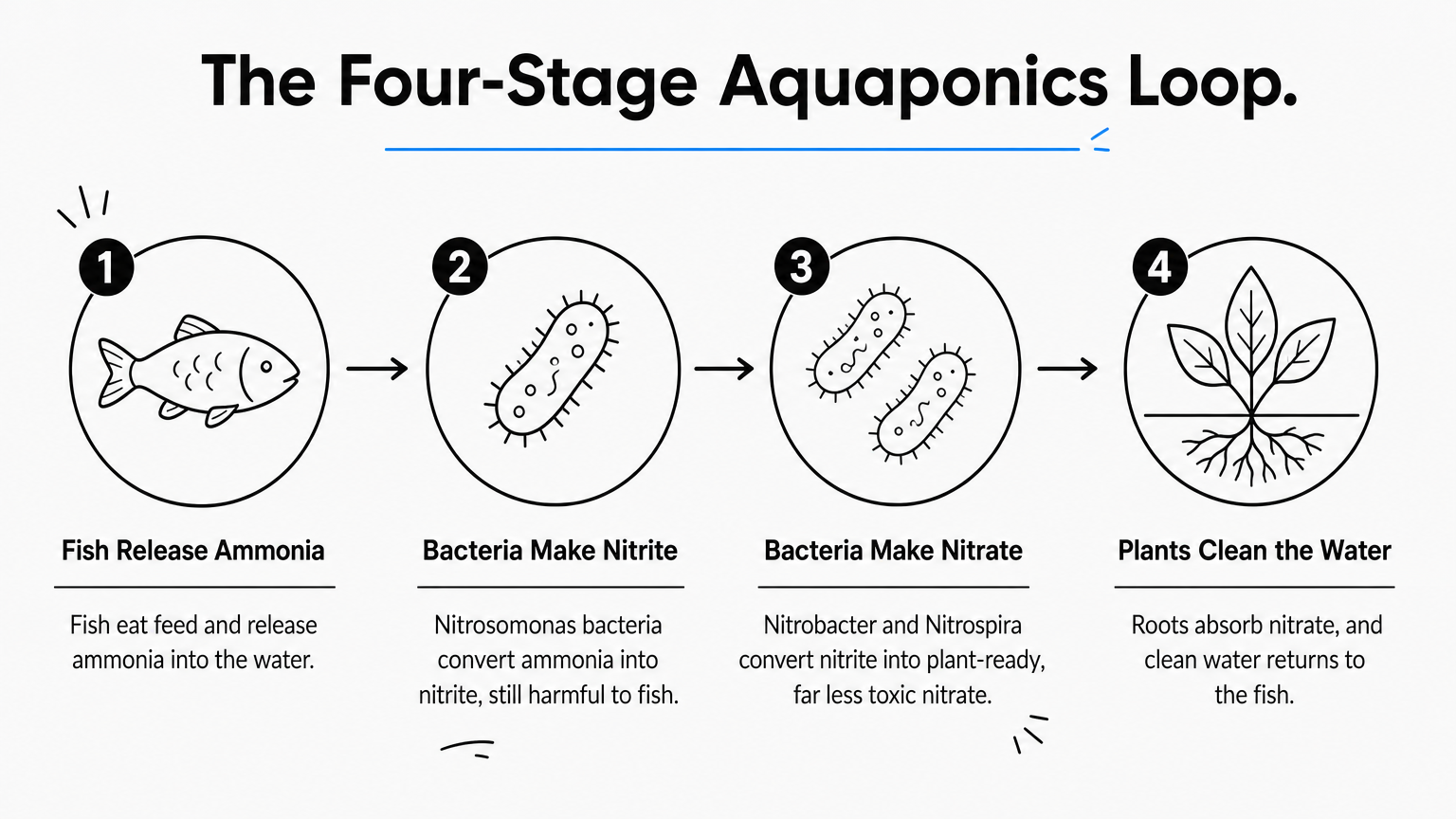
| Stage | Who does the work | What happens | Result |
|---|---|---|---|
| 1. Feeding | You and the fish | Feed adds protein and nitrogen, fish release ammonia through their gills and waste | Ammonia in the water |
| 2. First conversion | Nitrosomonas bacteria | Ammonia is converted to nitrite | Still harmful to fish |
| 3. Second conversion | Nitrobacter and Nitrospira bacteria | Nitrite is converted to nitrate | Plant-ready and far less toxic |
| 4. Uptake | Plants | Roots absorb nitrate and other dissolved nutrients | Clean water returns to the fish |
Why bacteria are the real engine
Fish waste arrives as ammonia, which is toxic to fish and hard for most plants to use. Without bacteria the loop breaks at stage one. Ammonia climbs, the fish suffer, and the plants starve.
These bacteria live on every wet surface: grow media, pipe walls and filter media. More surface area means more capacity, which is why media-filled grow beds and filter media matter so much. Extension researchers at Clemson name three requirements for a productive biofilter: water flow to carry waste to the bacteria, surface area for them to cling to, and dissolved oxygen to keep them working.
The bacteria, not the fish or the plants, decide whether an aquaponics system stays healthy.
Following the water around once
Picture one liter of water leaving the fish tank. It carries dissolved waste and solid particles. First it passes a solids filter or settling tank, because rotting solids use up oxygen and release even more ammonia.
Next the water reaches the biofilter or grow bed, where bacteria convert ammonia to nitrate. The plant roots take up the nitrate, and the cleaned water returns to the tank by gravity or by pump.
Fish waste alone is short on a few nutrients, mainly iron, potassium and calcium. If new leaves turn yellow, growers add small doses of fish-safe chelated iron or buffering compounds. The loop supplies most of what plants need, but not everything.
Aquaponics system types and components
Every aquaponics system has the same core parts, and the three main designs differ only in how water meets the plant roots. Once you know the parts, you can read any layout.
The parts every system needs
Each component has one job, and each one affects the others.
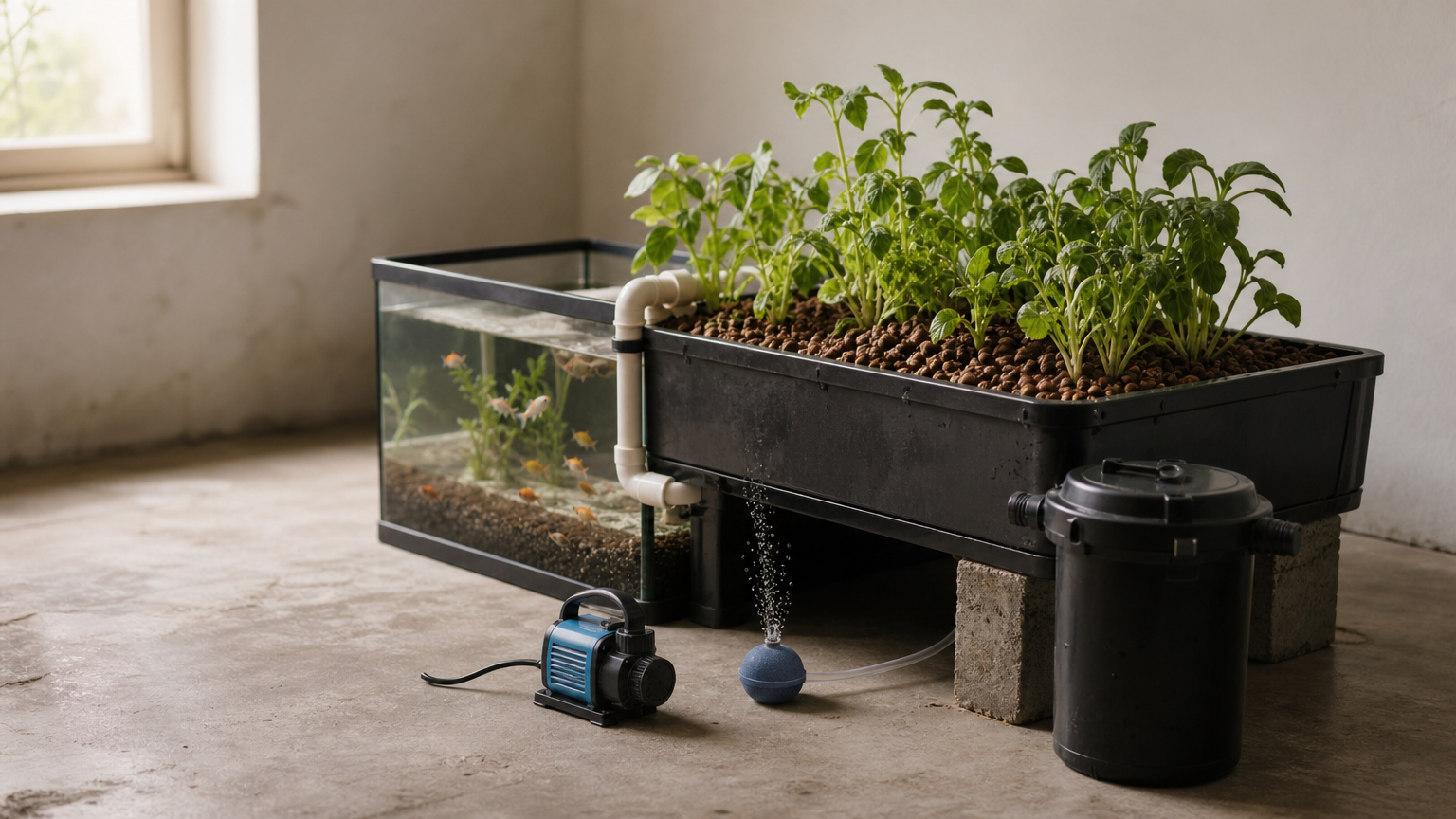
- Fish tank: holds the fish. A larger tank swings less in temperature, oxygen and waste concentration.
- Solids removal: settles or filters out waste particles before they rot.
- Biofilter: gives bacteria surface area. In media beds the grow bed does this job.
- Grow bed or channels: where plants absorb nutrients and clean the water.
- Water pump: moves water around the loop. Buy one rated for continuous use.
- Aeration: an air pump and air stones that supply oxygen to fish and bacteria.
- Plumbing and drains: pipes, valves and overflows that keep flow even and easy to service.
Size these parts together. A heavier fish load needs more biofiltration, and more grow beds need a stronger pump.
Media bed, raft and NFT compared
The three common designs suit different crops and different levels of experience.
| Design | How water meets the roots | Suits | Watch out for |
|---|---|---|---|
| Media bed (flood and drain) | A bed of clay pebbles or gravel floods, then drains through a bell siphon | Tomatoes, peppers, herbs, lettuce | Media can clog with solids, and the beds are heavy |
| Raft (deep water culture) | Plants float on foam over a trough of water about 6 to 8 inches deep | Lettuce, basil, kale, chard | Needs strong aeration plus a separate solids filter and biofilter |
| NFT (nutrient film technique) | A thin film of water runs through tilted channels | Herbs and small leafy vegetables | Roots dry out in a power cut, and narrow pipes clog |
Which design suits a beginner
A media bed is the most forgiving choice. It filters solids, houses bacteria and anchors roots in one unit, and it grows both leafy and fruiting crops. The draining cycle also re-oxygenates the roots, so water oxygen matters slightly less than in a raft.
Raft systems are better when you want lots of lettuce and are ready to manage separate filters. Many growers later combine designs, for example media beds for fruiting plants and rafts for greens.
For a first system, choose the design with the fewest parts that can fail, and that is usually a media bed.
How to start and balance your first system
Start by sizing the fish load to the plant bed, then cycle the system for several weeks before stocking fully, and test the water every week. Skipping any of these steps is the usual cause of early failure.
Match fish feed to grow bed size
The amount of feed you add each day is the real measure of a system's load. A common hobby rule for media beds is 40 to 60 grams of feed per day for each square meter of grow bed. Treat this as a starting point, not a law.
Here is a worked example. A grow bed of 2 m² suggests 80 to 120 grams of feed per day. Begin at the low end, 80 grams, and raise it only when ammonia and nitrite stay at zero. That feed total then limits how many fish you keep. Stock slightly fewer than the number that would eat it all.
For tank size, a 1:1 ratio of grow bed volume to fish tank volume is a common starting point for media beds.
Cycle the system before you stock fully
Cycling means growing the bacteria colony before the fish depend on it. It usually takes 4 to 6 weeks. Work through it in order:
- Fill the system and run the pump and aeration nonstop. Tap water often contains chlorine, which harms bacteria, so use a dechlorinator or let the water stand first.
- Add an ammonia source: a few hardy fish, a little fish feed, or pure ammonia.
- Test ammonia, nitrite and nitrate every day or two.
- Treat the system as cycled when ammonia and nitrite read zero and nitrate is present.
- Add plants first or together with fish, then raise the fish count gradually.
Bottled bacteria can shorten the process, but you still need to confirm the readings.
Targets to test every week
Once the system is running, a short test routine keeps it stable. Test pH and ammonia first, because they change fastest.
- pH: about 6.8 to 7.2, a compromise between what bacteria, fish and plants prefer.
- Ammonia: zero.
- Nitrite: zero.
- Nitrate: present and steady, which shows the plants are using it.
- Temperature: matched to your fish species.
- Oxygen: kept high with continuous aeration.
Cycle first, stock slowly, and let the test readings, not the calendar, tell you when to add more fish.
Common problems and what to expect in Malaysia
Most failures come from three causes: too much feed for the biofilter, interrupted flow or aeration, and unstable temperature or pH. The fixes are simple once you can spot the symptom.
Problems, causes and fixes
| Symptom | Likely cause | Fix |
|---|---|---|
| Fish gasping at the surface | Low oxygen, overstocking or heat | Add air stones, cut feed, shade the tank |
| Ammonia or nitrite above zero | Immature or overloaded biofilter | Reduce feeding, do a partial change with dechlorinated water |
| Yellowing new leaves | Iron shortage | Add a small dose of chelated iron |
| Clogged pipes or bad smell | Solids not removed | Clean the filter and improve settling |
| pH drifting down | Nitrification slowly acidifies the water | Raise it gradually with a fish-safe buffer such as potassium bicarbonate |
Heat, rain and mosquitoes in Malaysia
Warm water holds less oxygen, so aeration matters more in tropical conditions. Shade the fish tank from afternoon sun and check the temperature daily in the hottest months. Warm-water species such as tilapia suit these conditions better than cold-water fish.
Heavy rain can dilute the water and swing the pH, so cover the system or give it a controlled overflow. Open water can also breed mosquitoes. Cover tanks and beds where you can, keep the water moving, and rely on the fish to eat larvae.
What a garden fish pond has in common
A garden koi pond runs on the same biology. Feed becomes ammonia, bacteria in the filter convert it to nitrate, and the nitrate either feeds plants or builds up until a water change removes it.
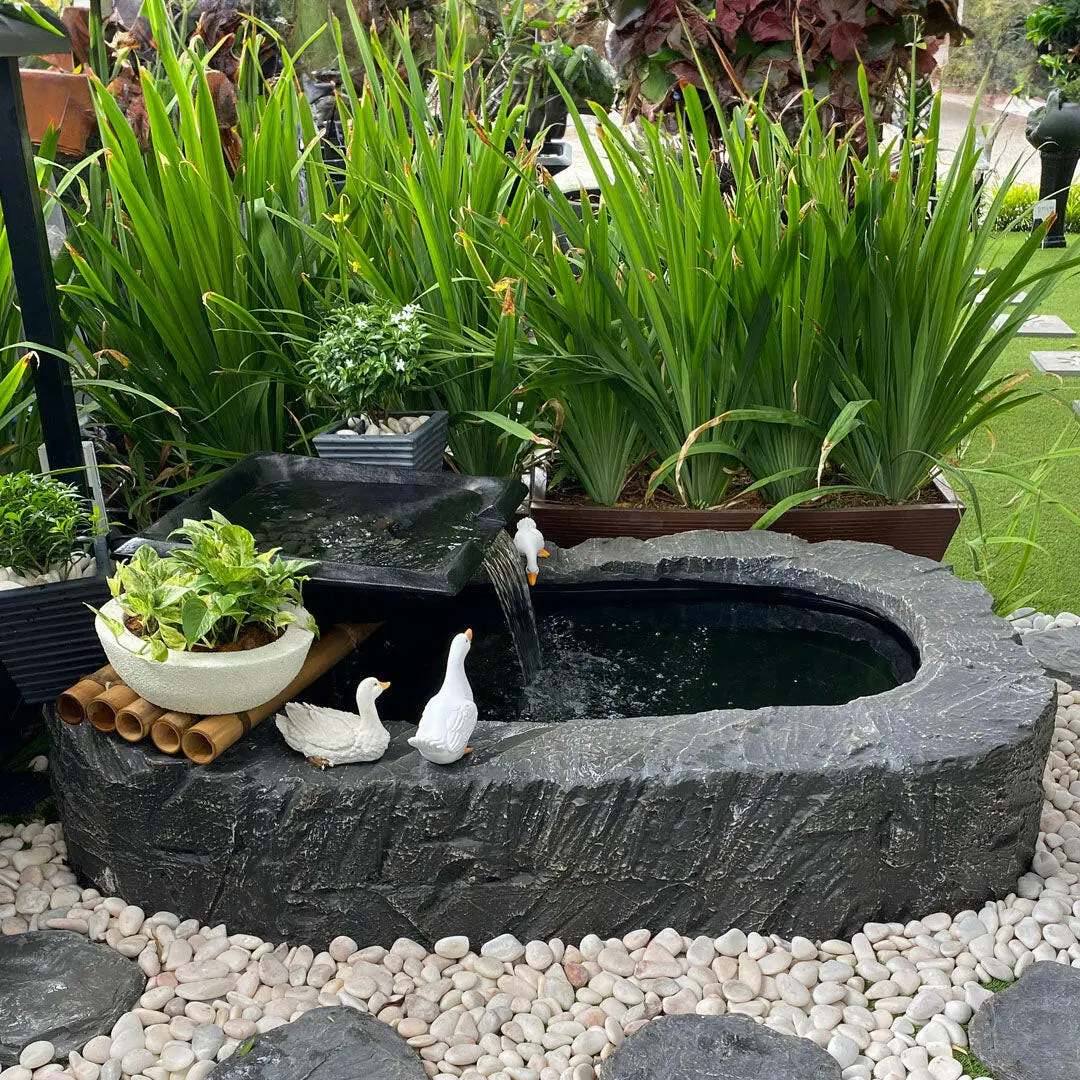
Our Zen Bio Mini Natural Koi Pond 1 (RM5,950) includes a pump, canister filter, UV light and good bacteria. The Himalaya Rock Fish Pond Mini (RM5,350) includes a filter, pump, good bacteria and a planter box. These are ornamental koi ponds, not food-production systems, but they show the same rule: a pond stays clear only when its filter can handle the fish load.
Putting the loop to work
Aquaponics works because three groups depend on each other. Fish supply ammonia, bacteria convert it into nitrate, and plants remove the nitrate and clean the water. Your job is to keep the loop balanced: match feed to the grow bed, cycle before you stock, keep air and flow running, and test every week.
Whether you want vegetables or a clear garden pond, the same discipline applies. Get the bacteria working first, and the rest of the system follows.
If you would like a fish pond designed for your own garden in Malaysia, talk to our team. We can discuss your space, your fish and the filtration that fits them.