

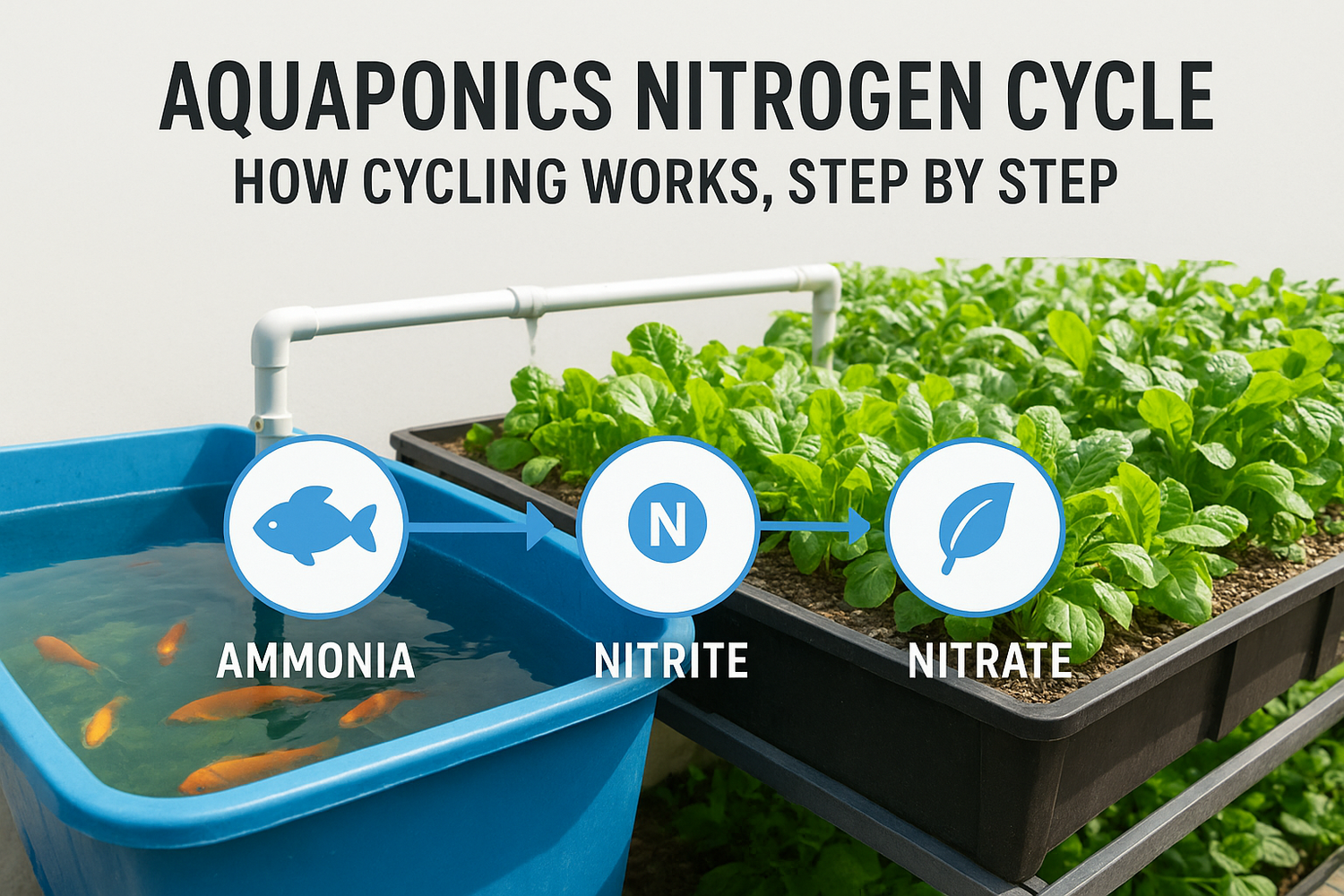
Every aquaponics system depends on one invisible process to keep fish alive and plants fed. That process is the aquaponics nitrogen cycle, a biological chain reaction where bacteria convert toxic fish waste into plant-ready nutrients. Get it right, and your system practically runs itself. Skip it or rush it, and you'll likely lose fish.
At Konzept Garden, we design sustainable outdoor spaces across Malaysia, including integrated water features and living garden systems that bring nature into everyday living. Aquaponics sits right at that intersection of water, plants, and thoughtful design, which is why we put this guide together for anyone looking to build a system that actually works.
This article breaks down exactly how nitrification works inside an aquaponics setup, what's happening at each biological stage, and how to cycle a new system from scratch. Whether you're building your first backyard unit or incorporating aquaponics into a larger garden project, you'll walk away with a clear, step-by-step understanding of the biology that holds the whole thing together.
Why the nitrogen cycle matters in aquaponics
In aquaponics, fish and plants don't just share water. They share a biological contract where each one's survival depends on the other. The aquaponics nitrogen cycle is what makes that contract work. Without it, fish waste builds up as toxic ammonia, plants starve for nutrients, and the whole system collapses. Understanding why this cycle matters is the first step toward building a system that can sustain itself week after week.
Fish waste turns lethal fast
Fish produce ammonia constantly through their gills and digestive waste. Even at low concentrations, ammonia is highly toxic. At levels above 0.5 ppm (parts per million), fish experience stress, reduced immunity, and gill damage. Push it higher, and fish die within hours. A new aquaponics system has no established bacteria to process that ammonia yet, which is exactly why cycling your system before adding fish is non-negotiable.
Ammonia doesn't build gradually to dangerous levels. It can spike within 24 hours in a new, uncycled system, making early water testing essential from day one.
Many new system owners underestimate how fast ammonia accumulates, especially when they stock fish at full capacity right away. Starting with fewer fish and running the system through a proper cycling period gives the bacteria population enough time to grow and keep pace with waste production.
Plants can't use raw waste directly
Your plants need nitrogen in the form of nitrate, not raw ammonia or nitrite. The nitrogen cycle converts fish waste through two distinct bacterial stages before it reaches a form that plant roots can actually absorb. Skip or rush those stages, and your plants get nothing useful from the fish waste moving through your grow beds.
This is where aquaponics differs from conventional soil gardening. Soil biology and organic matter handle much of this conversion work passively over long periods. In aquaponics, you're building that microbial workforce from scratch inside a water-based environment. You need to give those bacteria the time and conditions to multiply before the system can reliably nourish both fish and plants at the same time.
The nitrogen cycle steps in aquaponics
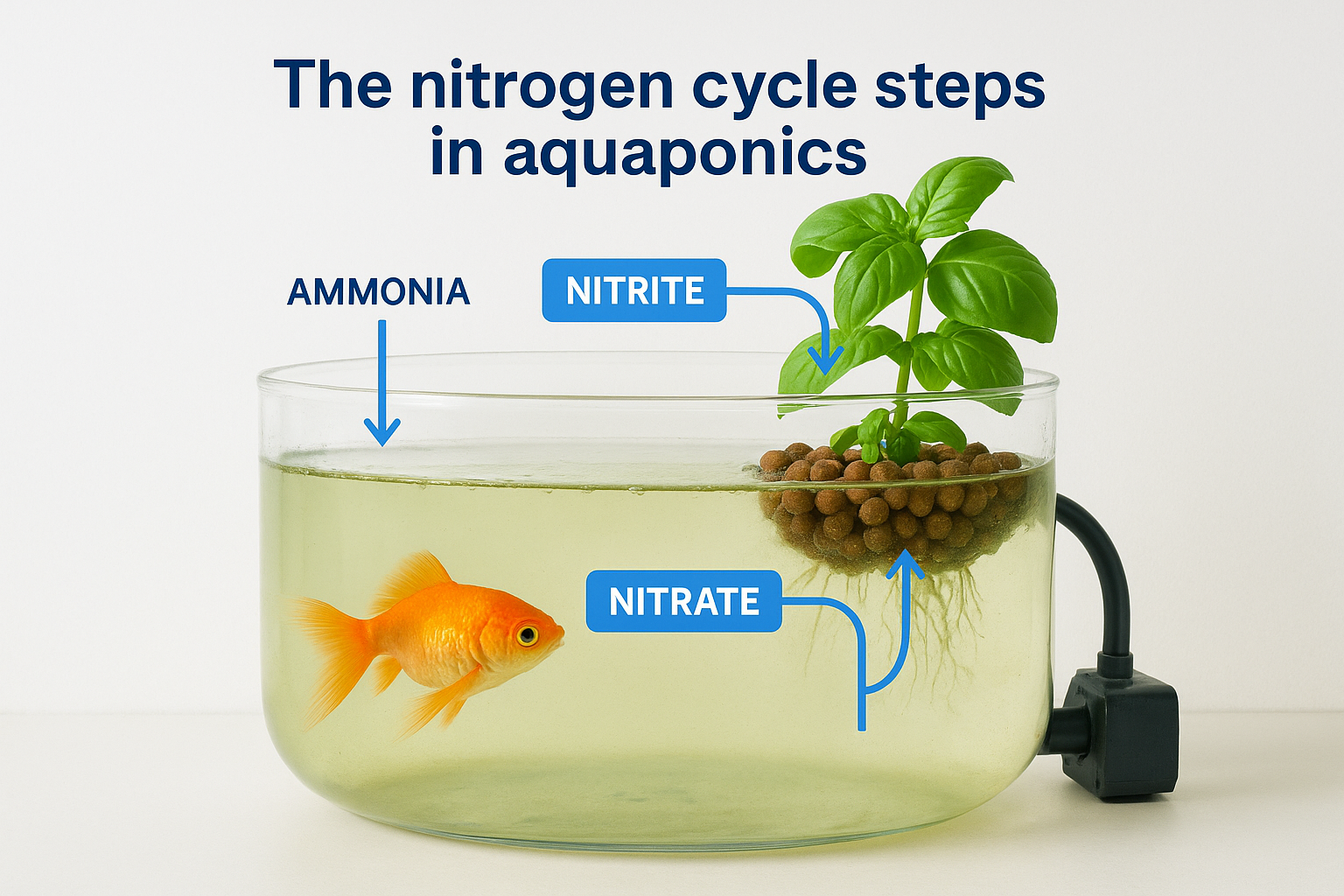
The aquaponics nitrogen cycle moves through three distinct chemical stages, each driven by a specific group of bacteria. Knowing what happens at each stage helps you understand why the process takes time and what your water tests are actually measuring.
Stage one: ammonia to nitrite
Fish release ammonia into the water continuously. A group of bacteria called Nitrosomonas colonize your grow media, tank surfaces, and biofilter, where they feed on that ammonia and convert it into nitrite. This conversion doesn't happen instantly. Nitrosomonas take time to multiply to a population large enough to process the ammonia your fish produce each day.
Nitrite is still highly toxic to fish, though slightly less so than ammonia. At this stage, your system is not yet safe for a full fish load, which is why you monitor both compounds throughout the cycling period.
Stage two: nitrite to nitrate
Once nitrite builds up, a second group of bacteria called Nitrobacter move in. These bacteria convert nitrite into nitrate, the final product of nitrification. Nitrate is far less toxic to fish and is the exact form of nitrogen that your plants actively absorb through their roots.
Nitrobacter tend to grow more slowly than Nitrosomonas, which is why nitrite often lingers in a new system even after ammonia levels start to drop.
Your plants pull nitrate out of the water as they grow, completing the loop and keeping the whole system in balance.
Cycling a new aquaponics system step by step
Cycling is the process of building up your bacterial colonies before you introduce fish. You're essentially creating the conditions that allow Nitrosomonas and Nitrobacter to grow and stabilize inside your system. The whole process typically takes three to six weeks, depending on your water temperature, pH, and ammonia source.
Step 1: Fill and prepare your system
Start by filling your tank with dechlorinated water. Chlorine kills the beneficial bacteria you're trying to grow, so either let tap water sit for 24 hours or use a dechlorinating agent to neutralize it. Set your water temperature between 77°F and 86°F (25°C to 30°C), since bacteria multiply fastest in that range.
Step 2: Add an ammonia source
Your bacteria need ammonia to feed on before any fish enter the system. You can use pure ammonia drops (check that they contain no surfactants), fish food left to decompose, or a small number of hardy feeder fish if you prefer a fish-in cycling approach. Aim for an initial ammonia reading between 2 and 4 ppm to give bacteria enough fuel to multiply.
Fish-in cycling carries real risk. If you go that route, test water daily and perform partial water changes the moment ammonia or nitrite climbs above 1 ppm.
Step 3: Track the aquaponics nitrogen cycle progress
Test your water every two to three days and log each reading. You're looking for ammonia and nitrite to spike, then drop, while nitrate climbs steadily. Once ammonia and nitrite both read at or near zero with nitrate present, your bacterial colonies are established and your system is ready for fish.
Water testing targets for safe cycling
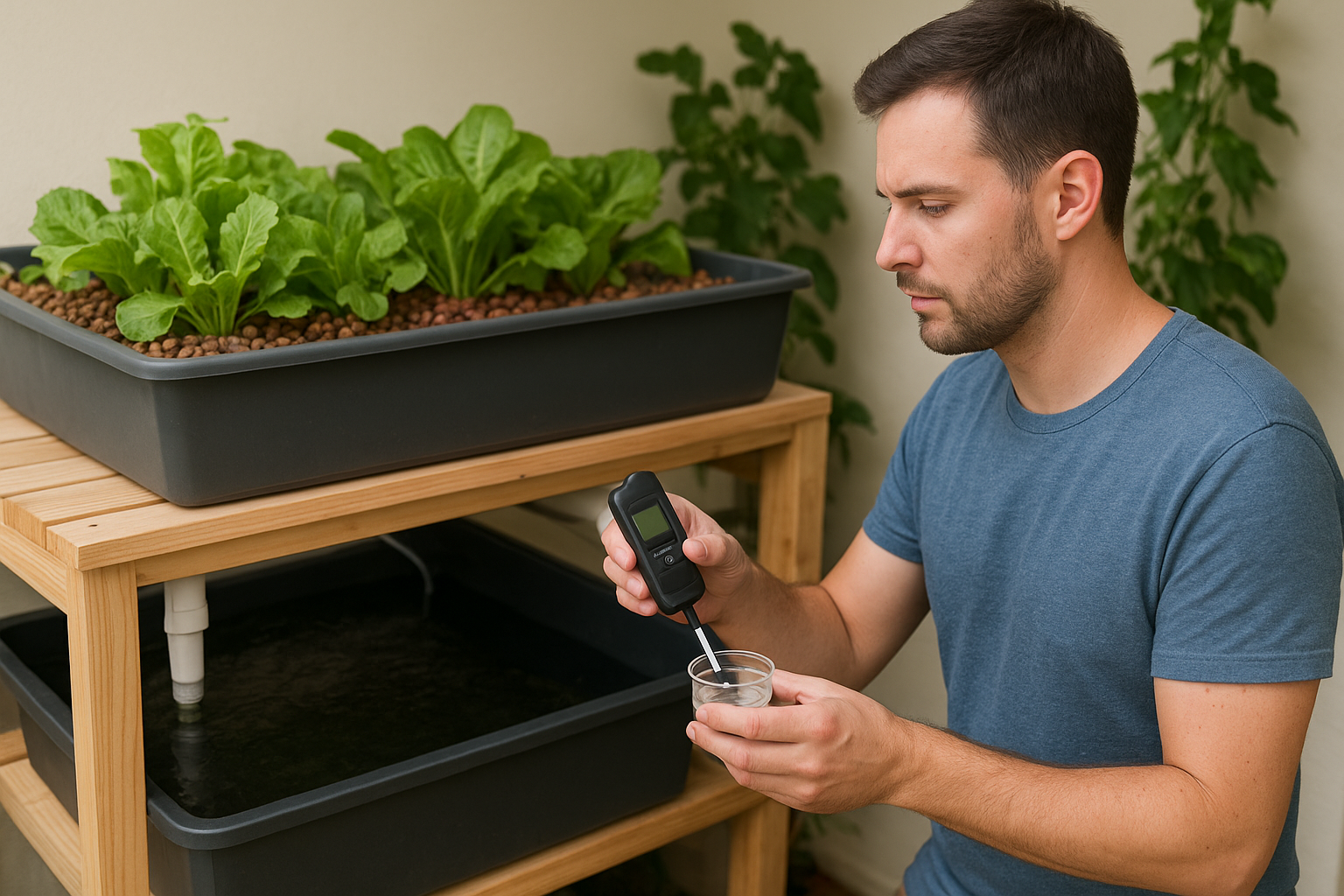
Testing your water consistently is how you track real progress through the aquaponics nitrogen cycle. Without data, you're guessing. The table below shows the key parameters to monitor, what safe levels look like, and what action to take if readings fall outside the target range.
What to measure and when
You need to test four parameters throughout the cycling process: ammonia, nitrite, nitrate, and pH. Test every two to three days during the active cycling phase. A liquid test kit gives more accurate readings than test strips, especially at the low concentration ranges that matter most during cycling.
| Parameter | Cycling Target | Safe for Fish |
|---|---|---|
| Ammonia | 0–4 ppm (spike then drop) | Below 0.5 ppm |
| Nitrite | 0–5 ppm (spike then drop) | Below 0.5 ppm |
| Nitrate | Rising steadily | Below 40 ppm |
| pH | 6.8–7.4 | 6.8–7.2 |
Once ammonia and nitrite both read zero on the same test day while nitrate is present, your system has cycled successfully.
Reading the results correctly
Your readings tell a story in sequence. Ammonia spikes first, then falls as Nitrosomonas establish. Nitrite rises next, peaks, and then falls as Nitrobacter catch up. Nitrate builds steadily throughout and continues rising as your fish population grows.
pH matters more than most beginners expect. Bacteria slow down significantly below pH 6.0 and above pH 8.0, so keeping pH stable in the 6.8 to 7.4 range gives your bacterial colonies the best conditions to mature on schedule.
Common cycling problems and how to fix them
Even when you follow the process correctly, the aquaponics nitrogen cycle doesn't always progress smoothly or on schedule. Several factors can stall it, and knowing how to identify and fix each one saves you weeks of frustration.
Ammonia won't drop
If your ammonia level spikes and stays high for more than two weeks, your bacterial population isn't growing fast enough. The most common cause is water temperature below 20°C, which slows bacterial metabolism significantly. Raise the temperature to the 25°C to 30°C range and confirm your pH sits between 6.8 and 7.4.
Avoid adding more ammonia when levels already sit above 4 ppm. Excess ammonia becomes toxic to the very bacteria you're trying to cultivate.
Adding a commercial nitrifying bacteria starter can speed up colonization when the cycle stalls. These products introduce live Nitrosomonas and Nitrobacter directly into your system, cutting days off your wait time.
Nitrite and pH problems
Nitrobacter bacteria grow more slowly than Nitrosomonas, so a prolonged nitrite spike is normal in the second half of cycling. If nitrite stays above 5 ppm for more than ten days, perform a 25% partial water change to lower the concentration without eliminating your ammonia source. Continue testing every two days until the reading drops toward zero.
Nitrification also produces hydrogen ions as a byproduct, pulling pH down over time. If pH drops below 6.5, add potassium bicarbonate or calcium carbonate in small amounts to stabilize it. Avoid baking soda long-term since it adds sodium that plants don't need.
Quick recap
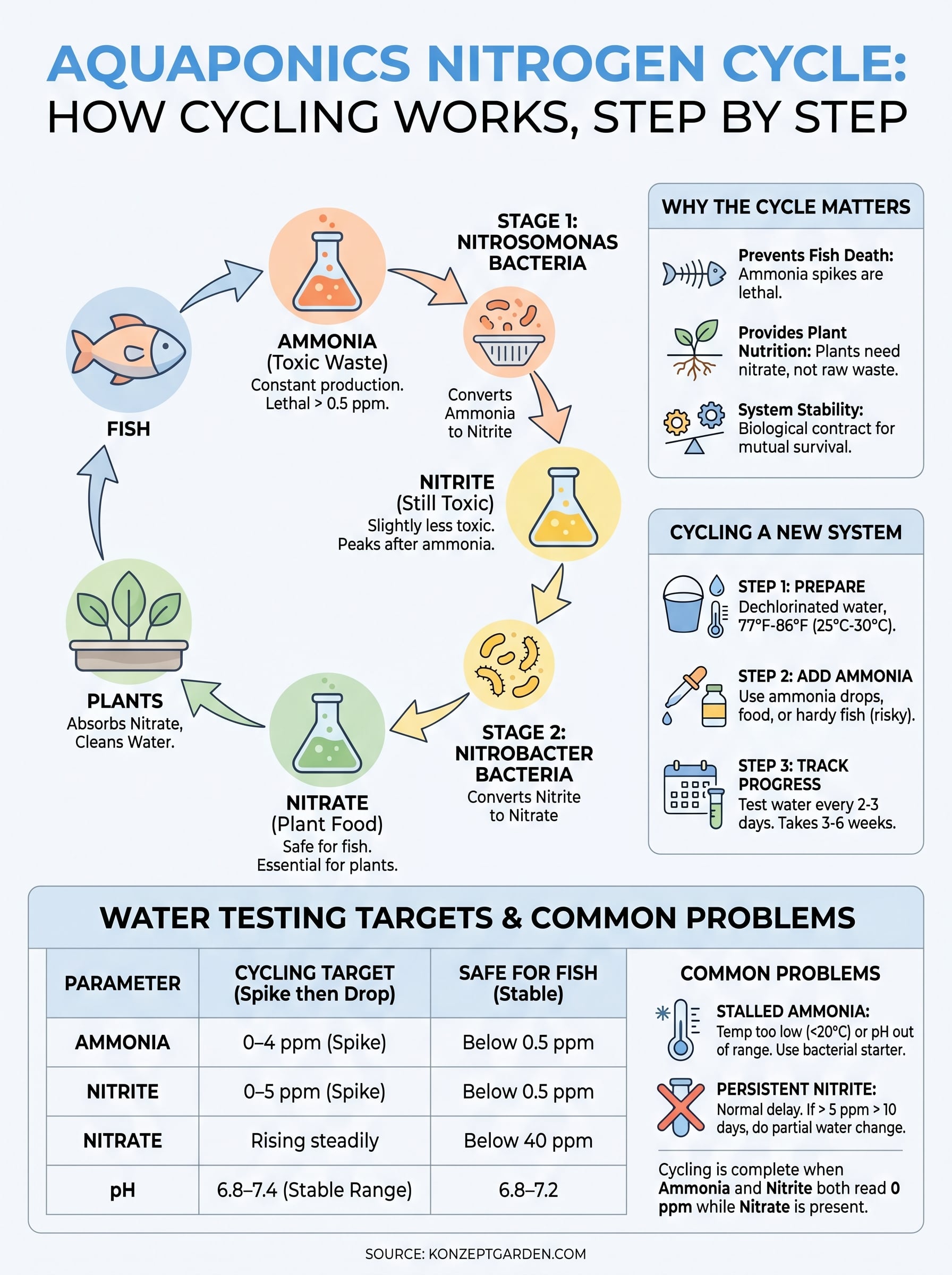
The aquaponics nitrogen cycle converts toxic fish waste into plant-ready nitrate through two bacterial groups: Nitrosomonas (ammonia to nitrite) and Nitrobacter (nitrite to nitrate). Cycling your system before adding fish builds those bacterial colonies from scratch, a process that typically takes three to six weeks. You track progress by testing ammonia, nitrite, nitrate, and pH every two to three days. Once ammonia and nitrite both hit zero while nitrate is present, your system is ready for fish.
If cycling stalls, the fix is almost always temperature, pH, or a bacterial starter product. Rushing the process or overstocking fish early are the two mistakes that cause most new systems to fail. Follow the steps, read your water tests honestly, and the biology will do the rest.
If you want to add a water feature that works with nature rather than against it, take a look at our Zen Bio Koi Pond to see what a well-designed aquatic system can look like.