
A beautiful koi pond is only half the equation, the other half is knowing what do koi fish eat to keep them thriving. Feeding koi the wrong foods (or even the right foods in the wrong amounts) can lead to poor growth, murky water, and health problems that shorten their lifespan significantly.
At Konzept Garden, we design and build custom koi ponds across Malaysia, from our Zen Bio Koi Pond systems to natural rock setups. Through years of working alongside pond owners and aquatic specialists, we've learned that pond design and fish nutrition go hand in hand, a well-fed koi population means cleaner water, brighter colors, and a pond that actually looks the way it was designed to.
This guide covers the 7 best foods and treats for healthy koi, including commercial pellets, natural food sources, and safe kitchen scraps. Whether you're a first-time koi keeper or you've had fish for years, you'll walk away knowing exactly what to feed them, and what to avoid.
1. Floating koi pellets as the daily staple
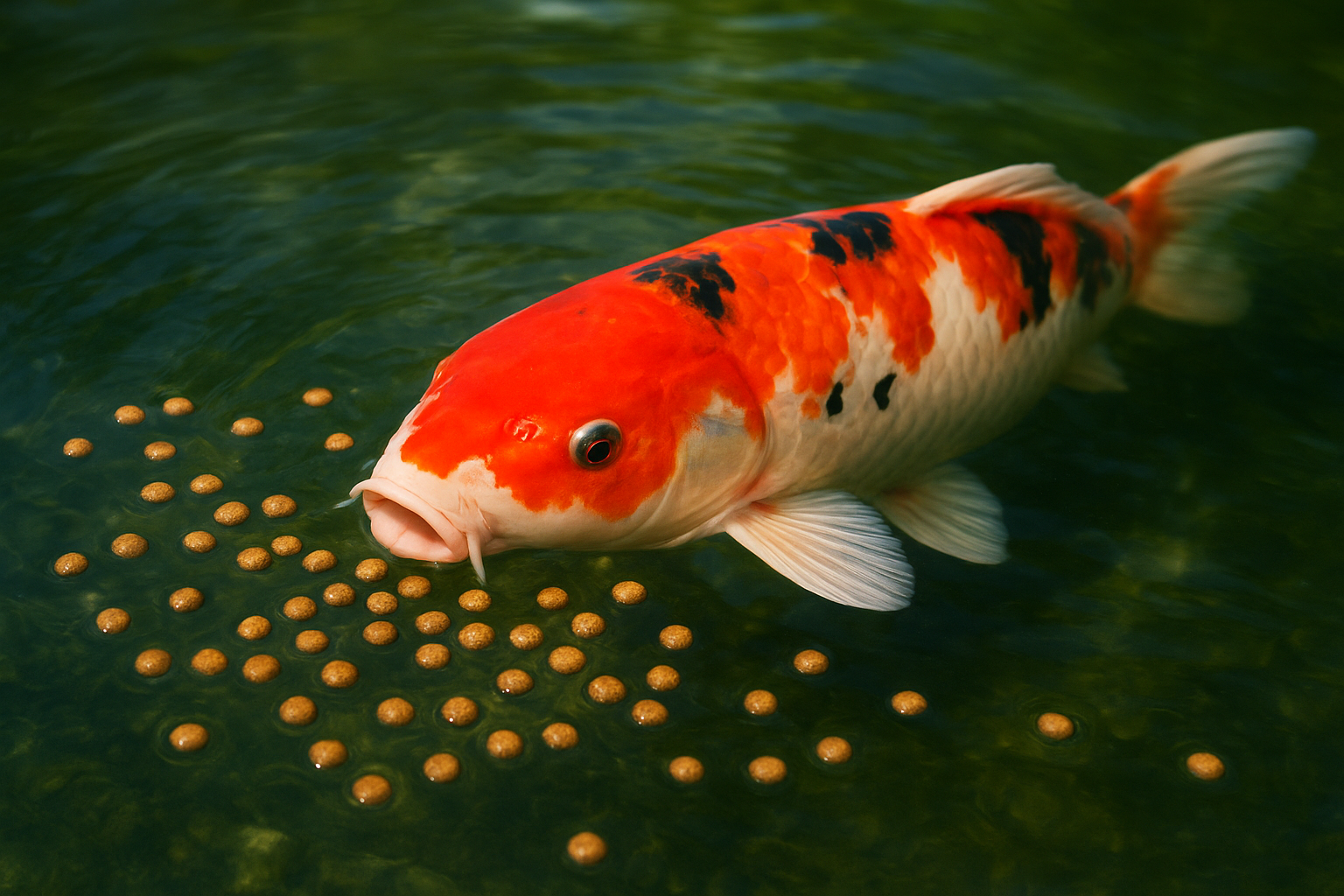
Floating koi pellets are the foundation of any solid feeding routine. If you're wondering what do koi fish eat on a daily basis, high-quality floating pellets should make up the bulk of their diet, typically 60 to 70 percent of what they consume over the course of a week.
What it is and why koi eat it
Commercially formulated to meet the nutritional needs of koi at different life stages, these pellets work directly with their natural feeding behavior. Koi are omnivorous surface and bottom feeders by nature, and floating pellets keep food visible at the surface where you can easily monitor how much they eat. Most koi take to pellets quickly because manufacturers balance palatability with nutrition, making them easy to accept and digest.
Nutrition and benefits
A good-quality pellet contains crude protein in the range of 30 to 40 percent, along with fats, vitamins, and minerals that support active fish. The protein drives muscle growth and tissue repair, while the fat content supplies consistent energy. Vitamin C and E are commonly included to support immune function and reduce stress responses. Pellets also tend to keep water cleaner than many natural food sources because they produce less waste per feeding.
A pellet with at least 35% crude protein is generally recommended for koi during the active growing season in warm climates like Malaysia.
How to feed it in a pond
Feed your koi two to three times per day during warmer months, offering only as much as they can finish in about five minutes. Remove any uneaten pellets with a net before they break down and cloud the water. Pellet size matters significantly, so use smaller pellets for juvenile fish and larger ones for adults to reduce competition and stress at feeding time.
Risks and mistakes to avoid
Overfeeding is the most common mistake koi owners make with pellets. Excess food decomposes quickly, spikes ammonia levels, and puts pressure on your filtration system. Cheap pellets with fillers like wheat or soy as the primary ingredient are another trap to avoid, since low-quality protein sources reduce digestibility and increase waste output, directly harming your water quality and the long-term health of your fish.
2. Wheat germ food for cool weather digestion
In Malaysia, pond water temperatures can drop during cooler months, and what do koi fish eat during those periods matters more than most owners realize. When water cools below around 15°C (59°F), koi metabolism slows significantly, making standard high-protein pellets harder for their digestive systems to process.
What it is and why koi eat it
Wheat germ food is a low-protein, highly digestible formula developed specifically for cooler water conditions. Manufacturers design it to move through a koi's gut more efficiently than standard growth pellets.
Koi instinctively reduce their activity and appetite as temperatures drop, and wheat germ formulas work with that natural behavior. Their digestive systems need simpler, easier-to-break-down ingredients during this period to avoid internal buildup and bloating.
Nutrition and benefits
This formula contains natural vitamin E and essential fatty acids that support immune health and skin condition even when fish are less active. The protein content typically sits between 25 and 30 percent, lower than standard growth pellets, which matches the reduced metabolic demands of cooler water.
Switching to wheat germ formula when your pond water drops below 15°C can prevent digestive complications and reduce waste buildup in your filtration system.
How to feed it in a pond
Feed wheat germ-based pellets once per day during cooler periods, and reduce the quantity compared to your warmer-weather routine. Your fish will naturally eat less when temperatures drop, so follow their lead and remove uneaten food promptly to protect water quality.
Risks and mistakes to avoid
The primary mistake is continuing to feed high-protein standard pellets year-round without adjusting for temperature changes. Undigested protein in cool conditions can ferment in the gut and cause serious health complications.
Wait until water temperatures stabilize above 18°C before transitioning back to your regular feeding formula, and make that switch gradually over several days rather than all at once.
3. Spirulina and algae-based foods for color
If you want to understand what do koi fish eat to achieve those vivid reds, oranges, and yellows you see in well-maintained ponds, spirulina and algae-based foods are a big part of the answer. These specialized formulas target pigmentation directly and produce visible results within weeks of consistent feeding.
What it is and why koi eat it
Spirulina is a blue-green microalgae that grows naturally in warm, alkaline water. In the wild, koi graze on algae and plant matter as part of their omnivorous diet, so spirulina-based foods connect directly to their natural foraging behavior.
Most commercial spirulina products come as pellets or flakes with a concentrated algae extract blended into a balanced base formula. Koi accept them readily alongside their regular feeding routine.
Nutrition and benefits
Spirulina delivers carotenoids and phycocyanin, the pigment compounds responsible for intensifying red and orange coloration in koi. Beyond color, it supplies antioxidants, amino acids, and B vitamins that support immune health and cellular repair.
Spirulina-based food works best as a supplement fed two to three times per week alongside your regular pellet routine, not as a full replacement.
How to feed it in a pond
Offer spirulina pellets or flakes on a structured weekly schedule rather than daily. Koi absorb the color-enhancing compounds gradually, so spacing out feedings gives better results than overloading:
- Feed two to three times per week
- Pair with your standard daily pellets, not instead of them
- Remove uneaten food within five minutes
Risks and mistakes to avoid
Treating spirulina food as your primary feeding option is the main mistake to avoid. Fed in excess, it can increase organic waste load and put unnecessary strain on your pond's filtration. Keep it as a supplement and adjust based on how your water parameters respond.
4. Freeze-dried shrimp or krill as a high-protein treat
When people ask what do koi fish eat beyond their daily pellets, freeze-dried shrimp and krill rank among the best answers. These high-protein treats add genuine nutritional variety to your feeding routine without introducing the risks that come with live food.
What it is and why koi eat it
Freeze-dried shrimp and krill are whole crustaceans with moisture removed to preserve freshness and concentrate their nutritional profile. In the wild, koi naturally hunt and consume small invertebrates when available, so these treats connect directly to their instinctive feeding behavior rather than forcing something unnatural on them. Most koi respond enthusiastically to shrimp at the surface.
Nutrition and benefits
Krill and shrimp deliver high concentrations of protein and astaxanthin, a natural carotenoid that enhances red and orange pigmentation in koi. Astaxanthin works alongside spirulina to intensify color from the inside out. These treats also supply omega-3 fatty acids that support cardiovascular health and fin condition.
Freeze-dried krill contains more astaxanthin per gram than most commercial color-enhancement pellets, making it one of the most efficient color-boosting treats you can feed.
How to feed it in a pond
Offer freeze-dried shrimp or krill once or twice per week as a supplement, not a daily staple. Drop small portions directly onto the surface and watch your fish respond within seconds.
Risks and mistakes to avoid
Feeding too frequently drives up protein load beyond what your koi actually need, which increases ammonia in your pond. Stick to two feedings per week maximum and keep portion sizes small.
5. Earthworms and insect larvae for natural protein
If you want to go beyond the standard answers to what do koi fish eat, earthworms and insect larvae are worth adding to your rotation. These natural protein sources replicate what koi encounter in the wild and often trigger some of the most enthusiastic feeding responses you'll see from your fish.
What it is and why koi eat it
Earthworms and insect larvae, including bloodworms and black soldier fly larvae, are whole, live or dried invertebrates that koi would naturally forage for in ponds and waterways. Their instinct to root through substrate and hunt small creatures makes these foods feel completely natural. Koi recognize and respond to worms almost immediately, often competing aggressively at the surface when you drop them in.
Nutrition and benefits
These foods deliver dense animal protein along with natural fats and amino acids that support muscle development and overall vitality. Black soldier fly larvae, in particular, are high in calcium and healthy lipids, which contribute to bone density and skin condition. Bloodworms are leaner but packed with iron and protein that fuel growth during the active feeding season.
Live or dried earthworms fed two to three times per week can noticeably improve the activity level and body condition of your koi within a few weeks.
How to feed it in a pond
Drop worms or larvae directly onto the water surface in small handfuls and let your fish hunt them down naturally. Feed two to three times per week, not daily.
Risks and mistakes to avoid
Never collect wild worms from soil treated with pesticides or fertilizers, as those chemicals transfer directly to your fish. Dried and commercially packaged options eliminate that risk entirely and remain a safer, more consistent choice for most pond owners.
6. Koi-safe vegetables for fiber and variety
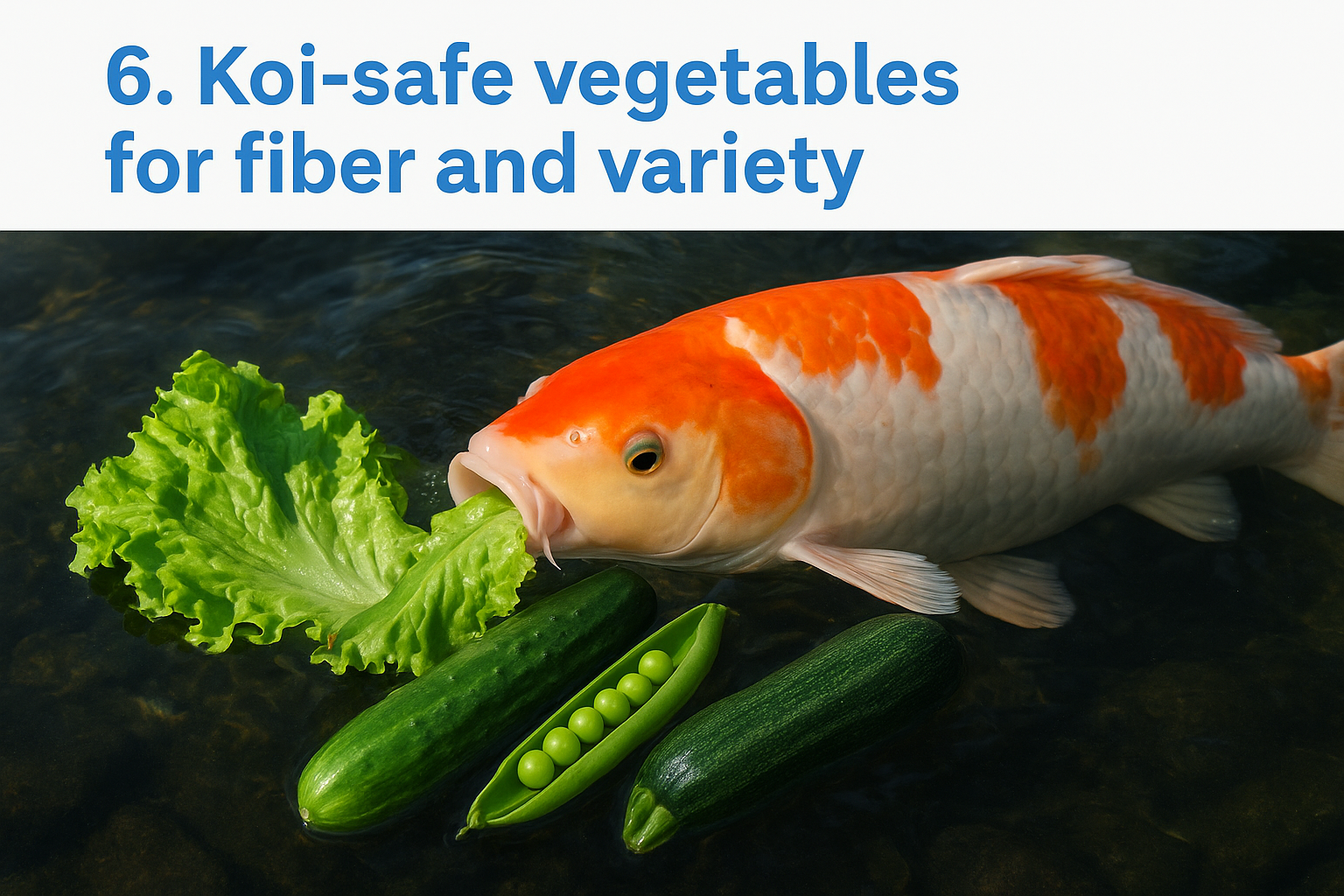
Vegetables give koi dietary fiber and plant-based nutrients that pellets alone don't fully provide. When people explore what do koi fish eat beyond commercial food, vegetables are one of the safest and most practical options to add into a regular feeding routine.
What it is and why koi eat it
Koi are natural omnivores that graze on aquatic plants and decaying vegetation in the wild, so vegetables align closely with their instinctive eating habits. Safe options include lettuce, spinach, peas, cucumber, and zucchini, all of which koi accept readily at the surface or just below it.
Nutrition and benefits
Leafy greens supply vitamins A, C, and K along with natural fiber that supports healthy gut motility. Peas, in particular, are a go-to option among experienced koi keepers because their soft, starchy interior aids digestion and can even help fish that show signs of constipation or buoyancy issues.
Blanching harder vegetables like zucchini and cucumber for 30 seconds softens them enough for koi to break apart easily, reducing waste and speeding up consumption.
How to feed it in a pond
Offer vegetables two to three times per week as a supplement alongside your regular pellet routine. Attach leafy greens to a clip or small weight to keep them in place, and remove any uneaten portions within a few hours to prevent decomposition.
Risks and mistakes to avoid
Avoid starchy or seasoned vegetables like corn, potato, or anything cooked with salt or oil. These stress your koi's digestive system and degrade water quality quickly. Stick to raw or lightly blanched options and keep portion sizes modest.
7. Koi-safe fruits as occasional enrichment
Fruits sit at the far end of the spectrum when it comes to what do koi fish eat, but they serve a genuine purpose as an occasional treat. Used correctly, they add variety, encourage natural feeding behavior, and give your koi a small nutritional boost beyond their standard diet.
What it is and why koi eat it
Safe fruit options include watermelon, oranges, grapes, and strawberries, all of which koi accept readily at the surface. In the wild, fallen fruit occasionally enters waterways and koi consume it opportunistically. This means fruit feeding taps into an existing instinctive behavior rather than forcing something foreign into their routine. Most koi investigate and eat soft fruit pieces within minutes of them hitting the water.
Nutrition and benefits
Fruits supply natural sugars, vitamin C, and antioxidants that complement the nutrients in your regular pellet formula. Watermelon, in particular, has a high water content and delivers lycopene and beta-carotene, compounds that support cell health and can subtly enhance coloration over time.
Limit fruit to once or twice per week at most, since the natural sugar content can disrupt water chemistry if fed too frequently or in large amounts.
How to feed it in a pond
Cut fruit into small, manageable pieces before dropping them into the pond, and remove any uneaten portions within two hours to prevent fermentation.
Risks and mistakes to avoid
Avoid citrus peel, seeds, and any fruit with added sugar or preservatives. These irritate your koi's digestive tract and break down quickly in the water, driving ammonia levels up faster than most other food sources.
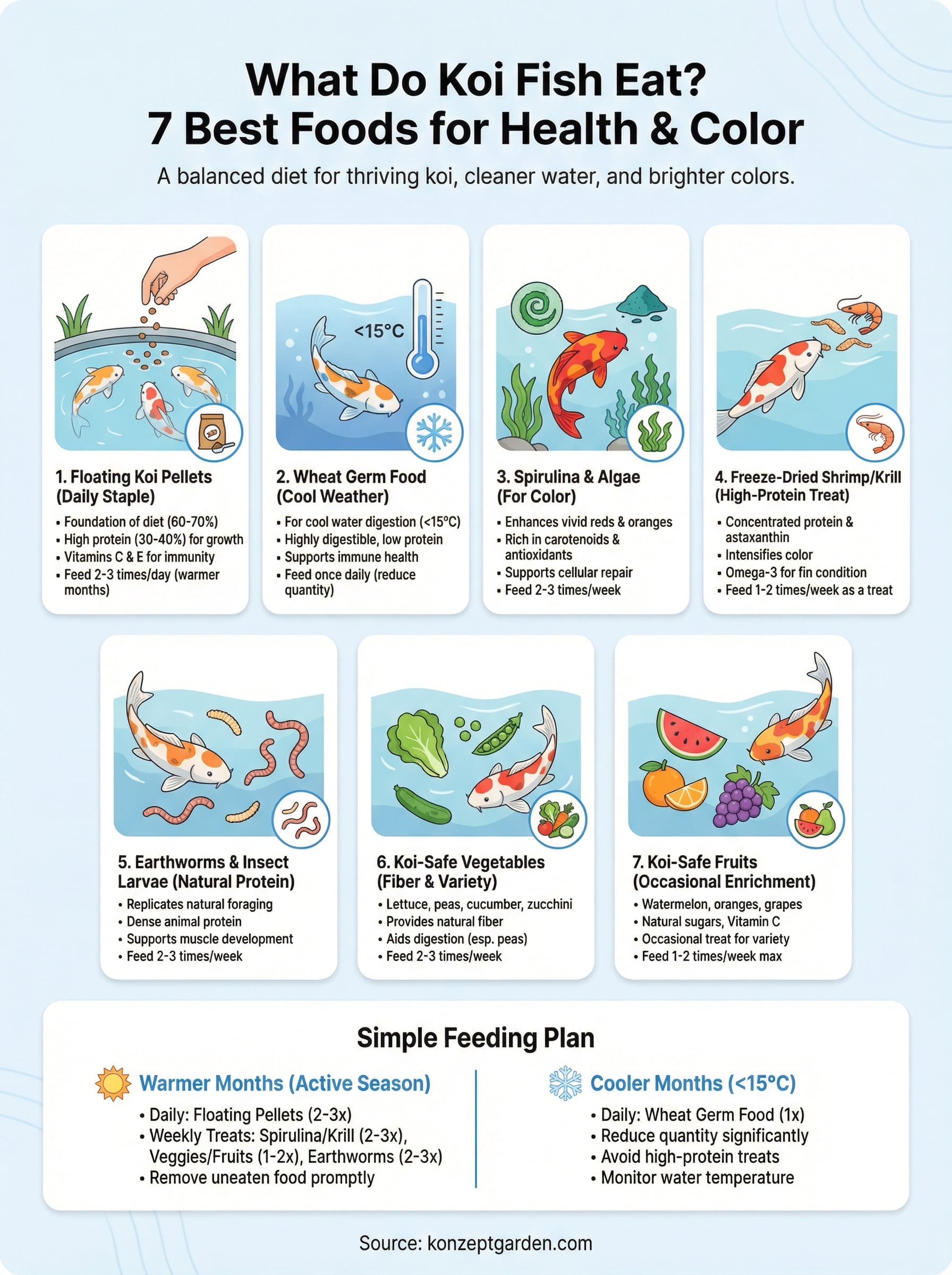
A simple feeding plan you can stick to
Now that you know what do koi fish eat across different seasons and situations, pulling it all together into a consistent routine makes the real difference. Floating pellets remain your daily foundation, fed two to three times per day during warmer months. Wheat germ formula takes over when water cools below 15°C, protecting your fish's digestive health through lower-metabolism periods.
Layer in your treats on a rotating weekly schedule: spirulina or freeze-dried krill two to three times per week for color and protein, vegetables or fruits once or twice a week for fiber and variety. Earthworms and insect larvae fit naturally into that same rotation. Keep every feeding session to five minutes and remove uneaten food promptly.
If you're building or upgrading a pond in Malaysia, the right pond environment supports everything this guide covers. Explore our Zen Bio Koi Pond to see how a purpose-built pond design sets your koi up to thrive.


