
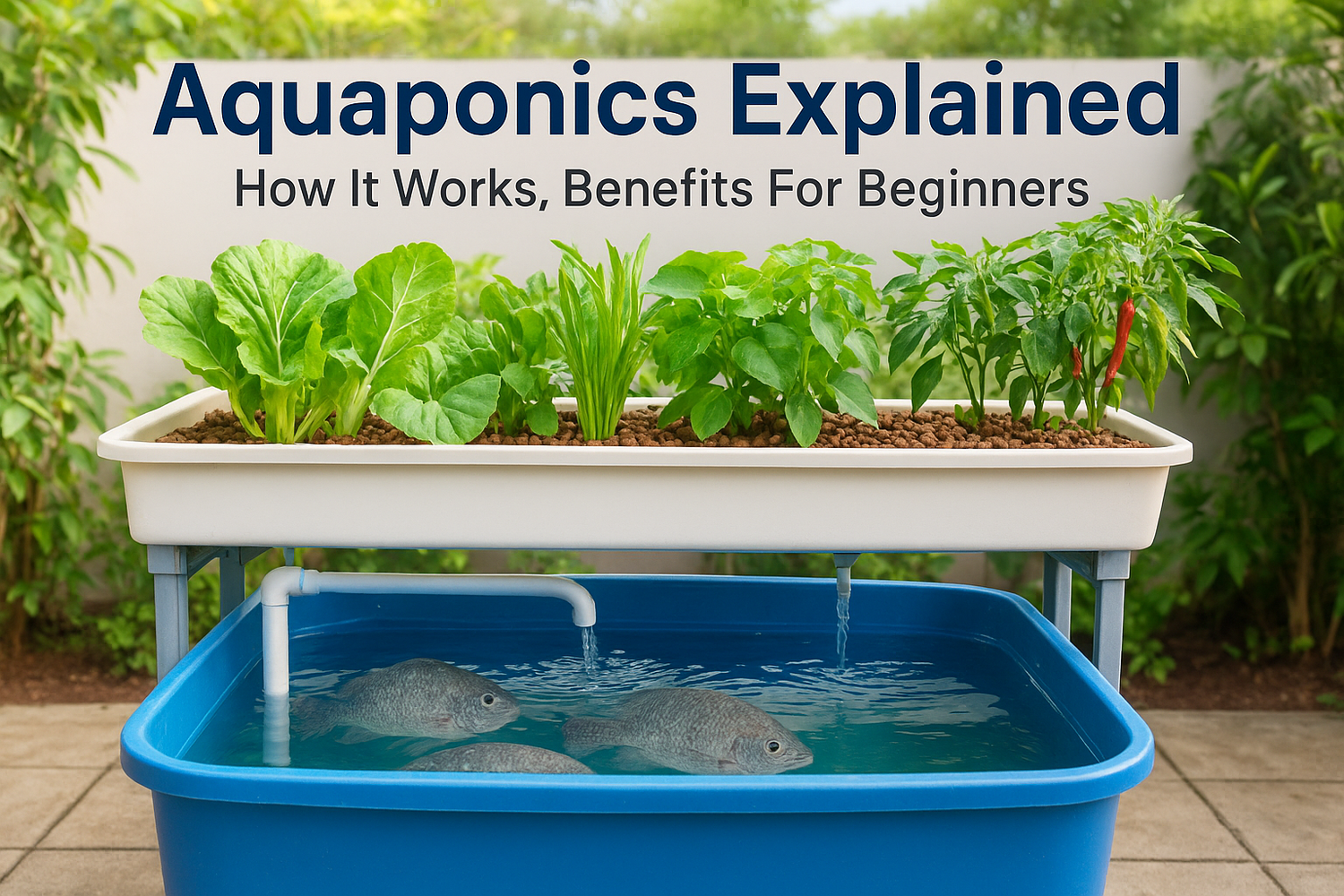
Picture a system where fish feed your plants and plants clean the water for your fish, no soil required. That's aquaponics explained in its simplest form: a closed-loop growing method that combines aquaculture (raising fish) and hydroponics (growing plants in water) into one self-sustaining cycle. It's efficient, it conserves water, and it's gaining serious traction among home growers and commercial producers alike.
At Konzept Garden, we design outdoor spaces across Malaysia that bring nature and modern living together. Aquaponics fits squarely into that vision, it's a practical, space-smart approach to growing food and ornamental plants, whether you're working with a backyard garden or a rooftop setup. We've seen firsthand how integrating living systems into landscape design creates spaces that are both productive and beautiful.
This article breaks down how aquaponics actually works, from the nitrogen cycle that powers it to the specific benefits it offers beginners. You'll walk away with a clear understanding of the system and enough knowledge to decide whether it belongs in your garden.
Why aquaponics matters for home growers
Home gardening in Malaysia comes with real constraints. Limited outdoor space, high humidity, and the challenge of sourcing quality soil all push growers toward smarter solutions. Aquaponics sidesteps several of these problems at once, giving you a compact, productive system that works whether you have a full backyard or just a covered patio. That's why more Malaysians are treating this method not as a novelty but as a genuine approach to growing food at home.
Food production in a small footprint
One of the clearest advantages of aquaponics is how much it produces relative to the space it occupies. A standard media-bed system roughly 1 meter by 2 meters can support a healthy fish stock and enough leafy greens or herbs to supplement a household's weekly meals. You don't need a sprawling garden to make it work. Vertical stacking and tiered grow beds can push production even higher, which makes aquaponics a realistic option for urban homes, townhouses, and covered rooftop setups.
The system also removes soil from the equation entirely, which matters more than it sounds. Poor soil quality is a persistent problem in many Malaysian residential developments, where topsoil is often stripped during construction and never properly replaced. With aquaponics, the growing medium (usually clay pebbles or gravel) only anchors the plant roots. All the nutrients come from fish waste cycling through the water, so your yields don't depend on soil amendments or fertilizer schedules at all.
Water efficiency that changes the math
Conventional gardening in Malaysia's dry season can burn through significant volumes of water, especially if you're growing vegetables that need regular, deep watering. Aquaponics recirculates the same water continuously through the system. Fish produce waste, plants filter the water through their roots, and the cleaned water returns to the fish tank in a continuous loop. Research from the Food and Agriculture Organization of the United Nations indicates that aquaponics can use up to 90% less water than traditional soil-based agriculture, which is a strong argument for any household trying to reduce its environmental footprint.
Aquaponics uses up to 90% less water than conventional soil gardening, making it one of the most water-efficient food production methods available to home growers.
That recirculation also means you're not contributing to nutrient runoff into local drainage. Fertilizer leaching from garden beds is a real environmental issue in urban areas, and aquaponics eliminates it by design. Your plants absorb what the fish produce, the water stays clean, and nothing escapes the loop. For anyone serious about sustainable gardening, this closed system offers a practical and measurable advantage over traditional methods.
The learning curve is shorter than you think
When people first encounter aquaponics explained in full technical detail, the nitrogen cycle and water chemistry can sound intimidating. In practice, most home systems stabilize within four to six weeks, after which daily maintenance drops to feeding the fish, checking water levels, and harvesting plants. You don't need a biology background to run a healthy system. Straightforward testing kits for ammonia, nitrite, and nitrate levels are widely available and take under five minutes to use each day.
Children and first-time gardeners often take to aquaponics faster than experienced soil gardeners do, partly because there's no weeding, no tilling, and no seasonal soil preparation required. The visible feedback loop, watching fish eat, plants grow, and water cycle through the system, makes the biology intuitive rather than abstract. You can also start small with a single tank and one grow bed, then expand the system gradually as your confidence builds and your available space allows.
How aquaponics works step by step
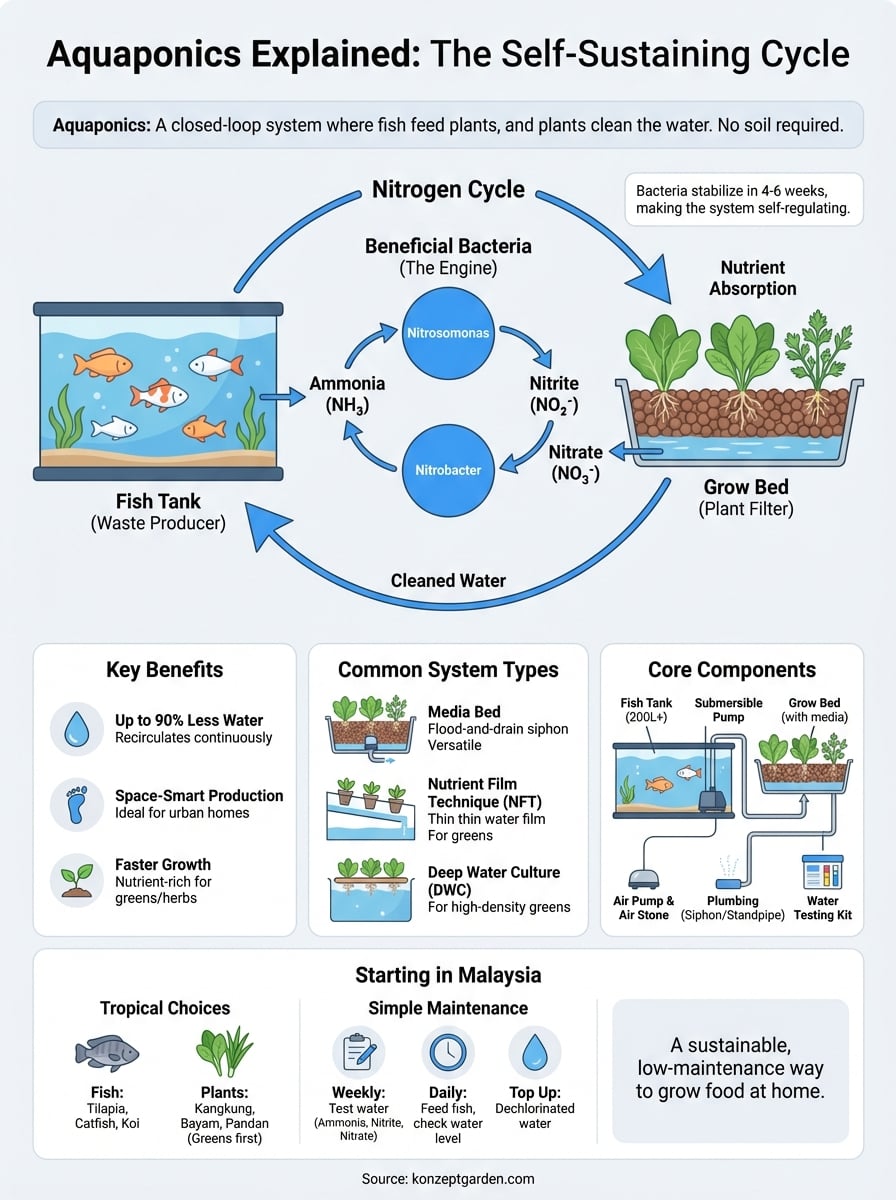
Understanding aquaponics explained at a mechanical level helps you set up and troubleshoot your system with real confidence. The entire process runs on one continuous biological loop: fish produce waste, beneficial bacteria convert that waste into plant nutrients, plants absorb those nutrients, and the filtered water flows back to the fish. Every part depends on the others, which is what makes the system both self-regulating and efficient once it reaches stability.
The nitrogen cycle at the core
The nitrogen cycle is the engine that powers every aquaponics system. Fish excrete ammonia through their gills and digestive waste, and if that ammonia builds up without being processed, it becomes toxic to the fish at relatively low concentrations. Two groups of naturally occurring bacteria, Nitrosomonas and Nitrobacter, colonize the surfaces inside your grow beds and tanks. They convert ammonia first into nitrite and then into nitrate, which is the form of nitrogen that plants readily absorb and use to grow.
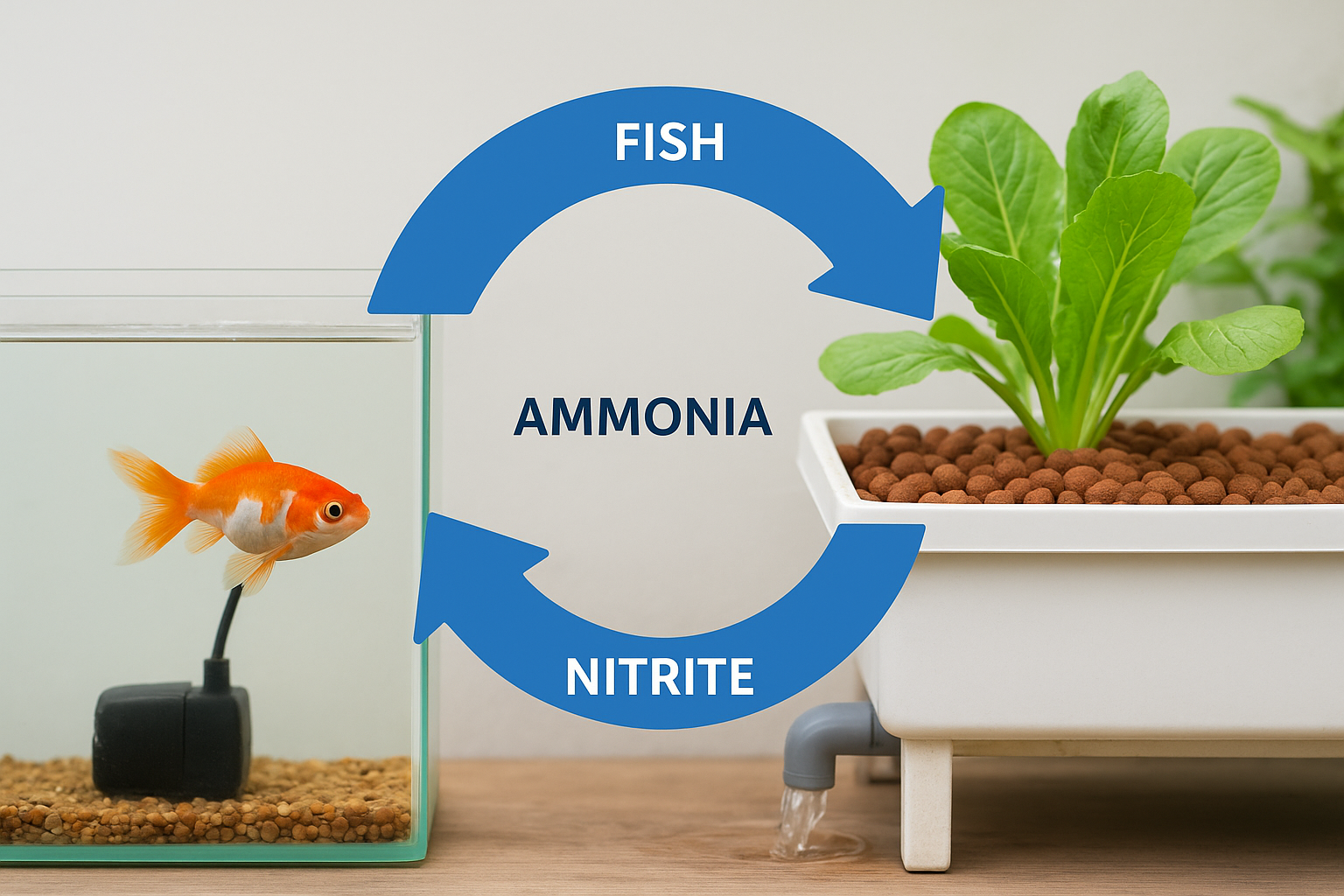
These bacteria establish themselves naturally over four to six weeks, after which your system largely manages its own water chemistry without constant intervention from you.
You don't need to add these bacteria manually. They grow on the clay pebbles, gravel, or other media you fill your beds with, and their population scales up naturally as your fish stock and feeding rate increase. Your main job during the startup period is to keep water temperature stable and avoid any chemicals, including chlorinated tap water, that would disrupt the bacterial colonies before they mature enough to handle the full biological load.
From fish tank to grow bed and back
Water moves from the fish tank through a submersible pump into the grow beds, where plant roots either sit in media or hang directly in the flowing water. As water passes through the root zone, plants extract nitrates and trace minerals, effectively scrubbing it clean. That filtered water drains back into the fish tank, and the loop starts again.
The flood-and-drain method, also called ebb and flow, is the most common approach for home systems. Each flood delivers fresh nutrients directly to the root zone, and each drain phase draws oxygen back into the grow bed, preventing root rot. A basic timer connected to your pump controls the cycle automatically, running on a schedule you adjust based on your plant types, bed depth, and fish stocking density.
Aquaponics vs hydroponics vs soil gardening
When you place these three methods side by side, the differences come down to nutrient source, water use, and ongoing input. Each has a distinct profile, and understanding those differences helps you decide which approach fits your space, budget, and goals. With aquaponics explained against its alternatives, the comparison becomes practical rather than theoretical.
| Factor | Aquaponics | Hydroponics | Soil Gardening |
|---|---|---|---|
| Nutrient source | Fish waste (natural) | Purchased nutrient solution | Soil and amendments |
| Water use | Very low (recirculating) | Low (recirculating) | High |
| Startup cost | Moderate to high | Moderate | Low |
| Maintenance once established | Low | Moderate | Moderate to high |
| Produces food protein | Yes (fish) | No | No |
How hydroponics differs from aquaponics
Hydroponics and aquaponics share the same foundation: growing plants without soil in a water-based system. The key difference is where nutrients come from. In hydroponics, you purchase and mix a chemical nutrient solution and add it to the water on a set schedule. That gives you precise control over what your plants receive, but it also means recurring cost and manual input every time you refresh or top up the solution.
Aquaponics replaces that purchased nutrient supply with fish waste, which your plants convert through the nitrogen cycle. You stop buying nutrients because your fish produce them continuously. For a long-running home system, this cuts operating costs and removes the need to measure and mix solutions each week. The trade-off is that aquaponics introduces living fish into the equation, which adds one layer of responsibility that a hydroponic setup does not require.
Where soil gardening still makes sense
Soil gardening remains the lowest-cost entry point for anyone starting out. You need basic tools, seeds, and a patch of outdoor space, with no pump, no tank, and no bacterial cycling period before you can plant. For ornamental beds, large fruit trees, or established shrub planting, soil is still the most practical option, and no water-based system comes close to replicating the same growing environment for deep-rooted plants.
Where aquaponics pulls ahead is in compact food production: leafy greens, herbs, and fruiting plants like tomatoes and peppers grow faster in an aquaponic system than in comparable soil conditions.
Traditional gardening also demands more physical input, including tilling, weeding, and seasonal fertilizing, all of which aquaponics eliminates by design. If your goal is consistent, low-maintenance food production within a limited footprint, that comparison shifts strongly in favor of a water-based system.
System types and the parts you need
Before you buy a single component, knowing which system design fits your space and goals saves you money and setup time. Three main configurations dominate home aquaponics, each suiting different space sizes, budgets, and plant types. Once you understand which design you're working with, selecting the right parts becomes straightforward rather than overwhelming.
The three main system types
Media bed systems are the most beginner-friendly option and the most common choice for home growers in Malaysia. You fill a grow bed with clay pebbles or gravel, plant directly into the media, and use a flood-and-drain timer to cycle water from the fish tank through the bed and back again. This design handles a wide range of plants, from leafy greens to fruiting crops like tomatoes and chili, which makes it the most versatile starting point for anyone new to the method.
Nutrient film technique (NFT) and deep water culture (DWC) systems work well for leafy greens and herbs but require more precise water flow management than a basic media bed setup.
NFT systems run a thin film of nutrient-rich water along a sloped channel, with plant roots sitting in that channel with minimal media support. DWC systems suspend plant roots directly in oxygenated, nutrient-rich water held in a shared raft tank. Both configurations are popular in commercial setups and can scale down to home use, but they suit growers who already understand basic water chemistry and want to focus on high-density production of fast-growing crops.
Core components every system needs
Regardless of which configuration you choose, every aquaponics system relies on the same core parts. Your initial shopping list is shorter than most beginners expect.
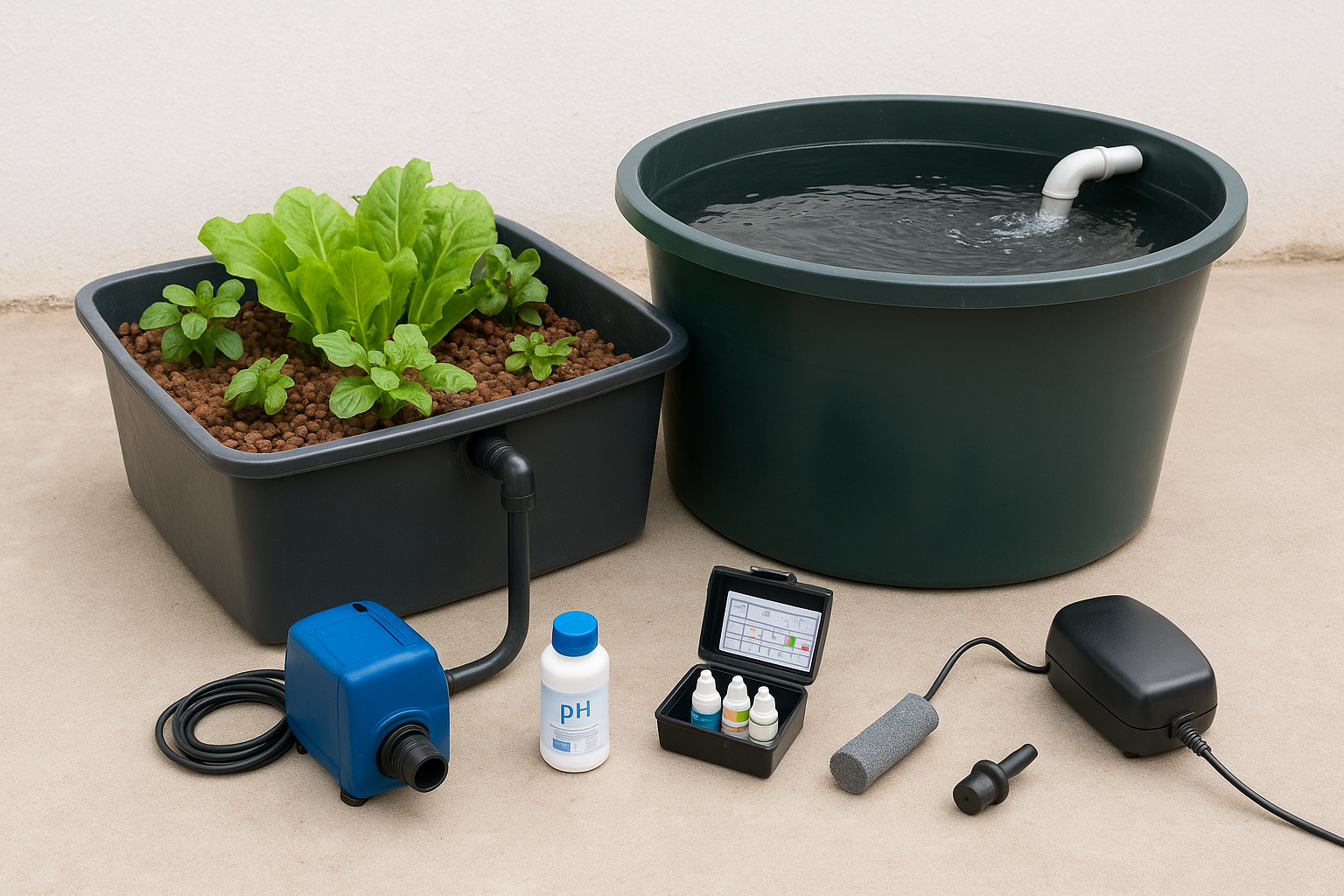
- Fish tank: A food-grade container of at least 200 liters for a basic home system
- Grow bed: A tray or container filled with clay pebbles, lava rock, or gravel
- Submersible water pump: Sized to turn over the fish tank volume at least once per hour
- Air pump and air stones: To maintain dissolved oxygen for fish and beneficial bacteria
- Water testing kit: For monitoring ammonia, nitrite, and nitrate levels weekly
- Plumbing fittings: Bell siphon or standpipe to control flood-and-drain cycling
- Grow lights (optional): Only required for indoor setups with limited natural light
With aquaponics explained down to individual components, you can see that the system is modular by design. Start with one fish tank and one grow bed, then add capacity gradually as your confidence grows and your available outdoor or covered space expands.
How to start and maintain a home system in Malaysia
Starting with the right fish and plant combination makes everything else easier. Malaysia's tropical climate sits between 26°C and 32°C for most of the year, which suits warm-water fish and fast-growing tropical vegetables perfectly. You don't need to heat your water or invest in climate control equipment, and that removes a significant cost barrier that home growers in cooler countries have to manage.
Choose fish and plants that thrive in tropical conditions
Tilapia is the most practical fish choice for Malaysian home growers. It tolerates a wide range of water conditions, grows quickly, and produces enough waste to support a generously stocked grow bed within the first few months of operation. Catfish is another strong option if you prefer a fish that handles overcrowding better during warm spells. For ornamental systems where you want visual appeal alongside food production, koi or goldfish work well, though their nutrient output per fish runs lower than tilapia.
Pair your fish with fast-cycling crops like kangkung, bayam, and pandan, which are well-adapted to Malaysia's heat and thrive on the ammonia-derived nutrients your fish produce daily.
On the plant side, leafy greens and herbs perform best in beginner systems because they cycle nutrients quickly and tolerate the variable nitrate levels that naturally occur during a system's first few months. Once your system stabilizes, you can introduce fruiting plants like chili, tomatoes, or long beans.
Keep the system stable with a simple weekly routine
With aquaponics explained down to its core mechanics, maintenance comes down to consistency rather than complexity. Feed your fish at the same time each day, remove uneaten food after five minutes, and test your water for ammonia, nitrite, and nitrate levels twice per week during the first two months. After the system matures, once-weekly testing is usually enough to catch any problems before they affect your fish or plants.
Malaysia's heat accelerates evaporation, so top up your tank with dechlorinated water every few days to maintain a stable volume and prevent salt concentration from creeping up. Use either filtered tap water or water that has sat uncovered for 24 hours to allow chlorine to dissipate. Clean your pump inlet screen monthly, and inspect your bell siphon every two weeks to make sure the flood-and-drain cycle runs on schedule.
A simple way to decide if aquaponics fits
With aquaponics explained from the ground up, the decision comes down to three honest questions. Do you want to grow food consistently without managing soil? Do you have a covered outdoor space of at least 2 square meters? Are you willing to care for fish as part of your gardening routine? If you answered yes to all three, a home system fits your situation well.
If you're drawn to combining a living fish display with a productive growing space, a koi-based setup gives you both food production and visual impact in one design. Our Zen Bio Koi Pond integrates ornamental fish with thoughtful landscape design, turning your system into a focal point rather than just a functional unit. Contact our team to explore how we can help you build an outdoor space that produces, thrives, and looks exactly the way you want it to.


