
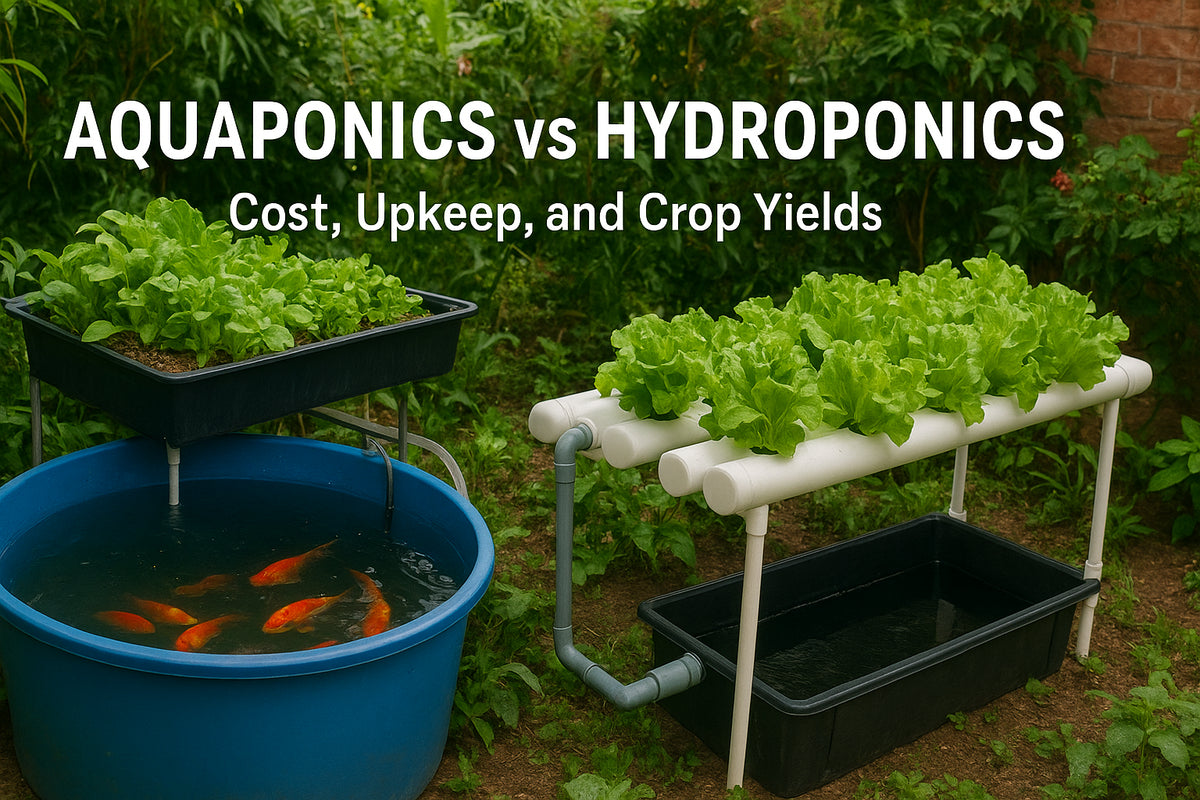
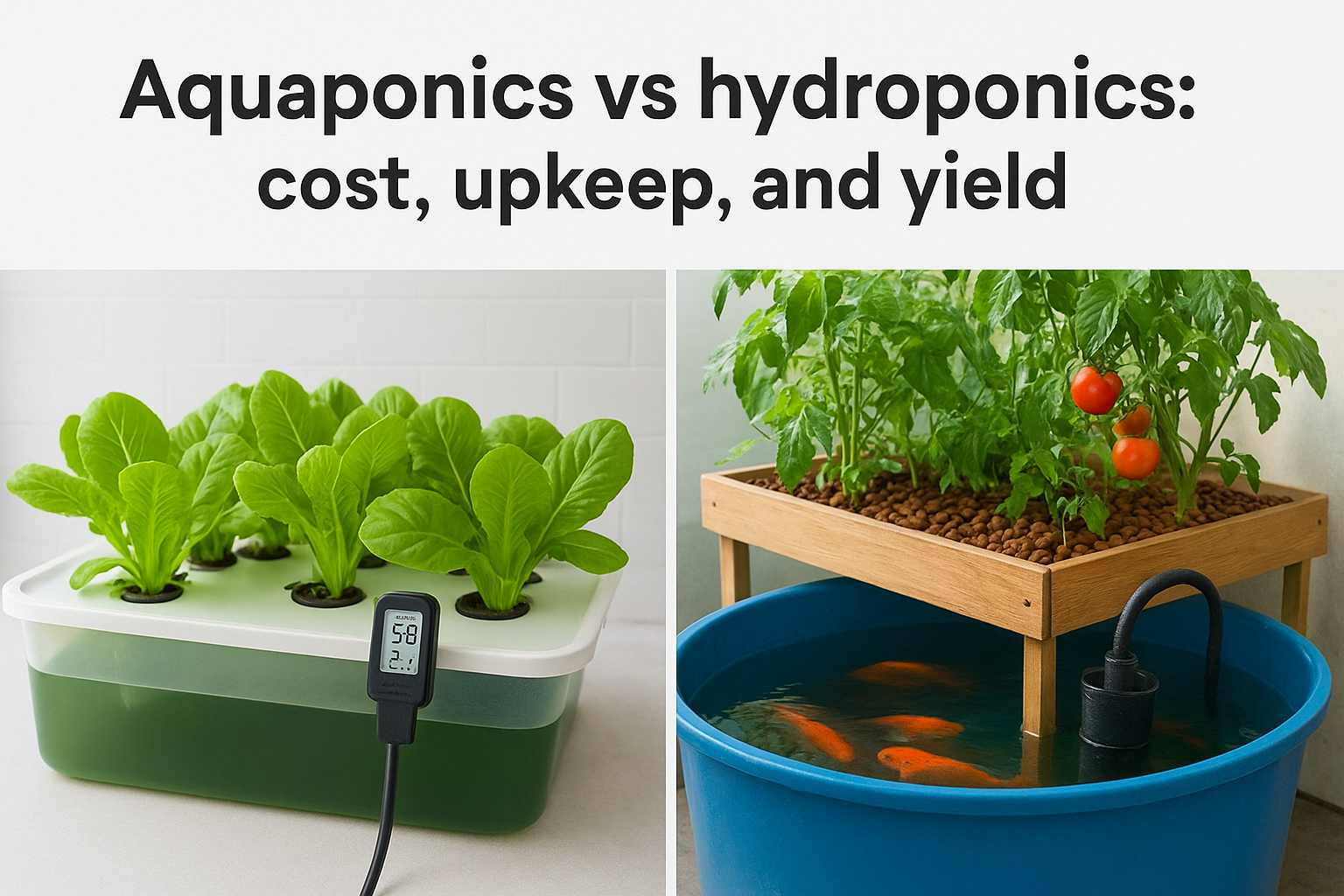
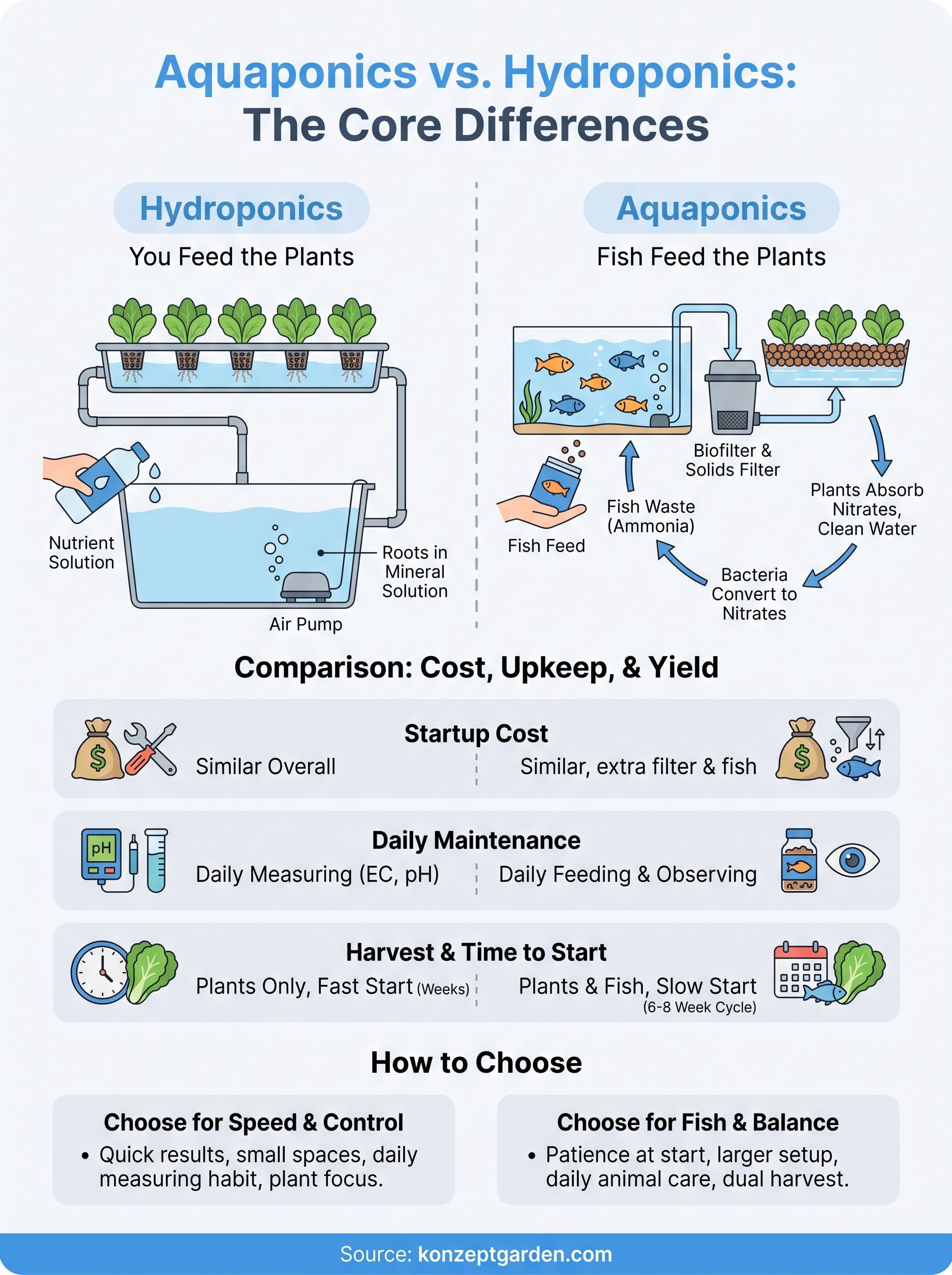
Aquaponics vs hydroponics comes down to one question: who feeds the plants? In hydroponics, you do. You mix a mineral nutrient solution into water and deliver it to roots that grow without soil. In aquaponics, fish do the feeding. Beneficial bacteria turn their waste into nitrates, and the plants absorb those nitrates and clean the water before it flows back to the fish. Hydroponics is quicker to start and easier to control. Aquaponics takes weeks to settle in, then needs fewer water adjustments and gives you fish as well as plants.
This guide explains how each system works, then compares cost, maintenance, and crop yields side by side. After that, you get a simple way to choose between them and the steps to build your first small setup for a home garden or small farm.
Konzept Garden designs outdoor spaces in Malaysia, including koi ponds and self-watering planters, so we often hear this question from homeowners who want to grow food in a compact area. The advice below keeps Malaysia's warm, humid conditions in mind.
Why the choice between these two systems matters
The choice matters because the two systems demand different habits, and a bad match ends in dead fish, stressed plants, or a setup you abandon after a few months. From a distance they look alike: tubs, pumps, pipes, and green leaves. The daily reality is very different.
How each system feeds plants
Hydroponics gives plants everything through a nutrient solution that you prepare. A typical setup has a reservoir, a pump or air stone, net pots, and an inert medium such as clay pellets or rockwool. You supply nitrogen, phosphorus, potassium, and trace minerals, and you measure pH and electrical conductivity (EC) to keep the mix in range. With no soil to cushion errors, mistakes show up in the plants quickly.
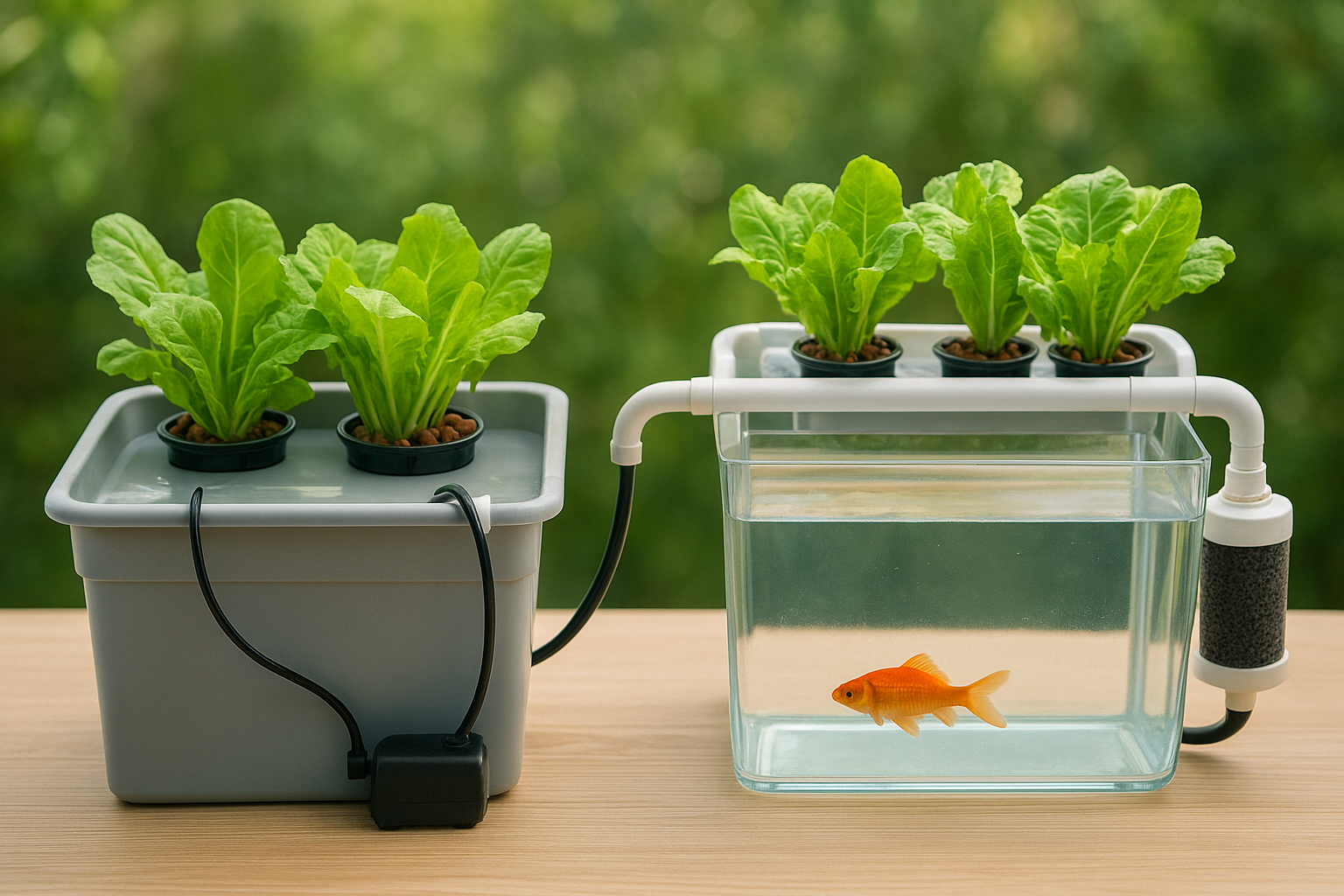
Aquaponics adds a fish tank and a biofilter to that loop. Fish produce ammonia, bacteria convert it to nitrite and then nitrate, and plants take up the nitrate. This is the nitrogen cycle, and it shifts your job from mixing nutrients to keeping fish healthy and water moving. Fish feed becomes your main nutrient input.
What a wrong choice costs you
Each system fails in its own way, and the damage is mostly lost time and livestock, not just money. Here is what a mismatch looks like in practice:
- Hydroponics: a skipped week of pH checks or a wrong dose can burn roots or stall growth.
- Aquaponics: a pump or aeration failure can kill fish, and fish need feeding every single day.
- Both: a power cut matters, because roots and bacteria both depend on oxygen and water movement.
Hydroponics rewards people who like measuring, and aquaponics rewards people who like observing.
Why Malaysia's climate changes the picture
Warm weather helps and hurts. Warm water speeds up bacterial growth, and Clemson University's extension service notes that a warm aquaponic system can finish cycling up to two weeks sooner. It also suits warm-water fish such as tilapia. The downside is that warm water holds less oxygen, so a sun-baked hydroponic reservoir invites root disease. Shade the tank, keep it in a light color, and run air stones constantly. Cover either system during heavy rain, because downpours dilute nutrients and shift pH.
Aquaponics vs hydroponics: cost, upkeep, and yield
Neither system wins every count. Hydroponics starts faster and is simpler, aquaponics needs far fewer water changes and adds a fish harvest, and startup costs and leafy-green yields come out similar.
Setup and running costs
Startup costs are close to equal. Aquaponics needs extra parts: a solids filter, a biofilter, more aeration, and the fish themselves. Hydroponics skips those, but you buy nutrient salts and pH adjusters again and again. Fish prices vary by species, and selling fish at harvest can offset them.
Running costs are a trade, not a gap. An aquaponic setup pays for fish feed and extra air pumps, and Clemson rates its operating cost slightly higher for that reason. A hydroponic setup pays for fertilizer, pH adjusters, and water for regular flushing. Grow lights add to either one if you garden indoors.
Daily maintenance and monitoring
Hydroponics is the more demanding system day to day. Plan to check EC, pH, and nutrient level daily, top up the reservoir, and drain and refill periodically so salts do not build up. Spent solution is nutrient-rich, and Clemson warns that dumping it into natural water can cause algal blooms and disrupt wastewater treatment, so dispose of it responsibly.
Aquaponics shifts the work to observation. You feed the fish daily, watch their behavior, and check pH and ammonia weekly. Water is lost mainly through evaporation and when you wash the filter, so there is no routine flushing. The catch is the cycling period, usually 6 to 8 weeks, before the system is fully productive.
Hydroponics costs you attention every day, while aquaponics costs you patience at the start.
Crop yields and what you can grow
Once an aquaponic system is cycled and stable, leafy greens and herbs grow at a comparable pace to hydroponics. Hydroponics usually leads in the first weeks, since you can plant as soon as the solution stabilizes. It also lets you dial in nutrients for heavy feeders. Aquaponics is limited by how much feed the fish receive, so fruiting crops such as tomatoes and peppers do best in a mature system with enough fish.
Aquaponics adds a second harvest. A SARE-funded school project in Nebraska ran a 100-gallon tilapia tank with a clay-media grow bed. Students grew lettuce, basil, kale, tomatoes, peppers, eggplants, and strawberries, and the tilapia reached marketable weight after nine months. Method matters too. Nutrient film technique (NFT), the standard for hydroponic lettuce, tends to clog in aquaponics, so aquaponic growers use media beds or deep water raft instead.
Side-by-side comparison
The table pulls the points above into one view so you can see where your effort goes.
| Factor | Hydroponics | Aquaponics |
|---|---|---|
| Nutrient source | Mixed fertilizer solution | Fish waste, converted by bacteria |
| Startup cost | Similar overall | Similar, with extra filter, aeration, and fish |
| Time to first planting | Once the solution stabilizes | After a 6 to 8 week cycle |
| Monitoring | Daily EC, pH, nutrient level | Weekly pH and ammonia, daily fish checks |
| Water handling | Regular drain and refill | Top up for evaporation, wash filter |
| Recurring inputs | Nutrient salts, pH adjusters | Fish feed, air pump power |
| Harvest | Plants | Plants and fish |
| Common layouts | NFT, deep water culture, drip | Media beds, deep water raft, ebb and flow |
| Typical failure | Nutrient error shows in plants | Fish loss if pump or aeration stops |
Read the table as a map of effort. Hydroponics concentrates your work in measuring and adjusting, while aquaponics concentrates it in feeding and watching.
How to choose between aquaponics and hydroponics
Choose hydroponics if you want quick results, a small footprint, and tight control. Choose aquaponics if you want fish as well as vegetables, accept a slow start, and will care for livestock every day.
Five questions to ask before you buy
Answer these honestly before you spend money, because they decide the right system for your home garden faster than any feature list.
- How much space do you have? Hydroponics fits a balcony or small patio. Aquaponics needs room for a tank, a filter, and grow beds.
- Do you want to keep fish? If the answer is no, hydroponics is your system.
- How often can you check in? Hydroponics needs daily measuring. Aquaponics needs daily feeding and observing.
- What do you want to grow? Leafy greens and herbs suit both. Fruiting crops need a mature aquaponic system or careful hydroponic feeding.
- How soon do you want a harvest? Hydroponics gets you there sooner.
Matching the system to your situation
Use these pairings as a starting point, and note that small farms face extra questions about fish rules.
- Apartment balcony or small patio: hydroponics, in a compact deep water culture or NFT unit.
- Backyard with a shaded, level spot and an interest in fish: aquaponics.
- Beginner who wants to learn plant care first: hydroponics.
- Small farm selling lettuce and herbs: hydroponics for speed and control. Add aquaponics only if you want a fish product, and check local rules on keeping and selling fish.
- Family or school project: aquaponics, because it shows the nitrogen cycle at work.
If you will not feed and watch fish every day, choose hydroponics and build it well.
A low-risk way to start when you are undecided
Start with a small hydroponic tub of lettuce. You learn pH, EC, and root health within weeks, and the pumps and grow containers carry over if you later add fish. The cost of the experiment is small.
Run it for two or three months. If you enjoy the testing, stay with hydroponics. If you catch yourself wishing the system balanced itself, build a small aquaponic loop next to it and compare the workload and the harvest for yourself.
How to set up your first system
Build small, keep it shaded, and let the system prove itself before you scale. A first setup of one tub or one tank teaches you more than a large build that you cannot manage.
Starting a simple hydroponic system
A deep water culture tub is the easiest hydroponic starting point, and it suits fast crops such as lettuce, basil, and kangkong. Follow these steps:
- Choose a lidded, opaque tub so light stays out and algae stays down.
- Cut holes in the lid for net pots and fill each pot with clay pellets.
- Add an air pump and air stone to oxygenate the water.
- Mix nutrient solution to the dose on the label, then adjust pH to roughly 5.5 to 6.5.
- Set seedlings in the pots so the roots reach the water.
- Check pH, EC, and water level daily, and replace the solution on a regular schedule.
Starting a small aquaponic system
Aquaponics starts with patience. Build the tank, filter, grow bed, and pump first, then cycle the system before you load it with plants and fish. This is the sequence:
- Set up a fish tank, a solids filter, a media grow bed with clay pellets, a pump, and aeration.
- Treat tap water for chlorine, which kills the bacteria you are trying to grow.
- Start the cycle with an ammonia source or a few hardy fish, and test ammonia, nitrite, and nitrate every few days.
- Wait until ammonia and nitrite fall to zero and nitrate appears, which usually takes 6 to 8 weeks.
- Add plants, then increase the fish gradually and feed lightly.
- Keep pH near neutral, roughly 6.8 to 7.0, as a compromise between fish, bacteria, and plants.
Rushing the cycle is how beginners lose their fish.
Where fish ponds fit into a garden design
A fish pond can serve as the fish half of an aquaponic loop, and a hydroponic unit can be styled to belong in the garden. In aquaponics vs hydroponics terms, the pond is the main design opportunity for homeowners.
Using a pond as the fish tank
Ornamental fish such as koi produce ammonia just like food fish, so a pond with a pump can feed a grow bed. Many growers still prefer edible species such as tilapia if they want to eat the fish. If you already plan a koi pond, raise the idea early. Whether a pond suits an aquaponic loop depends on its filtration, volume, and plumbing, so settle that before construction.
Making a food system look like part of the garden
A growing system you enjoy looking at is one you will keep up. These design habits help:
- Place tanks and reservoirs in shade, on level ground, near power and water.
- Set grow beds at a comfortable working height.
- Screen pumps and pipes with planting.
- Plan drainage so heavy rain does not flood the equipment.
Pick the system you will actually maintain
Hydroponics gives you speed, compact size, and control, in exchange for daily measuring. Aquaponics gives you a more self-balancing loop and a fish harvest, in exchange for a slow start and daily animal care. Yields for leafy crops are comparable once aquaponics is cycled, and startup costs are similar. So the deciding factor is the routine you can keep.
If you are unsure, start with a small hydroponic tub, learn the basics, and add fish later if you want them. If you are planning a pond or a larger garden project in Malaysia and want a food-growing feature built into it, talk to our team and we will help you plan the space.