

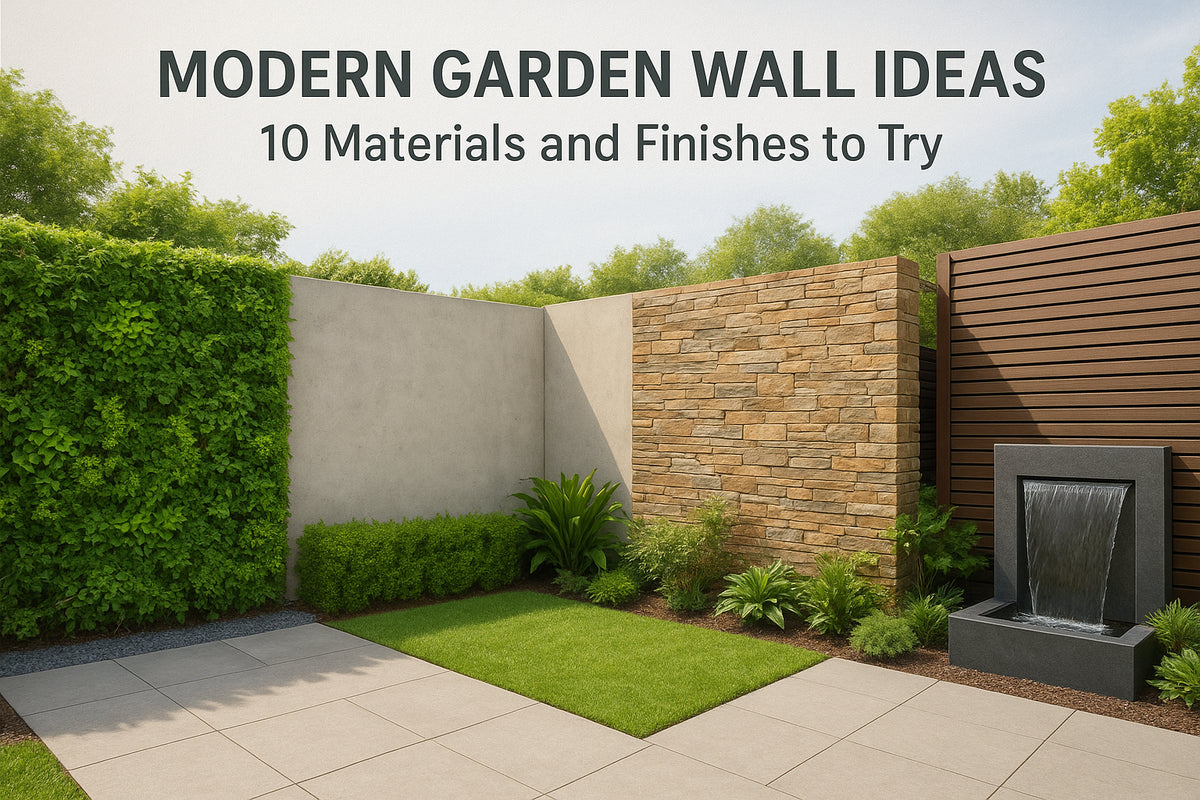
The best modern garden wall ideas combine a clean look with a build that survives Malaysian rain, sun and humidity. Choose a living wall for a small patio, fair-faced concrete or render for a minimal backdrop, and stone or porcelain cladding for a premium finish. Pick gabions or a terraced retaining wall for a slope, and a slatted or perforated screen when privacy and airflow matter most.
Most people choose a look first and only later find out that the wall has to hold soil, shed water, resist algae and sit legally on the boundary. That order of decisions leads to cracked render, rotting timber and a wall that looks tired within two years. This article gives you ten ideas, and for each one it explains why it works, what it is made from and how much care it needs.
We are Konzept Garden, an award-winning garden design company in Malaysia, and we design and build outdoor spaces for homes and commercial clients. The notes below favor what lasts in a tropical climate over what only photographs well. Use them to shortlist two or three walls, then match each one to your plot.
1. Vertical living wall
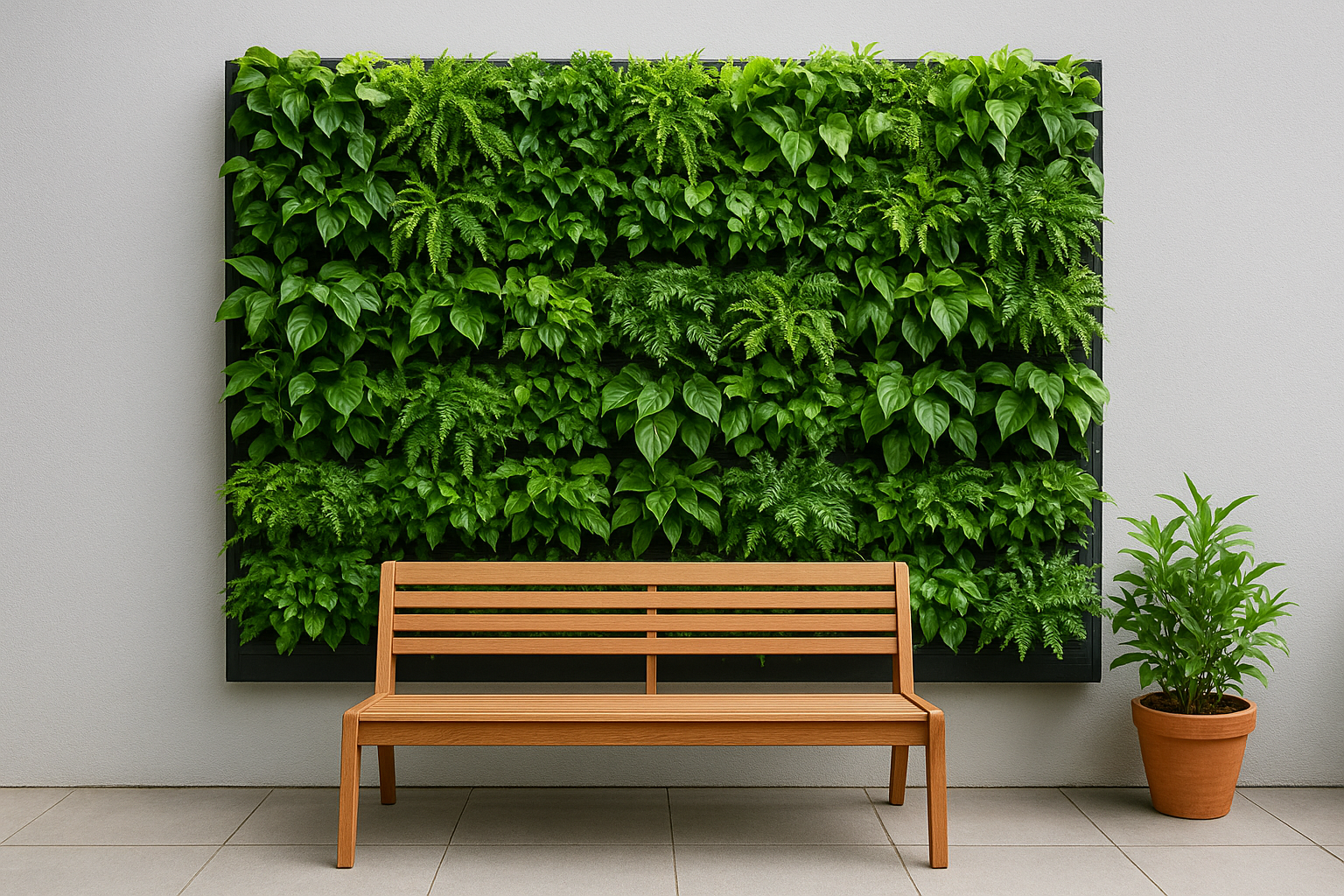
A vertical living wall is a surface planted with modules or pockets and fed by drip irrigation, so the foliage becomes the finish. Among modern garden wall ideas, it is the strongest choice when floor space is tight, because it turns a blank surface into planting area.
Why it works
In Malaysia's warm, wet climate, foliage fills a wall within a few months. The plants also shade the surface behind them, so the wall stores less heat and throws less glare onto your patio. A seat beside a living wall feels cooler by late afternoon.
A living wall is the one wall idea here that improves with age, provided the irrigation keeps working.
The modern look comes from restraint. Repeat two or three foliage plants in clean horizontal blocks instead of mixing a dozen species, and keep the frame lines straight. A tidy grid of green reads as design, while a random scatter reads as a neglected plant shelf.
Materials and build notes
A working living wall has four layers, and skipping any one of them is how these walls fail. Build them in this order:
- Waterproofing on the host wall, so moisture never reaches plaster or brick.
- Modular pockets or planter panels, so you can replace one failed plant without disturbing the rest.
- Drip irrigation on a timer, with a gutter or drain at the base to catch runoff.
- Foliage matched to the light, such as ferns, pothos, philodendron and peperomia for bright shade, or bromeliads for stronger light.
Plant choice is where most living walls go wrong. Our botanist consultations exist for exactly this, matching species to the wall's orientation before anything goes on the wall.
Best for and upkeep
This idea suits terrace houses, narrow side lanes and courtyards with no soil to plant in. Expect monthly trimming, a quick weekly check of the irrigation and a refresh of a few plants each year. It needs the most upkeep of the ten ideas, so choose it only if you will keep it watered or hire someone who will.
2. Fair-faced concrete wall
A fair-faced concrete wall is cast so the concrete itself is the finished surface, with no plaster or paint over it. It is the most architectural of the modern garden wall ideas in this list, and it looks best next to soft planting.
Why it works
A plain, heavy surface gives the garden a calm backdrop. A single tree, a row of grasses or a wash of warm light stands out against it. Board-formed concrete, cast against timber planks, picks up the wood grain and adds depth without adding color.
Treat concrete as the backdrop and let the planting and lighting do the decorating.
Materials and build notes
Your finish depends on how the formwork is built and how the surface is treated afterward. Four finishes are worth asking a contractor about:
- Smooth shuttered: the sharpest look, but it needs the best workmanship because every joint shows.
- Board-formed: a timber grain imprint that hides small flaws.
- Exposed aggregate: the surface is washed back to reveal stones, which hides stains well.
- Sealed: a clear, breathable sealer applied after curing to slow algae and water marks.
Structural pours need reinforcement and a concrete grade specified by an engineer. If site casting is difficult, precast panels give a similar look with a more predictable finish.
Best for and upkeep
Fair-faced concrete suits contemporary houses, pool backdrops and long boundary walls. In humid weather it grows algae and black streaks, particularly in shade, so wash it yearly with a soft brush and reseal every few years. Plan control joints so cracking happens where you want it. Because you cannot easily alter a cast wall, settle the design before the pour.
3. Stacked stone cladding
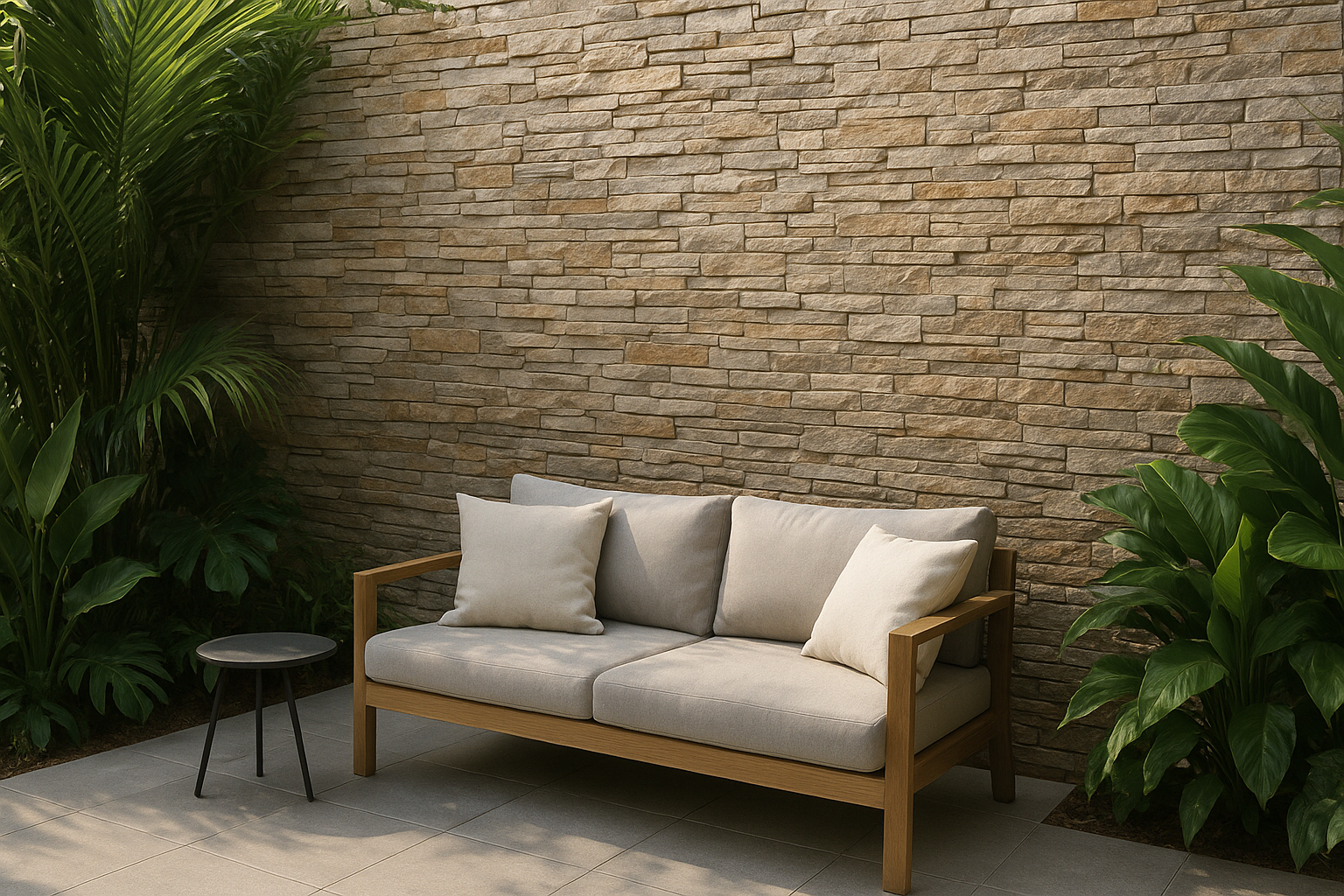
Stacked stone cladding is a layer of thin natural or reconstituted stone strips fixed over a structural wall. It gives you real stone texture without building a full stone wall, which makes it one of the more practical modern garden wall ideas for a feature area.
Why it works
The strong texture catches light. When you aim a narrow beam from above or below, every ledge throws a shadow and the wall looks three-dimensional at night. The earthy tones also sit comfortably beside tropical foliage.
Restraint keeps it modern. Clad one feature wall, such as the one behind a seating or dining area, and leave the surrounding walls plain. A stone-covered boundary all the way around reads as heavy and dated.
One well-lit stone feature wall beats a garden fully wrapped in stone.
Materials and build notes
Cladding comes in several stones, each with a different look and weight. Compare these before you choose:
- Slate: dark, layered and sharp-edged, a strong modern choice.
- Granite: dense and durable, with a speckled, even look.
- Sandstone: warm and soft-toned, but porous, so it needs sealing.
- Reconstituted stone: cast from aggregate and pigment, lighter and often cheaper than natural stone.
Stone must be fixed to a sound, waterproofed backing with the right adhesive or mechanical fixings. Ask for tight joints, since wide mortar lines make the wall look rustic instead of modern.
Best for and upkeep
Choose stacked stone for entry walls, feature walls behind outdoor seating and the back of a covered patio. Upkeep is modest. Rinse it down regularly and reseal porous stone as your installer advises. Shaded sections can green over with algae, so keep an eye on them during the rainy months. Budget at the mid-to-high end, because labor and materials both cost more than render.
4. Rendered and painted wall
A rendered wall is a sand-cement plaster finish, painted or tinted, over a masonry base. It is the most affordable way to get a clean modern wall, and it lets you set the color story for the whole garden.
Why it works
Flat, smooth planes are the backbone of modern design, and render delivers them cheaply. A well-chosen color also ties the garden to the house. Matching or slightly contrasting the home's exterior makes the wall look planned, not added later.
Color needs care in tropical sun. Very dark shades heat up and fade, while pure white shows algae streaks quickly. Mid-tones such as warm grey, sand and soft charcoal hide dirt and age gracefully.
In this climate, a mid-tone wall looks clean for longer than a pure white one.
Materials and build notes
Good render depends on the layers beneath the paint and on how the top of the wall is finished. Check these points with your contractor:
- Smooth sand-cement render, fully cured before it is painted.
- Exterior paint with algae and fungus resistance, applied in two coats.
- A coping with a drip groove on top, so rainwater falls clear of the face instead of streaking down it.
- Crack-resistant primer or mesh at joints between different materials.
Rushing the curing time is the most common mistake. Paint applied to damp render peels, and the fix costs more than the wait.
Best for and upkeep
Rendered walls suit nearly any boundary, low seat wall or tight budget. Wash them once a year and repaint every few years as the finish chalks or fades. Patch hairline cracks early, before water gets behind the paint. For most gardens this is the best-value wall here.
5. Slatted timber or composite screen
A slatted screen is a row of narrow battens, set horizontally or vertically on a frame, that blocks direct views while letting air and light through. It is an easy fit for tropical patios, and among modern garden wall ideas it is the warmest in tone.
Why it works
In humid weather, solid walls trap still, hot air. Gaps between slats let the breeze through, so the seating area stays more comfortable. A gap of roughly 10 to 20 mm screens most views at an angle while still passing airflow.
The slats also create shifting shadow lines across the day, which adds visual interest to an otherwise simple wall. Warm timber tones against green foliage give a natural resort feel that stays crisp because every line is straight.
Slats give you privacy without the stifling effect of a solid wall.
Materials and build notes
The slat material decides how long the screen lasts in rain, sun and termite country. Your main options are:
- Dense tropical hardwood, such as belian, which resists rot and insects naturally.
- Wood-plastic composite, which resists termites and needs no oiling.
- Aluminium with a wood-grain finish, the most stable option in wet conditions.
- Galvanized or powder-coated steel posts for the frame, set in concrete.
Whatever you choose, keep timber off the ground with a concrete plinth. Contact with damp soil is where termites and rot begin.
Best for and upkeep
Slatted screens work well to hide air-conditioning compressors, shield a patio from a neighbor's window or divide a dining zone from a driveway. Hardwood needs oiling every 6 to 12 months to keep its color, or you can let it silver naturally. Composite needs only a wash, and aluminium nearly nothing.
6. Gabion wall
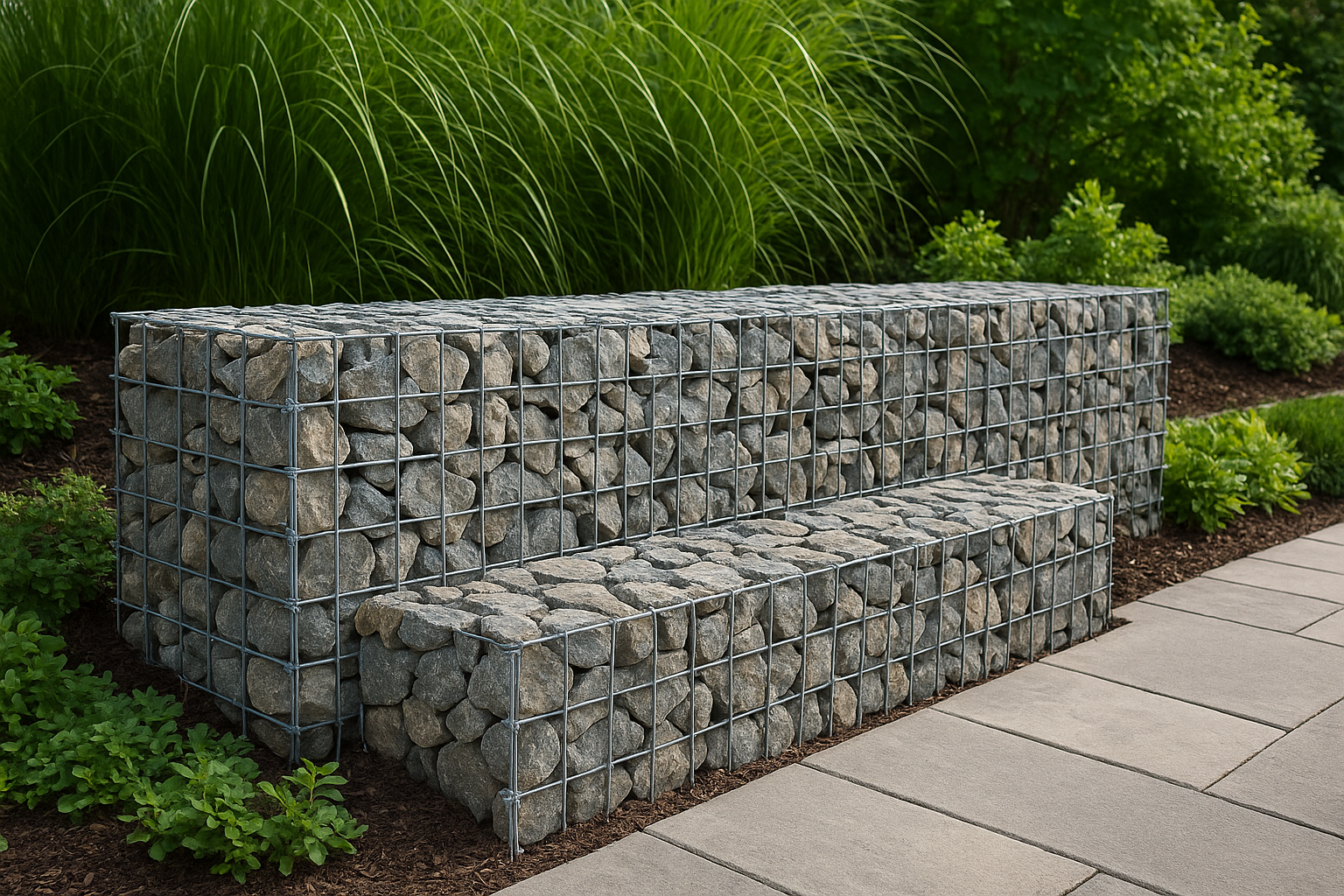
A gabion wall is a welded or woven wire cage filled with stone and stacked into a wall. It gives you a rugged, industrial surface, and it drains freely, which helps in a country with heavy, frequent rain.
Why it works
Water passes straight through the stone fill, so no water pressure builds up behind the wall. That makes gabions forgiving in monsoon conditions, where a solid wall can fail if drainage is poor. The stone texture also looks sharp against smooth render or timber.
Gabions are versatile. You can use them as a low retaining edge, a freestanding screen or a seat wall, and you can tuck LED strip lights into the cage for an evening glow.
Gabion walls drain by design, which is exactly what a rainy-climate garden wall needs.
Materials and build notes
The cage and the fill do all the work, so both deserve attention. Specify these items:
- Mesh: hot-dip galvanized at minimum, or PVC-coated for better protection in humid or coastal air.
- Fill: angular stone such as granite, a little larger than the mesh opening so it cannot slip out.
- Base: compacted, level ground, because gabions settle and shift on soft soil.
- Cage ties: close-spaced fasteners so the baskets act as one unit.
Low freestanding gabions are simple to build. Taller walls, or any gabion holding back soil, need an engineer's design.
Best for and upkeep
Choose gabions for slope edges, garden seating and raised planters. Upkeep is light. Check the coating on the mesh once a year and top up any stone that settles. Weeds and creepers can root in the gaps, so pull them while they are small.
7. Porcelain tile and slab cladding
Porcelain cladding covers a wall with large-format tiles or thin slabs in stone, concrete or timber looks. It is among the most durable modern garden wall ideas, because porcelain barely absorbs water and resists staining.
Why it works
Dense porcelain sheds rain and wipes clean, which suits walls that get splashed. Think of pool backdrops, outdoor kitchens and areas near water features. Large formats mean fewer grout lines, so there are fewer places for dirt and algae to settle.
You also get convincing stone, concrete or brick looks without the weight or the weathering of the real material. A brick-effect porcelain, for example, gives you the pattern with none of the mortar that stains and crumbles over the years.
Porcelain gives you the look of stone or concrete and washes clean after a heavy rain.
Materials and build notes
Installation matters more than the tile. A weak bond fails in tropical heat and rain, so brief your tiler on these points:
- Choose tiles rated for exterior use, ideally in a matte finish, so glare stays down.
- Use a polymer-modified adhesive suited to large tiles, with full coverage on the back.
- Add movement joints in long runs, so expansion in the heat does not crack tiles.
- Waterproof the substrate before tiling, so moisture cannot work its way behind the tile.
Best for and upkeep
This option suits outdoor kitchens, pool surrounds and walls behind water features. A rinse and an occasional wash is usually all it needs. Test a few tiles by tapping them after installation. A hollow sound means poor adhesive coverage, and it is much cheaper to fix that early.
8. Perforated breeze block screen
A breeze block screen is a wall of open-pattern concrete or clay blocks that screens views while passing air and filtered light. Builders in Malaysia have used ventilation blocks for decades, and a clean grid turns them into one of the more distinctive modern garden wall ideas.
Why it works
The openings do two jobs. They keep hot patios ventilated and they scatter patterned light and shadow across floors and walls through the day. You get privacy and character from a single element.
The modern effect comes from stacking the blocks in a straight grid, joint over joint, rather than in a staggered brick pattern. That crisp repetition looks deliberate, and a coat of matte white or charcoal sharpens it further.
A breeze block screen is privacy with built-in ventilation and a pattern you do not have to design.
Materials and build notes
Blocks come in a wide range of patterns and materials. Keep these build points in mind:
- Concrete blocks are the most common and the most affordable.
- Clay or terracotta blocks give a warmer tone and a softer look.
- Steel reinforcement through the cores adds strength for taller screens.
- Solid piers at set intervals keep long screens stable.
Unreinforced block walls have limited safe height, so ask your builder or engineer where the limit sits for your design and wind exposure.
Best for and upkeep
Use a breeze block screen to hide a service yard, line a car porch or divide a dining area from the driveway. Wash the blocks with a hose and brush, since the cores collect dust and cobwebs. Repaint every few years and soften the base with a row of trailing plants.
9. Terraced retaining wall
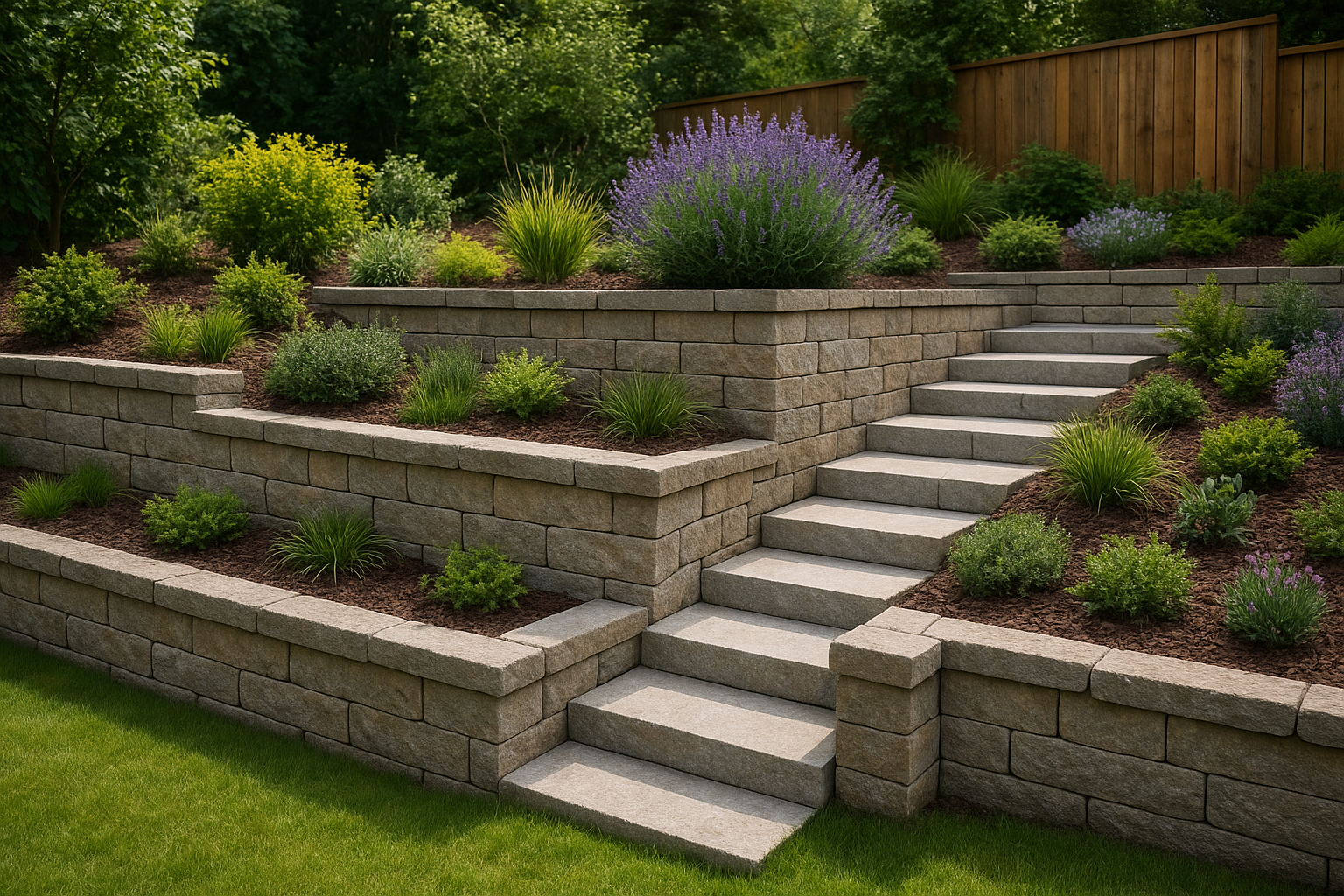
A terraced retaining wall steps a slope into level beds and patios, holding soil back with a structure designed for the pressure. Of all the modern garden wall ideas here, it does the most structural work, and it can double as seating and planting space.
Why it works
A slope you cannot use becomes flat, usable ground on every level. Long horizontal lines also read as modern, and they let you run steps, planters and lighting along the same edge. Done well, the terraces make the garden feel larger and better organized.
Drainage, not height, decides whether a retaining wall succeeds.
Materials and build notes
The wall face is the part you see, but the drainage behind it keeps the wall standing. Plan both together:
- Structure: reinforced concrete or interlocking concrete blocks, designed for the load.
- Face: render, stone, porcelain or timber, chosen from the ideas above.
- Drainage layer: crushed stone behind the wall, wrapped in geotextile.
- Outlets: a perforated pipe and weep holes so water leaves freely.
Timber sleepers work for low beds, but use only durable tropical hardwood. For safety, any wall taller than about knee height, or built near a boundary or house, should be designed by a qualified engineer. Check with your local council whether approval is required before you start.
Best for and upkeep
Terracing suits hillside plots, which are common around Malaysia's cities. Keep weep holes and pipes clear of mud and leaves, because blocked drains build pressure. Look for cracks, leaning or bulging after heavy storms, and call an engineer if you see any.
10. Water feature wall
A water feature wall lets water sheet or spill down a vertical surface into a basin, adding sound and movement to a small garden. Among modern garden wall ideas, it is the best focal point for an entry courtyard or a quiet seating corner.
Why it works
Moving water masks road and neighbor noise and gives the garden a sense of calm. Sheeting water over a dark slate or porcelain surface also reflects light, so the wall changes through the day and glows under evening lighting.
A recirculating pump reuses the same water, so running costs stay modest. If you would like fish in the picture, our koi pond systems, including the Zen Bio Koi Pond and the Himalaya Rock Koi Fish Pond, can sit against the wall as the basin.
Moving water adds sound as well as sight, which makes a small courtyard feel larger.
Materials and build notes
A water wall is a small mechanical system as well as a decorative one. These are the parts to specify:
- Wall surface: dark slate or porcelain, fully waterproofed behind.
- Spillway: a stainless steel or stone lip, set perfectly level so the water falls in an even sheet.
- Reservoir and pump: sized for the flow, with an access panel for servicing.
- Lighting: submersible LEDs for the evening.
Keep water moving and covered where possible, so it does not become a breeding spot for mosquitoes. Have a licensed electrician supply the pump circuit with an RCD.
Best for and upkeep
This idea suits entry courtyards and small seating nooks. Top up the reservoir in hot weather and clean the pump filter monthly. Wipe off mineral scale and algae before they build up, and always switch off the power before maintenance.
Choosing the wall that fits your garden
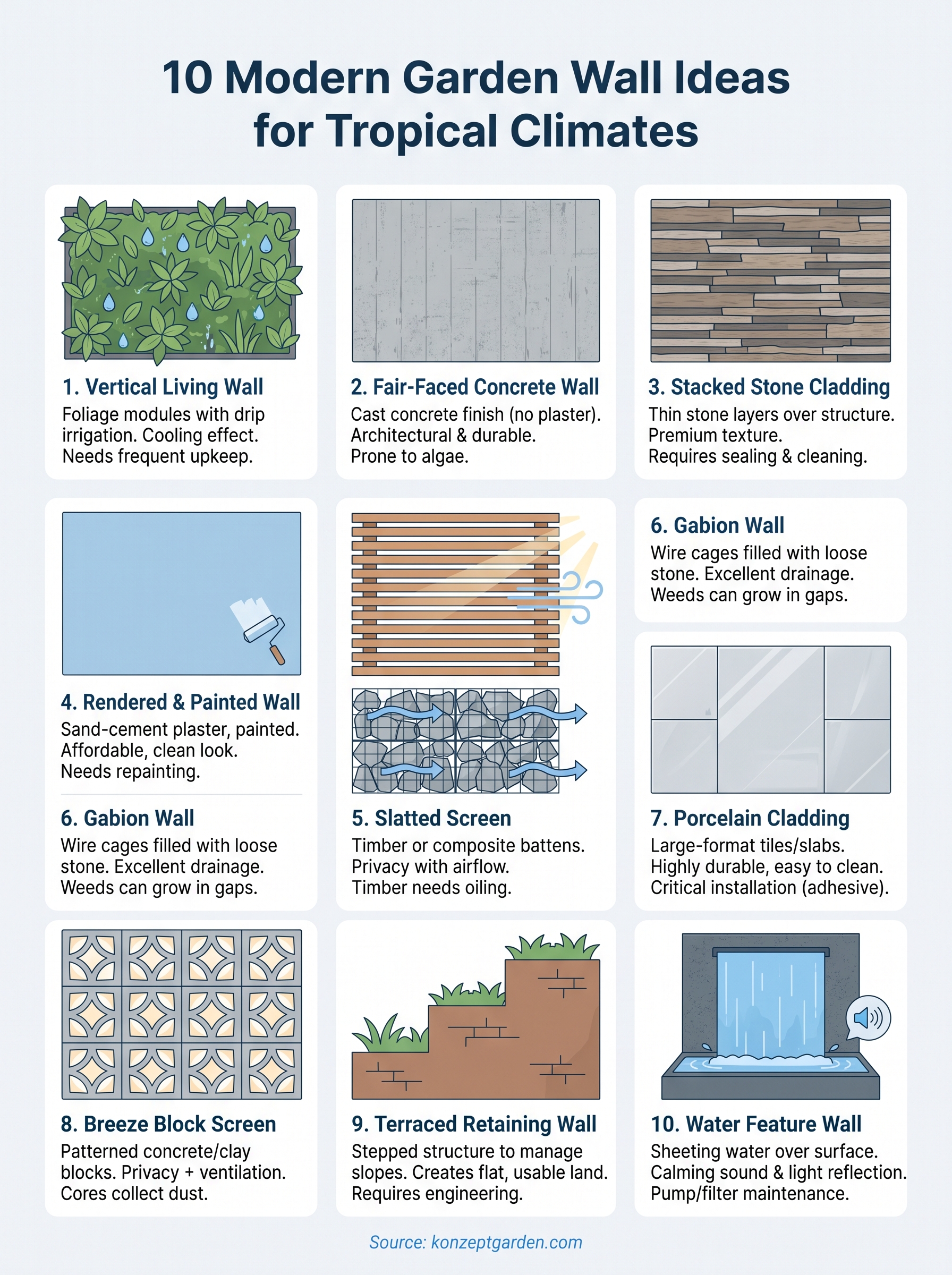
The right wall depends on what your garden needs most. A living wall adds greenery in tight spaces, concrete and render give a calm backdrop, and stone and porcelain add texture and durability. Gabions and breeze block screens handle drainage and airflow, while a terraced retaining wall makes a slope usable. A water feature wall adds sound and light. Whatever you pick, plan drainage, waterproofing and plant choice before you plan the color.
If you want help deciding, or you would like a wall designed and built as part of a complete garden, talk to the Konzept Garden team and tell us about your plot.


