
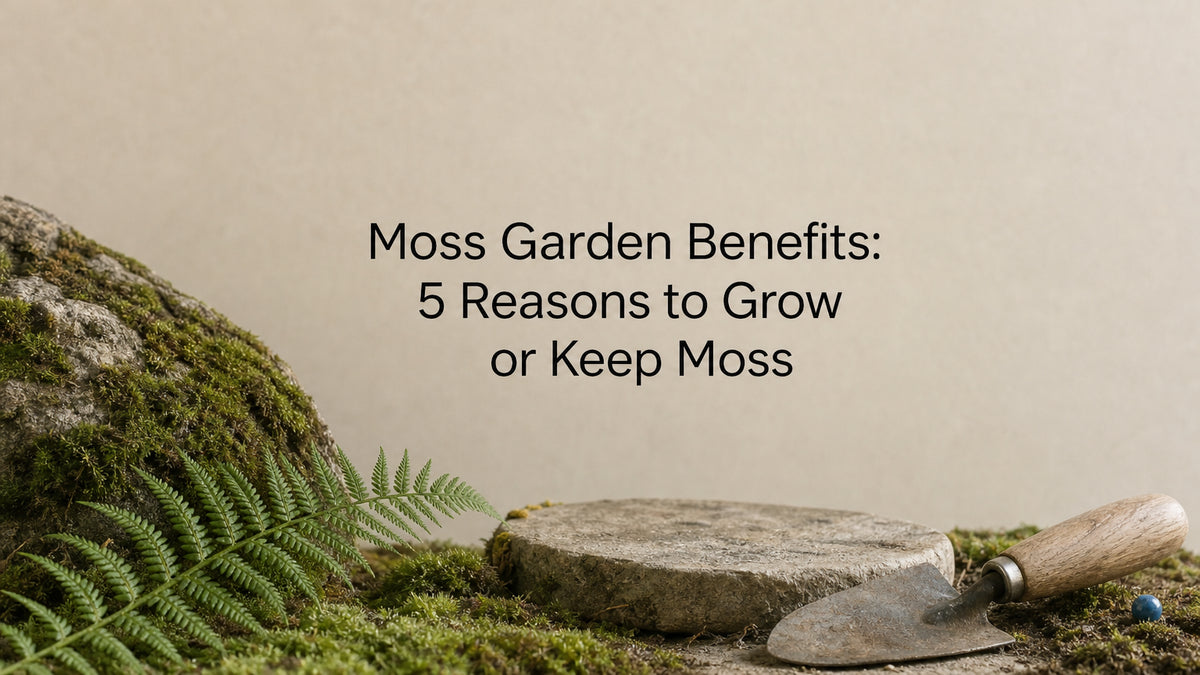
The main moss garden benefits are practical. Moss needs no mowing or fertilizer, soaks up rainfall, shields bare soil from erosion, crowds out weeds and gives tiny creatures a home. It suits you best if you have a shaded, damp corner where grass keeps failing, a gentle slope that washes out in heavy rain, or no time for weekly lawn work. It suits you less if your garden is hot, dry and in full sun, or if you need a lawn that children and pets run across every day.
Most homeowners meet moss the same way. It shows up on a shaded wall or a thin patch of lawn, and you have to decide whether to scrape it off or let it stay. Advice online is split, mostly because moss gets judged by lawn standards instead of by what it actually does.
This article lists five benefits, explains how each one works and who gains the most from it, then covers the limits so you can judge your own site. We write it as landscape designers working on Malaysian gardens, where constant humidity and heavy tropical rain change what moss can and cannot do.
1. Low maintenance once established
Moss is one of the least demanding ground covers you can grow, because it has no true roots and needs no regular feeding, mowing or soil preparation. After a short settling period, most of the work is simply leaving it alone.
How it works
Moss takes in water and nutrients directly through its leaves, from rain, dew and humid air. Tiny root-like threads called rhizoids only anchor it to the surface. That is why it grows on bricks, rocks and compacted soil where grass gives up, and why it needs no fertilizer at all.
The catch is the first few weeks. Newly laid moss must stay damp while it attaches, and it should not be walked on. Firm, cleared ground works better than loosened soil, because moss needs contact with the surface, not a fluffy seedbed.
Moss swaps the weekly lawn routine for a few weeks of careful watering at the start.
Who benefits most
Anyone with shaded ground under trees, along a north-facing wall or between buildings gains the most. Grass thins out in those spots, and moss fills them without extra effort.
It also helps if you are short on time. Grass grows year-round in Malaysia's climate, so a lawn can demand mowing almost all year. A moss area asks for none of that.
2. Water retention in the soil
Moss holds water like a sponge, which keeps the soil beneath it moist and slows the rainwater that would otherwise run off. This is the benefit that does the most for the plants growing around it.
How it works
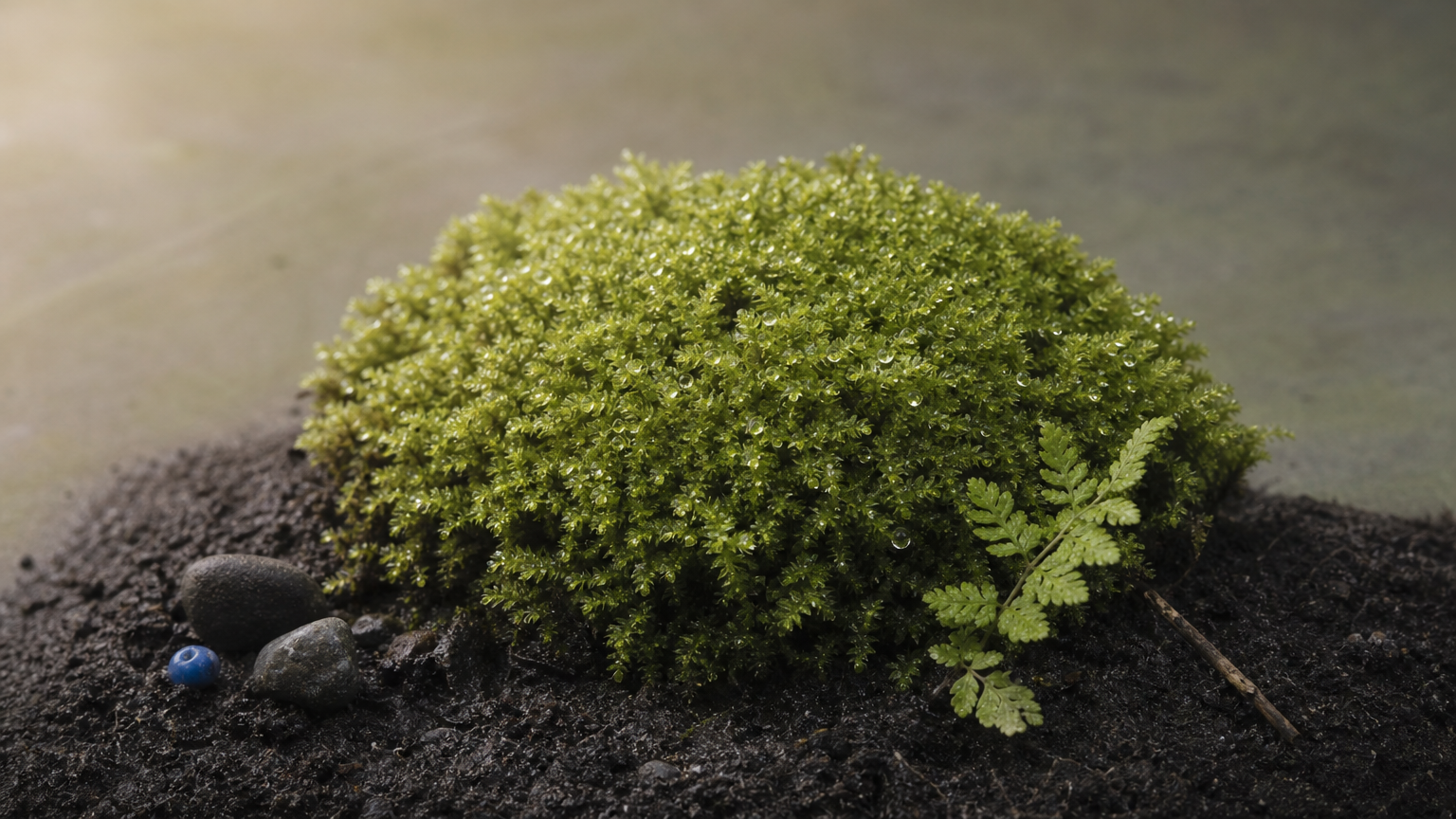
Moss leaves and stems have many tiny gaps that hold water by capillary action. Many mmosses can store several times their own dry weight in water, and sphagnum is the best known example. The moss soaks up rainfall, then releases moisture slowly into the soil and air around it.
For you, that means less evaporation from the surface. Soil under a moss layer stays damp longer after a downpour and dries out more gently than bare earth.
A moss layer works as a slow-release water store for the soil beneath it.
Who benefits most
Gardens with ferns, shade plants and planters gain the most, since those plants like steady moisture. Moss around their bases can reduce how often you water.
Be realistic about drought, though. Many species dry out and turn brown during a dry spell, then recover when wet weather returns. In our humid climate that happens less often, but a sunny, windy spot can still scorch it.
3. Erosion control on bare soil
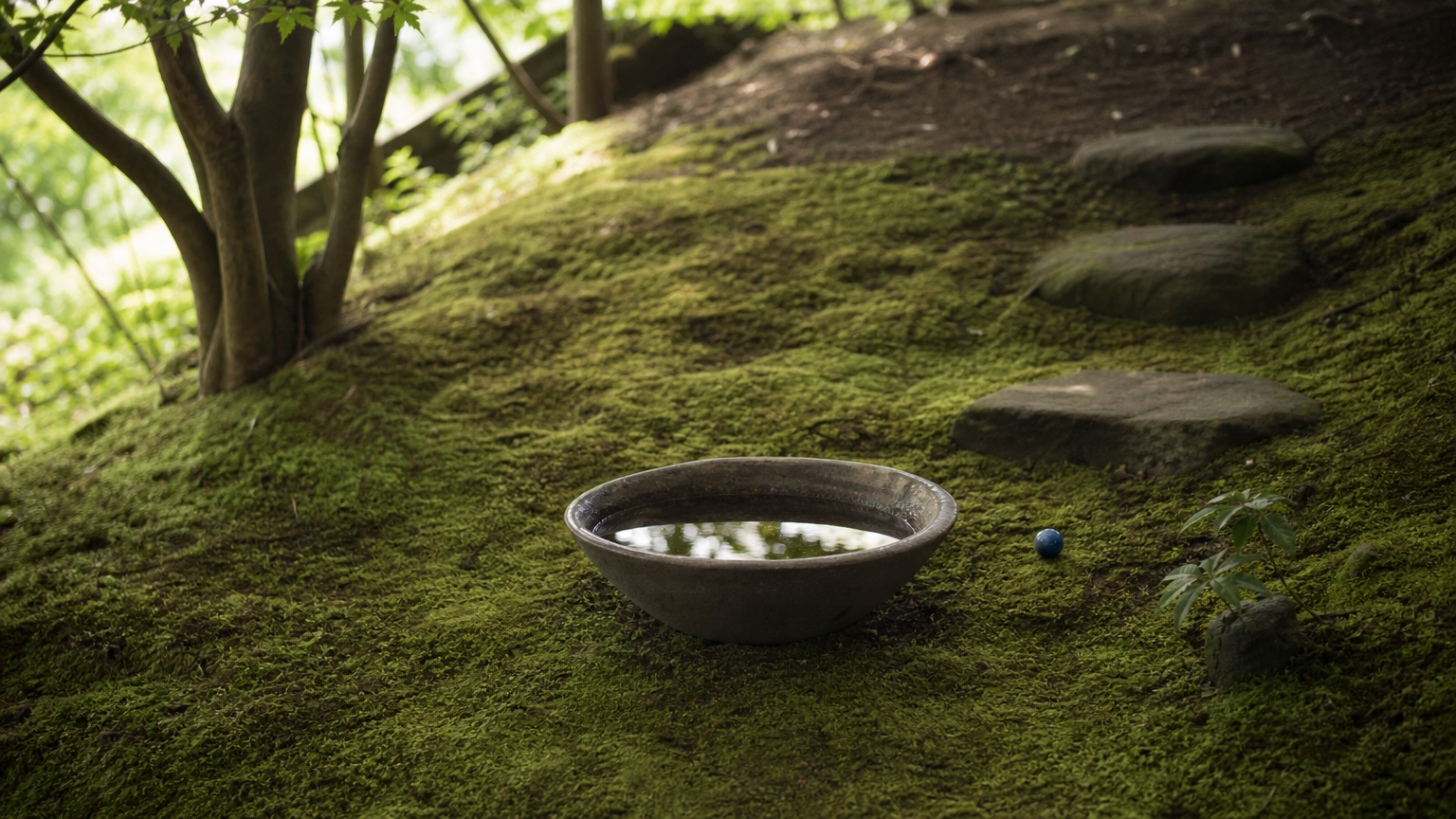
Moss protects bare ground by covering it with a dense mat that breaks the force of rain and slows surface runoff. It works well on gentle slopes and bare patches, but it is not a structural fix for steep ground.
How it works
Erosion usually starts when heavy raindrops hit exposed soil and wash fine particles away. A moss carpet takes that impact and soaks up part of the water. Spreading, mat-forming types, called pleurocarpous mosses, such as carpet moss (Hypnum cupressiforme), suit this job best. Upright cushion types leave more gaps between clumps.
Tropical downpours make this relevant. A bare slope under a tree can lose soil in a single storm, and a moss layer reduces that loss once it has knitted together.
Moss shields the soil surface, but it does not hold a hillside together.
Who benefits most
Gentle slopes, bare ground under dense shade and the soil around stepping stones all suit moss well. In these spots grass seed struggles to take hold.
Moss rhizoids are shallow, so on steep slopes or beside retaining walls you still need proper drainage and structure. Treat moss as the finishing surface on top of that work, not a replacement for it.
4. A natural barrier against weeds
A healthy moss mat leaves little bare soil for weed seeds to land on and sprout. That cuts the amount of weeding you do, as long as you clear the ground properly before you start.
How it works
Moss has no roots to compete with other plants. The RHS notes that it makes a useful groundcover that prevents weed seed from establishing. The mat is dense, and it is also low and damp, so seeds that land on it struggle to anchor.
Moss does not kill weeds that are already there. Remove grass and weed roots completely before you lay it, or those plants will push up through the new carpet. Afterward, the odd seedling that does appear pulls out easily from the shallow mat.
Moss blocks new weeds, but only once you have cleared the old ones.
Who benefits most
Paved areas, stepping-stone paths and the gaps between stones gain the most, since those are the places where weeding is fiddly. Moss between stepping stones also takes the pressure off the moss itself, because you walk on the stones.
Moss tolerates light foot traffic only. If you want a full path that you will walk on daily, choose stones or pavers and let the moss fill the joints.
5. Biodiversity and healthier soil
Moss supports small wildlife and helps build soil, which makes a garden more resilient over time. It is the least visible benefit, but the one with the longest reach.
How it works
Mosses are among the oldest land plants. Even today they act as pioneers on bare ground, trapping dust and organic matter that slowly turns into soil other plants can use. They also shelter and feed microscopic animals and small insects.
Moss can also tell you about your site. It tends to thrive where soil is damp, firm and shaded, so a patch that grows well on its own shows you where moisture collects. The RHS adds that moss is fine to add to your home compost.
You will see claims that moss cleans the air and stores carbon. Both have some basis, but a small garden patch makes only a modest contribution. Treat it as a bonus, not the reason to plant.
Moss quietly builds soil and habitat, which pays off for every plant around it.
Who benefits most
Gardeners who want a wildlife-friendly space will see the most from it, especially if they combine moss with ferns and other shade plants. Establish the moss first, then add ferns into gaps so the two do not compete for water early on.
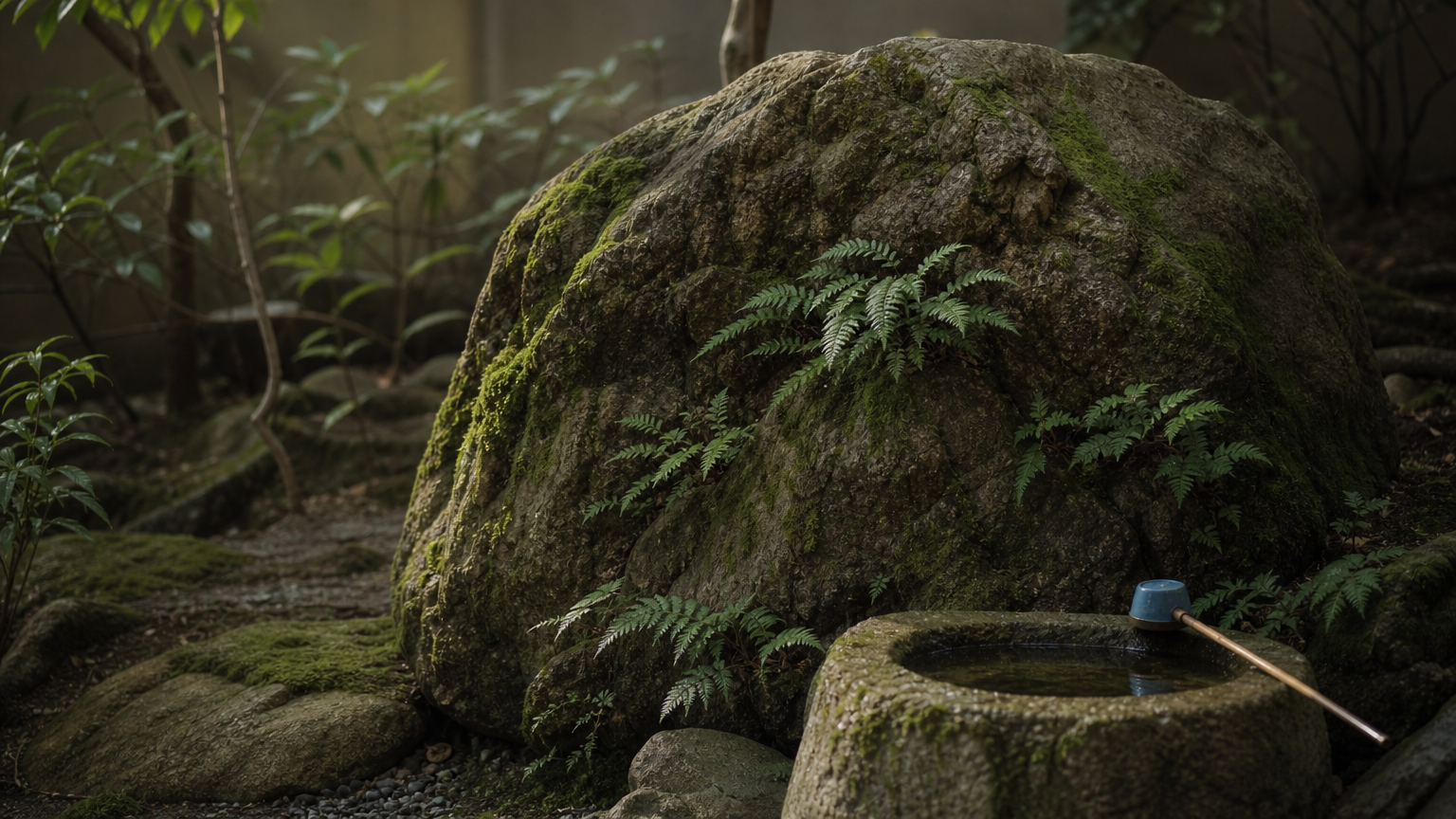
It also suits anyone building a calm, woodland or Japanese-style corner, where moss gives the aged, soft look that stone and water features rely on.
What to check before you grow moss
Moss works where you have shade, steady moisture and light foot traffic. It fails in hot, dry, sunny spots and under heavy use, so check your site honestly before you commit.
Moss versus grass at a glance
The table below sets the practical trade-offs side by side so you can see where moss wins and where grass is still the better choice.
| Factor | Moss | Grass |
|---|---|---|
| Mowing | None | Regular |
| Fertilizer | Not needed | Regular |
| Shade | Thrives | Thins out |
| Full hot sun | Browns or dies for most types | Tolerates it well |
| Heavy foot traffic | Poor, use stepping stones | Good |
| Setup | Keep damp for the first weeks | Water regularly while it grows in |
A quick site check
Run through these four checks before you buy or transplant anything.
- Light: the area should get shade or gentle morning sun for most of the day.
- Moisture: the soil should stay damp after rain without becoming waterlogged.
- Traffic: plan stepping stones wherever you will walk often.
- Source: transplant moss from your own property or buy it from a nursery. Never strip it from forests or public parks.
If you are unsure whether a corner suits moss, a professional look saves guesswork. At Konzept Garden, a site visit costs RM200, and that fee is deducted from the final quotation if you go ahead with the project. Our botanist consultations can also help you pick the right planting for tricky spots.
The best moss garden is the one planted in the shade you already have.
Is moss worth keeping in your garden?
Yes, if your garden has the shade and moisture it needs. Moss asks for little, holds water, protects bare soil, keeps weeds down and supports small wildlife. Its limits are just as clear: it dislikes hot sun and heavy foot traffic, and it cannot hold a steep slope on its own.
Start with what you already have. If moss is growing in a damp, shaded patch, keep it and work around it. If you want to extend it, clear the ground, press the moss down firmly and keep it damp until it settles.
If you would like help fitting moss into a wider garden plan, with planting, paths or water features, talk to our team about your garden.