

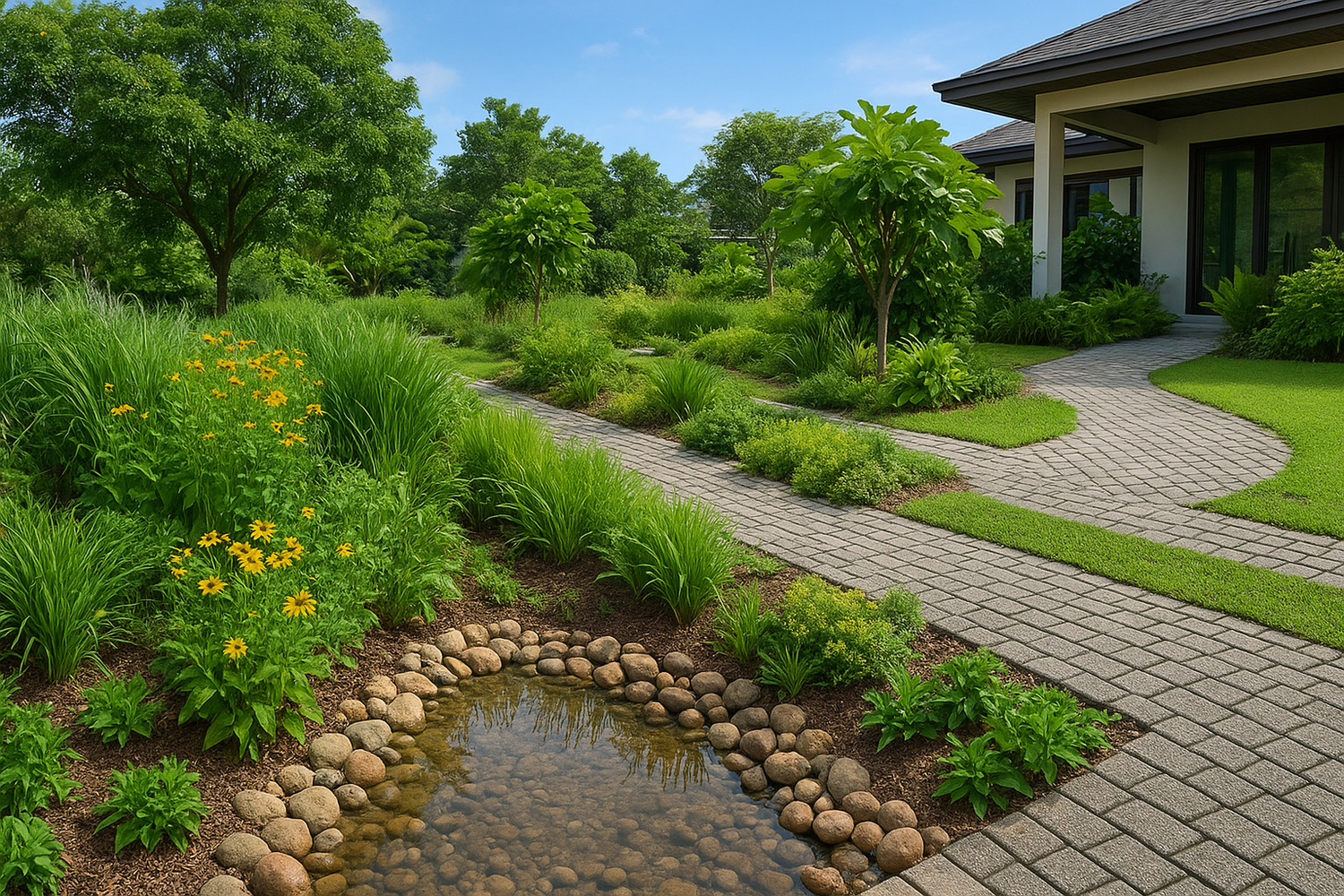
Every time it rains heavily in Malaysia, tons of water rush across hard surfaces, roads, rooftops, parking lots, picking up pollutants and overwhelming drainage systems. The result? Flooding, contaminated waterways, and eroded soil. Green infrastructure for stormwater management offers a smarter approach: using nature-based systems to capture, filter, and absorb rainwater right where it falls.
Unlike conventional grey infrastructure (think concrete drains and pipes), green infrastructure works with natural processes. It treats stormwater as a resource rather than a problem. Rain gardens, green roofs, permeable pavements, and bioswales are just a few examples, and they do more than manage water. They cool urban areas, support biodiversity, and create outdoor spaces that actually look good.
That last point matters to us at Konzept Garden. As a landscape design company, we see firsthand how thoughtful planting and grading decisions affect where water goes during a storm. Sustainable design isn't separate from beautiful design, it's part of it. Many of the features covered in this article, from rain gardens to planted swales, are elements we regularly incorporate into residential and commercial projects across Malaysia.
This article breaks down what green infrastructure is, how it manages stormwater, and which specific solutions work best. Whether you're a homeowner dealing with a waterlogged yard or a developer planning a new site, you'll walk away with practical knowledge and real examples you can act on.
What green infrastructure means for stormwater
Green infrastructure is a broad term for land and water management systems that use or mimic natural processes to handle stormwater. At its core, it describes any approach that slows, soaks, filters, or stores rainwater using vegetation, soil, and natural materials before it reaches a drain or waterway. You see it in rain gardens, planted swales, green roofs, permeable pavements, constructed wetlands, and tree pits. Each one does something different, but they all share the same operating principle: let nature do the heavy lifting.
How stormwater moves through a city
When rain falls on a natural landscape, most of it soaks into the ground. Tree canopies catch some, roots absorb more, and soil holds the rest. Very little becomes surface runoff. In a built-up city or suburban neighborhood, that picture flips completely. Roads, rooftops, and parking lots are impermeable surfaces that shed water almost immediately. The runoff picks up oil, sediment, fertilizer, and other pollutants as it travels, then dumps everything into drains and rivers at once.
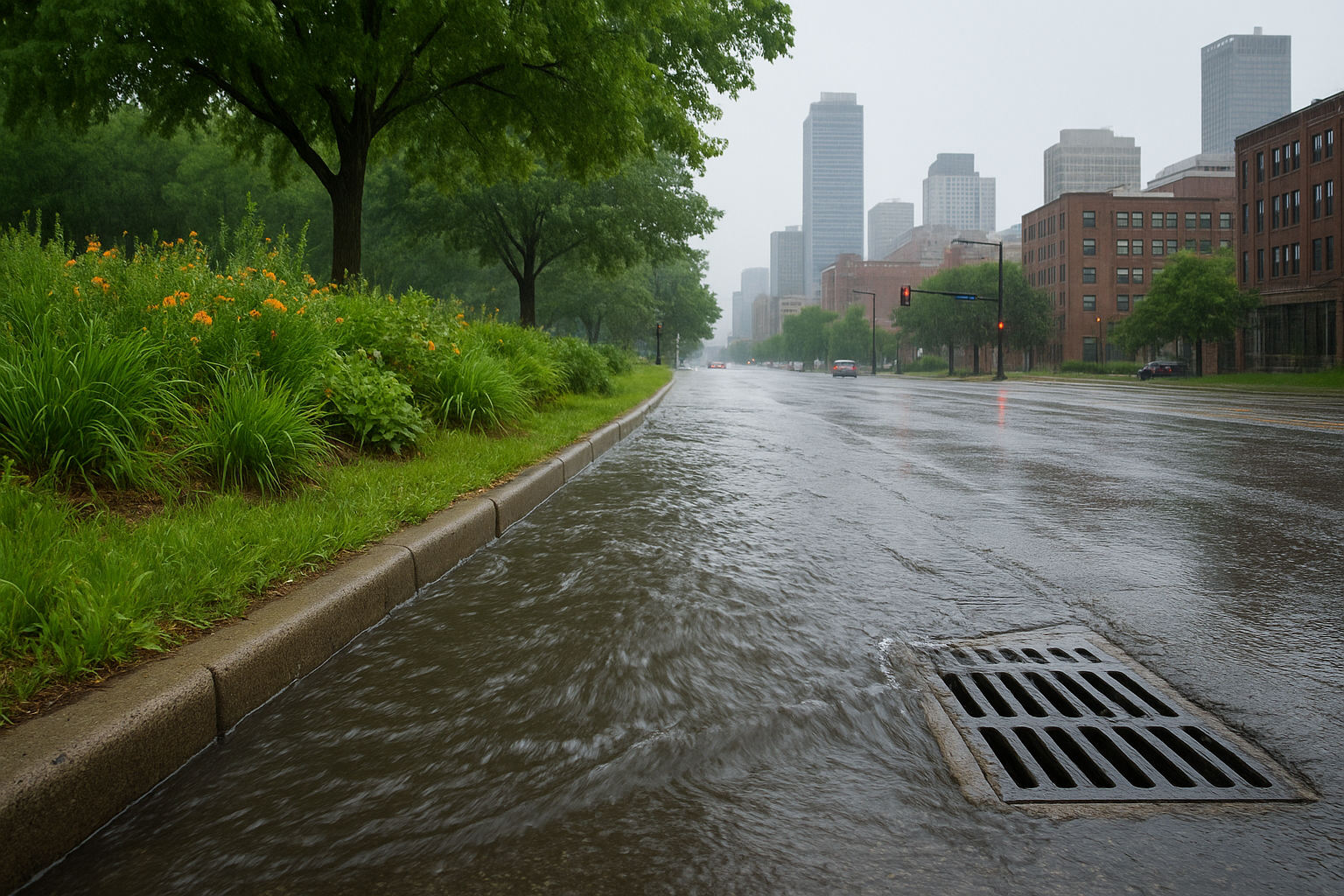
This sudden surge is what engineers call peak flow. It's the main driver of urban flooding. Your local stormwater system, the pipes, culverts, and drains built during construction, was designed to handle a certain volume. When peak flow exceeds that design capacity, water backs up, roads flood, and rivers overflow their banks. Green infrastructure for stormwater management directly addresses this problem by reducing peak flow before it builds.
The goal isn't to stop rain from running off entirely. The goal is to slow it down, spread it out, and treat it before it overwhelms the system.
What "green" actually includes
The word "green" in this context doesn't just mean plants, though plants are a major component. Green infrastructure also includes engineered systems that incorporate natural materials and processes. Permeable concrete, gravel infiltration trenches, and sand filter beds all fall under this category. The defining quality is that these systems rely on natural hydrological processes such as infiltration, evapotranspiration, and filtration, rather than simply routing water away through pipes.
You can think of it at two scales. At the site level, a homeowner installs a rain garden or a permeable driveway. At the catchment or city level, a municipality designs a connected network of bioswales, retention ponds, and street tree pits that work together. Both are green infrastructure. The difference is scale, not principle. Most effective stormwater programs combine both levels so that individual site improvements feed into a larger, coordinated system.
The role of soil and vegetation
Soil and plants do the actual work in most green infrastructure systems. Healthy, uncompacted soil acts like a sponge. It holds water in its pore spaces and releases it slowly over time, feeding groundwater reserves and cutting surface runoff. Roots create channels that improve infiltration rates and prevent soil from sealing over. In compacted urban soils, infiltration rates can drop to near zero, which is why site preparation matters as much as plant selection.
Vegetation adds another layer. Leaves intercept rainfall before it hits the ground, reducing its energy and slowing runoff at the source. Plants also take up water through their roots and release it through their leaves via evapotranspiration, effectively removing water from the system entirely. In Malaysia's hot, humid climate, this evapotranspiration effect is significant. A well-planted garden or bioswale can process a meaningful volume of rainfall without any water ever reaching a drain.
Why cities use it instead of only gray drains
Gray drainage systems, the concrete channels, underground pipes, and culverts that line most Malaysian cities, were built to move water out fast. They do that one job reasonably well, but they weren't designed to handle the combination of rapid urban expansion and increasingly intense rainfall that cities now face. When every new building adds more impermeable surface to a catchment, the same pipe network has to absorb greater and greater volumes of water. Eventually, the system hits its limit.
The limits of pipes and concrete
Concrete drains move water quickly, but they don't reduce the total volume of runoff. Every liter that enters a drain still has to go somewhere downstream, usually a river or coastal outlet. As cities grow, the total runoff volume keeps climbing, and upsizing pipes across an entire urban network is enormously expensive. In Kuala Lumpur, massive projects like the SMART Tunnel represent enormous investments in gray infrastructure that still can't eliminate flooding on their own. The fundamental problem is volume, and pipes alone can't solve a volume problem without also finding ways to reduce runoff at the source.
Expanding pipe capacity also only fixes the problem at one point in the network. Upstream flooding can still occur when local drains back up before water ever reaches the main system. Older drainage infrastructure in many Malaysian neighborhoods was sized for lower population densities and less rooftop coverage than exist today, meaning the gap between capacity and demand widens with each new development.
What green infrastructure adds that drains can't
Plants, soil, and permeable surfaces absorb and process water on-site, reducing how much ever reaches the drainage network. This cuts peak flow before it builds, which is exactly what gray infrastructure struggles to manage. Beyond flood control, green systems also filter pollutants out of runoff before it enters rivers, something concrete drains don't do at all. Malaysian waterways carry significant loads of sediment, nutrients, and hydrocarbons washed off roads and development sites. A well-designed bioswale or rain garden captures a large share of those pollutants passively, with no chemicals or energy input required.
Green infrastructure for stormwater management addresses the source of the problem directly, which is something no pipe can do.
Green infrastructure also delivers benefits that gray drains never will. Shade trees and planted swales reduce urban heat, which is a serious concern in Malaysia's climate. They support insects, birds, and other wildlife in otherwise hard urban environments. Your outdoor space improves visually and ecologically at the same time. Cities increasingly recognize that infrastructure spending can do double or triple duty when it incorporates green systems, making it a smarter long-term investment than simply laying more concrete.
How green infrastructure manages rainwater
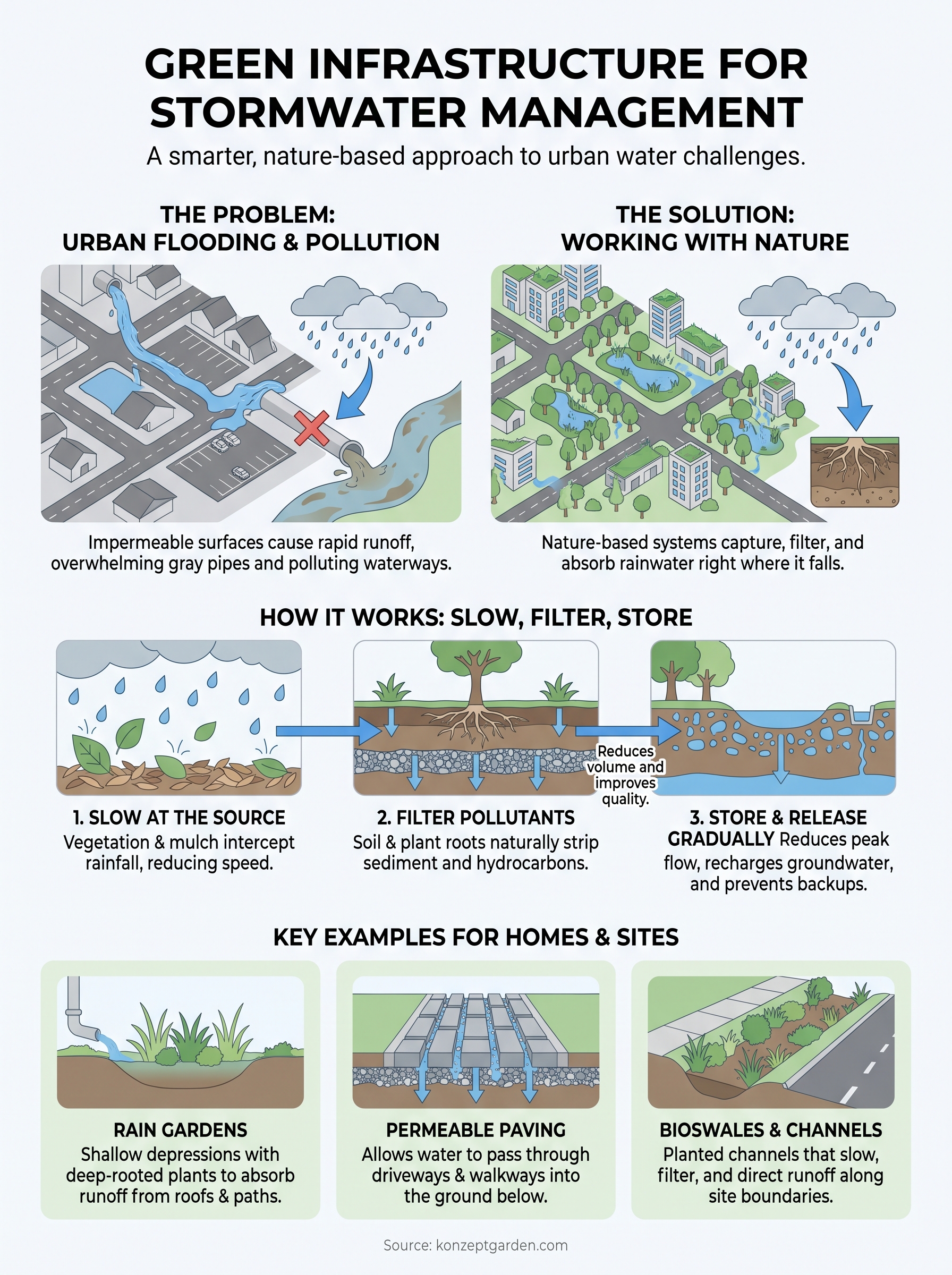
Green infrastructure for stormwater management works through three connected actions: slowing water down, filtering it as it moves, and storing it for gradual release. These aren't separate processes. They happen together and often within the same system. Understanding how each one works helps you make better decisions about which solutions fit your site.
Slowing water at the source
The first job of any green system is to intercept rainfall before it builds speed and volume. Plant canopies catch rain directly, reducing the force of droplets hitting the ground. Leaf surfaces hold water temporarily, some of which evaporates before it ever reaches the soil. This interception effect is especially relevant in Malaysia, where intense downpours can dump large volumes of rain within minutes. Slowing water at the source gives downstream systems more time to respond without being overwhelmed.
Ground-level plants and mulched surfaces extend this effect. Dense plantings break the flow of water across a slope, and organic mulch absorbs moisture and slows surface runoff. When you reduce the speed at which water moves, you also reduce the erosion and pollutant pickup that make stormwater so damaging to rivers and drains.
Filtering pollutants through soil layers
As rainwater moves through soil, the soil acts as a natural filter. Particles, nutrients, and hydrocarbons attach to soil particles or get taken up by plant roots. In a well-designed rain garden or bioswale, water passes through layers of engineered growing media that are specifically selected for their filtration and drainage properties. Sand, gravel, and compost each play a different role in stripping contaminants from the water before it reaches groundwater or a drain.
The filtering process doesn't require any energy input or maintenance beyond healthy, active plant cover and uncompacted soil.
Storing and releasing water gradually
Once water infiltrates into the soil, it moves slowly. Soil pore spaces hold water like a reservoir, releasing it over hours or days rather than minutes. This slow release is what cuts peak flow in a storm event. Instead of all the rainfall from a heavy downpour hitting the drain at once, a vegetated system spreads that load over a longer window, giving the drainage network time to handle the volume. In some systems, excess water also recharges shallow groundwater, which supports dry-season plant growth and reduces the need for irrigation.
Examples you can use on homes and sites
Green infrastructure for stormwater management isn't reserved for large municipal projects. Many solutions scale down to a single residential lot or commercial site, and several can be added to an existing property without major construction. Below are the most practical options for Malaysian homes, gardens, and development sites.
Rain gardens
A rain garden is a shallow, planted depression positioned to receive runoff from a roof, driveway, or paved path. You direct downpipe water or surface flow into it, and the planted soil absorbs and filters that water over several hours. It doesn't hold standing water permanently; a properly built rain garden drains within 24 to 48 hours, which prevents mosquito breeding and keeps plants healthy.
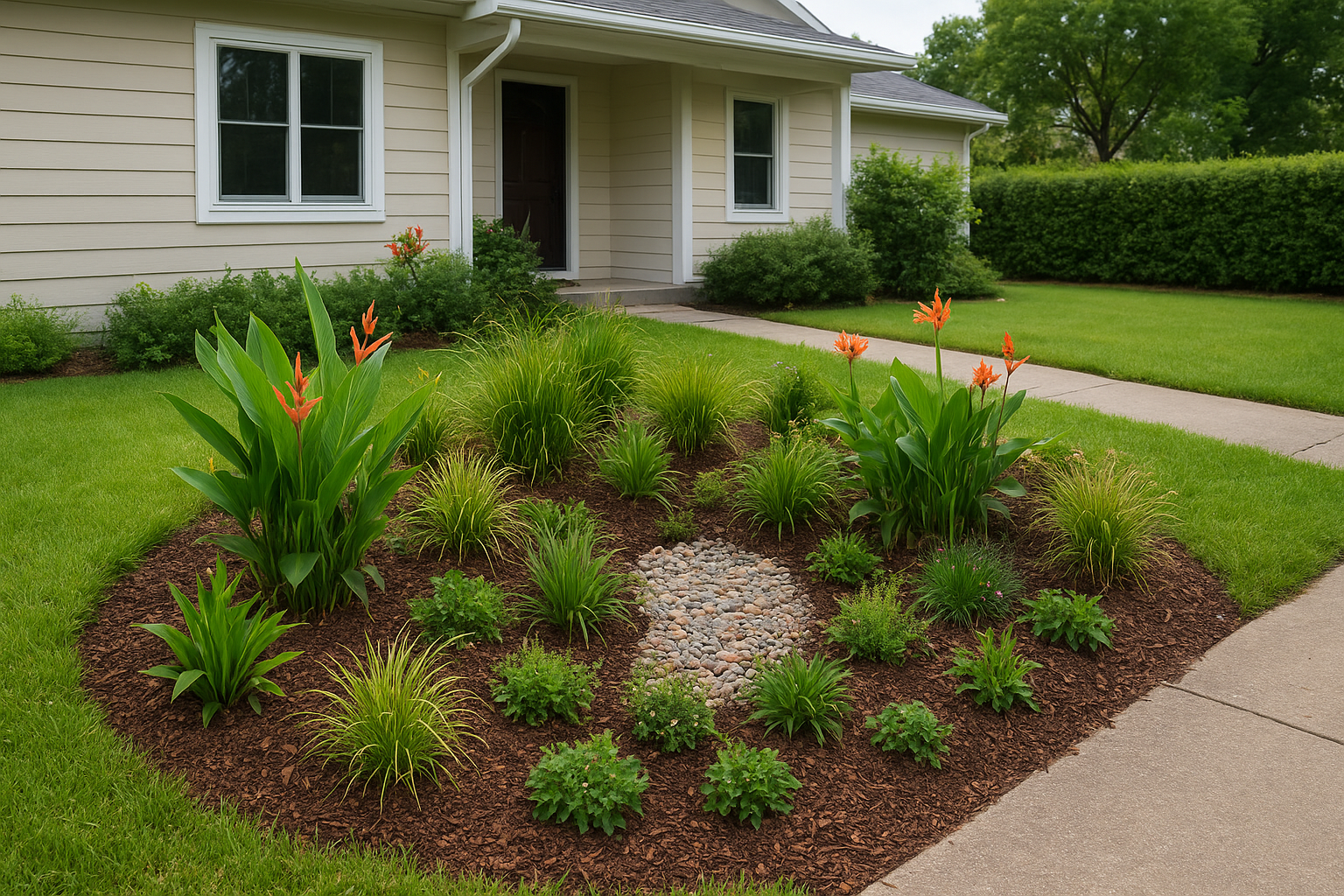
For Malaysian conditions, choose deep-rooted, moisture-tolerant plants for the base of the depression and drought-tolerant species for the upper edges. Heliconia, canna lily, and ornamental grasses handle wet periods well and add real visual interest to the garden. A rain garden that receives overflow from a 50 to 100 square meter roof can process a significant share of rainfall from a typical storm event.
Permeable paving
Standard concrete and asphalt shed water immediately. Permeable alternatives let water pass through the surface into a gravel sub-base, where it infiltrates into the ground slowly. Options include permeable concrete, block paving with planted or gravel joints, and open-cell grass pavers. For driveways, walkways, and carparks, these surfaces reduce runoff volume substantially without changing how the area looks or functions.
Switching your driveway to a permeable surface is one of the highest-impact changes you can make at the household level.
Block paving with planted joints also supports ground-level plants and reduces urban heat island effects, which matters in Malaysia's climate. Maintenance is straightforward: keep joints clear of compacted soil and silt so infiltration rates stay high over time.
Bioswales and planted drainage channels
A bioswale is a vegetated channel that slows and filters runoff as it moves across or along a site. Instead of routing water directly to a concrete drain, you pass it through a planted swale first. The plants and engineered soil mix capture sediment and pollutants while reducing the speed and volume of flow. On a residential site, a bioswale can run along a boundary fence or property edge, making use of space that would otherwise be unused. On commercial and development sites, bioswales replace open concrete channels with a system that delivers cleaner water downstream.
How to plan and maintain it in Malaysia
Planning green infrastructure for stormwater management in a Malaysian context means working with the local climate rather than against it. Malaysia receives between 2,000 and 4,000 mm of rainfall annually, with intense, short-duration storms common year-round. That rainfall pattern makes green infrastructure more valuable here than in drier climates, but it also means your systems need to handle high volumes and recover quickly between events.
Start with your site's water movement
Before you choose any specific solution, map where water currently flows on your property during a downpour. Look for areas where runoff pools, where soil stays wet after rain, and where water exits the site. These observations tell you where the pressure points are. Once you know the flow path, you can position rain gardens, bioswales, or permeable surfaces to intercept water at the right moments rather than reacting to problems after they appear.
Placing a green infrastructure element in the right location matters far more than which specific system you choose.
Your site's soil type and existing gradient will also shape your options. Compacted, clay-heavy soils common on developed Malaysian sites may need amendment before infiltration-based systems work properly. A simple infiltration test (pour water into a hole and time how fast it drains) gives you a realistic picture of what's feasible without expensive site investigations.
Choose plants suited to Malaysian conditions
Native and tropical species tolerate wet-dry cycles better than imported ornamentals, and they require less maintenance once established. For rain garden bases and bioswale channels, plants that handle temporary waterlogging followed by dry periods perform best. Strong candidates include Acorus gramineus, Scirpus species, and hardy heliconias. For upper edges and drier zones, compact shrubs and ground covers reduce maintenance while filling in the planting.
Avoid invasive species regardless of how well they handle wet conditions. A qualified landscape designer can help you build a plant palette that performs functionally and looks cohesive with the rest of your outdoor space.
Keep the system working over time
Maintenance for most green infrastructure systems is lighter than most people expect, but it isn't zero. Clear inlet points and overflow channels once or twice a year to prevent blockages. Remove debris that accumulates in rain gardens after major storms. Topdress mulch annually to maintain moisture retention and prevent surface compaction. Check permeable paving joints every six months and clear any silt that reduces infiltration rates.
Soil in bioswales and rain gardens can compact over several years, especially in high-traffic areas. Light aeration every two to three years restores infiltration rates without replanting the entire system. Small, consistent interventions keep green infrastructure performing well across decades.
Final takeaways
Green infrastructure for stormwater management turns a rainfall problem into a design opportunity. Rain gardens, bioswales, permeable paving, and planted channels all reduce peak flow, filter pollutants, and cut the load your site puts on public drainage systems. You don't need a large property or a big budget to make a meaningful difference. Even a single rain garden or a permeable driveway positioned correctly will change how water behaves on your site during a downpour.
Malaysia's rainfall intensity makes these systems more valuable here than almost anywhere else. The solutions in this article aren't complicated, but getting the placement, soil prep, and plant selection right makes the difference between a system that performs for decades and one that clogs within a season. If you want to build an outdoor space that handles water well and looks great doing it, talk to our landscape design team and we'll help you plan it from the start.