When cities flood after heavy rain, when urban temperatures spike, and when biodiversity quietly disappears from neighborhoods, the root cause often traces back to one missing piece: green infrastructure. It's a term that gets used frequently in planning, policy, and environmental discussions, but its actual definition carries more weight and nuance than most people realize.
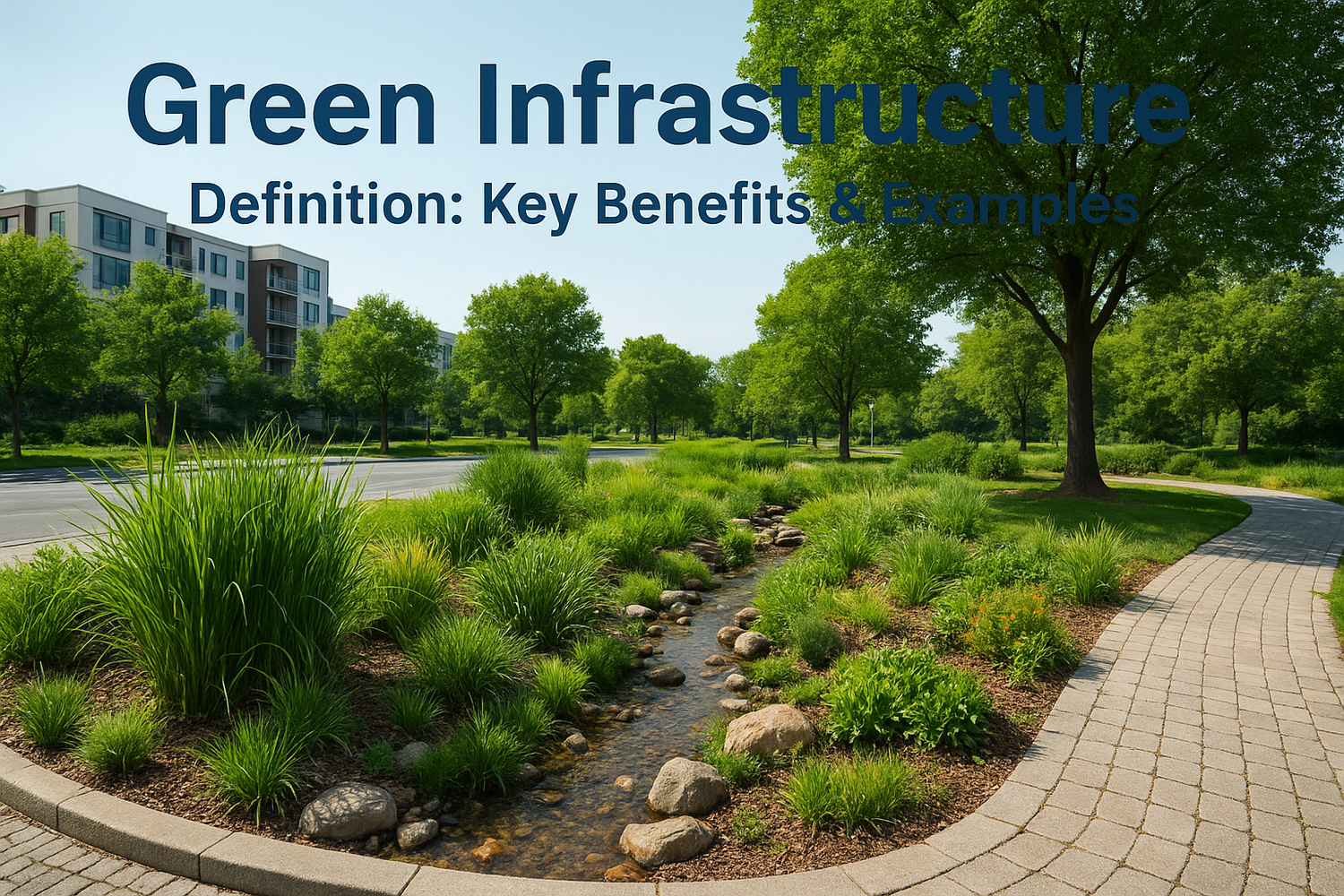
At its core, green infrastructure refers to a network of natural and engineered systems, think rain gardens, permeable surfaces, urban tree canopies, and green roofs, that deliver measurable environmental and social benefits. Unlike traditional "gray" infrastructure (concrete drains, steel pipes), these solutions work with nature rather than against it. For property owners and developers in Malaysia, understanding this concept is increasingly relevant as weather patterns intensify and sustainable design becomes a practical necessity, not a luxury.
At Konzept Garden, we design and build outdoor spaces grounded in these principles, from garden planting plans to full landscape implementations that manage water, support ecosystems, and create livable environments. This article breaks down the definition of green infrastructure as recognized by major environmental organizations, walks through its core components, and provides real-world examples of how it works in practice.
What green infrastructure means
The green infrastructure definition centers on one core idea: using natural systems, or systems that mimic nature, to perform functions that engineers traditionally assigned to concrete and steel. Think of a rain garden absorbing stormwater rather than letting it rush into an overloaded drain, or a row of street trees cooling the air by several degrees on a hot afternoon. Green infrastructure treats nature as functional infrastructure, not decoration, and that distinction matters enormously for how you plan and build any outdoor space.
Green infrastructure doesn't replace conventional engineering; it works alongside it to deliver outcomes that concrete alone cannot.
The difference between green and gray infrastructure
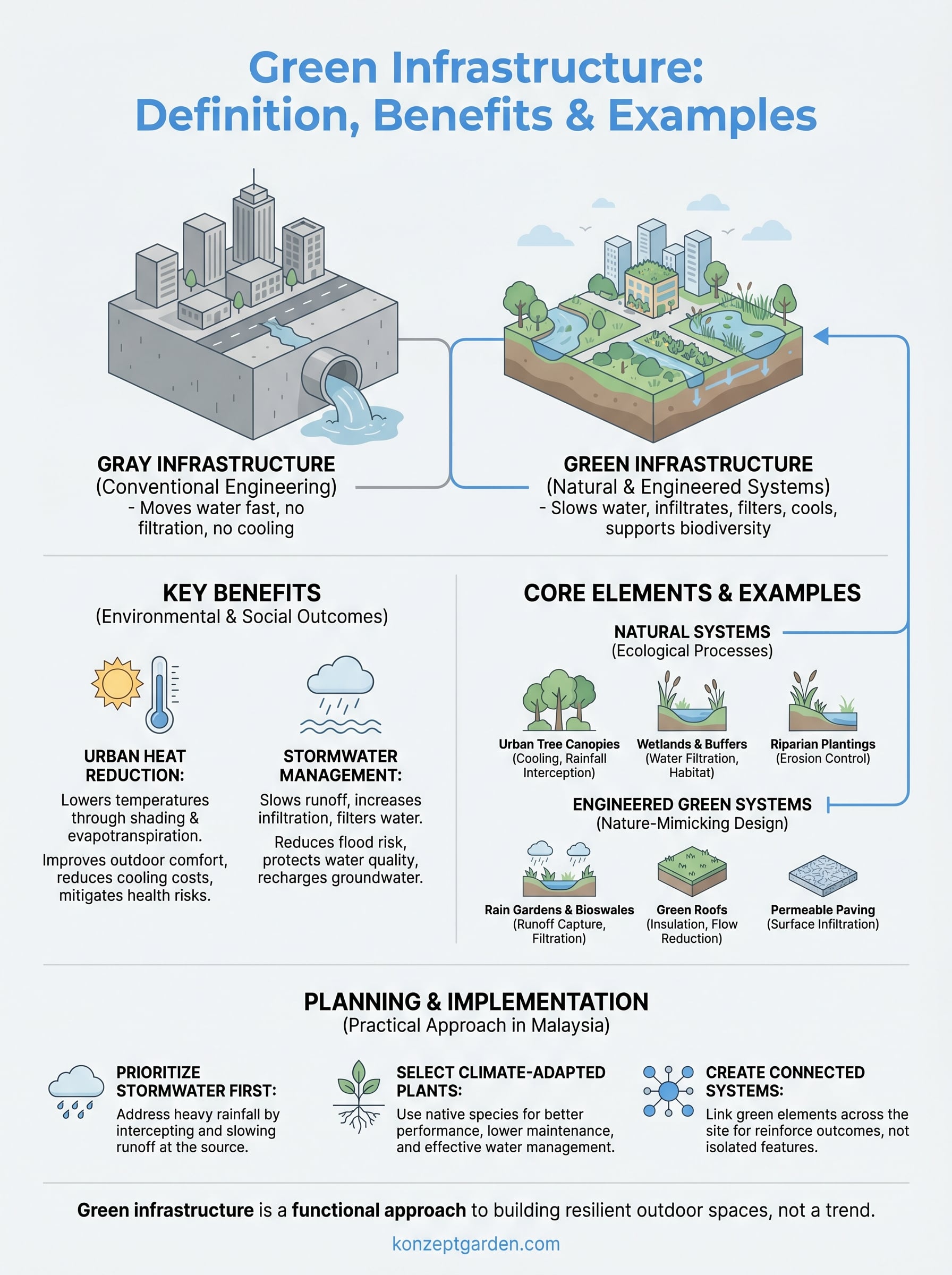
Gray infrastructure refers to the engineered systems most cities rely on: concrete pipes, sealed drainage channels, and impermeable road networks. These systems move water fast, but they don't filter it, cool the air, or support wildlife. Green infrastructure, by contrast, slows water down, allows it to infiltrate the soil, and creates habitat in the process. For you as a property owner or developer, this means a designed garden or planted surface can serve a genuine stormwater function, not just an aesthetic one.
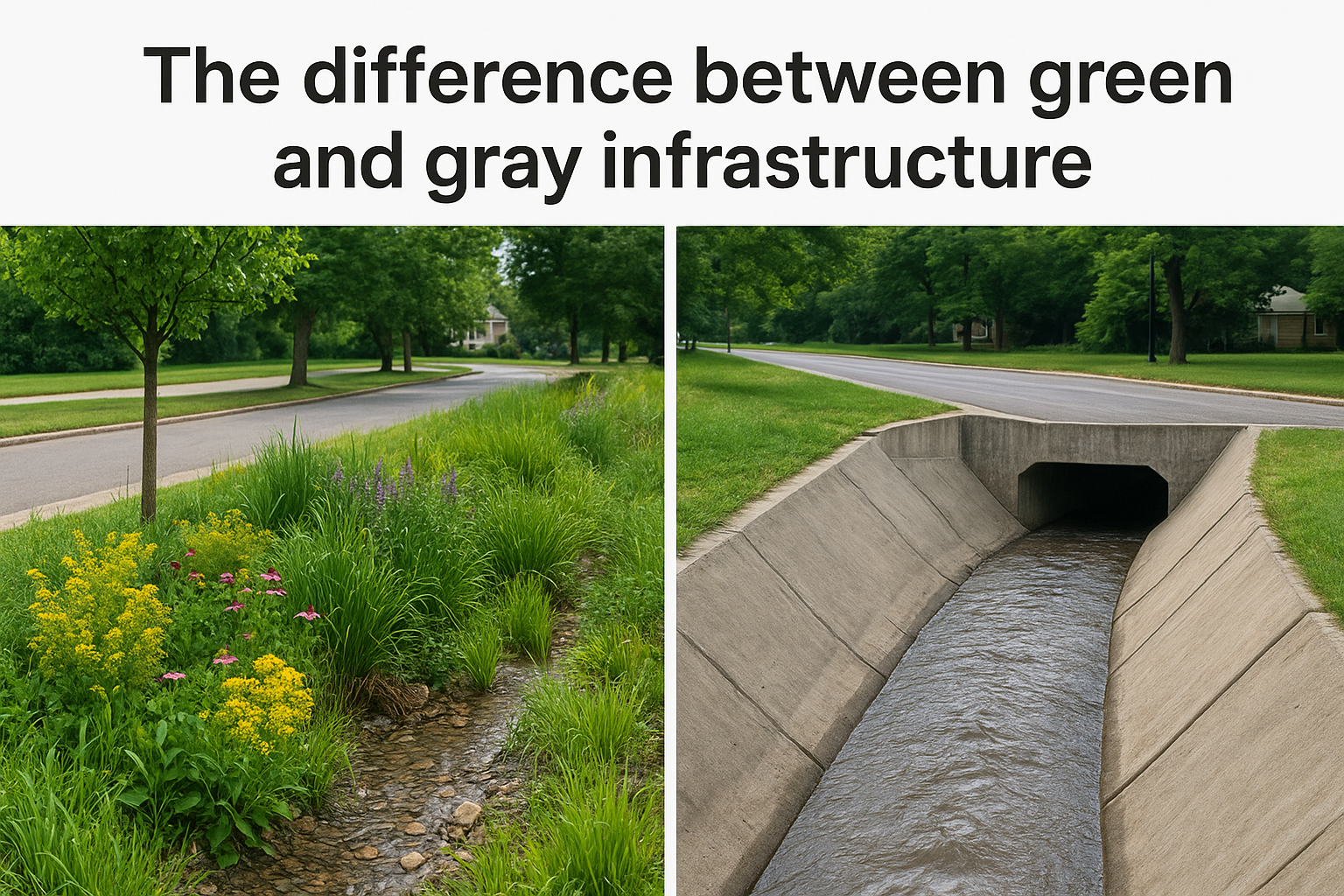
- Rain gardens and bioswales filter runoff at the source
- Tree canopies reduce surface temperatures and intercept rainfall
- Green roofs insulate buildings and reduce peak runoff volumes
- Permeable paving allows water to move through the surface into the ground
How it works as a connected system
The real strength of green infrastructure comes from connectivity. A single tree does something useful. A planned network of planted areas, permeable surfaces, and water features across a site or a neighborhood does significantly more. Each element reinforces the others, so stormwater managed in one planted bed reduces the load on the next, and a connected canopy provides more cooling than isolated plantings without design logic.
When you approach your outdoor space with this systems-thinking mindset, the individual design decisions, what to plant, where to place a path, how to grade the soil, all start to align around measurable outcomes rather than aesthetics alone. That shift in thinking is what separates a genuinely functional landscape from one that simply looks appealing.
How major organizations define green infrastructure
The green infrastructure definition varies slightly depending on the organization behind it, but the core principles remain consistent. Each major body emphasizes the use of natural or nature-mimicking systems to deliver environmental, social, and economic benefits alongside or instead of conventional engineered solutions. Understanding these institutional definitions helps you communicate clearly with planners, consultants, and government bodies when designing your own outdoor space.
How the US EPA defines it
The US Environmental Protection Agency (EPA) defines green infrastructure as an approach that uses vegetation, soils, and natural processes to manage water and create healthier environments. The EPA focuses particularly on stormwater management, framing green infrastructure as a way to restore the natural water cycle that urbanization disrupts. Their approach treats planted surfaces, rain gardens, and permeable paving as functional tools for reducing runoff and improving water quality.
The EPA's definition reinforces a practical truth: plants and soil are not just aesthetic additions to a site; they are active infrastructure components that manage real volumes of water.
How the European Commission frames it
The European Commission takes a broader view, defining green infrastructure as a strategically planned network of natural and semi-natural areas designed to deliver a wide range of ecosystem services. This framing extends beyond water management to include air quality, biodiversity, climate adaptation, and human wellbeing. For you as a property owner or developer, this wider definition is useful because it positions every planted area, whether a rooftop garden or a landscaped boundary, as contributing to a larger environmental system.
Why green infrastructure matters in cities and sites
Cities concentrate people, heat, and hard surfaces into dense areas, and that creates real, measurable problems. Urban heat islands form when concrete and asphalt absorb and slowly release solar energy, raising local temperatures significantly. Stormwater overwhelms drainage systems, flooding streets and homes within minutes of heavy rain. Understanding the green infrastructure definition helps explain why these problems persist and how natural systems address them directly.
Functional landscapes solve environmental problems that gray infrastructure cannot manage on its own.
The urban heat island effect
High surface temperatures push up energy costs, worsen air quality, and create genuine health risks for residents. Green infrastructure reduces surface temperatures by shading hard surfaces and releasing moisture through plant transpiration. A planned network of trees, planted rooftops, and vegetated walls multiplies that cooling effect across an entire site.
Key outcomes of reducing urban heat through green design:
- Lower cooling costs for buildings
- Improved outdoor comfort for occupants
- Reduced heat-related health risks in dense areas
Flood risk and stormwater
Malaysia's rainfall intensity makes stormwater management a practical necessity for any property. Permeable surfaces and planted areas slow runoff, giving water time to infiltrate the soil rather than overwhelming drainage infrastructure. For your site, this can mean the difference between a garden that handles heavy rain well and one that erodes or floods.
Addressing runoff at the source also protects neighboring properties and reduces the load on municipal systems. Every planted bed or permeable surface you install contributes to a site-wide water management response that sealed surfaces simply cannot provide.
Core elements and types of green infrastructure
When you look at the green infrastructure definition in practice, it breaks down into two broad categories: natural systems and engineered systems that replicate natural processes. Both categories serve the same purpose, delivering environmental functions like water filtration, temperature regulation, and biodiversity support within built environments. Knowing which type suits your site helps you make specific, purposeful design decisions rather than selecting plants and surfaces based on appearance alone.
Natural and semi-natural systems
Natural systems use existing ecological processes with minimal modification to deliver environmental outcomes. A tree canopy, a wetland buffer, or a planted floodplain all fall into this category. These elements perform multiple functions simultaneously, filtering water, providing shade, and supporting local wildlife without the ongoing maintenance demands of engineered alternatives.
The most effective natural systems work because they replicate what healthy landscapes already do, rather than forcing nature into a rigid engineering solution.
- Urban tree canopies for cooling and rainfall interception
- Wetlands and planted buffers for water filtration
- Riparian plantings for erosion control along waterways
Engineered green systems
Engineered green systems apply deliberate design and construction to achieve specific, measurable outcomes on built sites. Rain gardens, bioswales, green roofs, permeable paving, and self-watering planter installations all fit here. For your property, these elements integrate directly into the landscape layout and function as active stormwater and thermal management tools from the day construction completes.
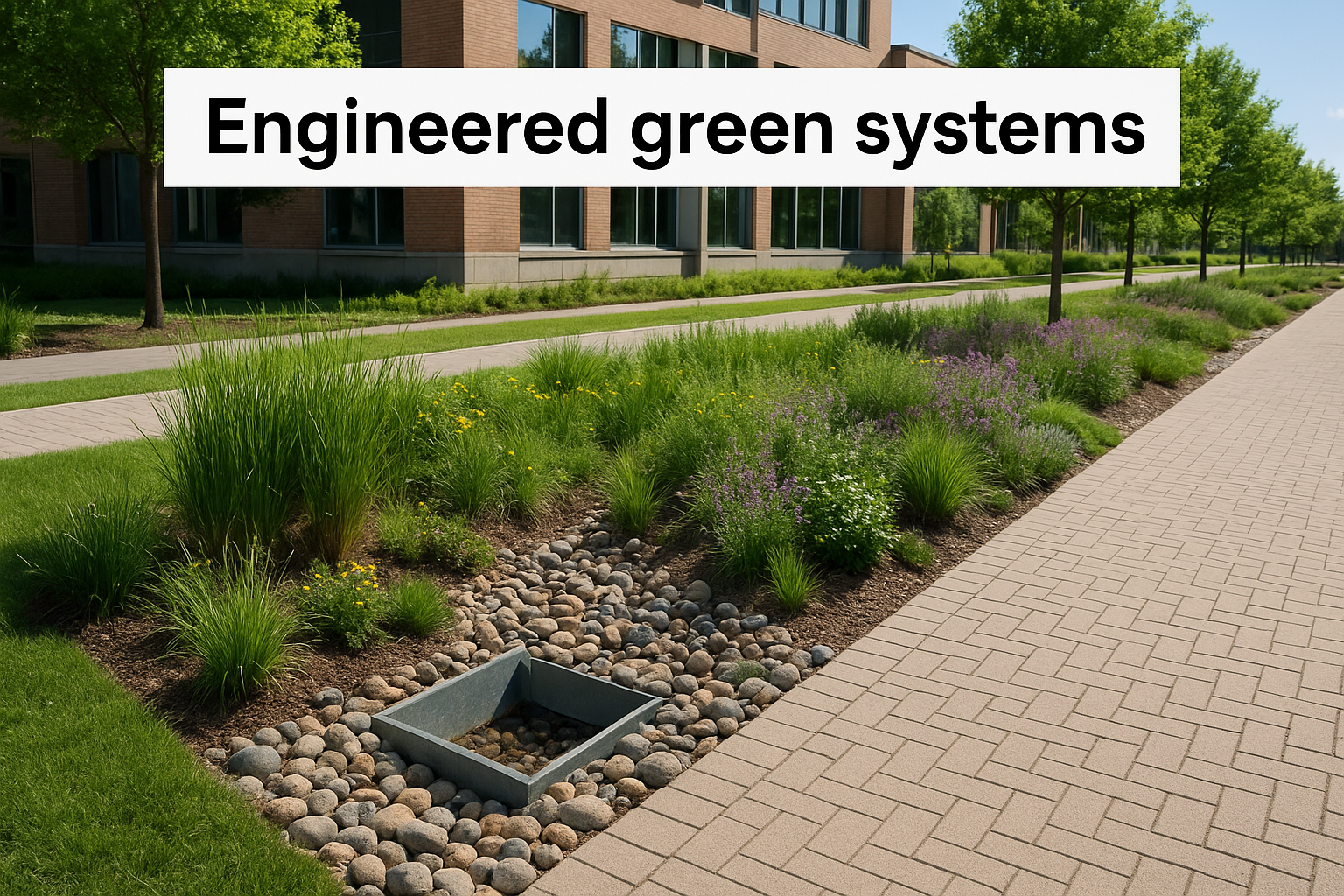
- Rain gardens and bioswales for on-site runoff capture
- Green roofs for insulation and peak flow reduction
- Permeable paving for surface water infiltration
How to plan and build green infrastructure in Malaysia
The green infrastructure definition takes on a practical dimension when you apply it to a specific site in Malaysia. Heavy rainfall, high humidity, and intense solar radiation are constants here, and they shape which elements work best and how you sequence a design. Start by identifying your site's most pressing environmental challenges before you select any specific element.
The most effective green infrastructure plans in Malaysia address stormwater first, then cooling, because rainfall intensity drives the most immediate risks.
Address water before anything else
Stormwater management should drive your first design decisions. Rain gardens, bioswales, and permeable surfaces positioned at low points on your site intercept runoff before it leaves your property, reducing erosion and protecting neighboring land. Pair these with planted buffer zones to maximize infiltration.
- Map your site's drainage flow before selecting plant locations
- Grade soil toward planted areas, not sealed surfaces
- Use deep-rooted plants to improve soil infiltration over time
Match your plant selection to local conditions
Native and climate-adapted plants outperform exotic species in Malaysia's conditions because they establish faster and require significantly less maintenance once settled. Selecting the wrong species wastes both investment and resources. Work with a landscape professional who understands local soil conditions, rainfall patterns, and plant performance across different site orientations.
Two key factors matter most: root depth for water management, and canopy density for shade. Getting both right means your green infrastructure performs functionally from day one, not just aesthetically.
Quick recap
The green infrastructure definition comes down to this: natural and engineered systems that deliver real environmental functions, stormwater management, temperature control, biodiversity support, within built environments. Major organizations like the EPA and European Commission agree that these systems work best when planned as a connected network rather than isolated features. For your property in Malaysia, the practical priorities are stormwater first, then cooling, using plants and surfaces that match local rainfall intensity and soil conditions.
Green infrastructure is not a design trend. It is a functional approach to building outdoor spaces that perform well under the specific pressures your site faces. Every planted area, permeable surface, and designed water feature contributes to outcomes that sealed concrete simply cannot replicate. If you want to bring these principles into your own outdoor space, Konzept Garden can help you plan and implement a landscape that works for your site from the ground up. Get in touch with our team to start your project.