
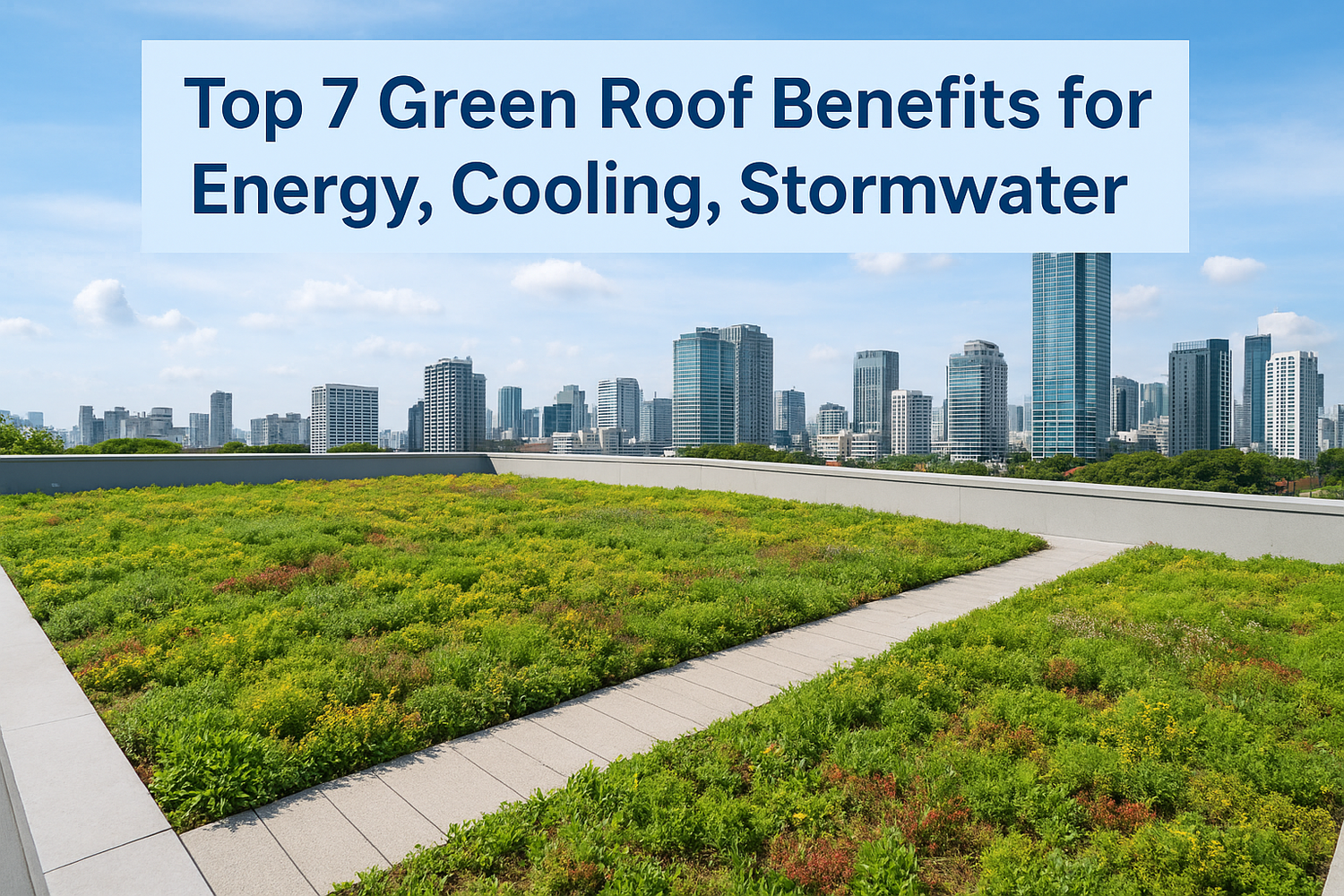
Your roof sits empty while your electricity bill climbs each month. Rain overwhelms your drains. Top floor rooms bake in the afternoon sun. Most buildings treat rooftops as wasted space, but a green roof transforms that neglected surface into a working asset that cuts costs, manages water, and creates habitat.
This guide walks you through seven proven benefits of green roofs backed by real data. You'll learn how vegetation and growing medium cool buildings by up to 27°F, slash energy bills by 70%, and capture monsoon rain that would otherwise flood streets. We'll also show you how green roofs extend your roof's lifespan, clean urban air, and add valuable amenity space. Whether you're planning a residential garden or a commercial installation, these benefits explain why green roofs make sense for Malaysia's climate and cities.
1. Konzept Garden rooftop and green roof design
Professional design separates a thriving green roof from a maintenance headache. A properly engineered system accounts for structural load, drainage patterns, plant selection, and long-term care before you install the first layer. Konzept Garden brings award-winning expertise to every rooftop project, ensuring your green roof delivers the full spectrum of benefits from day one.
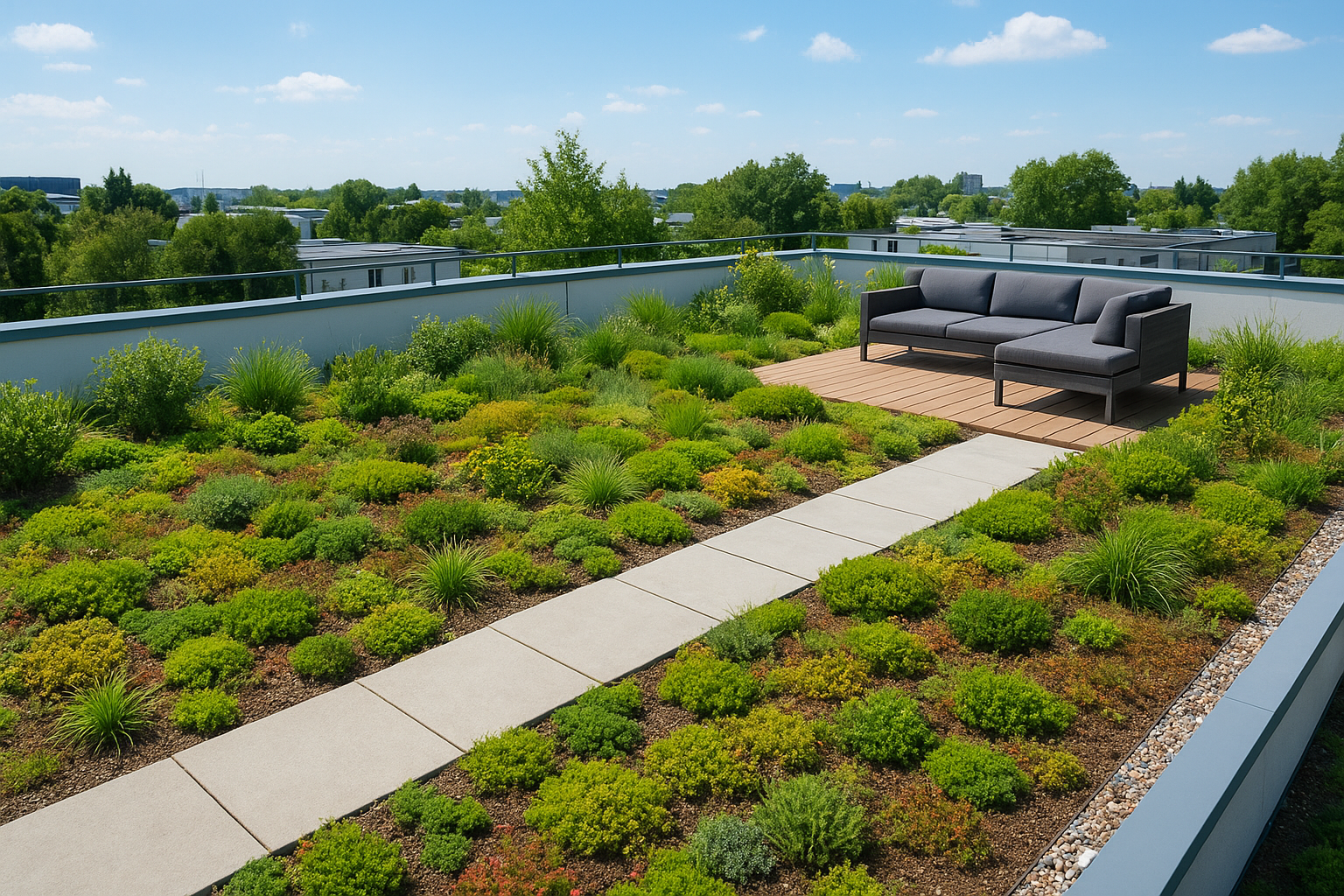
Why expert design matters for green roofs
Your building's roof wasn't designed to hold soil and plants. Structural analysis confirms whether your existing roof can support the added weight or if you need reinforcement. Konzept Garden evaluates load-bearing capacity, waterproofing integrity, and drainage slopes to prevent leaks and pooling. Poor planning leads to water damage, failed vegetation, and expensive repairs within months.
How Konzept Garden tailors systems to Malaysia
Malaysia's monsoon rains and year-round heat demand specialized green roof solutions. Konzept Garden selects drought-tolerant plants that survive dry spells yet handle heavy downpours, matches growing medium depth to your roof's capacity, and designs drainage layers that prevent waterlogging. Local expertise means your system works with tropical conditions instead of fighting them.
The best green roof benefits emerge when design accounts for regional climate and building constraints from the start.
Integrating green roofs with your overall landscape
A green roof shouldn't exist in isolation. Konzept Garden connects rooftop gardens with ground-level landscaping through consistent plant palettes, matching hardscape materials, and unified irrigation systems. This holistic approach creates visual harmony and simplifies maintenance across your entire property.
When to choose a rooftop garden versus other options
Intensive rooftop gardens with walkways and seating work best when you need usable amenity space and have strong structural support. Lightweight extensive systems suit buildings with limited load capacity or where you prioritize environmental benefits over human access. Konzept Garden recommends the right type based on your building's constraints and your goals.
2. Lower energy use and electricity bills
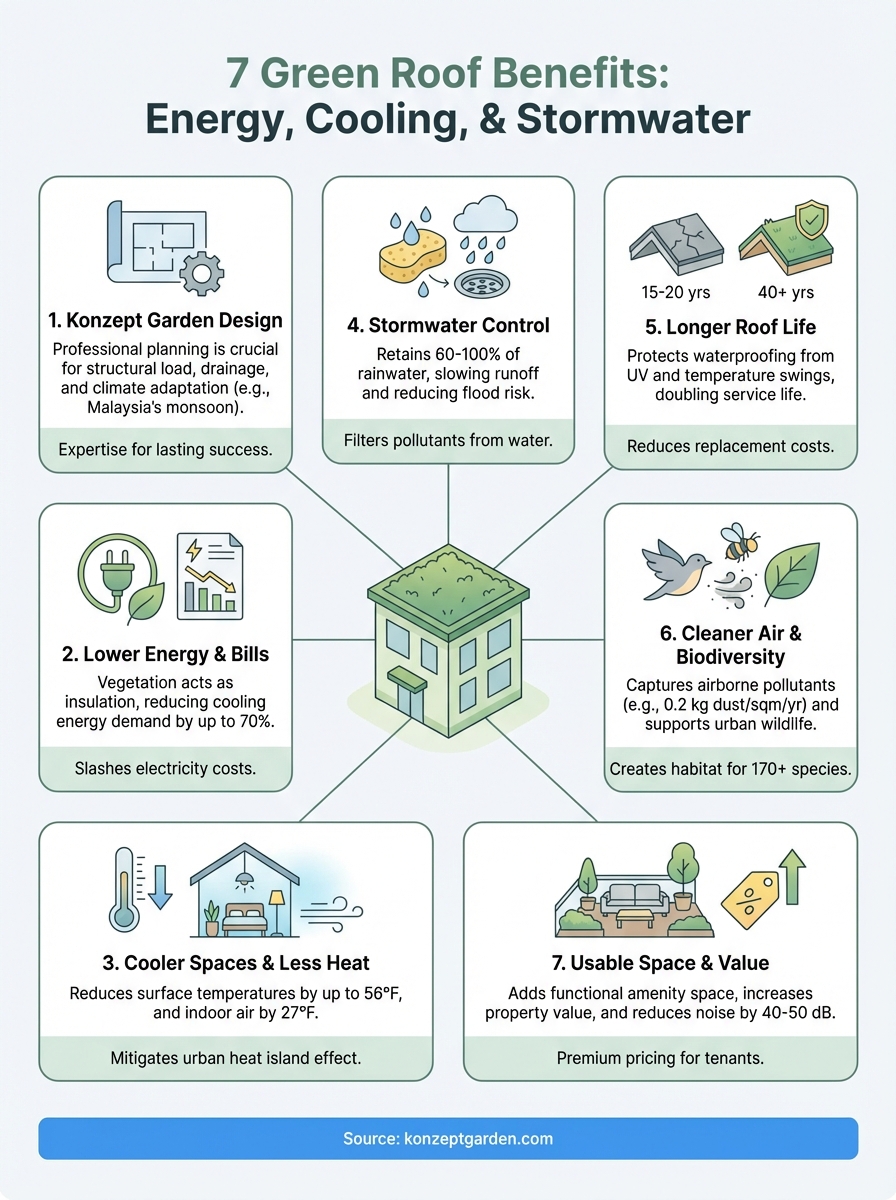
Green roofs cut your air conditioning load by acting as natural insulation. The vegetation and growing medium create a thermal barrier that absorbs sunlight before heat penetrates your building. Studies show green roofs can reduce cooling energy demand by up to 70% compared to conventional roofs, translating directly into lower electricity bills month after month.
How green roofs reduce energy demand
Plants absorb solar radiation through photosynthesis and evapotranspiration, converting energy that would otherwise heat your roof into biological processes. The soil substrate adds thermal mass that slows heat transfer into your building. During hot afternoons, a conventional roof can reach 150°F or higher, while a green roof surface stays near ambient temperature.
Every degree you prevent from entering your building saves cooling energy without requiring mechanical equipment or ongoing electricity costs.
Energy savings ranges from global studies
Research across different climates shows cooling energy reductions between 25% and 75% depending on roof type and building design. A Kansas City study found green roofs prevented 269 tons of CO2 emissions annually through reduced electricity use. Your actual savings depend on factors like insulation quality, building size, and air conditioning efficiency.
Combining green roofs with insulation and shading
Green roofs work best alongside other energy strategies. Pair them with reflective waterproofing membranes underneath vegetation to bounce heat away. Add pergolas or lattice structures on intensive roofs to shade seating areas. This layered approach maximizes the green roof benefits while improving occupant comfort.
Where energy savings matter most in Malaysia
Malaysia's year-round heat makes cooling your largest energy expense for most buildings. Green roofs deliver consistent savings every month, not just during peak summer. Top floor units and single-story buildings with large roof-to-wall ratios see the biggest impact because roof heat dominates their thermal load.
3. Cooler indoor spaces and less heat
Your green roof cuts indoor temperatures by blocking radiant heat before it penetrates your ceiling. The EPA measured surface temperature reductions of up to 56°F on green roofs compared to conventional rooftops, and indoor air temperatures dropped by 27°F in buildings with poor insulation. This cooling effect runs constantly during daylight hours without consuming electricity or requiring mechanical systems.
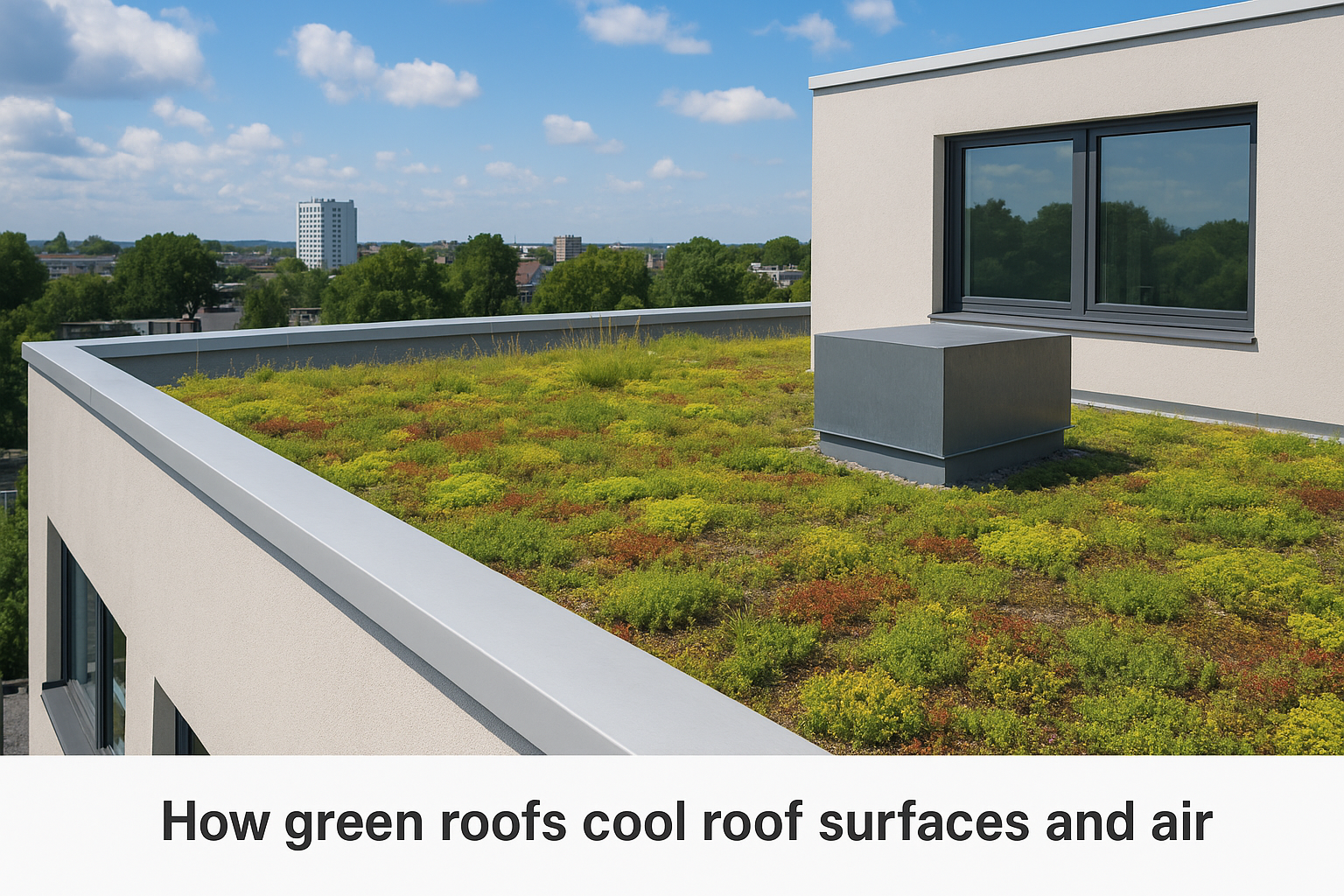
How green roofs cool roof surfaces and air
Plants and soil absorb solar energy through evapotranspiration, converting heat into water vapor that dissipates into the atmosphere. The growing medium acts as thermal mass that buffers temperature swings between day and night. Your conventional roof radiates stored heat into your building for hours after sunset, while a green roof stays cooler and stops transferring excess warmth downward.
Heat island relief in dense urban areas
Cities trap heat in concrete and asphalt, creating urban heat islands that raise ambient temperatures by up to 20°F compared to surrounding areas. Green roofs counter this effect by cooling the air around your building through shade and moisture release. When multiple buildings add green roofs, the cumulative impact lowers neighborhood temperatures and reduces the collective cooling burden across your district.
The green roof benefits multiply when you coordinate with nearby buildings to create connected cool zones.
Comfort gains for top floor rooms
Top floor occupants suffer most from roof heat transfer, often setting thermostats several degrees lower than ground floor units. Green roofs eliminate this problem by keeping ceiling temperatures near comfortable levels. Residents report fewer cooling complaints and more consistent temperatures throughout multi-story buildings after green roof installation.
Design tips to maximize cooling benefit
Choose darker substrates that absorb more solar radiation for evapotranspiration. Select plants with high transpiration rates like grasses and sedums that actively release moisture. Add sufficient growing medium depth to provide thermal mass while staying within your structural limits.
4. Stormwater control and flood protection
Your green roof acts as a natural sponge that captures rainwater before it overwhelms drainage systems. The vegetation and growing medium absorb rainfall, hold it temporarily, and release it slowly over hours or days. Studies show green roofs can retain 60% to 100% of stormwater depending on system depth and rainfall intensity, dramatically reducing the volume and speed of runoff that floods streets and drains during Malaysia's monsoon season.
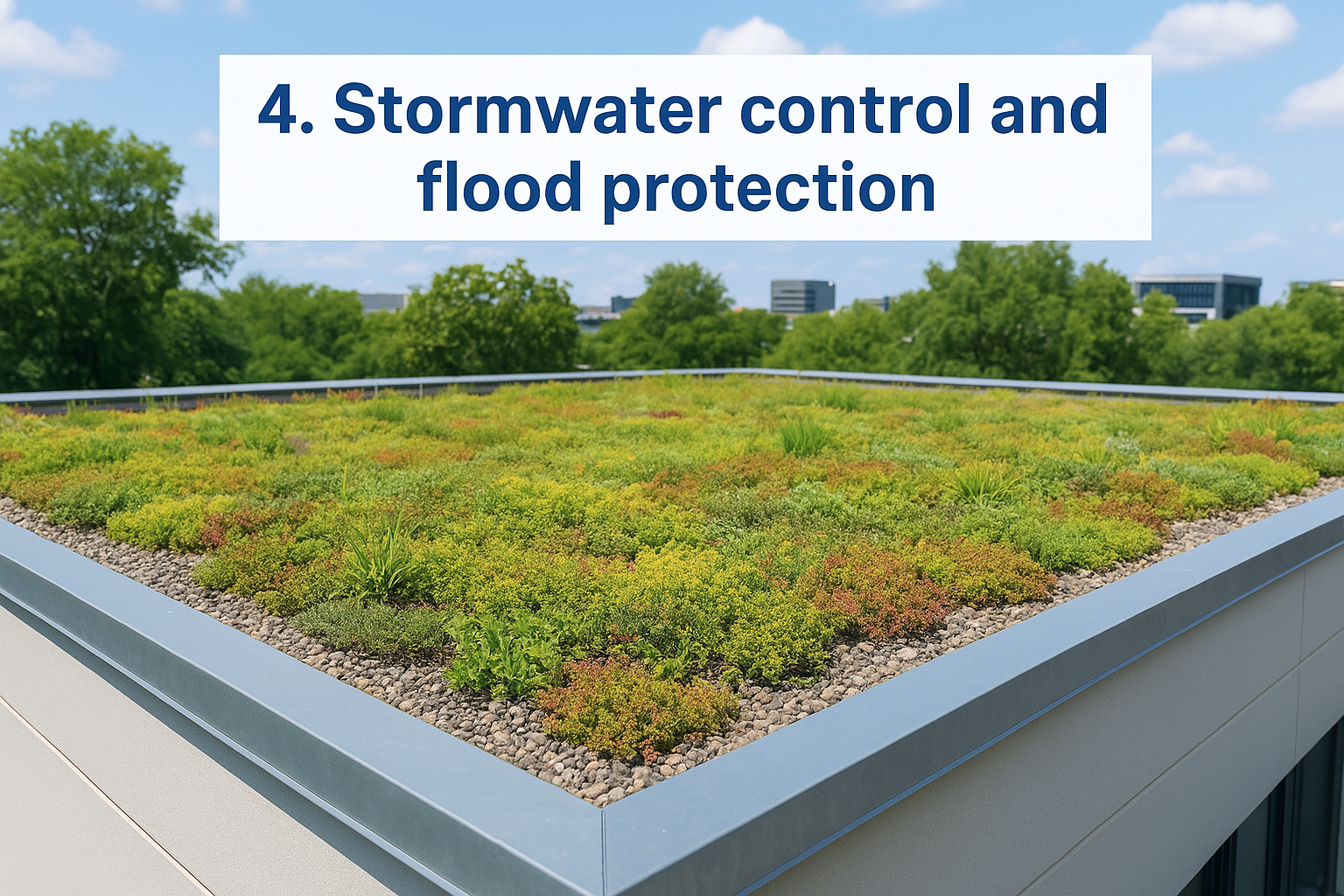
How green roofs store and slow heavy rain
The substrate layer soaks up rainfall like a reservoir, holding water in the pore spaces between soil particles. Plants pull this stored moisture through their roots and release it back into the atmosphere through transpiration. A 4-inch extensive green roof typically retains the first 1 to 1.5 inches of rainfall completely, while heavier storms see delayed release that spreads peak flow over several hours instead of minutes.
Reducing stress on drains and city systems
Your building's stormwater discharge drops immediately after green roof installation. This reduction means less pressure on municipal drainage infrastructure during heavy rain events. When multiple buildings adopt green roofs, the cumulative effect prevents downstream flooding and reduces the need for expensive drain expansion projects.
The green roof benefits extend beyond your property line by protecting entire neighborhoods from flood risk.
Stormwater quality and pollution reduction
Your green roof filters pollutants from rainwater as it passes through substrate and vegetation. The growing medium captures dust particles, heavy metals, and organic compounds that would otherwise wash into waterways. Research shows green roofs remove up to 37% of sulfur dioxide and 21% of nitrous acid from stormwater.
Design choices for Malaysia's monsoon climate
Malaysia's intense rainfall requires deeper substrate layers of 4 to 6 inches minimum to handle sudden downpours. Add drainage layers with high flow capacity to prevent waterlogging during multi-day rain events. Select fast-draining substrates mixed with expanded clay or perlite that release excess water quickly while retaining enough moisture for plant survival.
5. Longer roof life and material protection
Your green roof doubles or triples the lifespan of waterproofing membranes by shielding them from destructive forces. Conventional roofs fail within 15 to 20 years due to UV radiation, temperature cycling, and physical damage. A properly maintained green roof extends that service life to 40 years or more by eliminating direct exposure to harsh conditions that degrade roofing materials.
How vegetation shields membranes from sunlight
Ultraviolet light breaks down waterproofing compounds through photodegradation, causing cracks and leaks over time. Your green roof's plant layer blocks UV rays before they reach the membrane surface. The growing medium adds another protective barrier that prevents physical damage from foot traffic or falling debris.
Protection from temperature swings and hail
Exposed roofs expand and contract daily as temperatures swing between scorching afternoons and cool nights. This constant movement creates micro-tears in membranes. Green roofs buffer these temperature fluctuations by keeping the waterproofing layer at stable temperatures. The substrate also absorbs hail impact that would otherwise puncture conventional roofing.
One of the most valuable green roof benefits is the elimination of temperature-driven membrane failure.
Maintenance planning for long roof life
Schedule annual inspections to check drainage outlets and vegetation health. Replace failed plants immediately to maintain continuous coverage. Clean debris from gutters twice yearly before and after monsoon season.
Comparing lifecycle costs with conventional roofs
Your green roof costs more upfront but eliminates multiple replacement cycles over 40 years. Factor in energy savings and avoided waterproofing repairs when calculating total cost of ownership.
6. Cleaner air and more urban biodiversity
Your green roof captures airborne pollutants and creates habitat for wildlife that would otherwise struggle in dense urban areas. The vegetation filters particulate matter from the air while providing food and shelter for insects, birds, and pollinators. These environmental benefits improve public health and restore ecological balance to built environments.
Capturing dust and urban air pollutants
Plants on your roof trap dust particles on leaf surfaces and absorb harmful gases through their stomata. Research shows green roofs remove up to 0.2 kg of dust per square meter annually. This filtration reduces respiratory irritants and improves air quality for building occupants.
Supporting birds, insects, and pollinators
Your rooftop ecosystem attracts native pollinators that struggle to find habitat in paved cities. Birds use green roofs as feeding grounds and nesting sites. Studies document over 170 species thriving on surveyed green roofs, proving these spaces function as genuine urban wildlife refuges.
Green roof benefits extend beyond your building when they create stepping stones that connect fragmented habitats across your city.
Plant selection for resilient rooftop ecosystems
Choose native flowering plants that support local pollinator populations while tolerating rooftop conditions. Mix grasses with sedums and herbs to provide year-round nectar sources. Avoid invasive species that might spread to surrounding areas.
Fitting green roofs into wider urban greening
Your green roof contributes to citywide biodiversity networks when combined with street trees, parks, and vertical gardens. Coordinate plant choices with nearby green spaces to create connected corridors that allow wildlife movement across urban landscapes.
7. Extra usable space and higher property value
Your green roof converts unused rooftop area into functional amenity space that increases your property's market appeal and rental income potential. This transformation adds usable square footage without expanding your building's footprint, creating outdoor rooms for relaxation, entertainment, or play. Properties with accessible green roofs command higher prices and attract tenants willing to pay premium rates for exclusive outdoor access.
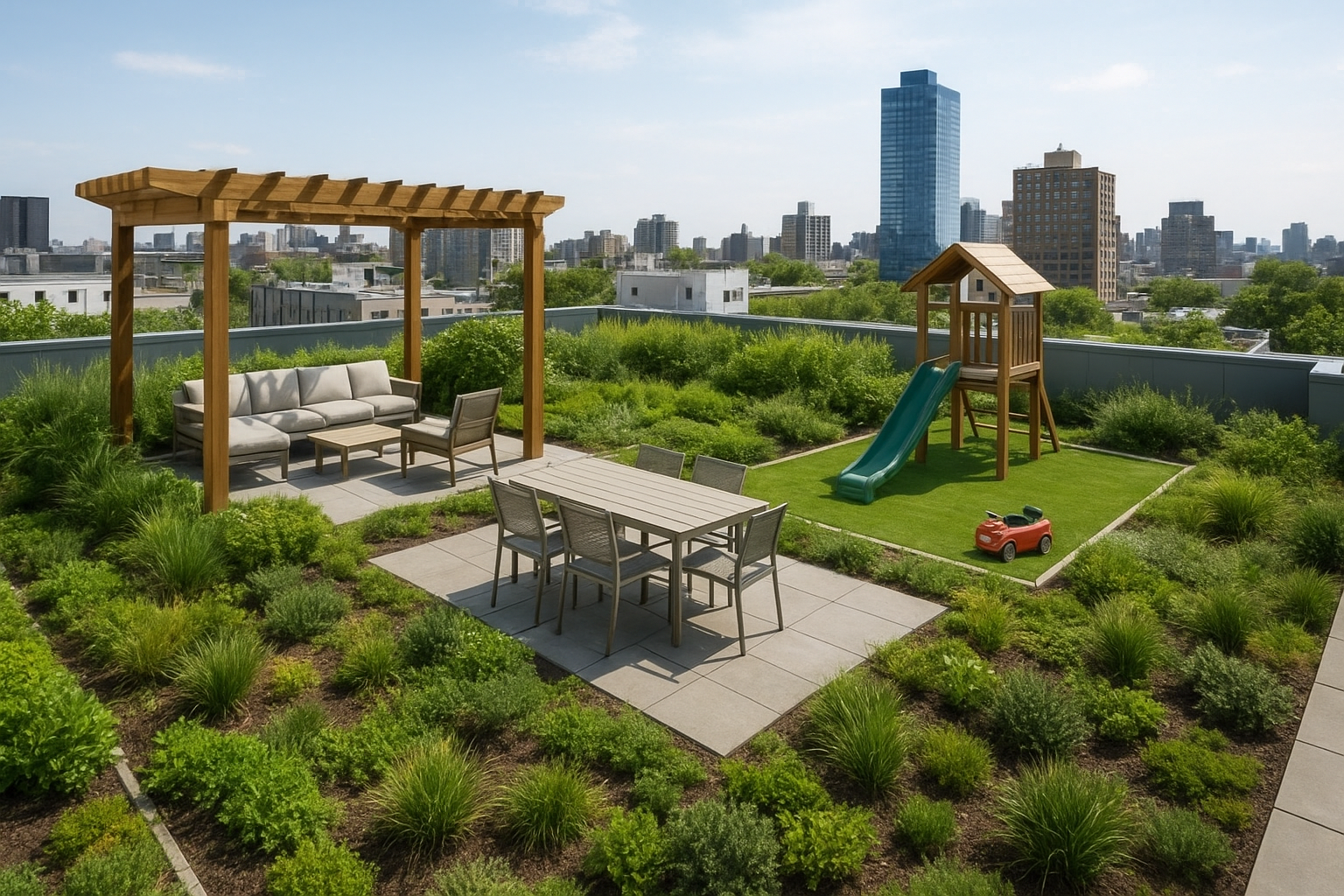
Turning roofs into gardens, lounges, and play areas
Your intensive green roof supports paved walkways, seating areas, and planters that create outdoor living spaces. Add pergolas for shade, install irrigation for lush plantings, and design zones for dining or children's play. These rooftop retreats provide private outdoor access that ground-level properties cannot match in dense urban settings.
Noise reduction and acoustic comfort benefits
The substrate and vegetation absorb sound waves from street traffic, aircraft, and neighboring properties. Your green roof can reduce noise by 40 to 50 decibels depending on system depth, creating quieter indoor environments that improve sleep quality and concentration.
Visual impact and curb appeal for buildings
Your building stands out with greenery visible from surrounding properties and streets. This visual distinction attracts buyers and tenants who value sustainability and aesthetic quality.
How green roofs influence rental and resale value
Properties with green roofs achieve higher rental rates and faster sales compared to conventional buildings. The combination of green roof benefits like energy savings, outdoor space, and environmental credentials justifies premium pricing that recovers your initial investment while increasing long-term returns.
Ready to plan a green roof
You now understand how green roofs deliver measurable returns through energy savings, stormwater management, extended roof life, and added property value. These green roof benefits transform your unused rooftop into a working asset that cuts costs while improving comfort and environmental performance. Your building gains usable outdoor space, cleaner air, and natural cooling that conventional roofs cannot provide.
Konzept Garden designs and installs custom green roof systems tailored to Malaysia's climate and your building's structural capacity. Our team evaluates your roof's load limits, selects appropriate vegetation, and creates drainage solutions that handle monsoon rains. Contact us today for a free consultation and quotation to start planning your green roof project.