
A green roof is a rooftop covered with vegetation and growing medium instead of traditional materials. Think of it as a living layer that transforms your roof into a garden or natural habitat. You might see sedum plants, grasses, shrubs, or even small trees depending on the design. These roofs come in different styles ranging from lightweight shallow systems that need minimal care to full rooftop gardens where people can walk and relax.
This guide breaks down the main types of green roofs and helps you pick the right one for your project. You'll learn about extensive, intensive, semi intensive, and biodiverse systems plus what makes each unique. We'll cover what each type costs, how much maintenance they demand, and which one works best for your specific building and climate. By the end, you'll know exactly what to consider when planning your green roof.
Why green roofs are worth considering
Your building gains multiple advantages when you install a green roof. Stormwater runoff drops by up to 90% in some extensive systems, which reduces flooding risk and strain on drainage infrastructure. The vegetation layer also insulates your building naturally, cutting your cooling costs during hot months and extending your roof membrane's lifespan by protecting it from UV damage and temperature swings.
Green roofs transform unused rooftop space into functional areas while improving air quality and reducing urban heat island effects.
Different types of green roofs offer varying levels of these benefits based on their design and depth. You'll also find that many local authorities reward green roof installations with planning incentives, reduced stormwater fees, or expedited permits. The initial investment often pays back through energy savings and longer roof replacement cycles.
How to choose the right green roof
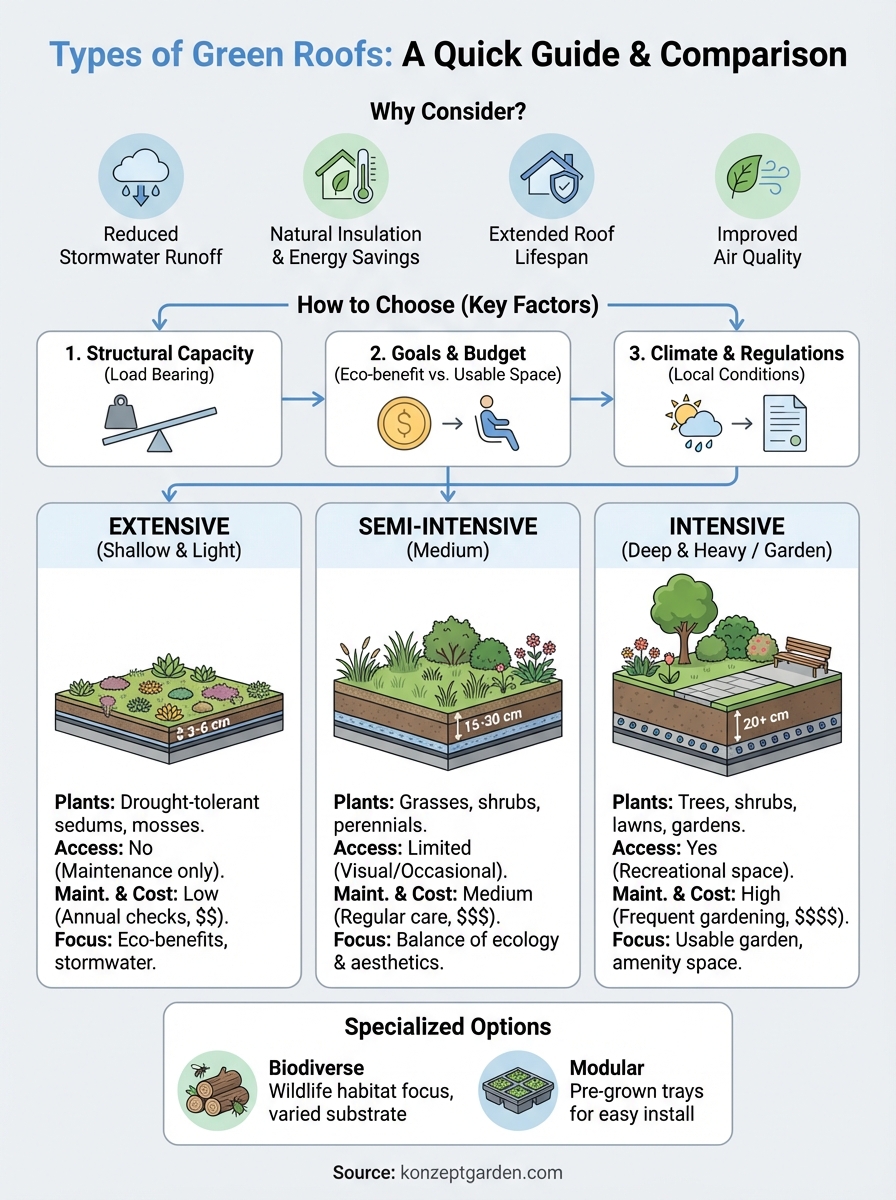
Your building's structural capacity determines which types of green roofs you can install. Start by hiring a structural engineer to calculate your roof's load bearing capacity, as this single factor eliminates options that exceed your limits. Extensive systems typically require 30-90 kg/m² capacity, while intensive roofs demand 150 kg/m² or more. Your existing roof slope also matters since angles beyond 30 degrees restrict your choices to specialized lightweight systems.
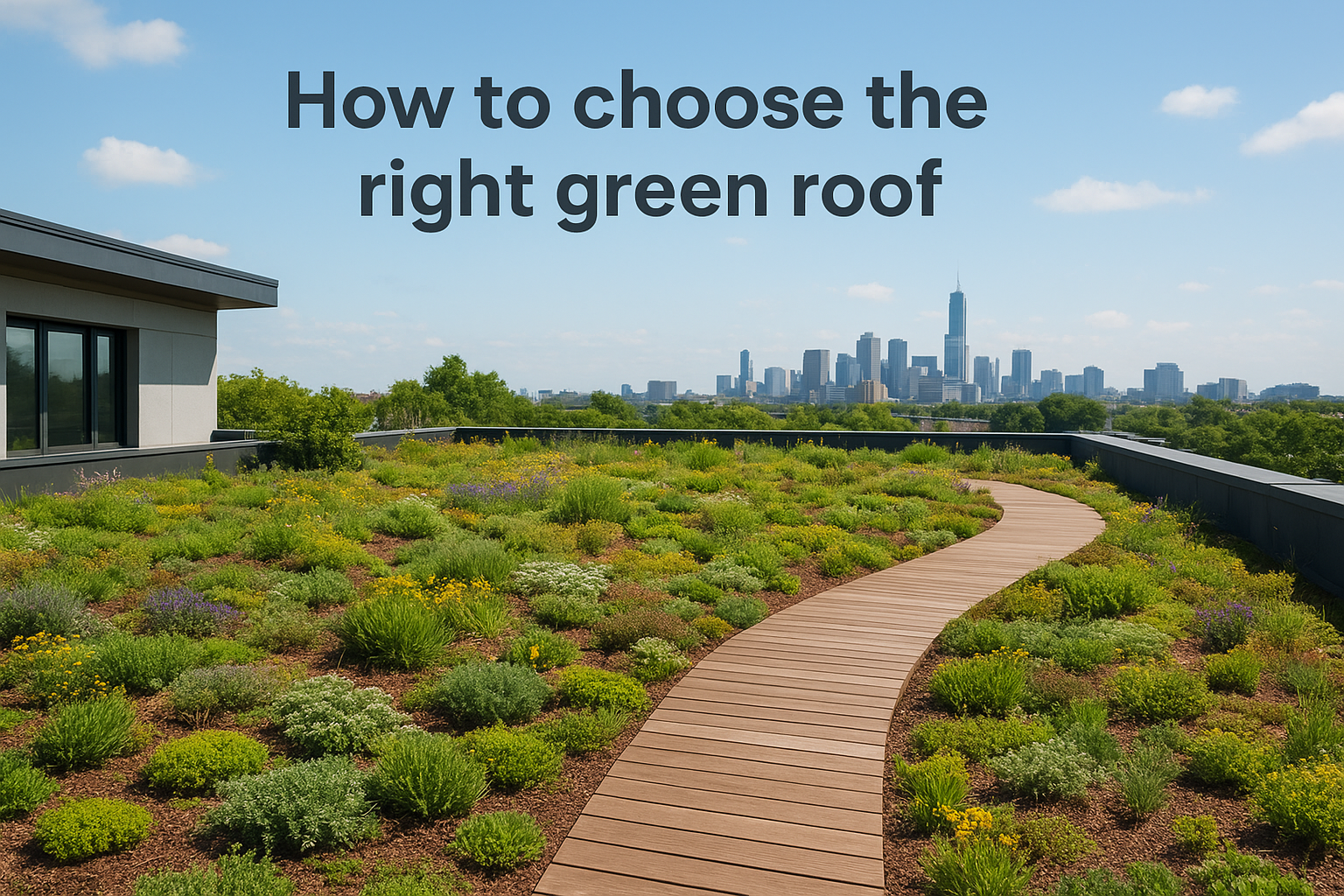
Consider your building's structure
You need to assess whether your roof can support the additional weight before exploring design options. Concrete roofs and podium decks handle heavier loads better than older buildings with timber frameworks. Request a detailed structural survey that accounts for saturated soil weight, not just dry conditions, since water adds significant mass during rainfall.
Match your goals and budget
Your intended purpose shapes which green roof type makes sense financially. Extensive roofs cost less upfront (around $10-25 per square foot) and work well if you want ecological benefits without regular access. Intensive systems require larger budgets ($25-50+ per square foot) but create usable outdoor spaces where people can walk and relax. Consider your maintenance capacity too, as some systems need monthly care while others thrive with annual inspections.
Main types of green roofs explained
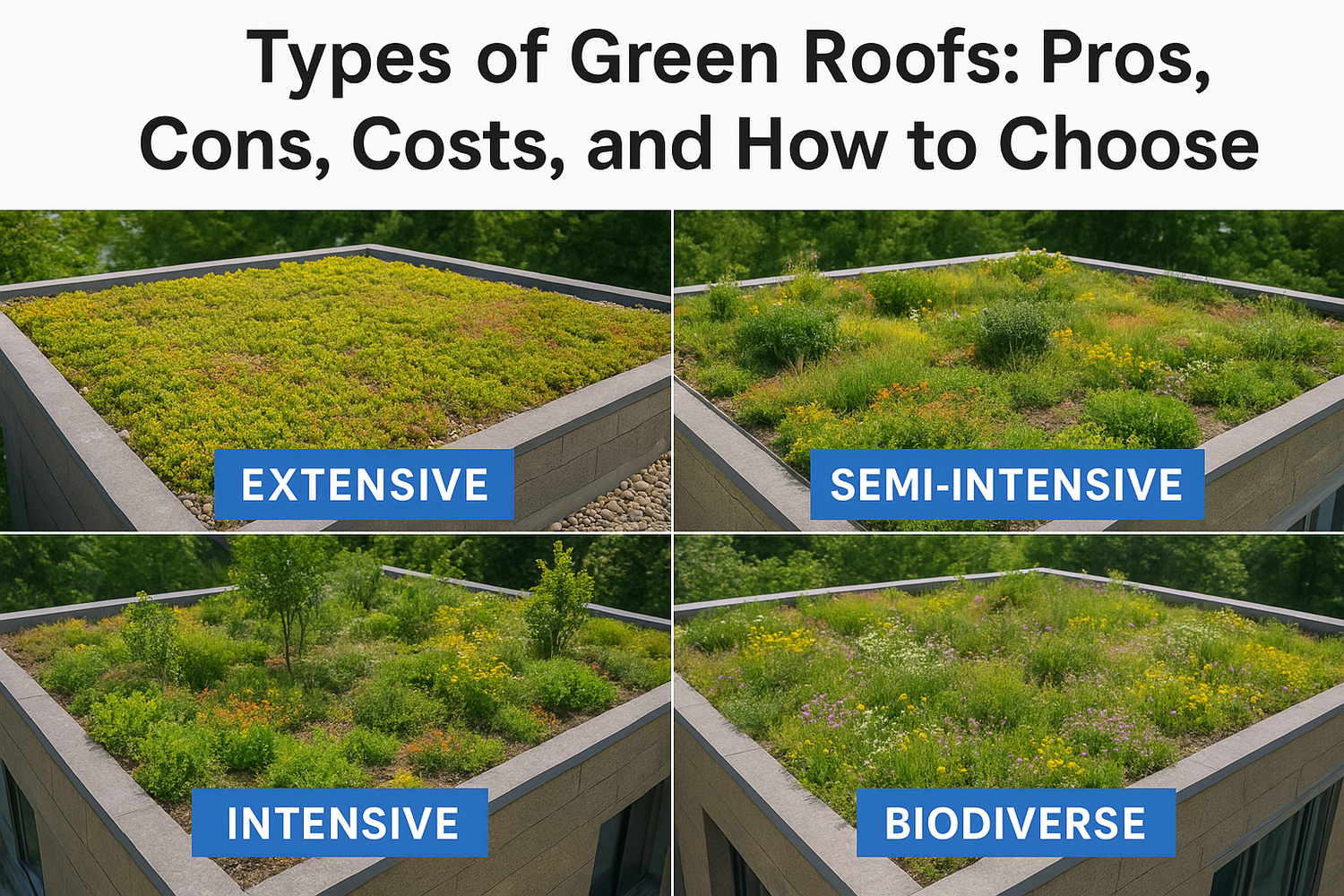
The three primary categories of green roofs differ mainly in depth, weight, plant variety, and intended use. Each category serves distinct purposes and requires different structural support. Extensive systems prioritize low maintenance, intensive roofs create accessible gardens, while semi-intensive designs blend both approaches. You'll also encounter specialized variants like biodiverse roofs and modular systems that address specific ecological or installation needs.
Extensive green roofs
Extensive systems use shallow growing medium (typically 3-6 cm deep) and hardy plants that survive with minimal watering. These lightweight options weigh between 30-90 kg/m² when saturated, making them suitable for most existing buildings. Sedum species dominate these installations because they tolerate drought, extreme temperatures, and poor soil conditions without fertilizer or regular irrigation.
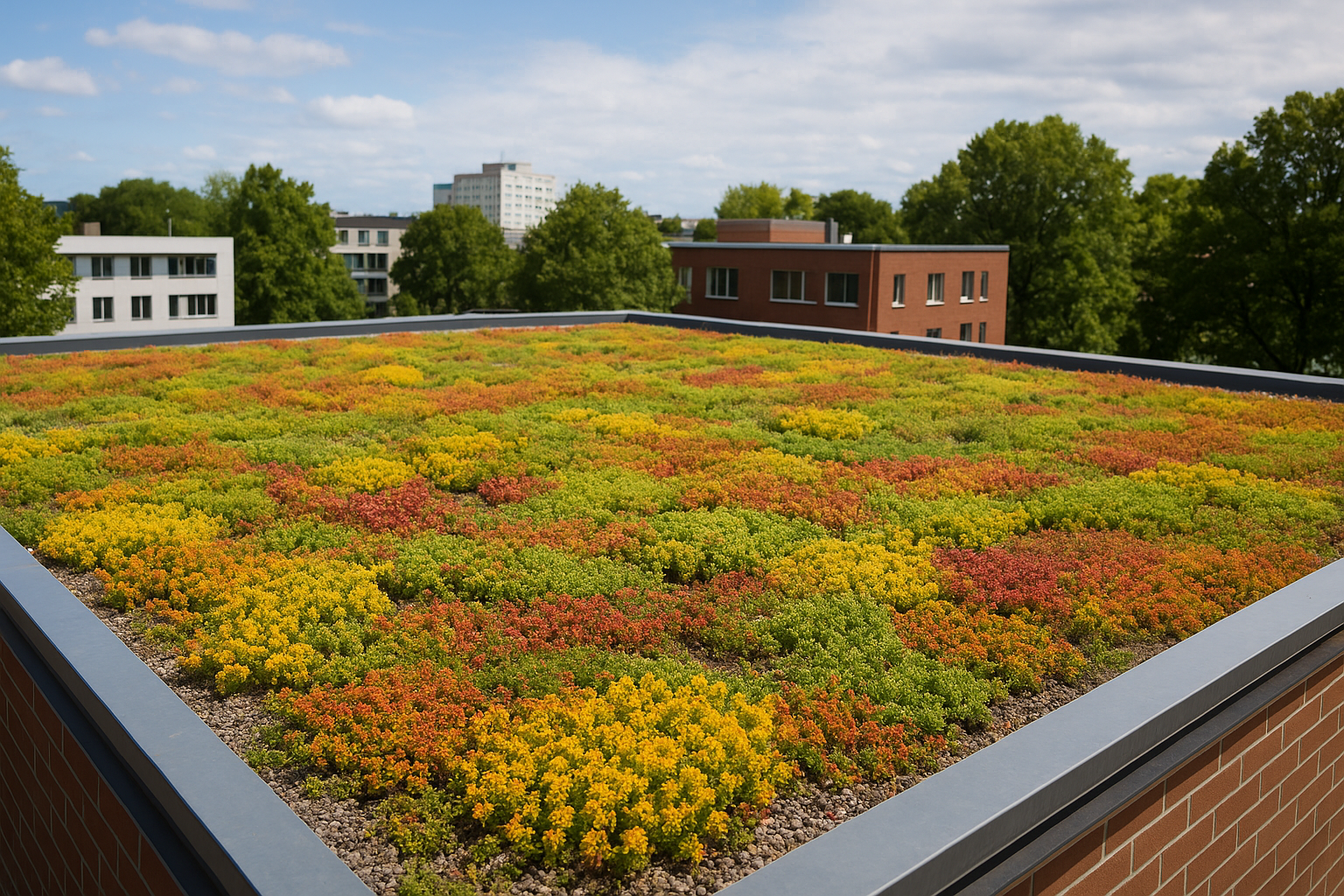
You can install extensive roofs on slopes up to 30 degrees, and they rarely need more than annual maintenance checks. Pre-grown sedum blankets speed up installation and provide immediate coverage. The shallow depth limits plant diversity, but these systems excel at stormwater retention and thermal insulation while demanding minimal care.
Intensive green roofs
Intensive installations function as rooftop gardens with growing medium 20 cm or deeper, supporting shrubs, perennials, and even small trees. These heavy systems start at 150 kg/m² and require concrete structural support. You can incorporate walkways, seating areas, and diverse plantings that transform unused rooftops into recreational spaces where people gather and relax.

Irrigation becomes necessary since deep-rooted plants consume more water than succulents. Regular maintenance including mowing, pruning, and fertilizing keeps these gardens thriving. The investment pays off through expanded usable space in dense urban areas where ground-level gardens aren't possible.
Semi-intensive and biodiverse options
Semi-intensive roofs bridge the gap with medium depths of 15-30 cm, allowing ornamental grasses and small shrubs while weighing less than full intensive systems. Biodiverse roofs prioritize wildlife habitat over human access, incorporating varied substrate depths, logs, and recycled materials that attract insects, birds, and native plants.
The different types of green roofs let you balance structural limitations, budget constraints, and ecological goals based on your specific project requirements.
Pros and cons of each green roof type
Each category of green roof brings distinct advantages and challenges that affect your project's success. Understanding these tradeoffs helps you select the system that aligns with your building's capabilities and your long-term goals. The wrong choice leads to maintenance headaches or structural problems, while the right match delivers decades of benefits with minimal intervention.
Extensive roof advantages and drawbacks
Extensive systems cost less to install and maintain compared to other types of green roofs, making them ideal when budget constraints limit your options. These lightweight designs fit most existing structures without reinforcement, and drought-tolerant plants survive weeks without irrigation in many climates. You benefit from automatic stormwater retention and cooling effects without hiring dedicated gardeners.

The shallow depth restricts plant diversity, so you miss opportunities for colorful flowers or varied textures that intensive gardens provide. Limited accessibility means you can't use the space for recreation or outdoor meetings. Sedum roofs sometimes develop bare patches in extreme weather, requiring occasional replanting to maintain full coverage.
Intensive roof benefits and limitations
Intensive installations create valuable usable space where employees relax during breaks or residents gather for events. The deep soil supports diverse plantings including small trees, vegetables, and ornamental gardens that change with seasons. Property values often increase when buildings offer attractive rooftop amenities.
Heavy structural requirements make intensive roofs impossible on many existing buildings without expensive reinforcement.
Regular irrigation systems add to your utility bills, and ongoing maintenance demands professional landscaping services. Installation costs run two to three times higher than extensive alternatives. You need careful waterproofing since deeper root systems increase leak risks if drainage layers fail.
Costs, maintenance, and local factors
Your location shapes which types of green roofs perform best and what permits you need before installation. Local building codes specify minimum waterproofing standards, drainage requirements, and structural certifications that vary between cities. Check with your municipal authority about incentive programs that offset installation costs through rebates or reduced fees. Understanding these regional variables prevents costly mistakes during planning and helps you budget accurately.
Budget planning essentials
Installation expenses vary based on system complexity and regional labor rates. Extensive systems in Malaysia typically range from RM40-100 per square foot, including materials and professional installation. Intensive roofs cost RM100-200+ per square foot due to deeper substrates, irrigation infrastructure, and structural reinforcement needs. Annual maintenance for extensive designs runs RM5-15 per square foot, while intensive gardens demand RM20-40 per square foot for regular care and pruning.
Climate conditions determine whether your chosen system thrives or struggles, regardless of how much you invest upfront.
Local climate and regulations
Malaysia's tropical climate favors drought-resistant plants on extensive roofs since heavy rainfall saturates growing medium frequently. Your roof needs robust drainage to prevent waterlogging during monsoon seasons. Heat stress affects even hardy sedums during prolonged dry periods, so consider irrigation backup for consistent coverage year-round. Verify local fire safety requirements that may restrict plant heights or mandate specific access paths around rooftop installations.
Key takeaways on green roofs
Selecting the right green roof depends on your building's structural capacity, budget, and intended use. Extensive systems deliver low-maintenance ecological benefits at lower costs, while intensive roofs create functional outdoor spaces that people actively use. Semi-intensive and biodiverse options fill specific niches between these extremes, letting you balance weight constraints with plant diversity goals.
Climate and local regulations shape which types of green roofs succeed long-term on your property. Professional assessment prevents structural failures and ensures your installation complies with building codes. Malaysia's tropical conditions favor drought-resistant extensive systems with robust drainage, though proper planning makes any type viable.
Ready to explore green roof solutions for your property? Contact our landscape design team to discuss which system fits your building, budget, and vision. We'll help you transform your rooftop into a sustainable asset that delivers benefits for decades.