
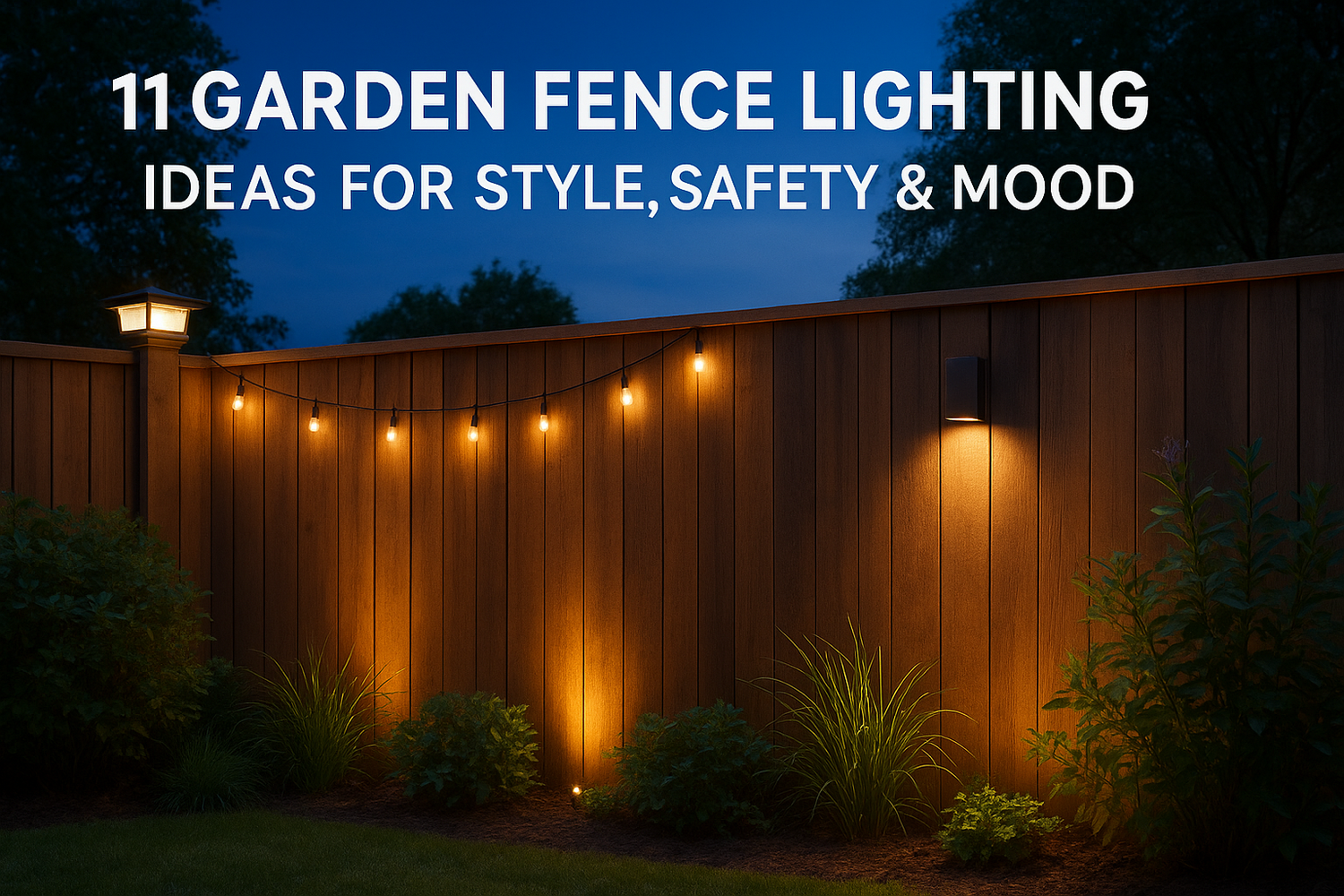
Your garden fence does more than mark boundaries, it's one of the largest vertical surfaces in your outdoor space, and after dark, it disappears entirely. That's a missed opportunity. The right garden fence lighting ideas can turn a plain perimeter into something that actually works for you: setting a mood, improving visibility, and making your garden feel intentional even at night.
Whether you want soft ambient glow for evening dinners or brighter fixtures for security along a walkway, fence lighting gives you options without eating into your garden's floor space. The trick is choosing fixtures and placement that match your garden's design rather than fighting against it, something we help clients think through every day at Konzept Garden as part of our landscape design work across Malaysia.
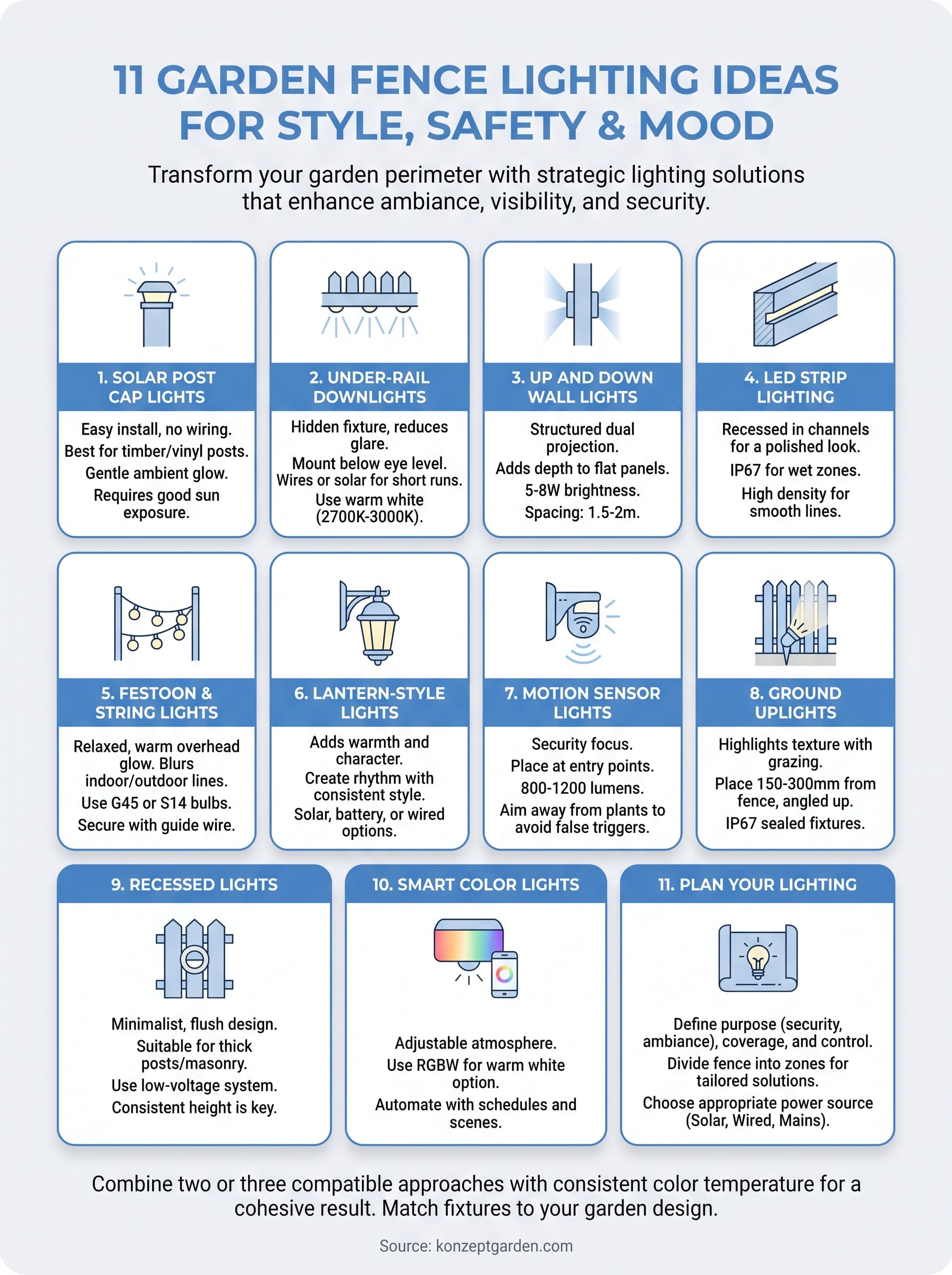
Below, we've pulled together 11 practical and stylish approaches to fence lighting. Each one covers what it looks like, where it works best, and what to consider before installing. Let's get into it.
1. Start with a fence lighting plan
Most people skip the planning phase and buy fixtures that look good in photos but don't work together as a system. A lighting plan saves you money, prevents rework, and gives you a result that looks intentional rather than assembled piece by piece.
What you decide before buying any lights
Before you buy anything, identify what you need the lighting to do: security, ambiance, or accent. Each goal requires different brightness levels and beam angles, so mixing them without a clear plan leads to a fence that looks uneven and wastes budget on the wrong fixtures.
The three decisions to settle upfront are:
- Purpose: security, atmosphere, or both
- Coverage: full perimeter or specific zones only
- Control: manual switches, timers, or motion sensors
How to map lighting zones along a fence line
Walk your fence after dark and mark the sections that matter most: entry points, seating areas, dark corners, and garden beds running along the perimeter. Dividing the fence into zones lets you match fixture intensity to actual need rather than applying the same solution everywhere.
Treating your entire fence as one zone is the most common planning mistake. Different sections serve different purposes, and your lighting plan should reflect that.
Power options and what they mean for the design
Solar, low-voltage wired, and mains-powered are your three main routes. Solar works well for standalone fixtures with good sun exposure, while low-voltage wired systems deliver more consistent output across longer fence runs. Mains power gives you the most reliability but requires a licensed electrician and conduit work, which adds to the overall project cost.
Design details that matter in Malaysia's climate
Malaysia's humidity, heat, and heavy seasonal rain mean IP65 or higher is the minimum rating you should accept for any outdoor fixture. UV-resistant materials also matter, since prolonged sun exposure causes many budget fittings to yellow and crack within a year. Corrosion-resistant options in stainless steel or quality-coated aluminum outlast cheaper alternatives significantly in this climate.
How Konzept Garden can help with layout and specs
When garden fence lighting ideas become part of a full landscape brief, planning errors are caught before they cost you money. Konzept Garden builds lighting layouts directly into the overall garden design, so placement, power routing, and fixture selection all work with the space from the start rather than being bolted on later.
2. Solar post cap lights
Solar post cap lights sit directly on top of fence posts and charge during the day to emit a soft glow at night. They're one of the simplest garden fence lighting ideas available because they require no wiring, no electrician, and no changes to your existing fence structure.
The look this creates at night
Post caps create a row of evenly spaced light points along the fence line, giving a clean, defined perimeter after dark. The light they produce is gentle rather than bright, making them better suited to mood and boundary definition than active security coverage.
Where post caps work best
These fixtures suit timber and vinyl post fences with flat-topped posts between 75mm and 100mm square. If your posts are round or irregular, you'll need adapter kits or a different fixture type entirely.
What to check before you buy solar lights
Look for an IP65 rating or higher and check the battery capacity in milliamp-hours (mAh). In Malaysia, longer runtime matters more than in drier climates because overcast days reduce charging efficiency. Before purchasing, confirm these three things:
- Runtime on a full charge (six hours minimum)
- Panel size relative to the cap footprint
- UV-resistant housing material
Anything rated under six hours of runtime will leave your fence dark well before morning.
Spacing guidelines for an even glow
Standard post spacing of 1.8 to 2.4 meters works well with solar post caps. Beyond 3 meters, the gaps between light points become obvious and the effect loses its cohesion.
Common solar mistakes to avoid
Installing caps under tree canopy or covered pergola sections is the most common error. Shaded panels charge slowly and deliver short, dim output regardless of how premium the fixture is, so sun exposure at the install location always takes priority.
3. Under-rail downlights for a clean glow
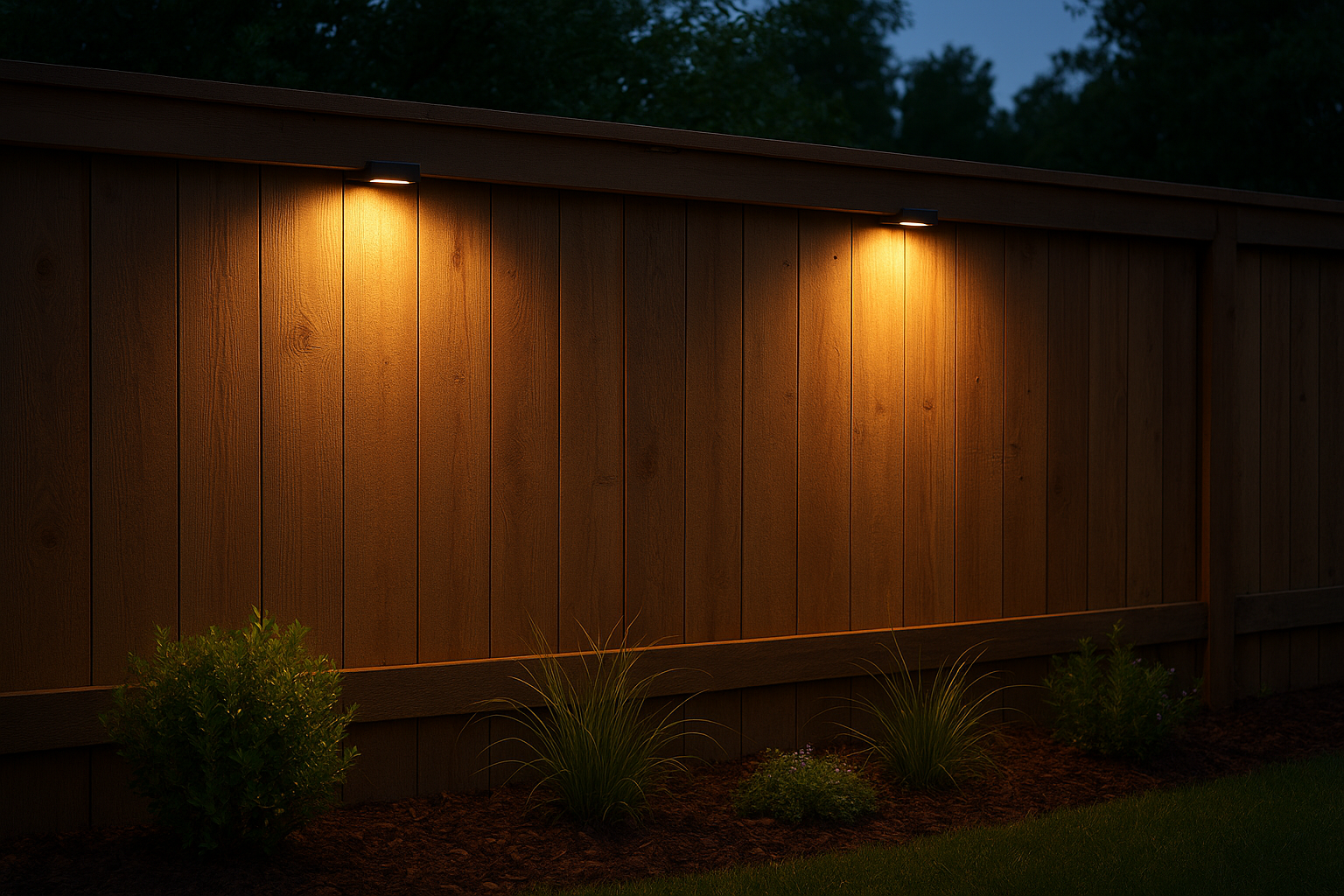
Under-rail downlights mount to the underside of a fence rail and direct light downward along the fence face or toward a garden bed below. They're one of the tidiest garden fence lighting ideas available because the fixture stays largely hidden, and only the light itself remains visible.
Why downlighting flatters most fence styles
Downlighting works because it follows the natural direction of light people are accustomed to from indoor ceiling fixtures. It reads as intentional and calm rather than dramatic. Timber, composite, and brick-capped fences all benefit because the downward beam draws out texture without exposing unsightly fixture hardware.
Placement heights that reduce glare
Mount fixtures on the underside of your lowest horizontal rail or at a height between 600mm and 900mm from ground level. Any higher and the beam angle creates glare at seated eye level, which makes your outdoor seating area uncomfortable after dark.
Keeping fixtures below seated eye height is the single most effective way to avoid glare with downlights.
Wired versus solar under-rail setups
Low-voltage wired systems deliver consistent brightness across the full fence run, making them the better choice for longer perimeters. Solar under-rail fixtures work for short runs of three posts or fewer where wiring isn't practical, though they require unobstructed sun exposure on the panel face.
Best bulbs and color temperature for warmth
Choose 2700K to 3000K color temperature for a warm, inviting tone that suits garden settings. Cooler temperatures above 4000K make plant foliage look washed out and give the space a clinical feel.
Weatherproofing details that prevent failures
In Malaysia's rain-heavy climate, IP65-rated fixtures are the minimum acceptable standard for under-rail installs. Check that cable entry points use sealed glands, not open knockouts, since water ingress at the wiring connection is the most common failure point for outdoor downlights.
4. Up and down wall lights on fence posts
Up and down wall lights mount directly onto fence posts and project two separate beams: one directed upward and one directed downward. This dual projection is one of the more versatile garden fence lighting ideas because it adds visual depth to your fence line without requiring multiple fixture types or complex installation.
How up and down beams change the mood
These fixtures produce a more structured and layered look than simple downlights alone. The upward beam grazes your fence face or washes toward the sky, while the downward beam illuminates the ground plane below. Together, they frame each post as a deliberate design element rather than just a structural component.
Best fence types for this idea
Up and down lights suit rendered masonry, painted timber, and steel panel fences where the surface is flat enough to display the beam pattern clearly. Heavily textured or open-slatted fences scatter the light and reduce the effect significantly.
Beam angle, brightness, and spacing basics
Keep fixture spacing between 1.5 and 2 meters for consistent coverage along your fence run. A brightness of 5 to 8 watts per fixture is enough for most residential perimeters without producing an overly intense glow.
Spacing fixtures beyond 2.5 meters creates visible dark patches between posts that undermine the whole effect.
Wiring paths that stay hidden and safe
Run cables through the post interior or along the back face of your fence, then terminate at a weatherproof junction box at the base. Exposed surface wiring degrades quickly in Malaysia's sun and heavy rain.
When to choose warm white versus neutral white
Use 2700K to 3000K warm white for garden zones near seating or planting beds. Neutral white at 3500K to 4000K suits boundary fences along driveways or entry paths where visibility takes priority over atmosphere.
5. LED strip lighting inside slats or grooves
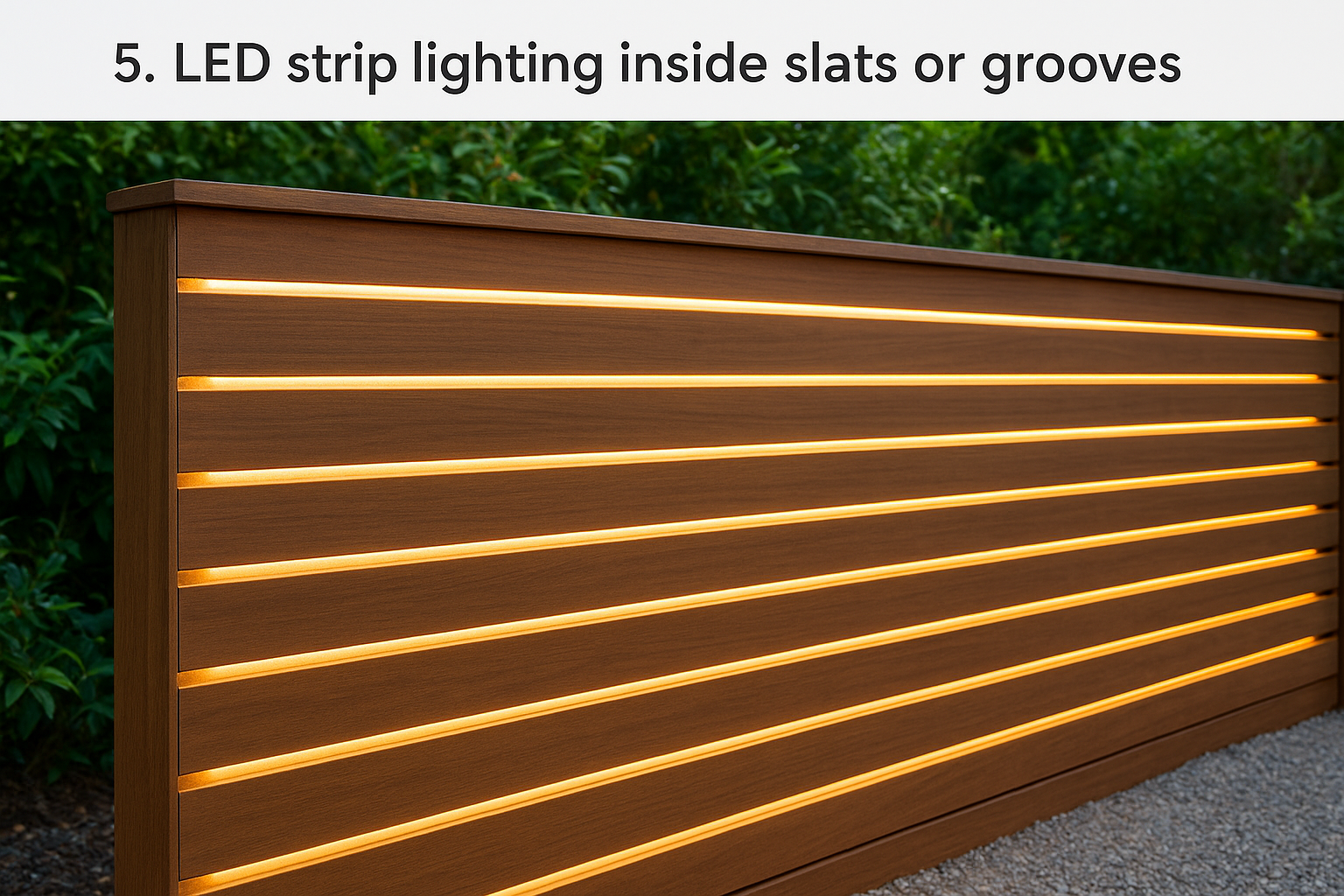
LED strip lighting sits inside fence grooves, slat channels, or routed timber profiles to produce a continuous line of light that looks built-in rather than added on. Among the more polished garden fence lighting ideas available, this approach works because the source stays completely hidden and only the glow itself remains visible.
How to hide strips for a premium look
Route a shallow channel into your timber slats or use an aluminum extrusion profile to recess the strip fully. The profile also acts as a heat sink, which extends the lifespan of the LEDs significantly in Malaysia's warm climate.
Where strips work best on modern fences
Strips suit horizontal slat fences, louvered panels, and composite board fences with consistent groove spacing. Open or irregular surfaces scatter the light unevenly and reduce the clean line effect that makes this technique work.
Vertical slat fences rarely produce the same result as horizontal ones because the beam has nowhere defined to travel.
Choosing the right IP rating and diffuser
Use IP67-rated strips for any channel exposed to rain splash or irrigation. Pair them with a frosted diffuser cover, which softens individual LED hotspots into one continuous line rather than a dotted string of points.
Power supply placement and cable management
Place your weatherproof driver box at one end of the fence run inside a lockable enclosure. Run cables through conduit along the fence's rear face to keep connections dry and accessible for future maintenance.
How to avoid hot spots and uneven lines
Purchase strips with a density of at least 60 LEDs per meter to prevent visible gaps between diodes. Lower-density strips create a dotted effect no diffuser can fully correct once the strip is installed.
6. Festoon and string lights along the fence
Festoon and string lights bring a relaxed, social quality to outdoor spaces that most other garden fence lighting ideas can't match. Strung along a fence line above a patio or dining area, they create a warm, overhead glow that makes evening gatherings feel comfortable without any complex installation.
The vibe this creates for patios and gatherings
This style works because it blurs the boundary between indoors and outdoors, giving your patio the same warmth you'd expect from a well-lit interior. The light falls downward and diffuses softly, which suits low-key entertaining, outdoor dining, and quiet evenings far better than directional spotlights.
Mounting methods that keep lines tidy
Use screw-in cable hooks on your fence posts at consistent heights to keep the catenary line even. Uneven hook placement is the fastest way to make string lights look careless rather than considered.
Bulb shapes and spacing that look intentional
G45 globe bulbs spaced at 300mm intervals produce the most balanced coverage for fence runs under 10 meters. Larger S14 filament bulbs suit longer spans where a bolder, more visible statement fits the design.
Matching your bulb shape to the scale of the space makes the difference between a deliberate design choice and a temporary decoration.
Power options for renters and owners
Battery-powered string lights with a timer function suit rental properties where fixed wiring isn't an option. Owners installing permanent lines benefit from a weatherproof outdoor socket connected to a timer switch for consistent automated operation.
How to prevent sagging and wind damage
Run a steel guide wire between your posts first, then attach the light string to it rather than letting the cable carry its own weight. This keeps the line taut through Malaysia's rainy season winds and prevents fixture damage over time.
7. Lantern-style lights for a cozy perimeter
Lantern-style lights give a fence line warmth and personality that most other garden fence lighting ideas don't match. They work by drawing attention to specific points along the perimeter, creating deliberate rhythm rather than continuous coverage.
Styles that suit tropical and modern gardens
Lanterns come in two directions that suit Malaysian gardens well: clean-lined geometric designs for contemporary and minimalist spaces, and darker iron or bronze finishes for tropical and heritage styles. Avoid chrome finishes outdoors, since humidity accelerates corrosion on uncoated metals quickly.
Mounting ideas for panels and posts
Post-mount brackets keep lanterns raised and visible, while wall-mount plates suit flat fence panels directly. Use corrosion-resistant stainless hardware for all fixings, since standard screws deteriorate quickly in Malaysia's humid outdoor conditions.
Solar, battery, and wired lantern tradeoffs
Wired lanterns deliver the most reliable output but require conduit and a licensed electrician for safe installation. Solar lanterns work well as standalone perimeter accents where consistent daily runtime matters less than convenience, while battery models suit rental properties or zones where fixed wiring isn't practical.
Match your power source to your usage pattern first, then choose the fixture style around it.
Safe flame-free candle effects and timers
LED flicker modules inside lantern housings simulate candlelight without any fire risk. Pair them with a built-in timer or smart plug to automate on and off cycles so the lights run consistently without daily manual adjustment.
How to keep lanterns from looking cluttered
Stick to one lantern style across your entire fence run. Mixing multiple designs fragments the visual rhythm and makes the perimeter look assembled rather than intentionally planned.
8. Motion sensor lights for security zones
Motion sensor lights are one of the most practical garden fence lighting ideas for perimeter security. They stay off when the garden is empty and activate on detection, which conserves energy and signals activity to anyone approaching your property.
Where motion lighting adds the most value
Focus motion lights on entry gates, side passages, and dark corners where a person could approach unseen. These are the zones where instant, bright light creates the strongest deterrent effect and gives you the most useful coverage per fixture.
How to avoid false triggers in gardens
Set your sensor sensitivity to medium and angle the detection zone away from swaying plants and areas where animals pass regularly. Large-leafed tropical plants in particular move constantly in Malaysian evening breezes and will trigger poorly aimed sensors repeatedly.
Aiming the sensor toward a fixed approach path rather than open garden space cuts false activations dramatically.
Brightness and beam spread for real coverage
Choose fixtures that deliver 800 to 1200 lumens with a 120-degree beam spread for standard residential gates and side access paths. Narrower beams leave coverage gaps, while higher lumen outputs can create harsh glare that actually reduces your own visibility.
Pairing motion lights with ambient fence lighting
Keep your ambient fence lighting running at low brightness continuously and let motion lights layer on top when triggered. This combination gives your perimeter a natural, welcoming look at night rather than a security-facility appearance.
Placement rules that protect neighbors' sightlines
Mount fixtures between 2.4 and 3 meters high and angle the beam downward at roughly 15 degrees. This keeps the light on your property and prevents the activated beam from flooding directly into neighboring windows or the street.
9. Ground uplights to graze fence texture
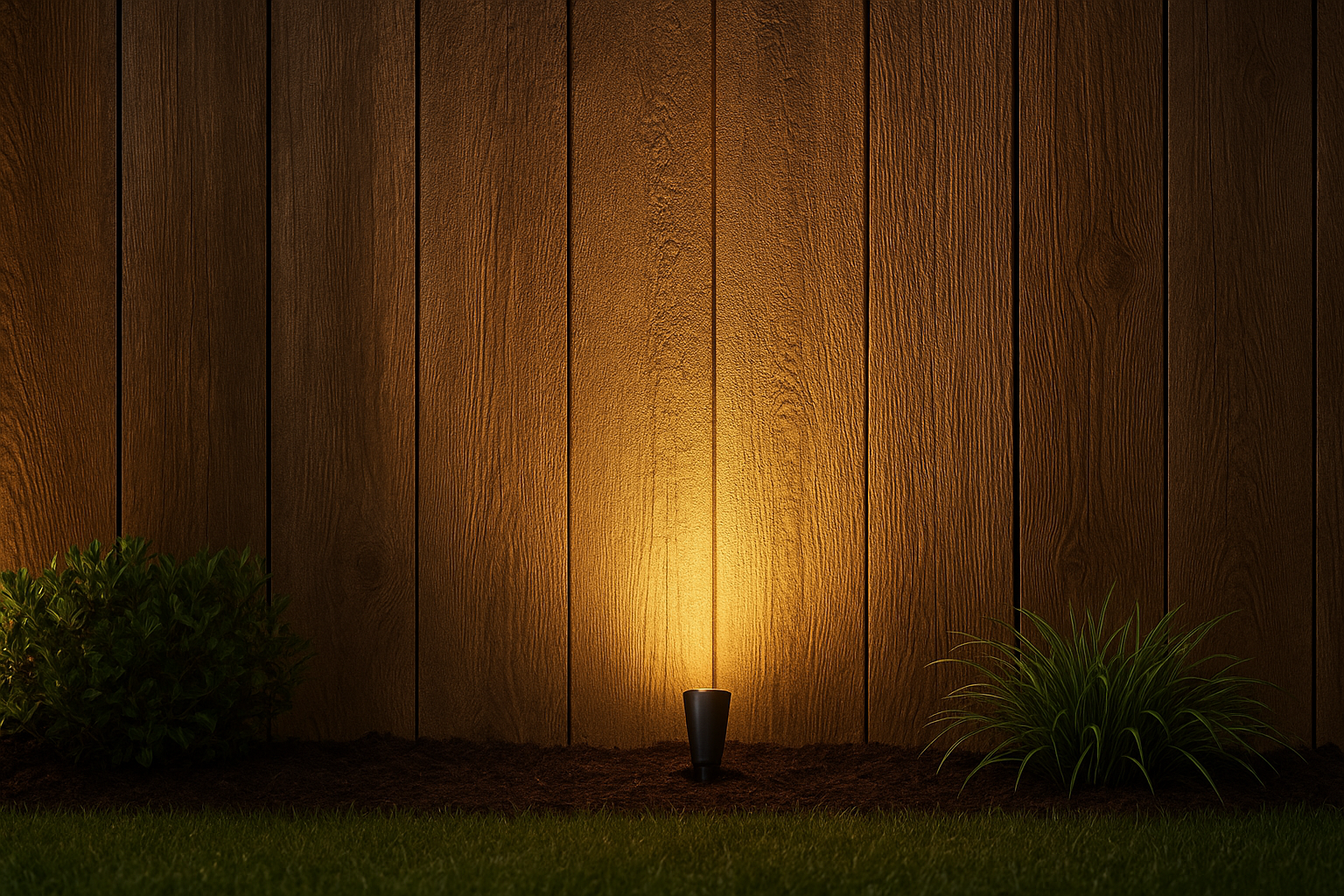
Ground uplights sit at ground level and direct a tight beam upward along your fence face, a technique called grazing. This approach reveals surface texture in a way no other lighting method can, making it one of the more distinctive garden fence lighting ideas for adding depth to your perimeter after dark.
What grazing does for timber, stone, and metal
Grazing works by placing light at a sharp, raking angle across a surface, which forces shadows into every groove, ridge, and grain line. Timber boards gain visible character, stone cladding develops dramatic relief, and metal panels show subtle surface variation you'd never notice in daylight.
Angle and distance guidelines for clean shadows
Position your uplight 150 to 300mm away from the fence face and angle it at roughly 15 to 25 degrees from vertical. Moving the fixture further back softens the shadow and reduces texture contrast, so keep it tight to the surface for the sharpest result.
The closer the fixture sits to the fence face, the more pronounced the texture effect becomes.
Fixture types that survive rain and irrigation
Use fully sealed IP67-rated spike-mount uplights made from powder-coated aluminum or marine-grade stainless steel. These handle both direct rain and irrigation spray without corroding at the cable entry points or mounting hardware.
Warmth and brightness settings for subtle drama
Keep brightness between 3 and 6 watts per fixture at a 2700K to 3000K color temperature. Higher outputs wash the texture flat rather than deepening it, which defeats the purpose of grazing entirely.
Mistakes that cause glare and light spill
Placing fixtures too far from the fence is the most common error, since it spreads the beam wide and reduces contrast significantly. Also avoid wide-angle flood lenses on grazing fixtures, because they project light sideways into your garden rather than directing it cleanly up the fence face.
10. Recessed lights built into posts or panels
Recessed lights sit flush inside your fence post or panel face, with only the trim ring and lens visible from outside. Among the cleaner garden fence lighting ideas, this approach suits contemporary designs where surface-mounted fixtures would interrupt the overall aesthetic.
When recessed lighting makes sense
Recessed fixtures make sense when your fence is thick enough to accommodate a housing, typically timber posts above 90mm square or masonry columns above 150mm wide. They suit gardens where a minimal, uncluttered perimeter is the design priority.
Cut-in locations that look balanced and safe
Position recessed lights at consistent heights along your fence run, either at 300mm above ground for low-level path lighting or at mid-post height around 900mm for a more deliberate visual rhythm. Avoid placing them near soil level where water pools after heavy rain.
Consistent placement height across every post is what separates a polished installation from one that looks improvised.
Low-voltage safety basics for outdoor installs
Use a 12V low-voltage system fed through a weatherproof transformer rated for your total fixture load. All cable runs behind panels should sit inside UV-resistant conduit to prevent insulation breakdown from Malaysia's heat and moisture exposure.
How to choose trim styles that disappear
Select trim rings that match your fence material in color and finish. Dark bronze trims recede into timber and composite panels, while brushed aluminum suits rendered masonry with lighter surface tones.
Maintenance access so you do not trap failures
Design your install so each fixture pulls forward from the face rather than requiring full panel removal to replace. This keeps routine bulb and seal checks straightforward and prevents you from dismantling the fence structure every time a fitting needs attention.
11. Smart color lighting for mood and events
Smart color lights let your fence shift atmosphere on demand, moving from a calm warm glow on a regular evening to something more vivid when you're hosting guests. Among all garden fence lighting ideas, this one is the most flexible because you control the output from your phone rather than committing to one fixed look.
Where color works without feeling overdone
Color lighting works best on accent zones rather than the full fence perimeter. Pick one section, such as behind a water feature or along a seating nook, and keep the rest of the fence in warm-white. This gives color a specific purpose rather than letting it compete across every surface.
Scenes to set for daily use and hosting
For daily use, a warm amber or soft white preset keeps things calm and consistent. When you're hosting, a low-saturation blue or deeper amber shifts the mood without turning your garden into a venue.
Setting two or three saved scenes in your app covers most situations without requiring manual adjustment every time.
How to combine RGB with warm-white lighting
Use RGBW strips or fixtures, which include a dedicated warm-white channel alongside the color diodes. This lets you run clean neutral light on ordinary nights and switch to color only when you need it, rather than filtering everything through the RGB channels alone.
Scheduling, sensors, and automation basics
Connect your smart lights to a scheduling app and program scene changes to trigger at sunset or a fixed hour. Geofencing features available in most smart lighting platforms can also activate a welcome scene automatically when you arrive home.
Light pollution and neighbor-friendly settings
Keep maximum brightness below 50 percent in color mode and angle fixtures inward toward your garden. Saturated cool tones like blue and green scatter more visually than warm hues, so limit them near shared boundaries.
Next steps
These 11 garden fence lighting ideas cover the full range from simple solar caps to smart color systems, but the one that works best for your garden depends on your fence type, power access, and how you actually use the space. Picking two or three approaches that share a consistent color temperature and power source gives you a more cohesive result than installing multiple unrelated fixtures across your perimeter.
Before you buy anything, walk your fence after dark and note where the real gaps are. Security, atmosphere, and accent lighting each require different fixtures, and knowing which priority applies to which section keeps your budget focused. If you want professional guidance on combining lighting with a full garden layout, Konzept Garden can help you plan it properly from the start. Talk to our team about your garden design and get a quote that covers both the lighting and the landscape together.