
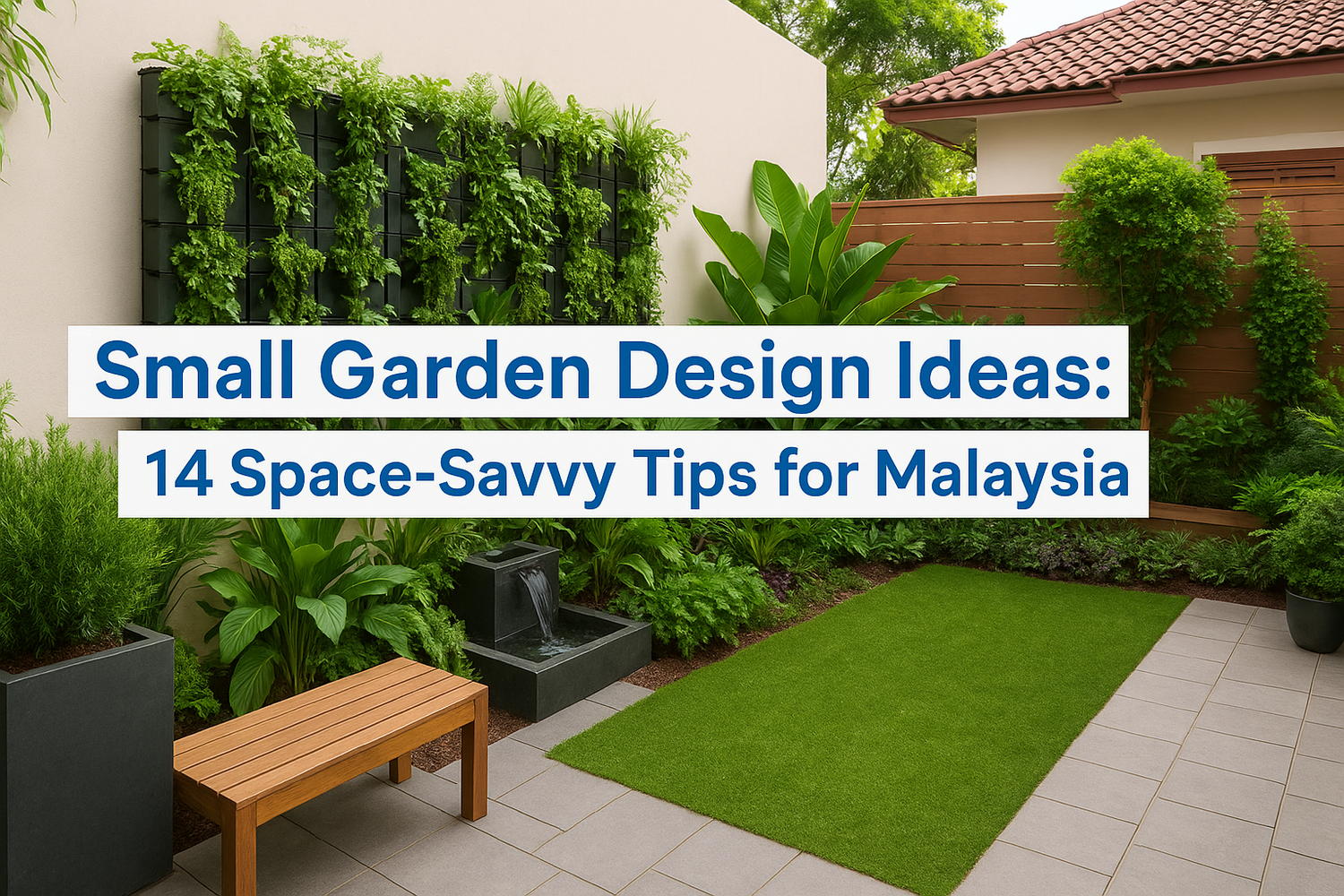
You have a balcony, a narrow side yard, or a small patch behind your terrace. You want greenery, seating, and maybe even a water feature, but the space feels boxed in. Every centimetre matters, and you are not sure where to start. Many Malaysian homeowners face this puzzle when they search for small garden design ideas that actually fit their climate and footprint.
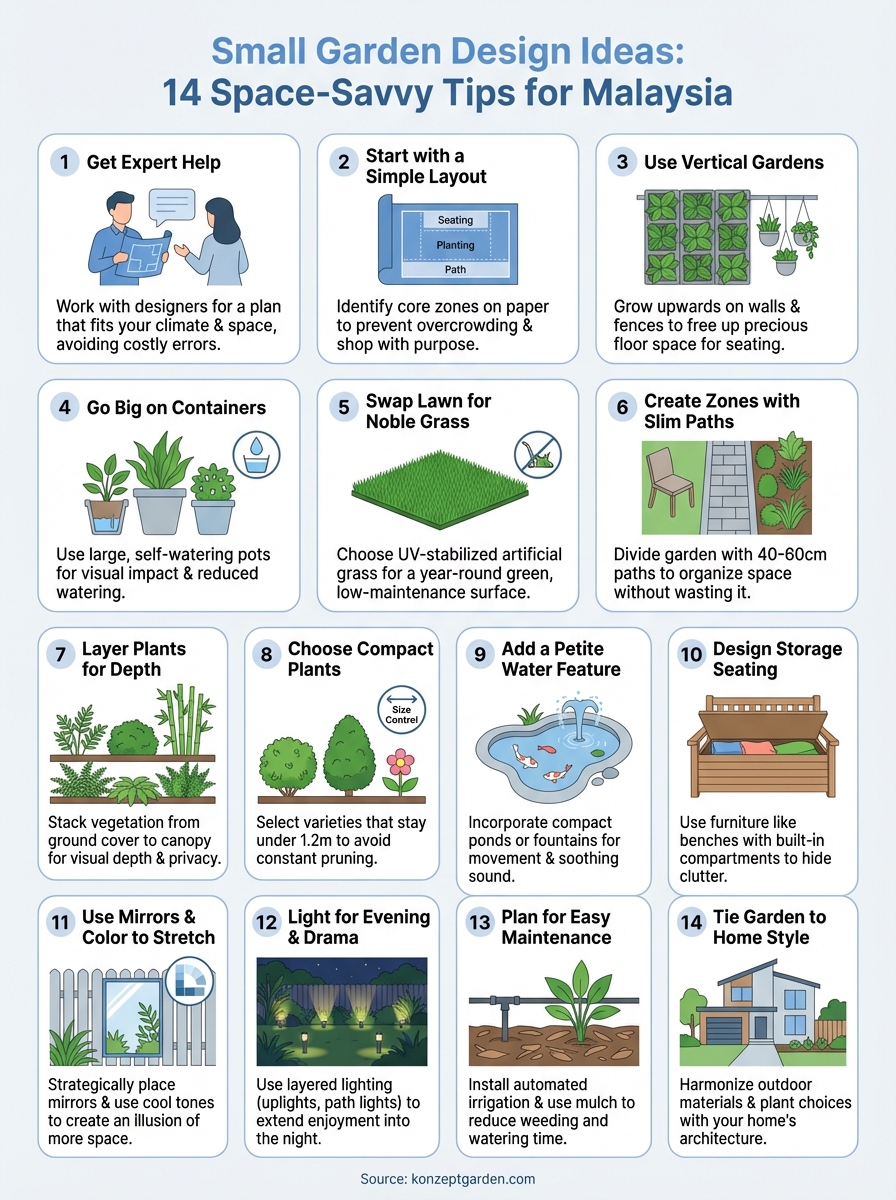
This guide gives you 14 practical tips to transform your compact outdoor area into a functional, beautiful retreat. You will learn how to maximize vertical space, choose the right plants for Malaysia's heat and humidity, swap high-maintenance lawns for smart alternatives, and carve out zones that feel larger than they are. Each tip includes clear advice on layouts, materials, and products so you can plan with confidence. Whether you rent a condo or own a landed property, these ideas help you make every square metre count.
1. Get expert help from Konzept Garden
Planning a small garden in Malaysia means juggling tropical climate, limited square footage, and the need for year-round greenery. You can spend weeks browsing Pinterest or copying ideas that fail in our heat, or you can work with a local landscape designer who understands both your space and your climate. Konzept Garden offers award-winning design services that take you from concept sketches to finished installation, so you avoid costly trial and error.
Idea overview
Professional designers start with a site assessment to measure sun exposure, drainage, and access points. They then create a 3D visualization that shows exactly how your small garden will look before a single plant goes into the ground. This service includes planting plans matched to Malaysian conditions, material recommendations, and a timeline for implementation. You skip the guesswork and get a design that fits your lifestyle, whether you want low-maintenance greenery or a feature pond.
How to apply this in a small space
Book a free quotation through the Konzept Garden website or visit their showroom to discuss your vision. The design team will measure your balcony, side yard, or courtyard, then produce a detailed plan that maximizes every corner. They handle permits, sourcing, and installation, so you do not juggle multiple contractors. The process typically runs four to six weeks from initial consultation to completion.
"Award-winning expertise means fewer mistakes and a garden that thrives from day one."
Plants, materials and products to use
Designers specify drought-tolerant shrubs, Noble Grass, Ziant Hydro Planters, and EcoWall modules tailored to your site. They source materials directly, often at better rates than retail.
Best for
Homeowners who value time savings, professional results, and a guaranteed outcome. Ideal if you want a cohesive design without managing logistics yourself.
2. Start with a simple small garden layout
Before you buy plants or hardscape materials, you need a clear layout that divides your space into functional zones. A simple plan prevents overcrowding and ensures you allocate the right area for seating, planting, and circulation. Sketch your boundaries on graph paper or use a free online tool to map beds, paths, and focal points. This step saves money because you order only what fits.
Idea overview
A basic layout identifies three core zones: a seating or relaxation area, a planting bed for greenery, and a path or circulation strip. You do not need elaborate curves or multiple levels in a small garden. Rectangular or L-shaped beds hugging the perimeter leave a central open area that feels larger than it is. Mark shaded spots for ferns and sunny corners for flowering shrubs.
How to apply this in a small space
Measure your garden's length, width, and any fixed elements like drains or walls. Draw the outline to scale, then pencil in 60 cm wide paths for comfortable movement and allocate the rest to planting and seating. Place the seating zone where you get morning shade or evening breeze, and keep it visible from your main living area. Avoid filling every square metre; leaving negative space makes the garden breathe.
"A clear layout turns guesswork into a roadmap, so you shop with purpose."
Plants, materials and products to use
Use gravel or pavers for paths, raised timber or metal edging for beds, and compact shrubs like Ixora or Heliconia for borders.
Best for
First-time gardeners and renters who want a no-fuss framework that adapts as plants mature.
3. Use vertical gardens to free floor space
When your floor area measures only a few square metres, you need to grow upwards instead of outwards. Vertical gardens let you pack lush greenery onto walls, fences, and railings without sacrificing precious walking or seating space. This approach turns blank vertical surfaces into living art and keeps your small garden design ideas functional rather than cramped.
Idea overview
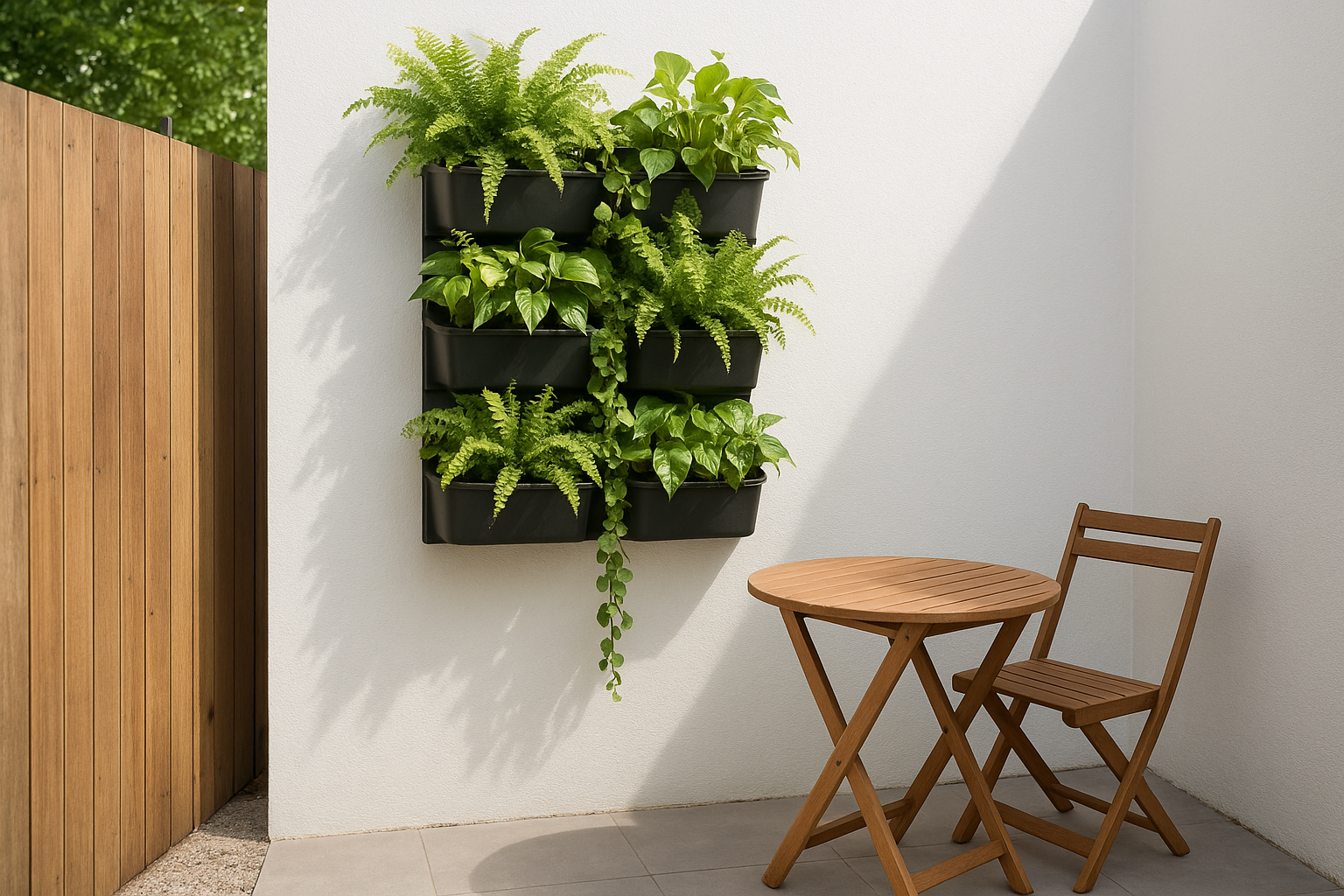
Vertical systems range from simple wall-mounted planters to modular living-wall panels that slot together like tiles. Plants grow in stacked pockets or trays fed by a hidden drip line, so roots stay hydrated without daily hand-watering. You can cover an entire fence or dedicate one accent wall to greenery, depending on your budget and maintenance appetite. The result is a green backdrop that adds privacy, cools the air, and frees the ground for furniture or paving.
How to apply this in a small space
Install EcoWall modules along your longest boundary fence or fix tiered planters to a sunny side wall. Space the modules or pockets 30 cm apart vertically and ensure each unit has drainage holes to prevent root rot. Run a drip irrigation line if you travel often, or hand-water twice weekly during dry spells. Choose a wall that receives morning sun and afternoon shade to prevent leaf scorch in Malaysia's midday heat.
"Vertical planting turns wasted wall space into the star of your garden."
Plants, materials and products to use
Ferns (Nephrolepis exaltata), pothos, and trailing peperomia thrive in vertical pockets. EcoWall panels from Konzept Garden come pre-drilled for quick mounting, or you can use timber battens and galvanized steel planters for a DIY setup.
Best for
Balconies, narrow side yards, and courtyards where floor space is limited but wall area is abundant.
4. Go big on containers and self-watering pots
Containers give you complete control over soil quality, drainage, and plant placement in your small garden. You can move pots to follow the sun, swap tired plants for fresh blooms, and avoid digging into poor soil or concrete slabs. Self-watering pots take this flexibility further by storing water in a reservoir at the base, so you water less often and your plants never wilt during a weekend away. This strategy fits perfectly into small garden design ideas for Malaysian balconies and courtyards.
Idea overview
Large containers create visual impact without cluttering the ground with dozens of small pots. A single 60 cm planter holds enough soil for a dwarf palm, several ferns, and trailing ground cover in one layered display. Self-watering systems use a wick or false bottom that draws moisture upward, keeping roots hydrated for five to seven days between top-ups. You reduce watering chores and give plants consistent moisture levels, which matters in Malaysia's humid, hot climate where surface soil dries fast.
How to apply this in a small space
Choose rectangular or oval planters that sit flush against walls or railings, saving floor space compared to round pots. Position three to five large containers along the perimeter, mixing heights from 30 cm to 80 cm for depth. Fill them with quality potting mix and install Ziant Hydro Planters for automatic watering. Check the reservoir weekly and refill when the indicator drops below half.
"Fewer, larger pots create order while self-watering tech frees your weekends."
Plants, materials and products to use
Plant peace lilies, sansevierias, and bird's nest ferns in shaded pots, or dwarf ixora and portulaca in sunny spots. Ziant Hydro Planters from Konzept Garden suit Malaysia's rainy and dry cycles.
Best for
Busy homeowners, frequent travelers, and renters who want portable greenery with minimal daily care.
5. Swap high-care lawns for Noble Grass
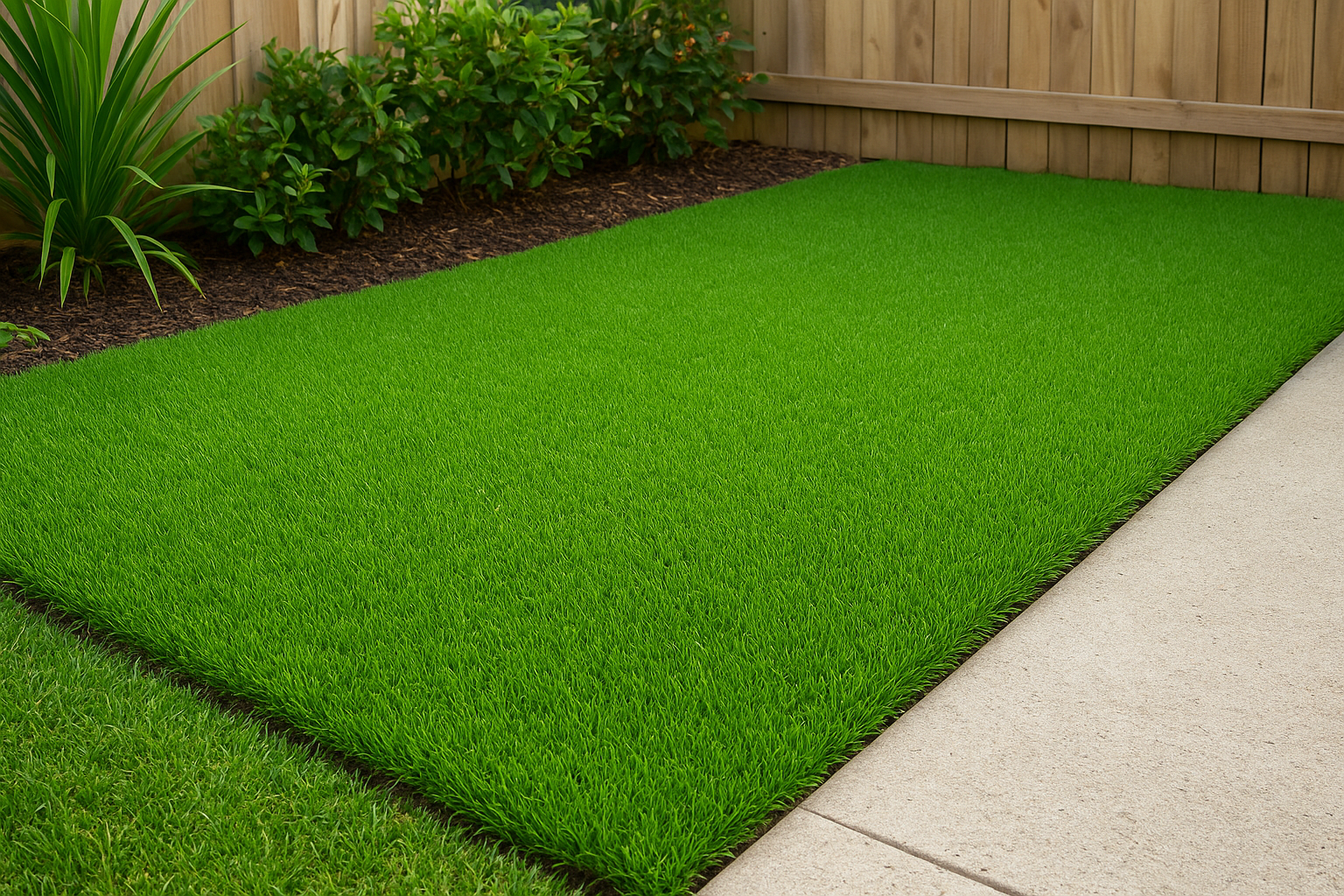
Real grass in a small Malaysian garden demands weekly mowing, constant watering, and battles with brown patches during dry spells. You spend hours maintaining a few square metres of turf that never looks pristine. Artificial grass removes this burden while giving you a lush green surface year-round. Noble Grass, available through Konzept Garden, mimics natural blades and drains quickly after Malaysia's afternoon storms, so you reclaim time and keep your small garden design ideas low-maintenance.
Idea overview
Noble Grass uses UV-stabilized polyethylene that resists fading under tropical sun and features a permeable backing for rapid drainage. Installation involves laying a compacted sand base, rolling out the turf, and securing edges with galvanized nails or adhesive. The surface stays cool underfoot compared to concrete and requires only occasional brushing to lift flattened fibers. You eliminate fertilizers, pesticides, and the noise of a lawn mower.
How to apply this in a small space
Measure your lawn area and order Noble Grass with a 10 percent overage for trimming. Excavate 5 cm of soil, spread compacted sand, and lay weed-barrier fabric before rolling the grass. Trim around planters and paths with a sharp utility knife. Brush the fibers monthly and hose down dust during dry weeks.
"Artificial turf transforms high-maintenance grass into a worry-free green carpet."
Plants, materials and products to use
Noble Grass from Konzept Garden, compacted sand base, weed fabric, and galvanized edging strips.
Best for
Families with children, pet owners, and anyone who wants a tidy lawn without weekend labor.
6. Create zones with slim paving and paths
Dividing your small garden into distinct areas makes it feel organized rather than cluttered, but you cannot afford to waste space on wide pathways. Slim paving strips and narrow paths mark boundaries between seating, planting, and utility zones while keeping most of your square footage usable. This technique works because the human eye reads different surfaces as separate spaces, so a simple shift from gravel to pavers signals a transition without building walls or fences. You apply these small garden design ideas to guide movement and define purpose without shrinking your garden.
Idea overview
Paths act as visual dividers that carve your garden into functional zones. A 50 cm wide paver strip between your seating corner and planting bed creates a clear boundary while still allowing you to move comfortably with a watering can or tray. Using contrasting materials such as timber decking beside gravel or darker pavers next to lighter gravel amplifies the zoning effect. The path does not need to be a continuous walkway; stepping stones or interrupted strips work equally well in tight spaces.
How to apply this in a small space
Lay 40 to 60 cm wide paths using rectangular pavers or gravel edged with metal strips. Connect your main entry point to the seating area with a direct line, then branch a secondary path to reach planters or storage. Keep curves gentle or stick to straight lines so you do not lose usable planting area to awkward angles. Bed the pavers on compacted sand for drainage and stability.
"Narrow paths divide space visually without sacrificing precious square metres."
Plants, materials and products to use
Use concrete pavers, reclaimed timber sleepers, or pea gravel for paths. Edge with galvanized steel or aluminum strips to prevent spread. Flank paths with low groundcover like Ophiopogon or Trachelospermum.
Best for
Small courtyards and side yards where you want clear zones for seating, planting, and access without building permanent structures.
7. Layer plants for depth, shade and privacy
Your small garden feels flat when every plant sits at the same height, and neighbors peer straight into your seating area. Layering plants in tiers from ground cover to canopy level creates visual depth, cools the space naturally, and screens unwanted sightlines without building solid walls. This technique mimics how forests grow and makes your compact plot feel lush and established rather than sparse. You combine plants of different heights and textures to build a living privacy screen that adapts as your small garden design ideas evolve.
Idea overview
Plant layering stacks vegetation in three or four height bands: ground covers below 30 cm, mid-level shrubs from 50 cm to 1.2 m, tall feature plants or small trees at 2 m, and climbers that reach 3 m or more. Each layer performs a role. Ground covers suppress weeds and soften hard edges, shrubs provide the main privacy mass, taller plants form a canopy that shades seating, and climbers fill vertical gaps on fences or trellises. The overlapping foliage creates a dense green backdrop that blocks views while allowing air circulation, which matters in Malaysia's humid climate where solid walls trap heat.
How to apply this in a small space
Plant tall palms or bamboo at the back boundary, add mid-height shrubs like Dracaena or Cordyline in front, and edge with low ferns or Rhoeo. Space plants 60 to 80 cm apart so they knit together within six months. Train climbers like Antigonon leptopus or jasmine on existing fences to fill the upper layer fast.
"Layered planting turns a flat bed into a three-dimensional privacy screen."
Plants, materials and products to use
Use clumping bamboo (Bambusa multiplex), lady palms (Rhapis excelsa), philodendrons, and ground ferns. Add trellis panels or wire for climbers.
Best for
Gardens overlooked by neighbors, courtyards that need cooling shade, and anyone wanting year-round greenery without solid fencing.
8. Choose compact plants that love Malaysia
Your plant choices make or break your small garden because oversized species quickly outgrow their space and demand constant pruning. You need compact varieties that stay manageable year-round while thriving in Malaysia's heat, humidity, and afternoon storms. The right plants fill your beds with color and texture without sprawling into paths or blocking windows, so your small garden design ideas remain functional as the garden matures.
Idea overview
Compact plants grow to predictable sizes, typically staying below 1.2 meters tall and spreading less than 60 cm wide without aggressive trimming. These varieties evolved for understory or rocky habitats, so they naturally grow slower and denser than their wild cousins. Malaysian-adapted species tolerate high humidity, intense sun, and heavy rain without developing fungal diseases or leaf scorch. You avoid the frustration of battling plants that double in size every season or require weekly shaping.
How to apply this in a small space
Select plants rated for Zones 11 to 12 that match your garden's sun exposure. Place sun lovers like dwarf Ixora and Portulaca in spots receiving six hours of direct light, and shade plants such as Aspidistra or Chlorophytum under eaves or taller shrubs. Space each plant 40 to 50 cm apart to allow air circulation while ensuring they knit together within four to six months.
"Choosing the right size plants from day one saves years of pruning battles."
Plants, materials and products to use
Use dwarf Ixora coccinea, compact Heliconia psittacorum, bird's nest fern, snake plant, Rhoeo spathacea, and Cuphea hyssopifolia. Source from local nurseries for pre-acclimated stock.
Best for
Homeowners who want year-round color with minimal maintenance and gardens where every plant must earn its space.
9. Add a petite koi pond or water feature
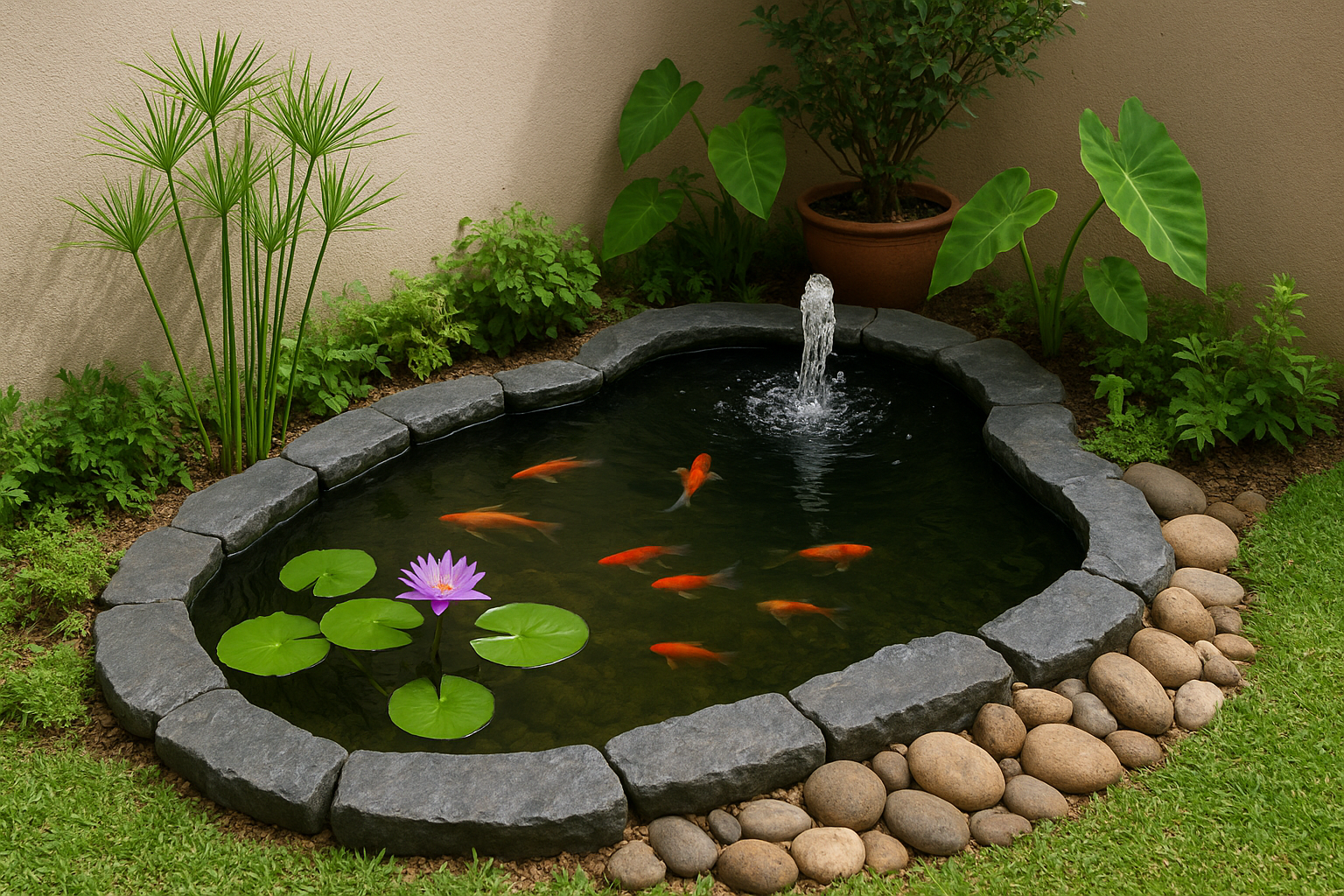
Water brings movement and sound that transform a static garden into a sensory retreat, and you do not need a sprawling lake to achieve this effect. A compact koi pond or simple fountain fits into corners, against walls, or even on raised platforms in your small garden design ideas for Malaysian spaces. The gentle trickle of water masks street noise, cools the air through evaporation, and attracts birds and dragonflies, adding life beyond your planted beds.
Idea overview
Petite water features range from pre-formed pond shells measuring 1 meter by 80 cm to wall-mounted bubble fountains that occupy just 40 cm of floor space. Koi ponds need filtration and aeration to keep fish healthy in Malaysia's warm water temperatures, while decorative fountains simply recirculate water through a submersible pump. Both options create a focal point that draws the eye and gives your garden a finished, professional look. Konzept Garden offers Zen Bio Koi Pond and Himalaya Rock Fish Pond designs scaled for tight urban plots.
How to apply this in a small space
Position your pond or fountain where you can see and hear it from your main seating area, typically 1.5 to 2 meters away for optimal effect. Dig in a pre-formed shell or build a raised timber box lined with rubber pond liner to save excavation depth. Install the pump, add water, and cycle it for three days before introducing fish. Keep the feature shaded during midday to prevent algae blooms in Malaysia's intense sun.
"Moving water turns a small garden into a living, breathing retreat."
Plants, materials and products to use
Use dwarf papyrus, water lilies, and taro for pond edges. Zen Bio Koi Pond kits include pump and filtration. Pair with river rocks and slate edging.
Best for
Gardens needing a calming focal point, homeowners who enjoy aquatic life, and spaces with shaded corners perfect for water features.
10. Design seating that doubles as storage
Your small garden needs comfortable seating for morning coffee or evening gatherings, but dedicated storage for cushions, tools, and toys eats into limited space. Furniture that serves both purposes solves this problem by hiding clutter inside benches, ottomans, or planter boxes with built-in seating. You reclaim square metres while keeping everything you need within arm's reach, which makes your small garden design ideas both practical and tidy.
Idea overview
Storage seating combines a lift-up lid or sliding door with a cushioned top that supports your weight. The interior compartment holds garden tools, spare pots, barbecue accessories, or outdoor cushions when rain threatens. Malaysian humidity demands ventilated storage, so look for designs with drainage holes or slatted sides that prevent mildew buildup. Timber, resin wicker, and powder-coated steel frames all work outdoors if treated for tropical weather.
How to apply this in a small space
Position a 120 cm storage bench along your longest wall or fence line to maximize seating and storage without blocking circulation paths. Place cushions in waterproof bags inside the compartment to protect them during afternoon storms. Anchor lightweight units to prevent tipping in strong winds.
"Storage benches hide clutter while giving guests a place to sit."
Plants, materials and products to use
Choose treated timber benches with lift-up lids, resin wicker ottomans with waterproof liners, or galvanized steel planters with integrated seating edges.
Best for
Families needing toy storage, tool organization, and flexible seating without sacrificing floor space for separate units.
11. Use mirrors and color to stretch space
Perception shapes how large your garden feels, and you can manipulate this with strategic mirrors and a limited color palette. These tricks cost little but deliver instant visual expansion, making your compact plot feel twice its actual size. Mirrors reflect greenery and light to create an illusion of depth, while a cohesive color scheme prevents the eye from stopping at busy clutter. Both techniques fit seamlessly into small garden design ideas for Malaysian balconies and courtyards where physical expansion is impossible.
Idea overview
Garden mirrors work like indoor mirrors by doubling your view when placed at the right angle. A 60 cm wide mirror positioned behind planting reflects foliage forward, suggesting hidden garden rooms beyond. Color discipline means sticking to two or three plant hues plus green foliage, so your eye glides smoothly across the space instead of jerking between contrasting spots. Malaysian gardens benefit from cool tones like blues, purples, and whites that recede visually, paired with dark paving that grounds the design.
How to apply this in a small space
Mount a weatherproof acrylic mirror on your back fence at eye level, angling it slightly to bounce light without glare. Frame it with climbers or tall shrubs to blend the edges. Choose plants in white, lavender, and soft pink rather than mixing reds, yellows, and oranges. Use dark gray or charcoal pavers to anchor the palette.
"Mirrors multiply greenery while a simple color scheme keeps your eye moving smoothly."
Plants, materials and products to use
Use acrylic or polycarbonate mirrors with rust-proof fixings. Plant white Catharanthus, purple Ruellia, and pale pink Impatiens for a cohesive palette.
Best for
Narrow courtyards, shaded side yards, and anyone wanting instant visual expansion without construction work.
12. Light the garden to feel larger at night
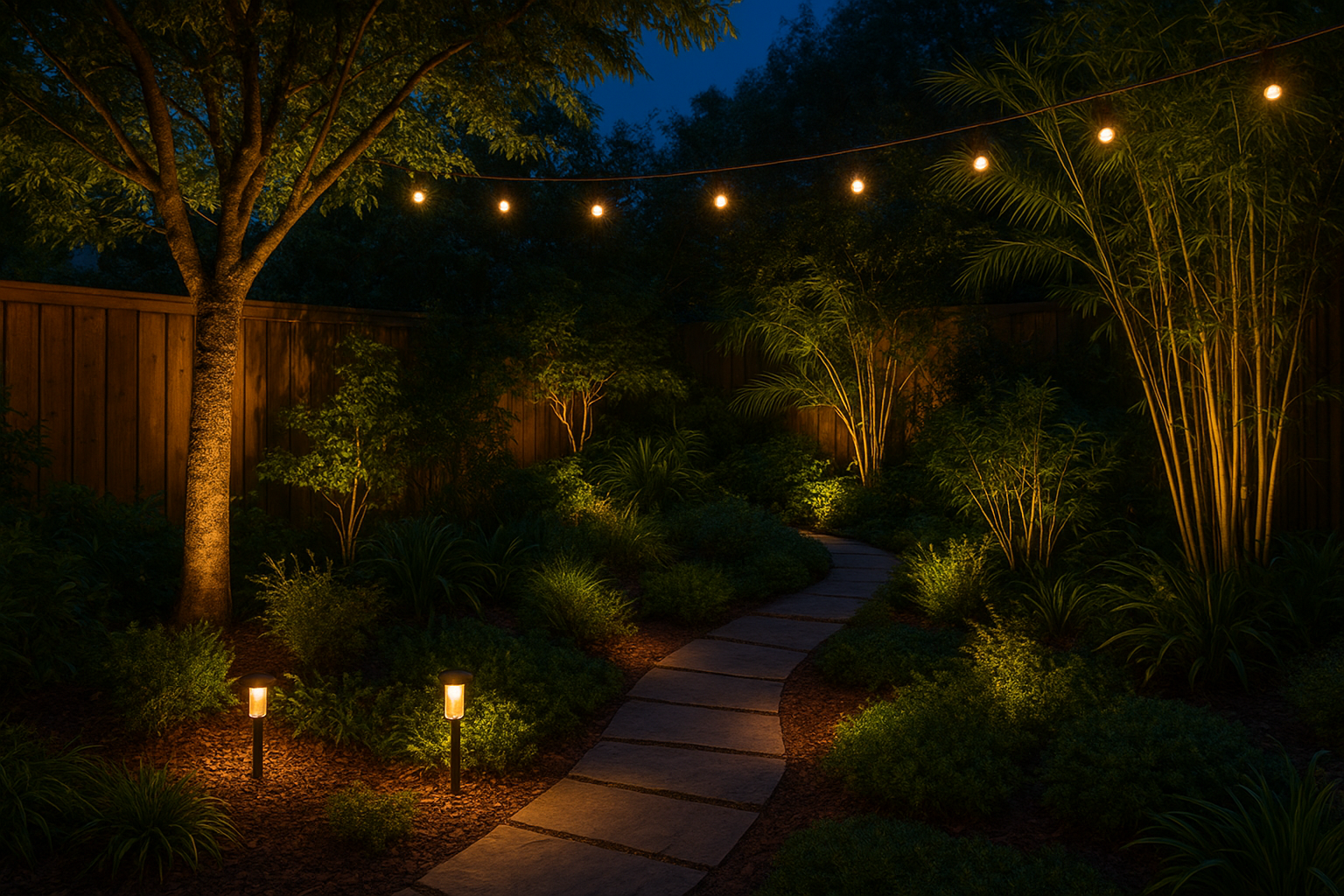
Darkness shrinks your small garden into a black void after sunset, wasting half the day when you could enjoy the space. Strategic lighting extends your outdoor hours while creating depth and drama that make the garden feel larger than it does in daylight. You place lights to highlight features and cast shadows that suggest hidden areas beyond your boundaries, so your compact plot transforms into an evening retreat rather than disappearing into the night.
Idea overview
Garden lighting works through layering different light levels at multiple heights, similar to how you layer plants. Uplights at ground level wash light up tree trunks or walls to draw the eye upward and create vertical drama. Downlights from pergolas or eaves mimic moonlight filtering through branches. Path lights at 30 to 40 cm height define circulation routes and cast gentle pools that make the garden feel deeper. Warm white LEDs between 2700K and 3000K suit Malaysian gardens better than cool whites, which can look harsh against tropical foliage.
How to apply this in a small space
Install solar stake lights along paths and 12-volt LED spotlights at the base of feature plants or against boundary walls. Position lights to graze textured surfaces like timber fences or stone walls, which amplifies the play of light and shadow. Run wiring under paving or mulch to keep it hidden, and use timers so lights switch on automatically at dusk.
"Layered lighting turns flat darkness into a three-dimensional evening garden."
Plants, materials and products to use
Use solar LED path lights, low-voltage spotlights, and string lights on pergolas. Highlight plants with interesting bark or foliage like palms and bamboo.
Best for
Gardens used for evening entertaining, spaces that feel cramped by day, and anyone wanting to double usable hours outdoors.
13. Plan for easy maintenance and watering
Your small garden should reward you with greenery and relaxation, not consume every weekend with pruning, weeding, and hand-watering. Low-maintenance design means choosing plants that thrive without fussing, installing automated irrigation, and using mulch or ground covers that suppress weeds naturally. You build these systems into your small garden design ideas from day one so the garden practically runs itself, leaving you time to enjoy the space rather than maintain it.
Idea overview
Maintenance-smart gardens rely on three pillars: drought-tolerant plants that survive if you forget to water, drip irrigation or timers that deliver moisture automatically, and mulch layers that lock in soil moisture while blocking weed seeds. Malaysian gardens benefit from irrigation systems that adjust to our wet and dry seasons, running daily during hot spells but pausing when afternoon storms arrive. You combine these elements to cut watering time from daily chores to weekly checks.
How to apply this in a small space
Install a drip irrigation system with a timer connected to your outdoor tap, running lines beneath mulch to each planting zone. Set the timer to water early morning for 15 to 20 minutes, three times weekly during dry months. Spread 5 cm of organic mulch like wood chips or cocoa husk around plants to reduce evaporation and smother weeds. Group plants by water needs so you do not overwater drought-lovers while underwatering thirsty ferns.
"Automated watering and smart plant choices free your weekends for enjoying the garden instead of servicing it."
Plants, materials and products to use
Use Ziant Hydro Planters for containers, drip irrigation kits with adjustable emitters, and organic mulch. Plant Sansevieria, Agave, Portulaca, and dwarf bamboo for low water needs.
Best for
Busy professionals, frequent travelers, and anyone wanting year-round greenery without constant hands-on care.
14. Tie your garden to your home style
Your garden sits next to your house, and visitors see both together as one package. When the outdoor design clashes with your interior style or the building's architecture, the disconnect feels jarring and makes both spaces seem poorly planned. You create harmony by extending your home's design language into the garden through materials, colors, and plant choices that echo what happens indoors. This unified approach makes your property feel larger and more intentional, which matters when every element of your small garden design ideas must justify its presence.
Idea overview
Matching your garden to your home means observing the dominant colors, textures, and shapes inside, then translating them outdoors. A minimalist modern home with white walls and clean lines calls for simple rectangular beds, gravel or concrete pavers, and architectural plants like bamboo or agave. Traditional terrace houses with warm timber and ornate details pair better with curved paths, cottage-style plantings, and natural stone edging. The goal is not identical copying but creating a visual conversation between inside and outside.
How to apply this in a small space
List your home's key features: paint colors, flooring materials, window frames, and decorative style. Choose garden pavers or decking that match your interior flooring tone, and select plants whose foliage colors complement your wall paint. If your home has black window frames, repeat that in black metal planters or edging strips.
"Design continuity makes your home and garden feel like a single, well-planned retreat."
Plants, materials and products to use
Use timber decking for traditional homes, concrete pavers for modern builds. Plant formal hedges for colonial styles or mixed tropicals for contemporary designs.
Best for
Homeowners wanting a cohesive property where indoor and outdoor spaces feel intentionally connected rather than accidentally placed together.
Final thoughts
You now have 14 practical small garden design ideas that work in Malaysia's climate and compact spaces. These tips help you maximize vertical surfaces, choose low-maintenance plants, create functional zones, and extend your enjoyment into evening hours. Your small garden can deliver greenery, privacy, and relaxation without consuming your weekends or budget when you plan with intention from the start.
Start by mapping your layout and sun patterns, then layer plants for depth and choose containers that fit your watering schedule. Add one statement feature like a water element or vertical garden to anchor the design. Every choice you make should solve a problem while adding beauty, so your outdoor space works as hard as your indoor rooms.
Ready to transform your compact plot into a professional landscape? Visit our contact page to schedule a free consultation and get a custom design that fits your space and lifestyle.