

From street level, a green roof looks like a garden floating above the city. But beneath that layer of plants lies an engineered system designed to protect buildings while delivering real environmental value. Understanding how do green roofs work starts with recognizing that these aren't just gardens placed on rooftops, they're multi-layered assemblies where each component serves a specific purpose.
At Konzept Garden, we approach green roofs the same way we approach any landscape project: with attention to both form and function. Whether you're considering a green roof for a residential property or a commercial building in Malaysia, knowing what happens beneath the surface helps you make informed decisions about installation and long-term maintenance.
This guide breaks down the essential layers of a green roof system, explains how drainage and waterproofing work together, and covers the practical benefits you can expect. By the end, you'll have a clear picture of what makes these systems effective, and whether one might be right for your property.
What a green roof is and the main types
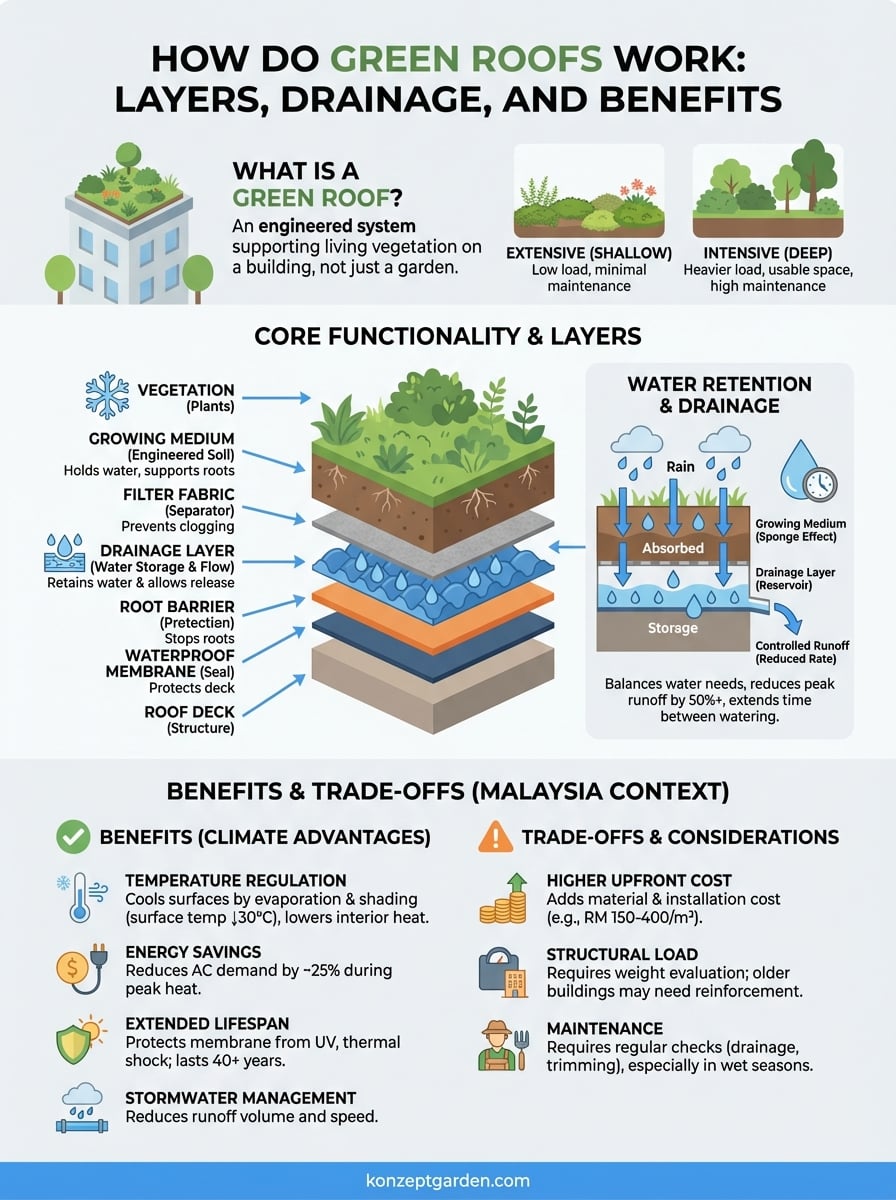
A green roof is a roofing system that supports living vegetation on top of a building's structure. You'll find a waterproof membrane at the base, followed by layers that manage drainage, provide growing medium, and support plant life. These systems transform unused roof space into functional landscape areas while protecting the building itself. The setup differs from traditional roofs because it must handle both structural loads and biological processes, which means you need proper engineering and planning from the start.
Understanding how do green roofs work requires knowing that not all green roofs are built the same. The two main types serve different purposes and require different levels of maintenance and investment.
Extensive green roofs
Extensive systems use a shallow substrate layer, typically 50 to 150 millimeters deep. You'll see hardy plants like sedums, mosses, and native grasses that thrive in minimal soil depth. These roofs add lightweight loads to the structure, usually between 60 and 150 kilograms per square meter when saturated. Most extensive systems need limited maintenance, often just one or two inspections per year to check drainage and remove invasive species.
Extensive green roofs work well for buildings where roof access is restricted or where you want environmental benefits without regular upkeep.
Property owners in Malaysia often choose extensive systems for commercial buildings and residential projects where roof accessibility is limited. The plants establish quickly and survive dry periods better than traditional garden species.
Intensive green roofs
Intensive systems support deeper soil profiles, ranging from 200 millimeters to over 600 millimeters. You can grow shrubs, small trees, and a wider variety of plants that create park-like spaces. These roofs require structural reinforcement because they add substantial weight, sometimes exceeding 300 kilograms per square meter. Regular maintenance becomes necessary, including watering, fertilizing, and seasonal care similar to ground-level gardens.
The advantage of intensive systems lies in their functional flexibility. You can design rooftop gardens, walkways, seating areas, and even small water features. This type makes sense when you want a usable outdoor space and the building structure can support the added load.
The layers of a green roof system
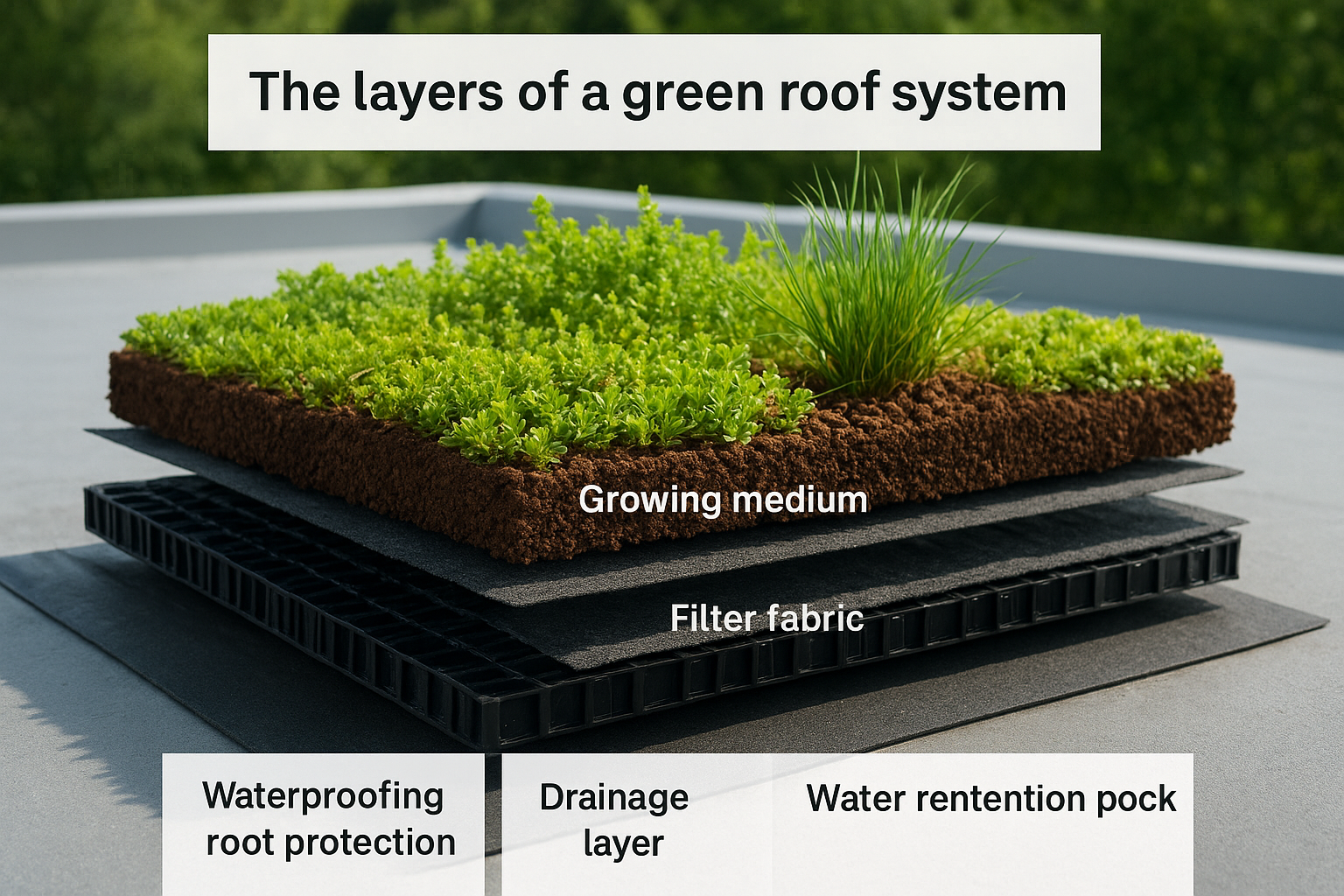
A green roof functions through a series of specialized layers stacked from the building deck upward. Each layer serves a distinct purpose, and proper installation of all components determines whether the system succeeds or fails over time. Understanding how do green roofs work means recognizing that these layers must work together to manage water, support plant growth, and protect the building structure beneath.
Waterproofing and root protection
The waterproof membrane sits directly on the roof deck and creates a sealed barrier against moisture infiltration. You'll typically find high-quality materials like EPDM rubber or modified bitumen designed to last 20 years or longer. Above this membrane, a root barrier layer prevents plant roots from penetrating the waterproofing below. Some modern membranes combine both functions into a single integrated layer, simplifying installation and reducing potential failure points.
Without proper waterproofing and root barriers, you risk expensive water damage and membrane replacement within a few years.
Drainage, filtration, and growing medium
The drainage layer removes excess water while retaining enough moisture for plants during dry periods. You'll see lightweight materials like plastic egg-crate panels or specialized mats with water retention pockets. A filter fabric sits above the drainage layer, preventing soil particles from washing down and clogging drainage channels. The growing medium provides nutrients and anchors plant roots, using lightweight substrates that differ from conventional soil. These substrates typically contain expanded clay, pumice, compost, and other materials engineered to drain quickly while supporting plant growth in shallow depths.
How drainage and water retention work
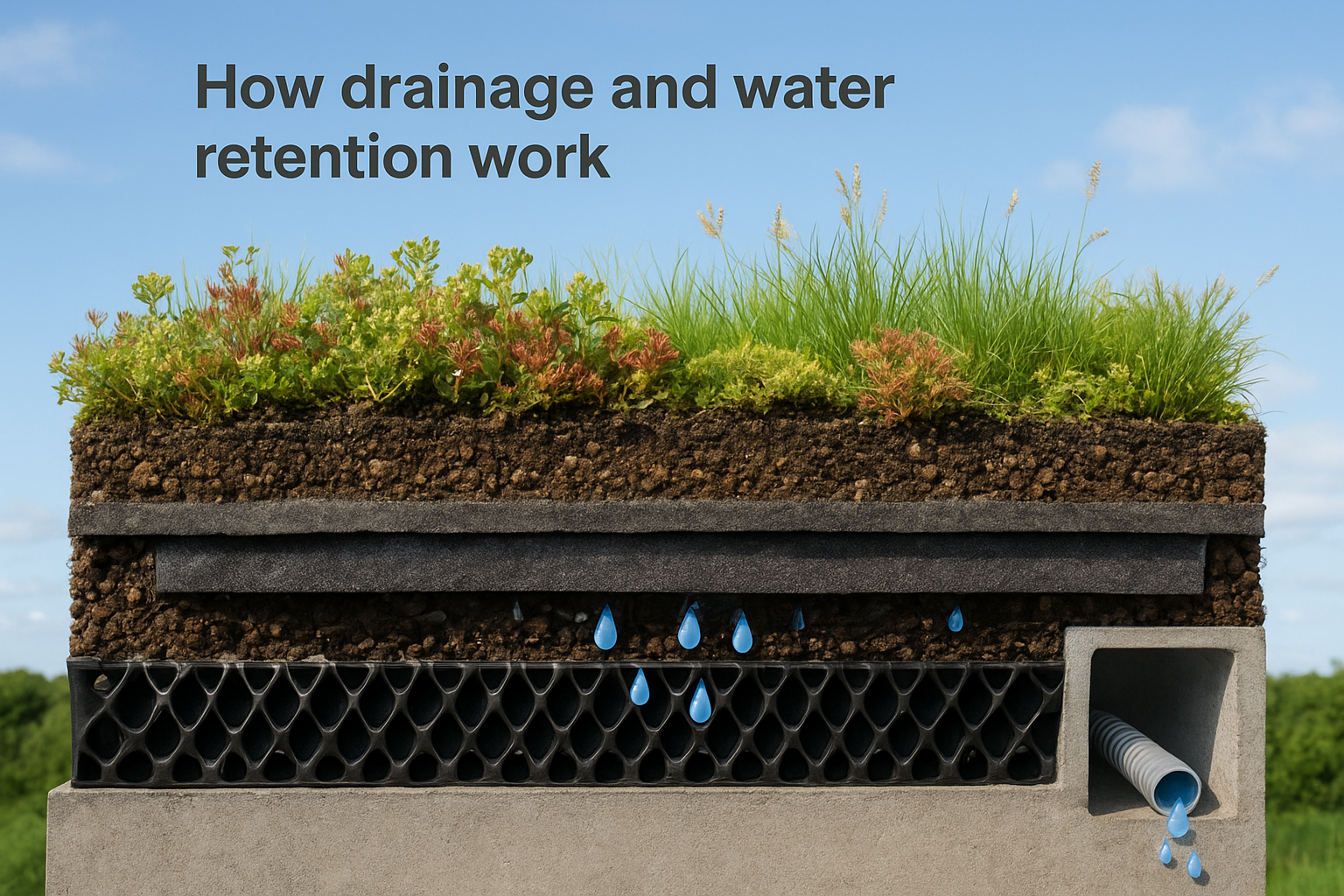
The drainage layer in a green roof must balance two opposing needs: removing excess water quickly while holding enough moisture to sustain plants between rain events. Understanding how do green roofs work requires recognizing that this layer acts like a reservoir with controlled release. When rain falls, water flows through the growing medium, passes through the filter fabric, and reaches the drainage layer where it either stores temporarily or exits through outlets.
How water moves through the system
Water follows a predictable path from the surface downward. Rain first saturates the growing medium, which absorbs moisture like a sponge until it reaches field capacity. Additional water then drains into the layer below, where specialized materials create void spaces that hold water while allowing excess to flow toward roof drains. You'll see retention rates vary based on substrate depth and material composition, with deeper systems holding more water than shallow extensive roofs.
Most green roofs retain 40 to 80 percent of annual rainfall, reducing the volume and speed of stormwater entering drainage systems.
Storage capacity and runoff control
The drainage layer's storage capacity determines how much water your green roof can retain during heavy rainfall. Modern drainage mats feature engineered channels and cups that hold water against the membrane while maintaining air circulation to prevent root rot. During dry periods, plants draw this stored moisture upward through capillary action, extending the time between watering needs. Excess water flows to perimeter drains or scuppers, but the delayed release prevents the sudden discharge typical of conventional roofs. This controlled flow reduces strain on municipal stormwater infrastructure and lowers your building's peak runoff rates by 50 percent or more.
How green roofs insulate and protect the roof
The vegetation and growing layers in a green roof create thermal barriers that reduce heat transfer between the building interior and outdoor environment. Understanding how do green roofs work from an insulation perspective reveals that these systems provide year-round temperature regulation through multiple mechanisms working simultaneously. The growing medium acts as thermal mass, absorbing heat during the day and releasing it slowly at night, while the plants themselves create shading and evaporative cooling that lower surface temperatures by up to 30 degrees Celsius compared to conventional roofs.
Temperature regulation and energy savings
Plant transpiration removes heat from the roof surface as water evaporates from leaves, creating a natural cooling effect similar to air conditioning but without energy consumption. The substrate layer below provides additional insulation value, reducing the building's heating and cooling loads throughout the year. You'll notice this effect most during Malaysia's hot afternoons when conventional roofs reach temperatures above 70 degrees Celsius, while green roofs stay closer to 40 degrees Celsius or below.
Green roofs can reduce a building's air conditioning demand by 25 percent or more during peak summer months.
Physical protection and extended lifespan
The layers above the waterproof membrane shield it from direct UV exposure, the primary cause of membrane degradation on conventional roofs. You eliminate thermal expansion and contraction cycles that crack and weaken standard roofing materials over time. The vegetation also protects against physical damage from hail, debris, and foot traffic during maintenance visits. Most waterproof membranes under green roofs last 40 years or longer, roughly double the lifespan of exposed membranes on traditional roofs.
Benefits and trade-offs in Malaysia
Malaysia's tropical climate creates both opportunities and challenges for green roof systems. Understanding how do green roofs work in this environment requires evaluating the specific benefits you'll gain against the practical trade-offs you'll face. The consistent temperatures and regular rainfall patterns throughout the year support plant growth without the dormancy periods seen in temperate regions, but high humidity and intense solar exposure introduce different maintenance demands.
Climate advantages in tropical conditions
Green roofs provide exceptional cooling benefits in Malaysia's hot climate, where conventional roof surfaces reach extreme temperatures daily. The vegetation layer reduces urban heat island effects by converting absorbed heat into water vapor through transpiration rather than radiating it back into the surrounding air. Your building's interior stays cooler without increased air conditioning costs, and you create outdoor spaces that remain usable even during midday heat. The frequent rainfall means you'll rarely need supplemental irrigation for extensive systems once plants establish, reducing operational costs compared to green roofs in drier climates.
Cost and maintenance considerations
Installation costs for green roofs in Malaysia run higher than conventional roofing, typically adding RM 150 to RM 400 per square meter depending on system complexity and plant selection. You'll need structural evaluations to confirm your building can support the added weight, and older structures may require reinforcement work before installation. Maintenance demands increase during the wet season when rapid plant growth requires more frequent trimming, and you'll need to monitor drainage systems closely to prevent waterlogging issues that can damage roots and reduce system effectiveness.
Most green roof systems in Malaysia reach cost recovery within 10 to 15 years through energy savings and extended roof membrane life.
Final takeaways
Green roofs work through engineered layers that manage water, support vegetation, and protect your building while delivering measurable environmental benefits. You've seen how the waterproof membrane, drainage system, and growing medium combine to create functional landscape areas that reduce energy costs and extend roof lifespan. The key to success lies in proper installation and selecting the right system type for your building's structural capacity and your maintenance preferences.
Malaysia's climate provides ideal conditions for green roof systems that thrive year-round without dormancy periods. Whether you choose extensive systems for low-maintenance environmental benefits or intensive designs for usable rooftop spaces, understanding how do green roofs work helps you evaluate if this investment makes sense for your property. The upfront costs balance against long-term savings in energy bills and roof replacement expenses.
If you're considering green roofs or other sustainable landscape solutions for your property, contact our team to discuss design options that work with Malaysia's tropical environment.


