


Managing stormwater runoff on your property isn't just about preventing flooding, it's about creating a sustainable landscape that works with nature. When exploring green drainage solutions, the comparison of rain garden vs bioswale often comes up, and understanding their differences can help you make the right choice for your outdoor space. Both systems filter pollutants and reduce runoff, but they serve distinct purposes based on your site conditions and project goals.
At Konzept Garden, we design outdoor spaces that balance aesthetics with practical function, including recommending the right drainage solutions for Malaysian properties facing heavy monsoon rains. This guide breaks down the key differences between rain gardens and bioswales, covering costs, design complexity, and implementation tips. By the end, you'll understand which option suits your property scale, budget, and long-term stormwater management needs.
Why rain gardens and bioswales matter in Malaysia
Malaysia receives over 2,500 millimeters of annual rainfall in many regions, with intense monsoon seasons that overwhelm conventional drainage systems. Your property faces unique challenges when tropical downpours dump 100 millimeters or more in a single hour, creating flash flooding, soil erosion, and polluted runoff that damages landscapes and structures. Traditional concrete drains simply move water elsewhere instead of managing it sustainably, which is why the rain garden vs bioswale debate matters for Malaysian homeowners and developers looking for long-term solutions.
Heavy rainfall creates urgent stormwater challenges
Malaysia's tropical climate produces sudden, high-volume storms that saturate soil quickly and create rapid surface runoff. Urban developments with large paved areas struggle most because rainwater has nowhere to absorb naturally, leading to street flooding and overloaded municipal drainage. Green infrastructure like rain gardens and bioswales capture this runoff at the source, filtering pollutants while reducing the volume of water entering public systems.
Natural drainage solutions can reduce peak runoff by 30 to 50 percent during typical storm events.
Properties in areas like Klang Valley, Penang, and Johor face recurring flood risks during northeast and southwest monsoon seasons. Installing appropriate bioretention systems protects your investment by preventing water damage to foundations, driveways, and garden beds while improving soil health.
Property damage and flooding risks
Unmanaged stormwater erodes topsoil, damages plant roots, and creates standing water that breeds mosquitoes, a serious health concern in tropical climates. Your outdoor living spaces become unusable during and after heavy rains when drainage fails. Both rain gardens and bioswales address these problems, but choosing the right system depends on your site conditions, available space, and the severity of runoff you need to manage.
Rain garden vs bioswale at a glance
The rain garden vs bioswale comparison centers on how each system handles water movement and storage. Rain gardens function as shallow depressions that collect runoff from roofs, driveways, or paved areas, allowing water to pool temporarily before filtering through amended soil into the ground below. Bioswales operate differently by channeling water along a linear path, using gentle slopes and vegetation to slow, filter, and absorb runoff as it travels to another drainage point or infiltration area.
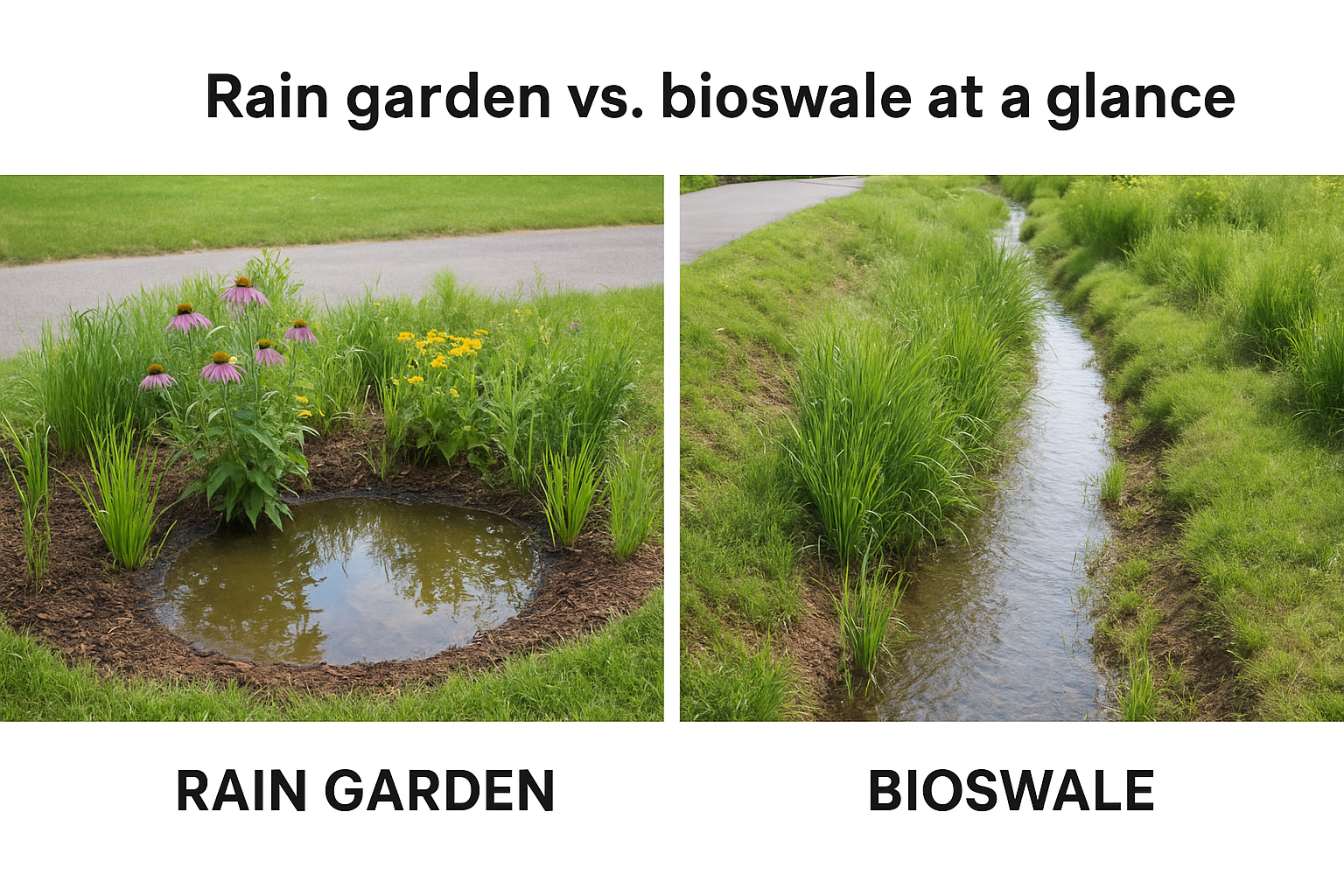
Key structural differences
Your rain garden creates a stationary collection basin that holds water for 12 to 48 hours after storms, making it ideal for capturing runoff from specific sources like downspouts or small parking areas. The design typically includes native plants with deep root systems that tolerate both wet and dry conditions, since the basin alternates between saturation and drought depending on rainfall patterns.
Bioswales work as vegetated channels that move water horizontally across your property, perfect for managing runoff along driveways, pathways, or property boundaries where you need linear drainage. You'll notice bioswales have defined berms or edges that prevent water from spilling out while maintaining a shallow slope that allows controlled flow, typically between 2 and 6 percent grade.
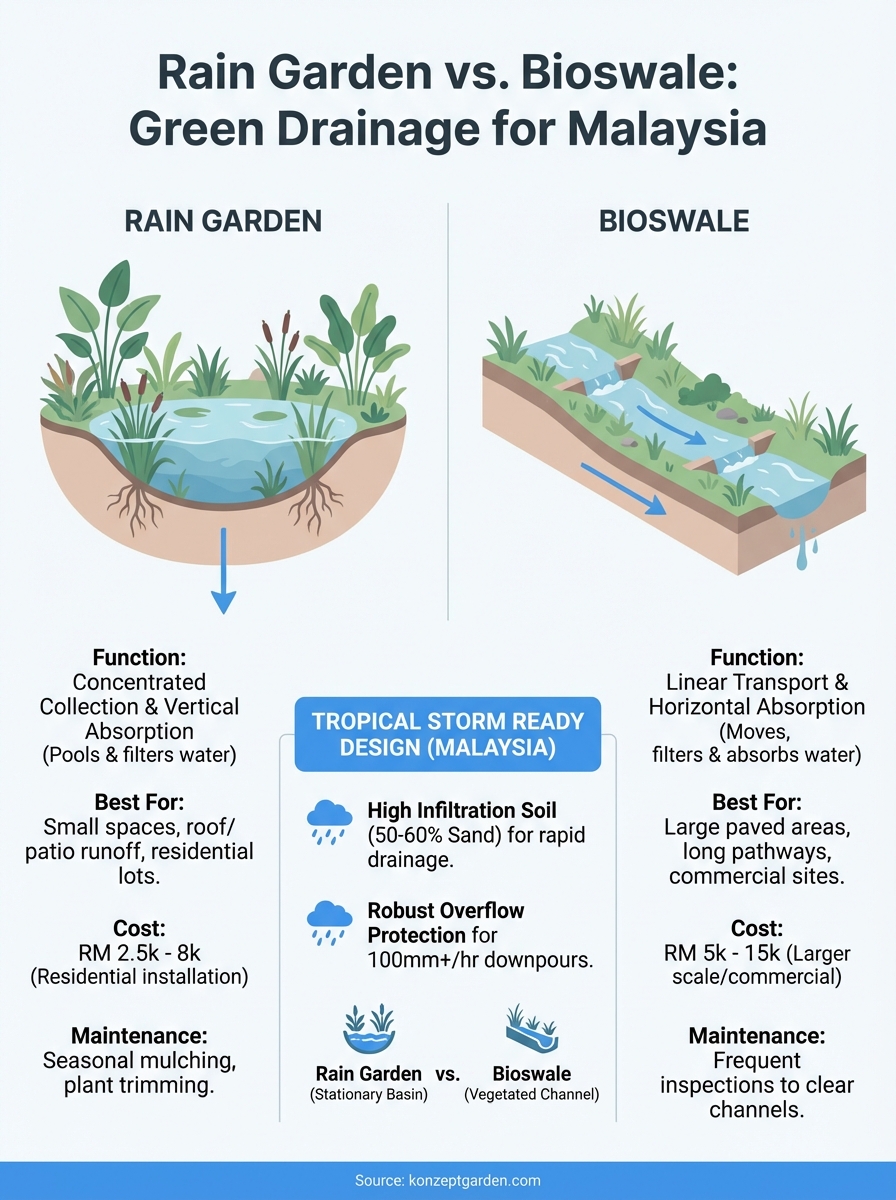
Rain gardens absorb water vertically while bioswales transport it horizontally before infiltration.
Costs, space, and maintenance expectations
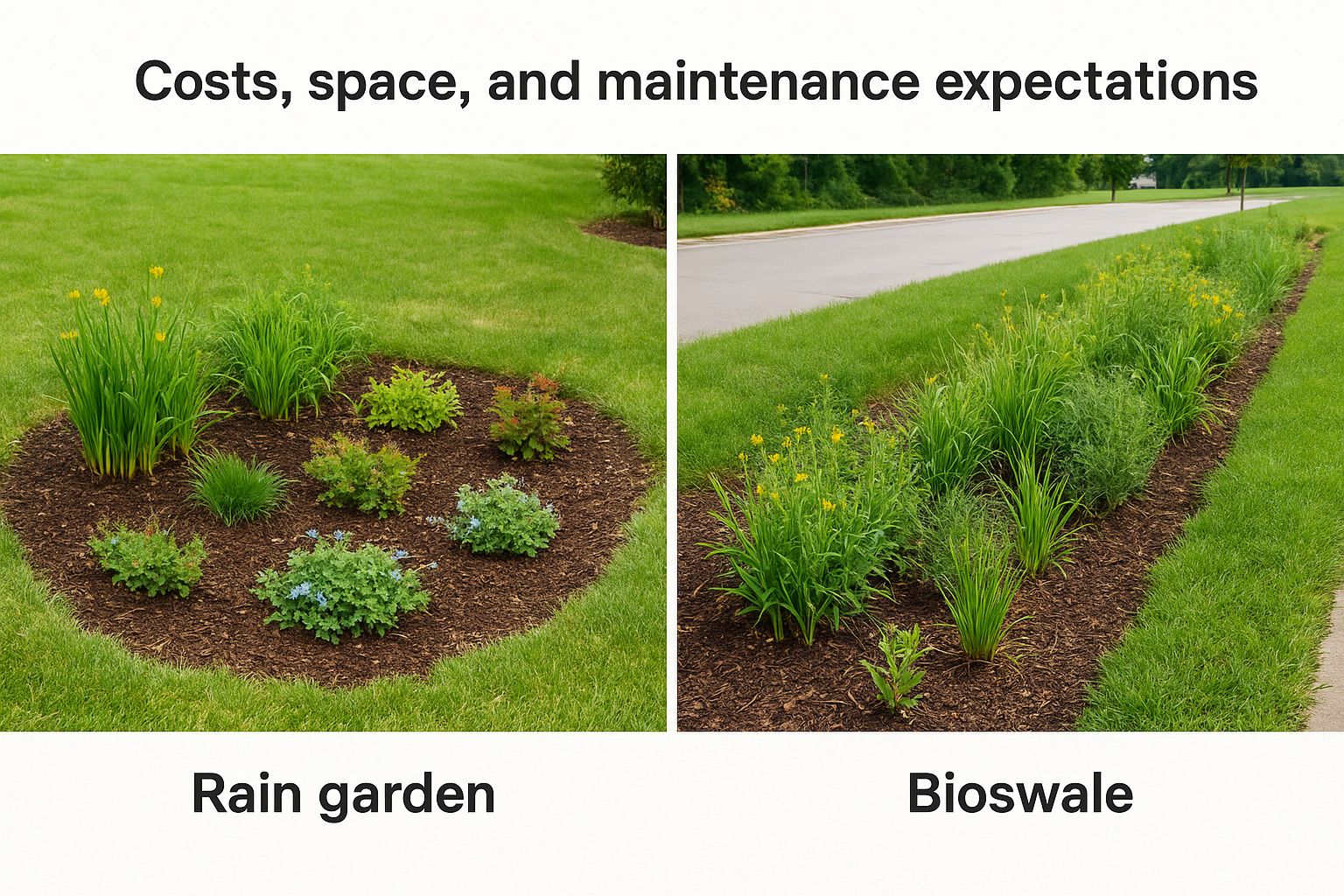
Your budget and available property space heavily influence the rain garden vs bioswale decision, with each system requiring different upfront investments and ongoing care. Rain gardens typically cost between RM 2,500 to RM 8,000 for residential installations, depending on size, soil amendments, and plant selection. Bioswales generally run higher at RM 5,000 to RM 15,000 because they cover longer distances and need more extensive excavation, grading, and structural work to maintain proper slopes.
Installation and material costs
Rain gardens require less site preparation since you're creating a single depression rather than a linear channel across your property. Your main expenses include excavation, imported soil mix with high infiltration rates, mulch, and moisture-tolerant native plants. Bioswales demand more engineering precision to establish correct grading and may need check dams or erosive control features along their length, increasing labor costs.
Professional installation ensures proper soil composition and drainage rates that DIY projects often miss.
Space and maintenance needs
You can fit a rain garden into as little as 10 to 20 square meters, making it practical for compact residential lots. Bioswales need continuous linear space, typically 1.5 to 3 meters wide, which works better for larger properties or commercial sites. Both systems require seasonal mulching and plant trimming, but bioswales demand more frequent inspections to clear debris from channels and maintain flow paths.
How to choose the right option for your site
Your property's physical characteristics determine whether a rain garden or bioswale serves you better, with site dimensions, slope, and runoff patterns playing critical roles in the rain garden vs bioswale decision. Start by measuring available space and identifying where water currently pools or flows during storms, since these observations reveal which system matches your drainage challenges and budget constraints.
Assess your property dimensions and slope
Rain gardens work best when you have limited horizontal space but need concentrated infiltration near a specific runoff source like a downspout or patio edge. Your site needs relatively flat terrain with less than 5 percent slope to create an effective depression that holds water without overflow. Bioswales require continuous linear space along property boundaries or pathways where you can establish a gentle slope that moves water without erosion, making them suitable for larger lots or commercial properties with extended drainage paths.
Consider water volume and source locations
Properties with multiple concentrated discharge points benefit from rain gardens positioned strategically near each source. You should choose bioswales when runoff comes from large paved areas like driveways or parking lots that produce high-volume flow needing distributed management along the water's path rather than single-point collection.
Sites with severe slope or heavy clay soil may need professional soil amendments before either system performs effectively.
How to design and build for tropical storms
Malaysia's extreme rainfall intensities require modifications to standard rain garden vs bioswale designs that account for sudden water volumes exceeding 100 millimeters per hour. Your system needs deeper excavation, higher-capacity soil media, and structural overflow features that prevent erosion during peak storm events when infiltration rates cannot keep pace with inflow.
Design for higher infiltration rates
Your rain garden or bioswale should use amended soil mixtures containing 50 to 60 percent sand to achieve infiltration rates of at least 25 millimeters per hour, double what temperate climate designs require. Standard Malaysian clay soils infiltrate too slowly for tropical downpours, so you need excavation depths of 45 to 60 centimeters with complete soil replacement using sandy loam or engineered bioretention media.
Proper soil testing before installation prevents costly failures when the first major storm hits your property.
Build with overflow protection
Every system needs designated overflow pathways that direct excess water safely away from structures when capacity is exceeded. Your rain garden requires an elevated outlet or spillway positioned at the maximum ponding depth, typically 30 centimeters above the basin floor. Bioswales need armored check dams every 15 to 20 meters along channels with slopes exceeding 4 percent to slow water velocity and prevent channel erosion during intense rainfall.
A simple way to decide
The rain garden vs bioswale choice boils down to your property layout and how water moves across your site during storms. Choose rain gardens when you need concentrated infiltration near specific discharge points like downspouts or small paved areas, especially if available space is limited. Select bioswales when managing runoff from large surfaces that require linear drainage along pathways, driveways, or property boundaries where water travels horizontally before infiltrating.
Your decision becomes clearer after observing rainfall patterns on your property for one monsoon season, noting where water pools, flows, or causes erosion. Both systems deliver long-term value when designed properly for Malaysian climate conditions. Professional landscape designers can assess soil conditions, calculate required capacity, and integrate either system seamlessly into your outdoor space. Contact our team for expert guidance on sustainable drainage solutions that protect your property while enhancing your garden's natural beauty.


