

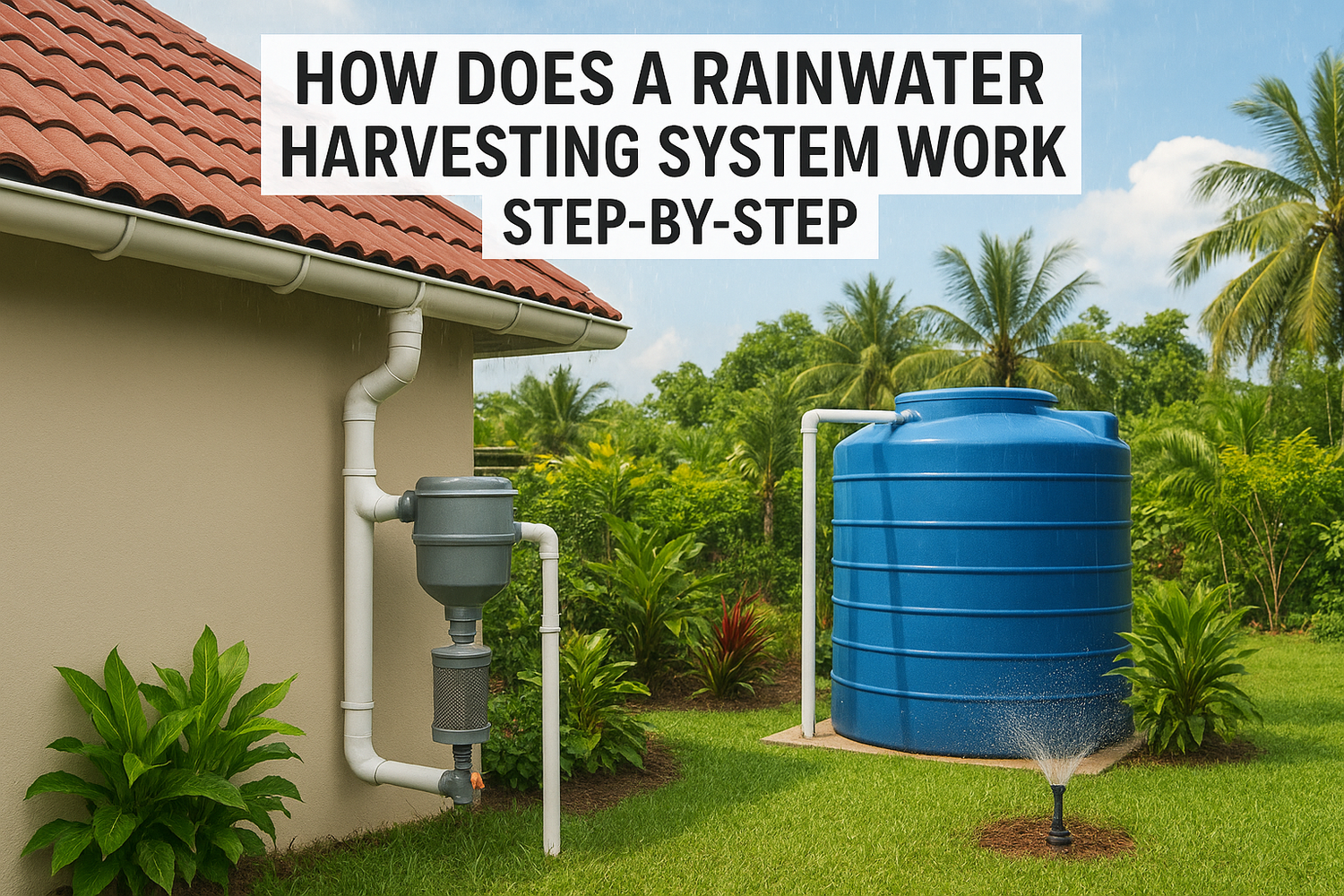
Malaysia receives abundant rainfall throughout the year, yet many gardens and landscapes rely entirely on treated municipal water. Understanding how does a rainwater harvesting system work can change the way you manage water in your outdoor spaces, saving money while supporting a more sustainable approach to gardening.
At its core, a rainwater harvesting system captures precipitation from surfaces like rooftops, filters it, and stores it for later use. The collected water can irrigate your garden, fill ornamental ponds, or even supply household needs after proper treatment. It's a practical solution that reduces dependency on mains water and makes your landscape more self-sufficient.
At Konzept Garden, we design outdoor spaces that balance beauty with function, and smart water management plays a key role in that vision. Whether you're planning a lush residential garden or a commercial landscape project, knowing how rainwater systems operate helps you make informed decisions about sustainable features worth integrating into your design.
This guide breaks down every stage of the process, from collection to distribution, so you'll know exactly what's involved.
Why rainwater harvesting matters in Malaysia
Malaysia's tropical climate brings heavy monsoon rains and consistent precipitation throughout most of the year, creating ideal conditions for capturing water. Your property already receives a natural resource that most rainwater harvesting systems can put to immediate use. Instead of letting thousands of liters run off your roof into storm drains, you can redirect that flow into storage and reduce what you draw from municipal supplies.
Malaysia's rainfall patterns make collection practical
The country receives between 2,000 and 4,000 millimeters of rain annually depending on your location, with the wettest months typically falling during the southwest and northeast monsoons. Even a modest rooftop can capture significant volumes during these periods. For example, a 100-square-meter roof can collect roughly 2,000 liters of water from just 20 millimeters of rainfall, enough to irrigate a medium-sized garden for weeks.
Understanding how does a rainwater harvesting system work becomes especially valuable when you recognize how much water your property already receives for free.
Coastal and northern regions experience particularly intense rainfall, while urban areas like Kuala Lumpur and Selangor see steady precipitation year-round. This consistency means your storage tanks refill regularly, making rainwater a dependable supplement rather than an occasional bonus.
Water costs and supply challenges
Municipal water rates continue rising as demand increases across Malaysia's growing urban centers. When you rely entirely on treated water for landscape irrigation, monthly bills can climb quickly, especially if you maintain large lawns, ornamental plants, or water features. Rainwater systems cut those costs by providing a free alternative for outdoor water needs.
Certain areas also face supply restrictions during dry spells or infrastructure strain. Having stored rainwater gives you independence when local authorities implement usage limits or when your neighborhood experiences temporary supply disruptions.
Environmental and sustainability benefits
Harvesting rainwater reduces the energy and chemicals needed to treat and pump municipal water to your property. Every liter you collect means one less liter that requires processing at treatment plants, which helps lower your carbon footprint. Your landscape benefits too, since rainwater contains no chlorine or added minerals that can stress sensitive plants over time.
Stormwater runoff poses serious problems in Malaysian cities, overwhelming drainage systems and contributing to flash floods. When your system captures roof runoff, you reduce the volume entering already strained infrastructure. This small change at the property level contributes to better water management at the community scale, particularly in densely built neighborhoods.
Garden-specific advantages matter as well. Plants respond better to rainwater's natural pH and lack of treatment additives. You'll notice healthier growth patterns and reduced soil buildup of minerals that sometimes accumulate with long-term use of treated water.
The core parts of a rainwater harvesting system
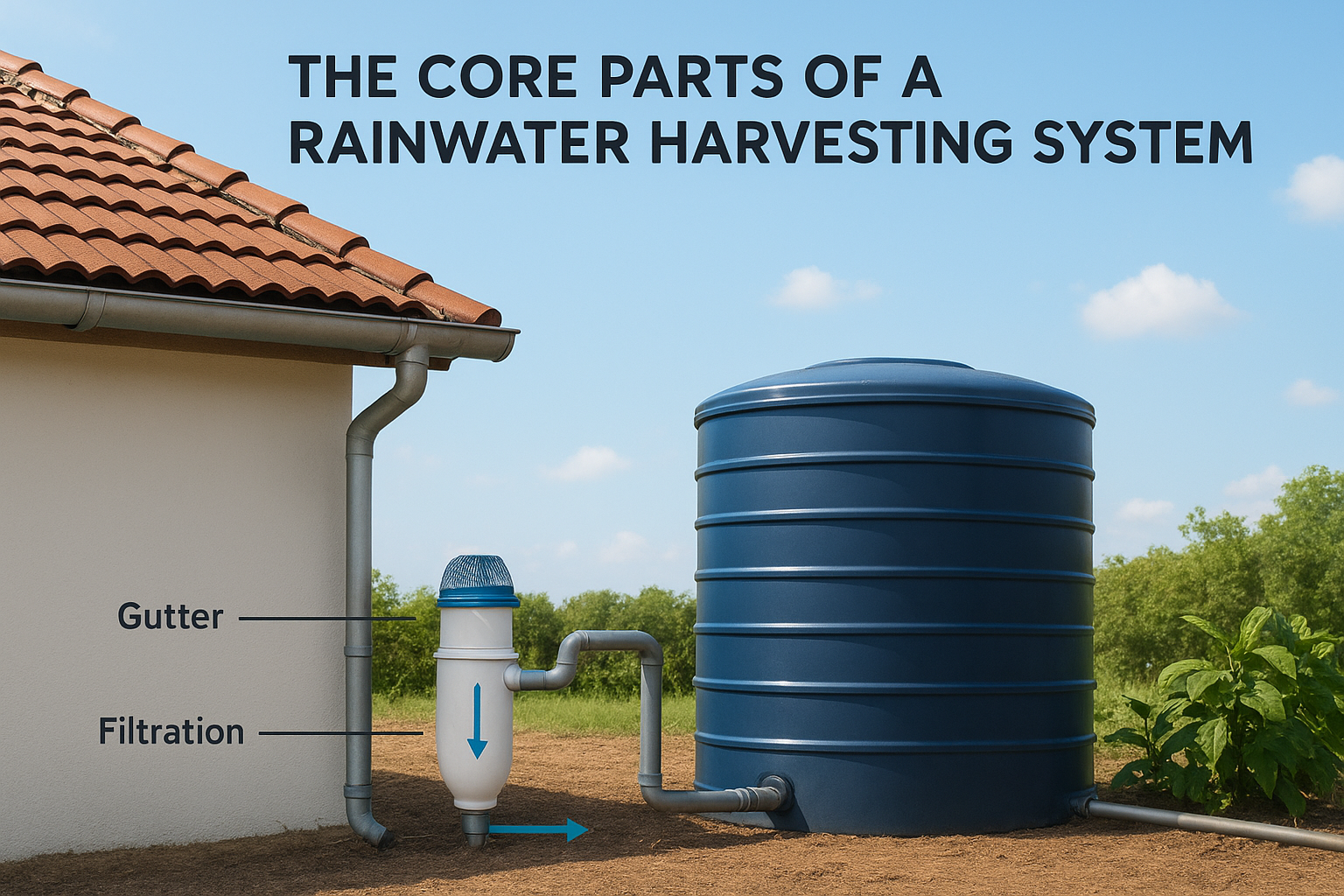
Every rainwater harvesting system relies on five essential components working together to capture, clean, store, and deliver water where you need it. Understanding these parts helps you see how does a rainwater harvesting system work as an integrated whole rather than disconnected pieces. Your system's efficiency depends on properly sizing and maintaining each component to match your property's rainfall patterns and water needs.
Catchment and conveyance system
The catchment surface, typically your rooftop, forms the starting point where rain first lands. Metal, tile, and concrete roofs all work well, with each square meter of surface area collecting roughly one liter of water per millimeter of rainfall. Gutters channel this water along the roof edge, while downpipes carry it vertically to ground level.
Your gutters must remain clear and properly sloped to prevent overflow and ensure maximum collection during heavy downpours.
Leaf guards and gutter screens provide basic protection by blocking large debris before it enters your downpipes. These simple additions save you significant maintenance time and reduce the risk of clogs that waste water during storms.
Filtration and storage components
First-flush diverters automatically discard the initial water from each rain event, which carries the highest concentration of dust, bird droppings, and accumulated particles from your roof. This device typically diverts the first 20 to 40 liters before allowing clean water to flow into your storage system.
Filters remove remaining sediment and organic matter through screens or media layers. You can install mesh filters at tank entry points or more advanced cartridge systems depending on your intended water use and budget.
Storage tanks represent the system's largest investment and come in polyethylene, fiberglass, or concrete construction. Tank capacity should match your garden's irrigation demands and the dry periods between rainfall events. Most Malaysian installations range from 500 to 5,000 liters for residential properties, while commercial landscapes may require significantly larger capacity.
Pumps and distribution pipes complete the system by delivering stored water under pressure to your garden taps, irrigation zones, or water features when you need it.
How a rainwater harvesting system works step by step
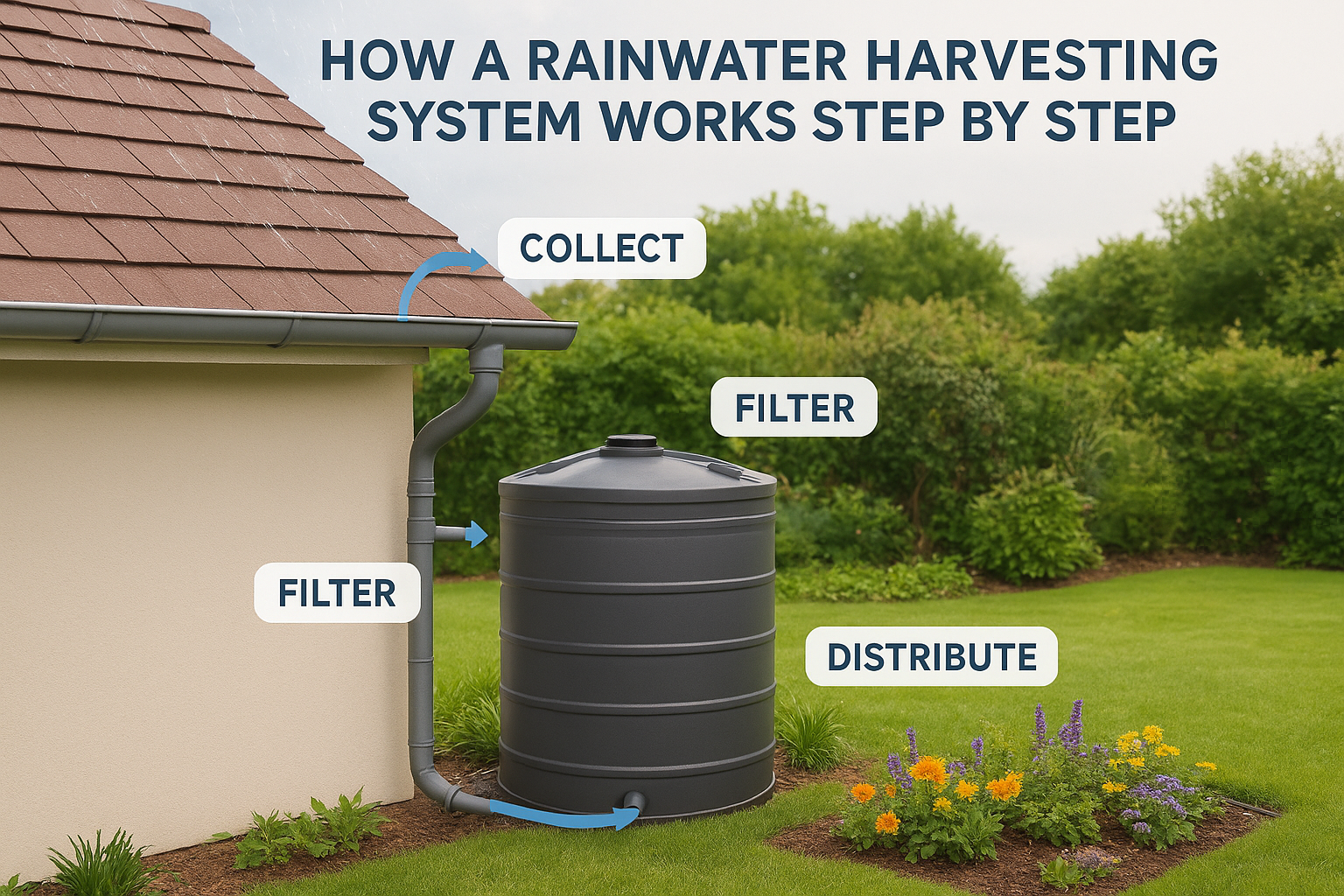
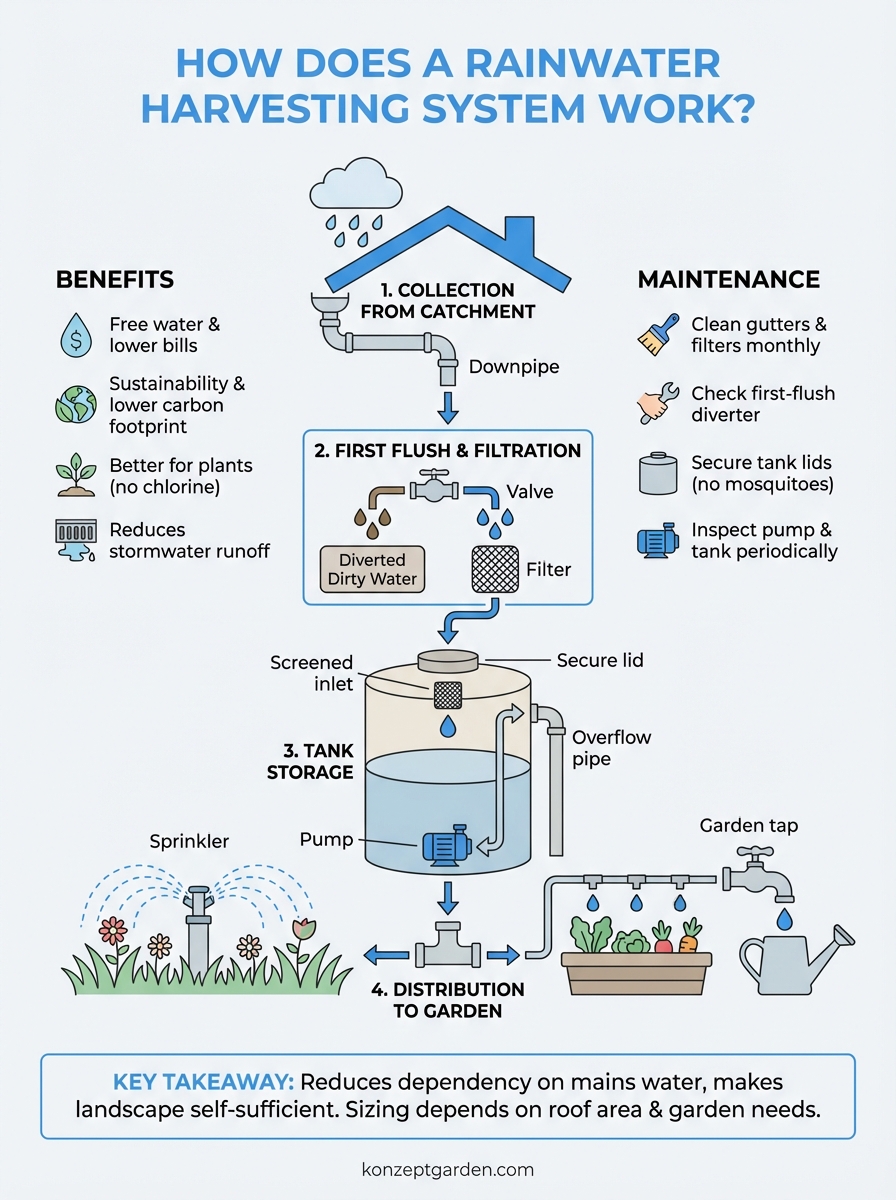
Understanding how does a rainwater harvesting system work becomes clear when you follow water through each stage from roof to garden. The process involves four distinct phases that happen automatically once you install the equipment properly. Rain that would otherwise drain away gets captured, cleaned, stored, and delivered exactly where your plants need it most.
Stage one: Collection from catchment surface
Water begins its journey the moment raindrops hit your roof. Your catchment surface channels precipitation toward gutters, which slope toward downpipes at strategic points around your building's perimeter. During moderate rainfall, your system can collect hundreds of liters per hour depending on roof size and rain intensity.
The collection phase requires no electricity or moving parts, making it the most reliable component of your entire system.
Properly installed gutters maintain a slight gradient that prevents standing water while moving the flow efficiently toward collection points. Your downpipes then carry this water vertically to ground level where filtration and storage equipment wait.
Stage two: First flush and filtration
Your first-flush diverter activates automatically with each new rain event, diverting contaminated water away from your storage tank. After this initial volume passes, clean water flows through mesh screens or cartridge filters that remove remaining particles before storage.
Stage three: Tank storage
Filtered water enters your storage tank through screened inlets that prevent mosquitoes and debris from contaminating the supply. The tank holds this water until you need it, with overflow pipes directing excess back to stormwater drains during heavy rainfall.
Stage four: Distribution to your garden
When you turn on irrigation taps or activate your automated watering system, a pump draws stored water from the tank and delivers it under pressure. Your distribution pipes carry this water to garden beds, lawn areas, or water features just like municipal supply would, except you're using free rainwater instead.
Choosing the right system type and size
Selecting the appropriate rainwater harvesting system depends on your property layout, available space, and how much water your garden actually consumes. Malaysian installations range from simple barrel systems for small urban gardens to multi-tank setups that support commercial landscapes. Your choice affects both upfront costs and long-term performance, so matching system design to your actual needs prevents overspending while ensuring adequate supply during dry periods.
System types for Malaysian properties
Above-ground tanks offer the simplest installation since they require no excavation and allow easy access for maintenance. These systems work well when you have space along your property boundary or in covered areas where direct sunlight won't degrade the tank material. You can position polyethylene tanks near your garden beds to minimize pumping distances and reduce energy consumption.
Underground storage provides aesthetic advantages for properties where visible tanks would disrupt landscape design. These systems keep water cooler, which inhibits algae growth and maintains better quality for irrigation. Installation costs run higher due to excavation requirements, but you preserve surface space for planting areas or outdoor features.
Your system type should match both your space constraints and how does a rainwater harvesting system work within your overall landscape design.
Gravity-fed systems eliminate pumps entirely by placing tanks above irrigation zones, letting natural pressure deliver water where you need it. Pumped systems offer more flexibility in tank placement but require electrical connections and periodic pump maintenance.
Calculating your storage capacity needs
Start by measuring your roof catchment area in square meters and multiplying by your region's average monthly rainfall to estimate collection potential. A 150-square-meter roof in Kuala Lumpur can capture roughly 30,000 liters annually, though monthly variations require adequate storage to bridge dry spells.
Your garden's water consumption determines minimum tank size. Calculate weekly irrigation volumes based on planted area and multiply by the longest expected period between rainfall events. Most Malaysian residential systems use 1,000 to 3,000 liters of capacity, while commercial landscapes benefit from 5,000 liters or more to maintain consistent supply.
Operation, maintenance, and safety
Your rainwater harvesting system needs regular attention to maintain water quality and equipment performance throughout Malaysia's wet and dry seasons. Operating the system involves more than just letting rain fill your tank. You need to monitor water levels, clean filters, and inspect components quarterly to prevent problems that reduce efficiency or compromise water safety. Understanding how does a rainwater harvesting system work includes knowing which maintenance tasks keep everything functioning properly over years of use.
Daily and monthly maintenance tasks
Check your first-flush diverter monthly to ensure it resets properly after each rain event. Debris can prevent the mechanism from functioning, which allows contaminated water to enter your storage tank. Clean gutter screens and leaf guards every two to three weeks during heavy leaf-fall periods, more frequently if trees overhang your catchment area.
Regular filter cleaning prevents bacterial growth and maintains steady water flow to your irrigation system.
Inspect your tank's inlet screens monthly for clogs that restrict water entry during storms. Remove sediment from the bottom of your storage tank annually by draining a portion through the outlet valve. Your pump requires periodic checks of pressure settings and electrical connections, particularly before extended dry seasons when you'll rely heavily on stored supply.
Safety considerations for stored water
Never use rainwater for drinking or cooking unless you install proper treatment systems that meet Malaysian drinking water standards. Label all taps connected to your rainwater system clearly to prevent accidental consumption, especially important if you have children or elderly family members on your property.
Secure tank lids and access points to prevent mosquito breeding, which poses serious dengue risks in tropical climates. Your storage tank needs proper venting that allows air circulation while blocking insect entry. Test stored water pH levels quarterly if you irrigate sensitive plants, since roof materials can affect water chemistry over time. Position overflow pipes to direct excess water away from building foundations and prevent erosion in your garden beds.
Key takeaways and next steps
You now understand how does a rainwater harvesting system work from collection through distribution, plus the components required to capture Malaysia's abundant rainfall for your landscape. The system captures water from your roof, filters out debris, stores it in tanks, and delivers it through pumps when your garden needs irrigation. Regular maintenance keeps everything functioning efficiently while preventing water quality issues.
Starting your rainwater harvesting project begins with measuring your roof area and calculating storage capacity based on your garden's size and irrigation frequency. You can install a simple above-ground system yourself or work with professionals for underground tanks and integrated landscape designs. Many properties combine rainwater systems with water features like koi ponds that benefit from the natural water chemistry.
Konzept Garden designs complete landscape solutions that incorporate smart water management features. Contact our team to discuss how rainwater harvesting fits into your outdoor space transformation, whether you're planning garden beds, lawn areas, or ornamental water features.