
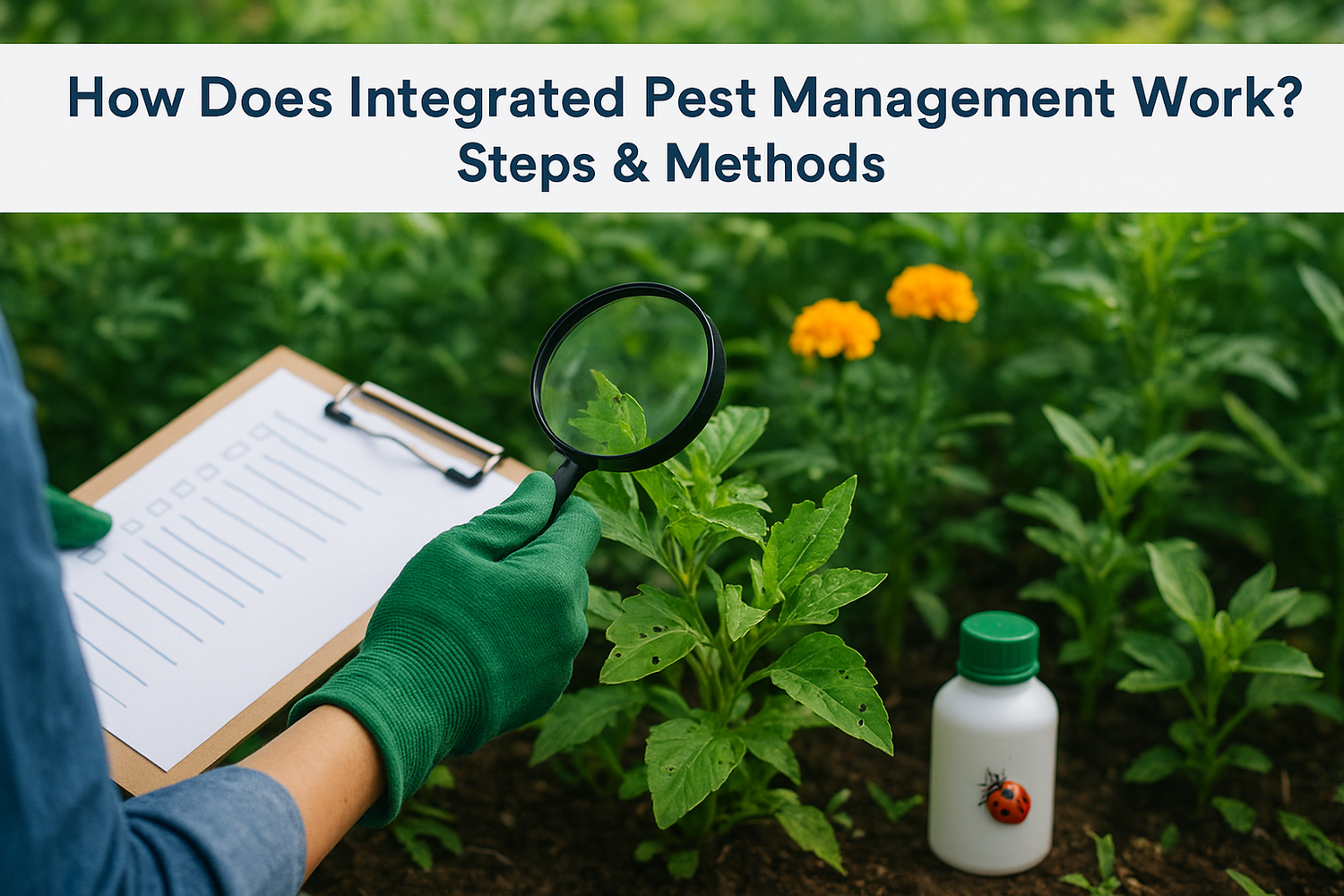
Pests can turn a thriving garden into a frustrating battle overnight. Whether aphids are attacking your ornamentals or caterpillars are devouring your edibles, the temptation to reach for chemical sprays is understandable. But how does integrated pest management work as a smarter alternative? At Konzept Garden, we design sustainable outdoor spaces that work with nature, and understanding IPM helps our clients maintain healthy, beautiful landscapes long after installation.
Integrated Pest Management takes a different approach than simply spraying and hoping for the best. It combines biological controls, cultural practices, and targeted treatments to manage pest populations while protecting beneficial insects, soil health, and the people who enjoy the space. This method aligns perfectly with creating gardens that balance aesthetics with ecological responsibility.
This guide explains the core principles, practical steps, and proven techniques that make IPM effective. You'll learn how to identify pest problems accurately, select appropriate control tactics, and build a management system that keeps your garden thriving without unnecessary chemical exposure.
Why integrated pest management matters in gardens
Your garden represents an investment in beauty, comfort, and property value. Traditional pest control methods often rely on broad-spectrum pesticides that kill everything in their path, including the beneficial insects that naturally keep pest populations in check. Understanding how does integrated pest management work helps you protect this investment while creating a safer environment for your family, pets, and the pollinators that keep your plants thriving.
The environmental impact of traditional pest control
Chemical pesticides create a cycle of dependence that damages your garden's ecosystem. You spray to eliminate pests, but you also kill predatory insects, bees, and soil organisms that perform essential functions. When these natural controls disappear, pest populations rebound faster and often stronger than before, forcing you to spray again with even stronger concentrations. Malaysia's tropical climate accelerates this problem because pests reproduce year-round without winter dormancy to reset the balance.
The runoff from chemical treatments also affects water sources and neighboring plants. Heavy rainfall, common in Malaysian gardens, carries pesticide residues into storm drains and eventually into rivers and coastal areas. Your children, pets, and beneficial garden wildlife face direct exposure to these toxins through contact with treated surfaces or consumption of contaminated foliage.
IPM breaks this destructive cycle by working with nature instead of against it, building resilience into your landscape rather than temporary suppression.
Long-term cost savings and sustainability
IPM reduces your ongoing maintenance expenses by addressing root causes rather than symptoms. When you improve soil health, select pest-resistant plant varieties, and encourage beneficial insects, you spend less on emergency treatments and plant replacements. A well-designed IPM system requires an initial investment of time and observation but pays dividends through reduced chemical purchases and fewer plant losses.
Gardens managed through IPM principles also maintain their aesthetic value longer. Plants stressed by repeated chemical applications become weak and susceptible to disease, requiring more intensive care. Healthy plants grown in balanced ecosystems resist pest damage naturally, showing better color, growth, and flowering with less intervention from you.
The 5 core steps of integrated pest management
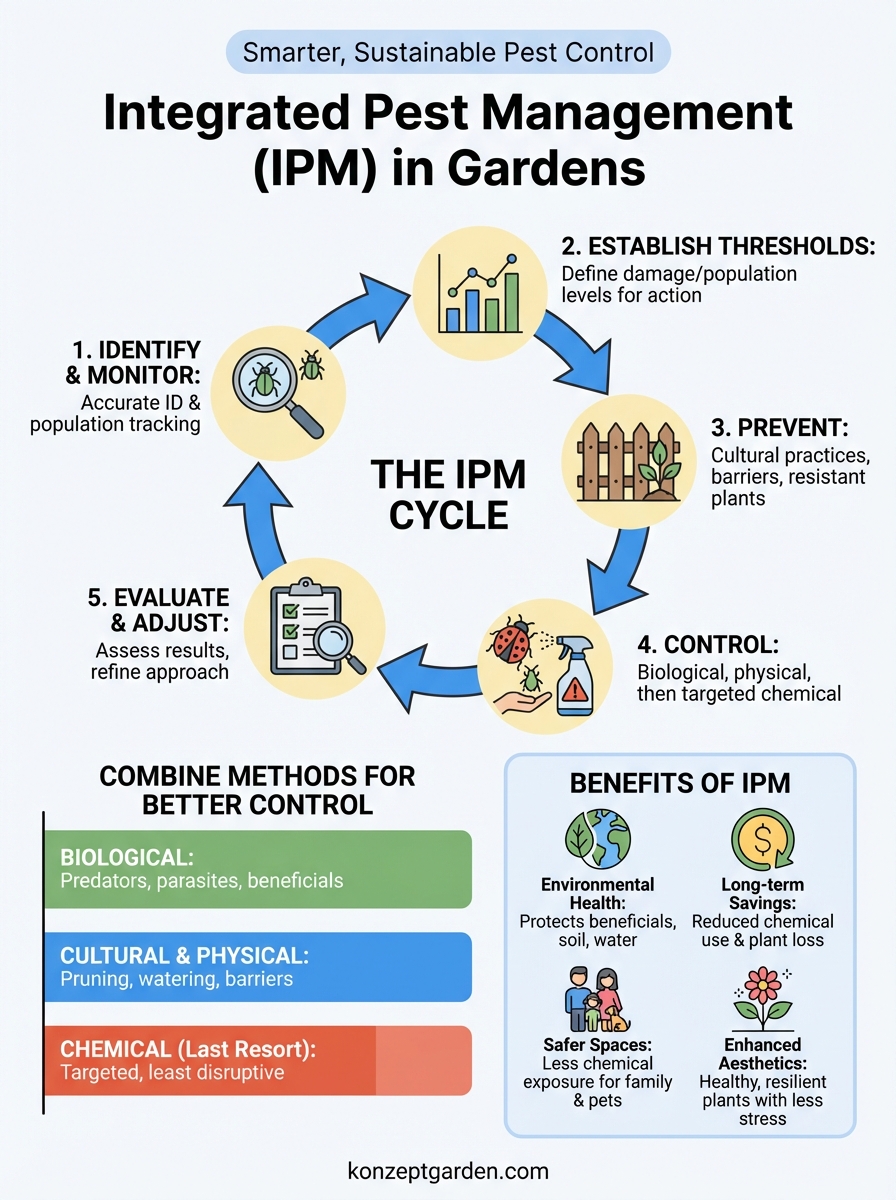
Understanding how does integrated pest management work requires grasping the systematic approach that separates it from reactive spraying. You follow five interconnected steps that create a cycle of observation, action, and improvement. Each step builds on the previous one, forming a framework that becomes more effective over time as you learn your garden's specific patterns and challenges.
Identify and monitor pest activity
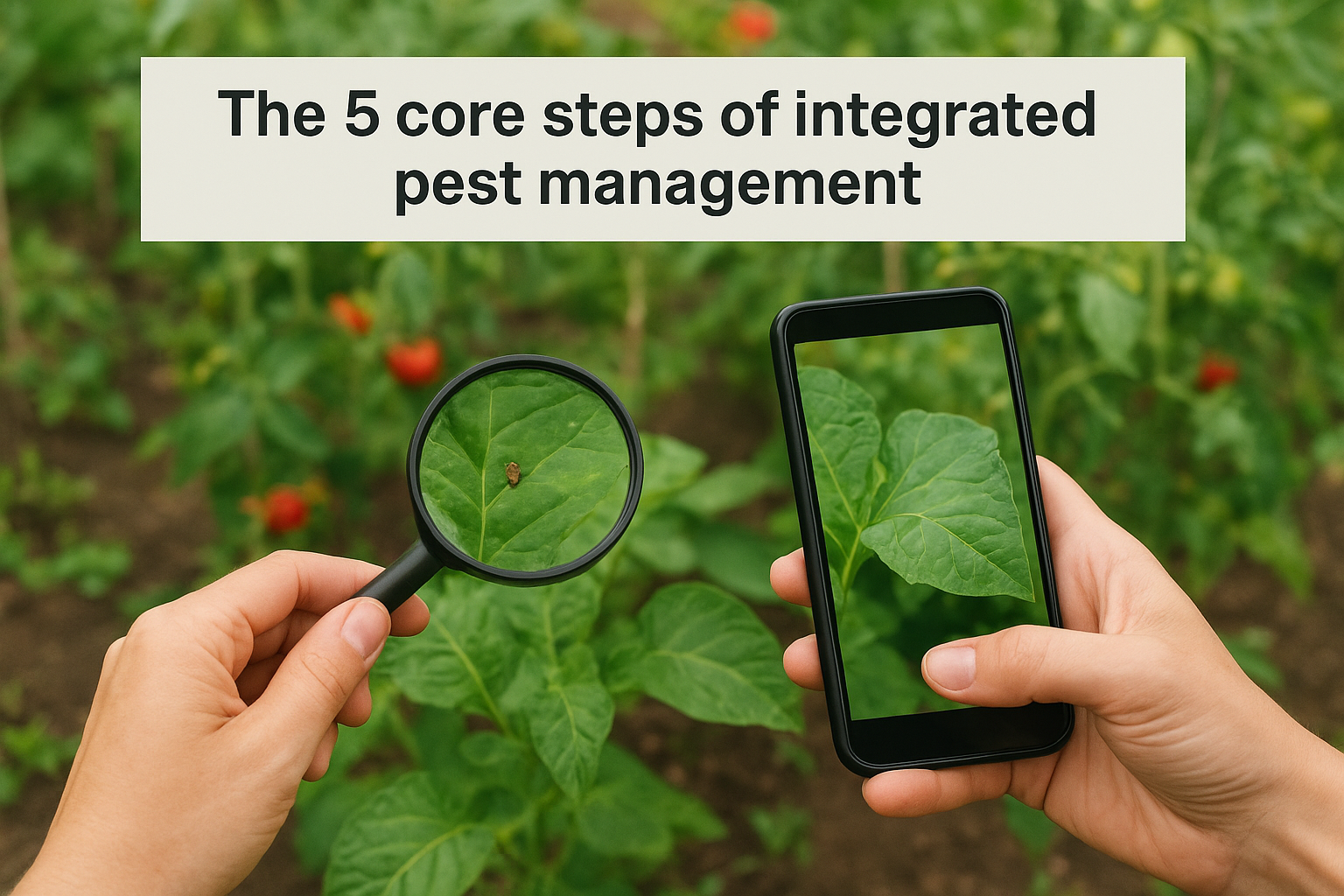
Your first step involves accurate identification of the pest species causing damage. Misidentifying the problem leads to wasted effort and ineffective treatments. You examine affected plants closely, looking for the pest itself rather than just the damage, because different species require different management strategies. Take clear photos and compare them against reliable identification guides, or consult with local horticultural experts when you're uncertain.
Once you know what you're dealing with, you establish monitoring systems to track population levels. This might include sticky traps, visual inspections, or checking specific plants known to attract certain pests. You record what you find and how much damage appears, creating a baseline that helps you determine when action becomes necessary.
Prevent, control, and evaluate outcomes
Prevention forms your third step through cultural practices that make your garden less hospitable to pests. You select resistant plant varieties, improve soil drainage, and maintain proper spacing for air circulation. Control becomes necessary only when monitoring shows pest numbers crossing your action threshold, at which point you apply the least disruptive method first.
The final step closes the loop: you evaluate whether your chosen control worked and adjust your approach based on actual results rather than assumptions.
IPM methods you can combine for better control
Effective IPM relies on layering multiple tactics rather than depending on a single solution. You combine biological, cultural, physical, and chemical methods in a sequence that starts with the least disruptive approach and escalates only when necessary. This strategy creates redundancy in your pest management system, so if one method fails or pests develop resistance, other controls remain active.
Biological controls that target specific pests
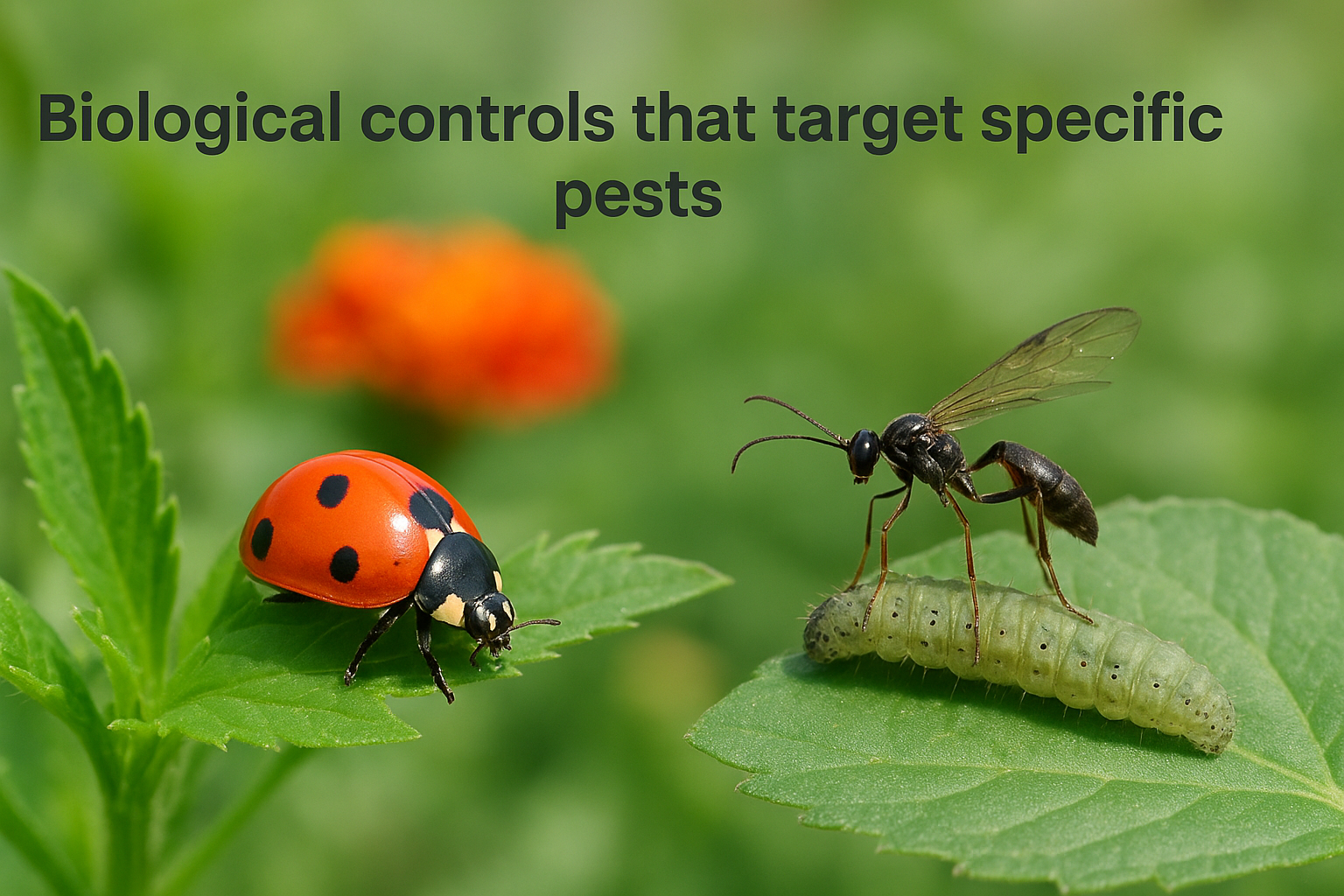
You introduce or encourage natural predators and parasites that feed on problem insects without harming your plants. Ladybugs consume aphids at impressive rates, while parasitic wasps lay eggs inside caterpillar bodies, controlling populations before they devastate your foliage. Malaysian gardens benefit from lacewings, praying mantises, and predatory mites that thrive in tropical conditions year-round.
Plants themselves serve as biological controls when you select varieties that attract beneficial insects or repel pests. Companion planting pairs vulnerable crops with protective species, such as marigolds near vegetables or herbs like basil that deter specific insect types through their natural compounds.
Cultural and physical barriers
Your maintenance practices directly influence pest pressure. You water early in the morning to prevent fungal diseases that weaken plants and attract secondary pests, and you prune for better airflow that discourages humid conditions where problems breed. Physical barriers like row covers, trunk wraps, and copper tape block pests mechanically without any chemical intervention.
Timing also matters when you understand how does integrated pest management work. You plant when pest populations naturally decline, or you harvest before infestations typically peak, avoiding the problem entirely through strategic scheduling.
Combining methods creates resilience, because pests that overcome one defense still face multiple other obstacles.
How to build an IPM plan for your property
Building an effective IPM plan transforms abstract principles into concrete actions tailored to your landscape. You start by documenting your property's unique characteristics, pest history, and management goals rather than copying generic solutions. This personalized approach ensures your efforts target actual problems instead of theoretical threats, making your time and resources more productive while reducing unnecessary interventions.
Assess your garden's specific conditions
You walk your property during different times of day, noting sun exposure, drainage patterns, and existing plant health. Malaysian gardens face unique challenges like intense heat, heavy rainfall, and year-round pest activity, so your plan must account for tropical conditions that differ from temperate zone strategies. Record which areas consistently show pest problems and identify patterns linking infestation to specific locations or plant types.
Create a simple map marking vulnerable zones, beneficial insect habitats, and water sources that influence pest movement. You photograph problem areas to track changes over time, building visual evidence that helps you evaluate which tactics work. Understanding how does integrated pest management work requires this baseline data, because you cannot measure improvement without knowing your starting point.
Set action thresholds and document your approach
You define specific population levels or damage percentages that trigger intervention for each pest type. Some cosmetic damage remains acceptable on ornamental plants, while food gardens require stricter thresholds to protect harvest quality. Write these numbers down rather than relying on memory, creating a reference document you consult before taking action.
Your plan becomes a living document that evolves as you learn what works in your specific garden conditions and climate.
Common IPM mistakes and quick FAQs
Even experienced gardeners make errors when applying IPM principles to their landscapes. Understanding how does integrated pest management work requires patience and observation, but many people rush to intervention or skip critical monitoring steps that make the system effective. Recognizing these common pitfalls helps you avoid wasted effort and accelerates your progress toward a balanced, resilient garden ecosystem.
Mistakes that undermine your IPM efforts
You act too quickly when you spot a single pest, ignoring the action thresholds you established during planning. One aphid does not justify spraying, and natural predators often arrive within days to control emerging populations before they cause significant damage. Another frequent mistake involves applying treatments without proper identification, treating symptoms rather than actual pest species and wasting resources on ineffective solutions.
Many gardeners also neglect documentation, relying on memory instead of written records that reveal patterns over multiple seasons. You lose valuable insights when you cannot track which methods worked or when specific pests typically appear in your garden.
Documentation transforms random observations into actionable knowledge that improves your results year after year.
Quick answers to common IPM questions
Does IPM take more time than regular spraying? Initially yes, but you spend less time managing crises once you establish monitoring routines and preventive practices. Can you still use chemicals in IPM? Absolutely, but only as a last resort after other methods fail, and you select the most targeted, least disruptive products available. How long before you see results? Most gardens show improvement within one growing season, with dramatic changes appearing by the second year as beneficial insect populations establish and soil health improves.
Final thoughts for a healthier garden
Understanding how does integrated pest management work gives you the tools to create outdoor spaces that resist pest pressure naturally while remaining beautiful and safe for your family. You move away from reactive spraying toward proactive ecosystem management, building resilience into your landscape through careful observation, prevention, and targeted intervention. The time you invest in monitoring and documentation pays back through reduced chemical use, lower maintenance costs, and healthier plants that show their best colors and growth year after year.
Malaysian gardens present unique challenges with year-round pest activity and tropical weather patterns, but these same conditions support diverse beneficial insects that become your strongest allies when you create habitat for them. Your garden becomes a balanced system where problems remain manageable without constant crisis intervention.
Konzept Garden designs landscapes that incorporate IPM principles from the start, selecting pest-resistant plants and creating conditions that favor beneficial organisms over destructive pests. Contact our design team to discuss how we can transform your property into a thriving, low-maintenance garden that works with nature instead of fighting against it.