

Stormwater management is the process of controlling rainwater runoff from hard surfaces like roofs, driveways, and pavements. When rain falls on natural ground, soil absorbs most of it. But when water hits concrete or asphalt, it rushes across the surface, picks up pollutants, and can overwhelm drainage systems. Proper stormwater management captures this runoff, filters it, and either stores it for later use or releases it slowly to prevent flooding and protect water quality.
This guide walks you through everything you need to know about stormwater management. You'll learn why it matters for your property and community, how to plan an effective strategy, and which methods work best for different situations. We'll cover practical solutions from detention ponds to rain gardens, explain how green infrastructure can transform your outdoor space, and show you what works specifically for Malaysian climates and soil conditions. You'll also discover common mistakes that waste money and effort, plus maintenance tips to keep your system working efficiently for years. Whether you're a homeowner looking to reduce flooding or a developer planning a new project, you'll find actionable information to make better decisions.
Why stormwater management matters
Understanding what is stormwater management becomes crucial when you see the direct impact uncontrolled runoff has on your property, local infrastructure, and environment. Without proper management, every rainstorm can damage your landscape, threaten your building foundations, and contribute to larger community problems. The cost of ignoring stormwater issues adds up quickly through repairs, water damage, and declining property values. You face real consequences when water flows freely across impervious surfaces without any system to control it.
Protects your property from water damage
Unmanaged stormwater creates immediate threats to your buildings and outdoor spaces. Water that pools around foundations seeps into basements, cracks concrete, and destabilizes structural supports. Your garden beds wash away when rainfall rushes across the surface without proper drainage channels. Erosion removes topsoil you've carefully cultivated, leaving behind bare patches and gullies that cost money to repair. Driveways and pathways develop potholes and uneven surfaces as water undermines the base materials beneath them.
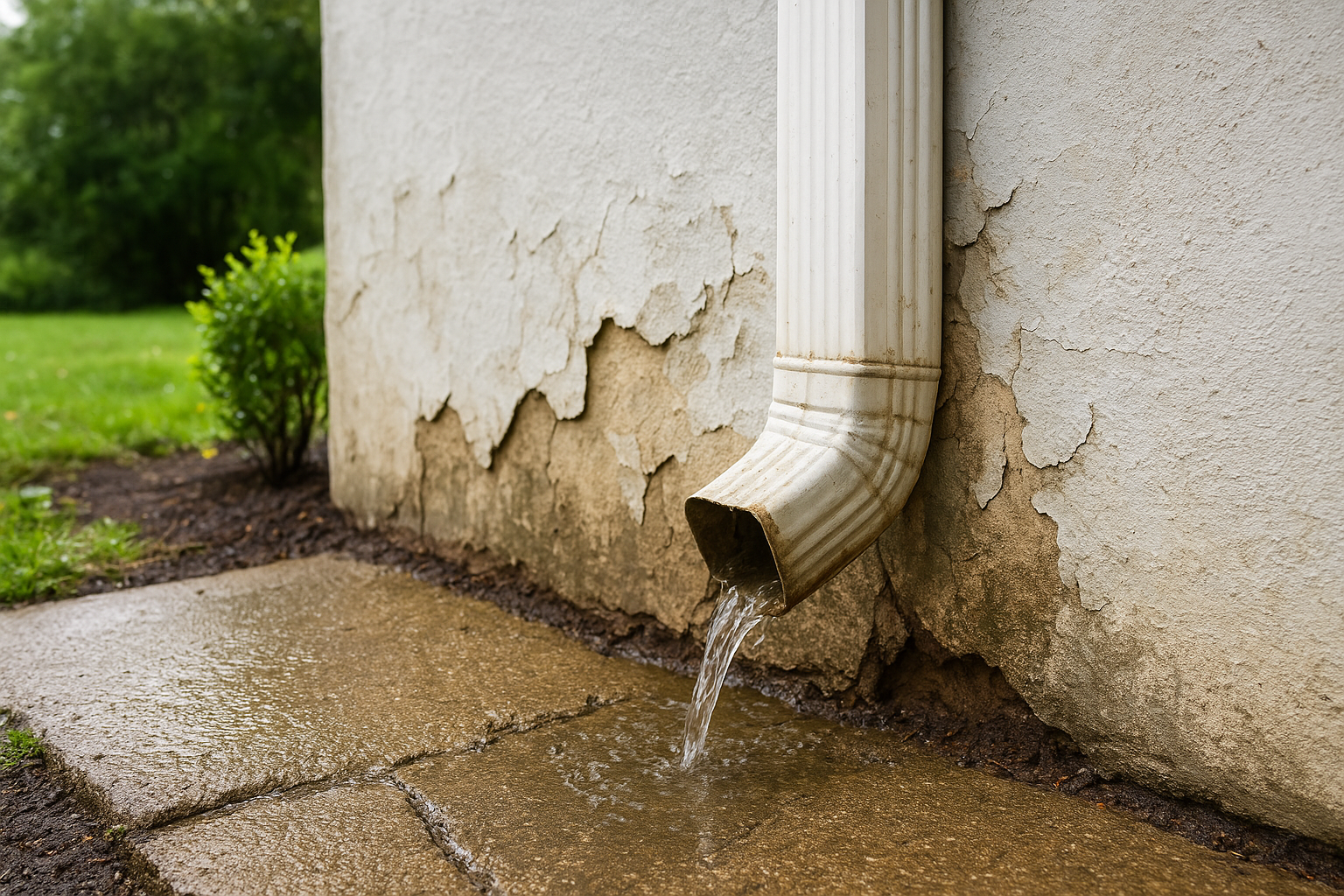
Malaysian properties face particularly intense challenges during monsoon seasons when heavy rainfall can dump months of precipitation in days or even hours. Your landscape suffers from both the volume and velocity of runoff. Retaining walls fail under pressure from saturated soil, and slope failures become genuine safety hazards. Insurance claims related to water damage cost Malaysian homeowners thousands of ringgit annually, yet many of these problems are preventable with proper stormwater management systems.
Prevents pollution in waterways
Stormwater picks up everything in its path as it races across surfaces. Oil from driveways, fertilizers from lawns, pesticides from gardens, and sediment from construction sites all wash into storm drains. These contaminants flow directly into rivers, lakes, and coastal waters without treatment. Local ecosystems suffer when polluted runoff disrupts aquatic habitats, killing fish and damaging coral reefs. You contribute to this problem every time unchecked runoff leaves your property carrying chemicals and debris.
The water that leaves your property today becomes someone else's drinking water, recreation area, or fishing ground tomorrow.
Malaysia's rivers and coastal waters already face significant pollution challenges, and residential stormwater adds to the burden. Heavy metals from roof runoff, nutrients from fertilizers, and bacteria from animal waste all degrade water quality. Communities downstream pay the price through contaminated water supplies and damaged fisheries that support local livelihoods.
Reduces infrastructure strain
Municipal drainage systems weren't designed to handle the increased runoff volumes from modern development. As cities replace forests and fields with roads and buildings, stormwater systems face overwhelming pressure during heavy rains. Your neighborhood experiences street flooding when storm drains can't keep pace with the water rushing into them. This overflow backs up into properties, creates traffic hazards, and damages public infrastructure.
Local governments spend millions of ringgit expanding and maintaining drainage networks to accommodate growing runoff volumes. These costs get passed to residents through higher utility fees and taxes. When you implement stormwater management on your property, you reduce the burden on public systems and help prevent the expensive upgrades that become necessary when too many properties send uncontrolled runoff into municipal drains.
How to plan a stormwater management strategy
Planning an effective stormwater management strategy starts with understanding your specific site conditions and goals. You need to evaluate your property systematically before choosing solutions. Generic approaches waste money because what works for one location often fails at another. Your soil type, slope, rainfall patterns, and existing drainage all determine which methods will succeed. A proper plan accounts for current problems, future development, and long-term maintenance requirements. Taking time to plan carefully now prevents costly mistakes and ensures your system performs reliably for decades.
Assess your property's unique conditions
Walk your property during and after heavy rain to identify where water flows and accumulates. Mark spots where puddles form, soil erodes, or water rushes across surfaces. Check your soil type by digging a small hole and observing how quickly water drains. Sandy soils absorb water rapidly while clay soils drain slowly and may require different management approaches. Measure the slope of your land using a level and measuring tape, noting any steep areas where water picks up speed. Document existing vegetation, impervious surfaces like driveways and patios, and current drainage infrastructure.
Your property's topography directly affects which stormwater methods will work best. Properties on slopes need erosion control and velocity reduction measures, while flat areas benefit from infiltration systems. Existing trees and vegetation influence both runoff volumes and available space for new installations. Take photos and create a simple sketch showing drainage patterns, problem areas, and potential locations for stormwater infrastructure.
Calculate expected runoff volumes
Understanding how much water your property generates helps you size your stormwater systems correctly. Measure the square footage of all impervious surfaces including roofs, driveways, walkways, and patios. Malaysian properties should plan for intense rainfall events during monsoon seasons. A typical calculation multiplies your impervious area by rainfall depth to estimate runoff volume. For example, a 200 square meter roof receiving 100mm of rain generates approximately 20,000 liters of runoff.
Undersized stormwater systems fail when you need them most, turning moderate rainfall into property damage.
Local rainfall data from meteorological departments provides the information you need for accurate calculations. Design your system to handle storms larger than average events. Most residential systems target 10-year or 20-year storm events, meaning they can manage rainfall that statistically occurs once every 10 or 20 years.
Set priorities based on your needs
Determine what you want your stormwater system to accomplish. Preventing basement flooding requires different solutions than reducing lawn erosion or harvesting water for irrigation. List your problems in order of importance and budget accordingly. Properties with repeated flooding issues need immediate solutions before aesthetic improvements. If water quality concerns you because runoff flows toward sensitive areas, prioritize filtration and treatment methods.
Consider both short-term fixes and long-term improvements when understanding what is stormwater management means for your property. Quick wins like redirecting downspouts cost little but provide immediate relief. Larger investments in retention ponds or rain gardens deliver more comprehensive benefits over time. Balance your immediate needs against future property plans. Anticipated construction or landscaping changes should influence which systems you install now to avoid rebuilding later.
Main stormwater management methods
Selecting the right stormwater management method depends on your site conditions, budget, and performance goals. Different approaches work better for different situations, and many properties benefit from combining multiple methods. You'll find that structural solutions like ponds and channels handle large volumes of water, while infiltration systems focus on returning water to the ground. Treatment methods remove pollutants before water enters natural waterways. Understanding what is stormwater management really means involves knowing which tools to use and when each approach makes sense for your specific property challenges.
Detention and retention ponds
Detention ponds temporarily store stormwater and release it slowly to prevent downstream flooding. These dry basins remain empty most of the time and fill only during rain events. Water drains out through controlled outlets over hours or days, reducing peak flow rates that overwhelm drainage systems. Malaysian properties with adequate space can install detention ponds in low-lying areas where water naturally collects. The basin bottom needs grading to direct flow toward outlets, and you must maintain vegetation on the slopes to prevent erosion.
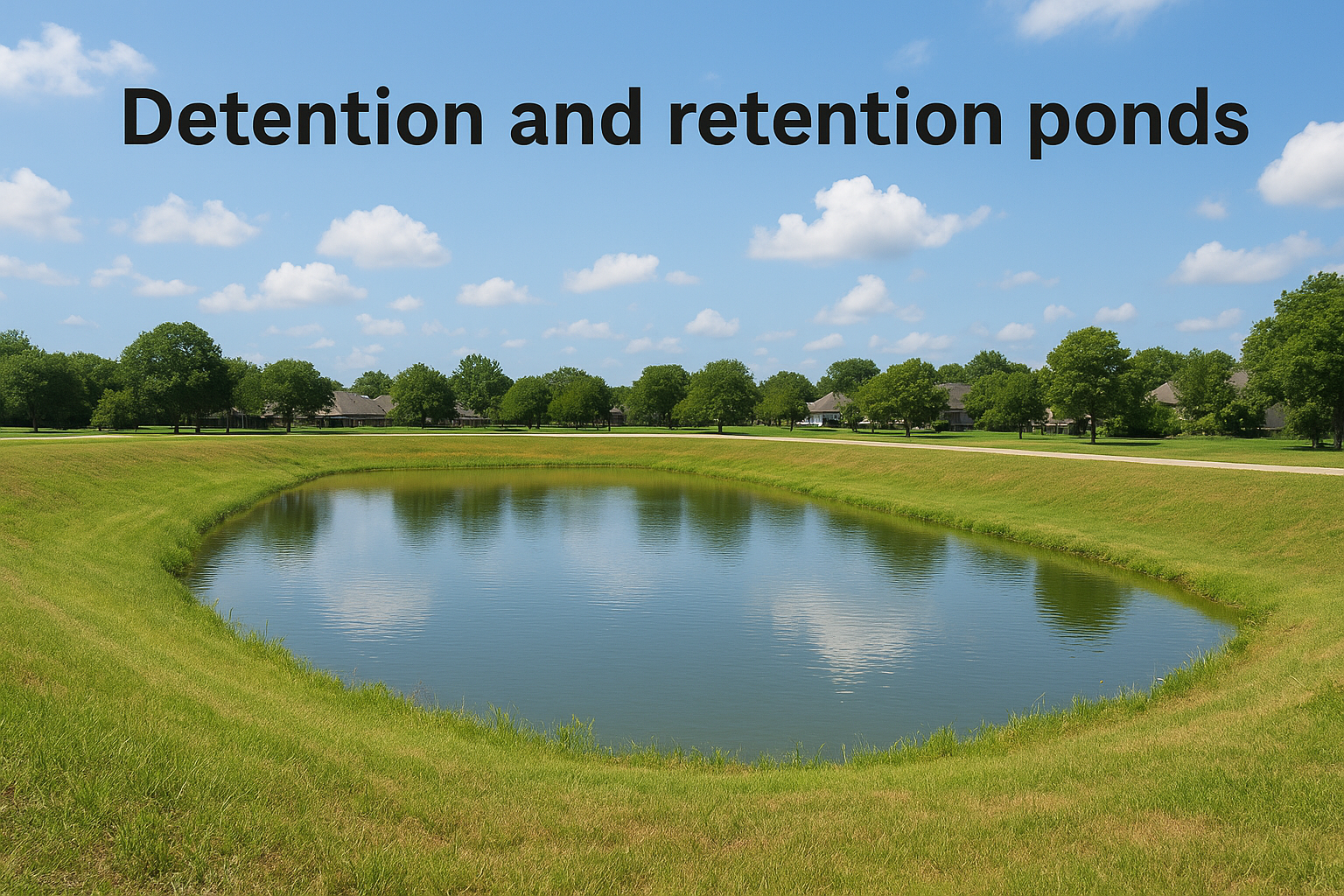
Retention ponds differ by holding water permanently in a pool or wetland setting. These wet ponds provide both flood control and water quality treatment as sediments settle and plants absorb nutrients. Retention systems require more maintenance than detention basins because you need to manage water levels, control mosquitoes, and maintain healthy vegetation. Both pond types need proper sizing based on your calculated runoff volumes, and outlets must include overflow provisions for storms that exceed design capacity.
Infiltration systems
Infiltration trenches and basins work by storing water underground in gravel-filled chambers where it soaks into surrounding soil. You dig trenches along property edges or beneath driveways and fill them with clean stone. Water enters through surface grates or pipes and filters down through the gravel before infiltrating into the subsoil. These systems work best in sandy or loamy soils with good natural drainage. Clay soils drain too slowly and cause infiltration systems to overflow.
Infiltration systems fail rapidly when sediment clogs the gravel, so you must filter runoff before it enters the trench.
Installing geotextile fabric around your infiltration system prevents fine particles from migrating into the stone. Position these systems away from building foundations to avoid water seeping into basements. Malaysian properties need to account for high rainfall intensities that can exceed infiltration rates even in good soils. Size your system generously and include overflow routes for extreme events. Regular inspection and maintenance keep these systems functioning, as you'll need to remove accumulated sediment from pre-treatment areas every few years.
Drainage channels and swales
Surface channels direct stormwater along planned routes instead of allowing uncontrolled flow. Concrete or stone-lined channels handle high-velocity water on steep slopes where vegetation can't establish. You need to calculate flow rates and size channels accordingly, ensuring banks are high enough to contain design storms. Exit points must discharge to stable areas where concentrated flow won't cause erosion. Include drop structures or check dams in long channels to reduce water velocity and prevent scouring.
Vegetated swales provide both conveyance and treatment as water flows through shallow, grass-lined channels. These broad, gently sloped depressions slow runoff velocity and allow sediment to settle while plants filter pollutants. Swales work well along property boundaries or parallel to driveways and roads. The vegetation requires regular mowing and occasional reseeding where flow concentrates. Design swales with side slopes no steeper than 3:1 to support mowing equipment and prevent erosion. Overflow capacity protects against channel breakout during intense rainfall when water volume exceeds the swale's ability to convey flow.
Filtration and treatment devices
Sand filters remove sediment and attached pollutants by forcing water through filter media before discharge. You construct a chamber filled with specific sand gradations that trap particles while allowing water to pass. Surface filters require regular cleaning as trapped material accumulates and reduces flow rates. Underground vault systems provide filtration in limited spaces where surface installations aren't possible. These manufactured devices include cartridge filters, media filters, and hydrodynamic separators that use swirling action to remove solids.
Screening devices capture trash, leaves, and coarse debris before they enter drainage systems. Simple mesh screens install in catch basins and require periodic cleaning to prevent clogging. Gross pollutant traps use settling chambers and screens to remove larger materials from stormwater. You place these devices at strategic points where runoff enters your drainage network. Malaysian properties benefit from frequent maintenance during monsoon seasons when vegetation debris increases dramatically. Combination devices provide both filtration and oil separation for properties where petroleum contamination poses risks, such as commercial parking areas or vehicle maintenance facilities.
Green infrastructure for homes and developments
Green infrastructure uses natural processes to manage stormwater instead of relying solely on pipes and concrete channels. These living systems mimic how undeveloped land absorbs and filters water, creating functional landscapes that also enhance your property's appearance and ecological value. Understanding what is stormwater management includes recognizing how plants, soil, and natural materials work together to capture runoff where it falls. You gain multiple benefits from green infrastructure including reduced flooding, improved water quality, habitat creation, and lower maintenance costs compared to conventional systems. These approaches integrate seamlessly into residential and commercial developments, transforming necessary stormwater controls into attractive landscape features.
Rain gardens and bioretention areas
Rain gardens are shallow planted depressions that collect runoff from roofs, driveways, and other impervious surfaces. You position these gardens in natural low spots or excavate shallow basins where water can pond temporarily after storms. Native plants with deep root systems work best because they tolerate both wet and dry conditions while creating channels for water infiltration. The soil mix in rain gardens typically contains sand, compost, and existing soil to support plant growth while maintaining good drainage rates.

Design your rain garden to capture runoff from a specific drainage area, usually 5 to 10 times smaller than the garden itself. Water should pond no deeper than 15 to 30 centimeters and drain completely within 24 to 48 hours to prevent mosquito breeding. Place gardens at least 3 meters from building foundations to protect structures from water infiltration. Malaysian homeowners succeed with rain gardens by selecting plants that handle tropical rainfall patterns and thrive in local soil conditions. You'll need to mulch the surface, weed regularly during establishment, and replace plants that don't survive the first season.
Permeable pavements and surfaces
Permeable pavement allows water to soak through the surface into stone reservoirs below instead of running off into drains. You can choose from permeable concrete, porous asphalt, or interlocking pavers with wide joints filled with gravel. These surfaces work well for driveways, patios, and walkways where you need firm surfaces but want to reduce runoff. The base layer typically consists of clean crushed stone that stores water temporarily while it infiltrates into the subsoil.
Permeable surfaces reduce runoff by up to 80% compared to conventional pavement while providing the same load-bearing capacity.
Installing permeable pavement requires proper base preparation and edge restraints to prevent material migration. You must clean these surfaces regularly because sediment clogs the pores over time. Vacuum sweeping works better than pressure washing for maintenance, as high-pressure water can damage the surface structure. Heavy clay soils beneath permeable pavement need underdrain systems to carry away water that can't infiltrate quickly enough.
Green roofs and living walls
Green roofs transform your building's top surface into planted areas that absorb rainfall and reduce runoff volumes. These systems include waterproofing layers, drainage mats, growing media, and vegetation selected for rooftop conditions. Extensive green roofs use shallow soil depths with hardy plants like sedums that require minimal maintenance, while intensive systems support deeper soils for diverse plantings. You reduce stormwater runoff by 40 to 60% while also insulating your building and extending roof membrane life.
Structural capacity determines whether your existing building can support a green roof's additional weight. New construction projects can incorporate the necessary structural support from the beginning. Maintenance includes periodic weeding, fertilizing, and irrigation during dry periods to keep plants healthy.
Stormwater management in Malaysian landscapes
Malaysian properties face unique stormwater challenges that require specialized approaches adapted to tropical conditions. Your location experiences some of the world's highest rainfall intensities, with monsoon seasons dumping up to 300mm of rain in single events. Understanding what is stormwater management in a Malaysian context means accounting for heavy downpours that overwhelm conventional systems designed for temperate climates. You also deal with consistently warm temperatures that accelerate plant growth and support year-round vegetation in your stormwater infrastructure. Local soil conditions, native plant species, and regulatory requirements all shape which methods work best for properties across Peninsular Malaysia, Sabah, and Sarawak.
Climate and rainfall considerations
Tropical rainfall patterns create intense, short-duration storms that generate massive runoff volumes in minutes rather than hours. Your stormwater systems must handle rainfall rates exceeding 100mm per hour during peak monsoon periods. Design capacity needs to account for these extreme intensities that far surpass what temperate-climate guidelines recommend. You can't rely on standard calculations from other countries because Malaysian rainfall characteristics differ fundamentally. Properties in coastal areas face additional challenges from high water tables that limit infiltration capacity and require more surface storage solutions.
Malaysian stormwater systems that work during light rain often fail catastrophically during monsoon events, causing thousands of ringgit in damage.
Seasonal variations between wet and dry periods require systems that function effectively in both extremes. Your rain gardens and swales need plants that survive both flooding and occasional drought conditions. Infrastructure must drain quickly enough to prevent mosquito breeding in standing water, a critical public health concern in tropical climates.
Soil types and drainage characteristics
Malaysian soils vary dramatically from sandy coastal areas with excellent drainage to heavy clay inland soils that resist water infiltration. You need to test your specific site because soil conditions change over short distances. Laterite soils common in Malaysia develop hard crusts that reduce infiltration rates and require scarification before installing rain gardens or infiltration systems. Properties built on reclaimed land or former tin mining areas face contaminated soils that limit options for ground-based stormwater treatment.
Clay-rich soils require amended planting media in bioretention areas to achieve adequate drainage rates. You typically mix existing soil with sand and compost in ratios of 40:40:20 to create the right balance. Underdrain systems become necessary in heavy soils where natural infiltration can't keep pace with tropical rainfall volumes.
Plant selection for tropical conditions
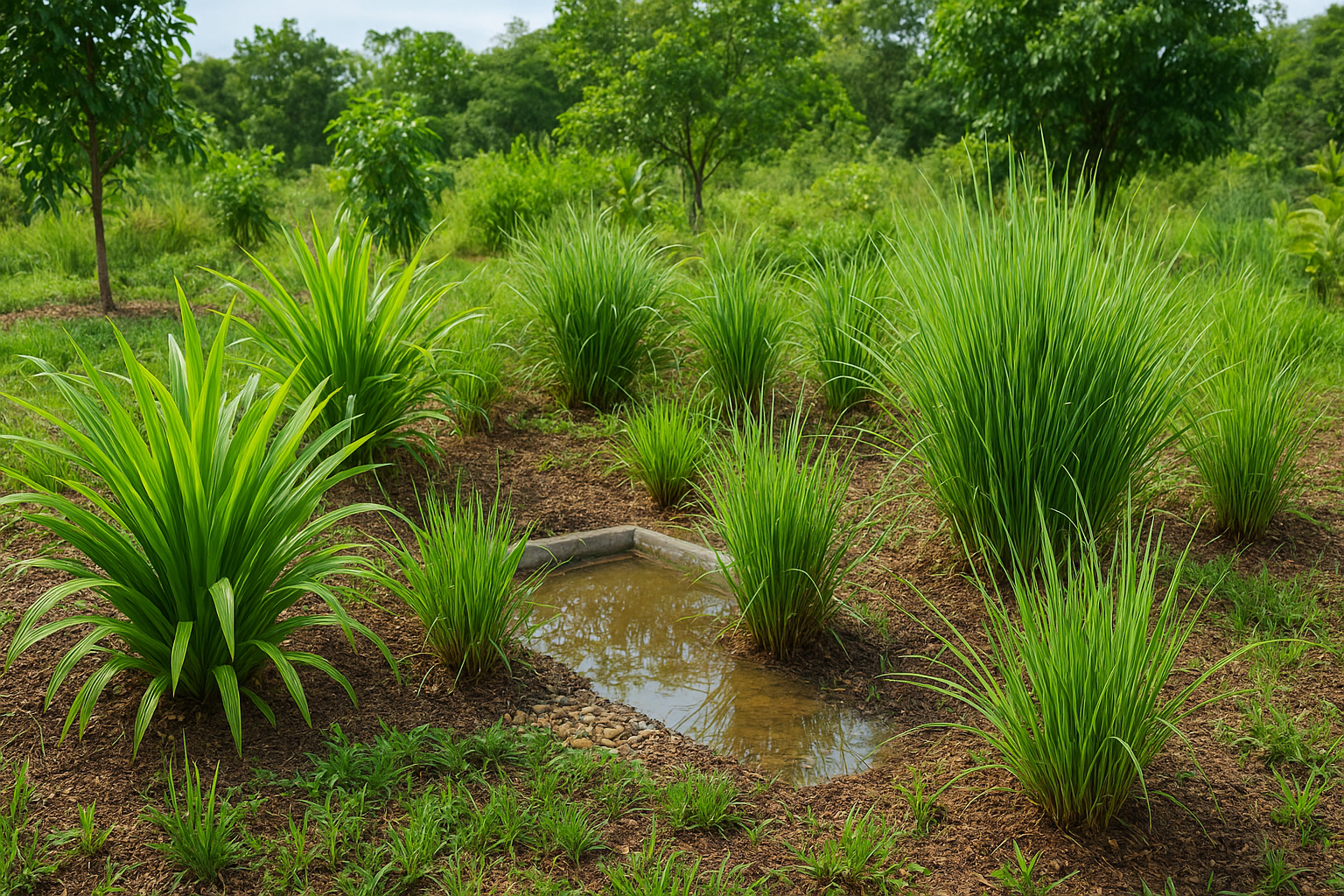
Native Malaysian plants perform better in stormwater systems than imported species that struggle with local conditions. You should select plants like pandan, lemongrass, and vetiver grass that tolerate both wet and dry periods. These species establish quickly and require less maintenance than exotic alternatives while supporting local wildlife. Avoid plants that spread aggressively or require frequent trimming, as maintenance costs mount rapidly in year-round growing conditions.
Common mistakes and how to avoid them
Property owners waste thousands of ringgit on stormwater systems that fail because of preventable planning and installation errors. You might understand what is stormwater management involves conceptually but still make critical mistakes during implementation. Common errors range from undersizing infrastructure to neglecting maintenance planning and choosing inappropriate materials for Malaysian conditions. These mistakes cause systems to overflow during storms, clog within months, or fail completely after the first monsoon season. Learning from others' errors saves you money and prevents the frustration of rebuilding failed installations.
Undersizing your system for extreme weather
Most property owners design stormwater systems based on average rainfall rather than monsoon extremes, creating infrastructure that works most of the time but fails when you need it most. You calculate volumes using typical storms and end up with detention ponds, rain gardens, or infiltration trenches that overflow during intense events. Malaysian properties require capacity for 100mm per hour rainfall rates that exceed what temperate climate guidelines recommend. Size every component generously because undersized systems provide zero benefit during actual flood conditions.
Installing a system that handles average rain but fails during storms wastes your entire investment.
Always include overflow provisions that direct excess water safely away from buildings and sensitive areas when design capacity gets exceeded.
Ignoring maintenance requirements
Stormwater infrastructure stops working when sediment clogs filters, vegetation dies from neglect, and debris blocks inlets. You install a beautiful rain garden or permeable pavement and forget that these systems need regular care to function properly. Schedule monthly inspections and seasonal maintenance tasks including removing accumulated sediment, clearing vegetation growth, and replacing dead plants. Properties that skip maintenance find their systems failing within two years instead of lasting decades as designed.
Poor plant selection and placement
Choosing exotic plants that can't survive Malaysian rainfall patterns or positioning vegetation incorrectly causes rapid system failure. You select species based on appearance rather than performance, then watch them die during the first dry spell or drown when rain gardens flood. Native plants adapted to local conditions require less replacement and maintenance while providing better stormwater treatment. Position plants according to their water tolerance, placing flood-resistant species in basin centers and drought-tolerant varieties on edges.
Maintaining and monitoring your system
Understanding what is stormwater management extends beyond installation to include ongoing maintenance and performance monitoring that keeps your system functioning reliably. You need to inspect components regularly, remove accumulated debris and sediment, and verify that water flows as designed. Neglected systems degrade rapidly in Malaysian climates where heavy rainfall accelerates clogging and aggressive plant growth blocks channels within weeks. Your maintenance schedule should intensify during monsoon seasons when problems develop quickly. Properties that commit to consistent upkeep get decades of reliable service, while those that skip maintenance face premature failure and expensive replacements.
Regular inspection schedules
Walk your entire stormwater system monthly during dry seasons and weekly during monsoons to catch problems before they cause damage. You should check that inlets remain clear, vegetation looks healthy, and structures show no signs of damage or settling. Document each inspection with photos and notes that track changes over time. Look for standing water that should have drained, erosion around outlets, and sediment buildup in channels or basins. Malaysian properties need more frequent inspections than temperate-climate guidelines recommend because tropical conditions accelerate both vegetation growth and material degradation.
Cleaning and sediment removal
Remove leaves, trash, and debris from catch basins and screens after every major storm to prevent clogging that reduces system capacity. You need to excavate accumulated sediment from detention ponds, rain gardens, and swales annually or when deposits exceed 5 centimeters depth. Sediment removal requires proper disposal because contaminated material can't simply be spread across your property. Schedule cleaning for dry periods when access is easier and removed material dries faster for handling.
Systems lose up to 50% of their capacity within two years when you skip sediment removal.
Performance tracking methods
Monitor how quickly water drains from retention areas to verify infiltration rates haven't declined. You can install simple staff gauges in ponds to track water levels after storms, noting whether drawdown times increase over seasons. Take photos from consistent locations to document vegetation health, erosion patterns, and structural integrity. Keep records of maintenance activities including dates, work completed, and any repairs made.
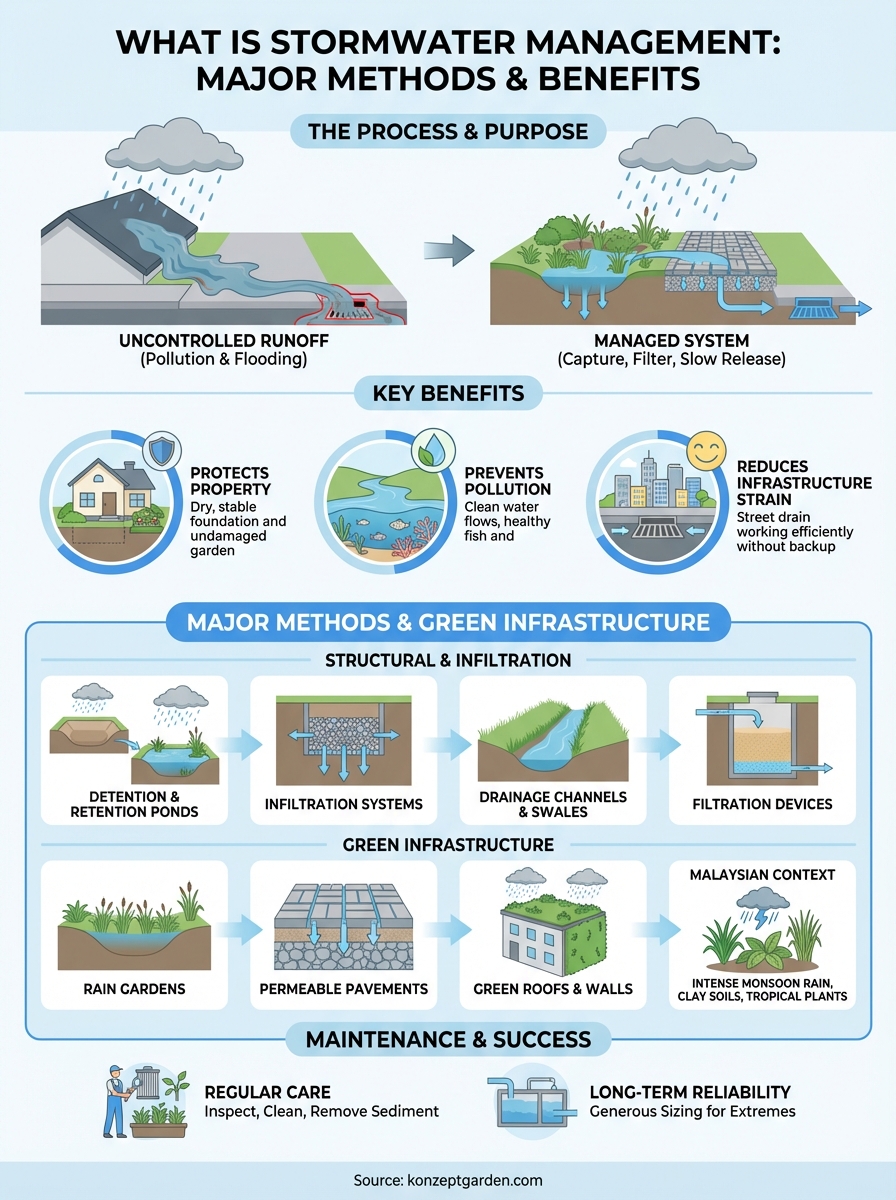
Key takeaways
You now understand what is stormwater management and how it protects your property from water damage, prevents pollution, and reduces strain on municipal infrastructure. Successful implementation starts with assessing your site conditions including soil type, slope, and rainfall patterns specific to Malaysian climates. Your strategy should combine multiple methods like detention ponds, infiltration systems, and green infrastructure to handle intense monsoon rainfall that can exceed 100mm per hour.
Green solutions like rain gardens and permeable pavements offer the dual benefits of flood control and enhanced landscape aesthetics. Remember that Malaysian properties require generous sizing because tropical rainfall intensities far exceed temperate climate standards. Regular maintenance keeps your system functioning reliably for decades, while neglect causes premature failure within two years.
Professional landscape design integrates stormwater management seamlessly into your outdoor spaces. If you're ready to protect your property while creating a beautiful, functional landscape, contact our team to discuss custom solutions that work specifically for Malaysian conditions and your unique site requirements.