

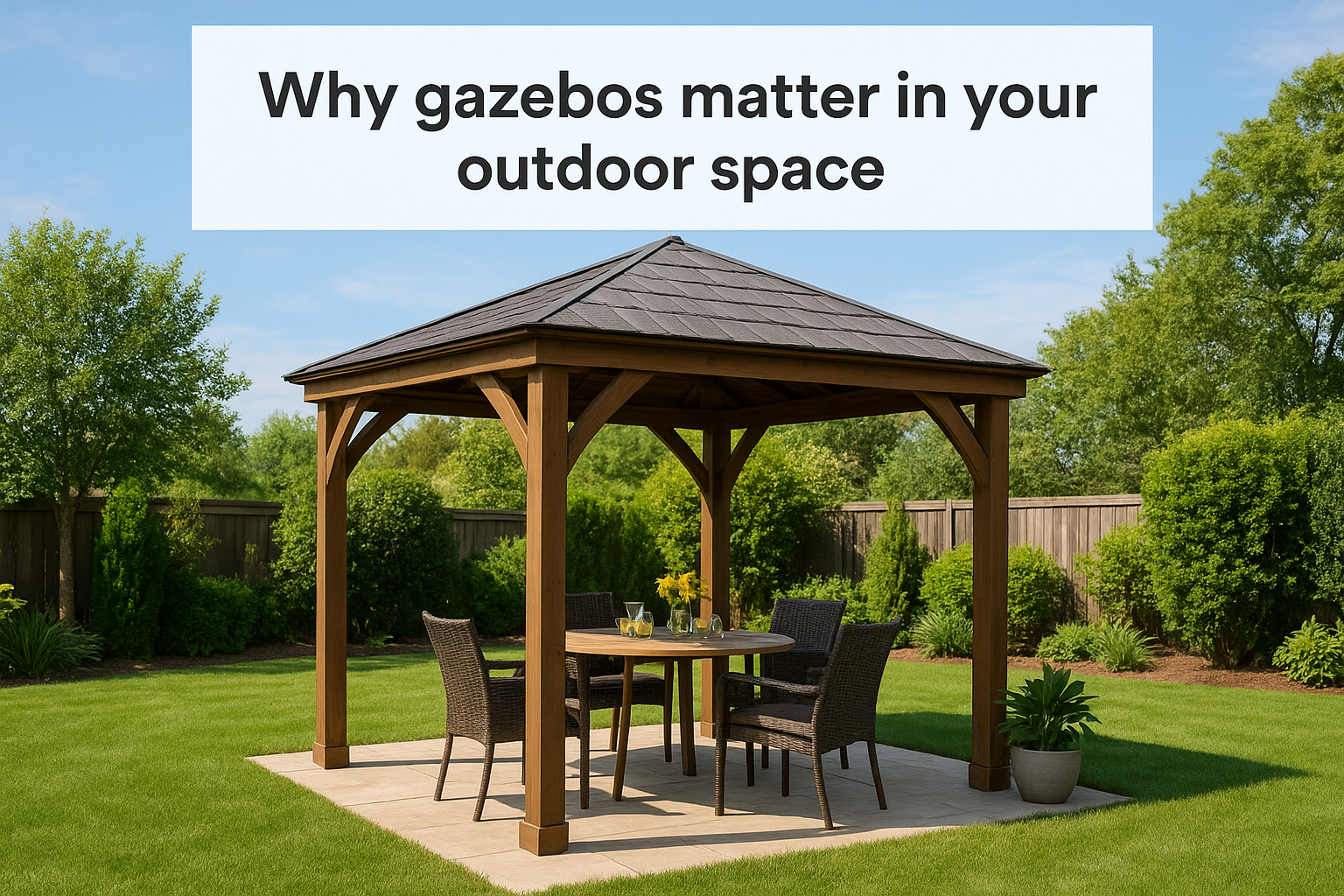
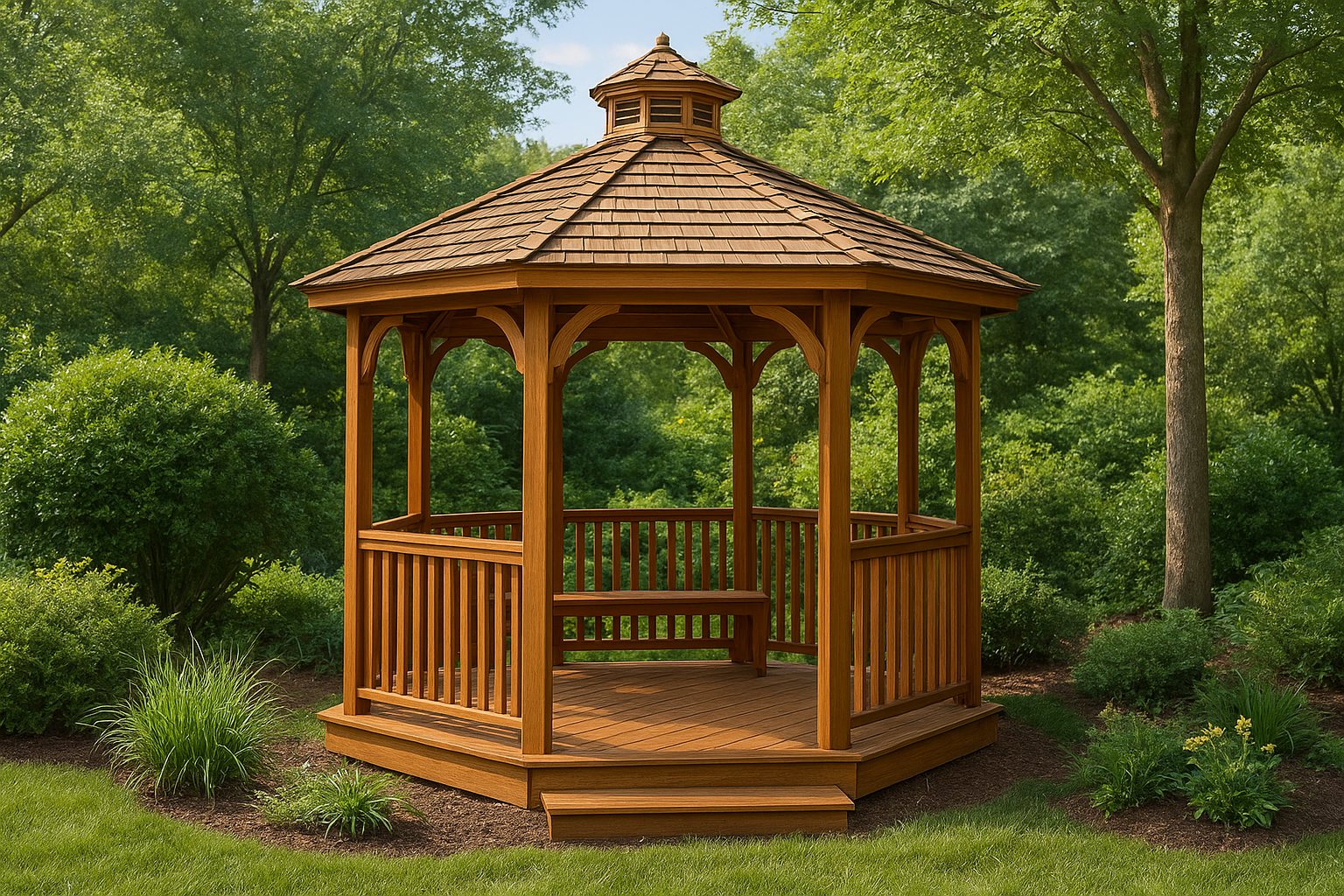
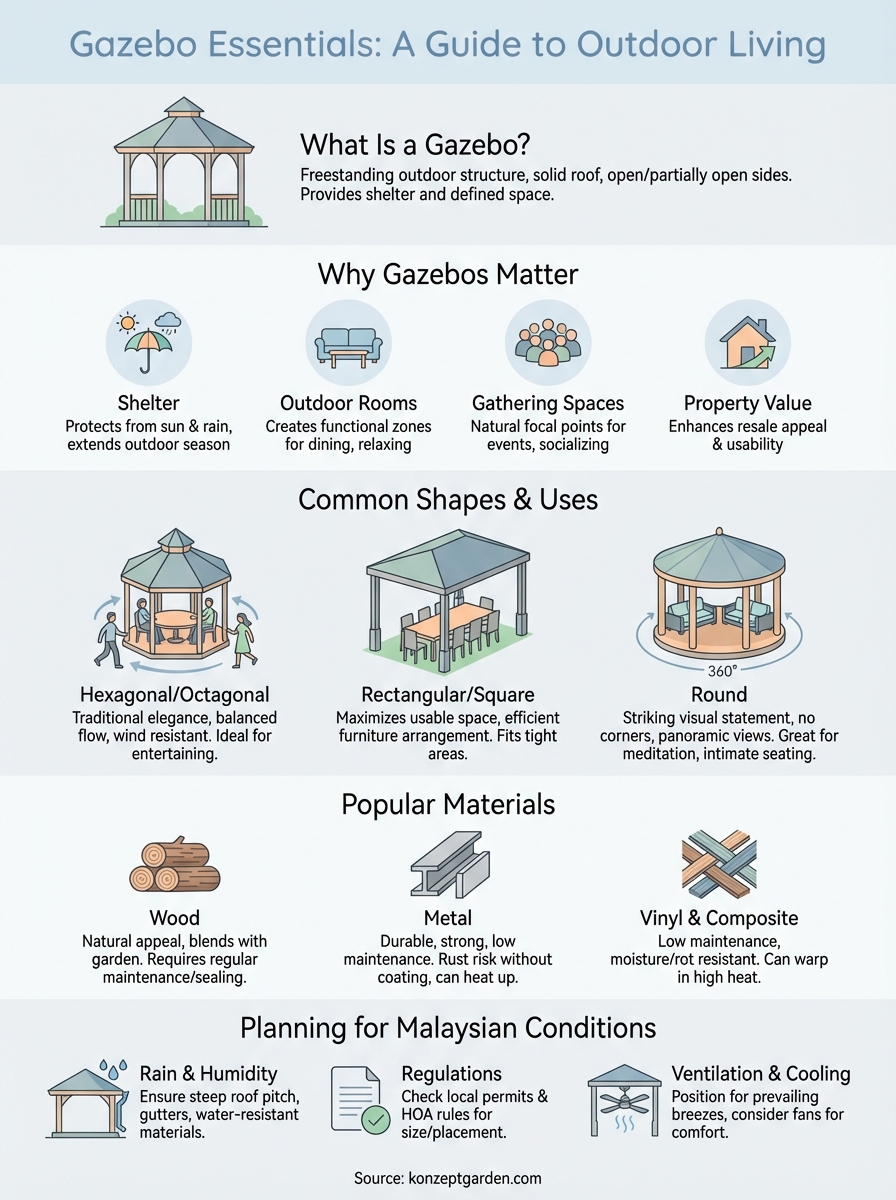
A gazebo is a freestanding outdoor structure with a solid roof and open or partially open sides. Picture a covered pavilion in your garden where you can sit protected from sun and rain while still enjoying fresh air and views. These structures typically feature a raised floor platform, support posts or columns, and come in shapes like hexagonal, octagonal, rectangular, or round. You will find gazebos in residential gardens, parks, and commercial properties across Malaysia and beyond.
This article explains everything you need to know about gazebos for your outdoor space. You will learn why these structures add value to gardens, how to select the right type for your needs, and what materials work best in Malaysian weather. We cover the most popular shapes and styles, practical ways to use your gazebo throughout the year, and key factors to consider when planning installation. Whether you are exploring options for a new garden feature or ready to transform your patio area, this guide gives you the information to make smart decisions about adding a gazebo to your property.
Why gazebos matter in your outdoor space
Your garden becomes a usable living area when you install a gazebo. These structures create defined outdoor rooms where you can host gatherings, enjoy meals, or simply relax without retreating indoors. A well-placed gazebo transforms underutilized lawn or patio space into functional zones that extend your home's square footage. Property buyers recognize this value, making gazebos a feature that often increases resale appeal and market price.
Shelter from Malaysian sun and rain
You need protection from intense tropical conditions to enjoy your garden year-round. A gazebo gives you shade during hot afternoons when direct sunlight makes outdoor activities uncomfortable. The solid roof also keeps you dry during sudden afternoon downpours that are common in Malaysia's climate. This weather shelter lets you plan outdoor events with confidence, knowing guests will stay comfortable regardless of conditions.
A quality gazebo extends your outdoor season by providing reliable protection from both sun and rain throughout the year.
Create memorable gathering spaces
Your outdoor entertaining improves dramatically with a dedicated structure. Gazebos provide natural focal points for birthday parties, family dinners, and weekend barbecues. The defined space helps you arrange furniture purposefully and establishes clear zones for dining, conversation, or relaxation. Guests naturally gravitate toward the shelter, making your events feel organized and welcoming without requiring complex setup.
How to choose and use a gazebo
Your selection process starts with measuring your available outdoor area and determining your primary purpose. A gazebo that fits well in your space should leave adequate clearance on all sides for movement and maintenance. Consider whether you need room for dining furniture, lounge seating, or specialized equipment like outdoor kitchens or hot tubs. The structure size directly affects both functionality and visual balance in your garden.
Match gazebo size to your available space
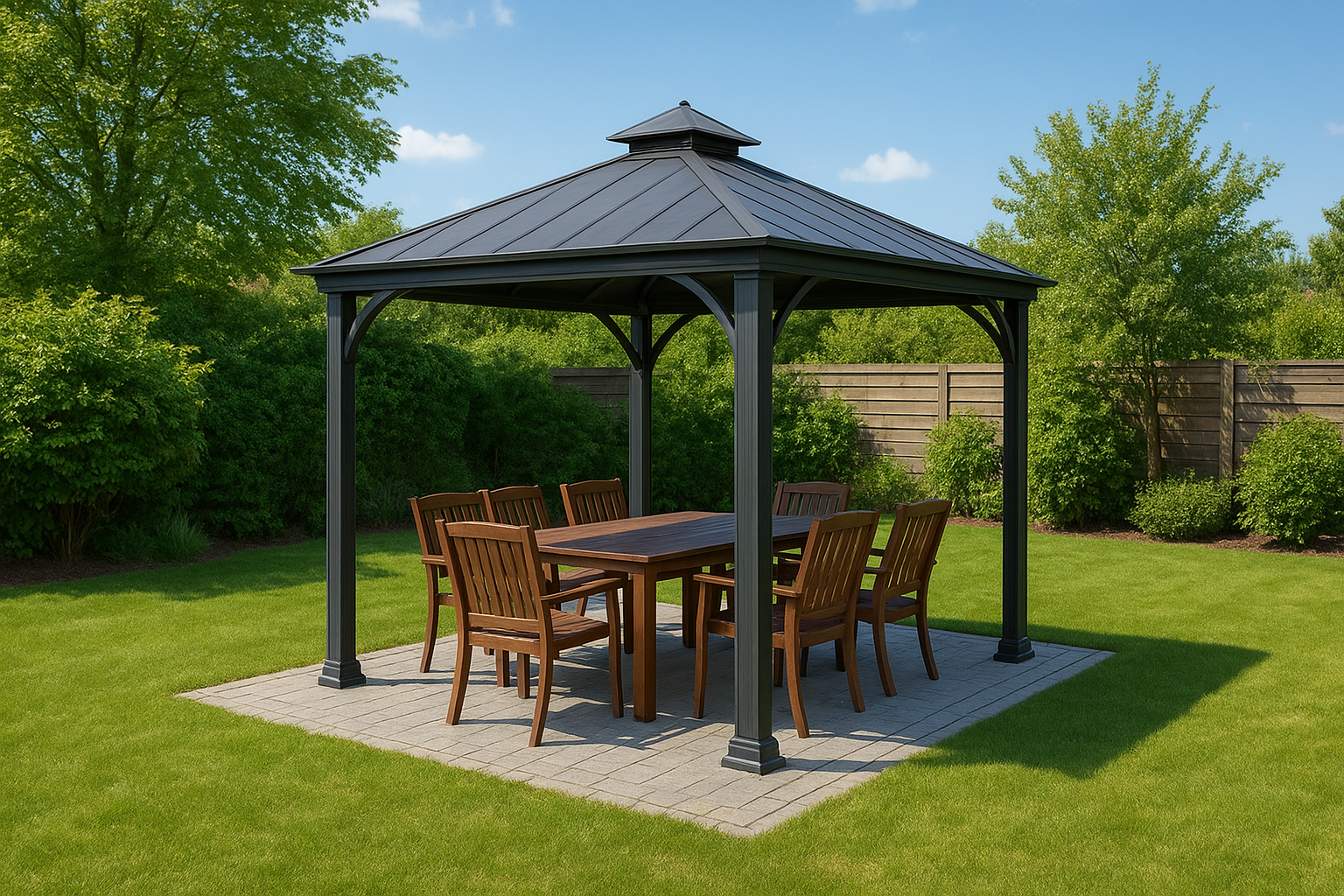
You should measure your intended location before shopping to avoid purchasing a structure that overwhelms or underwhelms your garden. A 4-meter by 4-meter gazebo typically accommodates a dining table with six to eight chairs comfortably, while smaller 2.5-meter hexagonal designs work better for intimate seating areas. Leave at least 1.5 meters of clearance around the perimeter for walkways and landscaping. Your gazebo should complement rather than dominate your garden's overall layout.
Position your gazebo for maximum benefit
Location determines how much value you extract from your investment. Place your structure where it captures pleasant views while providing natural shade during the hottest parts of the day. You want easy access from your house without requiring guests to walk across muddy lawn during rain. Consider prevailing wind direction in your area to maximize natural ventilation and cooling. Positioning near existing utilities simplifies adding lighting or ceiling fans later.
Strategic placement of your gazebo creates functional outdoor zones while enhancing the natural flow of your garden space.
Use your gazebo throughout the year
Your structure serves multiple purposes beyond basic shelter. Set up outdoor dining areas for weekend meals or install comfortable seating for afternoon reading spots. Many homeowners convert their gazebos into home office spaces when they need quiet work environments with natural light and fresh air. During gatherings, your gazebo becomes a natural bar area or buffet station. Understanding what is a gazebo helps you recognize these versatile applications. Add weatherproof curtains or screens to extend usability during windy conditions or when you need privacy from neighbors.
Understand common gazebo types and shapes
Your gazebo shape affects both aesthetics and practical use. Different designs suit specific garden styles and functional requirements, so understanding what is a gazebo in its various forms helps you select the right structure. Traditional shapes like hexagonal and octagonal styles create classic focal points, while modern rectangular designs offer maximum usable floor space. Round gazebos provide unique visual appeal and efficient space usage. Each shape brings distinct advantages for furniture arrangement, traffic flow, and integration with your existing landscape.
Hexagonal and octagonal designs
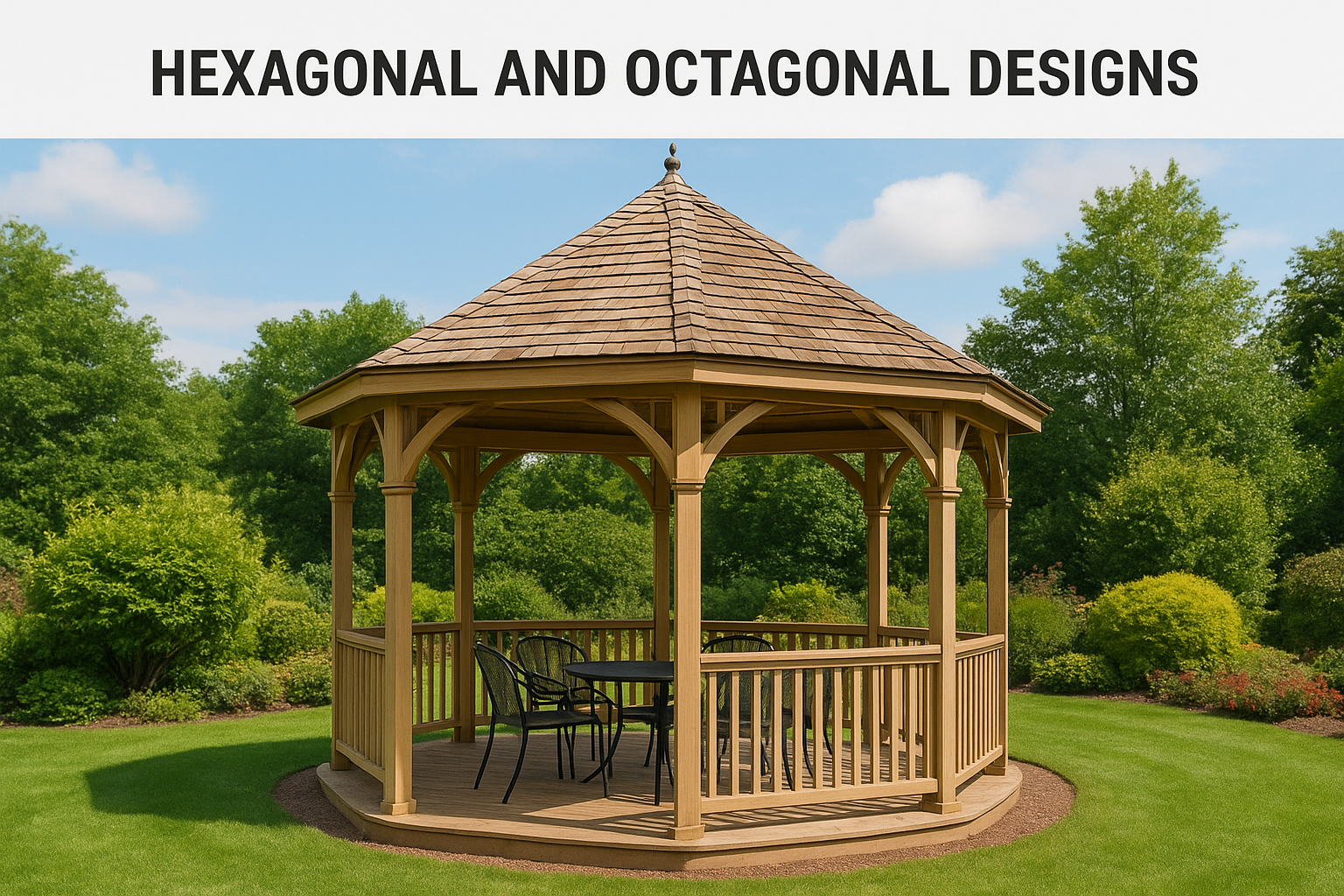
These multi-sided structures deliver traditional elegance that suits formal gardens and colonial-style homes. Hexagonal gazebos feature six sides while octagonal versions have eight, both creating symmetrical spaces that feel balanced from every angle. You gain natural traffic flow because entry points work from multiple directions. The angled walls also improve wind resistance compared to structures with flat surfaces. These shapes accommodate round dining tables efficiently, making them excellent choices for outdoor entertaining areas where guests move around the space freely.
Rectangular and square gazebos
Your best option for maximizing usable space comes from rectangular or square designs. These shapes align naturally with standard furniture dimensions, letting you arrange dining sets or lounge furniture without wasted corner areas. Rectangular gazebos work particularly well when you need to position the structure against existing walls or fencing in your garden. Square versions provide balanced proportions that suit formal garden designs while offering straightforward construction and lower costs compared to complex multi-sided structures.
Rectangular gazebos deliver the most efficient floor space for furniture placement and can fit into tight areas where multi-sided designs would not work.
Round pavilion styles
Circular gazebos create striking visual statements that draw attention in garden landscapes. The curved design offers no sharp corners or dead spaces, giving you continuous 360-degree views of your surroundings. Round structures handle strong winds better than angular designs because air flows smoothly around the curved walls. These gazebos work beautifully as meditation spaces or intimate seating areas where you want guests to face each other in conversation rather than sitting in rows.
Compare popular gazebo materials
Your material choice affects durability, maintenance requirements, and overall cost of ownership. Each option brings specific advantages and limitations that impact how well your structure performs in tropical conditions. Wood delivers natural beauty but demands regular upkeep, while metal options provide strength with minimal maintenance needs. Modern synthetic materials offer low maintenance at the expense of traditional aesthetics. Understanding what is a gazebo means recognizing how construction materials determine long-term satisfaction and performance in your specific environment.
Wood gazebos for natural appeal
Traditional timber construction creates warm, inviting spaces that blend naturally with garden surroundings. Cedar and redwood resist rot and insect damage better than standard pine, making them popular choices for outdoor structures. You need to apply protective sealants annually to prevent moisture damage and maintain the wood's appearance. Treated hardwoods like meranti or chengal perform exceptionally well in humid climates, though they cost more upfront. Wooden gazebos develop attractive weathered patinas over time, though some homeowners prefer maintaining the original finish through regular staining.
Metal structures for durability
Aluminum frames deliver exceptional strength without the rust problems that affect steel construction. These structures resist corrosion naturally and require only occasional cleaning with soap and water to maintain their appearance. Steel gazebos provide superior wind resistance and can support heavy roofing materials, but you must choose powder-coated or galvanized options to prevent rust in humid environments. Metal construction allows for intricate decorative patterns and slim profile designs that maximize interior space. The material conducts heat, so you may want to add ceiling fans or position your structure where trees provide natural shade.
Metal gazebos offer the longest lifespan with minimal maintenance requirements, making them cost-effective choices for long-term garden investments.
Vinyl and composite alternatives
Modern PVC and vinyl materials eliminate painting and staining requirements completely while resisting moisture, insects, and rot. These synthetic options come in colors that mimic wood grain or offer clean contemporary finishes. Composite materials blend wood fibers with plastic resins to create products that look like traditional timber while performing like synthetic materials. You simply wash these structures with a garden hose to remove dirt and debris. Heat can cause some vinyl products to warp or fade, so verify that any synthetic materials you consider carry UV protection ratings suitable for tropical sun exposure.
Plan a gazebo with Malaysian conditions in mind
Your tropical environment creates specific challenges that affect gazebo performance and longevity. Malaysia's high humidity levels and intense afternoon thunderstorms demand construction choices different from temperate climates. The combination of constant moisture, strong UV exposure, and seasonal monsoon rains means you need to prioritize water-resistant materials and robust drainage solutions. Planning your installation with these local factors helps you avoid costly repairs and ensures your structure remains functional year-round.
Account for heavy rainfall and humidity
You must design proper water runoff systems because Malaysia receives substantial annual precipitation. Your gazebo roof should have adequate pitch to prevent water pooling and direct runoff away from the structure's foundation. Install gutters and downspouts that channel rainwater to designated drainage areas rather than creating muddy zones around your gazebo. The constant humidity requires materials that resist mold and mildew growth naturally. Metal components need powder coating or galvanization to prevent rust, while wood requires marine-grade sealants formulated for tropical conditions. Understanding what is a gazebo in Malaysian contexts means accepting that moisture management determines structural lifespan.
Consider local building regulations
Check with your local municipal council before beginning construction because some areas require permits for permanent outdoor structures. Regulations vary between states and municipalities, with some locations requiring approval for gazebos exceeding certain dimensions. Your homeowners association may also impose restrictions on structure size, placement, or appearance that affect your plans. Getting proper permits protects you from fines and ensures your gazebo meets safety standards for wind resistance and structural integrity during storms.
Proper permits and compliance with local regulations protect your investment and prevent legal complications during property transactions.
Plan for ventilation and cooling
Natural airflow becomes essential in tropical heat. Position your gazebo to capture prevailing breezes that provide natural cooling without requiring mechanical systems. Open-sided designs work better than enclosed structures in humid climates because they allow continuous air circulation. Consider adding ceiling fans or misting systems for enhanced comfort during the hottest months. Your roof material choice affects interior temperature, with lighter colors reflecting heat better than dark surfaces.
Next steps for your garden gazebo
Your understanding of what is a gazebo and its various applications positions you to make informed decisions about adding this structure to your property. You now know the key factors that determine success, including shape selection, material choices, and placement considerations specific to Malaysian conditions. These foundational insights help you avoid common mistakes that lead to costly repairs or structures that fail to meet your needs.
Take action by measuring your available space and identifying your primary intended use for the gazebo. Sketch potential locations that capture views while providing natural shade and ventilation. Research local permit requirements early to avoid delays during installation. When you feel ready to move forward with professional design and installation, contact Konzept Garden's landscape experts for consultation on creating the perfect gazebo solution for your outdoor space.