
Every time a heavy downpour hits a paved parking lot or concrete rooftop, that rainwater has nowhere to go, except straight into drains, picking up pollutants along the way. So what is green infrastructure, and why are cities, developers, and homeowners turning to it as an alternative? In short, it's a design approach that uses natural systems like plants, soil, and permeable surfaces to manage stormwater right where it falls, rather than funneling it all into pipes and concrete channels.
At Konzept Garden, we see this principle at work in every garden and landscape we design across Malaysia. From rain gardens that absorb runoff to vertical planting systems that cool building walls, green infrastructure isn't just an urban planning buzzword, it's something that can start in your own backyard. Our team of landscape designers and botanists regularly incorporates these strategies into residential and commercial projects, creating outdoor spaces that look good and actually work with nature instead of against it.
This article breaks down the core concept of green infrastructure, walks through real-world examples you'll recognize, and explains the measurable benefits it delivers, especially for stormwater management. Whether you're a homeowner curious about sustainable landscaping or a developer evaluating site design options, you'll leave with a clear understanding of how green infrastructure functions and where it fits into your next project.
Why green infrastructure matters in cities
Cities replace forests, wetlands, and open soil with roads, buildings, and concrete, and that trade-off carries real consequences. In Malaysia, rapid urban growth means that when heavy rain arrives, stormwater runoff spikes quickly, overwhelming drainage systems and causing localized flooding. Heat islands form over paved surfaces, pushing up ambient temperatures and cooling costs. Understanding what is green infrastructure becomes essential here because natural systems actively counter these pressures by absorbing, filtering, and slowly releasing both water and heat back into the environment.
How urbanization creates compounding problems
When a city expands, permeable land shrinks. A single hectare of natural forest absorbs far more stormwater than the same area of pavement. Over time, the cumulative loss of green cover pushes up peak flood volumes, degrades water quality, and reduces biodiversity. Malaysia's climate, with intense monsoon rainfall concentrated into short seasonal windows, makes these effects especially pronounced for developers and homeowners planning outdoor spaces.
The more impervious surface a city adds, the more it amplifies flooding, heat, and pollution at the same time.
Why cities are rethinking their approach
Municipal engineers and developers are recognizing that grey infrastructure alone, meaning pipes, culverts, and concrete channels, cannot keep pace with urban growth. Expanding those systems is expensive and disruptive to existing neighborhoods.
Green infrastructure distributes water management across the entire landscape, using gardens, planted rooftops, and permeable paving to absorb stormwater before it ever reaches a drain. For property owners in Malaysia, that shift creates direct opportunities to add functional, low-maintenance green systems to your residential or commercial site, turning outdoor space into an active part of a building's environmental performance.
How green infrastructure manages stormwater
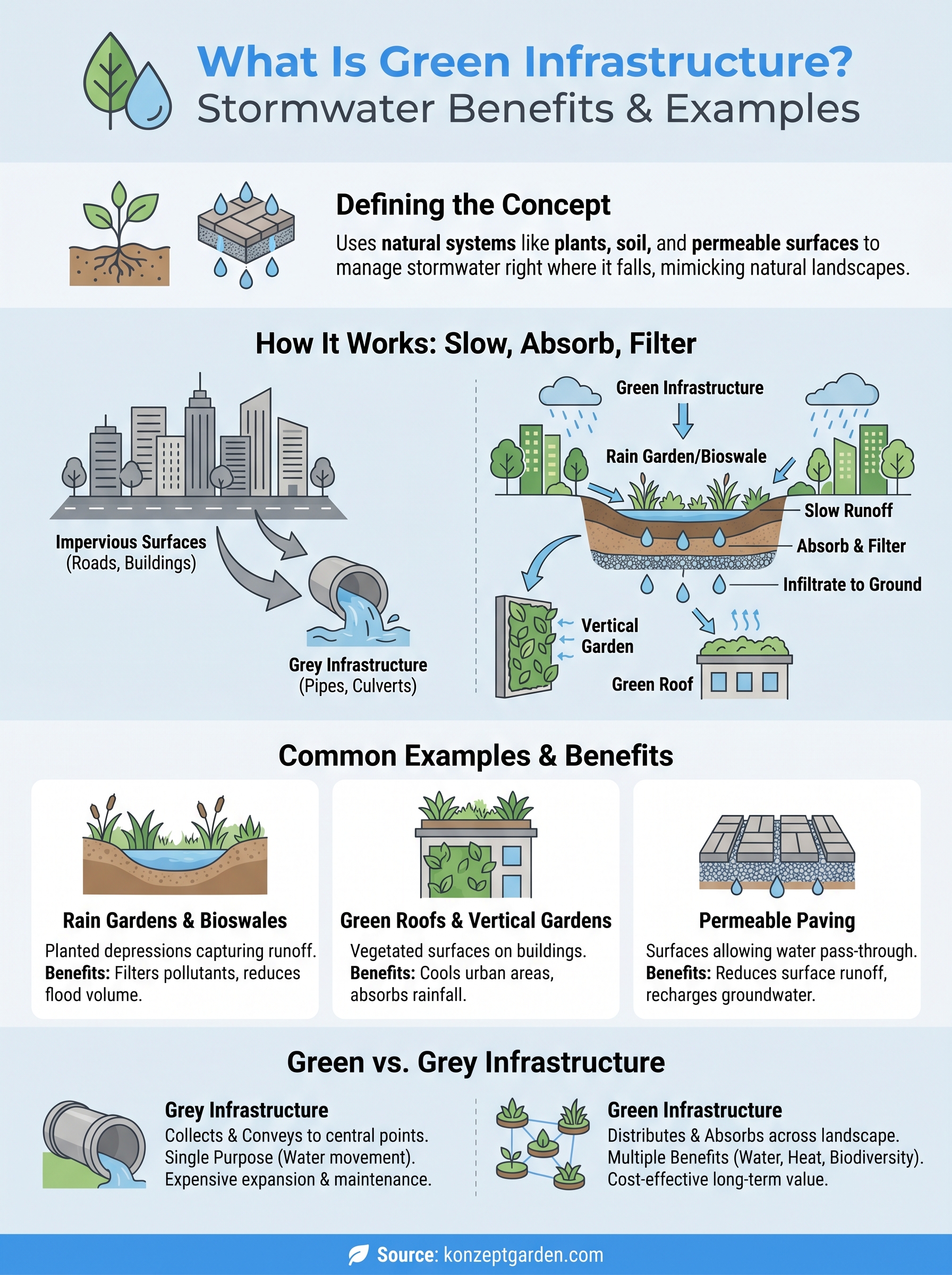
Green infrastructure manages stormwater by mimicking how natural landscapes handle rainfall. Instead of routing water immediately into drainage pipes, these systems slow runoff down, filter it through soil and plants, and allow it to infiltrate gradually into the ground. Understanding what is green infrastructure means recognizing that each planted surface acts as a small-scale water management system working continuously across the landscape.
The infiltration and filtration process
When rain falls on a rain garden or bioswale, the layered soil profile captures sediment, absorbs excess water, and removes common pollutants like motor oil and fertilizer runoff before the water reaches groundwater or waterways. Plants play an active role here: their root systems break up compacted soil, increasing its capacity to absorb and hold water between rain events.
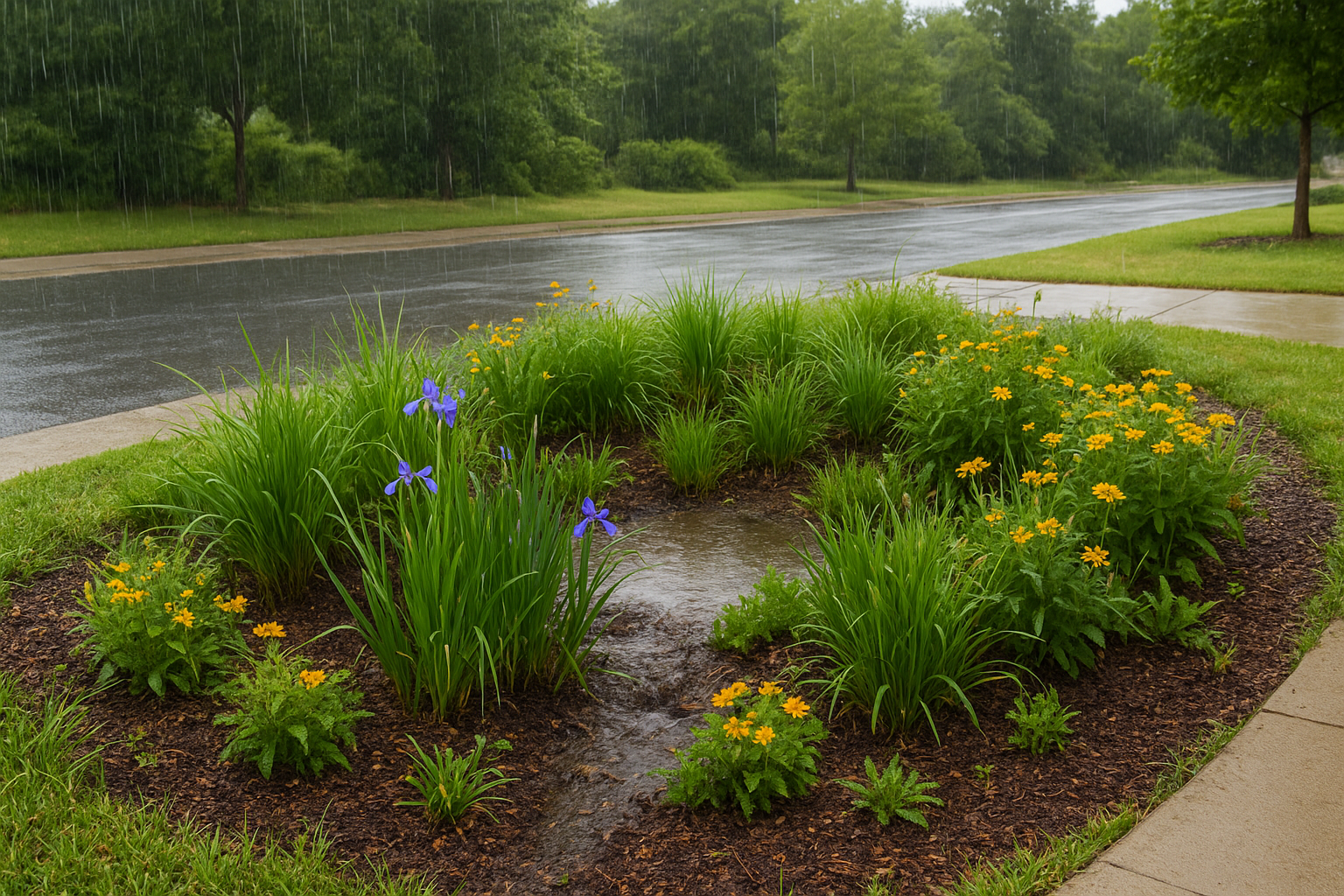
A well-designed rain garden can absorb significantly more stormwater than a conventional lawn of the same size, reducing the volume that reaches municipal drains.
Your site's specific soil type, slope, and rainfall intensity all determine which green infrastructure elements will perform best. A landscape designer can assess these factors and recommend the right combination of planted swales, permeable surfaces, or retention features to keep stormwater on your property and out of the municipal drainage system.
Green vs grey infrastructure: key differences
Grey infrastructure refers to the engineered systems built from concrete, steel, and pipes that cities traditionally use to move stormwater away from urban areas as fast as possible. Understanding what is green infrastructure becomes clearer when you compare it directly against this conventional approach, because the two systems follow completely different logic for handling rainfall.
How each system handles water
Grey systems collect and convey stormwater into centralized pipes and discharge points, which works until those pipes reach capacity. Green infrastructure absorbs and filters water across many points in the landscape, distributing the load rather than concentrating it in one location.
Distributed green systems reduce peak stormwater loads more cost-effectively than simply expanding grey pipe networks.
Your property's runoff never has to leave the site when permeable surfaces and planted areas intercept rainfall at the source.
Cost and long-term value
Grey infrastructure demands significant capital investment upfront and ongoing maintenance costs to stay functional. Green infrastructure, by contrast, increases property value, improves biodiversity, and reduces heat island effects alongside its stormwater function.
For your Malaysian property, a well-designed rain garden or planted rooftop delivers multiple returns that a concrete drain simply cannot match, making green systems a smarter long-term investment.
Common green infrastructure examples
Knowing what is green infrastructure means little without seeing it in practice. These systems range from large-scale urban installations to small residential features that fit into a standard Malaysian garden plot.
Rain gardens and bioswales
A rain garden is a planted depression that collects runoff from rooftops, driveways, or paved paths. Bioswales work similarly along longer linear routes, using planted channels to slow and filter water moving across a site.
A single well-placed rain garden can capture rooftop runoff and eliminate the need to route that water to a municipal drain.
Common placements include:
- Along building foundations
- At driveway edges
- Below downspouts
Green roofs and vertical gardens
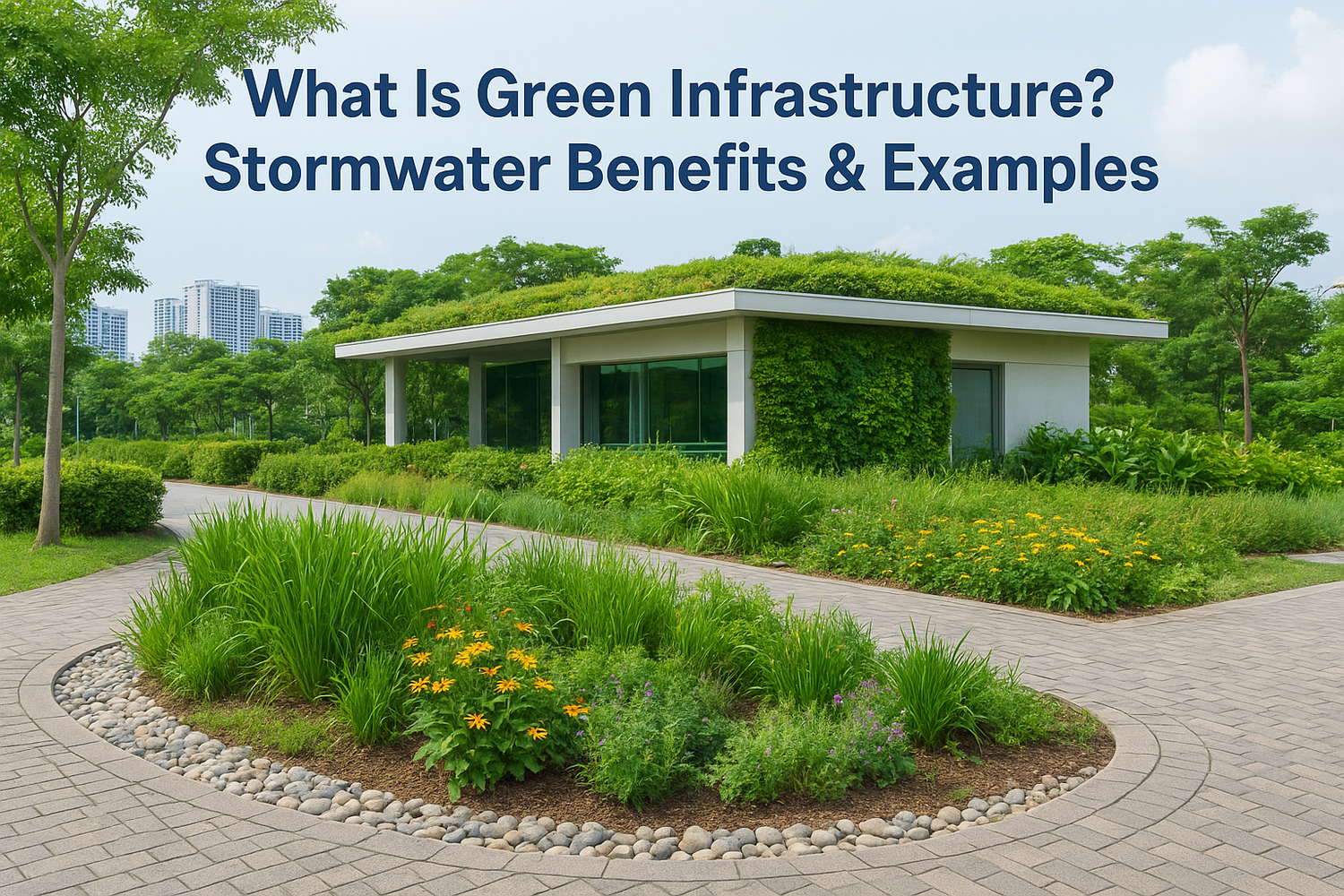
Green roofs layer growing medium and plants across a building's roof surface, absorbing rainfall before it runs off. Vertical garden systems, like the EcoWall solutions Konzept Garden installs, bring planted coverage to building walls, reducing heat gain while managing light rainfall.
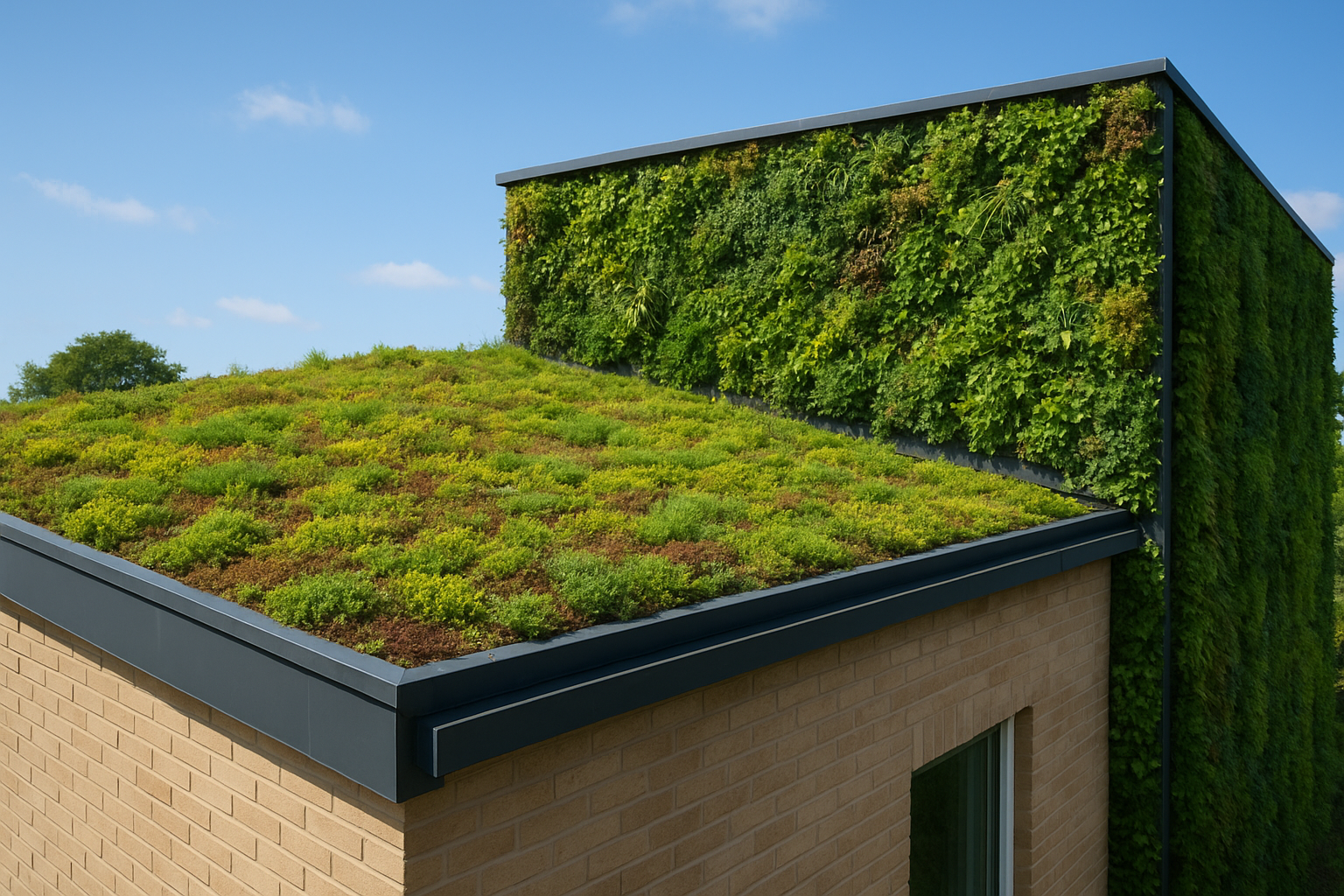
Both systems work together on the same building to maximize planted coverage and reduce the total impervious surface area your property presents to rainfall.
Permeable paving
Permeable paving replaces solid concrete with surfaces that allow water to pass through into a gravel sub-base below. You can apply it to driveways, walkways, and parking areas to cut surface runoff significantly on your property.
Common permeable materials include:
- Gravel
- Porous concrete
- Interlocking permeable pavers
How to plan, design, and maintain green infrastructure
Understanding what is green infrastructure is only the first step. Applying it successfully to your property requires careful site assessment and matched system selection before any construction begins. Start by identifying where runoff collects on your site, how your soil drains after heavy rain, and which surfaces currently block infiltration. These findings shape every design decision that follows.
Assess your site before you design
Before selecting any green infrastructure element, map your drainage flow paths and test your soil's infiltration rate. Sloped sites suit bioswales well, while flat areas with poor drainage typically benefit more from raised rain gardens or permeable paving. A professional landscape designer can read these site conditions quickly and recommend systems that match your specific plot, rainfall exposure, and budget.
Getting the site assessment right before construction prevents costly corrections once planted systems are already in the ground.
Maintain planted systems consistently
Green infrastructure needs regular plant maintenance and periodic soil checks to stay functional over time. Clear debris from rain garden inlets after heavy rainfall events, and replace any plants that fail to establish during their first growing season. Permeable paving requires occasional flushing to prevent sediment from clogging the sub-base drainage layer underneath.
Next steps
Now you have a clear answer to what is green infrastructure and a practical picture of how these systems work across real properties. Rain gardens, permeable paving, green roofs, and vertical planting systems all follow the same core logic: slow, absorb, and filter stormwater at the source rather than sending it straight into an overloaded drain network. Each system also returns multiple benefits beyond water management, from lower cooling costs to improved biodiversity on your site.
Applying these principles well starts with reading your specific site conditions accurately. Soil type, slope, and rainfall exposure all shape which systems will perform best on your property. Getting that assessment right before you build anything saves you from redesigning planted systems later.
If you're ready to bring green infrastructure thinking into your Malaysian garden or commercial landscape, our team at Konzept Garden can help you move from concept to a fully implemented design. Talk to our landscape team to get started.