If you've ever walked on a high-quality synthetic lawn and noticed how natural it feels underfoot, there's a hidden layer doing most of the heavy lifting. Artificial grass infill is the material spread between the blades of synthetic turf, and it directly affects how your grass looks, feels, and holds up over time.
At Konzept Garden, we work with artificial turf daily through our Noble Grass range and landscape installations across Malaysia. One question comes up more than almost any other: what actually goes between those synthetic fibers, and does it matter? The short answer is yes, it matters a lot. The type of infill you choose influences everything from surface temperature and drainage to how long your turf stays upright and realistic.
This guide breaks down the different types of artificial grass infill, what each one does, and how to pick the right option based on your specific setup, whether that's a backyard, a commercial space, or a rooftop garden.
What infill does for artificial grass
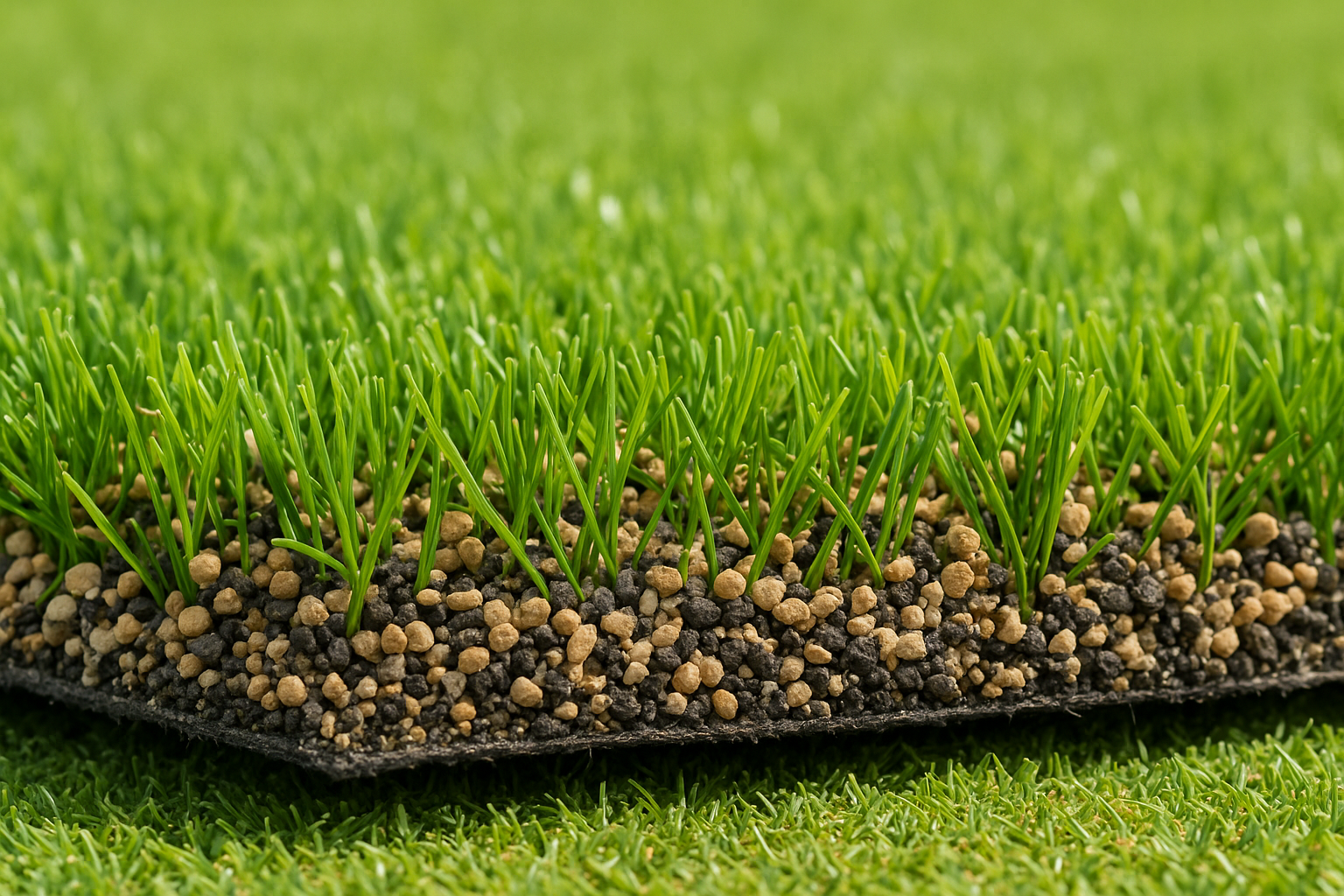
Infill serves as the foundation layer that makes artificial turf functional, not just decorative. Without it, synthetic grass flattens quickly under foot traffic and loses the realistic, upright look that makes it worth installing. Think of infill as ballast: it weighs the turf down, anchors the backing, and fills the space between fibers so everything holds its shape and position whether you're dealing with a quiet garden corner or a high-use commercial lawn.
It keeps the blades upright and the surface even
The most visible job infill does is support the individual grass blades. Synthetic fibers are designed to stand up, but foot traffic, furniture weight, and weather all push them flat over time. A proper infill layer gives each blade something to lean against, so the turf bounces back after use instead of staying matted. High-traffic areas like pathways or children's play zones rely on this even more than low-traffic lawns, because repeated compression without support causes permanent pile crush that no amount of brushing will fix.
Infill also keeps the turf backing flat against the ground. When turf is laid without it, the edges and seams can lift over time, creating trip hazards and uneven surfaces that are both unsightly and potentially unsafe. A consistent infill layer adds weight that holds the turf in position and reduces movement caused by thermal expansion when temperatures rise, which is a real concern across Malaysia's year-round heat.
It cushions impact and manages drainage
If you're installing turf in a space where people will be sitting, playing, or exercising, impact absorption becomes a priority. Infill materials like crumb rubber and organic cork provide a cushioned base that reduces strain on joints and softens falls. This is why most sports and playground installations specify infill as a requirement rather than an optional add-on, and why the feel underfoot differs so dramatically between an infilled lawn and a bare synthetic surface.
The right infill can make the difference between a surface that feels genuinely comfortable to use and one that feels like walking on a hard synthetic mat.
Drainage is the other function worth understanding here. Artificial grass itself is permeable, but without infill, water can pool on the surface or collect underneath the turf backing if the ground beneath is not perfectly graded. Infill materials like silica sand are porous and allow water to flow through the turf uniformly, directing it toward your drainage substrate or base layer rather than leaving it sitting stagnant after rain.
It controls heat and manages odors
In Malaysia's tropical climate, surface temperature is a practical concern for anyone installing synthetic turf. Synthetic grass absorbs and retains heat, and on a sunny afternoon, uncoated or dark infill materials can make the surface uncomfortably hot to walk on barefoot. Some infill types, particularly coated silica sand or organic options like cork, are specifically formulated to reflect heat and stay cooler than standard materials under direct sun exposure.
Odor control is another practical function, especially in lawns where pets use the grass regularly. Urine and organic waste break down inside the turf pile and create persistent smells that are difficult to remove after the fact. Certain infill products include antimicrobial coatings or zeolite compounds that neutralize odors at the source instead of masking them, which makes your maintenance routine significantly easier over the long term.
Infill types and how they compare
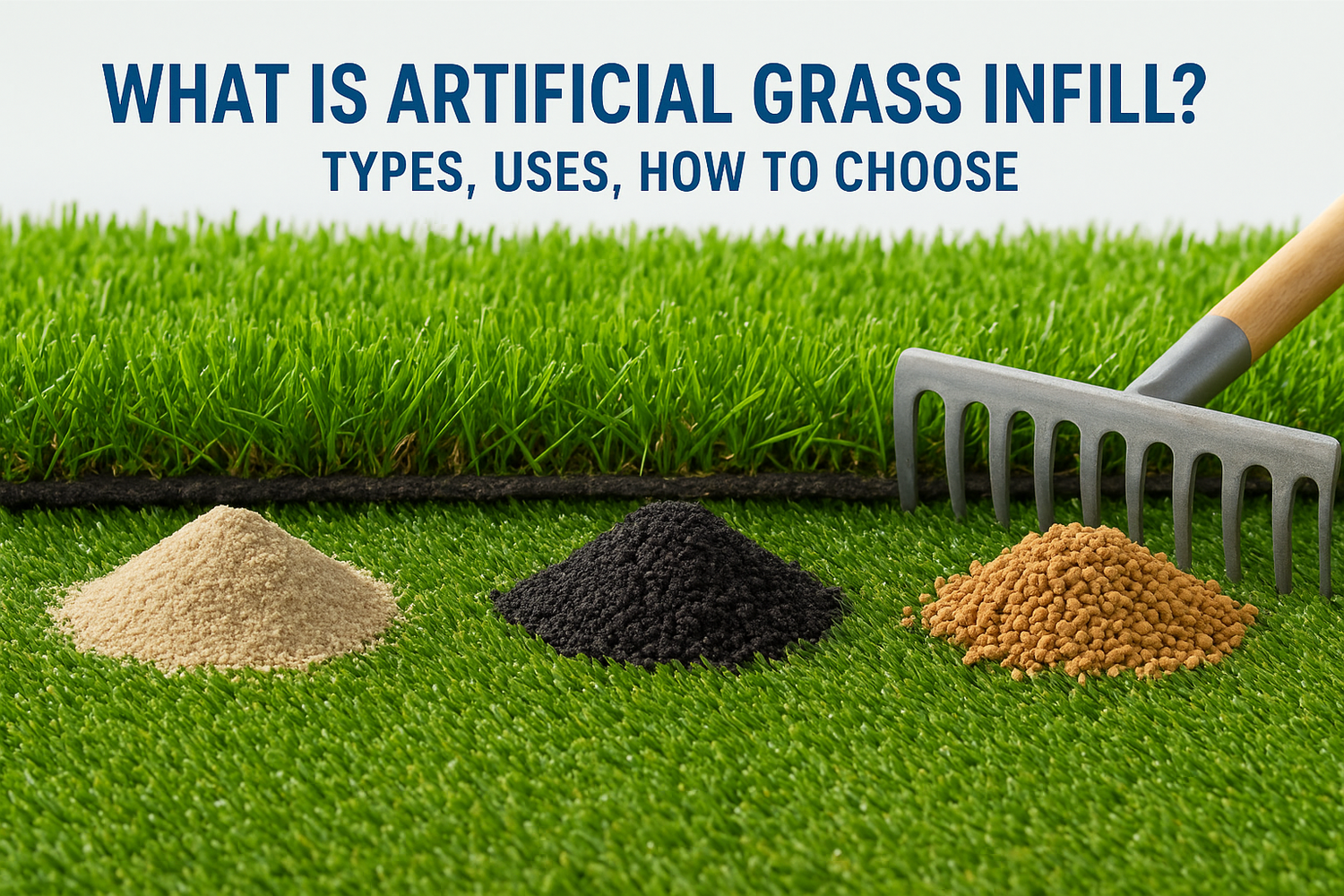
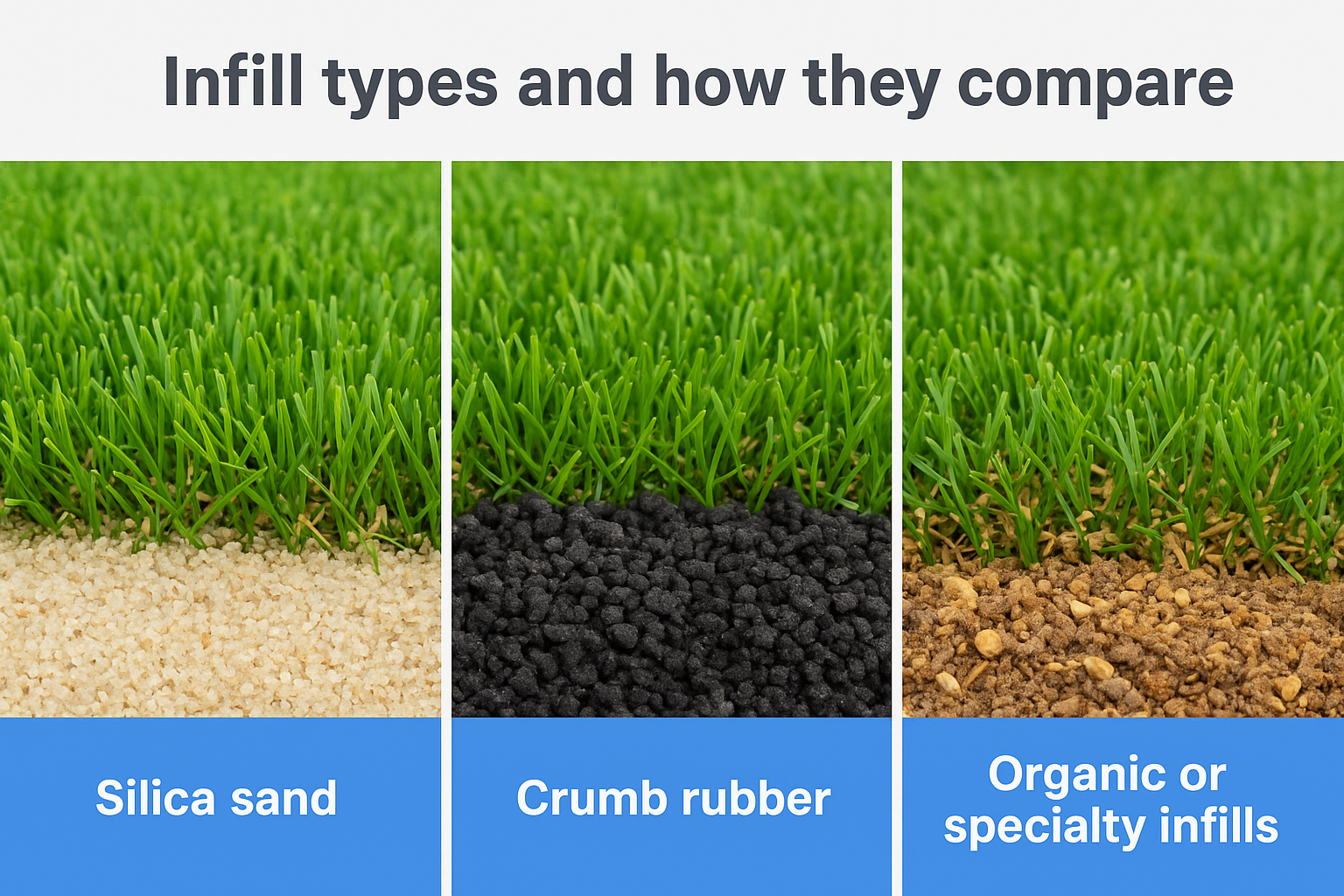
Not all infill materials work the same way, and choosing the wrong type for your conditions can affect both the performance and lifespan of your turf. Understanding what is artificial grass infill also means knowing the three most common categories available: silica sand, crumb rubber, and organic or specialty infills. Each one suits different budgets, climates, and use cases, so it helps to know what separates them before you commit to an installation.
Silica sand
Silica sand is the most widely used infill material, and for most standard residential lawns, it performs reliably. It is affordable, freely draining, and widely available across Malaysia, which makes it a practical default choice for straightforward installations. The main limitation is heat retention: under direct tropical sun, silica sand can heat up to uncomfortable levels, making it less pleasant for bare feet during peak afternoon hours. For shaded or low-traffic areas, this is rarely a problem, but it is worth factoring in if your lawn gets full sun exposure.
Crumb rubber
Crumb rubber is made from recycled rubber, typically sourced from old vehicle tires, and it offers noticeably better cushioning than sand. Sports fields, children's play areas, and high-traffic commercial spaces often specify it because it absorbs impact more effectively and holds up well under repeated use. The trade-off is that dark rubber retains more heat than sand under direct sunlight, which is a practical concern in Malaysia's climate if the area does not have shade cover for most of the day.
If your installation is primarily for children or sports use, crumb rubber's impact absorption often outweighs its heat retention drawback, particularly when natural shade is present.
Organic and specialty infills
Organic options like cork, coconut fiber, and acrylic-coated sand are gaining ground among homeowners who want better performance in hot, humid conditions. Cork stays cooler than both sand and rubber under direct sun, and coated sand products often include antimicrobial treatments that neutralize odor from pet waste and organic debris. These materials cost more upfront, but they reduce the maintenance burden significantly and perform better year-round in Malaysia's tropical environment.
How to choose the right infill in Malaysia
Selecting the right infill comes down to three factors: how you use the space, what the climate does to the surface, and how much ongoing maintenance you are prepared to do. Malaysia's heat, humidity, and frequent rain create conditions that rule out some infill choices for certain setups and favor others. Getting this right from the start means you avoid replacing or topping up infill prematurely.
Consider your primary use case
Your first question should be about who uses the turf and how often. Low-traffic decorative lawns in shaded residential gardens work well with standard silica sand, which is cost-effective and provides reliable drainage without overcomplicating the installation. If you have children, pets, or plan to use the area for exercise, demand on the infill increases and you need a material that cushions impact and handles odors more effectively than plain sand.
For pet owners specifically, odor control becomes a primary selection factor rather than a secondary one. An organic or coated infill with antimicrobial properties will save you considerably more effort than managing smell through cleaning alone after installation.
Factor in Malaysia's climate
Heat management is non-negotiable when thinking about what is artificial grass infill and how it behaves in a tropical environment. If your turf sits in full sun for most of the day, standard crumb rubber and dark silica sand will reach temperatures that make the surface uncomfortable during peak afternoon hours. In those conditions, coated or organic infill materials that reflect rather than absorb heat are worth the additional upfront cost.
Choosing infill that performs well in direct tropical sun protects both the usability of your lawn and the longevity of the turf fibers themselves.
Drainage is equally important given Malaysia's heavy rainfall. Any infill you choose should be permeable enough to let water pass through quickly without compacting or washing away during a downpour, so confirm drainage performance with your installer before finalizing the material.
Match infill to your budget realistically
Silica sand is the most affordable starting point, but lower upfront cost does not always mean lower total cost once you factor in top-ups and odor treatments. Specialty infills cost more initially but typically require less frequent maintenance and replacement, which balances out the investment over a two-to-five-year period.
How much infill you need and how to apply it
Understanding what is artificial grass infill is one part of the process; knowing how much to use and how to spread it correctly is the other. Most standard installations require between 1 and 2 pounds of infill per square foot, though the exact amount depends on your turf pile height and the infill material you've selected. Shorter pile turf needs less infill than longer pile varieties, so always check the manufacturer's recommendation for your specific product before ordering materials.
Calculating how much infill you need
The calculation is straightforward. Measure the total square footage of your turf area and multiply it by the recommended infill rate for your chosen material, usually listed in pounds per square foot or kilograms per square meter. For a standard residential lawn with a 35mm to 40mm pile height, plan for approximately 1.5 pounds per square foot as a starting point. If you're layering crumb rubber underneath silica sand, calculate each material separately since they fill different portions of the pile depth.
Here's a quick reference for common infill rates by pile height:
| Pile Height | Recommended Infill Rate |
|---|---|
| Up to 25mm | 1 lb per sq ft |
| 25mm to 40mm | 1.5 lbs per sq ft |
| 40mm and above | 2 lbs per sq ft |
Applying infill correctly
Applying infill properly makes a visible difference in how your turf performs from the first day. Spread the infill in small amounts across the surface using a drop spreader or by casting it evenly by hand, then use a stiff-bristled brush or power broom to work it down between the fibers. Dumping large piles in one spot creates uneven distribution that compacts unevenly and leaves sections of turf without proper support.
Work across the lawn in multiple passes rather than a single sweep to achieve consistent depth throughout the entire surface.
Once the infill is worked in, run a final brush pass in the opposite direction to lift the blades and confirm even coverage across the full area before anyone uses the space.
Maintenance, top-ups, and common problems
Once your infill is laid, regular upkeep keeps it performing the way it should. Understanding what is artificial grass infill also means knowing that the material shifts, compresses, and degrades gradually over time, so a small amount of routine attention prevents larger issues from developing later.
How often to brush and inspect
Brushing the turf regularly is the single most effective maintenance task you can do. In high-traffic areas, brush the surface every two to four weeks using a stiff-bristled brush to redistribute infill that has migrated toward the edges and lift fibers that foot traffic has pushed flat. Lower-traffic lawns can go longer between sessions, but you should still inspect the surface monthly for signs of compaction or uneven coverage.
After heavy rainfall, check whether infill has washed toward the perimeter or collected in low spots. Malaysia's frequent downpours can shift lighter infill materials like silica sand more noticeably than denser options, so this check matters more with standard sand installations than with rubber or organic alternatives.
When to top up infill
Infill levels drop over time through displacement, degradation, and drainage. You should plan to top up infill every one to three years depending on your traffic levels and the material you chose. Signs that a top-up is overdue include visible flattening of the grass pile, reduced cushioning underfoot, and blades that no longer return to an upright position after compression.
Waiting too long to top up infill allows the turf backing to take the full force of foot traffic, which accelerates wear and shortens the lifespan of the entire installation.
Adding fresh infill follows the same process as the original application: spread it gradually, work it down between the fibers with a brush, and complete multiple passes to achieve an even depth before using the space again.
Common problems and how to fix them
Compaction and odor are the two issues homeowners report most frequently. Compaction usually responds well to thorough brushing followed by a partial top-up of fresh infill in the affected zones. Persistent odor, typically from pet use, requires rinsing the area and applying an enzymatic cleaner before adding a zeolite or antimicrobial infill layer on top to prevent recurrence.
Sinking along seams or edges often means the base layer needs attention rather than just the infill itself, so check the compacted aggregate underneath before assuming more infill is the solution.
Key takeaways
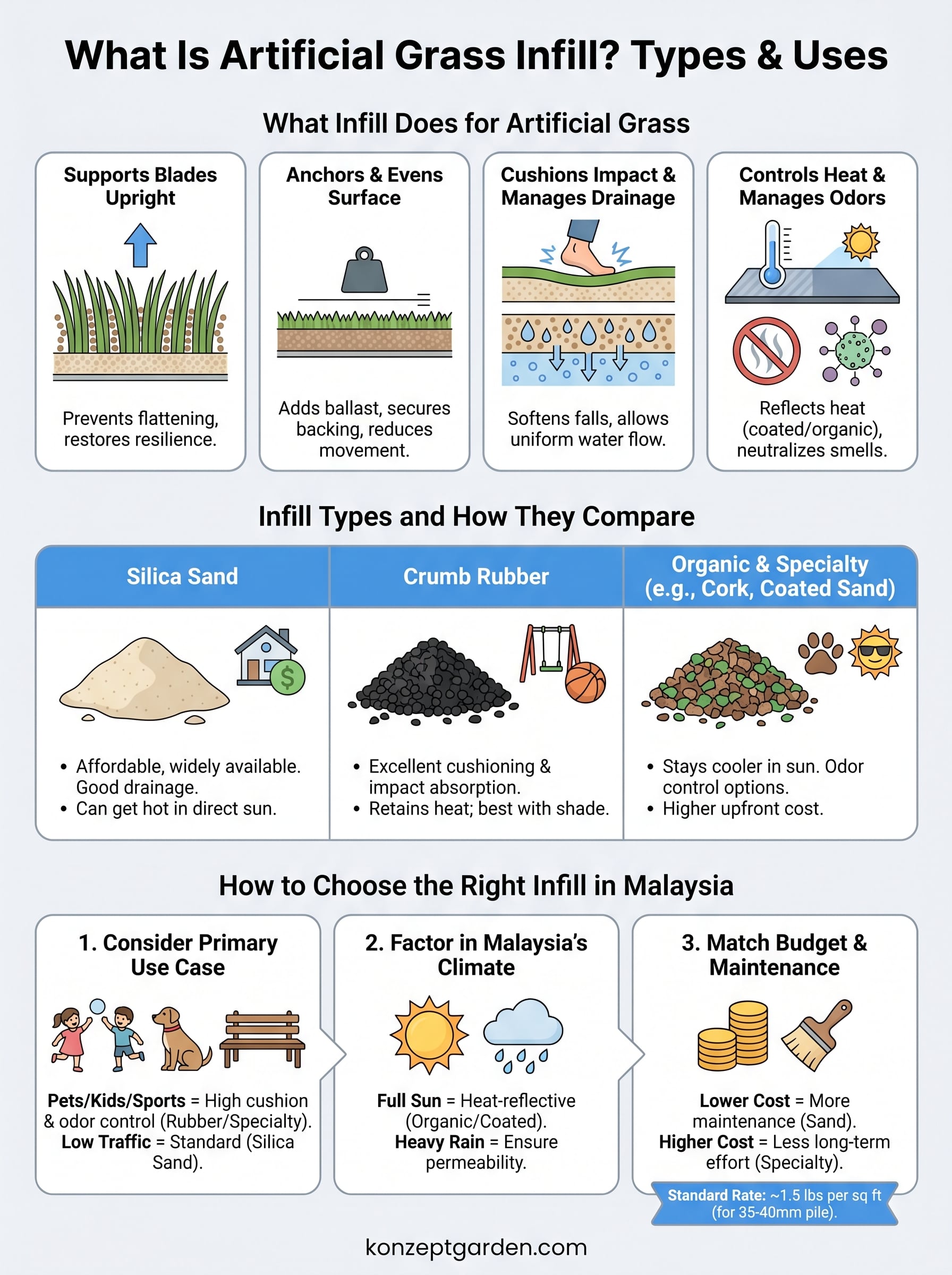
Understanding what is artificial grass infill gives you a clear advantage before any installation decision. Infill supports your turf blades, anchors the backing, cushions impact, manages drainage, and controls heat and odor. Without it, even the best synthetic grass flattens quickly and wears unevenly under regular use.
Your choice of material depends on how you use the space, how much sun the area receives, and how much maintenance you want to handle. Silica sand suits most standard residential lawns, while crumb rubber fits high-traffic and play areas, and organic or coated options perform best in full sun or pet-heavy environments. Plan for regular brushing, check infill levels every one to three years, and top up before the pile loses its upright position.
If you want expert advice on which infill suits your specific setup, speak to the Konzept Garden team and get a recommendation based on your space before you commit.