
If you've ever walked across a perfectly green lawn that stays pristine through Malaysia's monsoon season and scorching heat, you may have been standing on artificial grass. This synthetic alternative to natural turf has transformed how homeowners, businesses, and sports facilities approach outdoor spaces, offering a solution that looks lush year-round without the constant upkeep.
At Konzept Garden, we've installed artificial turf across countless residential gardens and commercial properties throughout Malaysia. Through our Noble Grass product line, we've seen firsthand how synthetic turf meets the practical needs of our tropical climate while delivering the aesthetic appeal our clients want.
This guide breaks down everything you need to know: what artificial grass is actually made of, where it works best, and the honest trade-offs between synthetic and natural options. Whether you're considering it for your home garden, a rooftop terrace, or a commercial space, you'll walk away with the information you need to make a confident decision.
Why artificial grass matters for modern landscapes
The shift toward synthetic turf reflects how outdoor spaces need to function in 2026, not just how they look. You're facing climate unpredictability, water restrictions, and limited time for yard maintenance, while still wanting a presentable outdoor area. Understanding what is artificial grass means recognizing it as a practical response to these modern challenges rather than a mere aesthetic choice.
Traditional lawn care in Malaysia demands constant attention: weekly mowing, regular watering, fertilizer application, and pest control. Artificial grass eliminates these recurring tasks while maintaining a consistent appearance regardless of weather conditions. Your outdoor space stays functional during both the dry season and heavy monsoon rains, something natural turf cannot guarantee.
Climate and maintenance reality in tropical regions
Malaysia's tropical climate creates specific challenges for natural grass. You deal with intense UV exposure, heavy rainfall, and high humidity, all of which stress living turf. Natural lawns require frequent watering (typically 25mm to 40mm per week), yet they still develop brown patches during dry spells. When monsoon rains arrive, waterlogging and mud become immediate problems.
Synthetic turf addresses these issues through engineered drainage systems that handle Malaysia's heavy downpours without creating muddy patches. You get a usable outdoor space within hours of rainfall instead of waiting days for natural grass to dry. The material withstands constant UV exposure without fading or dying back, maintaining its appearance through Malaysia's year-round heat.
Modern artificial grass products are designed to handle tropical conditions that would destroy natural lawns within months.
Practical demands of modern living
Time scarcity drives many homeowners toward artificial turf. You save approximately 2 to 4 hours weekly on lawn maintenance alone. This calculation doesn't include the time spent purchasing supplies, scheduling landscapers, or dealing with lawn problems when they arise.
Water consumption becomes another critical factor. A typical 100-square-meter natural lawn in Malaysia uses between 15,000 to 20,000 liters of water monthly. With artificial grass, you eliminate this usage entirely while maintaining the visual benefits. Your water bill drops, and you contribute less to municipal water strain during dry periods.
Cost considerations extend beyond installation. Natural lawns require continuous investment in fertilizers, pesticides, equipment maintenance, and professional services. Artificial turf involves a higher upfront cost but removes these recurring expenses for 10 to 15 years.
Commercial and aesthetic versatility
Artificial grass serves purposes beyond residential lawns. You'll find it on rooftop terraces, balconies, playground surfaces, and pet areas, spaces where natural grass struggles to survive. Commercial properties use synthetic turf to maintain consistent branding and appearance without dedicating staff to landscaping tasks.
The material adapts to different design requirements: you can install it over concrete, create green walls, or define specific zones within larger landscapes. This versatility lets you incorporate greenery into spaces that would otherwise remain barren or require extensive structural work to support natural grass growth.
What artificial grass is made of
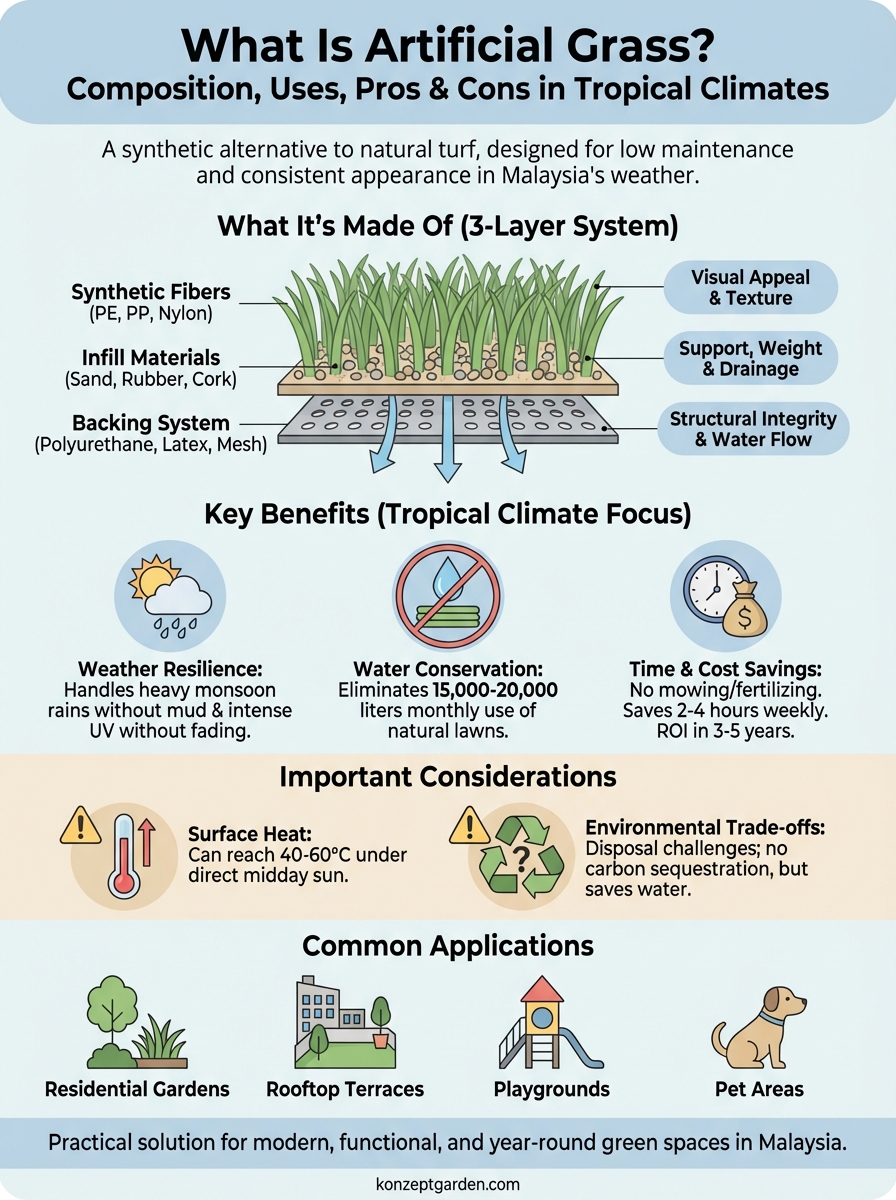
Understanding what is artificial grass requires looking at its three-layer construction system. You're not dealing with a simple carpet laid over dirt. Each component serves a specific purpose: structural integrity, visual appeal, and functional performance in tropical conditions.
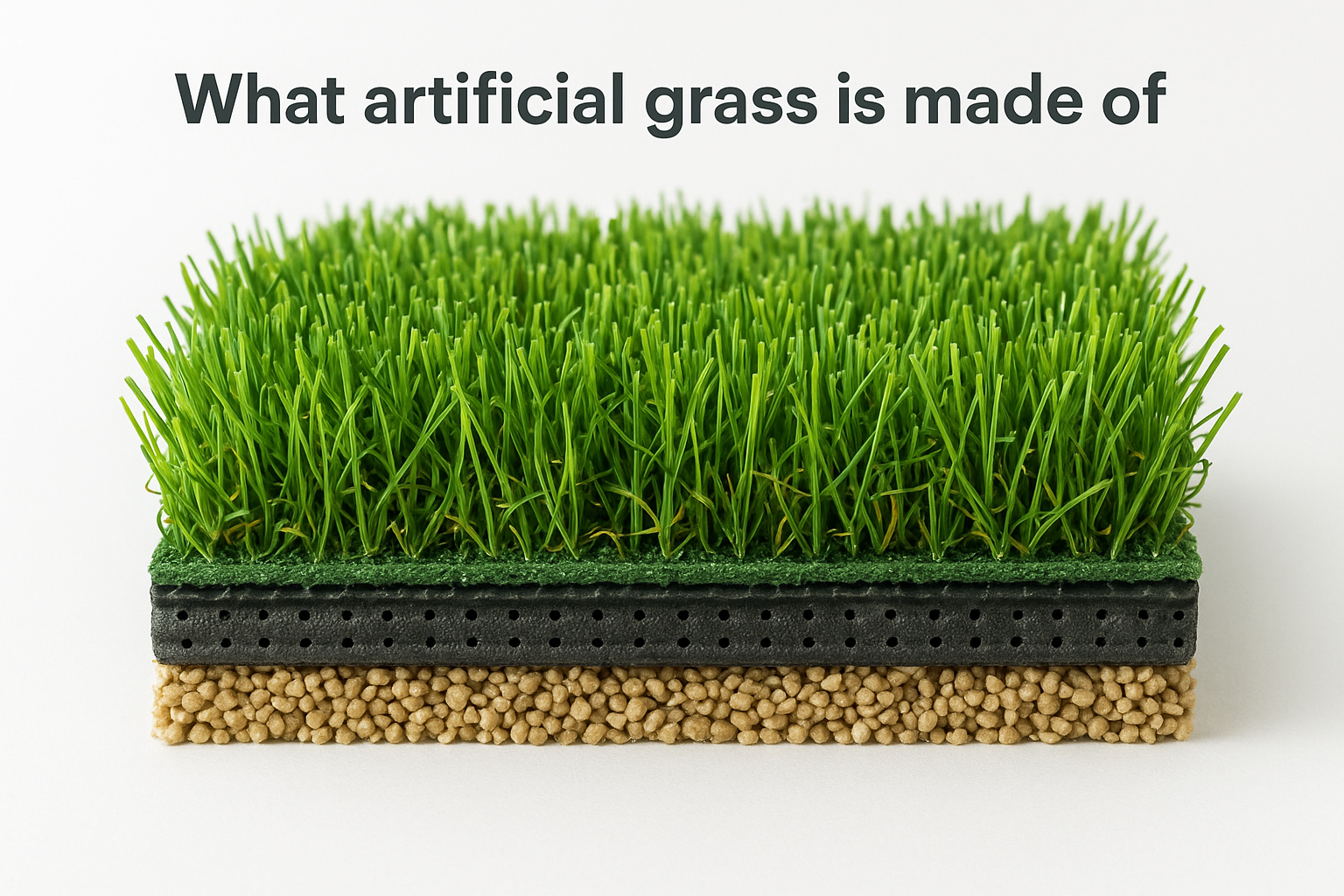
The material starts with backing layers that provide stability and allow water drainage. Modern artificial turf uses polyurethane or latex backing, sometimes reinforced with mesh, creating a foundation that resists decomposition in Malaysia's humid environment. This backing determines how well your installation drains during heavy rain and how long the product lasts before deterioration.
The backing system and drainage
Your artificial grass sits on multiple backing layers that work together. The primary backing holds the synthetic fibers in place, typically made from polypropylene fabric. A secondary backing, usually latex or polyurethane, provides additional strength and anchors everything together while creating channels for water flow.
These backing materials determine drainage performance and dimensional stability. Quality products feature perforated backing that allows water to pass through at rates of 30 to 60 liters per square meter per minute. Without proper backing, you face pooling water and potential mold growth beneath the surface.
Synthetic fiber composition
The visible grass blades you see consist of polyethylene, polypropylene, or nylon fibers. Polyethylene creates the softest feel and works well for residential lawns where you walk barefoot. Polypropylene costs less but provides less durability. Nylon offers the highest resilience for sports applications and high-traffic areas.
Manufacturers blend different fiber types to balance appearance, durability, and comfort. Your Noble Grass might combine polyethylene for softness with polypropylene for structural support, creating realistic texture variations similar to natural grass species.
The fiber composition directly affects how your artificial grass feels underfoot and how it performs under Malaysian sun exposure.
Infill materials
Between the synthetic blades, you'll find infill materials that add weight, support fibers upright, and improve drainage. Common options include silica sand, rubber granules, or organic alternatives like cork. The infill choice affects surface temperature, cushioning, and how the grass behaves during use. You need infill appropriate for Malaysia's climate to prevent excessive heat retention.
How artificial grass is made and designed
Manufacturing artificial turf involves precision engineering and quality control that determines how well the product performs in your Malaysian outdoor space. The process starts at industrial facilities where raw polymer pellets transform into the synthetic grass you eventually install. Understanding what is artificial grass means seeing beyond the finished product to the manufacturing decisions that affect durability and appearance.
The tufting and manufacturing process
Factories extrude molten polymer through spinnerets to create individual synthetic fibers, similar to how textile manufacturers produce fabric. These fibers get cut to specific blade heights (typically 20mm to 40mm for residential applications), then machines tuft them through the primary backing material in precise patterns. The tufting density, measured in stitches per square meter, determines how full and realistic your artificial grass appears.
After tufting, manufacturers apply the secondary backing through coating or lamination. This step bonds everything together and creates the drainage perforations you need for tropical rainfall. Quality control happens at multiple stages: fiber tensile strength testing, backing adhesion verification, and UV stability assessment. You want products that pass ASTM or ISO standards specific to outdoor synthetic surfaces.
Professional-grade artificial grass undergoes UV exposure testing equivalent to years of Malaysian sunlight before reaching your property.
Design specifications for tropical performance
Manufacturers adjust pile height, blade shape, and color variation to match specific aesthetic and functional requirements. Your residential lawn might feature 30mm to 35mm pile height with mixed green tones, while sports fields use shorter, more uniform specifications. The blade profile (C-shaped, W-shaped, or diamond) affects texture, resilience, and heat management.
Tropical-specific designs incorporate UV stabilizers directly into the polymer blend to prevent color degradation under intense Malaysian sun exposure. You'll also find products engineered with higher drainage rates and backing materials that resist mold growth in humid conditions. These specifications separate products built for temperate climates from those designed for year-round tropical use.
Where to use it and how to choose
Selecting artificial grass requires matching product specifications to your specific location and intended use. You'll find synthetic turf performs differently depending on factors like sun exposure, foot traffic, and whether pets use the space. Making the right choice starts with understanding what is artificial grass designed to handle in each setting, then evaluating products against your exact environmental conditions and functional requirements.
Common application areas
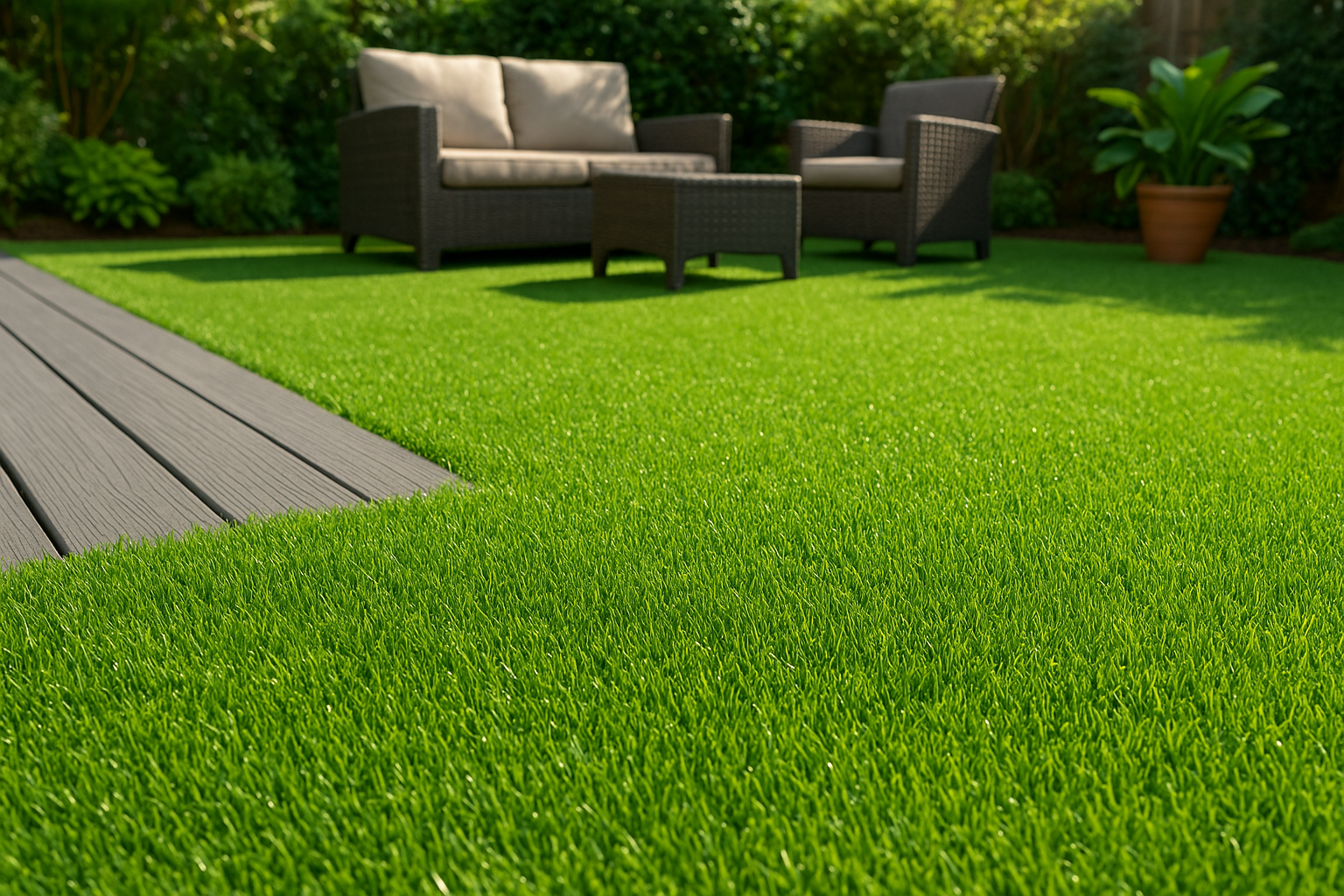
Residential gardens benefit most from 35mm to 40mm pile height with soft polyethylene fibers that create a natural appearance and comfortable walking surface. You want products with realistic color variation (mixing two to three green shades) rather than uniform bright green that looks artificial from a distance.
Rooftop terraces and balconies require lighter-weight products with excellent drainage performance, typically featuring perforated backing that handles 40+ liters per square meter per minute. Your installation here faces direct sun exposure without natural soil cooling, so choose materials with UV stabilizers rated for tropical climates.
Pet areas demand shorter pile height (20mm to 30mm) with antimicrobial infill that prevents odor buildup in Malaysia's humidity. You need backing materials that allow complete water penetration for easy cleaning. Products designed for pet use typically include enhanced drainage systems and fiber coatings that resist staining.
Matching pile height and backing specifications to your specific application determines whether artificial grass performs well or creates ongoing frustration.
Selection criteria for Malaysian conditions
Heat management becomes your primary technical consideration when choosing synthetic turf for Malaysia. Look for products with heat-reflective coatings or lighter color variations that reduce surface temperature by 10 to 15 degrees Celsius compared to standard options. Dark green, dense products without cooling technology can reach uncomfortable temperatures during midday.
Drainage capacity matters more in tropical regions than temperate climates. Your artificial grass needs to handle sudden heavy rainfall without pooling water or creating standing puddles. Verify the drainage rate specifications exceed 30 liters per square meter per minute for residential applications, higher for areas with poor natural drainage beneath the installation.
Check warranty coverage specific to UV degradation and color retention rather than general product warranties. Malaysian sun exposure breaks down synthetic materials faster than European or North American conditions, so you want explicit guarantees covering tropical climate performance for at least 8 to 10 years.
Pros, cons, and environmental trade-offs
Understanding what is artificial grass means weighing honest advantages against real limitations rather than accepting marketing claims at face value. You face a decision that affects your property for a decade or more, so you need complete information about performance, costs, and environmental consequences specific to Malaysian conditions.
Benefits that matter in practical use
Your artificial grass eliminates weekly mowing, fertilizing, and pest control tasks that consume time and money with natural lawns. You save 2 to 4 hours weekly on maintenance alone, plus the ongoing costs of equipment, water, and lawn care products. Your outdoor space stays consistently usable regardless of weather, without muddy patches or brown spots appearing during dry spells.
Water conservation provides measurable impact in tropical climates. Natural lawns consume 15,000 to 20,000 liters monthly for a typical 100-square-meter area, while artificial turf requires only occasional rinsing to remove dust and debris. Your installation drains quickly after Malaysia's heavy rains, giving you functional outdoor space within hours instead of days of drying time.
Limitations you need to consider
Surface temperature becomes problematic during midday hours. Artificial grass reaches 40 to 60 degrees Celsius under direct Malaysian sun, making it uncomfortable for barefoot walking until evening. You'll need shaded areas or cooling features if you expect frequent daytime use, particularly with children or pets.
Initial costs run higher than natural turf installation. Quality artificial grass with proper base preparation costs RM 25 to RM 50 per square meter, compared to RM 5 to RM 15 for natural sod. Your break-even point typically arrives within 3 to 5 years once you factor in eliminated maintenance expenses.
The upfront investment pays back through eliminated water bills, equipment costs, and landscaping services over the product's 10 to 15-year lifespan.
Environmental considerations
Synthetic turf creates disposal challenges at end-of-life, as most products cannot biodegrade and recycling infrastructure remains limited in Malaysia. You're installing petroleum-based materials that eventually become waste, though modern products last 10 to 15 years before replacement becomes necessary. The water conservation benefit counterbalances manufacturing impact in drought-prone regions, but you give up the carbon sequestration and cooling effects natural grass provides through photosynthesis.
Next steps for your outdoor space
You now understand what is artificial grass offers beyond simple lawn replacement: a practical solution for Malaysia's tropical climate that eliminates ongoing maintenance while delivering consistent visual appeal year-round. Your decision comes down to matching product specifications with your specific needs, budget constraints, and environmental priorities.
Start by evaluating your outdoor space's specific conditions: sun exposure patterns, drainage requirements, intended use, and expected foot traffic. These factors determine which pile height, backing system, and fiber composition will perform best for you. Request product samples to test surface temperature and texture before committing to full installation.
Professional installation matters more than product selection in determining long-term satisfaction with artificial turf. Proper base preparation, drainage systems, and seam placement separate successful installations from problematic ones. Contact our landscape design team to discuss your specific requirements and receive a detailed quotation for quality artificial grass installation tailored to Malaysian conditions.


