


A thriving garden can turn into a pest buffet overnight. Whether you're nurturing a backyard retreat or managing a commercial landscape, destructive insects and diseases pose a real threat to your investment. At Konzept Garden, we design outdoor spaces meant to last, and that means building in smart, sustainable pest control from the start. Understanding integrated pest management examples helps you protect your plants without defaulting to harsh chemicals that harm beneficial insects, soil health, and the environment around your home.
IPM combines multiple tactics, biological, cultural, physical, and chemical, into a coordinated defense system. Rather than reaching for a spray bottle at the first sign of trouble, you assess the situation, identify the pest, and choose the most effective response with the least collateral damage. This approach keeps your garden healthy while reducing long-term maintenance costs.
This article breaks down 12 proven IPM tactics you can apply in Malaysian gardens and landscapes. From introducing natural predators to adjusting your watering schedule, these strategies work together to give pests fewer opportunities to establish themselves. Let's look at what actually works.
Why IPM beats spray-first pest control
Spraying chemicals at every bug might seem efficient, but it creates more problems than it solves. When you rely solely on pesticides, you eliminate natural predators alongside the pests, leaving your garden defenseless when the chemicals wear off. The pests return, often in greater numbers, because their natural enemies are gone. This cycle forces you to spray more frequently, which damages soil microorganisms, contaminates water runoff, and exposes your family or clients to unnecessary toxins. In Malaysia's humid climate, where beneficial insects like ladybugs and parasitic wasps naturally control aphids and caterpillars, a spray-first approach destroys this free labor force.
The cost of chemical dependency
Every time you apply a broad-spectrum pesticide, you reset your garden's ecosystem. Target pests develop resistance to chemicals within a few generations, forcing you to buy stronger products or increase application frequency. Your expenses climb while effectiveness drops. Worse, beneficial insects reproduce slower than pests, so each spray sets back your natural defense system by weeks or months. A 2019 study in agricultural systems found that farms using IPM reduced pesticide costs by 30% to 50% while maintaining crop yields, proving that chemical dependence drains budgets without improving outcomes.
"Pesticide resistance develops faster than your suppliers can formulate new products, leaving you trapped in an expensive cycle that never truly solves the problem."
Second, chemical residues persist in soil and groundwater. In tropical environments like Malaysia, heavy rainfall accelerates runoff into water sources, affecting fish ponds, streams, and municipal supplies. If you're managing a commercial landscape with a decorative koi pond, pesticide contamination can kill your fish population overnight. Residential clients face similar risks when children or pets come into contact with treated surfaces. Insurance and liability concerns grow when you choose chemicals over safer integrated pest management examples that prioritize prevention.
Long-term effectiveness vs. quick fixes
IPM targets the root cause instead of chasing symptoms. When aphids infest your flowering shrubs, a spray kills the visible insects but ignores why they arrived. Perhaps overwatering or excessive nitrogen fertilizer created ideal conditions for aphids to thrive. IPM prompts you to adjust irrigation schedules and reduce fertilizer application, making the environment hostile to future infestations. You combine these cultural changes with biological controls like releasing ladybugs, which consume aphids continuously without harming plants or beneficial insects.
The spray-first method delivers instant results but fails to prevent recurrence. You eliminate today's pest population while guaranteeing tomorrow's outbreak. IPM builds cumulative resistance through multiple tactics working together. Physical barriers stop pests from reaching plants, cultural practices reduce pest-friendly conditions, biological controls provide ongoing suppression, and targeted chemical applications serve as a last resort when other methods need support. This layered defense adapts as pest populations shift, maintaining control without depleting your resources or harming the environment. Your garden becomes self-regulating rather than dependent on constant intervention.
The IPM cycle in 5 steps
IPM operates as a continuous loop rather than a one-time fix. Each step informs the next, creating a feedback system that improves your pest management strategy with every cycle. You start by gathering information about what's actually happening in your garden, then make decisions based on data instead of assumptions. This methodical approach prevents wasted effort and reduces unnecessary chemical applications by ensuring you only act when pests reach damaging levels.
Step 1: Identify the pest correctly
You can't solve a pest problem without knowing exactly what you're dealing with. Many beneficial insects resemble pests, and misidentification leads to killing your allies. A larval ladybug looks nothing like the familiar red beetle, yet it consumes more aphids than the adult form. Take clear photos of the insect, note where it appears on your plants, and compare characteristics like body shape, wing structure, and feeding patterns. Malaysian gardens host hundreds of insect species, so proper identification through field guides or agricultural extension services saves you from treating harmless visitors as threats.
Step 2: Monitor populations and set thresholds
Seeing one pest doesn't justify immediate action. You establish action thresholds based on how many pests your plants can tolerate before suffering real damage. A tomato plant handles a few aphids without yield loss, but 50 aphids per leaf demands intervention. Check your plants twice weekly, recording pest numbers and locations. This monitoring reveals patterns like which areas attract specific pests or when populations spike after rainfall. When integrated pest management examples include monitoring data, you make decisions grounded in your site's actual conditions rather than generic advice.

"Action thresholds prevent you from wasting time and money on problems that don't exist yet while catching real threats before they cause serious damage."
Step 3: Choose and apply control tactics
Once pests cross your threshold, you select the least disruptive tactic that achieves control. Start with cultural methods like adjusting watering or removing infested leaves. Add physical barriers or biological controls if needed. Chemicals become the final option when other methods prove insufficient. After applying your chosen tactic, continue monitoring to verify effectiveness, then adjust your approach based on results. This completes the cycle and prepares you for the next potential outbreak.
12 IPM tactics with real examples
Each tactic addresses pests through a different mechanism, and combining them creates overlapping defenses that prevent any single pest from overwhelming your system. Malaysian gardens benefit from this variety because tropical conditions support diverse pest populations year-round. You'll recognize which integrated pest management examples match your site's specific challenges as you review these options. Some tactics deliver immediate results while others build protection over weeks or months.
Biological and cultural controls
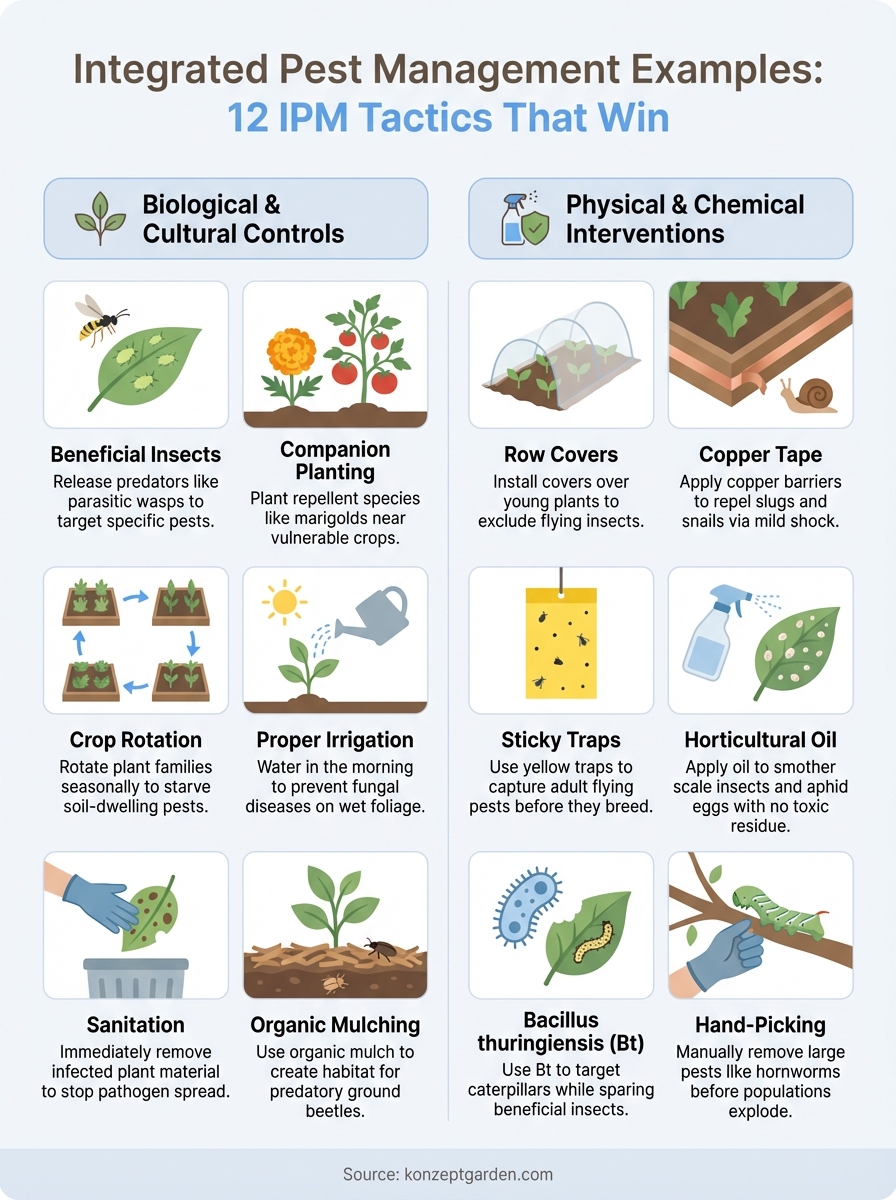
Releasing parasitic wasps targets whiteflies and aphids without harming plants. A single Encarsia formosa wasp parasitizes dozens of whitefly larvae, effectively collapsing their population within two weeks. Planting companion crops like marigolds near vegetables repels nematodes and attracts beneficial predators. Rotating plant families each season starves soil-dwelling pests that specialize in specific crops. Adjusting your irrigation schedule to morning watering prevents fungal diseases that thrive on damp foliage overnight. Removing infected plant material immediately stops pathogens from spreading to healthy specimens.
"Biological controls work continuously without repeat applications, providing free pest suppression once established in your landscape."
Mulching with organic materials creates habitat for ground beetles that hunt cutworms and slugs nightly. These six tactics cost less than monthly pesticide applications while building a self-sustaining ecosystem.
Physical and chemical interventions
Installing row covers over young plants excludes flying insects during vulnerable growth stages. Copper tape around raised beds stops slugs and snails through a mild electric reaction they avoid. Yellow sticky traps capture adult whiteflies and fungus gnats before they reproduce. Applying horticultural oil smothers scale insects and aphid eggs without toxic residues. Using Bacillus thuringiensis (Bt) targets caterpillars while sparing butterflies and other beneficial insects. Hand-picking large pests like hornworms removes them before populations explode.
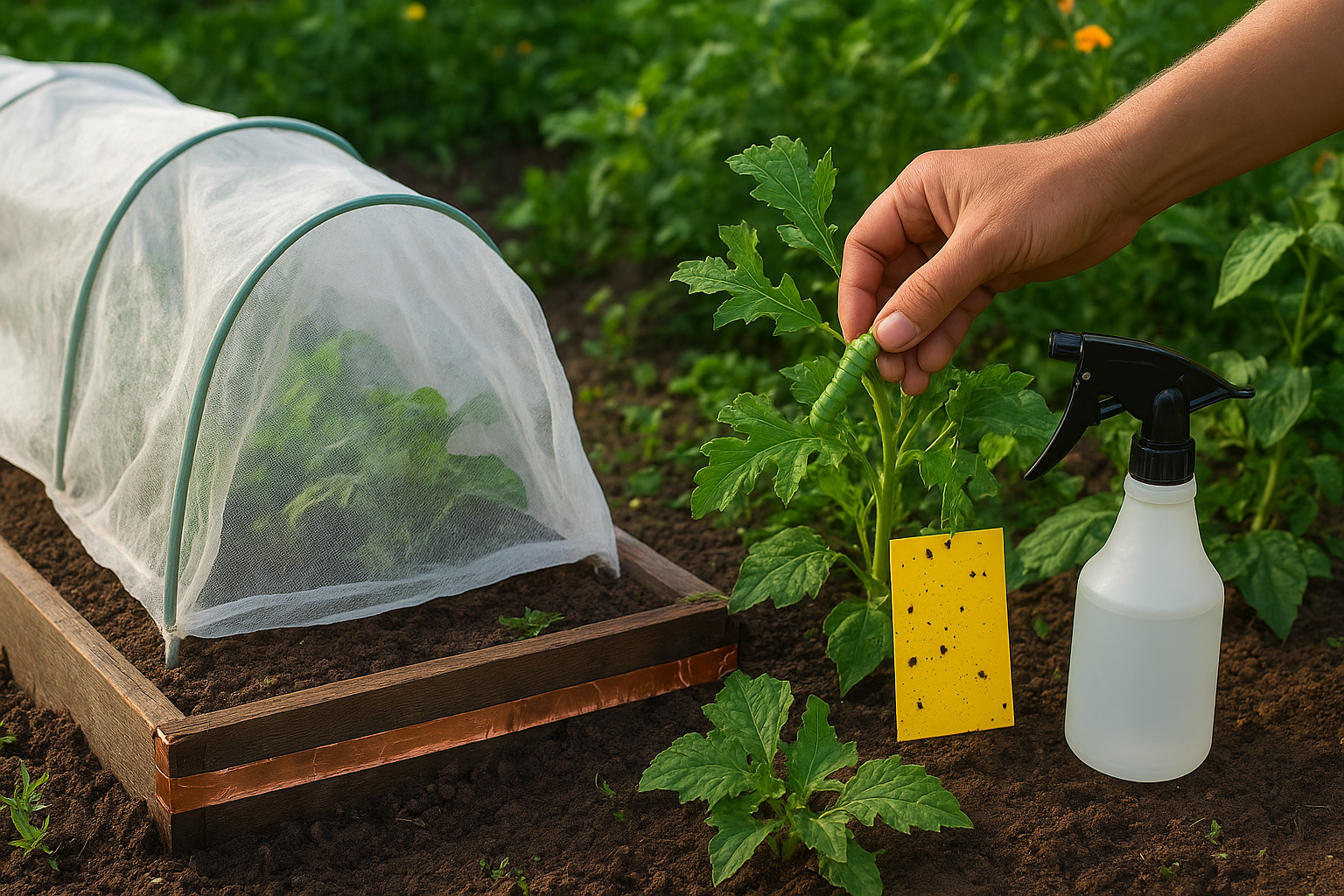
Physical barriers work immediately and require no waiting period before harvest. Chemical options like Bt and horticultural oil break down rapidly in sunlight, leaving no persistent contamination. These final six tactics complement prevention methods, giving you twelve integrated approaches that address every stage of pest development and behavior.
How to choose the right tactic for your site
Your choice of IPM tactics depends on three factors: the pest you identified, your site's environmental conditions, and the resources you can commit to ongoing management. A shaded courtyard with container plants requires different strategies than a sunny vegetable garden or commercial landscape. Start by matching control methods to your pest's behavior and lifecycle, then layer additional tactics that suit your location's climate, soil type, and maintenance schedule. This customized approach prevents wasted effort on methods that won't work in your specific conditions.
Match tactics to your pest's lifecycle
Different pests demand different intervention timing. Flying insects like whiteflies require sticky traps and row covers before they land on plants to breed. Soil-dwelling larvae respond better to beneficial nematodes applied during their active feeding stage, typically after rainfall when soil moisture peaks. Fungal diseases need cultural controls like improved air circulation and morning watering before symptoms appear, not after leaves show spots. When you understand whether your target pest feeds above ground or below, reproduces quickly or slowly, and prefers dry or humid conditions, you eliminate tactics that miss the vulnerable stage. Applying integrated pest management examples without considering lifecycle stages wastes time and materials on treatments that arrive too early or too late.
"Timing your tactics to match pest biology delivers three times better control than random applications of the right method at the wrong moment."
Consider your site conditions
Malaysian landscapes face high humidity and frequent rainfall, which limits certain physical controls while favoring biological ones. Sticky traps lose adhesion in rain, but predatory insects thrive in tropical conditions year-round. Your soil type affects whether nematodes can move freely to find hosts or get trapped in compacted clay. Budget constraints might favor one-time physical barriers over repeat chemical purchases, while labor availability determines whether you can hand-pick pests weekly or need automated solutions. Sites near water features require non-toxic methods to protect fish and beneficial aquatic insects. Choose tactics that your environment supports naturally rather than fighting against your location's inherent characteristics.
Common IPM mistakes to avoid in gardens
Most garden owners sabotage their IPM programs through simple errors that undermine the entire system. These mistakes stem from misunderstanding how integrated pest management examples actually function in real outdoor spaces. You might apply the right tactics but fail to see results because timing, dosage, or monitoring fell short of what your pests and plants needed. Recognizing these common pitfalls before they derail your efforts saves both money and plant health while keeping your landscape on track toward long-term pest resistance.
Overreacting to minor pest activity
Spotting a single aphid or caterpillar triggers panic in many gardeners, leading to immediate pesticide applications before pests reach damaging thresholds. This premature response kills beneficial insects that would have controlled the problem naturally within days. Your action threshold exists specifically to prevent this overreaction, yet ignoring it remains the most frequent IPM failure in Malaysian gardens. Wait until pest populations actually threaten plant health before escalating to chemical controls, and you'll preserve the predatory insects that provide free ongoing protection.
"Treating below-threshold pest populations wastes resources while destroying the natural enemies that would have solved the problem without your intervention."
Ignoring preventive maintenance
Skipping regular monitoring sessions leaves you blind to developing problems until damage becomes severe. You miss the early signs of pest buildup, like eggs on leaf undersides or small feeding holes, that signal when to deploy control tactics. Many landscapes fail because owners check plants only when obvious damage appears, by which time pest populations have exploded beyond easy control. Schedule twice-weekly inspections during growing season and record what you observe. Preventive cultural practices like proper spacing for air circulation and timely pruning of diseased branches stop most pest problems before they start, yet gardens frequently neglect these basics while investing in expensive controls that treat symptoms rather than causes.
Next steps for your outdoor space
You now have twelve integrated pest management examples that protect your garden without defaulting to harmful chemicals. Start by monitoring your current pest activity twice weekly, recording which insects you find and where they appear. Choose one or two tactics that match your site conditions and apply them consistently for at least three weeks before evaluating results. This patient approach builds lasting pest resistance rather than chasing quick fixes that fail.
Your landscape investment deserves protection that works with nature instead of against it. Whether you're maintaining a backyard garden or planning a new outdoor space with water features, IPM principles keep plants healthy while safeguarding fish, beneficial insects, and your family from toxic exposure. Professional landscape design incorporates these strategies from the start, creating environments that naturally resist pest problems through proper plant selection, spacing, and drainage.
Ready to build a garden that manages pests naturally? Contact our design team to discuss how we integrate IPM principles into every landscape we create.


