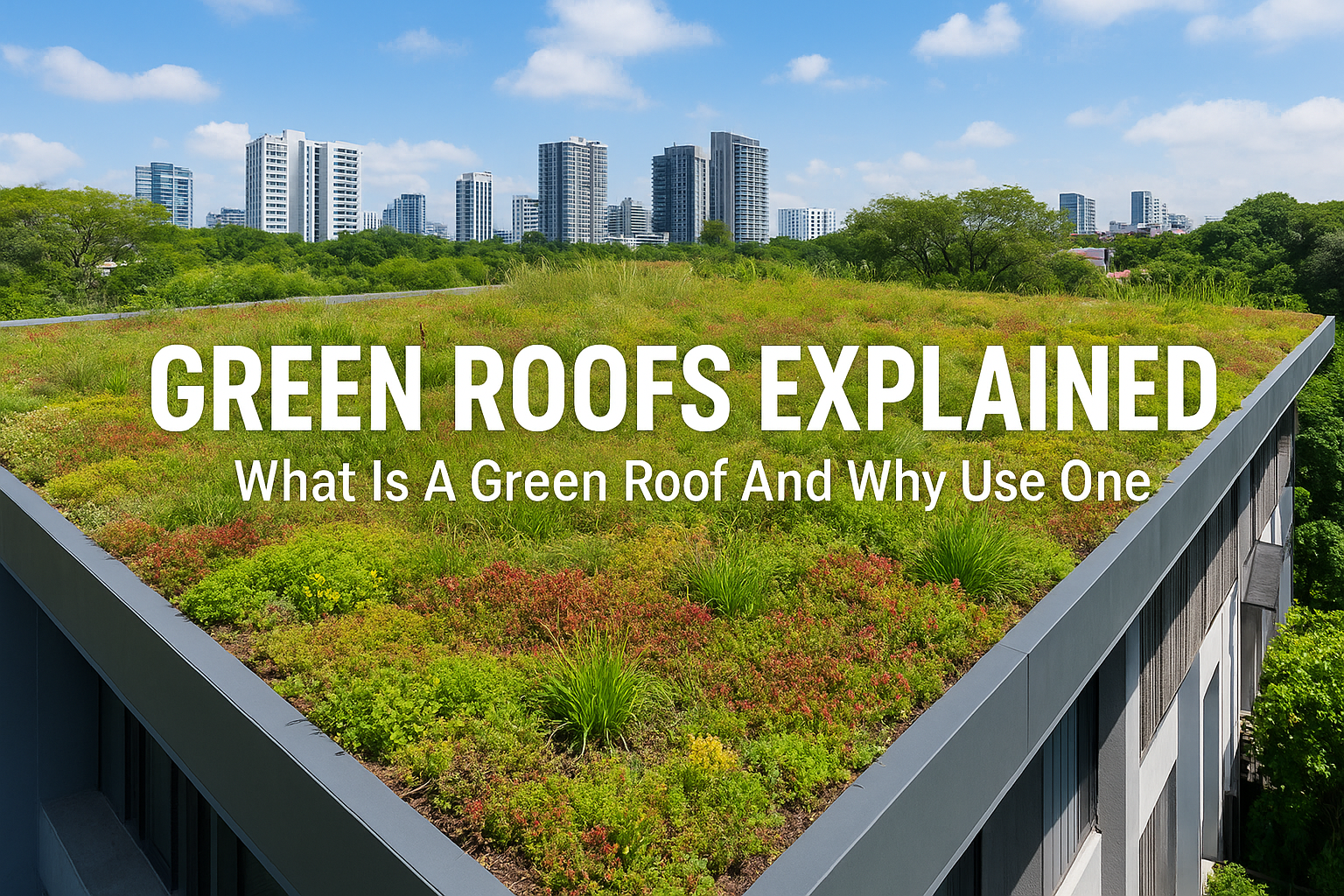
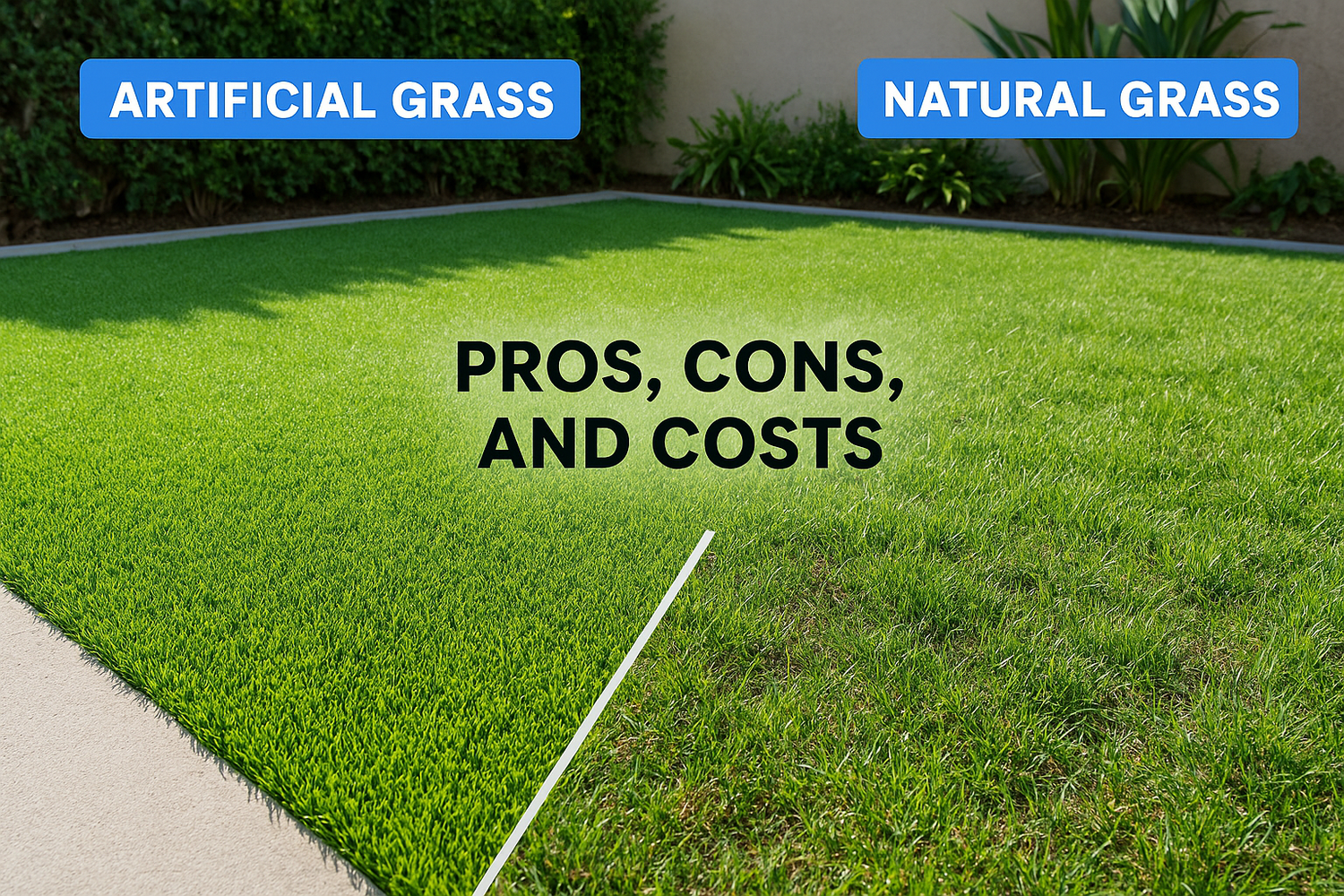
Choosing between artificial grass vs natural grass can feel overwhelming when you're planning your outdoor space. Both options have passionate advocates, and both come with trade-offs that affect your wallet, your weekends, and your environmental footprint. Whether you're designing a backyard retreat, a commercial lawn, or a rooftop garden in Malaysia's tropical climate, this decision deserves more than a quick Google search.
At Konzept Garden, we've installed both natural lawns and our Noble Grass synthetic turf across countless residential and commercial projects throughout Malaysia. We've seen what works, what doesn't, and what clients wish they'd known before committing. That hands-on experience has taught us that the "better" choice depends entirely on your priorities, there's no universal winner here.
This guide breaks down the real pros and cons of each option, compares long-term costs that most people overlook, and addresses maintenance demands and environmental considerations specific to Malaysian conditions. By the end, you'll have the clarity to pick the right grass type for your lifestyle, budget, and landscape goals.
Why this choice matters for Malaysian homes
Your choice between artificial grass vs natural grass carries implications that extend far beyond initial curb appeal. Malaysia's tropical climate creates unique challenges that amplify the consequences of this decision, from water consumption during dry spells to maintenance costs during monsoon season. You'll live with your grass choice for years, and switching later means significant expense and disruption. Homeowners we work with often underestimate how much their lawn choice affects daily life, property value, and long-term satisfaction with their outdoor spaces.
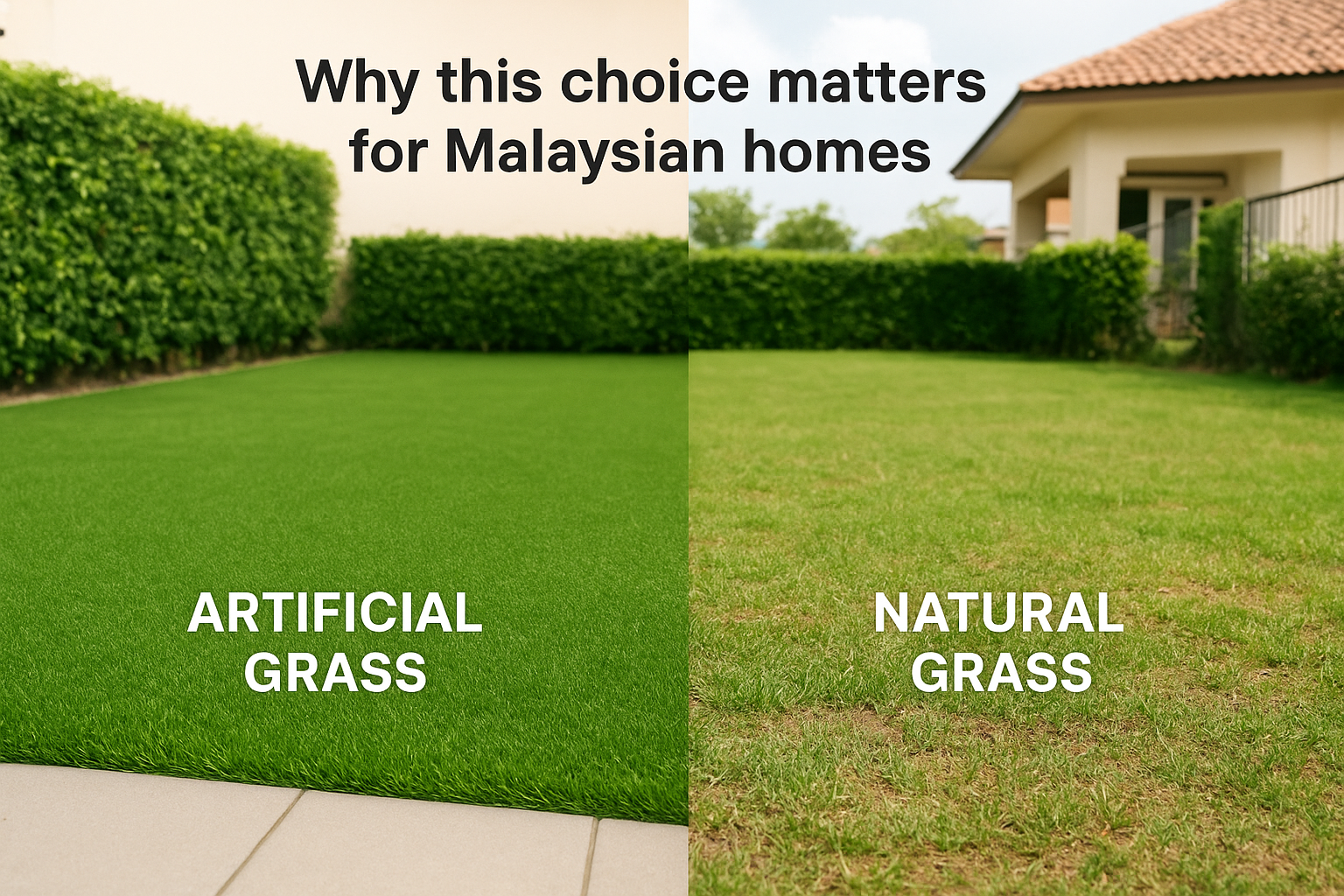
The decision impacts your household budget in ways that compound over time. Water bills, gardening equipment, pest control, fertilizers, and professional maintenance all add up differently depending on which grass type you select. Malaysian homeowners typically face water restrictions during El Niño years, and natural grass demands consistent irrigation to survive our intense heat and humidity cycles. These practical realities make your grass choice a financial commitment that deserves careful analysis before installation begins.
The tropical climate challenge
Malaysia's weather patterns create hostile conditions for maintaining pristine natural lawns year-round. Our intense UV exposure bleaches and stresses grass, requiring constant reseeding or replacement in high-traffic areas. Humidity levels that hover between 70% and 90% promote fungal diseases, moss growth, and pest infestations that natural grass invites. You'll battle these issues repeatedly if you choose living turf, especially during the northeast monsoon season when waterlogged soil becomes a breeding ground for problems.
Artificial turf eliminates weather-related maintenance headaches but introduces its own thermal challenge. Synthetic surfaces absorb heat during Malaysia's peak afternoon sun, making them uncomfortably hot to walk on barefoot between 1 PM and 4 PM. This temperature factor matters significantly if you have young children or pets who use the lawn daily. Understanding these climate interactions helps you set realistic expectations for either option.
"The average Malaysian lawn requires 150 to 300 liters of water per square meter monthly during dry seasons, a cost that artificial grass eliminates entirely."
Lifestyle compatibility and usage patterns
Your actual lawn usage should drive your decision more than aesthetic preferences alone. Families who host outdoor gatherings weekly need durable surfaces that recover quickly from foot traffic, which gives artificial grass an advantage in resilience. Natural grass shows wear patterns, develops muddy patches during rain, and requires recovery time between heavy use periods. If you rarely use your lawn except to look at it from inside, these durability concerns matter less than maintenance time commitment.
Professional demands on your schedule also factor into grass selection. Clients who travel frequently for work find artificial grass liberating because it doesn't punish neglect with brown patches and overgrowth. Natural grass demands consistent attention regardless of your availability, and hiring someone to maintain it during absences adds recurring costs. Consider whether you genuinely enjoy gardening tasks or view lawn care as an unwanted weekend obligation.
Resale considerations and neighborhood standards
Property buyers in Malaysian suburbs increasingly view well-maintained lawns as indicators of overall property care, affecting resale value and buyer perception. However, the definition of "well-maintained" varies by neighborhood and buyer demographics. Some areas embrace artificial turf as a modern, practical solution, while others see it as cutting corners. You need to assess your specific location's standards before making this choice permanent. Younger buyers often prefer low-maintenance artificial options, while traditional homeowners may insist on natural grass as the only acceptable choice for their future property.
What artificial and natural grass really are
Understanding the fundamental differences between these two lawn types requires looking beyond surface appearances. Natural grass consists of living plants that grow, photosynthesize, and interact with soil ecosystems, while artificial turf is a manufactured product engineered to mimic the visual and functional characteristics of living grass. The distinction runs deeper than maintenance requirements alone, it involves completely different biological and material properties that affect how each option performs in your specific environment.
Natural grass composition and living systems
Natural grass comprises living organisms that depend on sunlight, water, nutrients, and healthy soil to survive and thrive. The grass blades you see represent only the visible portion of a complex biological system that includes roots extending 15 to 30 centimeters into the ground, beneficial microorganisms in the soil, and a delicate balance of moisture and nutrients. Popular varieties in Malaysia include Zoysia, Bermuda, and Carpet Grass, each with specific tolerance levels for shade, foot traffic, and drought conditions.
These living plants continuously regenerate through growth cycles, which means they can repair damage naturally over time but also require regular cutting to maintain desired height. Your natural lawn functions as a small ecosystem that attracts insects, birds, and other wildlife. The root systems help prevent soil erosion and filter rainwater as it percolates through the ground, contributing to local water table replenishment during Malaysia's heavy rainfall periods.
Artificial grass materials and construction
Artificial grass consists of synthetic polymer fibers, typically made from polyethylene, polypropylene, or nylon, attached to a backing material with drainage holes throughout. Manufacturers engineer these materials to resist UV degradation, maintain color stability, and provide consistent blade orientation despite foot traffic and weather exposure. The infill material between the blades, usually silica sand or rubber granules, gives the turf stability, helps blades stand upright, and adds cushioning for comfort.
Modern artificial turf products have evolved significantly from the harsh, obviously fake surfaces of earlier decades. Today's options feature varied blade heights, multiple shades of green and brown, and textures designed to replicate specific natural grass species. The backing layer provides structural integrity and allows water to drain through perforations, preventing puddle formation after rain. When you evaluate artificial grass vs natural grass options, you're essentially choosing between a biological system that self-repairs and requires ongoing care versus an inert product that maintains consistent appearance with minimal intervention.
"Quality artificial grass products typically contain three distinct fiber types in different colors to create depth and natural variation that mimics real lawns."
Installation differences and what to expect
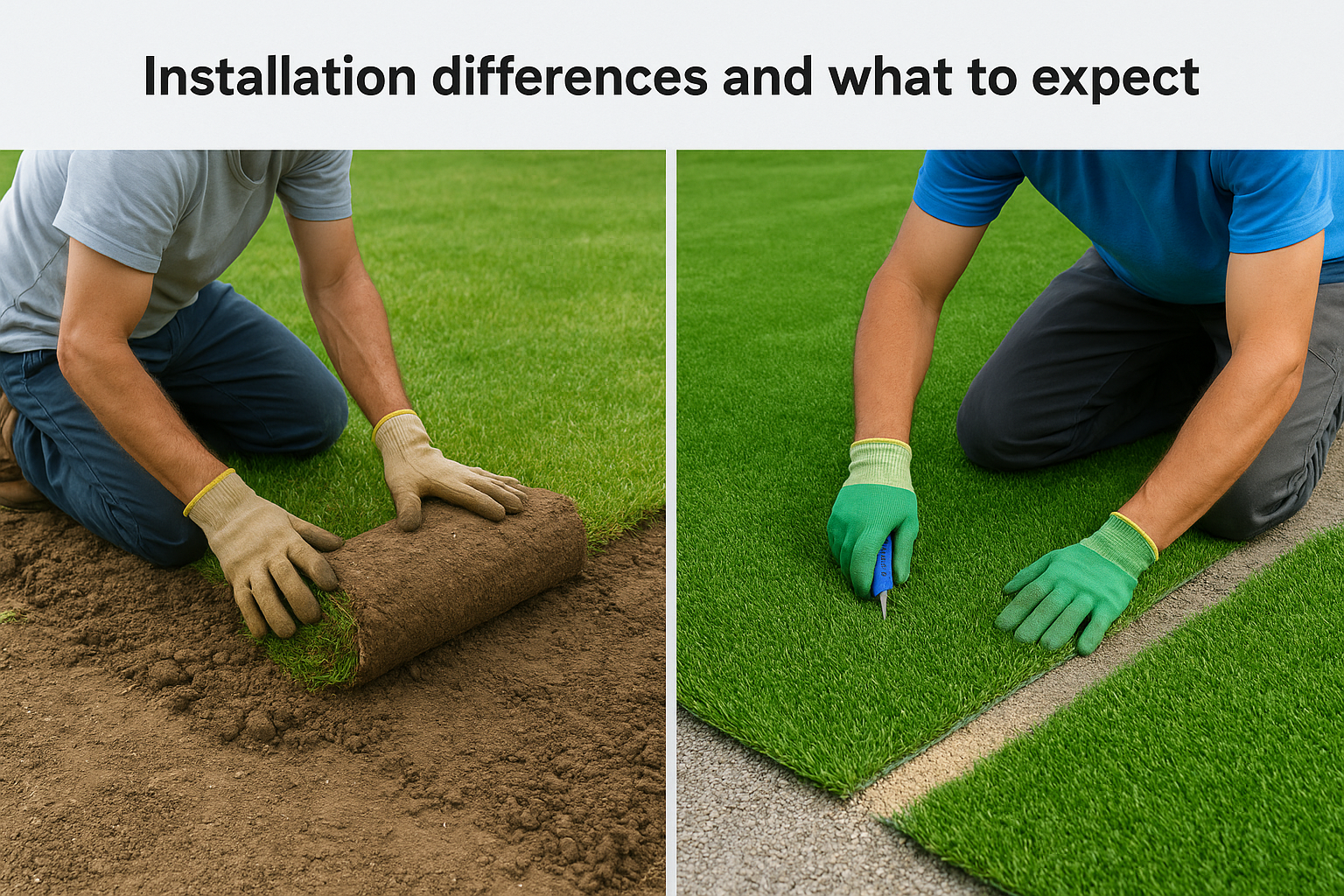
Installation complexity and timeline vary dramatically when comparing artificial grass vs natural grass, and both processes require professional execution for optimal results. Natural grass installation demands soil preparation, nutrient amendment, and careful timing to align with Malaysia's weather patterns, while artificial turf requires precise ground leveling and specialized base materials that prevent settling and drainage issues. Understanding these differences helps you set realistic expectations for project duration, disruption to your property, and when you can actually use your new lawn.
Natural grass installation process
Natural grass installation begins with soil testing and preparation that takes one to two days depending on your lawn size. Landscapers remove existing vegetation, till the soil to 15 to 20 centimeters depth, and add organic matter or sand to improve drainage and nutrient content. You'll wait three to four weeks before planting to let the soil settle and allow contractors to address any low spots that develop. This preparation phase determines whether your grass thrives or struggles throughout its lifetime.
Planting involves either laying turf rolls or seeding the prepared area, with turf providing immediate visual coverage but costing two to three times more than seed. Turf installation takes one day for most residential lawns, but you cannot walk on it for two weeks while roots establish. Seeded lawns require six to eight weeks before they're dense enough for regular use, and they need daily watering during germination. Malaysian humidity helps seeds germinate quickly, but afternoon thunderstorms can wash away newly planted areas if drainage isn't properly addressed.
"Natural grass requires immediate irrigation schedules within hours of installation, while artificial turf becomes fully usable as soon as the final infill layer is spread and brushed."
Artificial turf installation steps
Artificial grass installation starts with excavating 8 to 10 centimeters of existing soil to accommodate base materials that ensure proper drainage and prevent settling. Contractors lay a compacted aggregate base of crushed rock or gravel, followed by a weed barrier membrane that stops vegetation from pushing through your synthetic surface. This foundation work takes two to three days and determines whether your turf drains effectively during Malaysia's heavy rainfall periods.
The turf itself arrives in rolls that installers cut, position, and seam together using specialized adhesives or joining tape. Seaming quality separates professional installations from amateur work, as visible gaps or misaligned blade directions create obvious flaws that never disappear. After securing the turf edges with galvanized stakes or perimeter strips, installers spread silica sand or rubber infill throughout the surface and brush it into the fibers. Your artificial lawn is immediately usable once installation completes, typically within four to five days total from excavation to final cleanup.
Maintenance needs for each option
The maintenance workload separating artificial grass vs natural grass represents one of the most significant practical differences you'll experience after installation. Natural lawns demand regular attention across multiple categories, from cutting and watering to fertilizing and pest control, while artificial turf requires occasional cleaning and periodic grooming to maintain appearance. Your weekly time commitment varies dramatically between these options, and understanding the specific tasks involved helps you decide whether you prefer active lawn care or hands-off convenience.
Weekly and monthly tasks for natural grass
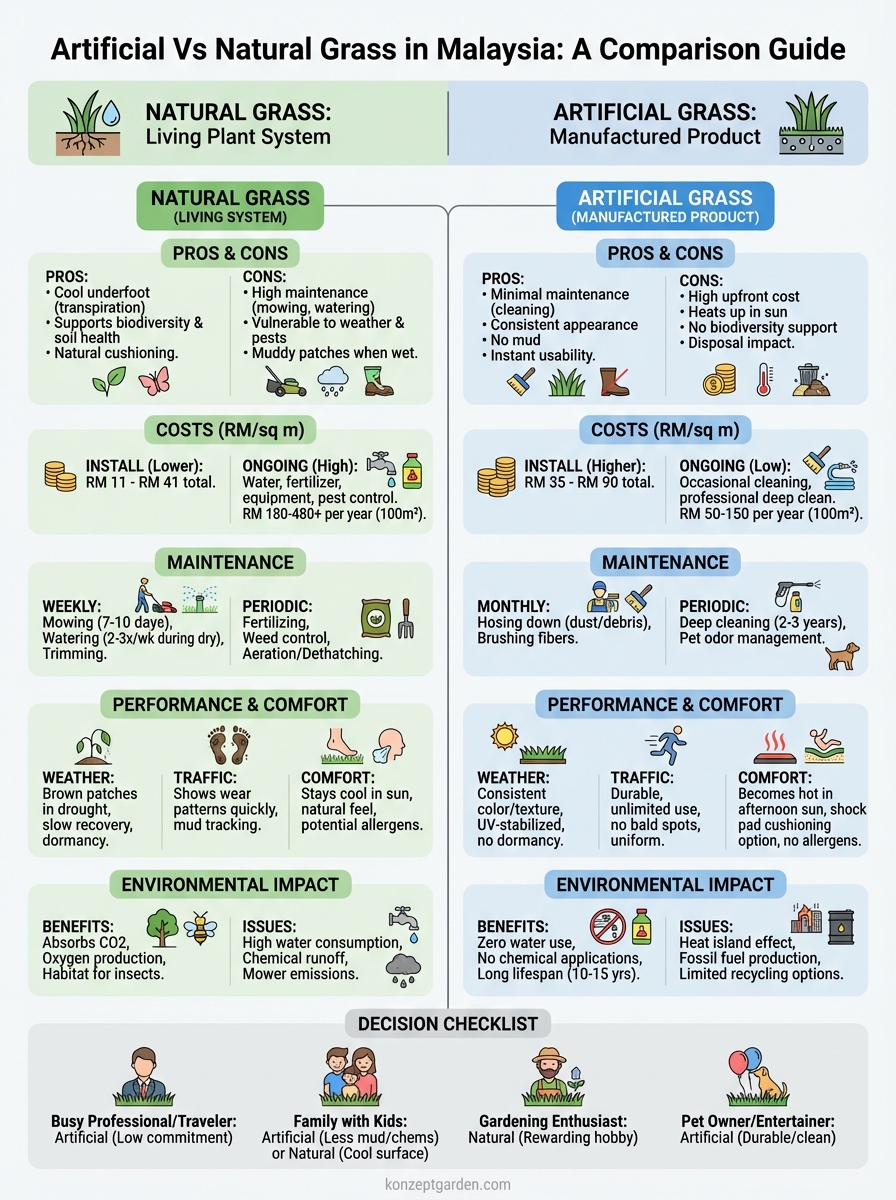
Natural grass requires mowing every 7 to 10 days during Malaysia's rainy seasons when growth accelerates, and you'll spend 30 to 60 minutes cutting a typical residential lawn depending on its size. You need to maintain consistent cutting height between 2.5 and 4 centimeters for most Malaysian grass varieties, and removing more than one-third of blade height in a single mowing session stresses the grass. Edge trimming around paths, driveways, and garden beds adds another 15 to 20 minutes to each maintenance session.
Watering demands vary by season, but expect to irrigate two to three times weekly during dry periods, with each session delivering 2.5 to 4 centimeters of water to penetrate root depth. You'll apply fertilizer quarterly to maintain color and density, and this requires spreading granules evenly then watering them into the soil. Weed control becomes an ongoing battle as Malaysian climate supports aggressive weed species that compete with your grass, requiring monthly herbicide applications or manual removal. Pest management, aeration, dethatching, and reseeding bare patches add periodic tasks throughout the year.
"Malaysian homeowners spend an average of 4 to 6 hours monthly maintaining natural lawns, compared to 30 to 45 minutes for artificial turf surfaces."
Minimal upkeep requirements for artificial turf
Artificial grass needs hosing down every two to three weeks to remove dust, pollen, and debris that accumulate on the surface. This cleaning takes 10 to 15 minutes and prevents buildup that dulls the turf's appearance. You'll brush the fibers monthly with a stiff broom to restore blade orientation and redistribute infill material that shifts with foot traffic and rain. Heavy use areas may require more frequent brushing to prevent matting.
Pet owners face additional maintenance as urine can create odors if not rinsed regularly, requiring weekly hosing in areas where dogs frequent. Leaves and organic debris need removal as they accumulate, though this task takes less time than natural lawn care since you're simply sweeping rather than managing living plants. Professional deep cleaning every two to three years removes embedded dirt and restores drainage performance, costing between RM 500 to RM 1,200 depending on lawn size.
Costs in Malaysia: install, water, and replacement
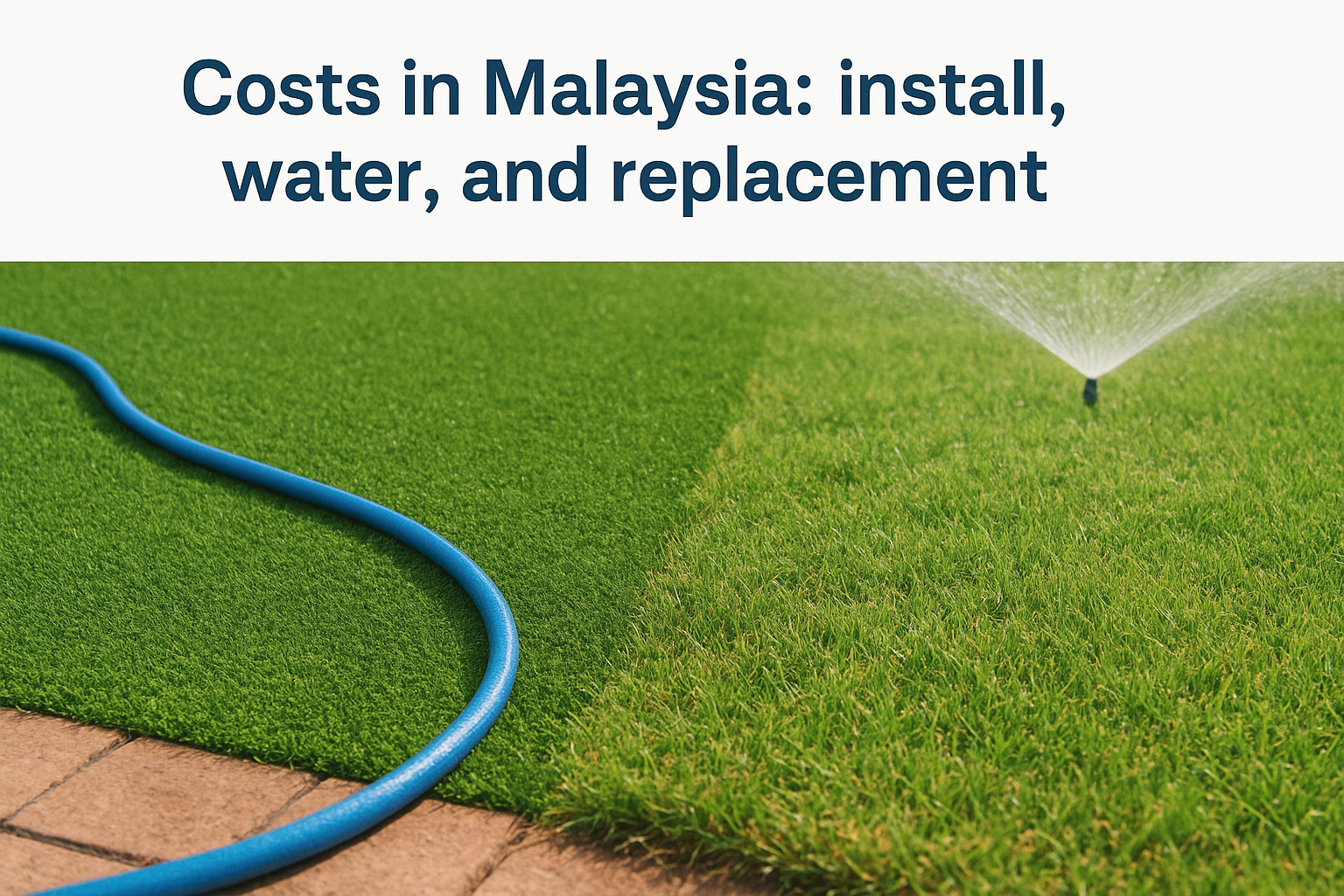
Understanding the complete financial picture when comparing artificial grass vs natural grass requires looking beyond installation sticker prices to include ongoing expenses and eventual replacement costs. You'll make a smarter investment decision by calculating total ownership costs over 10 to 15 years rather than focusing solely on what you pay during the first month. Malaysian homeowners often underestimate how water bills, maintenance supplies, and professional services compound over time with natural grass, while artificial turf buyers sometimes ignore replacement timelines that affect long-term budgeting.
Upfront installation expenses
Natural grass installation in Malaysia costs RM 8 to RM 15 per square meter for seeded lawns, while premium turf rolls range from RM 18 to RM 35 per square meter depending on grass variety and supplier location. You'll add another RM 3 to RM 6 per square meter for soil preparation, grading, and initial fertilization. A typical 100 square meter residential lawn runs between RM 1,100 to RM 4,100 total including labor, with lower costs achievable through seeding if you accept the longer establishment period.
Artificial turf installation costs RM 35 to RM 90 per square meter in Malaysia, with price variations reflecting fiber quality, backing durability, and infill type. Professional installation includes excavation, base preparation, drainage systems, and seaming work that natural grass doesn't require. Budget RM 3,500 to RM 9,000 for that same 100 square meter lawn, recognizing that higher-quality products in the RM 70 to RM 90 range deliver better heat resistance and longer lifespans than economy options.
Ongoing water and utility costs
Natural grass demands significant water consumption that affects your monthly bills throughout the year. You'll use 150 to 300 liters per square meter monthly during dry seasons, costing RM 15 to RM 40 monthly for a 100 square meter lawn based on current Malaysian water rates. Annual water costs reach RM 180 to RM 480 before factoring in fertilizers at RM 80 to RM 150 yearly, pesticides at RM 60 to RM 120, and equipment maintenance or professional services that add RM 200 to RM 600 annually.
"Artificial turf eliminates RM 2,500 to RM 4,000 in cumulative water and maintenance costs over a 10-year period compared to natural grass in Malaysian conditions."
Artificial grass requires minimal ongoing expenses limited to occasional cleaning products and periodic professional deep cleaning every two to three years. You'll spend RM 50 to RM 150 annually maintaining synthetic turf, representing substantial savings compared to natural lawn upkeep.
Replacement timelines and costs
Natural grass needs reseeding or patching every 2 to 4 years in high-traffic areas, costing RM 500 to RM 1,200 per renovation depending on affected area size. Complete lawn replacement becomes necessary after 10 to 15 years when soil compaction and wear patterns make patching ineffective.
Artificial turf lasts 10 to 15 years before requiring complete replacement, with quality products lasting longer in shaded areas that experience less UV exposure. You'll pay installation costs again when replacement becomes necessary, but the consistent performance over that period provides predictable budgeting compared to natural grass's variable maintenance demands.
Durability, drainage, and daily use performance
Performance differences between artificial grass vs natural grass become obvious within the first few months of daily use, especially in Malaysia's challenging climate conditions. Your lawn's ability to withstand foot traffic, recover from damage, and drain properly during heavy rain determines whether you'll enjoy consistent usability or face ongoing frustration with muddy patches and worn areas. Natural grass shows visible wear patterns in high-traffic zones like paths to the house or play areas, while artificial turf maintains uniform appearance regardless of how frequently you use specific sections. These practical performance factors affect your lifestyle more than aesthetic preferences alone.
How each surface handles Malaysian weather
Natural grass struggles with Malaysia's intense weather fluctuations that alternate between scorching heat and torrential downpours. You'll notice brown patches developing during drought periods despite regular watering, and fungal diseases emerge within weeks when humidity stays above 85% combined with poor air circulation. Recovery from weather damage takes four to six weeks for natural lawns, leaving you with an eyesore during that entire period. The grass enters dormancy during extended dry spells, losing its green color until conditions improve.
Artificial turf maintains consistent color and texture through all weather conditions because synthetic fibers don't respond to temperature or moisture fluctuations. You won't see browning, dormancy, or disease-related damage regardless of weather patterns. UV-stabilized products resist fading for 8 to 10 years in full sun exposure, though cheaper options may show color degradation within 3 to 5 years.
Performance under heavy foot traffic
Natural grass shows wear patterns within two to three weeks of daily use in the same areas, creating muddy or bare patches that require reseeding and restricted access during recovery. Children's play equipment, frequent walking paths, and pet running routes quickly kill grass through soil compaction and blade damage. You'll spend RM 300 to RM 600 annually repairing these high-traffic zones if you want to maintain consistent appearance.
Artificial turf handles unlimited foot traffic without visible damage since the synthetic fibers don't die or require soil-based root systems. You can use your entire lawn area every day without creating bare spots or requiring recovery periods.
"Quality artificial turf withstands 10,000 to 15,000 hours of heavy use before showing significant wear, equivalent to daily family activities for 12 to 15 years."
Drainage capabilities during monsoon season
Natural grass provides excellent water absorption through soil percolation, allowing rainwater to filter into the ground naturally. However, compacted soil or clay-heavy areas create waterlogging problems that kill grass roots and breed mosquitoes. Poor drainage turns natural lawns into muddy swamps during Malaysia's northeast monsoon season from November through February.
Artificial turf relies on perforated backing that drains 30 to 50 liters per square meter per hour when properly installed over aggregate base materials. You won't experience standing water or muddy conditions, though improper installation without adequate base preparation causes drainage failures that require expensive repairs.
Comfort, heat, and safety for kids and pets
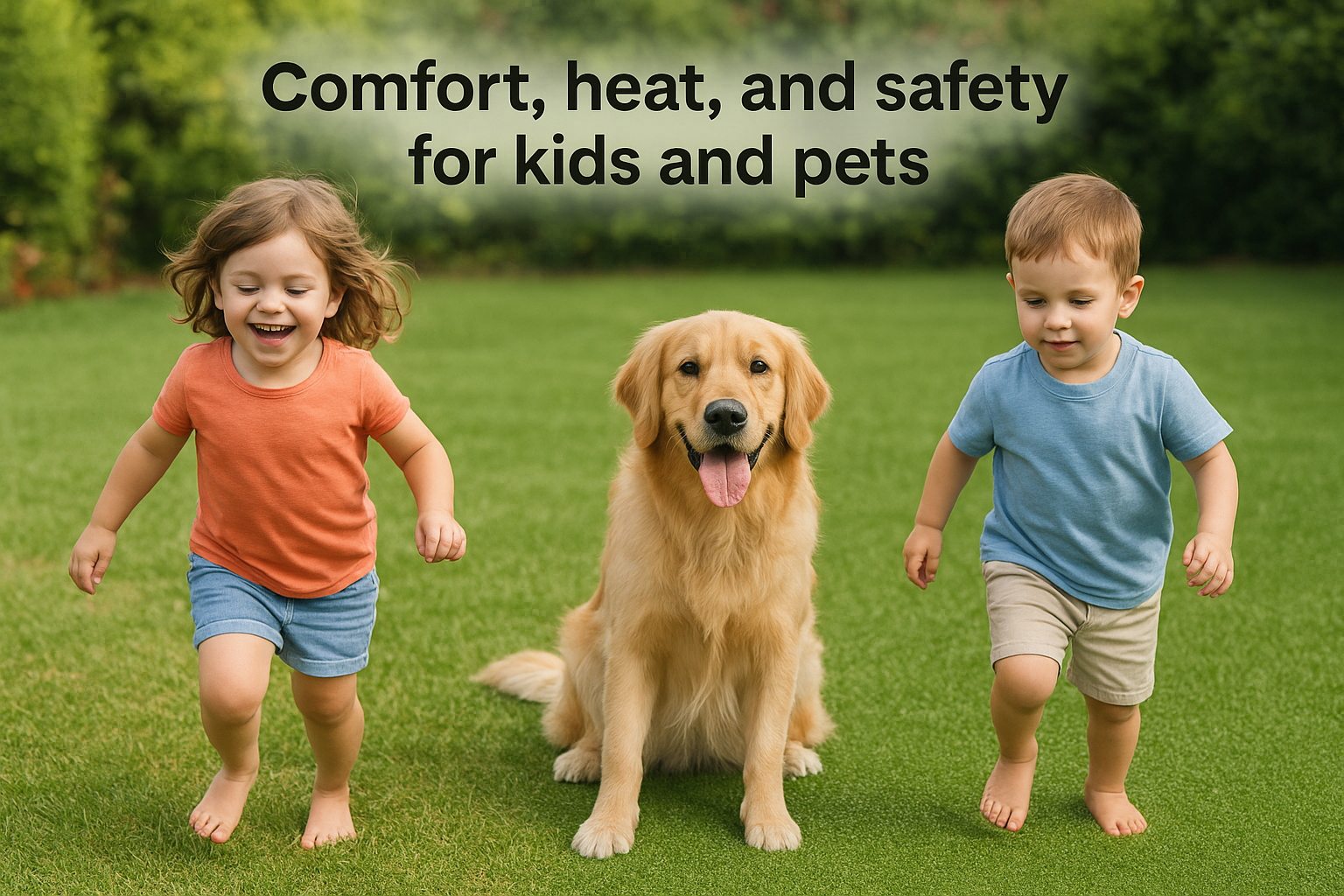
Your family's comfort and safety directly depend on which lawn surface you choose, especially if young children or pets spend hours playing outdoors. The artificial grass vs natural grass comparison takes on new importance when you factor in temperature extremes, potential injuries, and chemical exposures that affect vulnerable family members. Natural grass stays cooler underfoot but introduces allergens, insects, and maintenance chemicals into your outdoor space, while synthetic turf eliminates biological hazards but can reach uncomfortable temperatures during Malaysia's hottest hours.
Surface temperature and barefoot comfort
Natural grass maintains temperatures within 10 to 15 degrees of ambient air even during Malaysia's peak afternoon heat because living plants transpire moisture that cools their surfaces. You can walk barefoot comfortably on natural lawns throughout the day, and children can play without risk of heat-related discomfort or burns. The cooling effect from grass photosynthesis creates a microclimate that makes your outdoor space more inviting during hot weather.
Artificial turf absorbs and retains heat, reaching surface temperatures 20 to 40 degrees higher than natural grass in direct sunlight between noon and 3 PM. Your synthetic lawn becomes uncomfortably hot to touch, making barefoot play impossible during these hours. Lighter-colored turf products and ceramic-coated infills reduce heat absorption by 8 to 12 degrees compared to standard options, but afternoon use still requires footwear during Malaysia's hottest months.
"Artificial grass can reach surface temperatures of 60 to 70 degrees Celsius in full sun, hot enough to cause discomfort within seconds of contact."
Safety considerations for active play
Natural grass provides natural cushioning that reduces impact injuries from falls, though uneven ground, hidden rocks, or holes created by pests increase tripping hazards. You'll deal with mud tracking into your home, grass stains on clothing, and potential exposure to fertilizers or pesticides applied during maintenance. Allergies to grass pollen affect some children, causing respiratory discomfort during outdoor play sessions.
Artificial turf offers consistent, level surfaces that eliminate tripping hazards from uneven ground or hidden obstacles. You won't expose your family to lawn chemicals, and the synthetic fibers don't harbor ticks, fleas, or other pests that natural grass attracts. Quality turf includes shock-absorbing padding beneath the surface that cushions falls better than compacted natural soil, making it safer for active play areas and around playground equipment.
Environmental impact and sustainability trade-offs
The environmental consequences of choosing between artificial grass vs natural grass extend beyond your property boundaries and affect water resources, carbon emissions, and ecosystem health. Both options carry ecological costs that deserve honest evaluation rather than greenwashing claims from either side. Natural grass supporters emphasize carbon sequestration and groundwater benefits, while artificial turf advocates highlight eliminated water consumption and chemical applications. You need to weigh these competing environmental claims against your values and Malaysia's specific ecological challenges to make an informed decision.
Natural grass environmental benefits and concerns
Living grass performs photosynthesis that removes CO2 from the atmosphere and produces oxygen, with a 100 square meter lawn capturing approximately 100 to 150 kilograms of carbon annually. Root systems prevent soil erosion during Malaysia's heavy rainfall and allow rainwater to percolate naturally into groundwater tables rather than creating runoff. Your natural lawn supports biodiversity by providing habitat for beneficial insects, earthworms, and microorganisms that contribute to healthy soil ecosystems.
However, natural grass demands 150,000 to 300,000 liters of water annually for a typical residential lawn in Malaysian climate, placing stress on local water supplies during drought periods. Fertilizers and pesticides required for maintenance introduce chemicals that wash into storm drains and eventually reach rivers and coastal areas. Gasoline-powered mowers emit pollutants equivalent to driving a car 150 to 200 kilometers per year of weekly lawn cutting, though electric alternatives reduce this impact significantly.
"A natural lawn's environmental benefit from carbon sequestration gets cancelled out by emissions from maintenance equipment and chemical production within three to four years."
Synthetic turf manufacturing and disposal impact
Artificial grass eliminates water consumption and chemical applications entirely, preventing 150,000 to 300,000 liters of water waste and stopping fertilizer runoff from reaching waterways. You won't contribute emissions from lawn equipment or pesticide production throughout the product's 10 to 15 year lifespan. Heat island effects represent the main environmental drawback, as synthetic surfaces absorb and radiate heat that raises ambient temperatures in your immediate area by 2 to 4 degrees compared to natural grass.
Manufacturing artificial turf requires petroleum-based plastics that consume fossil fuels and generate industrial emissions during production. Most products end up in landfills after their useful life because recycling programs remain limited in Malaysia, creating waste disposal concerns. The turf itself doesn't support any biodiversity or ecosystem functions that natural grass provides to insects, birds, and soil organisms.
How to choose: a decision checklist by lifestyle
Your daily routine, family composition, and personal preferences should drive your decision when comparing artificial grass vs natural grass rather than abstract pros and cons lists. You'll achieve better satisfaction by matching lawn type to your actual lifestyle instead of choosing based on what neighbors prefer or what looks impressive during installation. This checklist approach helps you identify which option aligns with how you really live, considering time availability, physical activity levels, and priorities that shape your relationship with outdoor spaces.
For busy professionals and frequent travelers
You benefit most from artificial turf if your schedule leaves minimal time for weekend maintenance and you travel regularly for work or leisure. Natural grass punishes neglect with visible deterioration within two weeks of missed watering or cutting, creating stress around trip planning. Artificial grass requires no attention during absences and maintains appearance regardless of how often you're home, eliminating the need to hire temporary maintenance help or impose on neighbors.
Consider natural grass only if you genuinely find gardening therapeutic and want an active weekend hobby. The required time commitment provides stress relief for some people, but most busy professionals view lawn care as an unwanted obligation that artificial turf solves permanently.
For families with young children
Families who use their lawn daily for children's play should evaluate surface temperature and safety features as primary factors. Natural grass stays cool throughout the day and provides familiar, chemical-free surfaces for barefoot play and rolling around. You'll accept the maintenance workload and muddy shoe cleanup in exchange for comfortable outdoor temperatures and traditional lawn experiences.
Artificial turf works better if you prioritize eliminating maintenance time to spend with your kids and don't mind afternoon heat limitations. You gain consistent usability during rainy periods without mud tracking and remove exposure to fertilizers and pesticides that concern health-conscious parents.
"Families who entertain outdoors more than twice monthly typically prefer artificial grass for its resilience and immediate usability after rain."
For retirees and gardening enthusiasts
Retirees who enjoy active gardening typically prefer natural grass as part of their overall landscape hobby, viewing lawn care as rewarding physical activity rather than a burden. You'll appreciate the living ecosystem aspects and seasonal changes that synthetic turf cannot replicate. Natural grass fits seamlessly into gardens where you already tend flowers, vegetables, and shrubs as regular activities.
Choose artificial turf if mobility limitations make lawn maintenance physically challenging or you want to redirect your gardening energy toward more rewarding plants than grass. Reduced maintenance burden lets you focus on container gardens or raised beds without the demanding schedule that natural lawns require.
For pet owners and outdoor entertainers
Pet owners face specific considerations around odor management and cleaning requirements that differ between both options. Natural grass absorbs and processes pet waste naturally through soil microorganisms, though you'll deal with brown spots from urine concentration and digging damage from active dogs. Artificial turf requires regular hosing in pet areas to prevent odor buildup but withstands scratching and digging without visible damage.
Frequent entertainers benefit from artificial grass that stays presentable immediately after rain without requiring advance preparation before guests arrive. You won't cancel gatherings due to muddy conditions or postpone parties to allow grass recovery after previous events, providing reliable outdoor space for spontaneous hosting.
Wrap-up and next steps
You now understand the complete picture when weighing artificial grass vs natural grass for your Malaysian property. The right choice depends on your specific circumstances: budget constraints, time availability, family needs, and environmental priorities all factor into this decision. Natural grass offers living ecosystems and cooler surfaces but demands consistent maintenance and water consumption. Artificial turf eliminates upkeep and provides year-round usability but requires higher upfront investment and tolerates afternoon heat.
Your next step involves evaluating your actual lawn usage patterns against the maintenance realities each option requires. Consider testing both surfaces at showrooms or visiting installed examples in similar climates before committing. You'll make a smarter investment by matching lawn type to how you genuinely live rather than choosing based on assumptions about ideal outdoor lifestyles.
Konzept Garden has installed both natural landscapes and Noble Grass synthetic turf across hundreds of Malaysian properties, and our team understands the specific challenges tropical conditions create. If you need expert guidance on which option suits your space and lifestyle, contact our design team for a consultation and detailed quotation.