


Heavy rainfall in Malaysia often turns driveways and patios into temporary ponds. Traditional concrete and asphalt create impermeable surfaces that force water to rush into drains, carrying pollutants and overwhelming stormwater systems. Understanding permeable pavers benefits can change how you approach your outdoor spaces, and help solve these drainage headaches for good.
Permeable pavers allow rainwater to filter through the surface and into the ground below, mimicking natural soil absorption. This simple shift in paving technology offers real advantages for your property and the environment around it.
At Konzept Garden, we design outdoor spaces that work with Malaysia's climate, not against it. Our landscape solutions prioritize both beauty and function, and permeable paving fits perfectly into that philosophy. Below, we break down five key benefits that make permeable pavers a smart choice for homeowners and commercial property owners focused on sustainability and long-term value.
1. Reduce runoff and flooding on your property
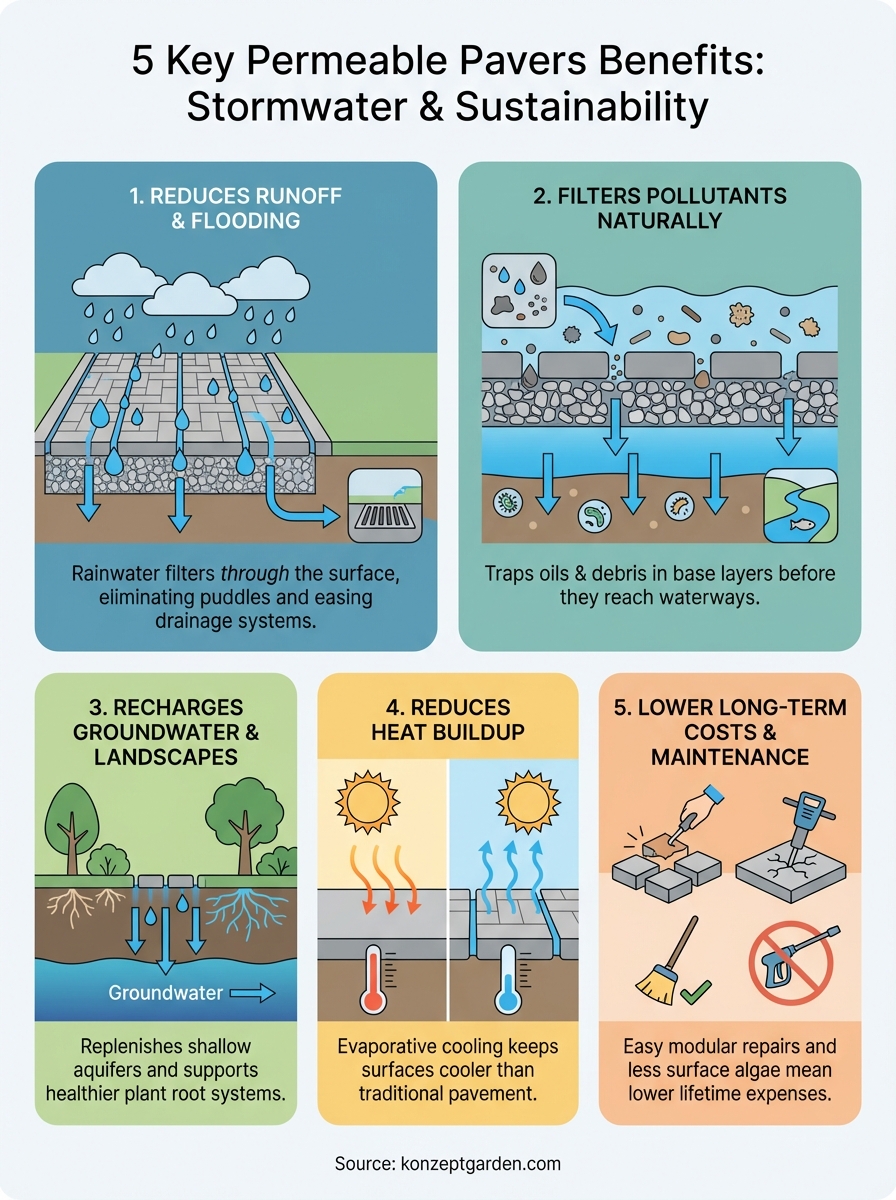
Traditional paving forces water to pool and rush toward street drains instead of soaking into the ground. This creates standing water on your driveway, erosion around your foundation, and stress on municipal drainage systems. One of the most practical permeable pavers benefits is how effectively they eliminate these problems by letting rainwater pass through the surface rather than racing across it.
What this benefit looks like during heavy rain
During a typical Malaysian downpour, you'll see water disappear into permeable pavers within seconds instead of forming puddles. Your driveway stays walkable, and vehicles don't splash through standing water when entering or exiting. This immediate drainage keeps surfaces safer and more functional throughout the storm.
How permeable pavers manage stormwater on-site
Permeable pavers create open joints filled with gravel or sand that allow water to flow downward. Below the surface, a stone base layer stores and slowly releases water into the soil beneath. This staged infiltration mimics natural ground absorption and handles heavy rainfall without overwhelming your property's drainage capacity.
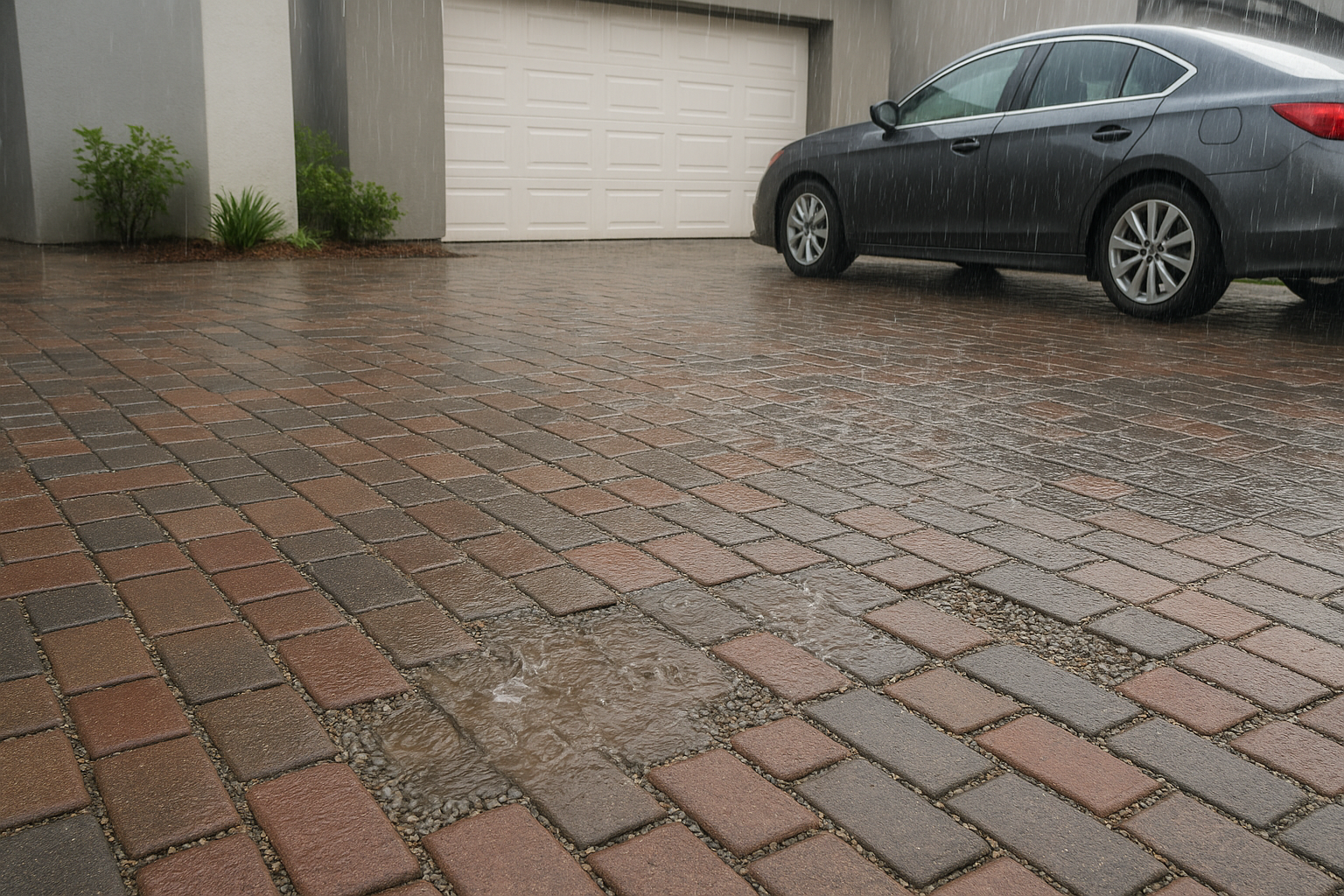
Permeable paving can reduce runoff by up to 80% compared to traditional concrete surfaces.
Where this matters most in residential and commercial spaces
You'll see the biggest impact in driveways, patios, and parking areas where water collects fastest. Commercial properties benefit from reduced liability around entryways, while residential installations protect gardens and foundations from erosion. Sloped sites gain even more value since permeable systems slow water before it reaches lower ground.
Design details that make or break performance
Base thickness determines how much water your pavers can handle at once. Installing a minimum 150mm crushed stone base gives most Malaysian properties adequate storage for typical storms. Poor compaction or thin bases lead to settling and reduced infiltration over time.
Common misunderstandings about drainage and flooding
Permeable pavers don't prevent flooding from extreme weather events that exceed soil absorption rates. They also won't solve problems caused by high water tables or clay-heavy soils that drain slowly. Understanding your site's soil type helps set realistic expectations for performance during heavy rain.
2. Filter pollutants before they reach drains and waterways
Traditional pavement washes motor oil, fertilizers, and debris directly into storm drains. One of the key permeable pavers benefits involves acting as a natural filtration system that captures pollutants before they reach rivers and coastal waters.
What runoff carries off typical paved surfaces
Driveways collect motor oil, tire particles, and pet waste throughout the week. Rain washes this mixture into drains and eventually to streams and the ocean. Malaysian properties near waterways contribute directly to coastal pollution through this unfiltered runoff.
How the paver layers filter and trap pollutants
Water passing through permeable joints encounters multiple filtration zones starting with surface aggregate. The stone base layer traps heavier particles while allowing water to continue downward. Microorganisms in the soil beneath break down organic pollutants naturally, cleaning water before it reaches the water table.
Permeable pavement systems can remove up to 95% of suspended solids from stormwater runoff.
When soil type and site conditions change the result
Sandy soils drain quickly but offer less biological filtration than loamy soils. Clay-heavy sites trap pollutants effectively but may need larger stone bases for slower infiltration. Testing your soil helps you adjust the design for optimal filtration.
How to reduce clogging while keeping filtration strong
Regular vacuum sweeping removes surface debris before it clogs joint material. Avoid using fertilizers and pesticides near permeable paving since these overwhelm natural filtration. Keeping grass clippings and leaves off the pavers maintains steady water flow.
What permeable pavers can't remove and how to plan for it
Permeable systems struggle with dissolved chemicals and heavy metals that don't settle easily. Properties with industrial runoff need additional treatment. Adding rain gardens downstream provides extra filtration for pollutants that pass through unchanged.
3. Recharge groundwater and support healthier landscapes
Traditional paving blocks water from reaching underground aquifers that feed wells and sustain plant life. Among the most valuable permeable pavers benefits is their ability to restore natural water cycles by allowing rainfall to seep into the ground where it belongs, creating healthier conditions for your entire landscape.
How infiltration helps local water balance
Water soaking through permeable pavers replenishes shallow groundwater that feeds nearby vegetation. This stored moisture helps trees and shrubs survive dry periods between storms instead of relying solely on irrigation.
Permeable surfaces can restore up to 50% of natural groundwater recharge in developed areas.
How permeable paving supports trees and planting beds
Root zones beneath permeable pavers receive oxygen and water simultaneously, preventing the suffocation that happens under concrete. Your established trees grow healthier root systems when surrounded by permeable surfaces rather than traditional paving.
Smart ways to connect paving to rain gardens and swales
Design your permeable areas to slope gently toward planted swales that catch overflow. Rain gardens positioned downslope from permeable pavers receive pre-filtered water that supports deeper-rooted native plants.
How to prevent root damage and soil compaction
Install root barriers along paving edges where aggressive tree roots might disrupt the base. Proper base compaction during installation prevents settling while maintaining infiltration capacity.
Signs permeable paving is improving site moisture
You'll notice greener grass and healthier plants near permeable surfaces during dry weather. Reduced irrigation needs around permeable areas prove groundwater recharge is working effectively.
4. Reduce heat buildup and improve outdoor comfort
Traditional concrete and asphalt absorb intense tropical heat throughout the day and radiate it back long after sunset. This heat island effect makes outdoor spaces uncomfortable and increases cooling costs for nearby buildings. Permeable pavers offer a cooler alternative that makes your patios and driveways more usable during Malaysia's hottest months.

Why hard paving overheats faster than planted areas
Solid surfaces trap heat because water can't evaporate from beneath them. Dark-colored concrete reaches temperatures 15-20°C higher than surrounding grass or garden beds during peak afternoon sun.
How permeable systems stay cooler than impervious paving
Water evaporating through permeable joints creates natural cooling throughout the day. The stone base layer beneath allows air circulation that prevents heat buildup, keeping surface temperatures closer to ambient levels.
Permeable pavement can be up to 10°C cooler than traditional asphalt during sunny afternoons.
How joint fill and surface color change heat performance
Light-colored pavers reflect more sunlight and stay noticeably cooler than dark options. Choosing stone dust over sand for joint fill improves water retention and evaporative cooling.
Best placements for comfort around homes and buildings
Install permeable pavers in entertainment areas and walkways where people spend time outdoors. Positioning them near windows and doors reduces radiant heat entering your home.
Limits to expect in humid climates and shaded sites
High humidity slows evaporative cooling, reducing the temperature advantage in coastal areas. Heavily shaded locations see minimal heat differences since direct sun exposure matters most for performance.
5. Lower long-term maintenance and infrastructure costs
Initial installation costs matter, but long-term value separates smart investments from expensive mistakes. One of the most practical permeable pavers benefits involves reducing ongoing maintenance expenses while eliminating drainage problems that damage traditional paving over time.
How permeable pavers reduce puddles, algae, and surface wear
Standing water on concrete driveways creates slippery algae growth that requires regular pressure washing. Permeable pavers drain immediately, preventing algae buildup and eliminating the safety hazards that come with slick surfaces during Malaysia's rainy season.
Why modular pavers simplify repairs compared to poured slabs
You can replace individual damaged pavers without disrupting surrounding areas. Concrete slabs require cutting, removing, and patching entire sections when cracks appear, costing significantly more in labor and materials.
Modular paver systems can reduce repair costs by up to 60% compared to traditional concrete replacement.
What maintenance actually looks like over a year
Vacuum sweeping twice yearly keeps joints clear of debris. Refilling joints with stone dust every few years maintains infiltration capacity. This basic routine takes less time than pressure washing and resealing traditional paving.
When permeable paving costs more upfront and why
Base preparation adds 20-30% to initial installation costs. Specialized materials and proper compaction require experienced contractors, increasing labor expenses beyond standard paving work.
How to estimate value from drainage and durability savings
Calculate avoided costs for drainage repairs, foundation waterproofing, and surface replacements over 20 years. Factor in reduced water bills from lower irrigation needs around properly drained areas.
Final thoughts
The permeable pavers benefits we've covered address real problems Malaysian property owners face daily. You gain immediate drainage that eliminates standing water, natural filtration that protects local waterways, and groundwater recharge that sustains your landscape during dry periods. These surfaces stay cooler during afternoon heat and require less maintenance than traditional paving over their lifespan.
Your property needs solutions that work with tropical rainfall patterns rather than fighting against them. Permeable paving delivers this functionality while creating attractive outdoor spaces that enhance your home or business value.
At Konzept Garden, we design landscapes that balance environmental responsibility with practical beauty. Our team understands how proper drainage integrates with other outdoor features, from rain gardens to water features that complement your sustainable approach. Whether you're planning a new driveway or redesigning your patio, contact our landscape design team to discuss how permeable pavers fit into your outdoor vision and solve your specific drainage challenges.


