
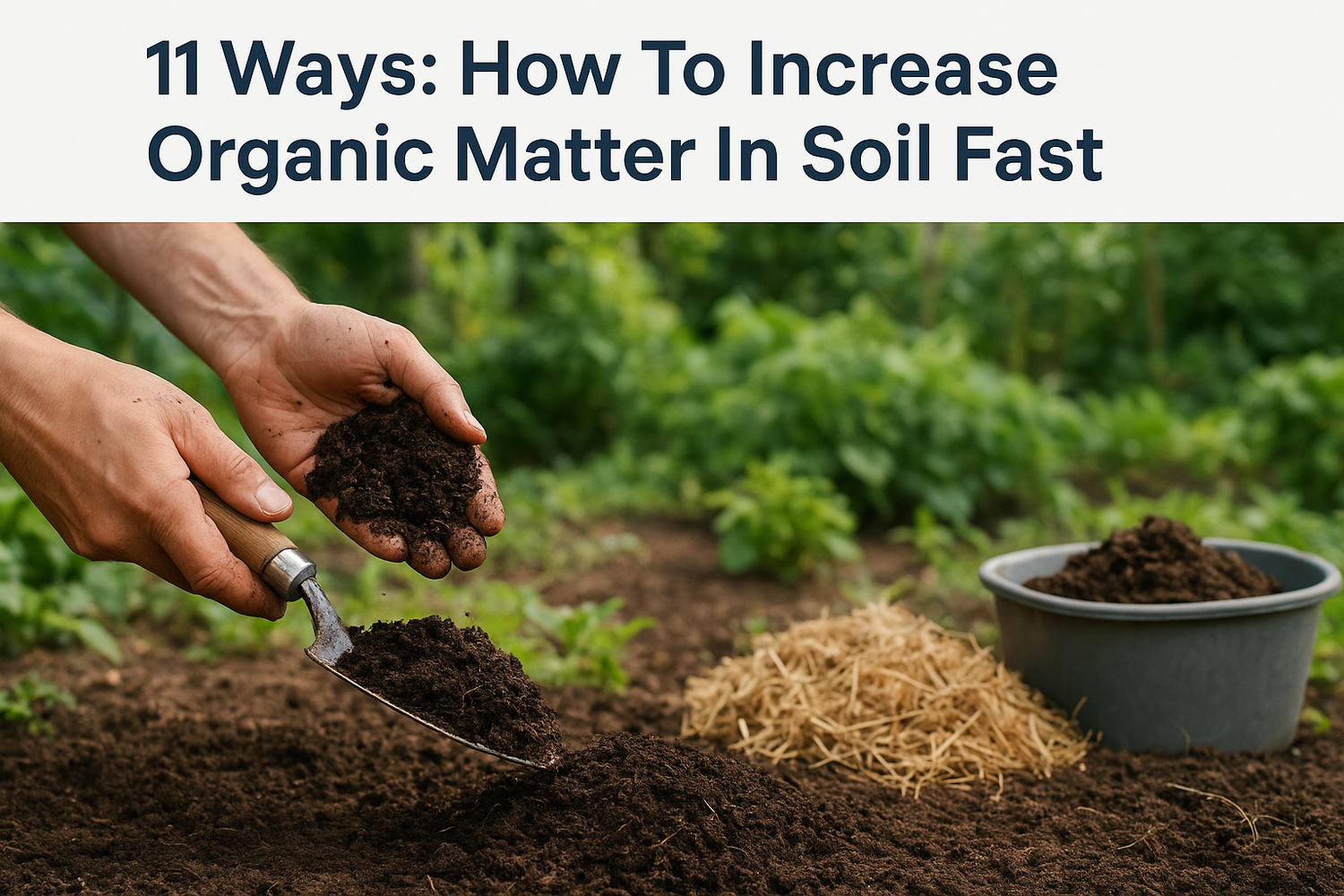
Every thriving garden starts beneath the surface. Whether you're preparing beds for tropical planting or reviving a tired lawn, understanding how to increase organic matter in soil determines whether your plants merely survive or actually flourish. Soil organic matter drives nutrient availability, water retention, and root development, it's the foundation that separates struggling landscapes from vibrant ones.
In Malaysia's hot, humid climate, organic matter breaks down faster than in temperate regions. That means soil depletion can happen quickly, especially in compacted urban plots or newly developed properties. Without deliberate effort to replenish what's lost, even well-designed gardens will underperform. At Konzept Garden, we see this firsthand during site assessments, poor soil health is one of the most common obstacles to achieving the lush, sustainable outdoor spaces our clients envision.
The good news? Building up your soil doesn't require a degree in agronomy. This guide covers 11 proven methods to boost organic matter in your soil, from quick amendments you can apply this weekend to longer-term strategies that compound over time. Whether you're a homeowner prepping a new garden bed or managing a larger commercial landscape, these approaches will help you create the growing conditions your plants actually need.
1. Get a tailored soil plan from a pro
Before you buy a single bag of compost or amendment, knowing what your soil actually lacks will save you time and money. A professional soil assessment gives you a clear starting point instead of guessing, which is especially important when you're trying to understand how to increase organic matter in soil effectively. Skipping this step often leads to applying the wrong products in the wrong amounts, and your plants will tell you about it clearly within a season.
What you can improve fast and what takes time
Not every soil problem responds to the same timeline. Quick wins include adjusting pH with lime or sulfur, adding compost to the top layer, and improving surface drainage, all of which show visible results within one to three months. Long-term changes, like rebuilding soil structure in heavily compacted clay or restoring microbial diversity after years of chemical use, can take one to three years of consistent effort.
Knowing which problems are short-term and which are long-term helps you set realistic expectations and avoid abandoning a plan that's actually working.
What a tailored plan should include for your site
A proper soil plan goes beyond a basic pH test. Your plan should cover organic matter percentage, nutrient levels (nitrogen, phosphorus, potassium), drainage capacity, and compaction depth. It should also factor in what you're growing, whether that's a lawn, vegetable beds, tropical shrubs, or a combination, because each has different soil demands.
Your plan should map out which amendments to apply, when to apply them, and in what quantities. Without that specificity, you're essentially working blind, and the wrong application rates can do more harm than no treatment at all.
How to approach soil fixes in Malaysia's climate
Malaysia's year-round heat and heavy rainfall accelerate organic matter breakdown significantly. Organic inputs decompose faster here than in temperate climates, which means you need to replenish more often and in larger amounts. Soil assessments in Malaysia should account for high leaching rates, where heavy rains strip soluble nutrients out of the root zone before plants can absorb them.
A professional familiar with local conditions will recommend amendments that are stable enough to persist through the wet season and appropriate for the soil types common in Malaysian residential and commercial plots, including laterite-heavy urban soils.
What to ask before you hire help
Before committing to any service, ask the assessor what laboratory tests they run and what the results will specifically tell you. Find out whether the plan includes implementation guidance or just a written analysis with no follow-through.
You should also confirm how long the assessor has worked with local soil conditions, since profiles vary significantly between coastal, urban, and hillside plots across Malaysia. Ask whether follow-up consultations are included if your soil doesn't respond as expected after the first amendments go in.
Budget range and typical scope of work
A professional soil assessment in Malaysia typically includes a site visit, sample collection, laboratory testing, and a written report with specific product and timing recommendations. Basic assessments start at roughly RM300 to RM600, while comprehensive plans with ongoing implementation support can reach RM1,500 or more depending on plot size and complexity. Larger commercial landscapes require more sampling points and a broader scope, so costs scale accordingly. Treating this as an upfront investment rather than an added expense will pay off consistently over the life of your garden.
2. Topdress with finished compost
Topdressing is one of the most direct ways to increase organic matter in soil without disturbing what's already growing. You spread finished compost directly over the soil surface and let water and microbial activity carry it downward. No digging is required, and plant health improvements often appear within a few weeks of a consistent application routine.
Why compost moves the needle fastest in gardens
Compost works quickly because it delivers organic matter and active microbial life in a single application. Unlike raw organic inputs that take months to break down, finished compost is already partially decomposed, so soil organisms can incorporate it fast.
Nutrient cycling accelerates within weeks of application, which benefits every plant in the bed almost immediately, making compost the most reliable starting point for soil improvement.
What "finished compost" looks and smells like
Finished compost looks like dark, crumbly material and smells earthy, similar to a forest floor after rain. If it smells sour or like ammonia, it hasn't finished decomposing and isn't ready to use.
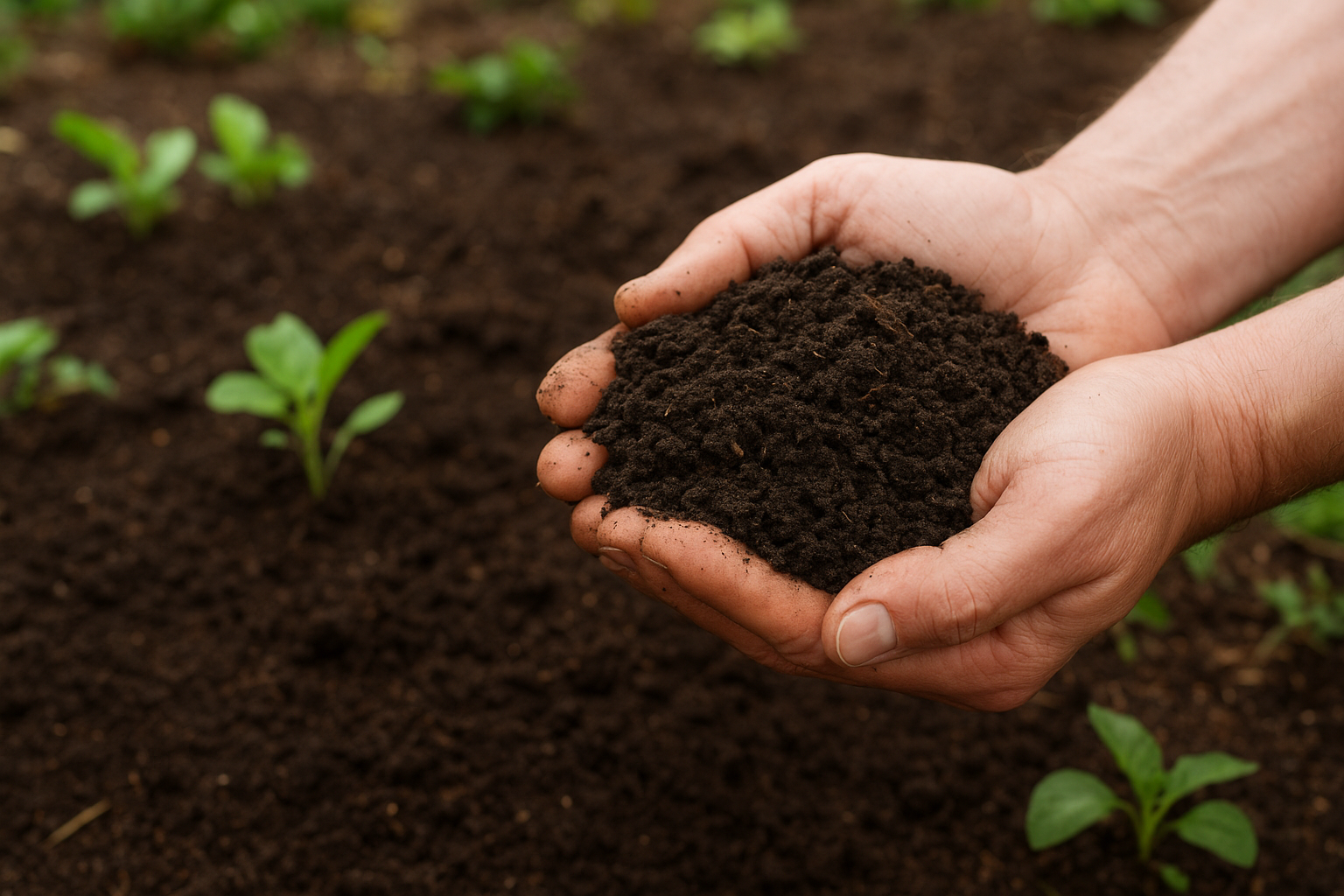
Partially finished compost can temporarily lock up nitrogen and may introduce pathogens, so always check maturity before applying it around plants.
Confirm compost is fully finished before applying it to established plants or edible gardens.
How to apply compost without harming plants
Spread compost in an even layer and keep it 2 to 5 centimeters away from plant stems and crowns to prevent rot. Water lightly after application to start incorporation.
Soil organisms will pull the compost downward naturally, so there's no need to work it in by hand or with tools after spreading.
How much compost to use for lawns vs beds
For garden beds, apply 3 to 5 centimeters once or twice per year. For lawns, use a thinner layer of 1 to 2 centimeters so grass blades aren't smothered.
In Malaysia's climate, organic matter breaks down faster than in cooler regions, so staying at the higher end of these ranges gives your soil a consistent and adequate supply.
Common mistakes that waste compost or cause issues
Applying compost too thickly around stems causes crown rot, particularly in humid conditions. Using unfinished compost attracts fungus gnats and creates nitrogen drawdown in the root zone.
Skipping follow-up watering after application slows incorporation and leaves the compost layer sitting dry and ineffective at the surface instead of feeding your soil.
3. Mulch thickly with wood chips or bark
Mulching is one of the most passive yet effective methods for building soil organic matter over time. You spread material over the soil surface and let biology do the work, no turning or tilling required. As wood chips and bark slowly break down, they feed soil fungi, bacteria, and invertebrates that convert raw material into stable organic matter your plants can benefit from.
How mulch builds organic matter without you digging
Mulch feeds the soil from the top down. Fungal networks thread through the decomposing material and pull carbon deeper into the soil profile over months and years. This process is especially relevant when you're thinking about how to increase organic matter in soil without disturbing existing plant roots or soil structure.
Undisturbed mulch layers mimic natural forest floor conditions, which consistently produce some of the most biologically rich soils on Earth.
How thick to mulch and where to keep it off-limits
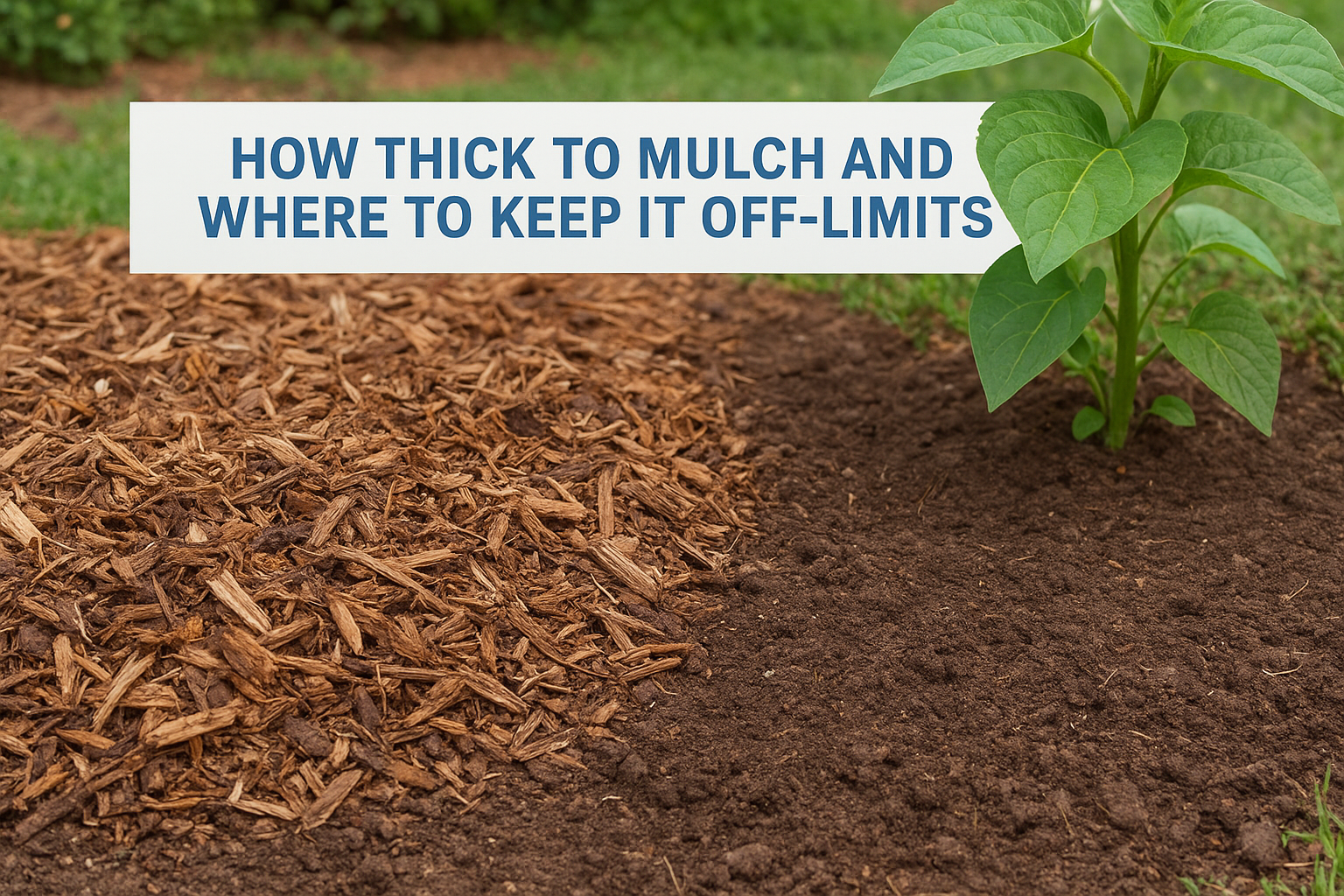
Apply wood chips or bark 7 to 10 centimeters thick across garden beds for meaningful results. Keep mulch at least 5 to 10 centimeters away from plant stems and tree trunks to prevent rot and fungal problems at the base.
Best mulch types for tropical rain and heat
Coarser wood chips hold up better than fine bark in Malaysia's heavy rainfall because they resist compaction and matting. Larger particle sizes also create more air pockets, which support the aerobic decomposition that builds stable organic matter rather than creating anaerobic sludge.
How mulch changes watering and fertilizer needs
A proper mulch layer reduces evaporation significantly, which cuts watering frequency in dry periods. Decomposing mulch also releases nutrients gradually, so you may find your fertilizer requirements drop after the first full year of consistent mulching.
Mulch problems and how to prevent them
Fine-textured mulch can form a hydrophobic crust that sheds water rather than absorbing it. Refresh and fluff the surface layer every few months to prevent this. Also avoid mulching with diseased plant material, as pathogens can persist and reinfect your garden through decomposing wood.
4. Add composted manure the safe way
Composted manure is one of the richest organic amendments you can add to a garden, and applying it correctly ties directly into how to increase organic matter in soil without risking plant or human health. Fresh manure, however, carries real risks that composted versions eliminate when handled with basic care.
When manure helps and when it backfires
Composted manure improves soil structure, microbial activity, and nutrient levels quickly, making it well suited for depleted garden beds and tired lawns. It backfires when you use raw or partially finished material, which can burn roots with excess nitrogen, introduce harmful pathogens, and create persistent odor problems that attract insects and vermin.
How to choose between cow, chicken, and pellets
Chicken manure is high in nitrogen but also higher in salts, so apply it in smaller amounts and always confirm it is fully composted before use. Cow manure is milder and bulkier, which makes it better for heavier applications across large planting areas. Pelleted manure suits home gardeners best because it is pre-composted, dry, and simple to measure without any special handling equipment.
How to apply manure without burning plants
Spread composted manure 3 to 5 centimeters deep across your beds and keep it well clear of plant stems and root crowns. Water the area thoroughly after application to move nutrients into the soil profile and prevent concentrated nitrogen from sitting at the surface and scorching tender roots or foliage.
Never apply fresh manure directly around established plants, as the ammonia content alone can cause significant root damage within days of contact.
Food safety and pathogen basics for edible gardens
Only use fully composted manure in vegetable and herb gardens. Composting at sustained temperatures above 55°C for several weeks destroys most harmful bacteria, including E. coli and Salmonella, which raw manure commonly carries in significant quantities.
Odor, flies, and runoff prevention tips
Cover fresh applications with a thin layer of wood chip mulch to suppress odor and reduce fly activity around the treated area. In Malaysia's heavy rain season, apply manure in smaller, more frequent doses to limit nutrient runoff that heavy downpours can strip from the root zone before plants absorb it.
5. Grow cover crops in empty beds
Empty garden beds lose organic matter fast, especially in Malaysia's climate where rain and heat break down soil carbon continuously. Cover crops are plants you grow specifically to improve soil rather than harvest, and they give you one of the most cost-effective ways to understand how to increase organic matter in soil through living biology rather than purchased inputs.
How cover crops add biomass above and below ground
Cover crops build organic matter through two separate channels simultaneously. Above ground, their leaves and stems decompose after you cut them down, adding carbon-rich material directly to the soil surface. Below ground, their roots die back seasonally and leave behind organic channels that improve both soil structure and microbial diversity over time.
Root biomass often contributes more long-term organic matter than above-ground material because it decomposes in direct contact with soil organisms.
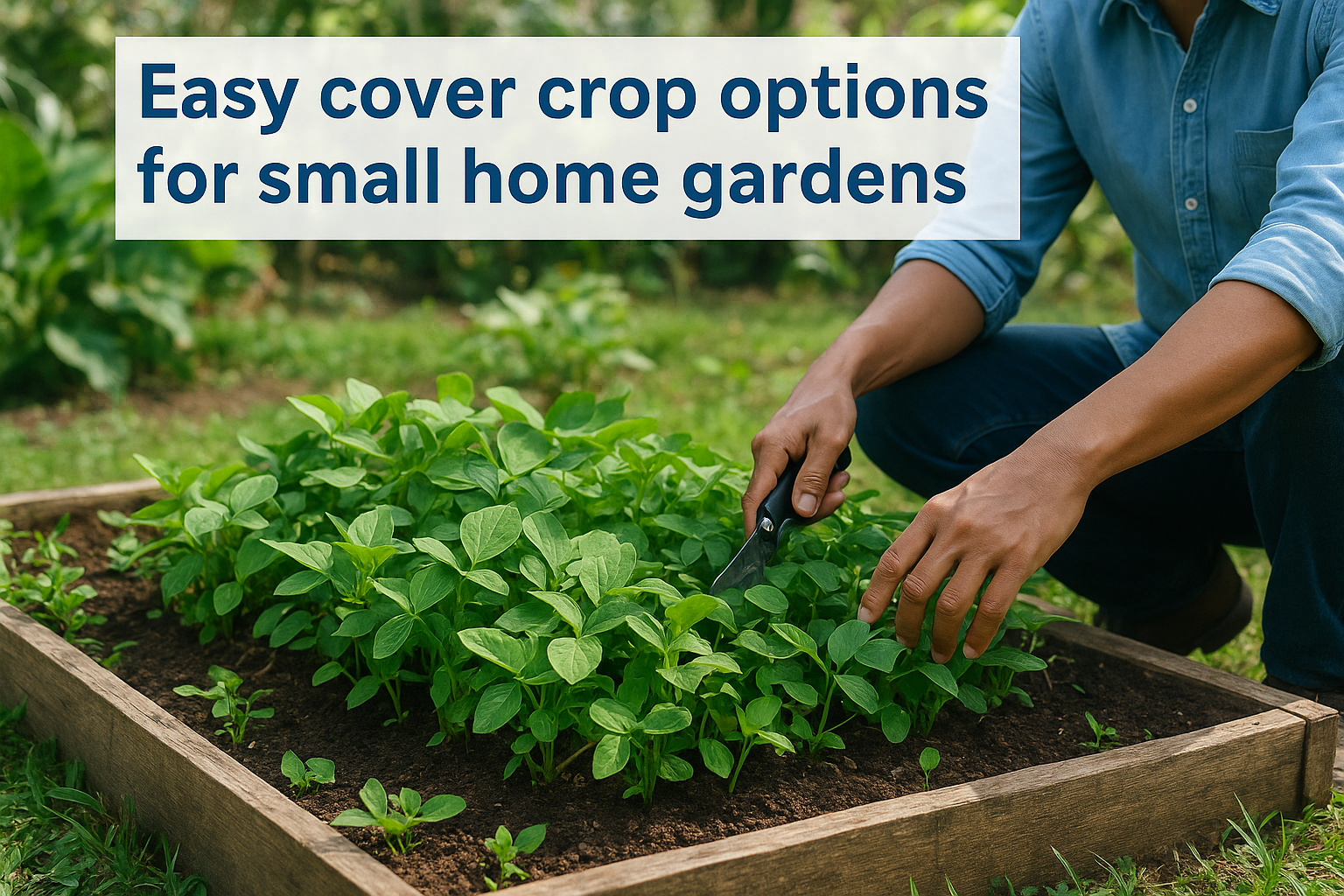
Easy cover crop options for small home gardens
For home gardens in Malaysia, legumes like cowpea (Vigna unguiculata) and mung bean grow quickly, fix atmospheric nitrogen, and produce plenty of biomass within six to eight weeks. Sunn hemp is another strong option for tropical conditions because it grows tall fast and produces deep roots that break through compacted soil layers.
How to plant, manage, and terminate cover crops
Broadcast seeds evenly across your empty bed, rake lightly to cover them, and water well. Cut cover crops down before they set seed to prevent uncontrolled spreading. Once cut, leave the material on the surface or lightly incorporate it into the top few centimeters of soil.
How to avoid cover crops becoming weeds
Timing termination correctly is the key step most gardeners skip. Cut plants at early flowering stage, before seed formation, to stop them from self-seeding across your garden. Mowing or hand-cutting works well in small spaces without requiring any chemical intervention.
What to do if you only have pots or planters
You can still use cover crops in large planters or raised beds by sowing a fast-growing legume, letting it grow for four to six weeks, then cutting and mixing the material into the top layer of potting mix. This approach refreshes container soil between plantings and reduces your dependence on purchased fertilizers.
6. Use green manure from fast-growing plants
Green manure is a technique where you grow plants specifically to cut them down and return them directly to the soil while still fresh. Unlike buying amendments and hauling them in, green manure is produced on-site, which reduces cost and gives you a highly localized way to understand how to increase organic matter in soil using what's already growing around you.
How green manure differs from compost and mulch
Green manure goes into the soil fresh and undecomposed, which distinguishes it from both compost and mulch. Compost is already broken down before you apply it, and mulch sits on the surface. Green manure decomposes in place, releasing nutrients and carbon directly into the root zone where soil organisms can access them immediately.
Best green manure choices for quick bulk and roots
For tropical gardens in Malaysia, legumes like cowpea, winged bean, and velvet bean work exceptionally well because they grow fast, fix nitrogen, and produce dense root systems within weeks. Tithonia (Mexican sunflower) is another strong option since it builds bulk quickly and its leaves are especially high in phosphorus and potassium.
Fast-growing green manures in tropical climates can produce usable biomass within four to six weeks of sowing.
How to chop and drop without inviting pests
Cut green manure plants at soil level using a sharp hoe or pruning shears, then lay the material flat across the bed. Chop stems into smaller pieces so they decompose faster and don't create thick mats that trap moisture and attract slugs or fungus gnats underneath.
How to time green manure between plantings
Plant green manure immediately after harvesting a crop to prevent beds from sitting bare. Give the cut material one to two weeks to wilt and begin breaking down before you transplant the next crop into the same bed.
When to avoid burying green material
Burying large amounts of fresh green material in one go depletes soil nitrogen temporarily as bacteria consume it during decomposition. If you have a heavy flush of material, layer it thinly or compost the excess separately rather than digging it all in at once.
7. Keep living roots in the soil year-round
Bare soil loses organic matter fast. Every time you pull out a crop and leave the ground empty, soil microbes run out of food and their populations crash, taking carbon-building activity with them. Keeping living roots in the ground at all times is one of the most consistent answers to how to increase organic matter in soil without purchasing additional inputs.
Why roots build organic matter faster than leaves
Roots deposit carbon directly into the soil through a process called rhizodeposition, where plants release sugars, proteins, and organic acids from their root tips as they grow. This feeds soil microbes continuously and builds stable organic matter far more efficiently than surface decomposition alone.
Surface residues have to travel downward before microbes can fully use them. Root carbon skips that process entirely and enters the soil food web at depth, which is why living roots consistently outperform leaf litter for long-term soil health.
How to plan succession planting in the tropics
Succession planting means you have the next crop ready to transplant the moment you remove the previous one, leaving no gap where soil sits bare. In Malaysia's year-round growing climate, you can run rotations continuously across wet and dry seasons without any forced rest period.
Mapping your planting calendar three months ahead prevents the bare-soil gaps that undo months of soil-building work.
Living mulches and groundcovers that work
Low-growing groundcovers like creeping legumes or sweet potato vine fill space between taller plants and keep roots active without competing aggressively with your main crops. These plants also suppress weeds, which means less disturbance from hand-pulling that would otherwise damage your improving soil structure.
What to do during rainy season and dry season
During the wet season, fast-growing legume groundcovers handle waterlogged periods better than exposed soil. In drier months, drought-tolerant species like Indigofera maintain living root systems with minimal irrigation demands.
Signs you have too much competition for nutrients
Watch for yellowing leaves on your main crops or noticeably slower growth, which often signals your groundcover is drawing nutrients faster than the soil replenishes them. Reduce cover plant density or apply a targeted compost top-dress to restore balance quickly.
8. Plant deep-rooted perennials and shrubs
Perennials and shrubs stay in the ground year after year, continuously feeding the soil through their expanding root systems without requiring replanting. This makes them one of the most labor-efficient and cost-effective approaches to how to increase organic matter in soil over a multi-year timeframe, particularly in established beds where repeated digging would undo prior improvements.
How perennials build soil with less effort
Perennial root systems grow deeper and wider each season, depositing carbon throughout the soil profile as they expand and periodically shed fine root material. Established perennials require far less intervention than annual crops while delivering consistent organic matter inputs at depths that surface amendments rarely reach on their own.
Which root types help compaction and structure most
Taprooted perennials like vetiver grass and lemongrass penetrate compacted layers and create permanent drainage channels long after the roots themselves decompose. Fibrous-rooted shrubs cover more horizontal ground and feed the upper 20 to 40 centimeters where most soil organisms concentrate their activity.
Combining both root types in the same bed addresses compaction at depth while simultaneously feeding the active upper soil layer.
How to establish perennials so they survive heat
Water new perennials deeply every two to three days for the first four to six weeks, then reduce frequency as roots establish. Apply a 5-centimeter compost layer around each plant's base to retain moisture and buffer soil temperature, which reduces transplant stress significantly during Malaysia's hotter months.
How to prune and recycle biomass on-site
Cut back perennial growth directly onto the soil surface rather than bagging and removing it. Chopped stems and leaves decompose quickly in tropical humidity and return carbon and nutrients to the same root zone where the plant grows, keeping the organic matter cycle closed and productive with minimal effort.
Where perennials fit in small yards and courtyards
Even a compact courtyard has room for two or three well-placed shrubs along a fence or wall. Vertically oriented perennials like pandan, butterfly ginger, or heliconia give you meaningful soil improvement in tight spaces without spreading wide and overwhelming a small planting area.
9. Stop tilling and minimize soil disturbance
Every time you dig or turn your soil, you expose stored organic matter to oxygen and accelerate its breakdown. What took months to build disappears within days of a deep tillage pass. Reducing soil disturbance is one of the most underused answers to how to increase organic matter in soil, and it costs you nothing to implement starting today.
Why turning soil burns through organic matter
Tilling physically breaks apart fungal networks and soil aggregates that hold organic matter in a stable form. Once exposed, this carbon oxidizes rapidly and releases into the air as CO2 rather than feeding your plants. In Malaysia's heat, that breakdown happens even faster than in cooler climates, making every unnecessary dig a significant setback to your soil-building progress.
Fungal networks can take years to fully develop, but a single tilling pass destroys them within hours.
No-dig bed setup that still drains in heavy rain
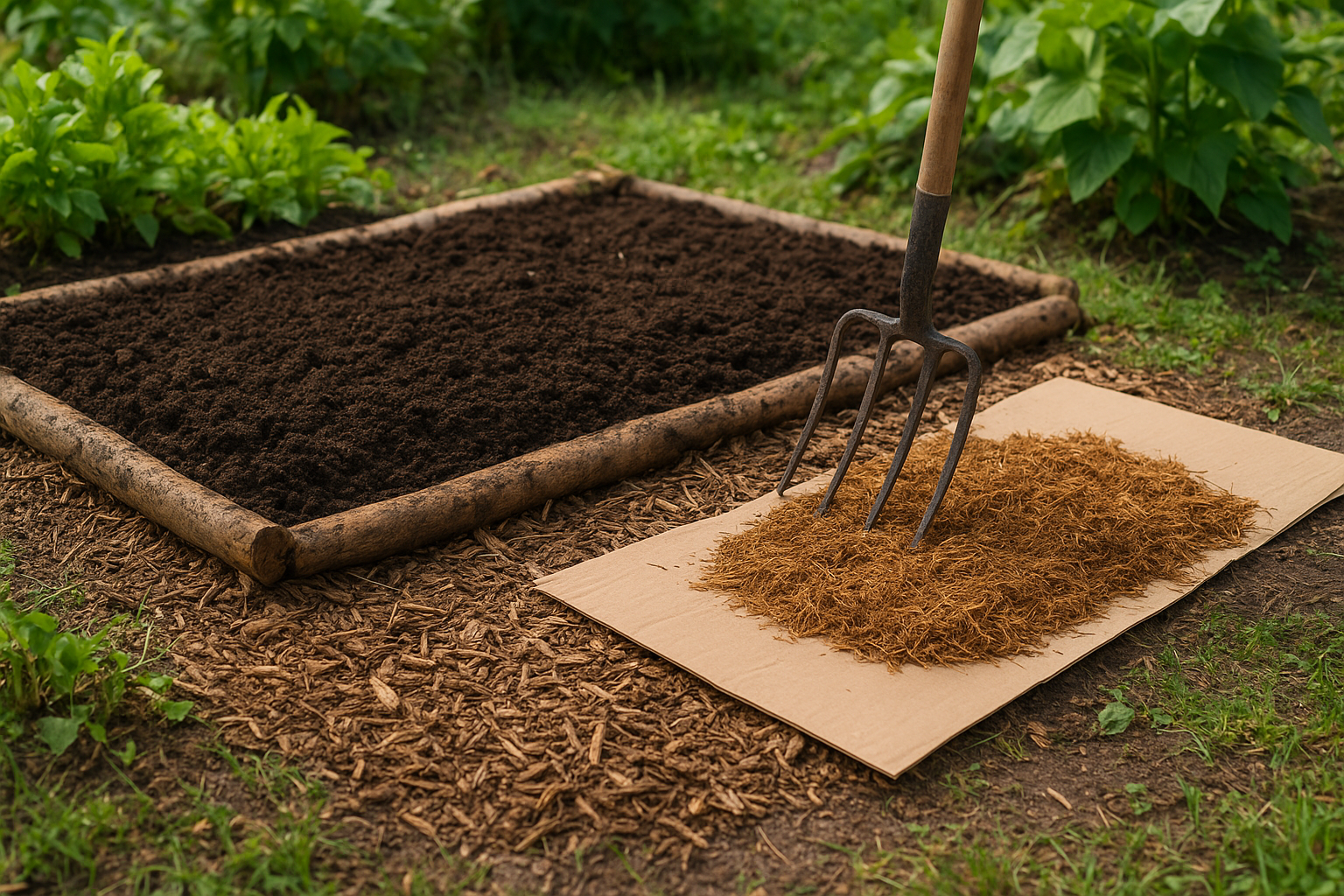
To set up a no-dig bed, layer 5 centimeters of compost directly on top of your existing soil and plant straight into it. In areas with heavy clay or poor drainage, add a base layer of coarse wood chips beneath the compost to create macropores that guide excess rainwater downward during Malaysia's wet season.
How to handle weeds without frequent digging
Instead of hoeing and disturbing the soil, smother weeds with cardboard topped by a thick mulch layer. Pull any persistent weeds by hand, gripping as low as possible to remove the root without opening a large hole in the soil surface. Consistent mulching prevents most weed seeds from germinating in the first place, which gradually reduces the problem over each season.
How to incorporate amendments without rototilling
Spread compost and manure on the surface and let soil organisms carry amendments downward through natural activity. Worms and beetles pull material into their tunnels without any mechanical assistance from you.
Transition tips if your soil feels hard and sticky
Use a broadfork rather than a spade to open compaction without inverting soil layers. Push the tines straight down and gently rock the handle back to create aeration channels. After two to three seasons of no-dig management, most compacted Malaysian soils respond noticeably with improved texture and drainage.
10. Make leaf mold and use it as a soil booster
Leaf mold is simply decomposed leaves, and it's one of the cheapest and most accessible soil amendments you can make at home. If your garden produces fallen leaves regularly, you already have the raw material to make a useful booster for soil structure and moisture retention without spending anything on purchased products.
Why leaf mold helps structure and moisture fast
This amendment improves soil primarily through its physical structure rather than its nutrient content. When you work it into your beds, it acts like a sponge, holding water between soil particles and reducing how often you need to irrigate. This physical improvement is one of the faster results you'll get when learning how to increase organic matter in soil through low-cost methods.
How to make leaf mold in a small space
Collect fallen leaves into a simple wire cage or a black plastic bag with a few air holes punched in the sides. Keep the leaves moist but not waterlogged, and the material will break down into dark, crumbly leaf mold within six to twelve months depending on humidity levels and leaf type.
Shredding leaves before piling them significantly speeds up decomposition and prevents compaction inside the pile.
How to use leaf mold in beds, lawns, and pots
Mix leaf mold into the top 10 centimeters of garden beds before planting, or topdress established beds with a 3-centimeter layer. For lawns, apply a thin 1-centimeter layer and rake it in so grass blades remain visible. In pots, blend it into your potting mix at roughly 20 to 30 percent by volume to improve drainage and water retention together.
What to do if leaves mat, smell, or attract pests
Matting happens when large flat leaves like banana or heliconia pile up without air circulation. Shred or tear them first before adding to your pile. A sour smell indicates the pile is waterlogged and anaerobic, so turn it and add dry material to restore airflow and return decomposition to a healthy aerobic process.
How leaf mold compares to compost for results
Leaf mold contains far fewer nutrients than finished compost, so treat it as a soil conditioner rather than a fertilizer. Compost delivers both nutrients and organic matter, while leaf mold specializes in improving texture and water-holding capacity, which makes the two products best used together rather than as direct replacements for each other.
11. Add biochar that is pre-charged
Biochar is charcoal produced by burning organic material in low-oxygen conditions, and it adds a highly stable form of carbon to your soil that resists breakdown for decades or centuries. Unlike most organic amendments that decompose and need regular replenishment, biochar persists in the soil and acts as permanent infrastructure that supports everything else you apply. Used correctly, it's a practical long-term tool for anyone serious about how to increase organic matter in soil with lasting results.
How biochar supports long-term organic matter
Biochar works by creating a porous physical habitat inside your soil where microbes, nutrients, and water concentrate. These pores attract and house the microbial communities that drive organic matter formation, which means biochar amplifies the effectiveness of every other amendment you apply alongside it. Stable carbon from biochar doesn't oxidize the way compost carbon does, so it contributes to long-term soil organic matter totals that hold steady even through Malaysia's heat and heavy rain.
Why you must charge biochar before applying
Raw biochar applied straight to soil draws nutrients out of your root zone temporarily because its empty pores absorb available nutrients before microbes can fill the space. Pre-charging means soaking biochar in compost tea, diluted liquid fertilizer, or finished compost for several days before you spread it, so the pores arrive already loaded with biology and nutrients rather than acting as a deficit.
Applying raw biochar without charging first can set your soil health back by several weeks before conditions recover.
How to apply biochar in beds, lawns, and pots
Mix pre-charged biochar into the top 10 to 15 centimeters of bed soil at roughly 5 to 10 percent by volume. For pots, blend it into your potting mix at around 10 percent by volume alongside compost to improve both drainage and moisture retention.
When biochar does not help or can hurt
Biochar raises soil pH slightly, so avoid it around acid-loving plants. Applying too much in a single season can also disrupt existing nutrient balances, particularly in soils that are already alkaline or heavily amended.
What results to expect in the first few months
Expect gradual rather than dramatic improvements in the first one to three months. Water retention often improves noticeably first, followed by steadier plant growth as microbial populations build inside the biochar pores. Visible soil structure changes typically take six to twelve months of consistent observation to confirm.
Your next steps
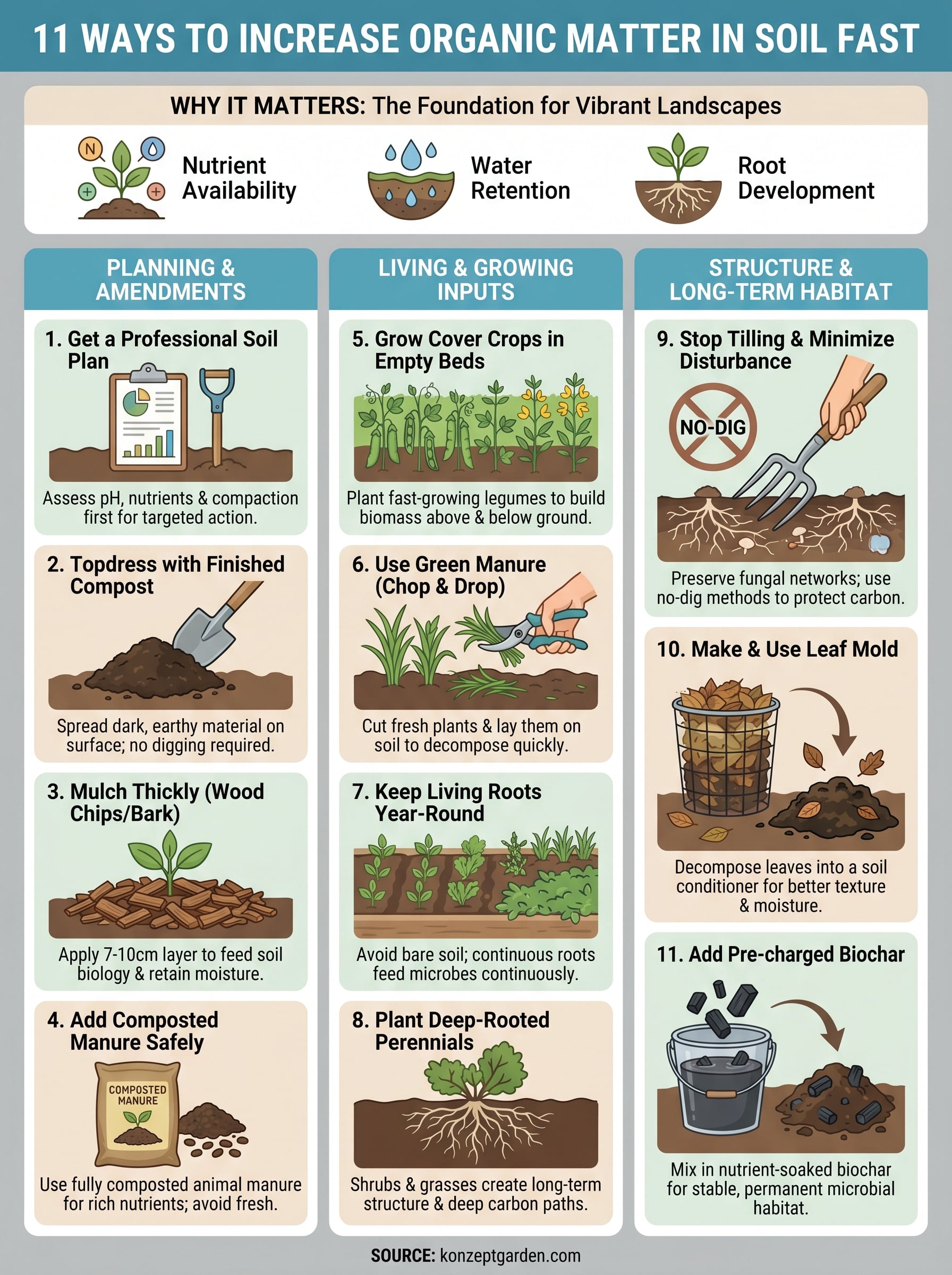
You now have 11 concrete methods to work with, from quick compost topdressing to long-term biochar applications. The most important move is to start with one or two methods rather than trying everything at once. Pick the approach that fits your current budget and space, apply it consistently for a full season, then add the next layer. Soil building rewards patience and consistency more than any single product or technique.
Understanding how to increase organic matter in soil is only part of the work. The other part is designing an outdoor space where healthy soil actually has room to do its job, supporting plants, managing water, and creating a landscape that holds up through Malaysia's wet and dry seasons year after year. If you want expert guidance on building that foundation the right way, talk to our team at Konzept Garden and let's plan your outdoor space together.