
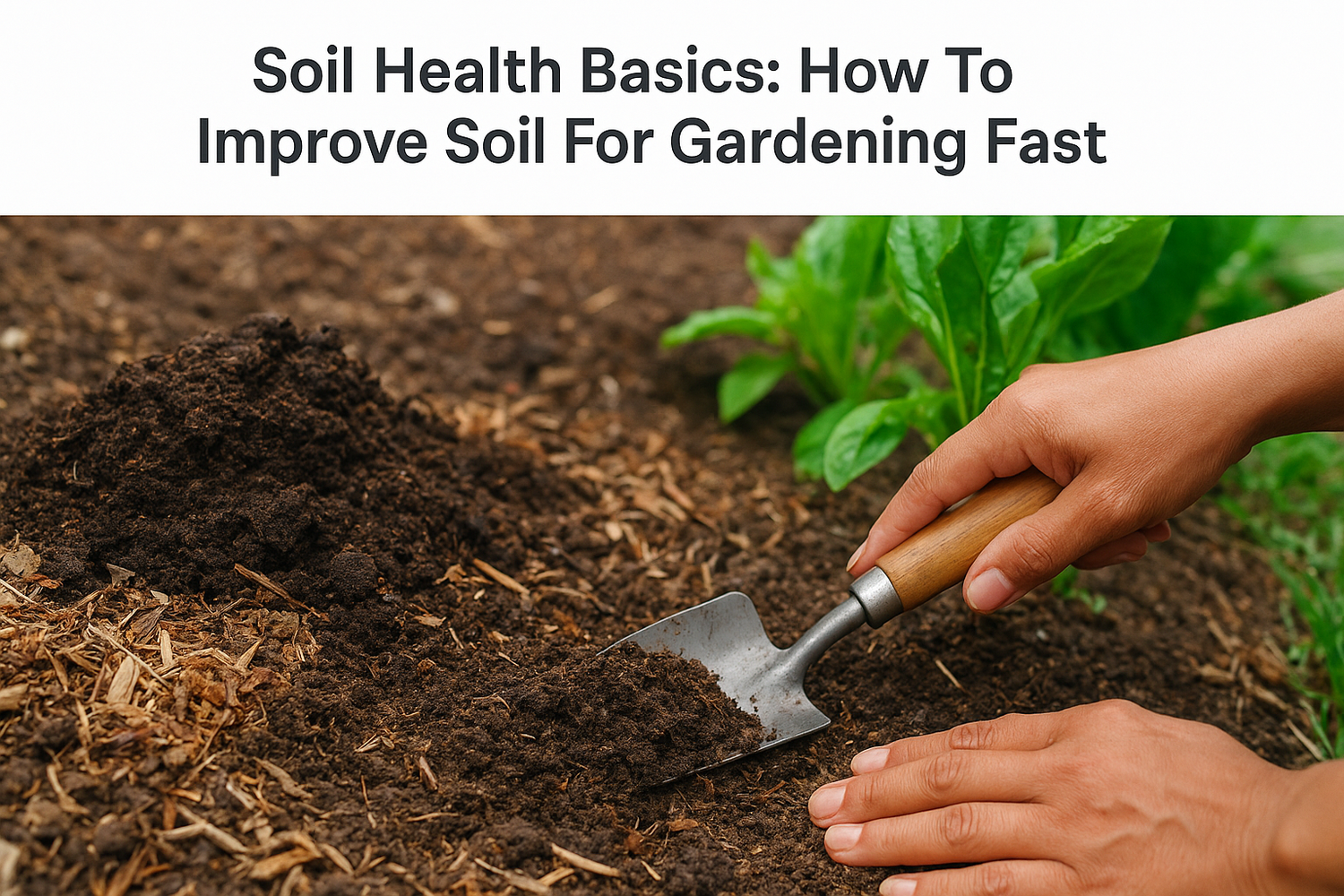
Every thriving garden starts below the surface. If you've been struggling with plants that won't grow, yellowing leaves, or waterlogged beds, the problem almost always traces back to your soil. Understanding how to improve soil for gardening isn't complicated, but it does require knowing what your soil actually needs before you start adding things to it. Poor soil is the single biggest reason gardens underperform in Malaysia's tropical climate.
At Konzept Garden, we've designed and built gardens across Malaysia for years, and soil preparation is where every successful project begins. Whether we're implementing a full landscape design or advising a homeowner on their backyard planting beds, healthy soil is non-negotiable. It's the foundation that determines whether your plants merely survive or genuinely flourish.
This guide breaks down the practical steps to assess, amend, and maintain your garden soil, from testing pH and drainage to building organic matter and choosing the right compost. You don't need a science degree. You just need a clear plan, the right materials, and a bit of consistency. Let's get into it.
What good garden soil looks like in Malaysia
Good garden soil isn't just dirt. It's a living system that holds water without becoming waterlogged, drains freely without drying out in hours, and feeds your plants through a constant cycle of organic matter decomposition. In Malaysia, where temperatures stay above 25°C most of the year and rainfall can exceed 2,500mm annually, that balance is harder to achieve than in temperate climates. Before you learn how to improve soil for gardening, you need to know what you're actually aiming for.
The tropical soil challenge
Most garden soil in Malaysia falls into one of two categories: heavy clay or sandy laterite. Clay soil compacts easily under heavy rain, cutting off oxygen to roots and creating drainage problems that slowly suffocate plants over weeks. Sandy laterite soil, common in plots with recent clearing or construction, drains so fast that nutrients and moisture flush through the root zone before plants can absorb them. Both types are also naturally acidic, often sitting between pH 4.5 and 5.5, which locks up nutrients even when you've applied fertilizer regularly.
Tropical soils lose organic matter up to three times faster than temperate soils because heat and moisture accelerate microbial activity, which means you need to replenish organic matter far more frequently than gardeners in cooler climates do.
High rainfall also drives nutrient leaching, where water carries nitrogen, potassium, and trace minerals deep below the root zone. This is why plants in Malaysian gardens show deficiency symptoms even in well-fertilized beds. Recognizing this cycle is essential before you start amending anything.
What healthy soil feels like and looks like
You don't need lab equipment to identify good soil. Healthy garden soil in a Malaysian climate crumbles in your hand rather than forming a hard ball or falling apart like dry sand. It carries a dark, earthy color from organic matter, a mild earthy smell from active microbial life, and visible signs of biological activity like earthworms or fine white fungal threads near plant roots.
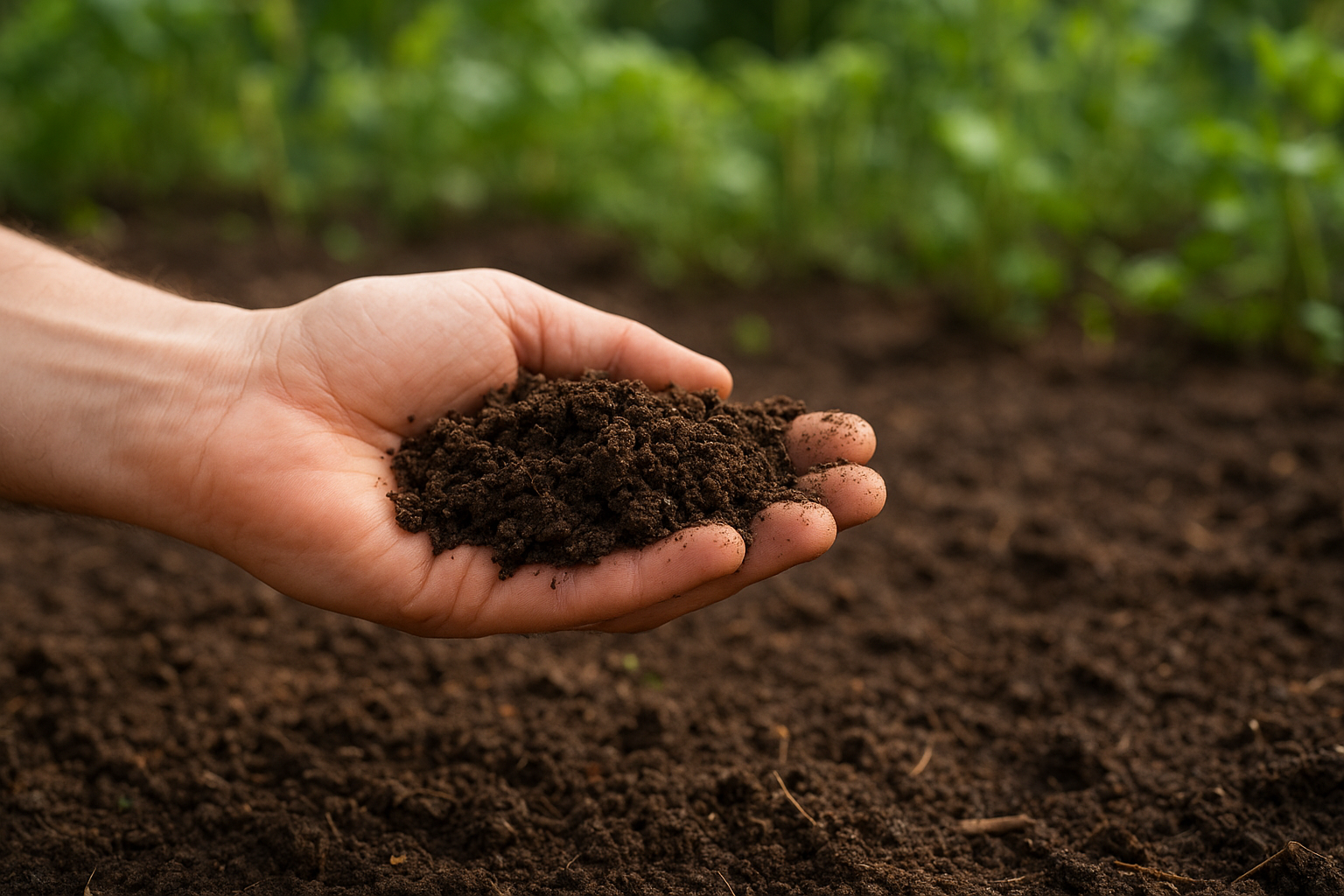
Here's a quick reference for assessing your soil before you start making changes:
| Indicator | Healthy soil | Problem soil |
|---|---|---|
| Texture | Crumbles easily, holds shape lightly | Hard clumps or completely falls apart |
| Color | Dark brown to near-black | Pale, red-orange, or grey |
| Smell | Fresh, earthy | Sour, sulphurous, or odorless |
| Drainage | Absorbs water within 1 to 2 seconds | Pools on surface or vanishes instantly |
| Biology | Earthworms visible, soft white roots | No worms, roots brown or stunted |
Earthworms are one of the most reliable indicators of soil health you can use without any testing tools. If you dig 30cm down and find fewer than five worms in a 30cm square patch of soil, your soil biology is under stress. That's a clear signal to build organic matter and improve structure before you put anything new in the ground.
Step 1. Check drainage, texture, and do a soil test
Before you add anything to your garden beds, you need to understand what you're working with. Guessing at soil problems wastes money and produces slow results. Running three simple checks - a drainage test, a texture test, and a basic pH test - gives you a clear picture of what your soil actually needs before you start spending on amendments. This is where knowing how to improve soil for gardening becomes genuinely practical.
Check drainage before anything else
Dig a hole about 30cm deep and 30cm wide, fill it completely with water, and watch what happens over the next 60 minutes. If the water drains within 30 to 60 minutes, your drainage is workable. If it sits for two hours or more, you're dealing with compaction or a heavy clay base that needs to be addressed first.
In Malaysian residential plots, especially those with recent construction, the subsoil often gets compacted by machinery. Breaking up that compacted layer with a fork before adding any organic matter will dramatically improve how well your amendments actually work.
Test texture with your hands
Take a small handful of moist soil and squeeze it firmly. Sandy or laterite soil crumbles the moment you open your fist. Clay soil holds a tight, slick shape and feels sticky between your fingers. The target is loamy soil, which holds a loose shape that breaks apart with light pressure.
Use this to quickly classify what you have:
- Sandy or laterite: Water and nutrients drain too fast, needs organic matter to retain moisture
- Heavy clay: Compacts and waterloggs under rain, needs organic matter and coarse material to open structure
- Loamy: Balanced, maintain it with regular compost top-dressing
Test pH before adding fertilizer
Soil pH directly controls how well plants absorb nutrients. Most Malaysian soils test between pH 4.5 and 6.0, which locks up phosphorus and key micronutrients even when you've fertilized consistently. Pick up a simple pH test kit or digital probe meter from any garden supply shop and test two or three spots across your bed.
Applying fertilizer to strongly acidic soil is largely ineffective because plant roots cannot take up most nutrients below pH 5.5, regardless of how much you add.
| pH Range | Soil Condition | Recommended Action |
|---|---|---|
| Below 5.0 | Strongly acidic | Apply agricultural lime at 100 to 200g per sq meter |
| 5.0 to 6.0 | Mildly acidic | Add compost to buffer and raise slowly |
| 6.0 to 7.0 | Ideal for most plants | Maintain with regular organic matter |
| Above 7.0 | Alkaline | Apply elemental sulfur or acidic compost |
Step 2. Improve soil structure fast with organic matter
Once you know what your soil is working with, organic matter is the fastest and most reliable fix for both clay and sandy soil at the same time. Adding compost, aged manure, or coconut coir works by binding sandy particles together to retain moisture longer and by opening up clay particles so water and air can move through. This is the practical core of how to improve soil for gardening in a tropical climate where both problems appear regularly.
Choose the right organic amendment
Not all organic materials work the same way, and choosing the wrong one for your soil type wastes time and money. In Malaysia, the most accessible and effective options are finished compost, rice hull (sekam padi), and coconut coir. Each one does a slightly different job depending on what your soil is missing.
Avoid adding fresh organic matter like unaged kitchen scraps or green plant trimmings directly to planting beds because the decomposition process temporarily draws nitrogen away from your plants, which worsens any existing deficiency symptoms.
Use this guide to match amendments to your soil type:
| Amendment | Best for | Application rate per sq meter |
|---|---|---|
| Finished compost | All soil types | 5 to 10cm layer, worked in to 20cm |
| Coconut coir | Sandy or laterite soil | 3 to 5cm, mixed thoroughly into top layer |
| Rice hull (sekam padi) | Clay soil | 3cm layer, forked in before planting |
| Aged animal manure | Nutrient-poor soil | 3 to 5cm, mixed in at least 2 weeks before planting |
How to apply organic matter correctly
Spreading compost on the surface and leaving it there helps far less than working it directly into the root zone. Fork or till your chosen amendment into the top 20cm of soil, which is where most feeder roots actively grow and absorb both water and nutrients. For a standard 1-square-meter bed, mix in roughly 10 liters of finished compost as a starting point.
Repeat this process every three to four months. Malaysian heat breaks down organic matter quickly, so a single annual application won't sustain the improvement you build in the first round.
Step 3. Keep soil covered with mulch and living roots
Bare soil is one of the fastest ways to undo the improvements you've already made to your garden beds. In Malaysia's tropical climate, exposed soil bakes under direct sun, loses moisture within hours, and gets compacted hard by heavy rain. A surface layer of mulch acts as a physical barrier that slows evaporation, moderates soil temperature, and protects the microbial community living just below the surface. Keeping soil covered is one of the most underrated steps in knowing how to improve soil for gardening over the long term.
Why bare soil loses ground fast
Every time heavy rain hits uncovered soil, the impact breaks up the surface structure and creates a hard crust that reduces water infiltration and oxygen movement. That crust forces water to run off rather than soak in, which carries topsoil and nutrients away from your planting beds. Over weeks, this process reverses the soil structure improvements you built in step two. In between plantings, always cover empty beds with mulch or plant a temporary cover crop like mung bean or sweet potato vine to keep roots in the ground.
Living plant roots continuously release compounds that feed soil biology and maintain soil structure, so even temporary ground cover between planting cycles does significant work.
How to mulch correctly in Malaysia's climate
Apply mulch in a 3 to 5cm layer across your bed surface, keeping it a few centimeters clear of plant stems to prevent rot. The most practical and widely available mulching materials in Malaysia are:
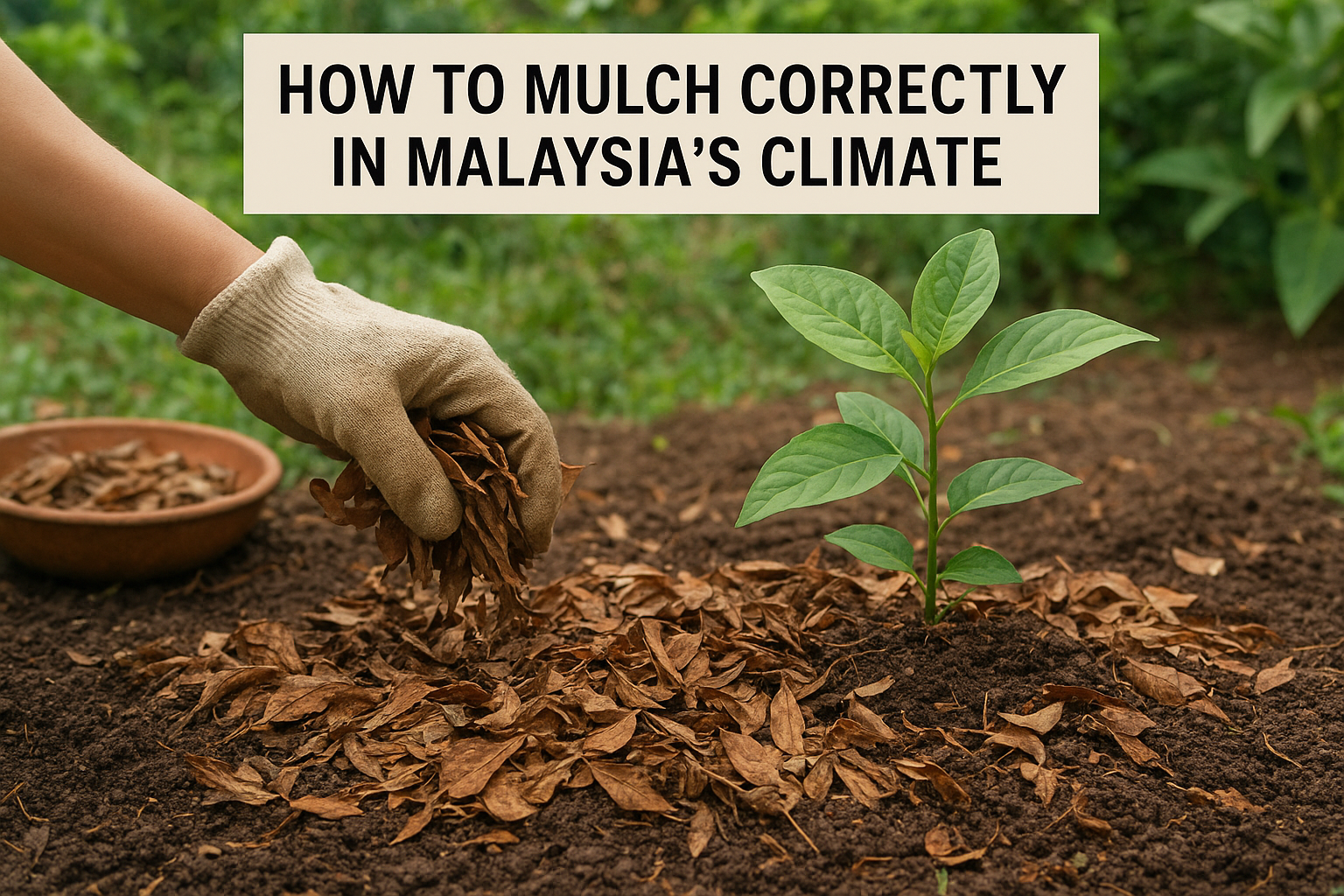
- Dried leaves or leaf litter: Free, breaks down to feed soil biology
- Wood chips: Long-lasting, excellent for moisture retention
- Dried rice straw: Lightweight, breaks down in 3 to 4 months
- Coconut husks: Durable and widely available across Malaysia
Refresh the mulch layer every 3 to 4 months as it breaks down, because a thin or patchy layer stops regulating temperature and moisture effectively. Over time, the decomposing mulch adds organic matter to the soil beneath it, continuing the improvement cycle you started in step two.
Step 4. Fix pH and nutrients without overfertilizing
Once your soil structure is solid and covered, pH correction and targeted feeding are what move your plants from surviving to thriving. Most Malaysian gardeners overfertilize without fixing pH first, which means nutrients sit in the soil unused while plants still show deficiency symptoms. This step shows you exactly how to improve soil for gardening by addressing the chemistry, not just the structure.
Correct pH before you feed
Soil pH is the gatekeeper for nutrient availability, and adjusting it before adding fertilizer saves you both money and frustration. For acidic soil below pH 5.5, which covers most Malaysian garden beds, apply agricultural lime (dolomite lime) at a rate of 100 to 200 grams per square meter, worked into the top 15cm. Wait two to four weeks before retesting, because lime acts slowly and rushing a second application creates more problems than it solves.
Changing pH too quickly by over-applying lime or sulfur can stress plant roots and disrupt soil biology, so small, staged applications always produce better results than a single heavy dose.
For soil sitting above pH 7.0, apply elemental sulfur at 30 to 50 grams per square meter and mix it in thoroughly. Retest after four weeks before deciding whether to apply again.
Feed based on what's actually missing
Feeding without a clear deficiency diagnosis is where most gardeners go wrong. Apply a balanced slow-release fertilizer, such as a 10-10-10 NPK granular formula, at the manufacturer's recommended rate once every 8 to 12 weeks during the growing season. Avoid doubling doses to speed results, because excess nitrogen burns roots and flushes into groundwater with Malaysia's heavy rainfall.
Use this quick reference to match visible symptoms to the right correction:
| Symptom | Likely deficiency | Correction |
|---|---|---|
| Yellow leaves overall | Nitrogen | Compost or balanced NPK |
| Purple leaf undersides | Phosphorus | Bone meal or single superphosphate |
| Leaf edge browning | Potassium | Muriate of potash or wood ash |
| Pale new growth | Iron or magnesium | Dolomite lime or chelated iron |
A simple seasonal plan to keep improving soil
Soil improvement isn't a one-time job. Consistency is what separates gardens that thrive year after year from those that revert to struggling after a few months. Knowing how to improve soil for gardening over the long term means working with Malaysia's rainfall patterns rather than against them, adjusting what you do depending on monsoon intensity and planting cycles.
Plan by quarter, not by season
Malaysia's climate doesn't follow four distinct seasons, but rainfall patterns shift noticeably across the year, which affects how quickly your organic matter breaks down and how much nutrient leaching happens in your beds. Using a quarterly maintenance cycle keeps your soil improvements compounding rather than slowly reversing between planting rounds.
Consistent small actions every quarter produce far better long-term soil health than occasional heavy applications done once or twice a year.
Use this quarterly plan as your baseline:
| Quarter | Months | Key Actions |
|---|---|---|
| Q1 | January to March | Retest pH, apply lime if needed, top-dress with compost |
| Q2 | April to June | Refresh mulch layer, apply slow-release fertilizer, plant cover crop in empty beds |
| Q3 | July to September | Add second compost layer, check drainage before heavy rain season |
| Q4 | October to December | Fork in decomposed mulch, retest soil texture, replenish organic matter |
What to watch between cycles
Yellowing leaves, pooling water after rain, and dry crusty surface soil are the three signals that your soil is slipping between quarterly maintenance rounds. When you spot any of these signs, act immediately rather than waiting for your next scheduled application. Adding a thin 2cm compost top-dressing and checking your mulch coverage is usually enough to correct minor issues between cycles.
Track your soil tests and amendments in a simple notebook or phone note. Recording what you applied, when, and what changed gives you a clear picture of what works in your specific plot and stops you from repeating applications that haven't moved results.
Wrap up and what to do next
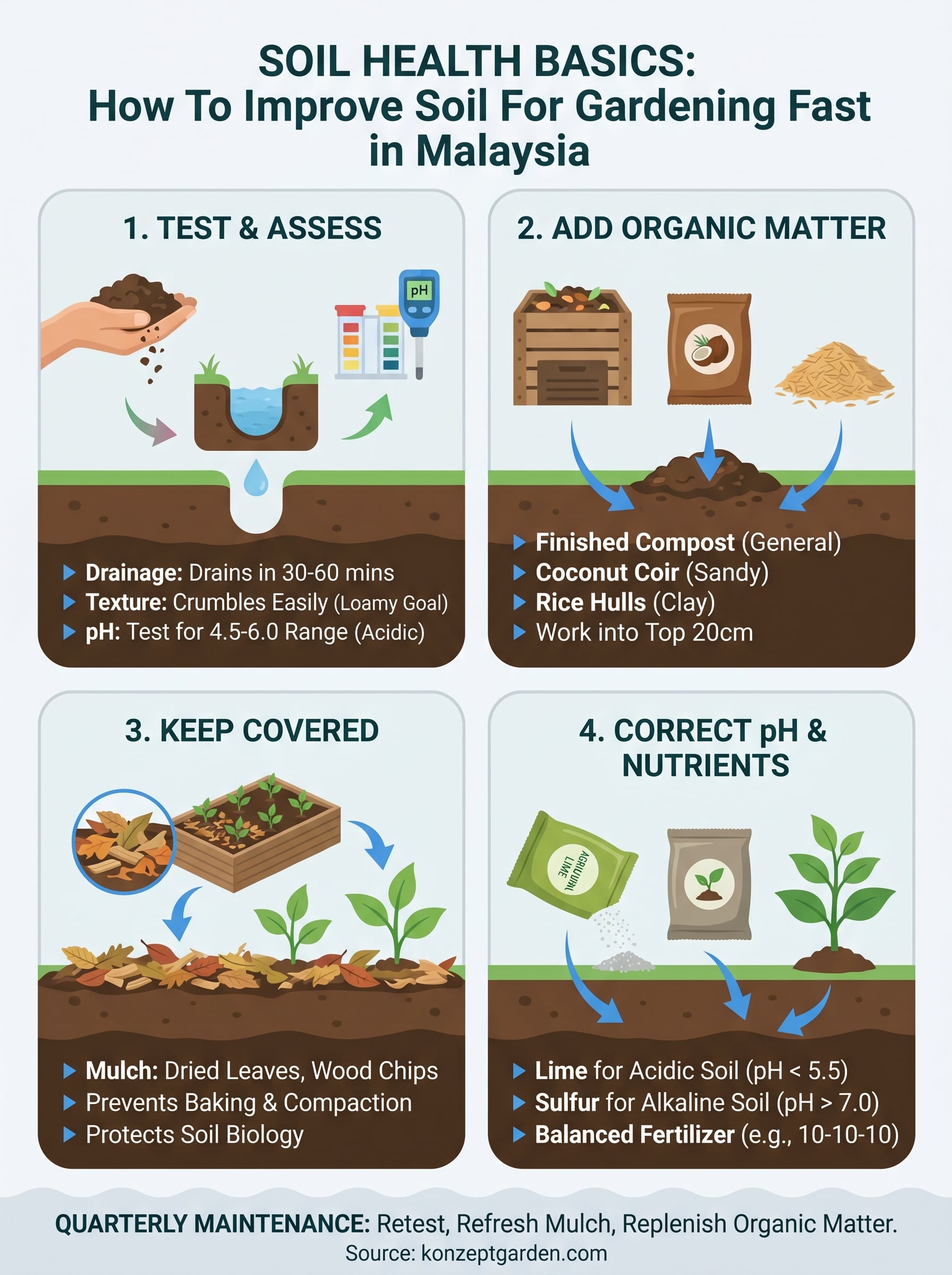
Knowing how to improve soil for gardening comes down to four repeatable steps: test what you have, build organic matter, keep the surface covered, and correct pH before you feed. Each step compounds the one before it, so the results you see after three months are significantly better than what you'd get from a single one-time fix. Malaysia's climate moves fast, and your soil management needs to match that pace with consistent quarterly attention rather than reactive problem-solving.
Start with the drainage test and a basic pH reading this week. Pick one amendment from step two and work it into your beds before your next planting cycle. Small, consistent actions are what actually transform struggling soil into a productive foundation. If you want professional guidance on designing a garden that works with your soil from the ground up, talk to the team at Konzept Garden and get a free quotation for your project.