


Malaysian homes have something most people take for granted, year-round warmth and greenery right outside the door. Yet so many patios, backyards, and terraces sit underused, treated as leftover space rather than an extension of daily life. The right outdoor living design ideas can change that completely, turning a bare concrete yard into a place where you actually want to spend your mornings, host dinners, or just decompress after work.
Whether you're building a new home or rethinking an existing outdoor area, the challenge isn't a lack of options, it's knowing which ideas actually work in Malaysia's climate and lifestyle. From material choices that handle humidity and rain to layouts that maximize airflow, every decision matters here more than in temperate countries where most design trends originate.
At Konzept Garden, we've designed and built outdoor spaces across Malaysia for years, and we've seen firsthand what holds up and what doesn't. This list pulls from that experience. Below, you'll find 13 practical and visually striking ideas, each one suited to modern Malaysian homes, to help you plan an outdoor space that looks good, functions well, and actually gets used.
1. Start with a master plan and 3D view
Jumping straight into outdoor furniture purchases or plant shopping before you have a plan is one of the fastest ways to waste money. A master plan maps out your entire outdoor space before anything is built or bought, and a 3D visualization lets you see exactly how it will look, at scale, before a single contractor shows up. Of all the outdoor living design ideas on this list, this one makes every other decision easier.
How it works
A landscape designer measures your space and documents every fixed element: drainage points, sun exposure, existing structures, and sightlines. From there, they build a full layout covering zones for seating, dining, planting, and pathways, all proportioned correctly for your actual property dimensions. The 3D render then takes that layout and turns it into a photorealistic image you can review digitally, adjusting materials, plant choices, and furniture arrangements before anything is finalized.
Seeing your outdoor space in 3D before construction starts is the single most effective way to avoid costly changes halfway through a project.
Best for
This approach works for any property size, from a compact terrace house garden to a sprawling bungalow compound. It is especially valuable for homeowners who want to phase their project over time, since the master plan gives you a clear roadmap so each phase connects logically to the next rather than looking like disconnected additions.
- Homeowners planning a full outdoor transformation
- Property developers designing multiple units with consistent landscaping
- Anyone who wants to phase construction over one to two years
Materials and plant choices
The planning stage is where you lock in material palettes and plant selections that suit Malaysia's climate. Your designer will factor in rainfall drainage, heat reflection from hard surfaces, and root space for trees. Choosing hardscape materials like porcelain tiles, natural stone, or composite decking at this stage prevents mismatched finishes later when different contractors come on site.
Budget and upkeep
Investing in a proper plan upfront reduces your total project cost because it eliminates guesswork, over-ordering, and redesign fees mid-build. Most professional landscape design fees in Malaysia cover the concept drawings, plant schedules, and 3D renders, and that documented plan also makes future maintenance straightforward because every plant species and material finish is already specified and on record.
2. Create a seamless indoor-outdoor transition
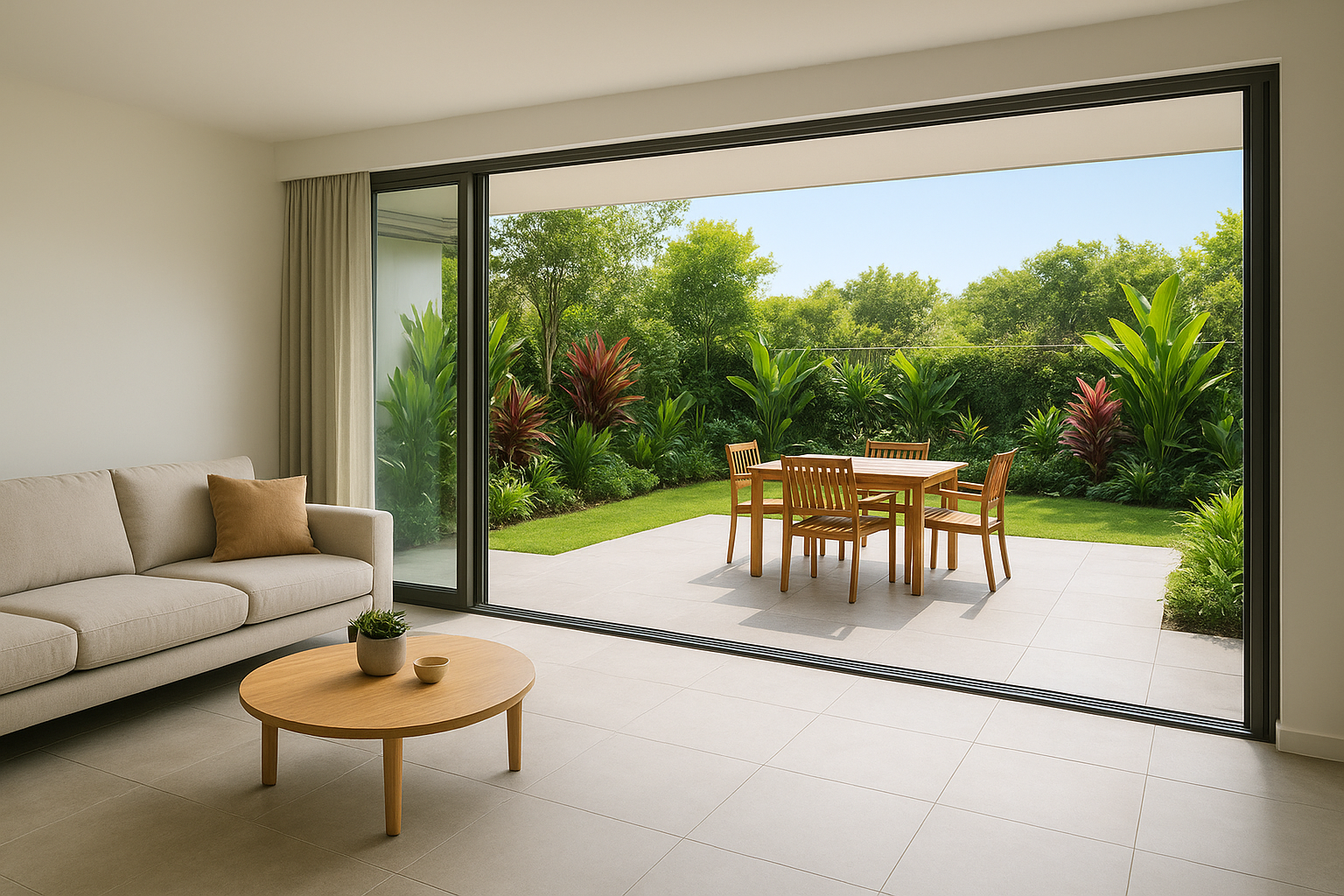
A hard boundary between your living room and your garden forces you to choose between inside and outside rather than enjoying both. Removing that boundary through thoughtful design is one of the most impactful outdoor living design ideas you can apply, and it makes both your indoor and outdoor spaces feel noticeably larger without adding a single square meter of floor area.
How it works
You align your interior flooring level with the outdoor surface so there is no step or visible edge between the two. Large sliding or folding glass doors replace solid walls, and the flooring runs continuously from inside to outside. Consistent materials and sightlines make your eye read the two spaces as one connected area rather than two separate rooms.
The spaces that feel most generous in Malaysian homes are almost always the ones where the interior opens directly onto a well-designed outdoor zone.
Best for
This idea works best for ground-floor living areas, dining rooms, and home offices that face a garden or patio. It suits both new builds and renovation projects, though retrofitting requires checking whether your current floor levels allow a flush threshold without major excavation.
Materials and plant choices
Use large-format porcelain tiles or natural stone that performs equally well indoors and out. Keep the planting nearest the opening focused on low-spread tropical species like Cordyline or Heliconia that add greenery without encroaching on the walkway or blocking airflow.
Budget and upkeep
Flush thresholds and matched floor finishes cost more upfront but simplify long-term maintenance because both surfaces wear at the same rate. Daily cleaning is straightforward since one continuous floor plane requires no separate tools or techniques for the indoor and outdoor sections.
3. Add shade first with a pergola or awning
Before you buy outdoor furniture or plan your planting, solve the heat problem. Malaysia's sun is intense enough to make an unshaded patio unusable between 10am and 4pm for most of the year. Shade is not a finishing touch in this climate; it is the foundation of every usable outdoor living design idea. A pergola or retractable awning gives you reliable cover without closing off your outdoor space the way a full roof extension would.
How it works
A pergola is a freestanding or wall-attached structure with an open or partially covered roof. You can leave it open for partial shade, add climbing plants for natural coverage, or fit it with polycarbonate or fabric panels for full rain protection. A retractable awning attaches directly to your exterior wall and extends over a terrace or patio at the push of a button, giving you flexible control over shade and sun exposure depending on the time of day.
A shaded outdoor zone stays 8 to 12 degrees Celsius cooler than an exposed surface, which makes the difference between a space you use daily and one you avoid.
Best for
Pergolas suit properties where you want a permanent architectural feature that anchors the outdoor space visually. Awnings work better for smaller balconies, terraces, or homeowners who want flexibility without committing to a full structure.
Materials and plant choices
Use powder-coated aluminum or treated timber for pergola frames since both resist moisture and UV degradation. Climbing plants like Thunbergia or Bougainvillea add shade and color without requiring a solid roof panel.
Budget and upkeep
A basic pergola starts lower than a full roof extension and requires minimal upkeep beyond annual cleaning and occasional re-sealing of timber. Retractable awning motors need periodic servicing, so factor that into your long-term maintenance budget when comparing the two options.
4. Build a modern outdoor living room layout
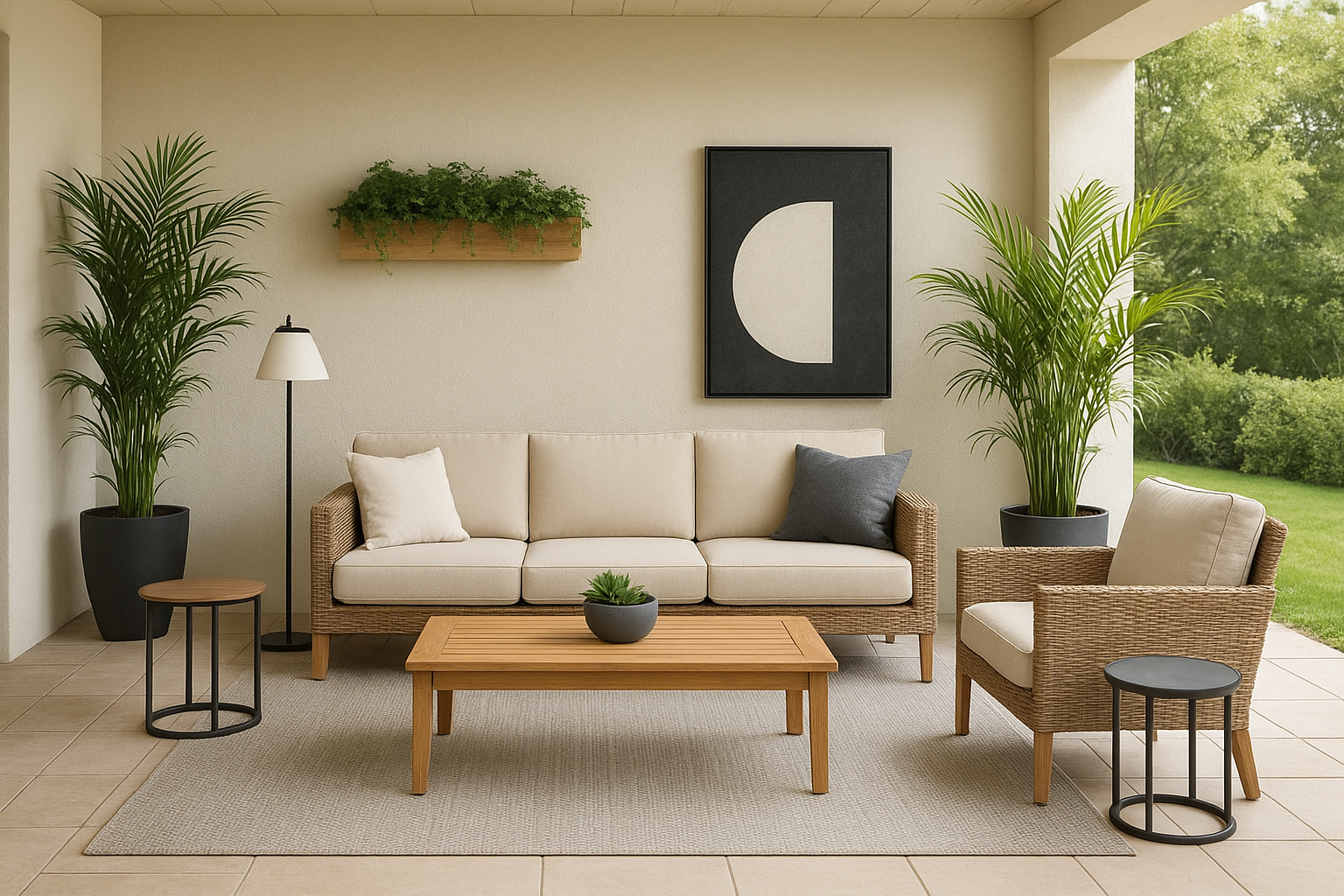
Most people place a table and a few chairs outside and call it done. A proper outdoor living room layout goes further by zoning your space the same way you would an interior room, with a defined seating area, clear traffic flow, and visual anchors that make the space feel intentional rather than improvised. This is one of the outdoor living design ideas that shifts how much time you actually spend outside.
How it works
You define the seating zone with a large outdoor rug that sets the boundary of the space, then arrange your sofa and chairs around a central coffee table the same way you would indoors. A side table, a floor lamp rated for outdoor use, and a wall-mounted feature like a planter shelf or outdoor art panel complete the room-like feel. Keeping furniture grouped tightly rather than pushed to the edges makes the space feel settled.
An outdoor seating zone that mirrors the proportions of your interior living room will feel comfortable immediately, because your eye already knows how to use the space.
Best for
This layout suits covered patios, roofed terraces, and pavilion areas where rainfall protection exists. It works particularly well for homeowners who entertain regularly and want a relaxed conversation setup separate from the dining area.
Materials and plant choices
Choose weather-resistant rattan, powder-coated aluminum, or teak furniture that holds up under humidity. Flank the seating zone with tall potted Areca Palms or Dracaena to add vertical greenery without encroaching on the seating footprint.
Budget and upkeep
Quality outdoor sofas represent a higher upfront cost but resist UV fading and mold far better than indoor furniture repurposed outside. Wipe down surfaces weekly and store cushions during extended heavy rain periods to extend their lifespan significantly.
5. Design a dining zone that handles rain and heat
Outdoor dining in Malaysia fails for one of two reasons: no protection from afternoon rain or no escape from direct heat. Getting the dining zone right solves both at once, and it's one of the most frequently used outdoor living design ideas for families who eat together regularly. When the space is designed to handle real conditions, you stop eating inside by default.
How it works
You position the dining table under a fully weatherproof structure, either a solid roof extension, a pergola with polycarbonate sheeting, or a tensioned shade sail rated for heavy rain. The key is overhead coverage that extends at least 600mm beyond the table edge on all sides so rain doesn't angle in and soak your guests mid-meal. A ceiling fan mounted above the table handles heat and keeps insects moving.
A dining zone with proper overhead coverage and airflow gets used almost every evening, while an exposed one gets used maybe twice a year.
Best for
This setup suits landed homes and bungalows with an existing garden or patio adjacent to the kitchen. It also works well for commercial F&B setups and resort-style hospitality projects where outdoor dining is a selling point rather than an afterthought.
Materials and plant choices
Use non-slip porcelain tiles or sealed concrete for the floor surface since both drain quickly and stay stable under wet conditions. Frame the edges with compact tropical plants like Ixora or dwarf Heliconia to define the zone without blocking airflow.
Budget and upkeep
A solid covered dining zone costs more upfront than a temporary canopy solution but needs far less maintenance over time. Rinse the floor weekly and check ceiling fan fixings twice a year to keep everything safe and functional.
6. Upgrade to an outdoor kitchen or wet bar
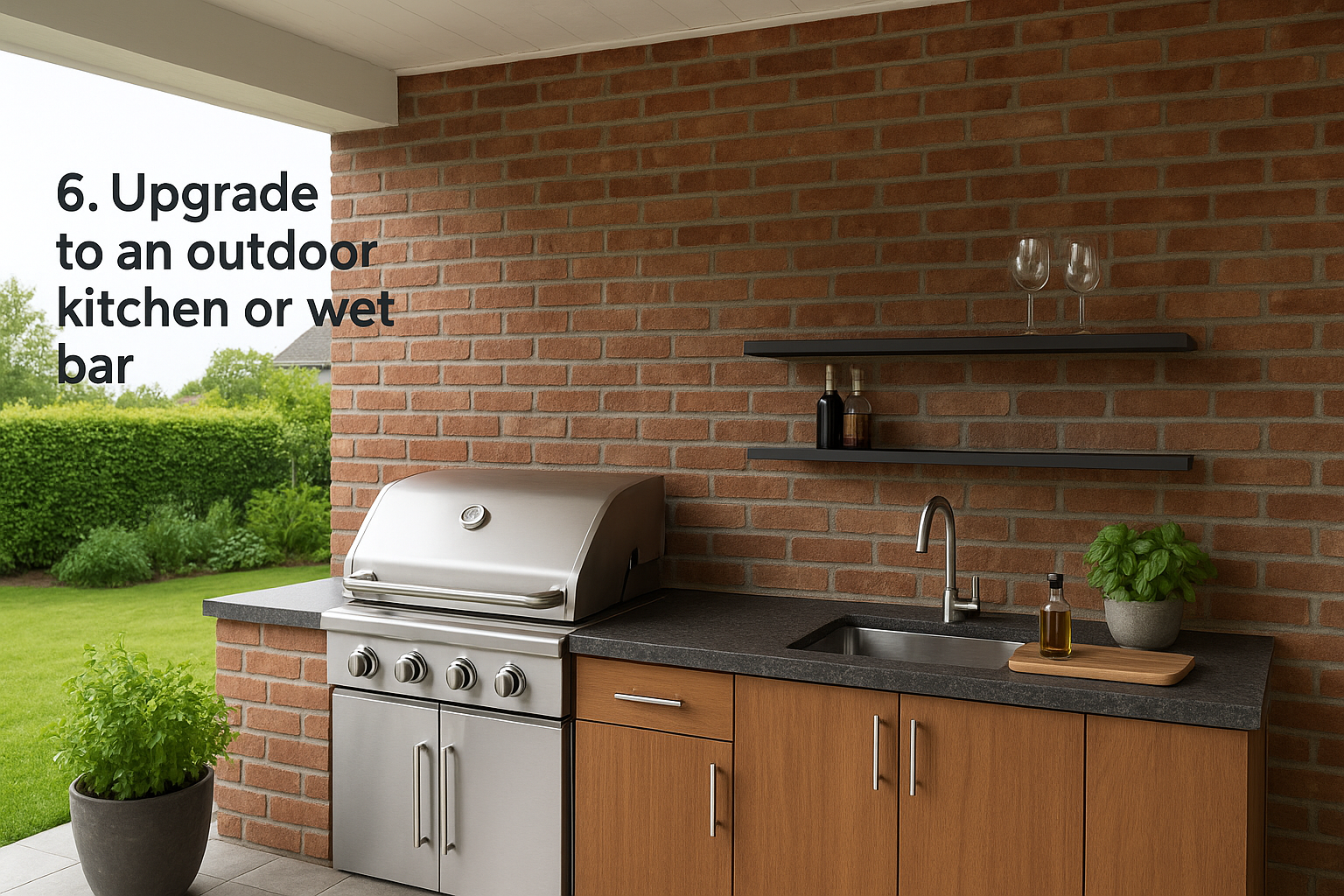
An outdoor kitchen or wet bar shifts your garden from a passive space you look at to one you actively cook and entertain in. This is one of the more committed outdoor living design ideas on this list, but it delivers the most daily value for households that cook regularly or host guests. Having food and drink preparation outside removes the constant back-and-forth to your indoor kitchen and keeps the energy of a gathering where it belongs.
How it works
You install a dedicated countertop zone with either a built-in grill, a burner, or a bar sink, depending on how you plan to use the space. A wet bar needs a water supply line and drainage, while a dry kitchen setup with a portable burner requires significantly less plumbing work. Overhead shelving or a compact cabinet keeps tools, condiments, and glasses within reach without adding clutter to the countertop.
An outdoor kitchen anchored to a permanent structure makes entertaining feel effortless because everything you need is already outside.
Best for
This upgrade suits landed homes with covered patios or any property where there is enough space for at least a 1.5-meter countertop run. It works equally well for commercial hospitality projects where food and beverage service happens in an open-air setting.
Materials and plant choices
Choose marine-grade stainless steel or sealed granite for countertops since both resist humidity, heat, and rain without warping. Plant culinary herbs like basil or curry leaf nearby for a practical and visually grounded edge to the zone.
Budget and upkeep
A built-in outdoor kitchen costs more than most furniture upgrades, but durable materials need little beyond weekly wipe-downs to stay clean. Check plumbing connections annually and re-seal stone surfaces every two years to maintain long-term water resistance.
7. Use a vertical garden for privacy and cooling
A vertical garden solves two problems at once in a Malaysian outdoor space: visual privacy from neighbors and passive cooling through plant evapotranspiration. Rather than building a solid wall that blocks airflow and feels oppressive, a living wall filters your sightlines while keeping the space breathable. This is among the more practical outdoor living design ideas for terrace homes and semi-detached properties where lot boundaries are tight.
How it works
You mount a modular planting system or a series of planters directly onto a wall or freestanding frame. The plants grow vertically, filling the structure over time and creating a dense green screen that reduces heat absorption on the wall behind it. Vegetated walls can lower surface temperatures by up to 10 degrees Celsius compared to bare concrete, which makes a measurable difference in how comfortable your space feels.
A vertical garden positioned on your west-facing wall blocks afternoon sun at its most intense angle, which is where most outdoor heat gain originates.
Best for
This solution suits compact urban properties and corner lots where horizontal planting space is limited. It also works well for commercial shopfronts and office terraces that need greenery without losing usable floor area.
Materials and plant choices
Use powder-coated aluminum panels or UV-stabilized polymer frames for the structure since both resist Malaysia's humidity without rusting or warping. Good plant choices include Pothos, Ferns, and Heliconia for tropical resilience and dense coverage.
Budget and upkeep
A basic vertical garden costs less than a masonry wall and needs monthly trimming and fertilizing to stay healthy. Installing a drip irrigation system from the start dramatically cuts daily watering time and keeps plants growing evenly.
8. Choose low-maintenance flooring and turf
Your outdoor floor takes more punishment than any other surface in your space: rain, foot traffic, UV exposure, and moss growth all hit it simultaneously. Choosing the wrong material turns your garden into a weekend chore, while the right choice keeps your space looking clean with minimal effort. This is one of those outdoor living design ideas that pays off every single week.
How it works
You select hard flooring or artificial turf based on how each zone gets used. High-traffic paths and seating areas benefit from sealed porcelain tiles or composite decking, both of which drain quickly and resist staining. For lawn areas, synthetic turf replaces natural grass entirely, giving you a consistently green surface without mowing, fertilizing, or irrigation.
Artificial turf in Malaysia's climate stays green through every dry spell and heavy monsoon without any intervention from you.
Best for
This approach suits terrace homes, semi-detached properties, and rooftop gardens where time and water access are limited. It also works well for commercial properties and show gardens that need to look sharp year-round without daily upkeep.
Materials and plant choices
Use non-slip porcelain or natural stone pavers for hard zones and a quality synthetic turf product with adequate drainage backing for soft zones. Border the turf edges with low-spread ground cover plants like Mondo Grass or Liriope to keep the transition between hard and soft surfaces visually clean.
Budget and upkeep
Quality materials cost more upfront but reduce your ongoing maintenance time significantly. Rinse hard floors weekly, brush synthetic turf monthly to keep fibers upright, and inspect drainage channels after heavy rain to prevent pooling.
9. Add a koi pond or water feature as a focal point
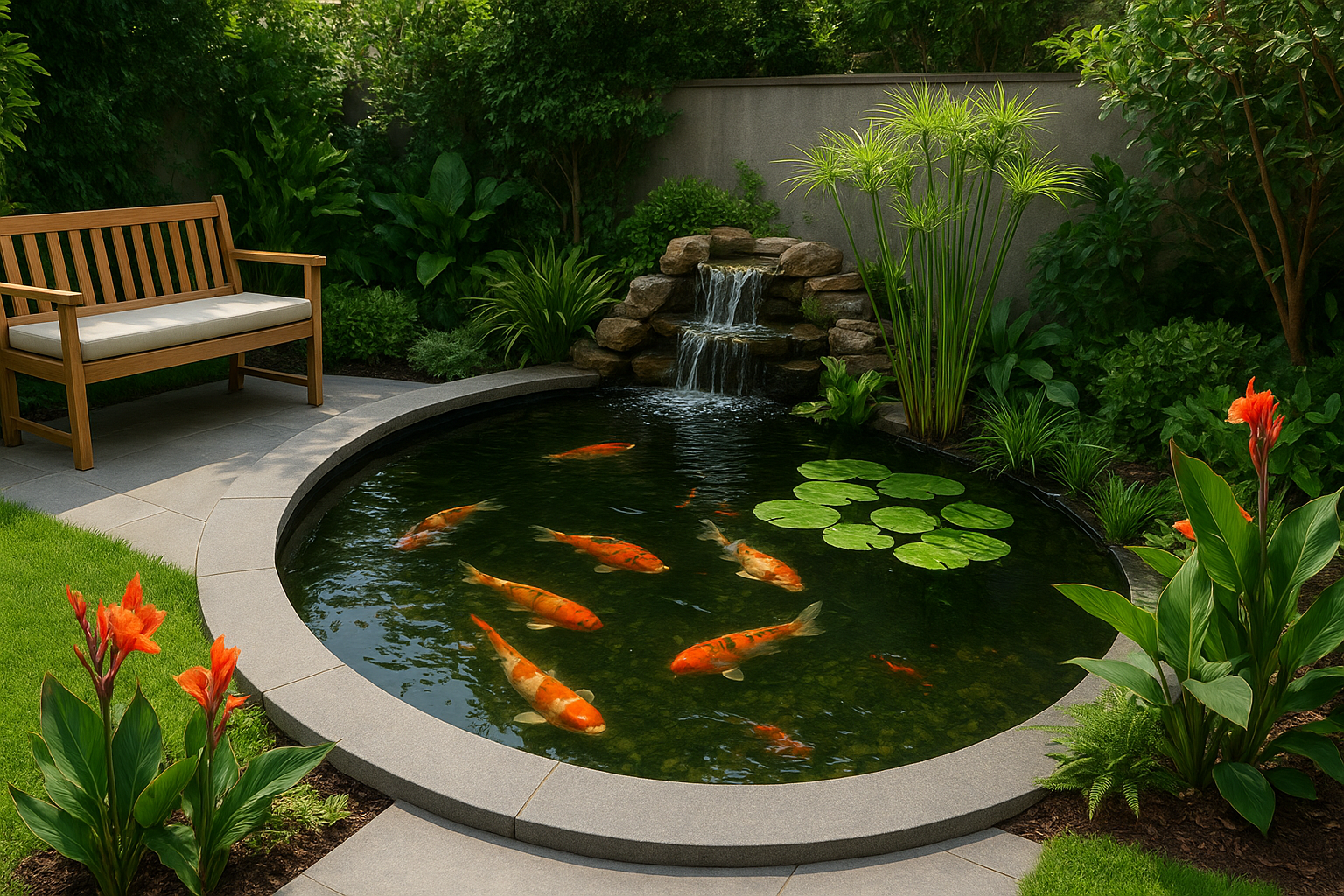
A koi pond or decorative water feature does something no piece of furniture or plant arrangement can replicate: it gives your outdoor space a living, moving focal point that draws attention the moment someone steps outside. Among all outdoor living design ideas, this one creates the strongest sense of calm and intention in a garden layout.
How it works
You designate a fixed anchor point in your garden, typically visible from your main seating area or indoor living room, and build the pond or feature into the ground or against a boundary wall. Moving water from a pump or waterfall keeps the surface active, which reduces mosquito breeding and adds ambient sound that masks street noise effectively.
A water feature positioned in your direct sightline from indoors extends the visual depth of your garden even when you're not physically outside.
Best for
This idea suits landed properties and bungalows with enough outdoor floor space for a permanent installation. It also works well for commercial lobbies, resort gardens, and wellness-focused spaces where atmosphere and first impressions matter.
Materials and plant choices
Use reinforced concrete or fiberglass pond shells for durability in Malaysia's wet conditions. Surround the edges with water-tolerant plants like Papyrus, Lotus, or Canna Lily to soften the structure and integrate the pond naturally into the wider garden.
Budget and upkeep
A custom koi pond requires a higher upfront investment than most garden features, but routine maintenance covers water testing, pump checks, and fish feeding on a weekly schedule. Installing a quality filtration system from the start significantly reduces the time you spend on water clarity and algae control.
10. Layer outdoor lighting for safety and mood
Outdoor lighting is one of the most underestimated outdoor living design ideas on this list. Most homeowners install a single overhead light and consider the job done, but a single source creates harsh shadows and flat lighting that makes a garden feel like a parking lot. Layering multiple light types at different heights transforms the same space into somewhere that genuinely feels worth being after dark.
How it works
You combine three levels of lighting: ambient overhead light for general visibility, task lighting near cooking or dining zones, and accent lighting that highlights plants, water features, or architectural edges. Each layer works independently but reinforces the others. Placing low-voltage path lights along walkways handles safety, while uplights on key trees or the pond feature add depth and visual interest.
Lighting a garden from three different heights eliminates the flat, institutional look that single-source overhead fixtures create.
Best for
This approach suits any covered or open outdoor space used after sunset. It works especially well for properties with a koi pond, vertical garden, or pergola since each of those elements benefits visually from targeted accent lighting that draws the eye.
Materials and plant choices
Choose IP65-rated fixtures or higher for all outdoor fittings to ensure they handle Malaysia's rain and humidity. Keep planting near low path lights to low-spread, non-reflective species like Liriope or Mondo Grass so the light reads cleanly against the ground.
Budget and upkeep
LED outdoor fixtures run at low wattage and last significantly longer than halogen alternatives. Replace any failed bulbs promptly and clean fixture housings every few months to remove dust and insect debris that dim the output over time.
11. Design for heavy rain with drainage and grip
Malaysia's monsoon seasons deliver intense downpours that can dump several centimeters of rain in under an hour. Without proper drainage and slip-resistant surfaces, even a well-designed outdoor space becomes a waterlogged hazard that nobody wants to use. Skipping this step causes more daily frustration than almost any other oversight in these outdoor living design ideas.
How it works
You build your outdoor floor with a deliberate slope of at least 1 to 2 percent away from your home's foundation and toward dedicated drain channels or a soakaway pit. Every hard surface needs a graded fall so water moves immediately rather than pooling. Channel drains along the perimeter of covered zones then capture overflow and direct it away from seating areas and entry points before it becomes a problem.
A 2 percent floor gradient is invisible to the eye but eliminates standing water within minutes of the heaviest rain stopping.
Best for
This planning step suits all outdoor spaces in Malaysia without exception. It is particularly critical for:
- Covered patios near sliding doors, where pooling water tracks indoors on foot traffic
- Rooftop terraces where drainage relies entirely on engineered outlet points
- Any outdoor dining zone with a solid overhead structure
Materials and plant choices
Choose textured porcelain tiles rated R11 or higher for slip resistance, or brushed concrete with an exposed aggregate finish. Both surfaces maintain grip when wet. Plant ground cover species like Liriope along drain channel edges to stabilize soil and prevent debris from blocking drainage outlets.
Budget and upkeep
Getting drainage right during construction costs far less than correcting it afterward. Clear channel drains monthly and check slope integrity annually after soil settlement to keep water moving as intended.
12. Create a small wellness corner outdoors
A dedicated wellness corner gives you a reason to step outside with intention rather than just passing through your garden. Among the more personal outdoor living design ideas on this list, this one creates a zone specifically designed for rest, movement, or mindfulness without requiring a large footprint.
How it works
You carve out a quiet section of your outdoor space, usually away from the main dining or entertaining zones, and furnish it for one specific purpose: slowing down. A yoga mat area, a hammock slung between two posts, or a compact daybed under a shade structure all work. The key is visual separation from the rest of your garden through planting, a low screen, or a change in floor material so the zone feels distinct.
A wellness corner works best when it sits at the furthest point from your entry door, giving you a genuine sense of stepping away from the rest of the house.
Best for
This idea suits homeowners with at least a moderate-sized garden who want a personal retreat that doesn't require much space to set up. It works equally well for rooftop terraces and covered balconies with enough room for a single lounger and a few plants.
Materials and plant choices
Use natural timber decking or smooth stone pavers to ground the zone. Plant fragrant species like Gardenia or Pandan nearby since both release scent in Malaysia's heat and reinforce the sense of calm without any additional effort from you.
Budget and upkeep
This is one of the lowest-cost zones on this list since the investment is mainly in a few key furniture pieces and targeted planting. Wipe down surfaces weekly and trim fragrant plants monthly to keep them healthy and productive.
13. Control heat and mosquitoes without ruining the vibe
Heat and mosquitoes are the two most common reasons Malaysians abandon their outdoor spaces after spending money to design them. Both are solvable without resorting to chemical sprays or industrial-looking equipment that kills the atmosphere you've worked to create. This is one of the outdoor living design ideas that keeps your space genuinely livable, not just visually appealing.
How it works
You address heat and insects through layered passive and active strategies rather than a single intervention. Ceiling fans mounted under covered zones push air consistently enough to disrupt mosquito flight patterns at low wind speeds, while misting fans or evaporative coolers drop the perceived temperature by several degrees without wetting your furniture. Citronella plants positioned around the seating perimeter add a natural deterrent that doubles as landscaping.
A ceiling fan running at medium speed reduces the perceived outdoor temperature by 3 to 4 degrees Celsius, which is often the margin between comfortable and too hot.
Best for
This approach suits any covered patio, dining zone, or wellness corner that gets regular use in the evenings. It is especially valuable for properties near standing water or dense vegetation where mosquito pressure is consistently higher.
Materials and plant choices
Install BLDC ceiling fans rated for outdoor use since they consume less power and resist humidity better than standard motors. Plant Citronella, Basil, or Lemongrass in visible clusters near seating to reinforce the natural repellent effect.
Budget and upkeep
Running costs stay low since energy-efficient fans draw minimal power on continuous use. Replace citronella plantings seasonally and service fan motors annually to maintain consistent airflow throughout the year.
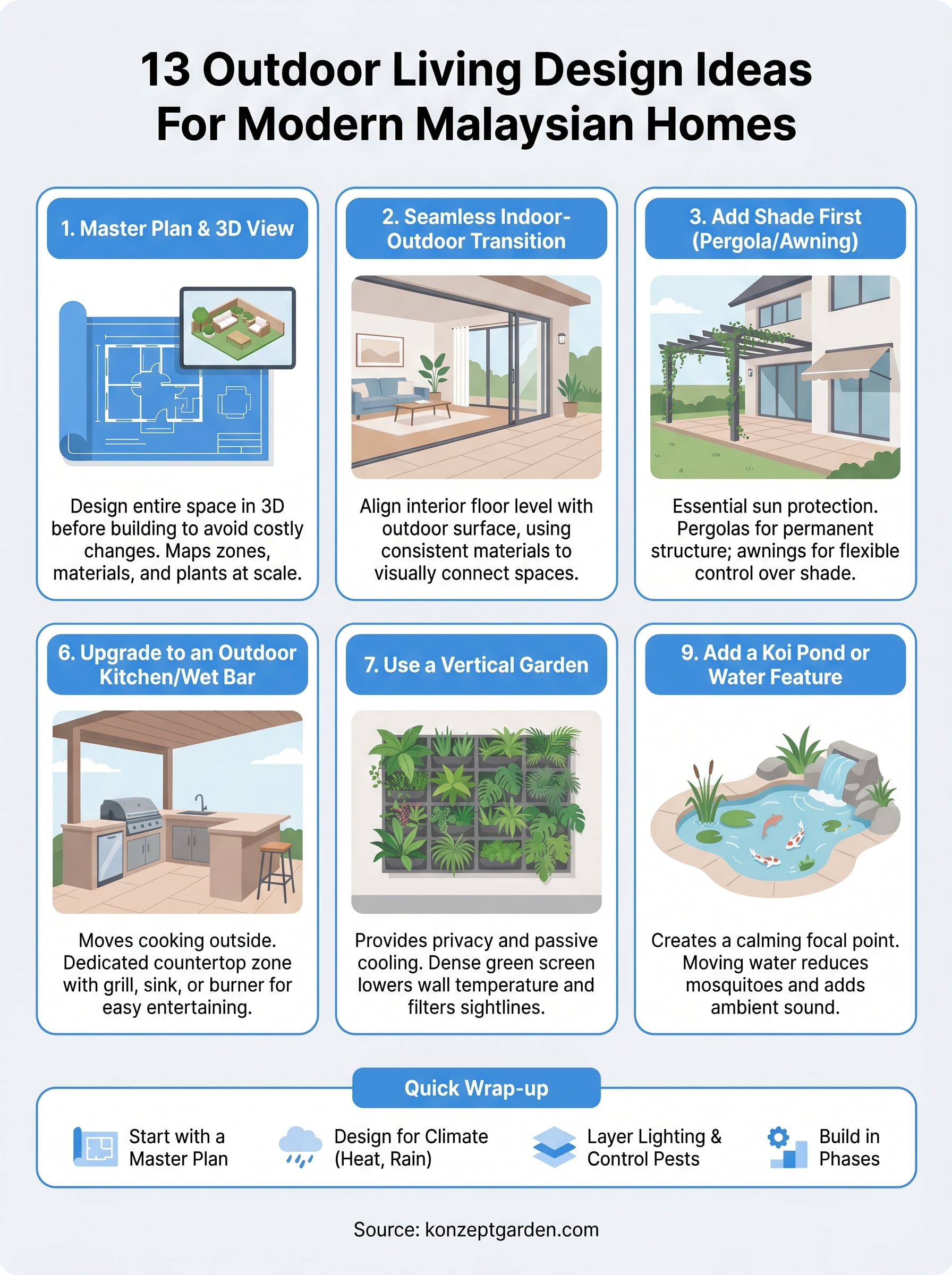
Quick wrap-up
Every outdoor living design idea on this list comes back to the same principle: design for how you actually live in Malaysia, not how outdoor spaces look in European or American design guides. Heat, rain, humidity, and limited lot sizes are real constraints, and the ideas here address all of them directly rather than assuming ideal conditions.
You don't need to tackle everything at once. Start with a master plan so your decisions connect, then build out each zone as your budget allows. Shade, drainage, and flooring come first because they determine whether everything else gets used. Features like water elements, vertical gardens, and lighting add depth once the foundations are solid.
If you want a space that genuinely works for your property and lifestyle, the best next step is talking to someone who has built them before. Contact the Konzept Garden team to get a free quotation and start turning your outdoor space into something you'll actually use.