
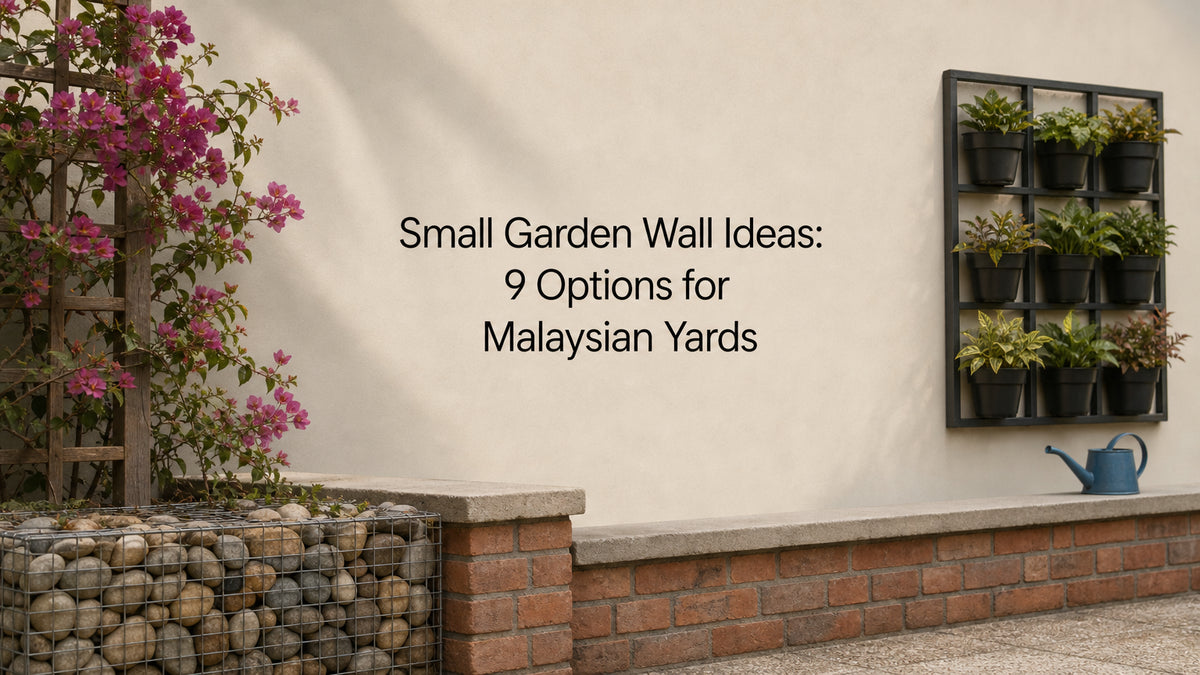
The best small garden wall ideas give you more than a boundary. They add planting space, privacy, seating or light without eating into the floor you have. A modular vertical garden or a trellis with climbers suits you if you want the most greenery from a tight plot. A low brick or block wall suits you if you want seating and raised beds. A painted or mirrored wall suits you if your yard feels dark and cramped. Pick by the job the wall must do, then by how much upkeep you accept in Malaysian heat, humidity and rain.
The trouble with a small garden is that every choice costs space. A thick planter bed can swallow a third of a narrow yard, yet a bare wall wastes the largest surface you own. This article walks through nine ideas, with how each one looks, how to build or install it, and what it costs to keep. It ends with a quick way to choose between them.
At Konzept Garden we design and build gardens across Malaysia, so the advice here leans on what survives tropical weather, from algae on shaded walls to termites in timber.
1. Modular vertical garden wall
A modular vertical garden is the best use of a small wall when you want the most greenery for the least floor space. It suits you if your garden is a narrow strip, a patio or a balcony and you would rather plant upward than outward.
What it looks like
Picture a frame holding a grid of pots or pockets, with plants filling the gaps until the wall reads as one living surface only a few centimeters deep. You control the mix of foliage and color, from a calm carpet of one leaf type to bold bands of contrasting plants.
Light decides your plant list. Ferns and philodendron cope with a shaded wall, while a west-facing wall in Malaysian afternoon sun needs heat-tolerant plants. Watch where the sun lands for a few days before you buy anything.
How to build or install it
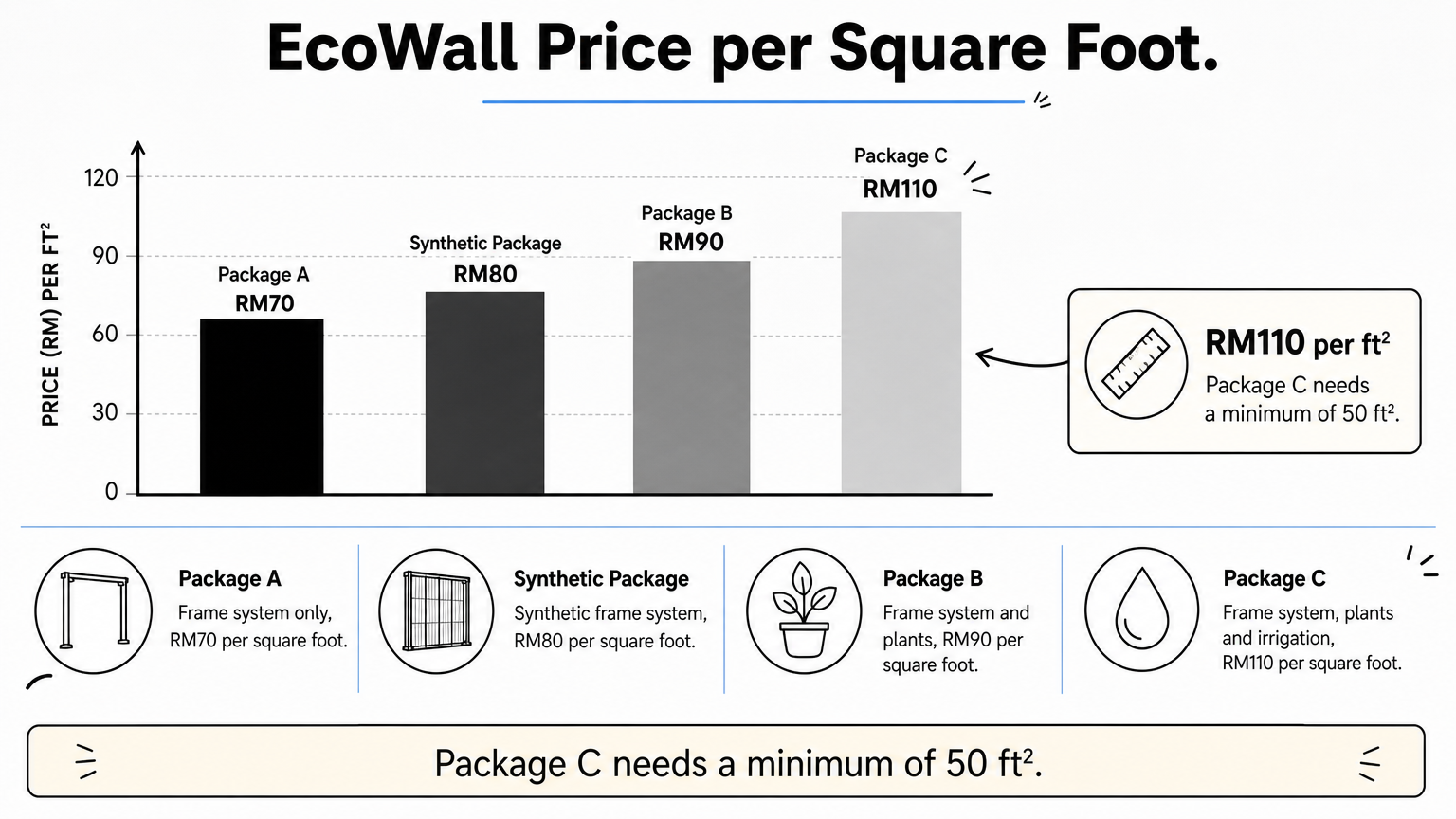
The EcoWall Mini Set (RM449) is a ready kit for one 60 cm x 60 cm panel. It includes 9 black Smart Pots, the frame, two 5 kg (10 litre) bags of nutrition soil, 600 g of hydrostone and geotextiles. For bigger walls, the EcoWall frame system is priced per square foot:
| EcoWall option | Price per ft² | What it includes |
|---|---|---|
| Package A | RM70 | Frame system |
| Synthetic | RM80 | Synthetic frame system |
| Package B | RM90 | Frame system and plants |
| Package C | RM110 | Frame system, plants and irrigation (minimum 50 ft²) |
Before you fix any frame, waterproof the wall behind it and check that the wall can carry the weight of wet soil. Plaster that stays damp turns into a stain, and later into a leak.
A vertical garden gives you the most green per square foot of floor, because it uses none.
Cost and upkeep
For a 4 ft by 3 ft wall (12 ft²), Package A comes to 12 x RM70 = RM840, and Package B with plants comes to 12 x RM90 = RM1,080. Package C includes irrigation but starts at 50 ft², so it fits a long boundary wall, not a small panel. The promotion package costs RM1,090 for a 48" x 46" wall (about 15 ft²) and includes installation and delivery, with delivery in Klang Valley only. Check the EcoWall collection for current terms.
Upkeep is mostly regular watering and trimming. On a small panel, hand-watering or a simple drip line is enough, and you replace a plant now and then as you would in any bed.
2. Climbing plants on a trellis
Climbers on a trellis are the cheapest way to turn a bare wall into a green screen. They suit you if you want privacy and soft color and can live with pruning every few months.
What it looks like
Flowering climbers give a wall movement and scent. Bougainvillea handles full sun and gives strong color, while jasmine adds fragrance for an evening seat. Both grow upward fast, so a narrow bed at the foot of the wall is enough.
Self-clinging climbers such as creeping fig grip the surface directly. That looks lush, but it can pull at render and paint. Choose a trellis-trained climber if you expect to repaint the wall one day.
How to build or install it
Follow these steps for a wall that stays healthy:
- Fix a timber, powder-coated metal or composite trellis on spacers so it sits 2 to 3 cm off the wall. The gap improves airflow and stops damp pockets.
- Plant the climber about 30 cm from the wall, where the soil is less dry, and angle it toward the trellis.
- Tie new stems loosely as they grow, and cut back after flowering.
A gap behind the trellis keeps the wall dry and the plant healthy.
Cost and upkeep
Cost stays low, because you pay for a trellis panel and a few plants. Humid air rusts untreated steel and rots untreated timber, so spend a little more on treated or powder-coated frames.
Expect to trim every few months, more often in the rainy season when growth surges. Bougainvillea has thorns, so wear thick gloves when you tie it in.
3. Low brick, block or stone wall
A knee-high wall of brick, block or stone gives a small garden structure, a raised planting bed and a place to sit. It suits you if you want something permanent, or if your plot has a gentle slope that needs holding back.
What it looks like
Brick brings classic warmth, especially in aged red tones. Rendered concrete blocks look clean and modern, and stone, natural or reconstituted, gives a rustic feel. A wall about 45 cm high doubles as a bench, so a small garden gets seating without extra furniture. Finish it with a flat coping so the top is comfortable.
Strictly, only a wall that holds back soil is a retaining wall. A low wall that frames a bed is a garden wall. On a slope, two or three low tiers are easier and safer than one tall wall, and the steps between them become planting shelves. That is the simplest of the small retaining wall ideas.
How to build or install it
Keep any wall you build yourself under about 1 m. Dig a level trench, compact a base, and lay the units on mortar. Backfill with gravel behind the wall and leave weep holes at the base so water drains out, because trapped water is what pushes walls over.
Walls taller than 1 m, or any wall that holds back soil near a house or a neighbor's boundary, need an engineer's design.
The taller the wall, the more it becomes an engineering job, so get an engineer involved before you build high.
Cost and upkeep
Materials rank roughly like this, from cheapest to dearest:
- Concrete block, the lowest cost, usually rendered or painted
- Brick, a mid-level option
- Natural stone, the highest cost
Facing a block wall with stone slips gives the stone look for less. Upkeep is low. Shaded faces grow algae in our humidity, so scrub them with a stiff brush and water once or twice a year.
4. Gabion wall
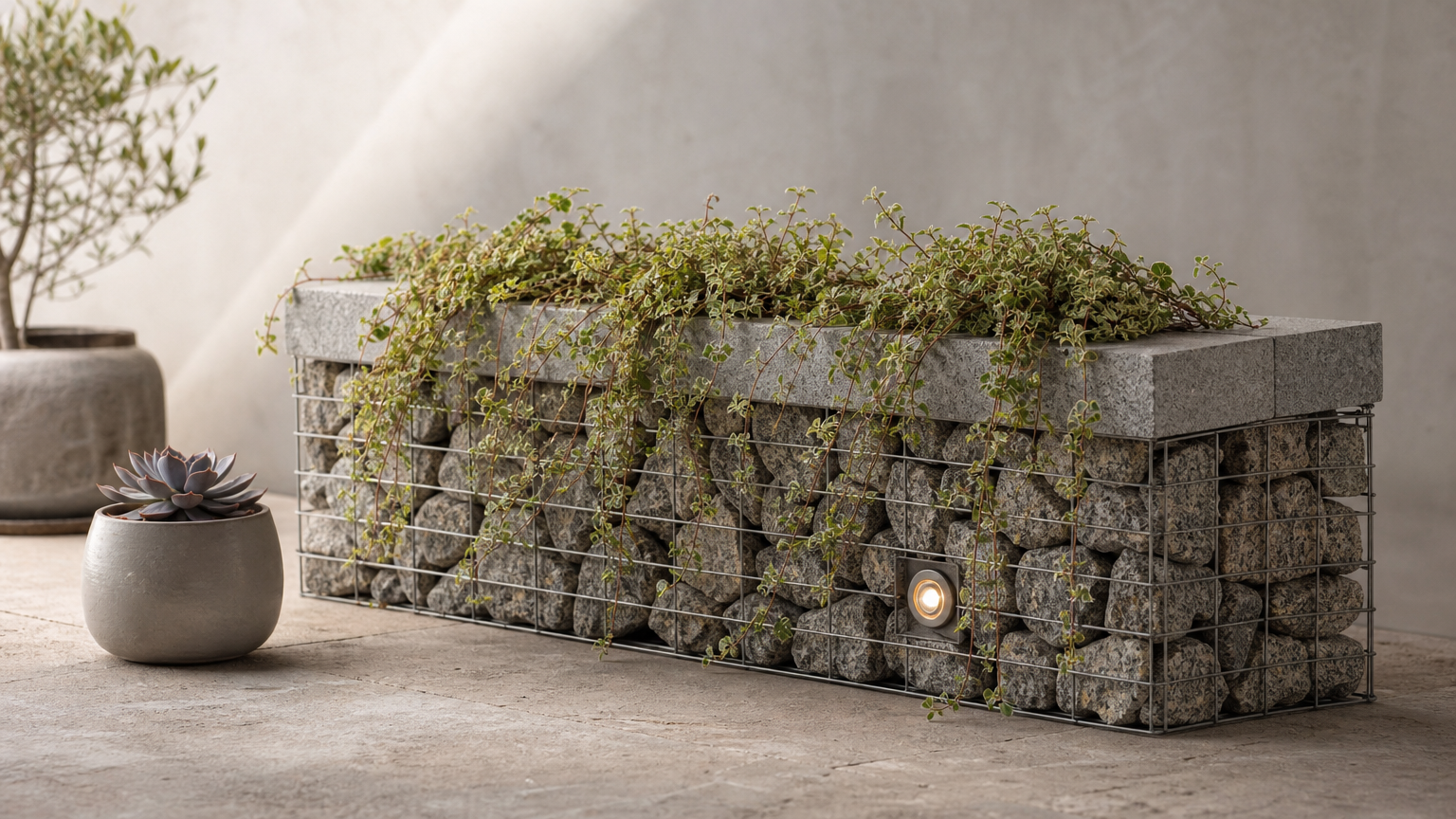
A gabion wall is a welded wire cage filled with stone, and it is one of the lowest-cost ways to build a sturdy low wall. It suits you if you like a modern, textured look or need to hold back a small bank of soil and let water drain.
What it looks like
The stone shows through the mesh, so grey granite looks sharp and river cobbles look warm. Gabions work as a low boundary, a bench base, a plinth for planters or a backdrop to a seat. Weatherproof lights set into the top give a good glow at night.
Trailing plants spilling over the top soften the wall and tie it to the rest of the garden. Succulents tucked into the edge also work well in the heat.
How to build or install it
Gabions are modular. Set the cages on a level, compacted base, wire them together, and fill them with angular stone that interlocks, in pieces larger than the mesh openings. Place the outer-face stones by hand so the front looks tidy.
Check the basket depth before you commit, because a deep basket takes a large bite out of a narrow yard. Keep retaining gabions low, as with masonry, and ask an engineer about anything tall.
Choose gabions when you want a strong wall at a low price, but measure the depth first.
Cost and upkeep
Landscape designers often name gabions as the most affordable way to retain soil, and you can build one yourself. You pay for cages and stone, and stone is the bigger share, so a nearby supplier saves on transport.
Upkeep is close to none. Pick galvanized or coated mesh because rain and humidity attack bare steel, and pull weeds that seed into the gaps.
5. Rendered and painted wall
A rendered and painted wall costs little and makes a small garden feel bigger and brighter. It suits you if your walls are dull, dark or mismatched and you want a clean backdrop for plants.
What it looks like
Pale colors reflect light, so white or soft cream makes a shaded courtyard feel open, and green leaves stand out against it. A bold accent wall in a pastel or deep tone works too, if you keep the rest of the palette calm. Matching the wall to the color of your house makes the garden feel planned.
Add a coping stone along the top for a finished edge. A plain rendered wall is also the quiet background that lets a water feature, a mirror or a trellis do the talking.
How to build or install it
Prepare the wall first, because paint only hides what lies underneath for a short time. Repair cracks, scrub off algae and let the wall dry fully. Then apply a primer and an exterior masonry paint that is labeled mold and algae resistant. New render must cure for the time the product states before you paint it.
In a humid climate, the preparation matters more than the paint you pick.
Cost and upkeep
This is among the cheapest ideas here, since you buy paint and brushes, or a bag of render and a trowel. Hiring a painter raises the cost but speeds the work.
Upkeep means washing the wall once or twice a year and repainting when the surface turns chalky or patchy. Keep plant pots a hand's width from the wall so air moves and mold has less to feed on.
6. Timber sleeper or slatted wall
Timber gives a small garden a warm, natural wall that works as a screen, a raised bed edge or a bench back. It suits you if you like a natural look and will protect the wood against termites and damp.
What it looks like
Vertical sleepers set side by side make a neat, fence-like wall that separates a planting area from the rest of the yard. Horizontal slats feel more modern, especially in a dark stain. Wood sits quietly beside plants, so it rarely looks out of place.
Varying the heights of the sleepers adds rhythm along a short wall. It also lets you step a bench or planter into the line.
How to build or install it
Set posts in concrete footings or fix sleepers to steel brackets. Keep the wood off wet soil with a gravel layer and drainage behind it, and line raised beds with a membrane. Seal every cut end, because that is where water and termites enter.
Choose naturally durable hardwood or properly treated timber. Treated wood can harm nearby plants, so keep the membrane between soil and timber.
Cost and upkeep
Wood is inexpensive at first, and lifespan decides the real cost. Rough in-ground figures:
- Untreated softwood: 3 to 5 years
- Treated softwood: 10 to 25 years
- Untreated hardwood: 10 to 30 years
- Treated hardwood: 30 years or more
Hot, wet, termite-rich conditions push you toward the shorter end of each range. Re-oil or re-stain every year or two and check the base for soft spots.
With timber, you are paying for lifespan, so buy the best grade you can afford.
7. Wall-mounted planters and shelves
Wall-mounted planters, shelves and hanging pots add greenery with no building work. They suit renters, balconies and anyone who wants to change the look each season.
What it looks like
Rows of pots on shelves or brackets turn a wall into a display. You can group plants by color, by leaf texture or by use, with herbs near the kitchen door and flowers at eye level. Because every pot is separate, you can swap a dead plant without disturbing the rest.
Leave empty wall between groups. Too many pots look cluttered, and a little blank space makes the plants you have look richer.
How to build or install it
Weight is the part people forget, because wet soil is heavy. Work through this list before you drill:
- Check the bracket's load rating against a watered pot, not a dry one.
- Use proper masonry anchors, never plain screws in plaster.
- Drill drainage holes and keep pots slightly off the wall.
- Put a tap or watering can within easy reach.
Plan for the weight of a watered pot, and the wall will thank you.
Cost and upkeep
The outlay is low, but small pots dry out fast in heat, so the cost is your time. A self-watering planter removes much of that. The Ziant Hydro Planter waters itself for up to 2 weeks, is UV-resistant and works indoors or outdoors, so a row along the foot of the wall covers a holiday.
Feed plants every few weeks, because nutrients wash out of small pots quickly. Replace the soil each year.
8. Water feature wall
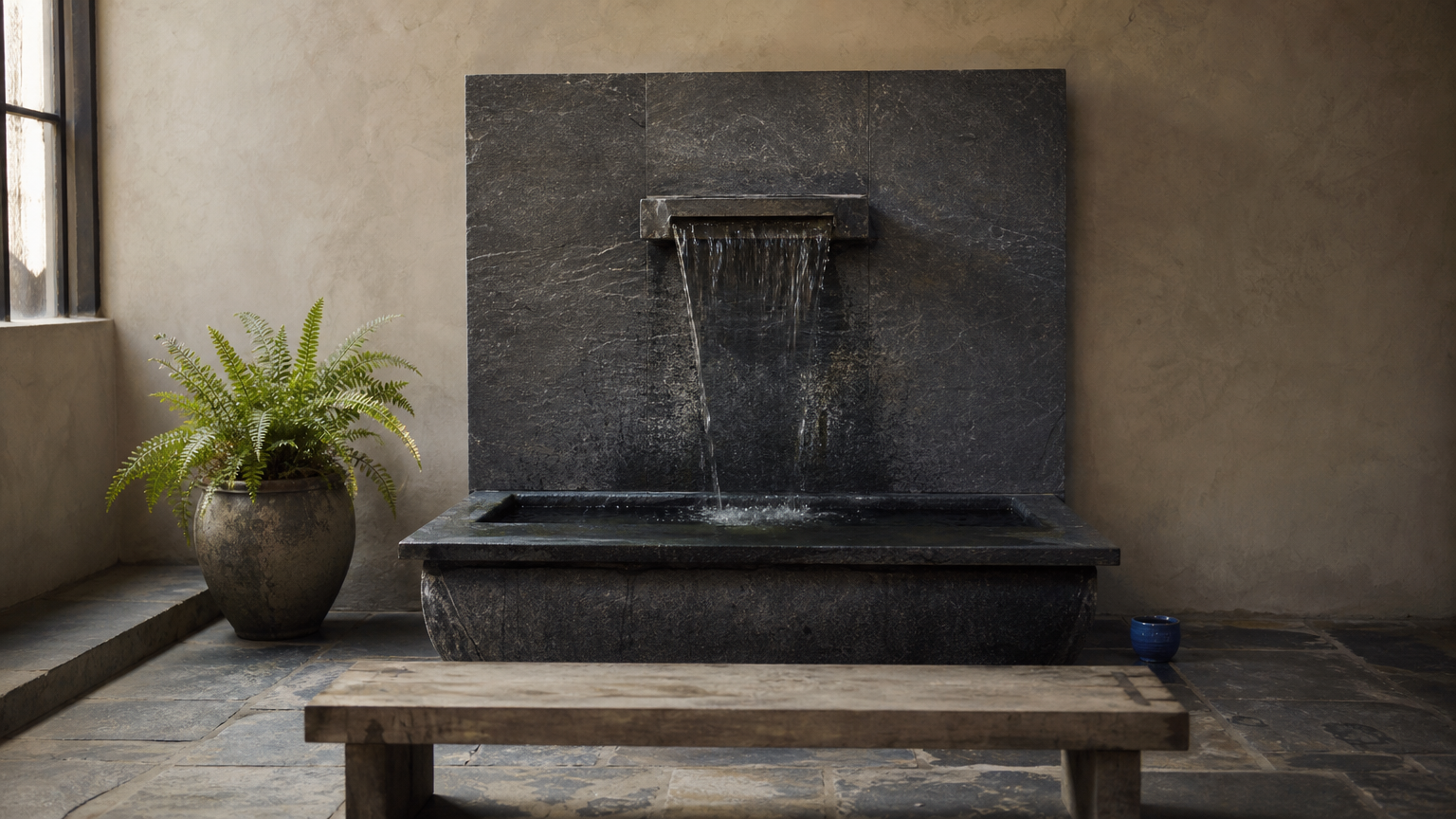
A wall that carries a spout or a thin sheet of water adds sound, movement and a focal point while using only a small basin of floor space. It suits you if you want a calm corner or want to mask road noise.
What it looks like
Water drops from a spout, scupper or slate face into a hidden basin and is pumped back up. Black slate or concrete with trickling water looks modern. Aged stone and weathered timber suit a rustic garden.
Place a bench or a pair of chairs facing it. The wall then becomes the reason to sit outside, not just a boundary.
How to build or install it
You need a recirculating pump, a waterproof basin or sump, and a wall face that water cannot soak into, such as porcelain or sealed stone cladding. Have a qualified electrician run the power, with a residual current device (RCD) on the circuit.
Mosquitoes are the Malaysian issue. Keep water moving, cover the sump, and avoid any shallow pockets of still water. If you want fish in the basin, our koi pond designs, the Zen Bio Koi Pond and the Himalaya Rock Koi Fish Pond, show what a full pond looks like.
Moving, covered water gives you the sound without the mosquitoes.
Cost and upkeep
Cost sits in the middle to high range and depends on the pump, waterproofing and cladding. A simple spout into a small basin is far cheaper than a full slate wall.
Clean the pump and filter regularly, top up the water that evaporates, and scrub algae off the face. Warm air makes algae grow faster than in cooler climates.
9. Mirrors, tiles and wall art
Outdoor mirrors, tiles and wall art make a small garden look deeper and give a plain wall a focal point without any planting. They suit you in a shaded courtyard where plants struggle.
What it looks like
A mirror reflects light and greenery, so a short garden seems to continue past the wall. Glazed tiles or a mosaic add color, and a single course of tiles along a raised bed makes a neat accent. Lanterns or soft solar lights make the wall a feature at night too.
Balance is the trick. One strong piece looks intentional, while five small pieces look like clutter.
How to build or install it
Buy pieces rated for outdoor use, with sealed backs and rust-resistant frames. Fix them rigidly with masonry anchors so wind and storms cannot shift them. Choose exterior-grade tiles and an exterior adhesive, then grout and seal the joints.
Untreated wooden frames rot in humid weather, so pick metal or well-sealed frames. Keep mirrors out of strong direct sun where reflected heat can stress nearby plants.
One well-placed mirror does more for a small yard than five small ornaments.
Cost and upkeep
Outlay is low, and you can build up the wall piece by piece. A large mirror or a tiled panel costs more than a lantern, but still far less than building a new wall.
Wipe mirrors and tiles with a damp cloth, and check the fixings after heavy storms. That is all the upkeep this wall needs.
How to choose the right wall for your garden
Choose by the job the wall must do first, then by the light it receives and the upkeep you will accept. Most small gardens end up combining two ideas, such as a low block wall topped with a trellis, or a painted wall with one mirror.
Compare the nine ideas at a glance
| Idea | Floor space used | Upkeep | Relative cost | Best for |
|---|---|---|---|---|
| Vertical garden | None | Regular watering and trimming | Mid to high | Most greenery in a tiny space |
| Trellis climbers | A narrow bed | Pruning every few months | Low | Privacy and flowers |
| Low masonry wall | Wall thickness | Low | Mid | Seating, beds and slopes |
| Gabion | Basket depth | Very low | Low to mid | Modern look, drainage |
| Rendered and painted | None | Wash and repaint | Low | Brightening dull walls |
| Timber | Narrow | Treat, check for termites | Low to mid | Natural, warm look |
| Wall planters | None | Frequent watering | Low | Renters and balconies |
| Water feature | Small basin | Clean pump and filter | Mid to high | Sound and a focal point |
| Mirrors, tiles, art | None | Wipe and check fixings | Low | Light and depth |
Check these points before you build
Run through this list before you spend anything:
- Measure the width of the space, and subtract the depth of the wall idea.
- Note how many hours of direct sun the wall gets.
- Decide where rainwater will drain.
- Check with your local council about height limits and approval for boundary or retaining walls, and agree plans with neighbors on a shared boundary.
- Start with one idea, and add a second only after the first has settled in.
Pick one wall and start small
A good small garden wall does one job well. A vertical garden or trellis gives you green, a low wall gives you seating and beds, a painted wall gives you light, and a water feature gives you calm. Match the idea to your sun, your drainage and the upkeep you will really do.
If you want help choosing or building, contact our team. Send photos and measurements of your wall so we can prepare a quotation. A site visit costs RM200, which is deducted from the final quotation if you go ahead.