
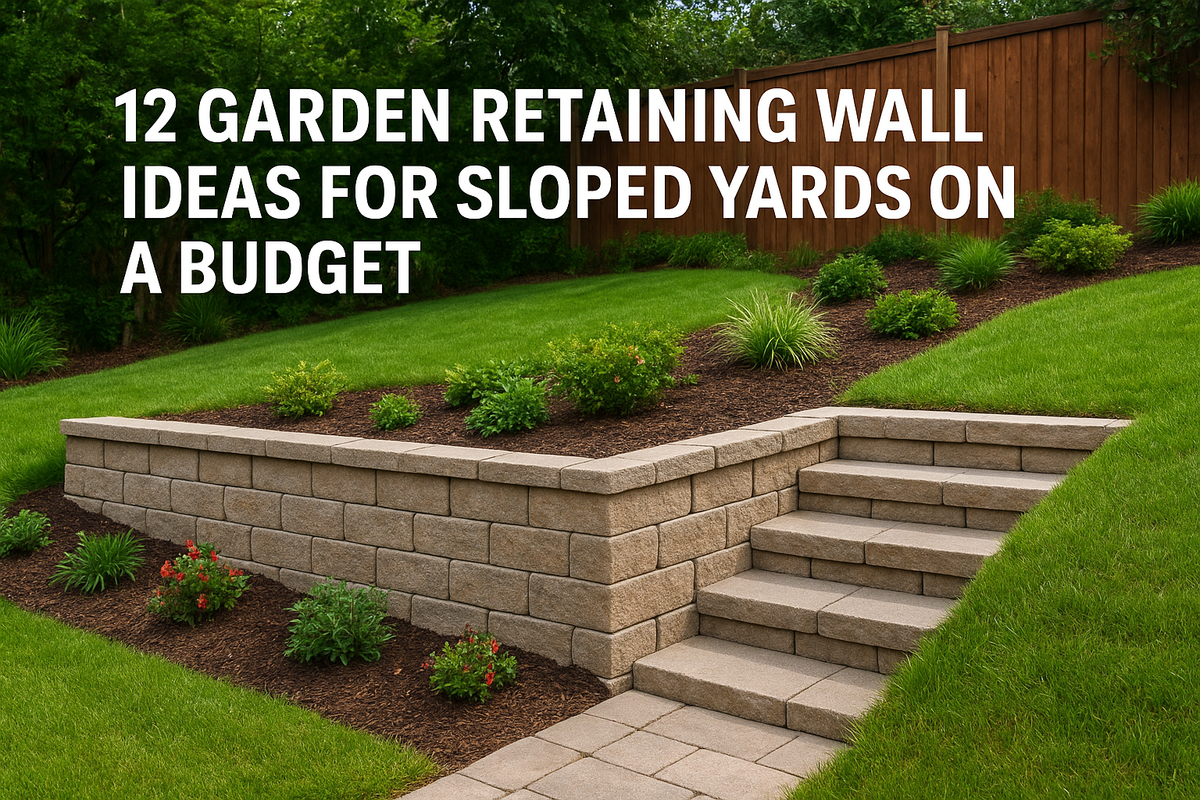
A sloped yard looks like a problem until you build a wall into it. Then it becomes flat lawn, planting beds, or a seating corner. The catch is cost. In Malaysia, heavy monsoon rain adds drainage and erosion to the budget, so a garden retaining wall needs smart choices from day one.
Here is the short answer. The cheapest walls use gabion baskets, timber sleepers, or interlocking concrete blocks, and they stay under roughly 1 meter high without engineering input. Natural stone and poured concrete cost more, but they last longer on steep ground. Anything taller than 1 meter, or any wall holding up a driveway or house, needs a structural engineer's approval.
Below you will find 12 garden retaining wall ideas for sloped yards, each with materials, rough cost level, and best use. We design and build gardens across Malaysia at Konzept Garden, so we also flag the drainage and planting details that keep a wall standing through the rainy season.
1. Custom-designed retaining wall with a landscape designer
What it is and how it works
A custom wall starts with a designer reading your slope, soil, and water flow before anyone picks a material. The designer then mixes wall types to suit the site, such as a reinforced concrete base clad in stone with planting pockets on top. You get a concept plan, a planting plan, and often 3D visuals, and the build includes drainage behind the wall, which is what most failed walls lack.
A retaining wall fails from trapped water, not from weight, so plan the drainage first and the looks second.
Best slopes and garden styles
Choose this route for steep or irregular slopes, split-level plots, and any wall taller than 1 meter. It also suits tropical, modern, and resort-style gardens, where the wall is a feature people see every day. If the slope sits next to a house, pool, or driveway, a designed and engineered wall is the safer call.
Typical cost range in Malaysia
Custom walls cost more per square foot than a DIY block wall, but they cost less than rebuilding a collapsed one. These figures are ballpark estimates only, and access, soil, and finish can move them a lot. A site visit and written quote are the only way to get a real number.
| Wall height | Rough construction cost (per sq ft of wall face) |
|---|---|
| Up to 1 m | RM 150 to RM 250 |
| 1 m to 2 m, engineered | RM 250 to RM 450 |
Pros and cons
The trade-off is simple. You pay more upfront and get a wall that fits your garden and holds through heavy rain.
- Pros: engineered for your soil, built-in drainage, a planting plan that softens the wall, and one team accountable from design to handover.
- Cons: the highest upfront cost on this list, a longer lead time, and a design stage before any digging starts.
Maintenance and lifespan
With good drainage, a reinforced concrete or stone-clad wall can last 30 to 50 years. Your job is light. Clear the weep holes and drain outlets before the monsoon, check for new cracks or bulging after storms, and trim climbers that push into joints. If you want a designer to scope your slope, Konzept Garden's landscape design service includes a free quotation.
2. Timber sleeper retaining walls
What it is and how it works
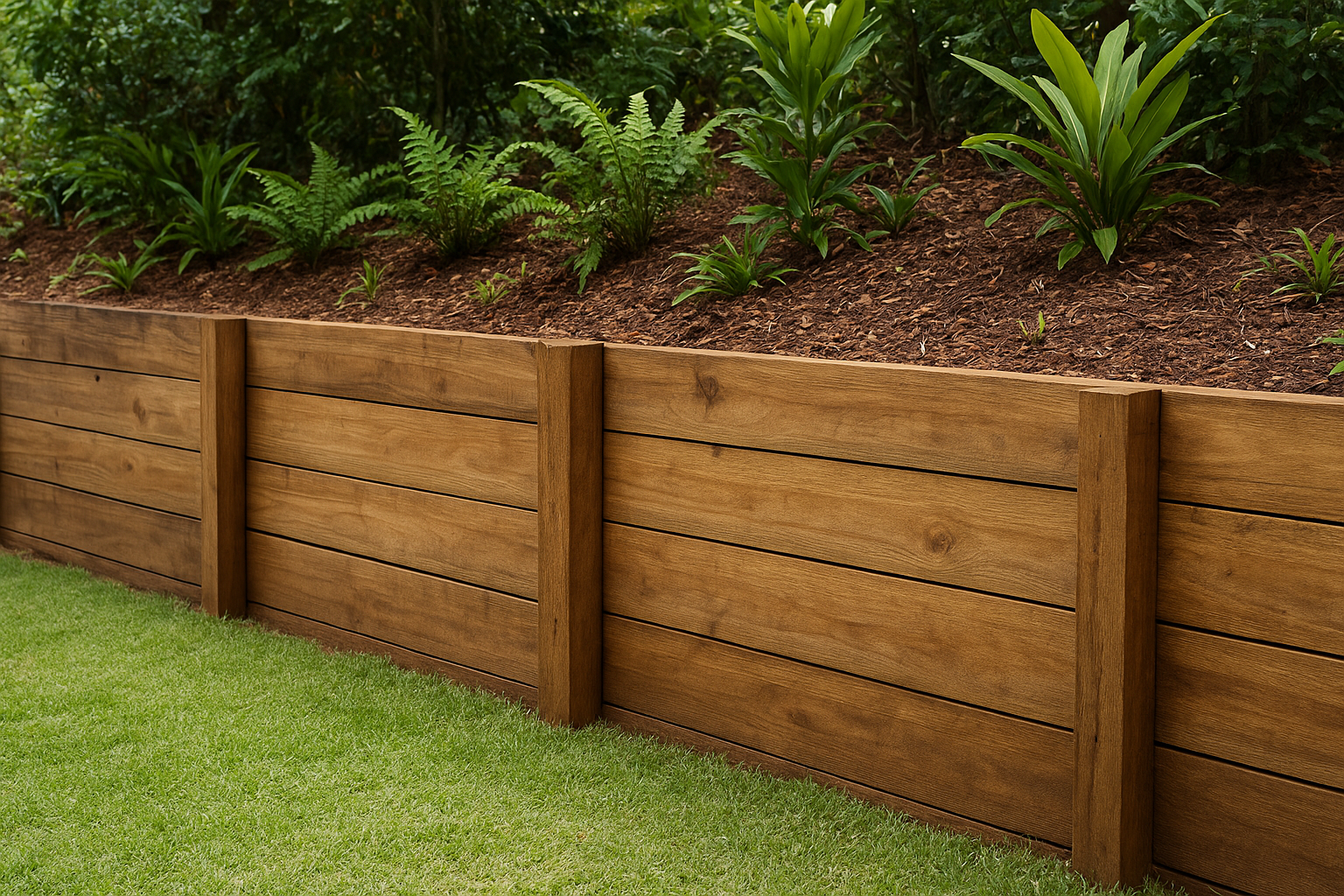
Stacked hardwood beams form the wall face, and vertical posts set in concrete hold them in place. Among budget garden retaining wall ideas, it is one of the fastest to build, often taking two or three days for a small garden. Get these details right:
- Posts every 1 to 1.5 m, buried about one-third of the wall height.
- Gravel backfill with a perforated drain pipe behind the wall.
- Geotextile fabric against the timber to keep soil out of the gravel.
Best slopes and garden styles
Sleepers suit gentle to moderate slopes under 1 meter, such as a raised lawn step or a vegetable bed edge.
Their warm, linear look fits tropical, rustic, and Japanese-style gardens, and it pairs well with ferns and gingers.
Typical cost range in Malaysia
Prices depend mostly on the species, and these are ballpark estimates only. Check the timber grade and supplier before you compare quotes.
| Timber type | Rough cost (per sq ft of wall face) | Life in ground contact |
|---|---|---|
| Pressure-treated softwood | RM 40 to RM 70 | 5 to 10 years |
| Belian or other tropical hardwood | RM 90 to RM 150 | 20 to 30 years |
Pros and cons
The trade-off comes down to low upfront cost against shorter life in wet soil.
- Pros: cheap, quick, easy to curve gently, and friendly to DIY.
- Cons: softwood rots fast in Malaysian humidity, termites are a risk, and it is a poor choice above 1 meter.
Maintenance and lifespan
Termites and rot are the enemies here. Inspect posts and the lowest course each year, keep soil from piling against the top edge, and keep the drain pipe outlet clear before the monsoon. Hardwood can last 20 years or more, while treated softwood often needs replacing within a decade.
In Malaysia's humidity, the timber species matters more than the wall design.
3. Concrete block retaining walls
What it is and how it works
Hollow concrete blocks are laid in mortar on a reinforced concrete footing, with steel rebar running through the cores and filled with grout. Most local contractors already know this method, so it is one of the more practical garden retaining wall ideas for tight budgets. Add gravel backfill and weep holes behind the wall so rain can escape.
A block wall is only as strong as its footing and its drainage.
Best slopes and garden styles
Walls up to 1 meter suit moderate slopes around lawns, car porches, and side lanes. Plain grey block looks heavy on its own, so it fits modern or utilitarian gardens best, or any plot where you plan to render or clad it later.
Typical cost range in Malaysia
Block walls sit in the middle of the price range, and these are ballpark estimates only. Footing depth and rebar spacing change the final quote.
| Wall height | Rough cost (per sq ft of wall face) |
|---|---|
| Up to 1 m | RM 60 to RM 110 |
| 1 m to 2 m, engineered | RM 120 to RM 200 |
Pros and cons
The trade-off is strength for the price against a plain, industrial look.
- Pros: strong, termite-proof, easy to find labor, and a solid base for render, paint, or cladding.
- Cons: needs a proper footing, looks bare unless finished, and cracks if drainage is skipped.
Maintenance and lifespan
Expect 30 to 40 years with good drainage. Seal or repaint every few years, and clear the weep holes before the monsoon. Hairline cracks are normal, but widening ones or a leaning section need an engineer's check.
4. Interlocking retaining wall blocks
What it is and how it works
These are precast blocks that lock together with a rear lip or fiberglass pins, so there is no mortar and no rigid footing. Among all the garden retaining wall ideas here, it is the friendliest for DIY. The basic sequence:
- Dig a trench and compact about 150 mm of crushed gravel.
- Stack each course slightly back into the slope.
- Backfill with clean gravel and lay a perforated drain pipe.
A compacted base and clean gravel backfill matter more than the block you pick.
Best slopes and garden styles
Interlocking blocks suit gentle to moderate slopes up to about 1 meter, such as terraced lawns and planting steps.
Because the system is flexible, it handles curves and corners well, and the even face suits modern and tropical gardens. Taller walls need geogrid reinforcement and an engineer's sign-off.
Typical cost range in Malaysia
Prices below are ballpark estimates only, and imported branded blocks sit at the high end. Compare block price plus labor when you collect quotes.
| Option | Rough cost (per sq ft of wall face) |
|---|---|
| DIY, materials only | RM 35 to RM 70 |
| Installed by a contractor | RM 80 to RM 140 |
Pros and cons
The trade-off is fast installation against limited height without reinforcement.
- Pros: no mortar, quick to build, easy curves, and single blocks can be replaced.
- Cons: blocks cost more than plain concrete block, the look is uniform, and a poor base means settling.
Maintenance and lifespan
Expect 30 to 50 years if the base stays firm. Check for bulging or gaps after heavy rain, and keep drain outlets clear before the monsoon.
Individual blocks can be lifted and reset, so repairs stay cheap and small.
5. Gabion retaining walls
What it is and how it works
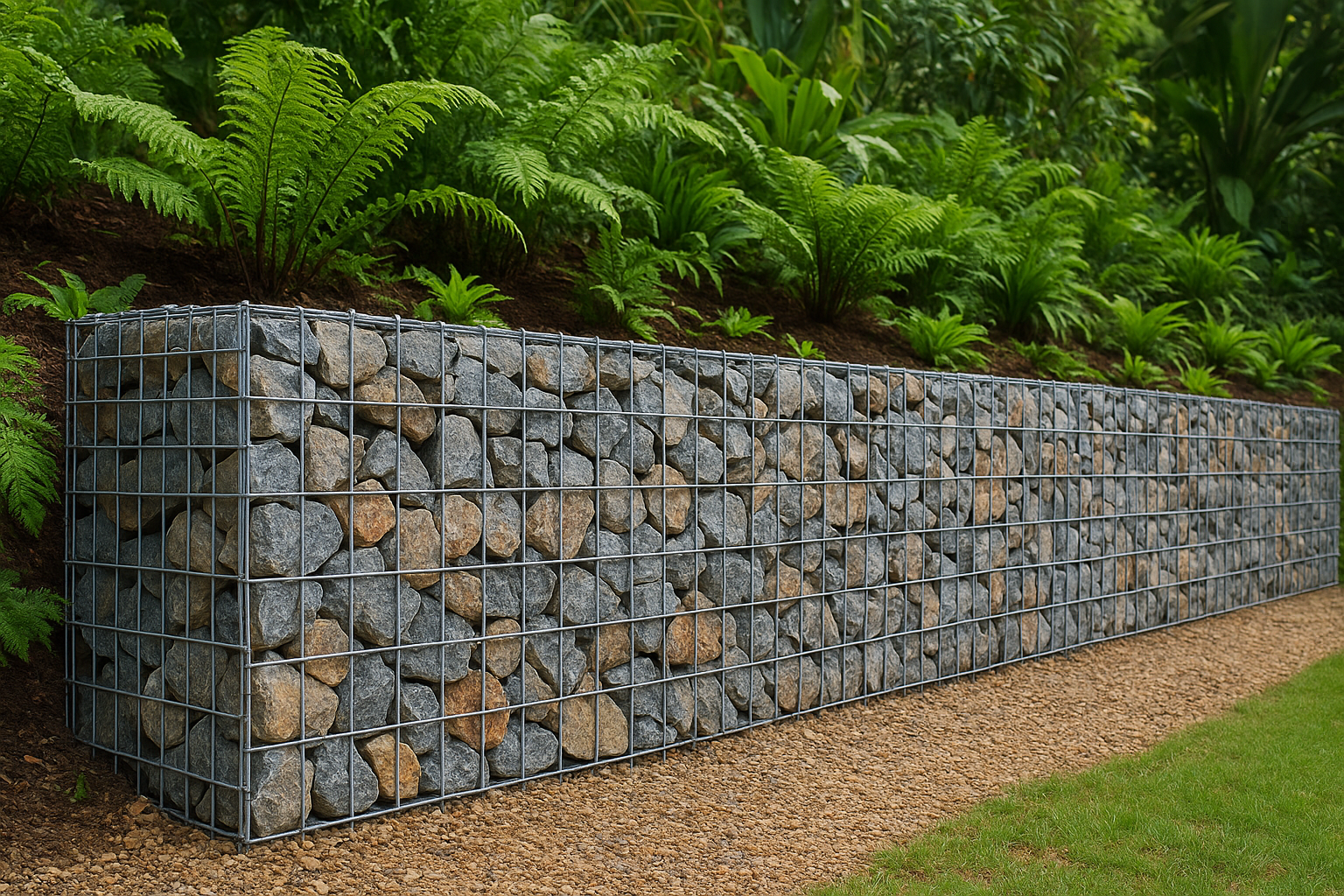
Steel wire baskets filled with stone make up a gabion wall. Among budget garden retaining wall ideas, it is one of the few that drains itself, because water passes through the gaps between the rocks. The build is simple:
- Compact the base and line the trench with geotextile.
- Stack the baskets and tie them together with wire.
- Fill with hard stone in layers, close the lids, and backfill.
Best slopes and garden styles
Gabions handle moderate to steep slopes well, because stacked baskets step back into the hill.
Their rugged look fits modern, industrial, and tropical gardens, especially with ferns tucked in front. Anything above 1 meter needs an engineer's check.
Typical cost range in Malaysia
Prices below are ballpark estimates only, and the stone source drives most of the difference. Local granite is cheap, while imported decorative stone is not.
| Option | Rough cost (per sq ft of wall face) |
|---|---|
| Galvanized basket, local stone | RM 50 to RM 90 |
| PVC-coated basket, selected stone | RM 90 to RM 140 |
Pros and cons
Gabions trade easy drainage and low cost for a rough, utilitarian face.
- Pros: quick to build, flexible on uneven ground, termite-proof, and plants root in the gaps.
- Cons: heavy stone to haul, a look that is not for every garden, and wire that fails if the coating is poor.
Maintenance and lifespan
Good galvanized or PVC-coated baskets can last 30 to 50 years. Check for bulging baskets or snapped wires after storms, and pull out weeds that seed in the gaps.
A gabion wall lasts as long as its wire coating, so never buy the thinnest mesh.
6. Natural stone and dry stone walls
What it is and how it works
Builders stack cut or field stone by hand, either dry with no mortar or bedded in mortar on a concrete footing. Dry stone holds by weight and interlock, and water drains through the joints. Few garden retaining wall ideas look this timeless. Follow these basics:
- Set the largest stones at the base, tilted slightly back into the slope.
- Add long tie stones that reach deep into the soil every meter or so.
- Backfill with clean gravel behind the wall.
Best slopes and garden styles
Dry stone suits gentle slopes under about 0.8 meter, such as a raised bed edge or a path border. Mortared stone can go higher, but anything above 1 meter needs an engineer.
The natural face fits tropical, cottage, and Japanese gardens, where moss and ferns settle into the joints.
Typical cost range in Malaysia
Skilled stonemasons are scarce, so labor drives the price. These are ballpark estimates only, and the stone source changes the quote more than anything else.
| Option | Rough cost (per sq ft of wall face) |
|---|---|
| Dry stone, local stone | RM 80 to RM 140 |
| Mortared, on concrete footing | RM 120 to RM 220 |
Pros and cons
You trade beautiful, long-lasting looks for a high labor cost.
- Pros: termite-proof, drains well, ages gracefully, and needs no sealing.
- Cons: slow to build, hard to find skilled masons, and heavy stone is costly to haul.
Maintenance and lifespan
Properly built walls last 50 years or more. Walk the wall after heavy rain and reset any loose stones before the gap spreads. Pull out tree seedlings too, because their roots pry joints apart.
Dry stone walls last because they drain, not because they are glued.
7. Boulder and rockery retaining walls
What it is and how it works
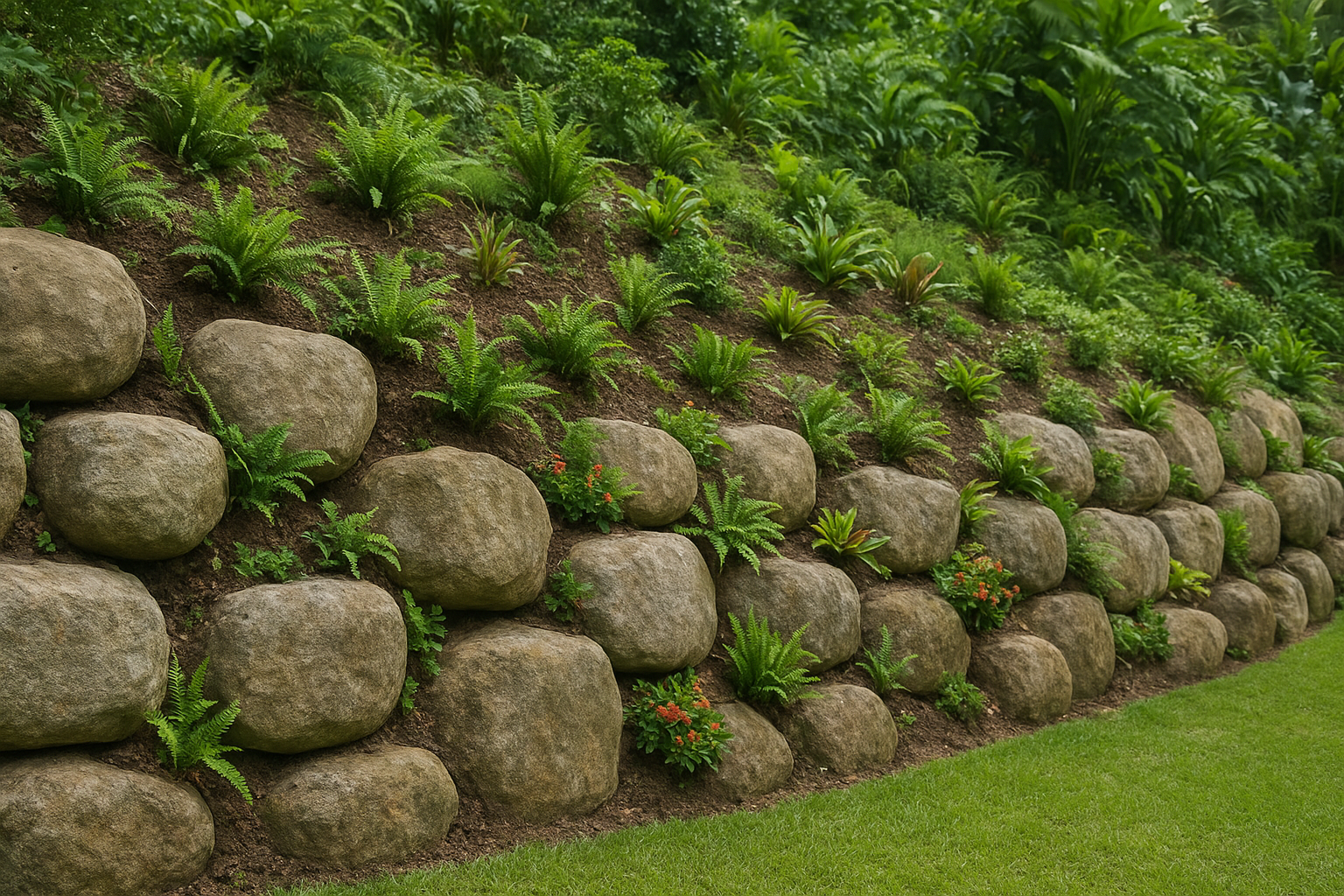
Large boulders are stacked in a staggered line, each one partially buried and tilted slightly back into the slope. Their weight holds the soil, and the gaps between them take plants. Among all the garden retaining wall ideas here, this one looks the most natural. The basics:
- Bury about one-third of each bottom boulder on compacted gravel.
- Line the back with geotextile and add clean gravel for drainage.
- Fill the gaps with soil and plant them.
Bury a third of every boulder, and its weight does the work for you.
Best slopes and garden styles
Boulders handle moderate to steep slopes well, up to about 1 meter high. Taller stacks need an engineer's check.
The rugged look suits tropical, Japanese, and resort-style gardens, especially with ferns, bromeliads, and dwarf ixora tucked into the pockets.
Typical cost range in Malaysia
These are ballpark estimates only. Stone source and machine access drive the price, because a crane lorry or excavator must reach your slope.
| Option | Rough cost (per sq ft of wall face) |
|---|---|
| Local granite boulders | RM 60 to RM 110 |
| Selected river or decorative rock | RM 110 to RM 200 |
Pros and cons
You trade natural looks and long life for a need for heavy machinery.
- Pros: termite-proof, drains well, and plants root between the rocks.
- Cons: no machine access means no wall, rocks can shift if poorly placed, and the style is not formal.
Maintenance and lifespan
A well-set boulder wall can last 50 years or more. Walk it after heavy rain and reset any rock that has tilted or sunk.
Plants need trimming and weeding twice a year, and tree seedlings should come out early before their roots pry the stones apart.
8. Brick retaining walls
What it is and how it works
Clay bricks are laid in mortar on a reinforced concrete footing, usually one brick thick (about 225 mm) with concrete columns every 2 to 3 m for stiffness. Of all the traditional garden retaining wall ideas, brick gives the warmest, most classic face. Mortar seals the joints, so you must add gravel backfill and weep holes.
Mortared brick does not drain itself, so build the drainage in or the wall will pay for it.
Best slopes and garden styles
Brick suits gentle to moderate slopes up to 1 meter, such as raised beds, patio edges, and front-yard steps. Its earthy tone fits heritage, cottage, and Japanese-style gardens. Anything taller needs an engineer's design.
Typical cost range in Malaysia
Labor is the main cost, and these are ballpark estimates only. Exposed face brick costs more because the masonry must look neat on its own.
| Option | Rough cost (per sq ft of wall face) |
|---|---|
| Common brick, to be rendered | RM 70 to RM 120 |
| Exposed face brick | RM 110 to RM 180 |
Pros and cons
You trade lasting good looks for slower, skilled work.
- Pros: termite-proof, strong in compression, and needs no paint if you leave it exposed.
- Cons: slow to lay, needs a proper footing, and cracks if water pressure builds behind it.
Maintenance and lifespan
With good drainage, brick walls can last 40 to 60 years. Scrub off moss and white salt deposits (efflorescence) once a year, and repoint crumbling joints early. Also clear the weep holes before the monsoon, because a blocked hole is how a good wall starts to lean.
9. Rendered or painted block walls
What it is and how it works
A rendered wall is the concrete block wall from idea 3, coated in cement-sand render and then painted or textured. The coat hides the block pattern and seals the surface against rain. Among budget garden retaining wall ideas, it is the cheapest way to get a clean, modern face. Use exterior masonry paint with a waterproofing additive, and let the render cure for about a week first.
Render hides the block, but it cannot hide a wall with no drainage behind it.
Best slopes and garden styles
Slopes up to 1 meter high suit this finish, the same as plain block walls. Smooth white, grey, or charcoal faces fit modern and minimalist gardens, and they make a sharp backdrop for green foliage. Textured finishes also work in Mediterranean-style courtyards.
Typical cost range in Malaysia
Finishing adds roughly RM 15 to RM 30 per square foot on top of the block wall. These are ballpark estimates only, and the paint grade matters more than the color.
| Finish | Rough cost (per sq ft of wall face) |
|---|---|
| Plain render and paint | RM 80 to RM 140 |
| Textured or feature finish | RM 100 to RM 170 |
Pros and cons
You trade low cost and design freedom for a finish that needs regular upkeep.
- Pros: cheap upgrade, unlimited colors, termite-proof, and a smooth face for lighting or signage.
- Cons: render cracks over time, algae spreads fast in humid weather, and repainting is a recurring cost.
Maintenance and lifespan
The wall itself can last 30 to 40 years, but the paint needs a refresh every 5 to 7 years. Wash off green algae each year, fill hairline cracks with flexible sealant, and clear the weep holes before the monsoon. Peeling paint in patches usually means water is trapped behind the wall.
10. Stone or porcelain cladded retaining walls
What it is and how it works
Cladding is a thin skin of natural stone slabs or porcelain tiles fixed over a block or concrete wall. The structure holds the soil, and the cladding is only the face. Among garden retaining wall ideas, it gives a premium look without building the whole wall in solid stone. Use exterior-grade adhesive for tiles, or mechanical clips for heavy stone, and keep weep holes open through the finish.
Cladding makes a wall beautiful, but the block behind it still does the holding.
Best slopes and garden styles
Use it on walls up to 1 meter that act as a showpiece, such as beside a pool, an entrance, or a patio. Slate and ledger stone suit tropical and resort gardens, while large-format porcelain fits modern and minimalist plots.
Typical cost range in Malaysia
Expect these prices to include the block wall underneath. They are ballpark estimates only, and tile size and stone grade move the quote more than anything else.
| Cladding | Rough cost (per sq ft of wall face) |
|---|---|
| Porcelain tile | RM 120 to RM 200 |
| Natural stone | RM 150 to RM 260 |
Pros and cons
You trade high-end looks for higher cost and skilled installation.
- Pros: upscale finish, termite-proof, and easy to wipe clean.
- Cons: poor fixing means tiles pop off, and heavy stone needs a strong base.
Maintenance and lifespan
Well-fixed cladding can last 25 to 40 years. Tap the surface after heavy rain and replace any hollow-sounding tile before water gets behind it. Reseal natural stone every two or three years, and clear the weep holes before the monsoon.
11. Multi-tiered terraced walls with planting beds
What it is and how it works
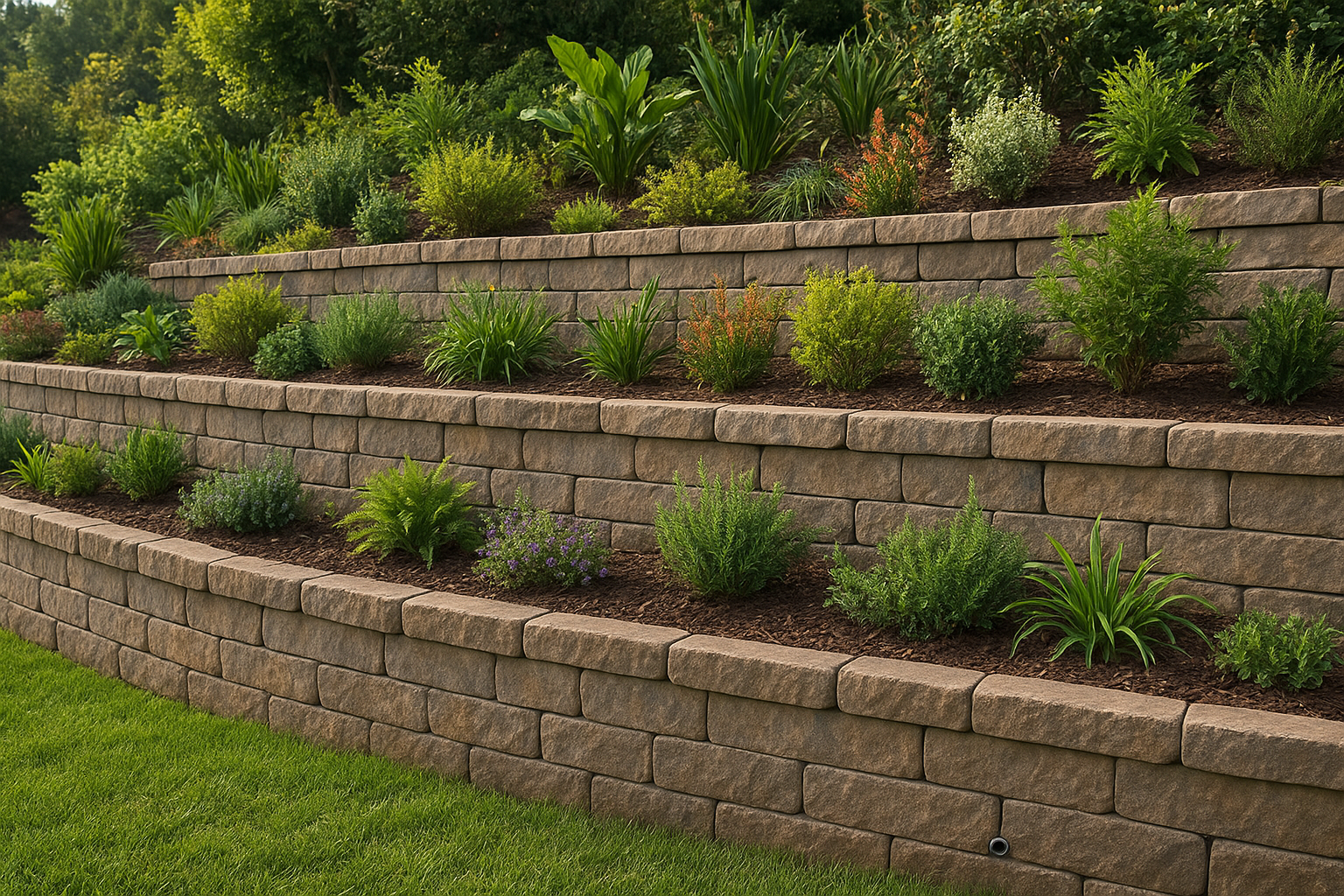
Terracing replaces one tall wall with two or three shorter walls, each under 1 meter, and a flat planting bed behind every one. Each step holds less soil, so drainage is easier to manage. Among garden retaining wall ideas, it is the one that adds the most usable space. Leave each bed at least 1 meter deep, and give every tier its own drain pipe.
Three low walls are safer and cheaper than one tall wall.
Best slopes and garden styles
Terraces suit steep slopes that no single low wall can handle, and long back gardens with a big drop. They fit tropical, edible, and cottage gardens, with herbs, gingers, or dwarf shrubs in each bed. If the combined drop passes about 1.5 meters, have an engineer check the whole system.
Typical cost range in Malaysia
You pay for each wall plus the soil and plants, so these are ballpark estimates only. Your choice of wall material decides most of the total.
| Terrace build | Rough cost (per sq ft of wall face) |
|---|---|
| Block or sleeper tiers | RM 60 to RM 140 |
| Stone or gabion tiers | RM 90 to RM 200 |
Pros and cons
You trade extra garden space for a bigger footprint and more materials.
- Pros: safer on steep ground, planting room on every level, and mixed materials allowed.
- Cons: needs space, more drains to build, and a higher total bill.
Maintenance and lifespan
Lifespan follows the wall material, so expect 30 to 50 years for block or stone. Check every tier's drain outlet before the monsoon, and watch for soil washing from upper beds onto lower ones. Prune plants twice a year, and keep roots of large shrubs away from the wall face.
12. Green retaining walls with vertical planting
What it is and how it works
A green wall pairs a structural wall with a living face. Hollow planter blocks hold soil pockets, or planting panels with drip irrigation are fixed onto a block wall. Of all the garden retaining wall ideas here, this one cools the garden most. The structure still carries the soil, so keep gravel backfill and weep holes behind it.
Plants soften a retaining wall, but they never replace the structure behind it.
Best slopes and garden styles
Green walls work best up to 1 meter high on gentle to moderate slopes. Aim for bright shade or morning sun, because strong afternoon heat dries small pockets fast.
They suit tropical, resort, and courtyard gardens. Ferns, peperomia, and peanut grass (Arachis pintoi) cope well in shallow soil.
Typical cost range in Malaysia
These are ballpark estimates only, and the irrigation system plus plant density change the quote. Prices include the wall underneath.
| Option | Rough cost (per sq ft of wall face) |
|---|---|
| Planter blocks with planting pockets | RM 100 to RM 180 |
| Planting panels on a block wall, with drip line | RM 150 to RM 300 |
Pros and cons
You trade living, cooling looks for steady upkeep.
- Pros: softens hard surfaces, cools the air nearby, and gives wildlife a home.
- Cons: needs irrigation, plants die if watering fails, and it costs the most to maintain.
Maintenance and lifespan
The block wall can last 30 to 40 years, while panel systems usually need renewing after 10 to 15. Check the drip line and timer weekly, because one blocked emitter leaves a dry patch. Feed and prune every few months, and clear the weep holes before the monsoon.
Choosing the right wall for your slope
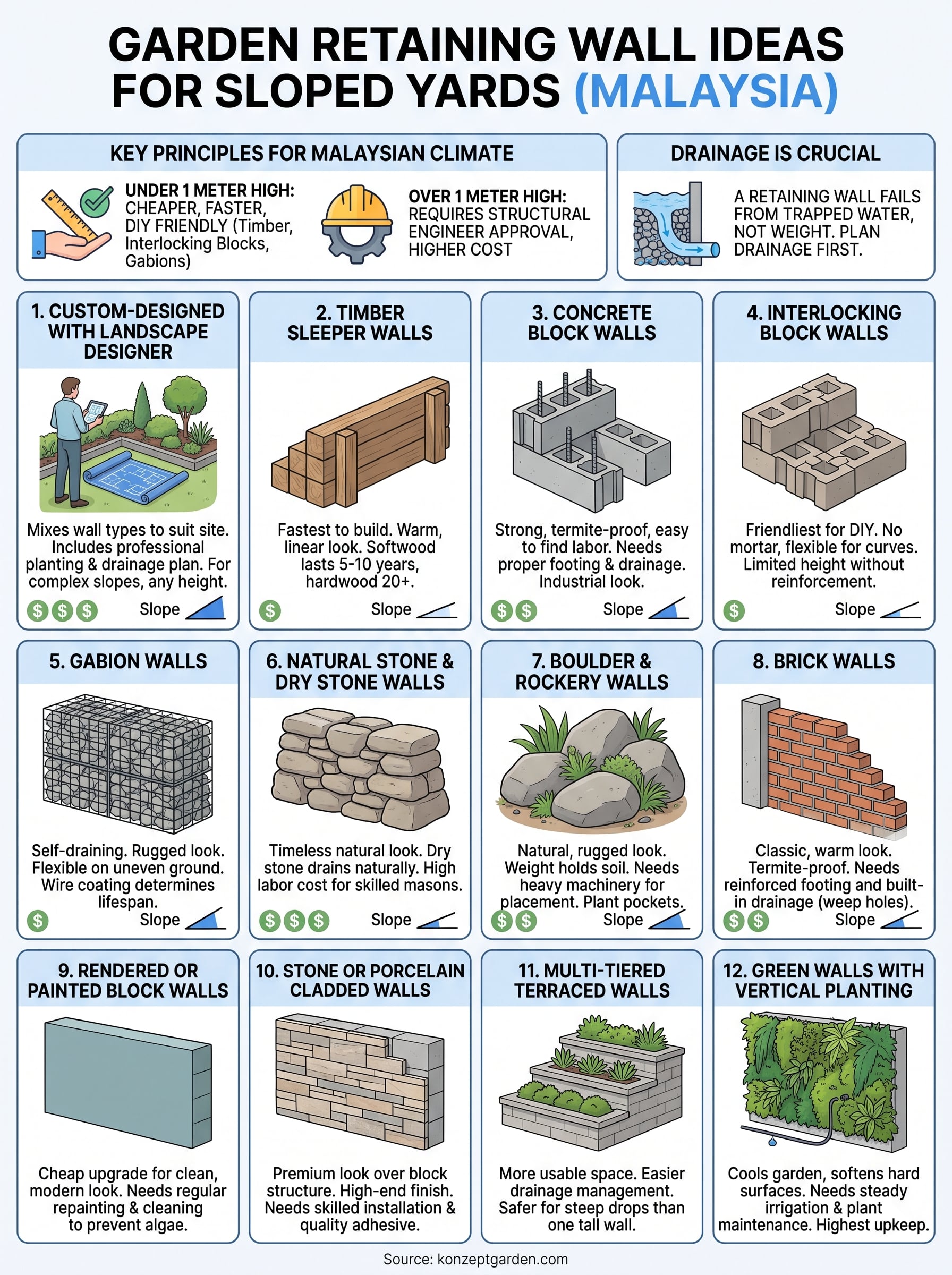
The best of these garden retaining wall ideas is the one that matches your slope, soil, and budget. For gentle drops under 1 meter, timber sleepers, interlocking blocks, or gabions keep costs low. For steeper ground, choose terraces, stone, or an engineered concrete base, then finish the face to suit your garden.
Whatever you pick, drainage decides how long the wall lasts. Gravel backfill, a drain pipe, and clear weep holes matter more than the material. Anything above 1 meter, or close to a house or driveway, needs an engineer's sign-off.
Not sure which wall fits your plot? Request a free quotation from Konzept Garden and our designers will review your slope, soil, and drainage before recommending a wall that suits your garden and budget.