
The best gravel garden path ideas share three traits: a firm base that drains, edges that hold the stone in, and a layout that suits how you walk through the garden. Stepping stones set in gravel suit beginners and small yards. A curved edged path suits lawns and borders, and a straight formal path suits front gardens. A dry creek path suits sloping or wet plots, and a banded modern path suits contemporary homes.
Most people searching for ideas hit a wall of photos with no guidance on what to actually build. A pretty picture does not tell you whether the stone will scatter, how wide the path should be, or why it turned into a weed bed after a few months of rain.
This article gives you five designs you can build, each with its look, the garden it suits, and the materials it needs. Konzept Garden has more than 30 years of landscape experience in Malaysia, so the notes allow for tropical downpours, fast weeds and strong midday sun.
1. Stepping stones set in gravel
Stepping stones in a gravel bed is the easiest of these gravel garden path ideas to build. The slabs give you a solid surface to walk on, and the gravel fills the gaps and suppresses weeds.
Look and best fit
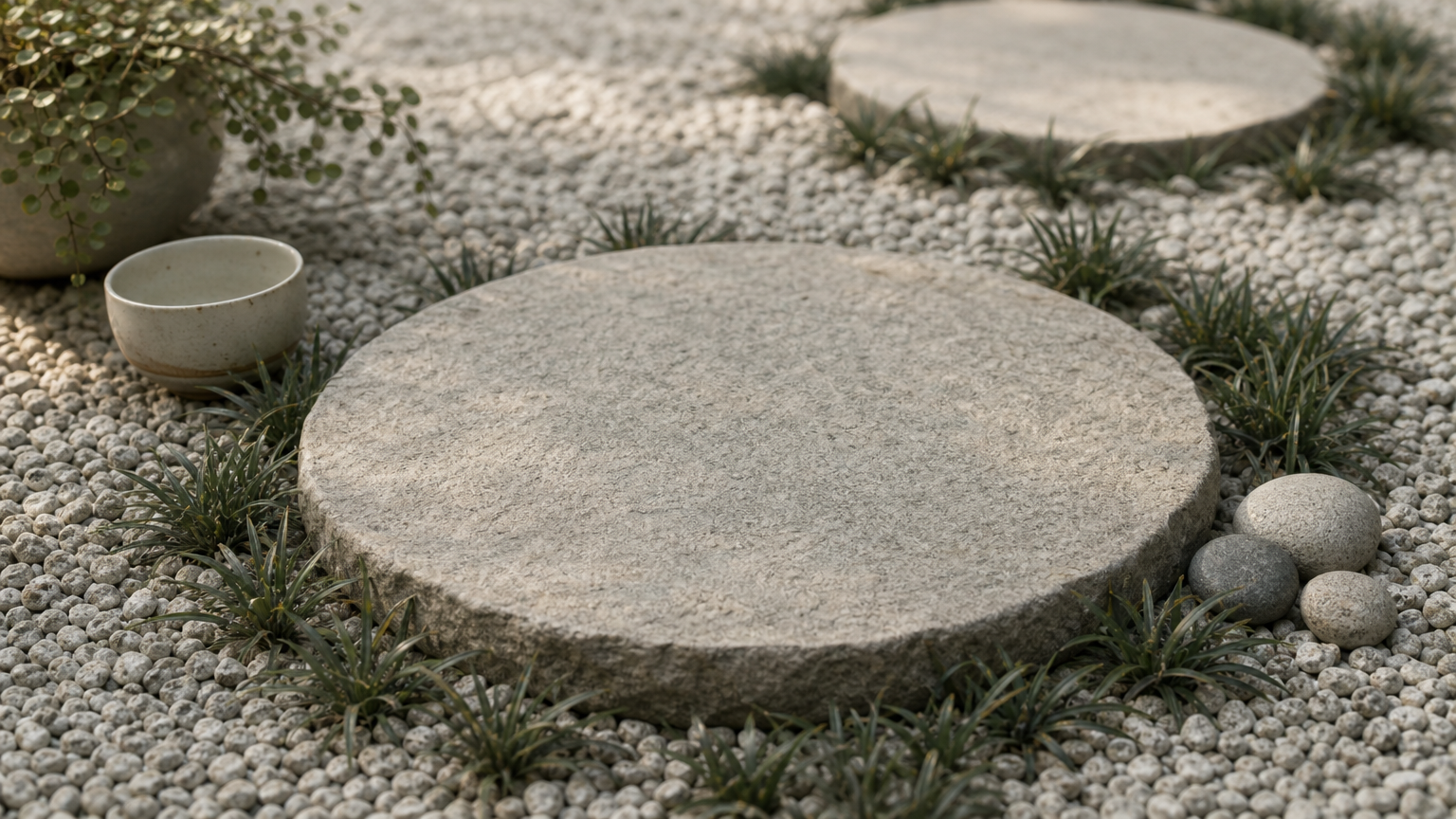
Large flat slabs, round or square, sit in a bed of pale or grey gravel. Space them about 60 cm from centre to centre so each step lands naturally. Slabs 40 to 60 cm wide feel stable underfoot. This design is best for small gardens, side passages and first-time builders, because you can lay it in a weekend.
Planting between the slabs softens the look. Low, tough ground covers such as dwarf mondo grass work well in Malaysian sun and rain. The slabs also keep your feet on a hard surface in wet weather, when loose gravel alone feels soft.
Materials and how to build it
Set every slab on a compacted base, never on loose gravel, or the stones rock and sink after the first heavy rain. Pour the gravel around them last. The type of gravel matters as much as the slabs.
Set the stones on a compacted base first, then pour the gravel around them.
| Gravel type | Typical size | Walking feel | Best use |
|---|---|---|---|
| Crushed angular stone | 10 to 20 mm | Firm, locks together | Main path surface |
| Pea gravel | 6 to 10 mm | Soft, shifts underfoot | Light fill between stones |
| River pebbles | 20 to 40 mm | Uneven, rolls | Borders and decoration only |
2. Curved gravel path with firm edging
A curved path with solid edging is the right pick for gardens with lawn or planting beds. The curve slows you down, and the edge keeps gravel out of the grass.
Look and best fit
A gentle S-curve between a lawn and a border hides the far end of the path and makes the garden feel bigger. It suits medium and large gardens, and any plot where a straight line would feel like a corridor.
Keep the curves wide and gradual. Tight bends get cut across, which scuffs the lawn and scatters stone. Ornamental grasses, ixora and cordyline along the edge give the path a tropical, layered look.
Materials and how to build it
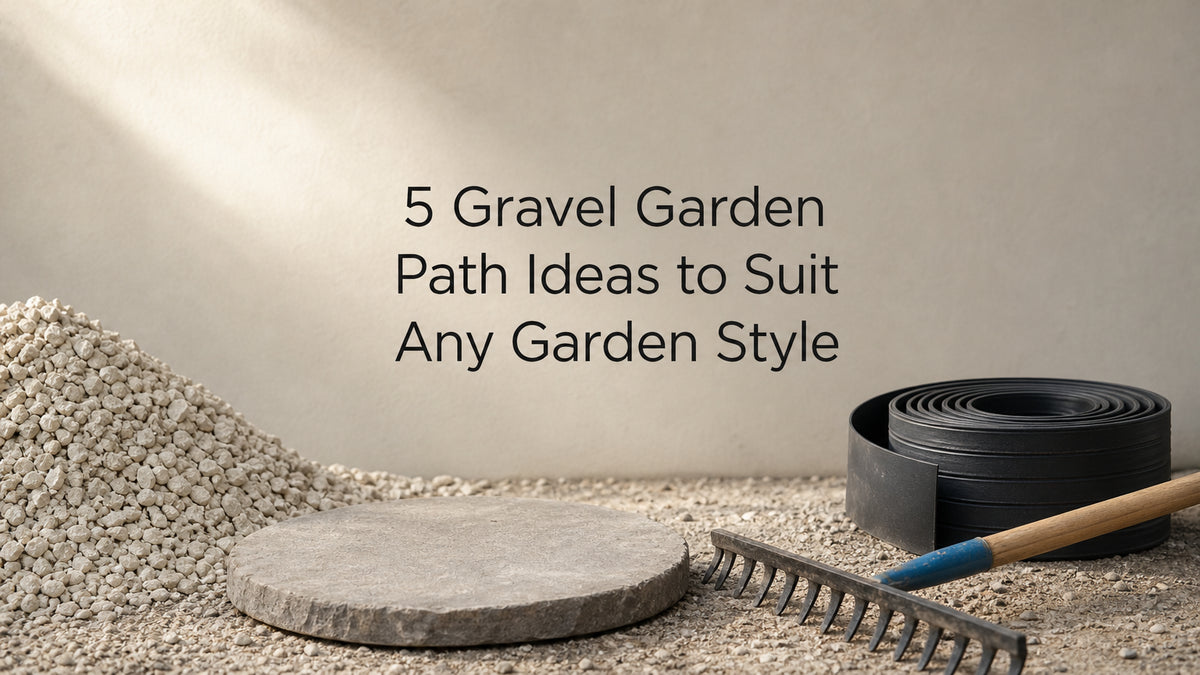
Flexible edging is the key part, because rigid pavers cannot follow a curve without awkward cuts. Take a 10 m path that is 1 m wide with 50 mm of gravel. You need 0.5 m³ of gravel, roughly 0.75 tonnes. Edging both sides takes 20 m. Our 10 meter flexible plastic lawn edging comes in black with 30 pegs and costs RM175 per roll, so two rolls cost RM350. Measure along the curve, since it adds length to a straight 10 m run.
Edging turns loose gravel into a path; without it, the stone creeps into the lawn and the shape is lost.
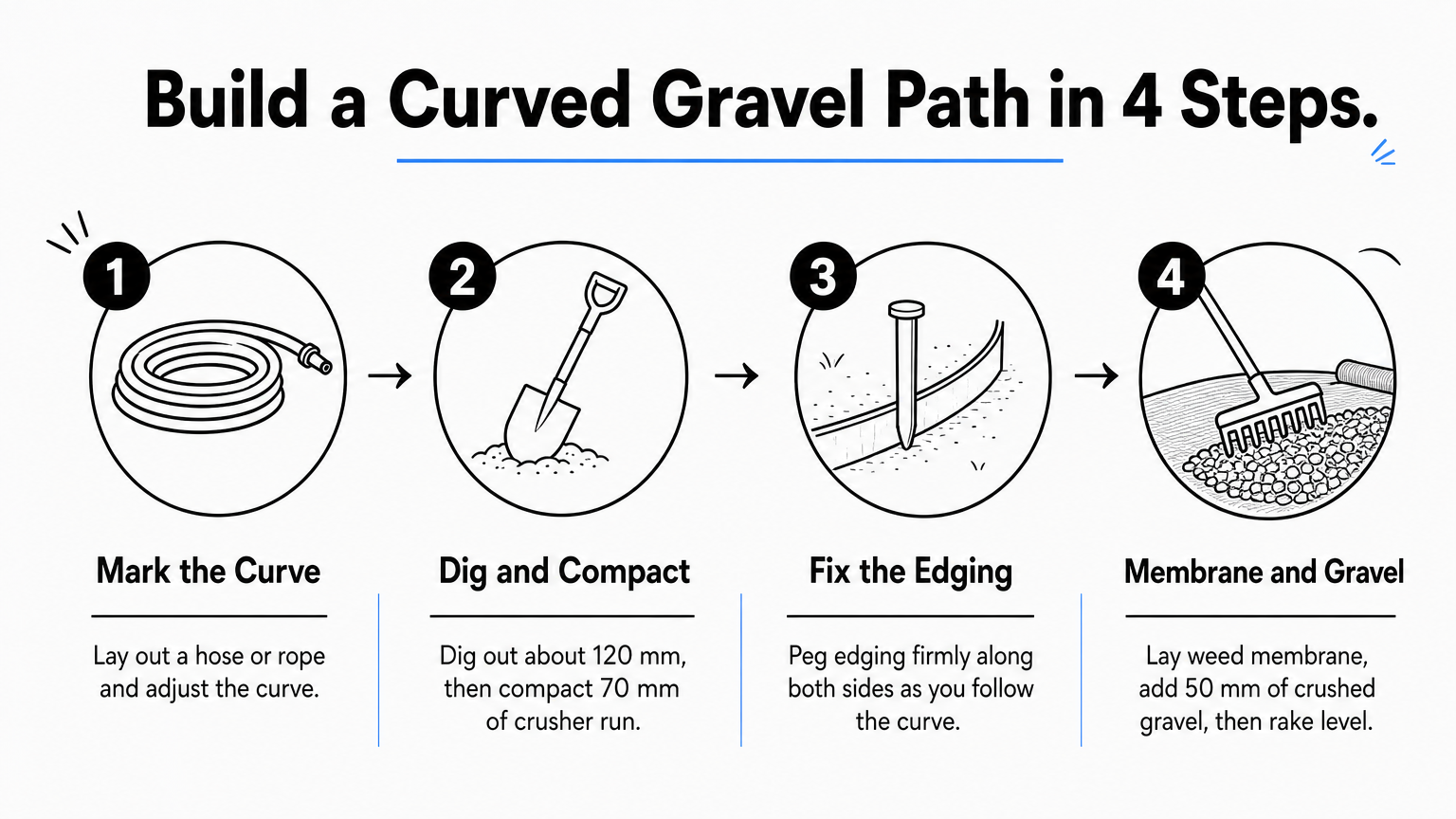
- Mark the curve with a hose or rope and adjust until it looks natural from the house.
- Dig out about 120 mm and compact 70 mm of crusher run as the base.
- Fix the edging along both sides, pegging it firmly as you follow the curve.
- Lay woven weed membrane, add 50 mm of crushed gravel, then rake it level.
3. Straight formal gravel path with clipped hedges
A straight, symmetrical path is the right choice for a front garden or entry, where you want a clear line from gate to door. Among all gravel garden path ideas, it looks the most deliberate.
Look and best fit
Clipped hedges run along both sides, and a pot, planter or small water feature marks the end of the line. Murraya or clipped ixora work as hedges in our climate. It suits terrace, semi-detached and bungalow front yards where first impressions matter.
Width decides how it feels. A path of 90 cm is the minimum for one person, and 1.2 m lets two people walk side by side. Plain loose gravel is a poor surface for prams, wheelchairs and wheeled bins, so a straight entry path is where a stabilised gravel grid earns its cost.
Materials and how to build it
Straight edges show every mistake, so set string lines before you dig. Use rigid edging such as brick or concrete kerb, because a straight run needs no flexibility. Choose a mid-grey or light-tan angular gravel. Very dark stone gets hot in midday sun, and bright white stone throws glare.
On a straight path, the edging and string line matter more than the gravel.
- Slope the surface 1 to 2 percent away from the house so rain drains off.
- Fill plastic grid cells with gravel on firm ground if wheels will use the path.
- Lay membrane under the grid or gravel to stop weeds.
- Clip hedges often. Overgrown hedges narrow the path and drop leaves on the stone.
4. Dry creek bed gravel path
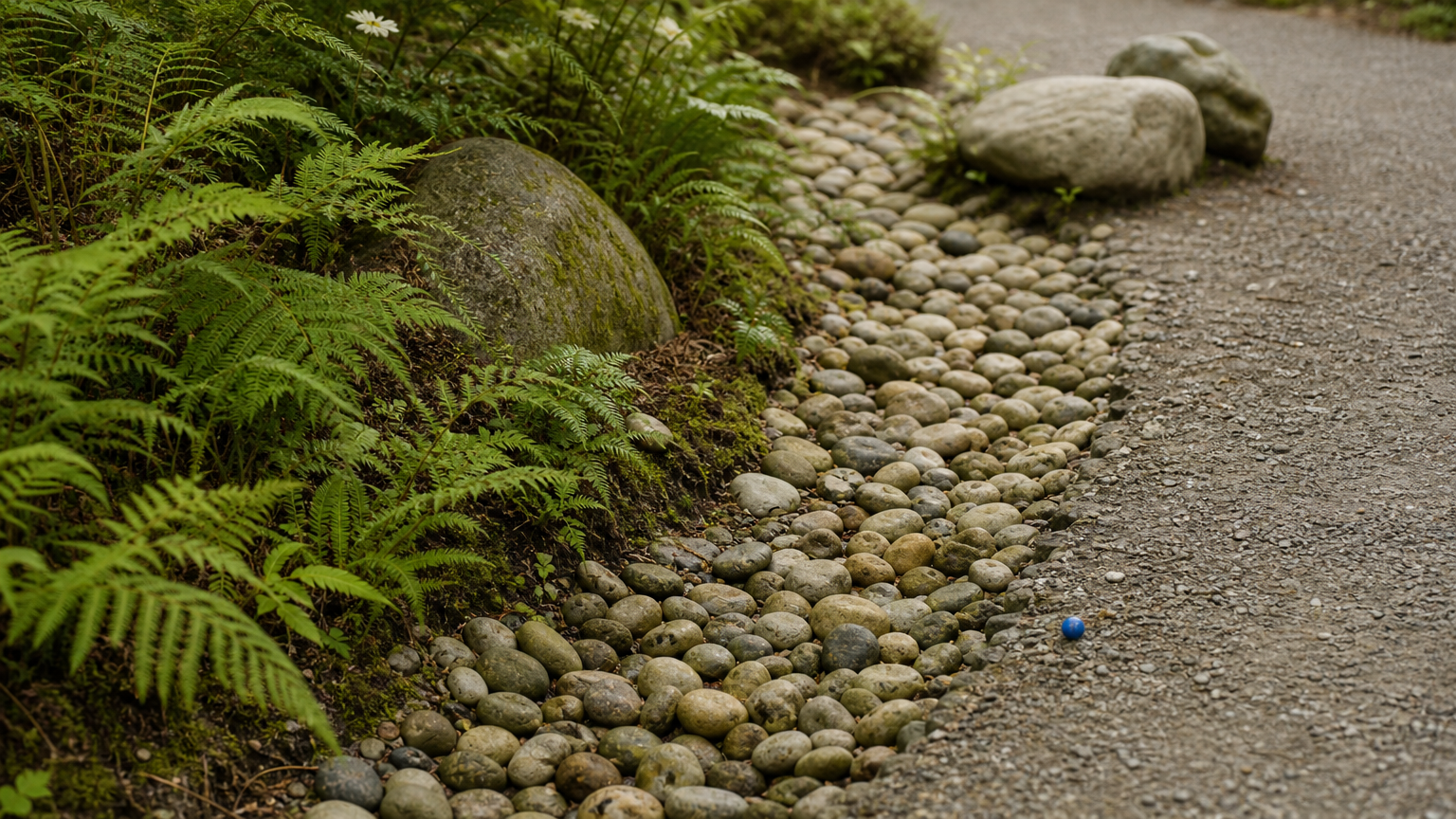
A path that runs beside a dry creek bed is the smartest option for sloping or soggy gardens. The creek carries rainwater, and the path stays walkable.
Look and best fit
Smooth river stones fill a winding channel, and a gravel path follows alongside. Ferns, bromeliads and bird's nest ferns suit the shade and the damp edges. This design is best for shaded gardens, gentle slopes and plots with runoff problems, and it gives a natural, jungle-garden feel.
Put the creek on the low side of the path and aim a roof downspout into it. In a Malaysian downpour, water then runs through the channel instead of across your walking surface. It looks like decoration, but it works as drainage.
Materials and how to build it
Use two stone sizes with different jobs. River stones of 40 to 100 mm fill the channel, with larger boulders half-buried at the bends. A crushed gravel of 10 to 20 mm forms the path, and it should sit a few centimetres above the creek so water never crosses it.
Give rainwater its own route, and the path stops doubling as the drain.
- Dig the channel about 15 to 20 cm deep and line it with membrane.
- Bury boulders by about half their height so they look settled.
- Slope the path surface slightly toward the creek.
- On steeper ground, break the slope with steps or bands, because gravel migrates downhill.
5. Modern gravel path with timber or steel bands
Bands of timber or steel set into gravel give the cleanest contemporary look. They also fix gravel's biggest weakness, which is movement.
Look and best fit
Dark or mid-grey gravel, straight or gently curved, is cut by slim rust-toned steel edging or hardwood bands. Ornamental grasses or a single frangipani give it a sculptural finish. It suits contemporary homes and sloped gardens, and it costs more than a plain edged path.
Bands laid across the path divide a slope into level sections, so the stone stays where you put it. Bands along the sides give a crisp line that reads as designed rather than casual.
Materials and how to build it
Use steel that is galvanised or powder-coated, or a hardwood rated for ground contact. Constant moisture and termites destroy untreated timber in Malaysia. Set the bands firmly, because they carry the whole design.
Bands hold the stone, so fix them first and fill the gravel afterward.
- Anchor timber or steel in concrete or deep stakes, so it cannot shift.
- Keep the top of each band flush with, or 10 to 20 mm above, the finished gravel.
- Choose mid-grey gravel over black, which gets hot in noon sun.
- Rake the surface after heavy rain and top up thin patches.
Choosing the path that fits your garden
Match the design to the ground you have. Stepping stones suit small yards, a curved edged path suits lawns, a straight path suits an entry, a dry creek suits wet slopes, and bands suit modern or sloping plots. Whichever you pick, a compacted base, firm edging, weed membrane and a slight fall for drainage matter more than style.
If you would rather have a designer plan the whole garden around your path, request a free quote from Konzept Garden. Send photos and measurements of your space, and we will put together a proposal for you.