
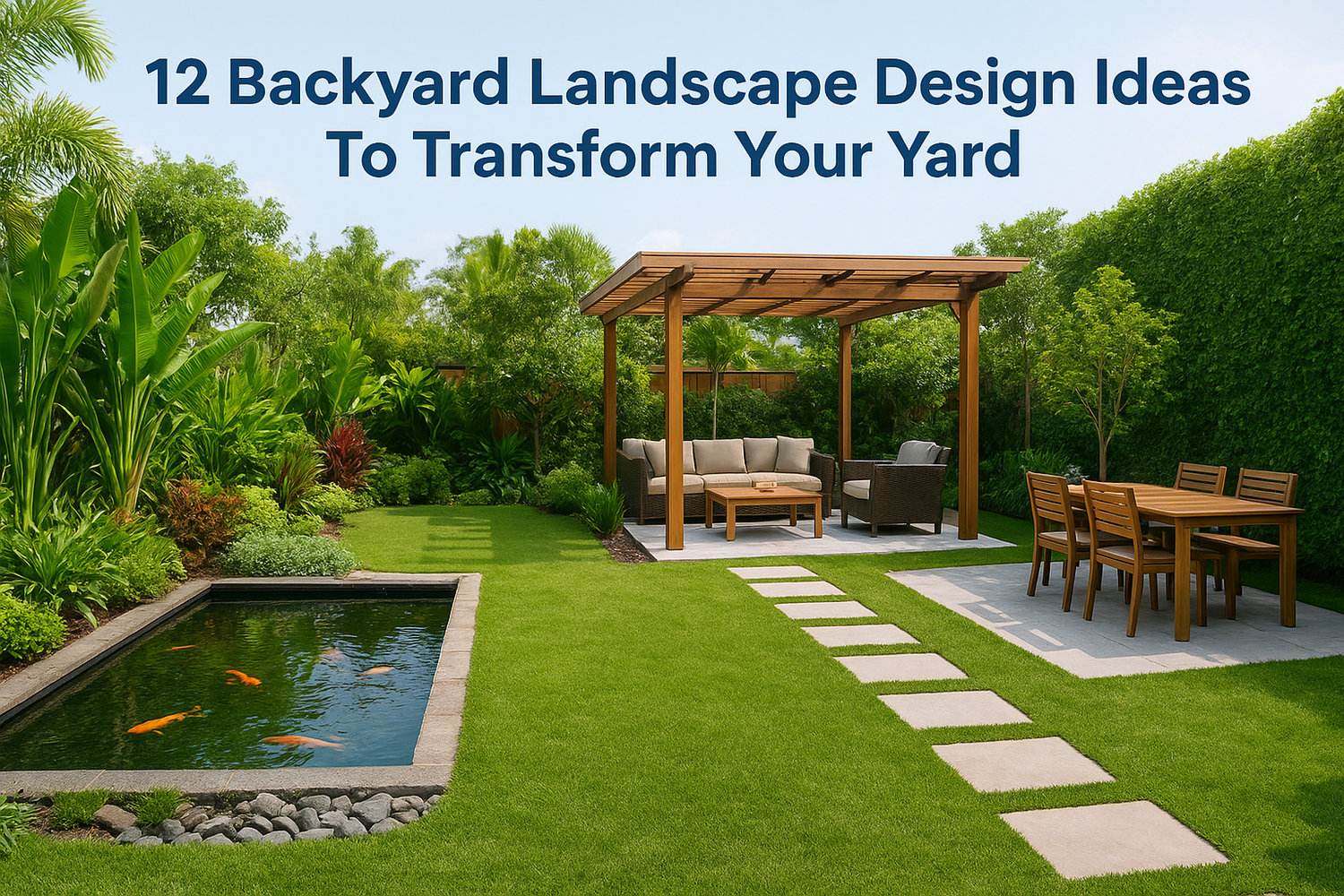
Staring at a bare, patchy backyard and not knowing where to start is a common problem for homeowners across Malaysia. You want a space that looks good and actually works for your family, but scrolling through hundreds of photos online often leaves you more confused than inspired. That's where solid landscape design ideas backyard owners can realistically apply come in handy, especially when they suit our tropical climate and rainfall patterns.
This article gives you exactly that: a curated list of practical, proven concepts rather than generic inspiration boards. Each idea addresses real Malaysian conditions, from humidity and heavy rain to limited maintenance time, so you can shortlist options that fit your lot size and lifestyle instead of copying a design that won't survive our weather.
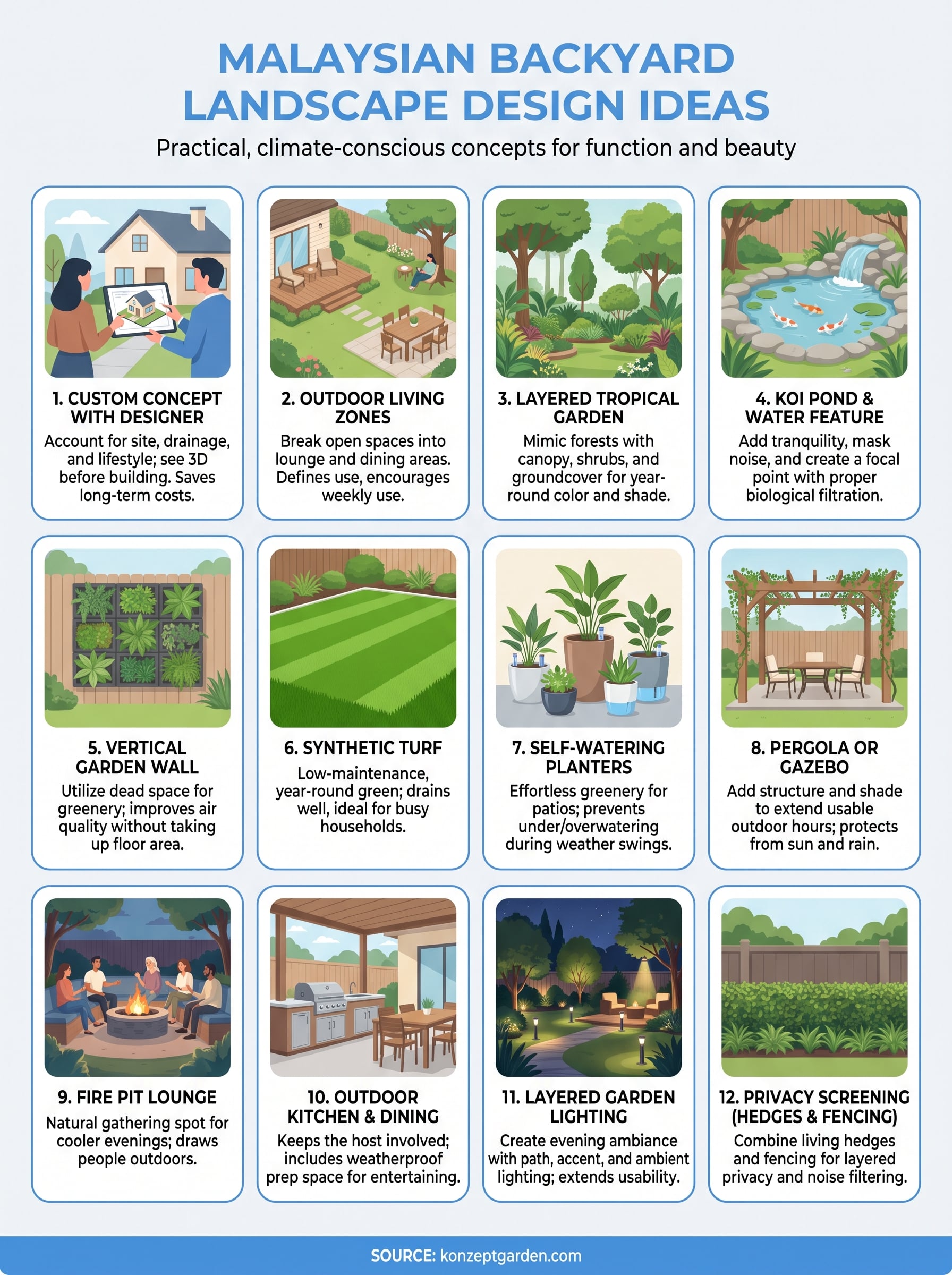
We'll walk through twelve distinct approaches, covering everything from low-maintenance turf solutions to koi ponds and vertical gardens. Drawing on years of hands-on design and implementation work at Konzept Garden, this list focuses on ideas that translate well from concept sketch to finished yard, giving you a clearer starting point before you talk to a designer or pick up a shovel yourself.
1. Work with a landscape designer for a custom concept
Before you touch a single plant or paver, sit down with a landscape designer who understands your site, your budget, and how you actually use your outdoor space. A custom concept starts with a site assessment, a conversation about your lifestyle, and a design that ties your house, garden, and any water or hardscape features into one coherent plan. Skipping this step is why so many backyards end up as a patchwork of ideas that don't relate to each other, a fire pit here, a random flower bed there, none of it working as a whole.
Why it works
A professionally designed concept saves you money in the long run because it accounts for drainage, soil type, and sun exposure before construction starts, not after a retaining wall cracks or a lawn drowns in the next monsoon. Designers also bring 3D visualization tools into the process, so you see how the finished space will actually look and feel before committing budget to it. That step alone prevents costly mid-project changes.
A good design plan costs less than fixing a bad one after it's built.
Best suited for
This approach suits homeowners with larger renovation budgets, awkward or sloped lots, or multiple features they want combined, such as a pond, a lounge deck, and a planting scheme that all need to work together. It's also the right call for property developers and commercial clients who need a design that photographs well and holds up under regular use. If your yard is small and your goals are simple, you can likely skip a full custom concept and go straight to one of the targeted ideas later in this list.
How to bring it to life
The process usually follows a predictable sequence, and knowing it upfront helps you set realistic expectations:
- Site visit and consultation to assess soil, drainage, sun patterns, and existing structures.
- Concept sketches based on your must-haves, budget range, and how you use the space day to day.
- 3D visualization so you can walk through the design digitally before anything is built.
- Material and planting plan finalized, including botanist input on species suited to your microclimate.
- Implementation, where the design team manages construction, planting, and final walkthrough.
At Konzept Garden, this full process starts with a free quotation and showroom consultation, so you get expert input before spending on materials.
Maintenance and cost
Design fees vary widely depending on project scope, but a comprehensive concept for a mid-sized residential backyard in Malaysia typically runs into the low thousands of ringgit for design alone, with implementation costs on top depending on materials and features chosen. Ongoing maintenance depends entirely on what the design includes, a garden heavy on tropical planting needs more upkeep than one built around hardscape and synthetic turf. Ask your designer to build a maintenance schedule into the handover so you know exactly what weekly, monthly, and seasonal care looks like from day one.
2. Create outdoor living zones for lounging and dining
Most Malaysian backyards get treated as one open patch of grass, which means nobody actually uses them beyond mowing day. Breaking the yard into distinct outdoor living zones, a lounge corner, a dining spot, maybe a quiet reading nook, gives each part of the space a clear job. This is one of the simplest landscape design ideas backyard owners can apply without a full renovation, since it works with paving, decking, or even a defined gravel patch rather than major construction.
Why it works
Zoning turns a flat, featureless yard into something that feels like an extension of your house. A raised deck or a change in paving material signals to everyone, including guests, where to sit and relax versus where to walk through. This separation also protects your furniture and cushions from getting soaked during sudden afternoon downpours if you position the lounging zone under a covered structure.
A backyard with clear zones gets used every week; an open lawn gets used twice a year.
Best suited for
This idea fits families who entertain often, whether that's weekend barbecues or quiet evening dinners outside. It also works well for narrow or L-shaped lots, where distinct zones help the space feel bigger by giving your eye multiple points of interest instead of one long, empty stretch.
How to bring it to life
- Define zones with decking, pavers, or gravel rather than furniture placement alone.
- Add a low retaining wall or planter border to separate lounging from dining without blocking sightlines.
- Position dining areas near the kitchen door for easy serving.
- Keep lounging zones shaded, either with existing trees or a simple canopy.
Maintenance and cost
Costs scale with materials, composite decking runs higher upfront than gravel or basic pavers, but requires less annual upkeep. Budget for periodic resealing of timber decks and occasional weed control between pavers to keep each zone looking sharp year-round.
3. Plant a layered tropical garden for shade and color
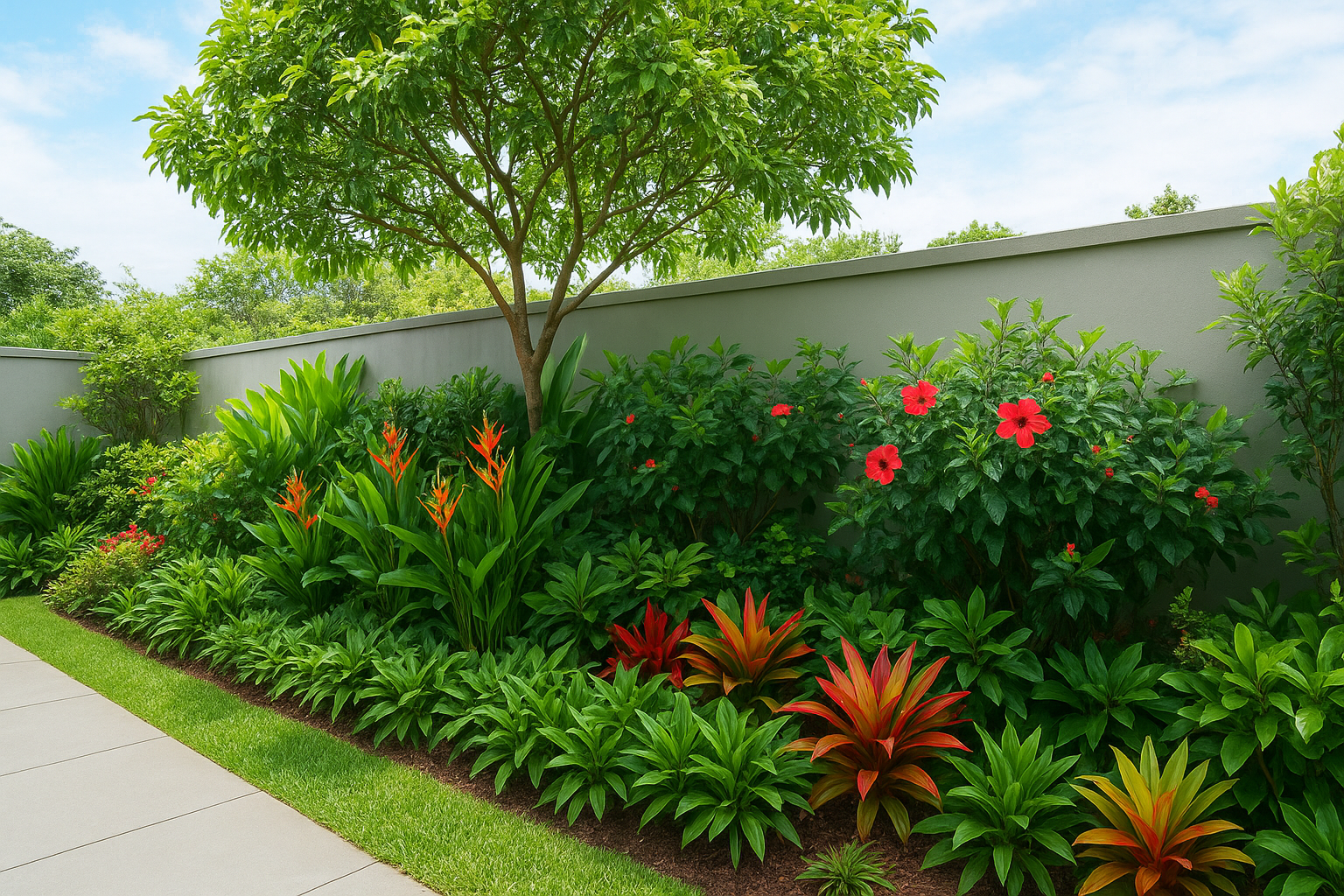
A single row of shrubs along the fence line rarely does justice to Malaysia's climate. Layering your planting, tall canopy trees, mid-height shrubs, and groundcover, mimics how tropical forests naturally grow and gives your backyard landscape design real depth instead of a flat green wall. This approach also solves a practical problem: raw heat. Layered planting cuts direct sun exposure on patios and walls, which lowers surface temperatures noticeably during peak afternoon hours.
Why it works
Layers create year-round interest because different species flower, fruit, or change color at different times, so your garden never looks static. Dense foliage also buffers noise from neighboring properties and absorbs heavy rainfall better than bare soil or thin lawn, reducing runoff and erosion during monsoon downpours.
A layered garden works with the tropics instead of fighting them.
Best suited for
This idea suits homeowners with a medium to large backyard and some patience, since a layered garden takes a season or two to fill in properly. It's also ideal if you want year-round color without constant replanting, or if you're dealing with a west-facing yard that gets brutal afternoon sun.
How to bring it to life
- Choose a canopy layer first: frangipani, tabebuia, or a smaller palm variety for structure and shade.
- Add mid-layer shrubs like heliconia or hibiscus for color at eye level.
- Finish with groundcover such as peace lily or bromeliads to fill bare soil and suppress weeds.
- Get a botanist consultation before planting to match species to your soil and drainage.
Maintenance and cost
Expect moderate ongoing work: pruning every few months, fertilizing seasonally, and clearing fallen leaves after storms. Costs depend heavily on plant maturity at purchase, mature specimens cost more upfront but fill the space immediately.
4. Add a koi pond or water feature for tranquility
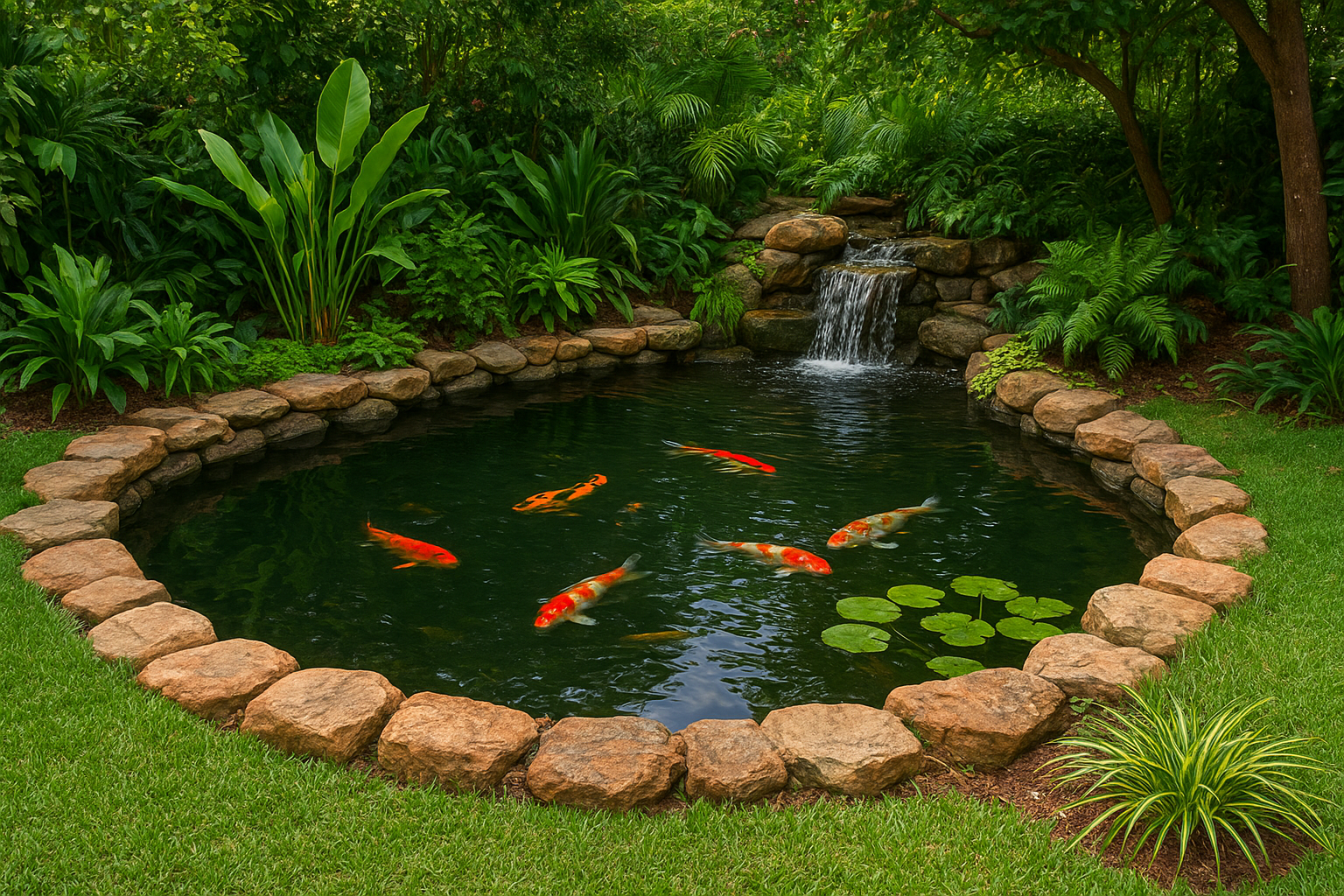
A pond does something no plant or paver can: it adds sound and movement to your yard. Water trickling over rocks masks traffic noise from the street and gives you a spot to sit and actually switch off after work. Koi ponds in particular have become a signature feature in Malaysian gardens because they pair well with tropical planting and hold up in our climate when built with the right filtration.
Why it works
Moving water cools the immediate area around it, which matters during humid afternoons when the rest of the yard feels stagnant. It also draws the eye downward and adds a focal point that photographs well, something clients ask for constantly when they want their garden to feel finished rather than half-done. A well-built Zen Bio Koi Pond setup keeps water clear without constant manual cleaning, since biological filtration handles most of the work.
A pond gives your backyard a sound, not just a view.
Best suited for
This idea suits homeowners who want a calm, contemplative corner rather than an active play area. It also works well if you already have a shaded spot under a tree, since koi need some protection from direct all-day sun. Skip this if you have very young children who'll be unsupervised near open water.
How to bring it to life
- Pick a pre-formed pond kit for smaller yards or a custom-built liner pond for larger, irregular shapes.
- Install a biological filter and pump sized correctly for your water volume, undersizing is the most common mistake.
- Add rock edging, such as a Himalaya Rock design, to soften the transition between water and lawn.
- Introduce fish only after the water has cycled for at least two weeks.
Maintenance and cost
Budget ongoing costs for fish food, water testing, and occasional pump servicing. Ponds with proper filtration need far less manual cleaning than DIY setups, but expect to top up water levels weekly during dry spells.
5. Build a vertical garden wall for tight spaces
When your backyard is more courtyard than lawn, a vertical garden wall gives you greenery without eating into floor space. Instead of spreading plants outward, you stack them upward against a boundary wall, fence, or even the side of the house. This is one of the smartest landscape design ideas backyard owners with terrace houses or narrow lots can use, since it turns dead vertical space into a living feature.
Why it works
A green wall softens hard surfaces like brick or concrete that otherwise trap heat and glare. Vertical planting also improves air quality right where you sit, since the foliage sits at eye and nose level rather than several meters away on the ground. For tight urban plots common across Malaysian housing developments, it's often the only way to add meaningful greenery at all.
A vertical wall turns a blank fence into your garden's main feature.
Best suited for
This idea fits homeowners in terrace or semi-detached houses with limited ground space, as well as commercial clients who want a striking backdrop for a café patio or office courtyard. It also suits renters or anyone hesitant to dig into permanent ground beds, since a modular EcoWall system installs without disturbing existing landscaping.
How to bring it to life
- Choose a modular panel system over built-in planter boxes for easier maintenance and plant swaps.
- Install a drip irrigation line at the top so gravity handles watering evenly across the wall.
- Mix textures: ferns, pothos, and small flowering species for visual variety.
- Position the wall away from full afternoon sun unless you select heat-tolerant species.
Maintenance and cost
Modular systems cost more per square meter than ground planting but save on long-term labor since irrigation is built in. Expect to trim and replace individual panels occasionally rather than replanting the whole wall, keeping upkeep manageable even for busy households.
6. Lay synthetic turf for a lush, low-maintenance lawn
Real grass struggles in Malaysia's climate. It patches under heavy foot traffic, browns during dry spells, and turns to mud after a good monsoon downpour. Synthetic turf solves that by giving you a year-round green lawn that never needs mowing, fertilizing, or reseeding. Among landscape design ideas backyard owners can adopt without touching the existing soil structure, this is one of the fastest to install and the easiest to live with once it's down.
Why it works
Turf stays green through both dry season and heavy rain because it doesn't rely on soil health or root growth. Noble Grass, for example, is built with drainage holes underneath so water passes through rather than pooling on the surface, which matters during Malaysia's intense afternoon storms. It also holds its color under direct sun better than most natural grass varieties, so you skip the patchy yellow spots that plague real lawns by mid-year.
A synthetic lawn looks the same in June as it does in December.
Best suited for
This fits busy households who want a lawn without weekend mowing duty, and it suits shaded yards where grass struggles to grow properly. It also works well for rooftop gardens, balconies, or side yards with poor soil, since turf doesn't need fertile ground underneath to look full.
How to bring it to life
- Clear and level the base, then add a compacted sand or gravel sub-layer for drainage.
- Roll out turf sections and secure edges with pins or adhesive strips.
- Brush infill sand into the fibers to keep blades standing upright.
- Trim edges neatly around borders, planters, or pathways for a finished look.
Maintenance and cost
Expect an occasional hose-down to clear dust and debris, plus a light brushing every few months to keep fibers upright. Quality turf typically lasts eight to ten years with minimal fading, making the upfront cost easy to recover against years of skipped mowing bills.
7. Use self-watering planters for effortless greenery
Traveling for work or just forgetful with a watering can? Self-watering planters solve the single biggest reason container gardens fail in Malaysia: inconsistent watering during dry stretches followed by overwatering during rainy weeks. These planters hold a reservoir at the base that feeds moisture up to the roots as needed, so your plants get a steady supply instead of feast-or-famine cycles. Among landscape design ideas backyard owners can apply to patios, balconies, or entryways without any digging, this is the lowest-effort option on the list.
Why it works
Roots pull water only when they need it, which prevents the root rot that kills so many potted plants after heavy rain sits in a saucer for days. A built-in reservoir also means you can leave for a week or two without asking a neighbor to check on your plants. Systems like the Ziant Hydro Planter use a wicking mechanism that keeps soil moisture consistent even through Malaysia's swings between scorching afternoons and sudden downpours.
Self-watering planters remove the one task most people forget until it's too late.
Best suited for
This suits apartment dwellers, busy professionals, and anyone managing a container garden on a patio, balcony, or entrance walkway rather than open ground. It also works well for renters who want greenery without committing to permanent planting beds.
How to bring it to life
- Fill the reservoir according to the planter's instructions, most hold enough water for one to two weeks.
- Choose plants suited to consistent moisture, like ferns, peace lilies, or herbs.
- Position planters where you can glance at the water indicator easily.
- Group several sizes together for a layered look on a patio or balcony.
Maintenance and cost
Budget for occasional reservoir refills and a seasonal soil top-up rather than daily watering duty. Quality units cost more upfront than basic pots but pay that back quickly in saved time and healthier plants.
8. Install a pergola or gazebo for shade and structure
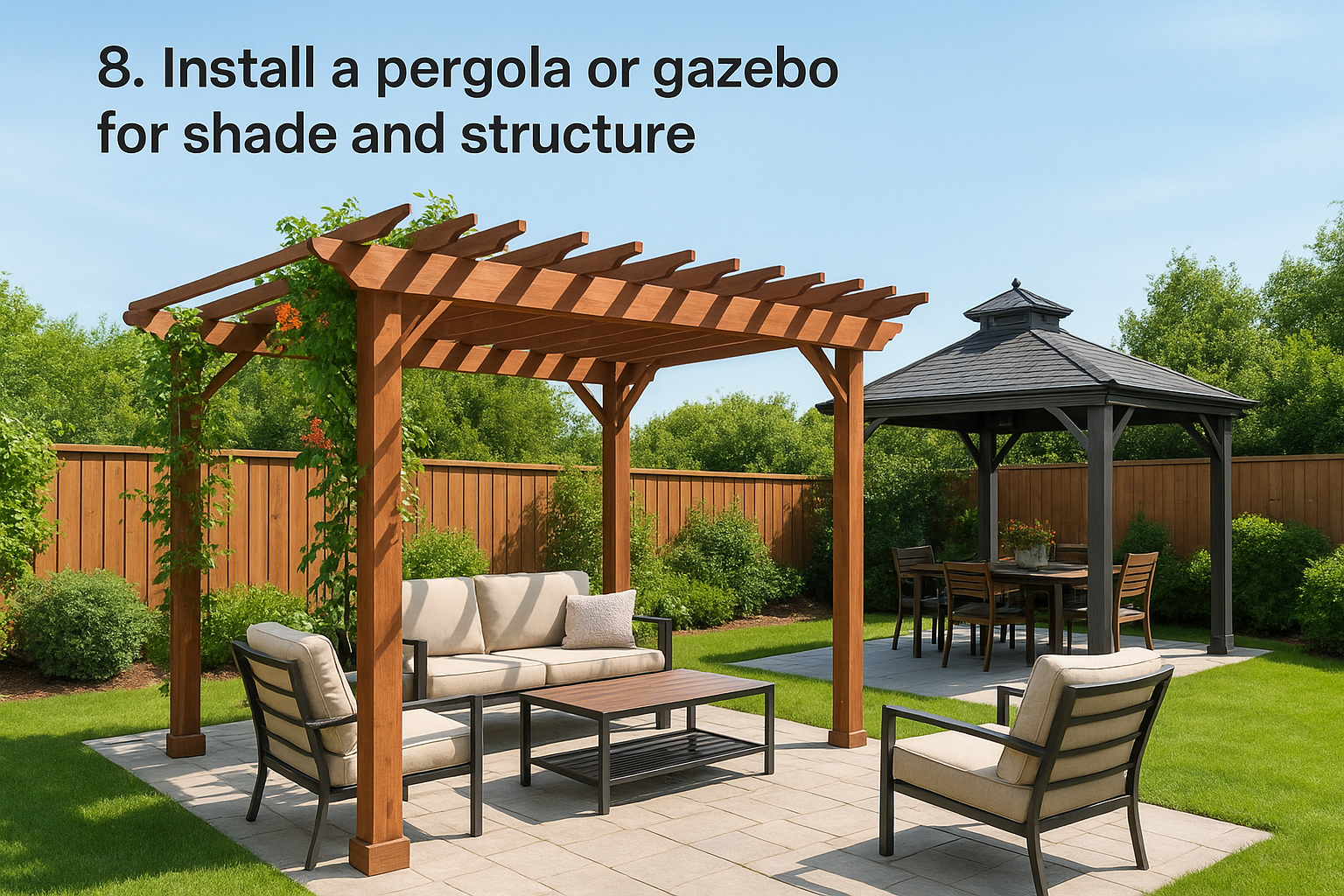
Malaysian sun makes any open patio unusable by mid-morning, so a pergola or gazebo gives you a fixed spot to sit outside without retreating indoors every time the sky clears. A pergola offers partial shade through its slatted roof, while a gazebo gives full coverage and works better if you want protection during sudden downpours too. Either structure anchors a backyard visually, giving you a defined roofline where before there was just open sky. It's one of the most requested landscape design ideas backyard owners bring up once they realize their patio furniture sits unused half the year.
Why it works
A roofed structure extends the hours your yard is actually usable, morning coffee, afternoon reading, evening dinners, all without chasing shade around the lawn. Climbing vines trained across a pergola frame add natural cooling as they mature, cutting surface temperature underneath by several degrees compared to open paving.
A pergola turns your hottest hour into your most livable one.
Best suited for
This suits homeowners who want a permanent focal point without building a full roofed extension, and it works particularly well positioned over a dining or lounge zone from earlier in this list. Gazebos suit yards that need rain protection too, since their solid roofs handle Malaysia's downpours better than open slats.
How to bring it to life
- Choose timber, aluminum, or steel framing based on budget and maintenance appetite.
- Anchor posts into concrete footings for stability against monsoon winds.
- Add a retractable canopy or polycarbonate roof panels for extra rain coverage.
- Train climbing plants like bougainvillea across the frame for shade that improves yearly.
Maintenance and cost
Timber structures need periodic sealing to resist rot and termites, while aluminum or steel needs almost none beyond occasional cleaning. Budget higher upfront for steel or gazebo-style roofing, but expect lower long-term upkeep than a timber pergola exposed to constant humidity.
9. Design a fire pit lounge for cool evenings
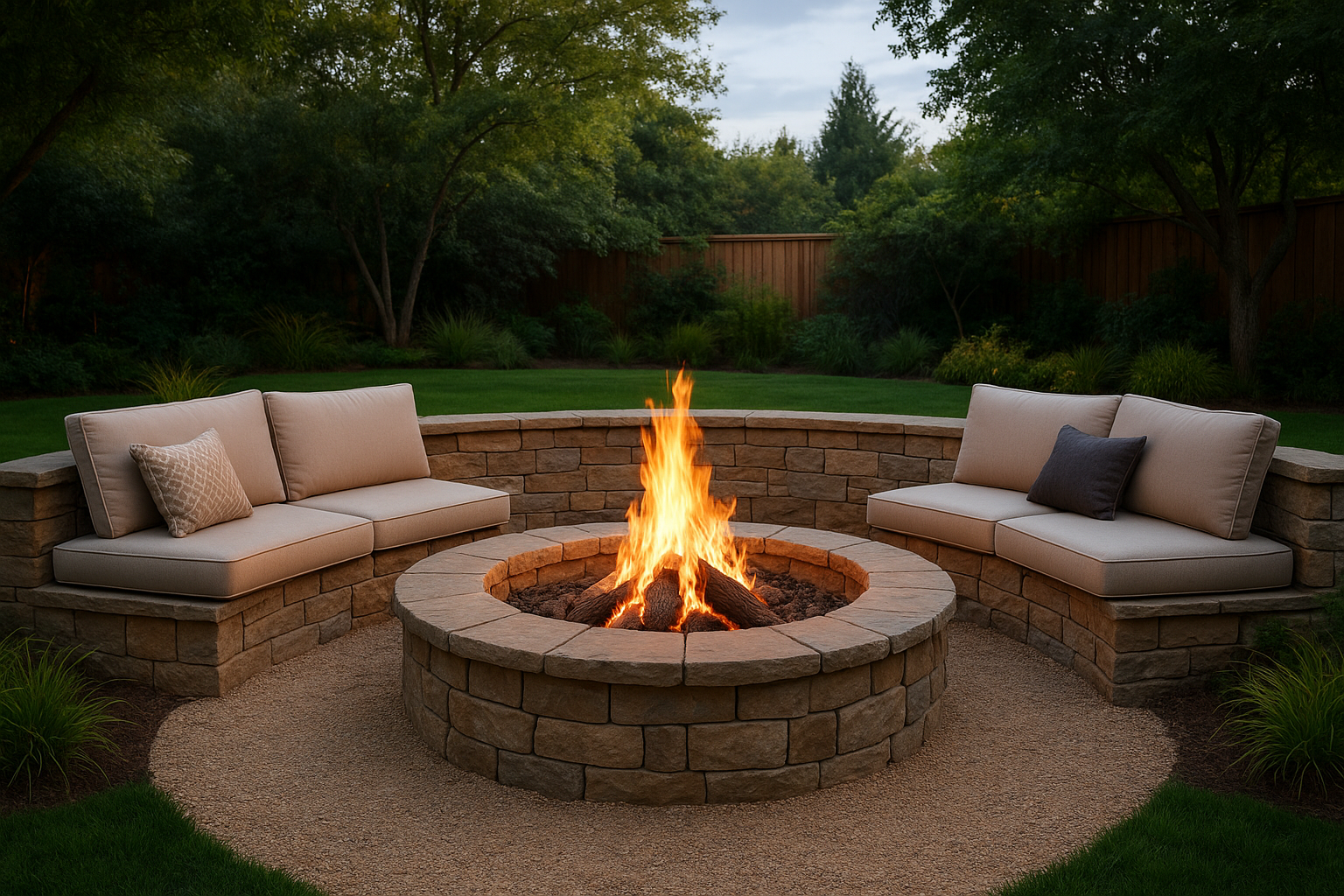
Even in Malaysia's climate, evenings can cool down enough to make a fire pit lounge worth building, especially up in the highlands or during the wetter months when temperatures dip after dark. A fire pit gives your backyard a natural gathering point, something to sit around rather than just near, and it works as both a design feature during the day and a functional heat source at night. Among landscape design ideas backyard owners overlook, this one punches well above its cost.
Why it works
Fire draws people together in a way no other feature does. It gives guests a reason to linger outside past sunset instead of drifting back indoors once the light fades. A built-in fire pit also becomes a strong visual anchor for the whole yard, something your eye lands on even when it's not lit.
A fire pit gives your evenings a reason to move outside.
Best suited for
This fits homeowners who entertain in the evenings or want a cozy spot for family time after dinner. It also suits larger yards with enough clearance around the pit for seating, since safety spacing matters more here than with most other features on this list.
How to bring it to life
- Choose a gas-fueled or wood-burning pit based on convenience versus atmosphere preference.
- Surround it with built-in stone or timber seating for a finished look.
- Keep at least a two-meter clearance from overhanging branches or structures.
- Add a spark screen if wood-burning, especially near dry planting.
Maintenance and cost
Gas pits cost more upfront but need almost no cleanup, while wood-burning pits need regular ash removal and occasional stone resealing. Either way, budget for periodic checks on gas lines or clearing debris before each use.
10. Build an outdoor kitchen and dining patio
Cooking indoors while entertaining outdoors never quite works, someone always ends up stuck ferrying plates back and forth. An outdoor kitchen and dining patio solves that by moving the grill, prep counter, and sink outside, right next to where your guests are actually sitting. This is one of the more ambitious landscape design ideas backyard owners take on, but it changes how a family uses their yard more than almost any other feature on this list.
Why it works
Grilling, prepping, and serving in one space keeps the host in the conversation instead of running inside every few minutes. A weatherproof counter and storage also means you're not hauling equipment out and back in every time you cook, which is often the real reason outdoor cooking setups get abandoned after a few months.
An outdoor kitchen keeps the cook part of the party.
Best suited for
This suits households who host regularly, especially larger family gatherings or weekend barbecues where one grill and a folding table stopped being enough. It also works well paired with a covered patio or pergola from earlier in this list, since shade matters more here than in almost any other zone.
How to bring it to life
- Choose weather-resistant materials like stainless steel, stone, or sealed concrete for counters.
- Position the kitchen near existing water and gas lines to cut plumbing costs.
- Add a covered roof to protect appliances from monsoon rain.
- Include enough counter space for prep, not just grilling.
Maintenance and cost
Budget for higher upfront costs than a basic patio, since plumbing, gas lines, and weatherproof cabinetry add up quickly. Ongoing upkeep mainly involves sealing stone surfaces and covering appliances between uses to protect them from humidity.
11. Layer garden lighting for evening ambience
A backyard that looks great at noon often disappears completely once the sun sets, and most homeowners only notice this after all the hardscaping and planting is done. Layered garden lighting fixes that by treating light the same way you'd treat planting: with different heights, intensities, and purposes working together instead of one bright floodlight washing out the whole yard. Among landscape design ideas backyard owners tend to add last, this one delivers the biggest visual return for the smallest budget.
Why it works
Good lighting design uses three layers: path lighting at ground level for safety, uplighting on trees or walls for drama, and softer ambient light near seating areas for comfort. Combining these layers means your pond, planting, and pergola from earlier ideas on this list all stay visible and usable after dark, instead of vanishing the moment the sun drops, which happens fast near the equator.
Good lighting makes your garden a two-shift space instead of a daytime-only one.
Best suited for
This suits any household that actually spends time outside in the evening, whether that's dinner on the patio or just sitting by the pond after work. It's especially valuable for yards with a koi pond, fire pit, or outdoor kitchen already built, since lighting extends the hours those features get used.
How to bring it to life
- Install low-voltage LED path lights along walkways for safe, even navigation.
- Add uplights at the base of feature trees or the pond edge for depth.
- Use warm white bulbs near seating, cooler tones near planting for contrast.
- Run lighting on a timer or smart switch so it activates automatically at dusk.
Maintenance and cost
LED fixtures cost more upfront than basic bulbs but last years longer and use far less power, keeping running costs low. Expect occasional cleaning of fixture lenses and battery checks if you use solar-powered units instead of wired lighting.
12. Screen your yard with hedges and fencing for privacy
A backyard surrounded by neighbors' windows or a busy road never feels fully relaxing, no matter how much you've spent on planting or hardscaping. Combining a living hedge with a fence gives you layered privacy that softens hard boundary lines while still doing the practical job of blocking sightlines. This is often the last piece homeowners add, after they realize every other feature on this list gets used more once the yard actually feels enclosed.
Why it works
Hedges filter noise and dust from the street far better than a solid wall alone, since foliage breaks up sound waves instead of bouncing them back into your yard. Fencing paired with planting also gives you two layers of security, so if a gap opens up in one, the other still holds the boundary. Together they turn an exposed yard into a private one without making the space feel boxed in.
Privacy is what lets a backyard feel like a room instead of a passageway.
Best suited for
This suits corner lots, homes near busy roads, or anyone with neighbors whose windows look directly into their yard. It also works well for families with young children or pets who need a secure boundary they can't easily slip through.
How to bring it to life
- Choose fast-growing species like duranta or ixora for quick hedge coverage.
- Install fencing first, then plant the hedge just in front to soften its look.
- Stagger plant heights along the boundary to avoid a flat, uniform wall of green.
- Leave enough spacing between plants for airflow, which prevents fungal issues in humid weather.
Maintenance and cost
Hedges need trimming every four to six weeks during growing season to hold their shape, while fencing needs occasional repainting or rust checks depending on material. Budget more for timber fencing upkeep than aluminum or composite, which handle Malaysia's humidity with far less fuss.
Finding the right fit for your outdoor space
Twelve ideas is a lot to weigh, so start small. Pick the one or two features that solve your actual problem, a patchy lawn, a boring flat yard, no privacy, rather than trying to squeeze everything into one project. Synthetic turf and self-watering planters suit anyone short on time, while a koi pond or layered garden rewards homeowners ready to invest in something with more presence.
Whatever combination you land on, the ideas in this list work best when they're planned together rather than bolted on one by one. That's exactly where a proper design concept earns its cost, tying your chosen features into one yard that actually functions as a whole instead of a collection of good intentions.
If you're ready to turn any of these ideas into a real plan for your backyard, get in touch with our team for a free consultation and quotation.