
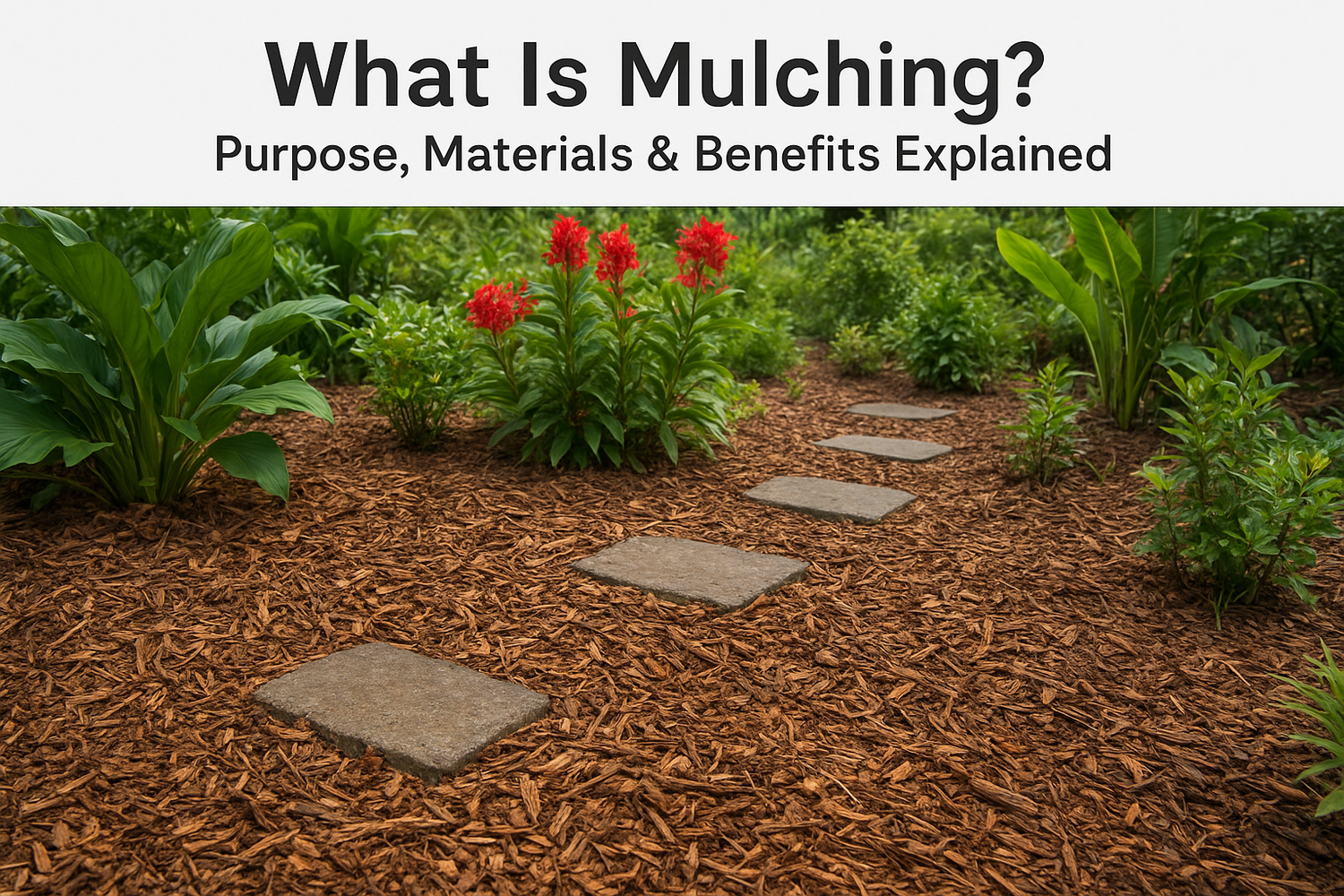
If you've spent a hot afternoon watering a Malaysian garden only to watch the soil dry out by evening, you already understand why mulching matters. Mulching means covering the soil surface around your plants with a protective layer, organic or inorganic, that shields the ground from sun, rain, and weeds. It's one of the simplest habits that separates a garden that struggles through our tropical heat from one that thrives in it.
So what is mulching actually doing for your plants? It retains soil moisture by slowing evaporation, regulates root temperature, suppresses weed growth, and gradually feeds the soil as organic material breaks down. The result is healthier root systems and less time spent on maintenance, whether you're managing a home garden or a commercial landscape.
In this article, we'll break down the different mulch materials you can use, from wood chips and straw to gravel and rubber, and explain how each performs in Malaysia's climate. We'll also cover proper application techniques and the specific benefits for soil and plants you can expect, drawing on the same landscaping principles our team applies when designing gardens across Malaysia.
Why mulching matters for a thriving garden
Malaysia's climate throws two extremes at your garden: intense sun that bakes bare soil within hours, and sudden downpours that wash away nutrients and compact the ground. Mulching addresses both problems at once, which is exactly why it's become standard practice for anyone serious about landscape design here, from home gardeners to the teams behind commercial properties. Understanding what is mulching really doing beneath the surface helps you see why it's not just a cosmetic finish but a functional layer that keeps your entire garden ecosystem working properly.
Keeping moisture where your plants need it
Water evaporates fast when soil sits exposed under direct sun, and in Kuala Lumpur or Penang that can mean losing a significant portion of your morning watering by mid-afternoon. A layer of mulch, whether it's wood chips, straw, or even gravel, acts as a barrier that slows this evaporation dramatically. Gardeners who switch to consistent mulching often report cutting their watering frequency by half, which matters both for your water bill and for plants that suffer when moisture swings between soaked and bone dry.
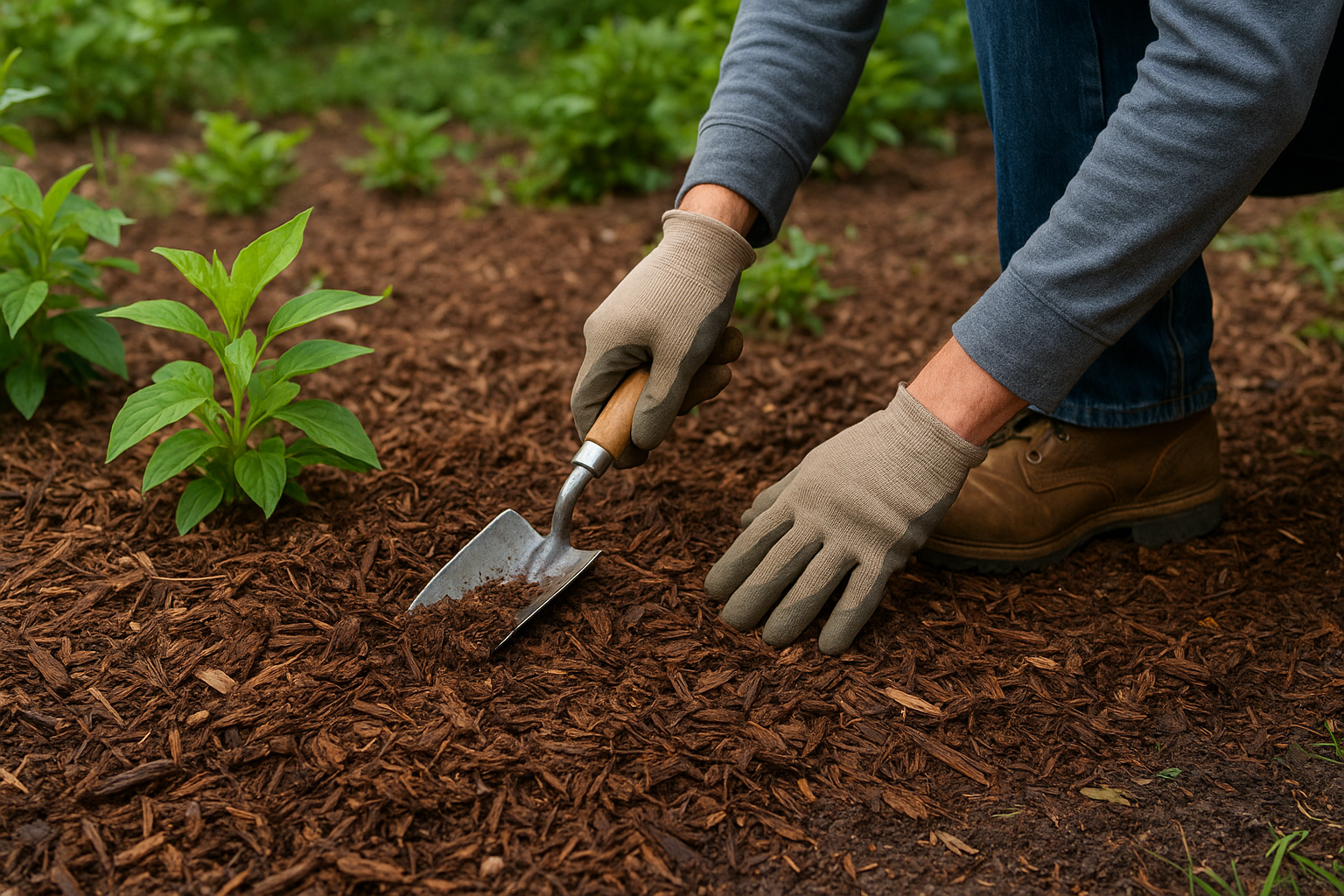
Mulch doesn't add water to your garden, it just stops you from losing the water you already gave it.
Protecting roots from temperature swings
Soil temperature affects root development more than most home gardeners realize. Unmulched soil in full tropical sun can heat up several degrees above ambient air temperature, which stresses shallow root systems and slows nutrient uptake. Mulch acts as insulation, keeping the root zone cooler during peak heat and slightly warmer during the rare cool spells. This stability lets roots focus energy on growth rather than survival, which is particularly important for young transplants and shallow-rooted ornamentals that make up much of a typical Malaysian residential garden.
Cutting down on weeds without constant chemicals
Weeds compete directly with your plants for water, nutrients, and light, and in Malaysia's growing conditions they can establish themselves within days of clearing a bed. A thick enough mulch layer blocks the sunlight weed seeds need to germinate, so fewer weeds sprout in the first place instead of you having to pull them out later. This matters for anyone trying to reduce herbicide use around edible gardens or areas where children and pets play. The table below shows roughly how different mulch depths perform against weed suppression, based on common landscaping practice.
| Mulch depth | Weed suppression | Notes |
|---|---|---|
| Less than 2.5 cm | Weak | Sunlight still reaches many seeds |
| 5 to 7.5 cm | Strong | Standard recommendation for most beds |
| Over 10 cm | Very strong, but risky | Can suffocate roots and trap excess moisture |
Feeding the soil as it breaks down
Organic mulches like bark, straw, and compost don't just sit on top of the soil, they slowly decompose and feed it. As microorganisms and earthworms break the material down, they release nutrients back into the ground and improve its structure over time. Heavier clay soils become looser and better drained, while sandy soils gain more capacity to hold onto both water and nutrients. This slow-release feeding process is one reason experienced landscapers treat mulching as a long-term soil investment rather than a one-time task, similar to how we approach soil preparation in our own garden design projects.
Reducing erosion and soil compaction
Heavy tropical rain hits bare soil hard, splashing particles around and gradually compacting the surface until water starts pooling instead of soaking in. Mulch cushions that impact, spreading the force of raindrops across its surface rather than letting them hammer the exposed dirt directly. Over a rainy season, this protection noticeably reduces the amount of topsoil that washes away from sloped beds or garden borders, which is a real concern for properties built on Malaysia's often uneven terrain.
Supporting a healthier garden ecosystem
Beyond soil and water, mulch creates a more stable microclimate for beneficial organisms. Earthworms, ground beetles, and other soil-dwelling creatures thrive under mulch cover, and their activity aerates the soil and speeds up nutrient cycling. Gardens with a healthy mulch layer also tend to attract fewer pest outbreaks, since the balance of predator and beneficial insects stays more intact than in bare, disturbed soil. Together, these effects explain why mulching shows up as a foundational step in nearly every professional landscape design plan, not an optional extra reserved for keen hobbyists.
...
Choosing the right mulch material for your garden
Not every mulch works the same way, and picking the wrong one for your soil type or garden goals can undo some of the benefits you just read about. Organic materials like wood chips and straw feed the soil as they break down, while inorganic materials like gravel and rubber last longer but do nothing for soil fertility. Your choice should depend on what you're growing, how much maintenance you want to do, and how Malaysia's rain and heat will treat that material over a full year.
Organic versus inorganic mulch
Organic mulch decomposes, which means you'll top it up every season, but it also builds soil structure the longer you use it. Inorganic mulch stays put for years and needs almost no replacing, though it offers zero nutritional value and can trap heat if you pick a dark material. Here's how the two categories compare on the factors that matter most for a tropical garden.
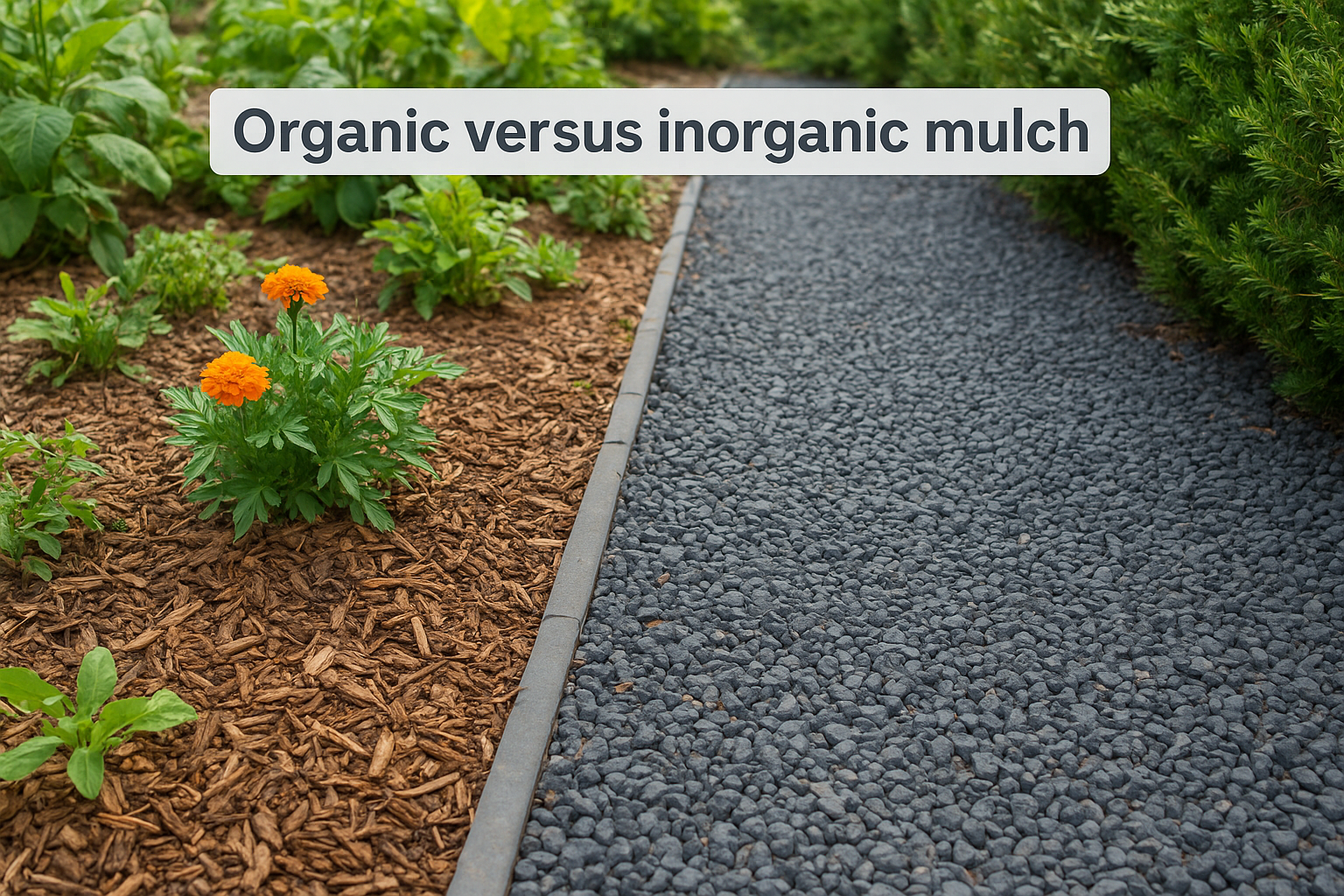
| Factor | Organic mulch | Inorganic mulch |
|---|---|---|
| Lifespan | 3 to 12 months | Several years |
| Soil improvement | Yes, as it decomposes | None |
| Cost over time | Recurring, moderate | Higher upfront, low ongoing |
| Heat retention | Low to moderate | Can be high (gravel, rubber) |
| Best for | Flower beds, vegetable patches | Pathways, driveways, low-maintenance zones |
If your goal is healthier soil, choose organic. If your goal is low upkeep, choose inorganic.
Best organic options for Malaysian conditions
Wood chips and bark hold up well against heavy rain without floating away, and they break down slowly enough to last a few months before needing a top-up. Straw works well in vegetable beds because it's light and easy to move around growing plants, though it decomposes faster in our humidity and needs more frequent replacing. Compost-based mulch delivers the fastest nutrient boost but breaks down quickest, so it suits gardeners who don't mind reapplying every couple of months. Consider these three when you're planning a bed that needs active soil building:
- Wood chips: slow decomposition, good moisture retention, ideal for shrub borders
- Straw: lightweight, fast-acting, best for annual vegetable beds
- Compost mulch: highest nutrient value, shortest lifespan, good for nutrient-hungry plants
When inorganic mulch makes more sense
Gravel and stone mulch suit pathways, driveway borders, and drought-tolerant plantings where you're not trying to feed the soil at all. Rubber mulch, made from recycled tires, resists washing away in heavy rain and holds its color for years, which makes it a practical pick for playgrounds or high-traffic commercial landscapes. Synthetic grass, like the Noble Grass we install at Konzept Garden, isn't technically a mulch but solves the same core problem of bare, exposed ground in areas where growing turf is impractical due to shade or heavy foot traffic. Landscapers often combine both categories on a single property, using organic mulch in planting beds and inorganic material along paths, so the whole garden benefits without one material trying to do a job it's not suited for.
Understanding what is mulching material actually does in each zone of your garden helps you avoid a common trap: assuming one type fits every bed. A koi pond surround, for instance, needs a different mulch approach than a vegetable patch a few meters away, and matching the material to the microclimate makes the difference between a garden that maintains itself and one that fights you every week.
Common mulching mistakes to avoid
Even experienced gardeners get mulching wrong in ways that quietly undo its benefits. Knowing what is mulching supposed to look like when done correctly helps you spot these errors before they cost you a plant or a full growing season. Most mistakes come down to applying too much, too little, or the wrong material in the wrong spot, and each one has a simple fix once you know what to watch for.
Piling mulch too high against stems
The most common error, sometimes called a mulch volcano, happens when gardeners heap mulch directly against a trunk or stem instead of leaving a gap. This traps moisture against the bark, invites fungal rot, and gives pests a hidden pathway straight to the plant's tissue. Excess mulch depth also suffocates roots by cutting off oxygen exchange, which reverses the very benefit you were trying to create.
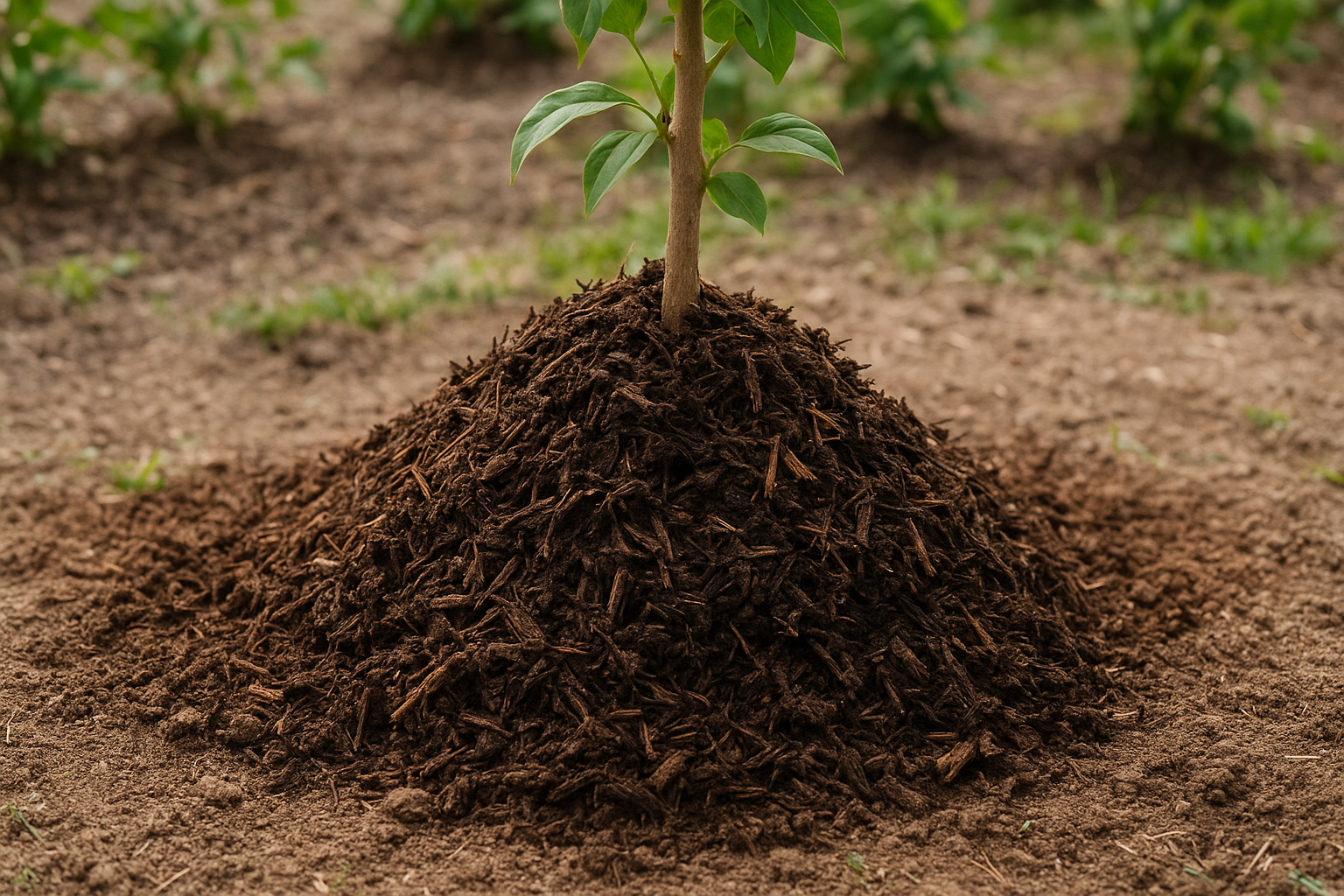
A thick mulch ring around the base of a plant does more harm than no mulch at all.
Keep a gap of 5 to 8 cm between the mulch and any stem or trunk, and stick to the 5 to 7.5 cm depth range covered earlier for the bed itself.
Skipping soil prep before you spread mulch
Dumping mulch straight onto compacted, weedy, or poorly watered soil locks in whatever problems already exist underneath. Weeds that were already established will push through regardless of mulch depth, and compacted soil stays compacted since mulch alone can't loosen it. Proper soil preparation means clearing existing weeds by the root, loosening the top layer, and watering thoroughly before you ever add the mulch layer on top.
Choosing a material that fights your garden's needs
Using dark rubber or gravel mulch around heat-sensitive plants can raise soil temperature to a point where roots struggle, especially in direct Malaysian sun. Conversely, spreading a fast-decomposing material like straw in a low-maintenance zone means you're back out there reapplying within weeks. Match the material to the job rather than grabbing whatever's cheapest or most available:
- Dark inorganic mulch near heat-sensitive plants: raises soil temperature beyond safe limits
- Straw or compost in low-maintenance zones: breaks down too fast, requires constant reapplication
- Fine-textured mulch on slopes: washes away in heavy rain instead of staying put
- Untreated wood mulch near termite-prone structures: can attract pests toward your home
Letting mulch sit too long without refreshing it
Organic mulch breaks down over months, and once it thins out or compacts into a solid mat, it stops doing its job. A compacted layer actually blocks water from reaching the soil instead of retaining it, which is the opposite of what you want. Check your mulch every few months, fluff it up with a rake if it's matted, and top it up once it drops below the 5 cm mark.
Mulching over waterlogged or poorly drained ground
Finally, spreading mulch onto soil that already drains poorly traps excess moisture against roots, especially during Malaysia's heavier monsoon stretches. This creates the kind of damp, low-oxygen environment where root rot thrives. Improve drainage first, whether through raised beds or amended soil, and only then add your mulch layer on top.
Putting mulching into practice
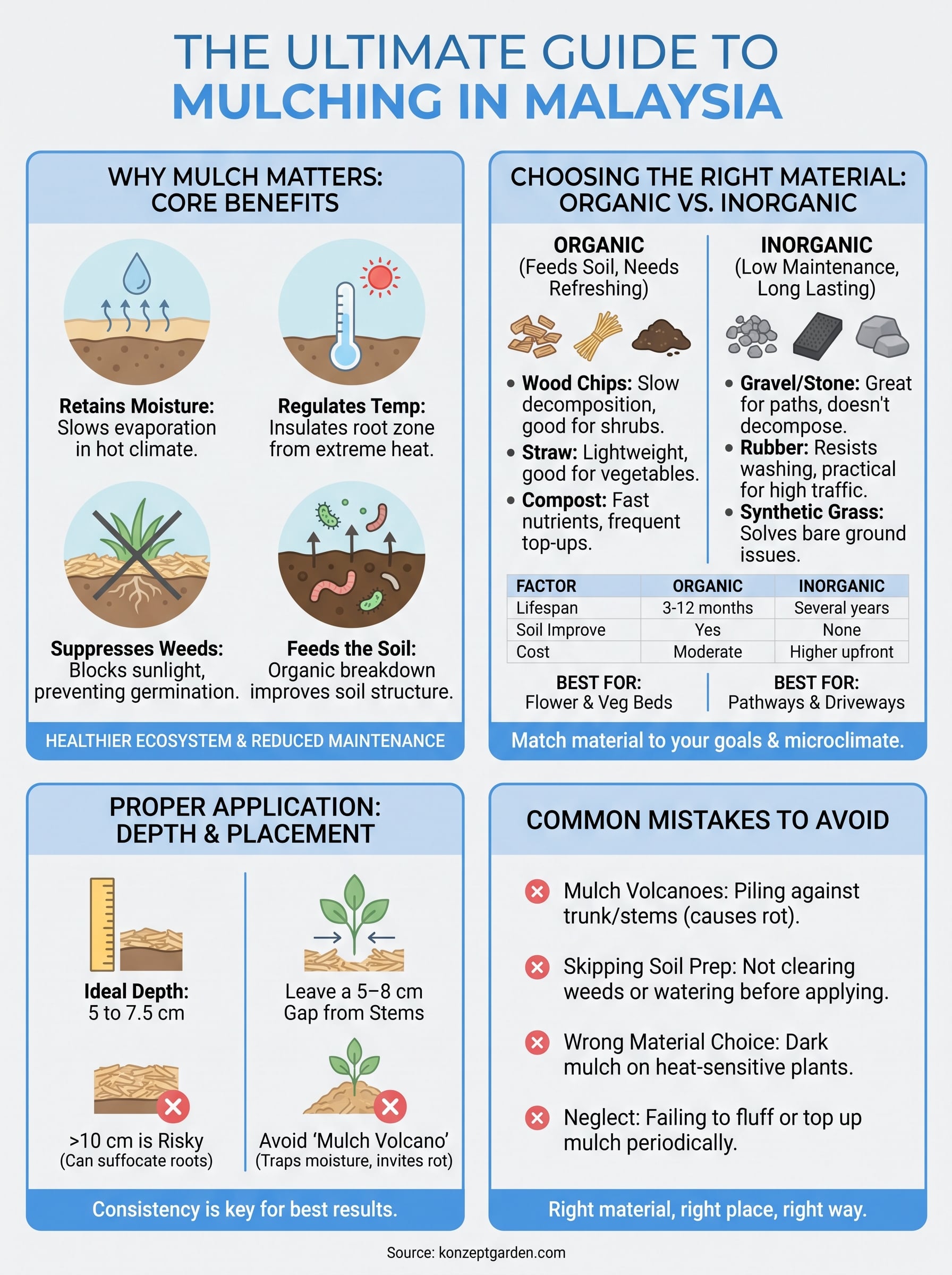
Now you know what mulching actually does: it locks in moisture, steadies soil temperature, chokes out weeds, and slowly feeds the ground beneath your plants. Choosing the right material for your climate zone and garden goals matters just as much as applying it correctly, and avoiding the common mistakes covered above will save you a full season of frustration. Getting this one habit right often makes the biggest visible difference in a Malaysian garden, more than any fertilizer or fancy plant purchase.
Every garden has its own soil, sun exposure, and drainage quirks, so what works for your neighbor's beds might need adjusting for yours. If you'd rather have a professional set of eyes on your specific space, whether that's a struggling flower bed or a full landscape redesign, our team at Konzept Garden is happy to walk through it with you. Get in touch with our team and we'll help you build a garden that thrives through every season.