

Wood chips are one of the most popular mulching materials in Malaysian gardens, and for good reason. They're affordable, widely available, and give garden beds a clean, finished look. But before you dump a truckload around your plants, you need to understand the full picture of wood chip mulch pros and cons to avoid costly mistakes that could set your garden back months.
At Konzept Garden, we've designed and implemented enough residential and commercial landscapes across Malaysia to know that mulch choice directly affects long-term garden health. The wrong application can starve your soil of nitrogen, attract pests, or trap excess moisture in our tropical climate. The right approach, however, can suppress weeds, regulate soil temperature, and reduce your maintenance workload significantly.
This article breaks down the real benefits and genuine risks of wood chip mulch, with practical tips so you can decide whether it belongs in your garden, and how to use it properly if it does.
1. Get a mulch plan from Konzept Garden
Before diving into the wood chip mulch pros and cons, it helps to know that the right mulching strategy depends heavily on your specific garden conditions. Konzept Garden works with homeowners and commercial clients across Malaysia to design outdoor spaces where every material choice, including mulch, serves a clear purpose.
What it is
Konzept Garden is an award-winning landscape design company based in Malaysia that provides end-to-end garden planning and implementation. Their service covers everything from initial concept and 3D visualization to full on-site execution. Mulch selection is part of that broader design process, factored in alongside plant choices, drainage, and soil preparation.
When it helps most
A professional mulch plan matters most when you're starting a new garden from scratch, replanting after construction, or trying to solve an existing problem like persistent weeds or uneven soil moisture. In Malaysia's tropical climate, getting mulch depth and placement wrong can quickly cause root rot or fungal spread. Working with a specialist from the beginning saves you from expensive corrections later.
A garden designed around your soil type, plant selection, and drainage conditions will always outperform one where mulch was applied as an afterthought.
Watch-outs
Not every garden needs the same mulch approach. If your beds include sensitive ornamentals or newly planted specimens, a blanket wood chip application could cause more harm than good. Konzept Garden's consultants assess your specific plant types, sun exposure, and watering habits before recommending any ground cover material.
Practical tips
You can request a free quotation directly through Konzept Garden's website at konzeptgarden.com, or visit their showroom for a face-to-face consultation. If you already have a garden and want advice on improving it, their team can assess the current setup and recommend targeted changes. Bringing photos of your existing beds and noting any problem areas, like yellowing plants or waterlogged patches, will help them give you faster, more accurate recommendations.
2. Pro: Wood chips suppress weeds and reduce upkeep
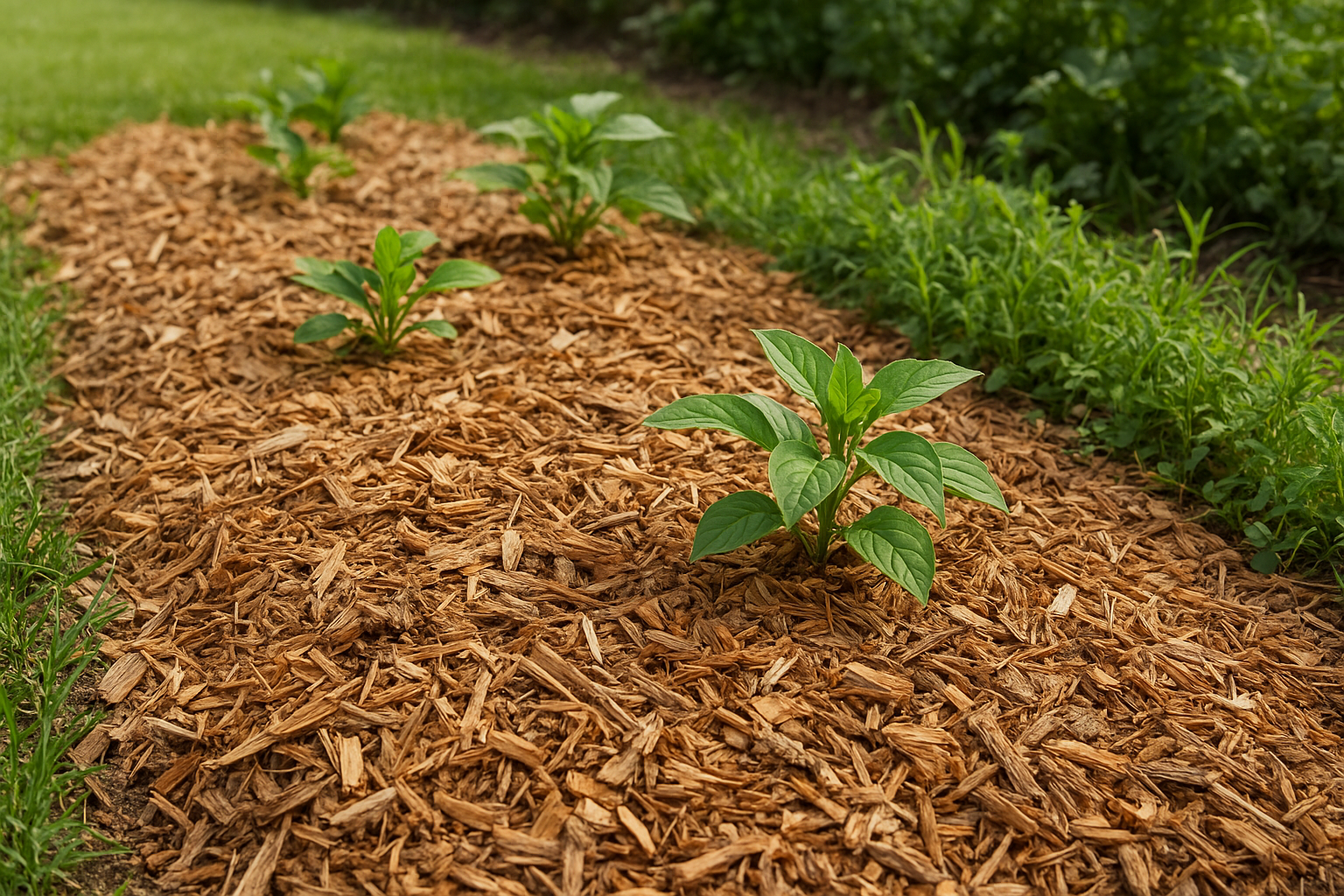
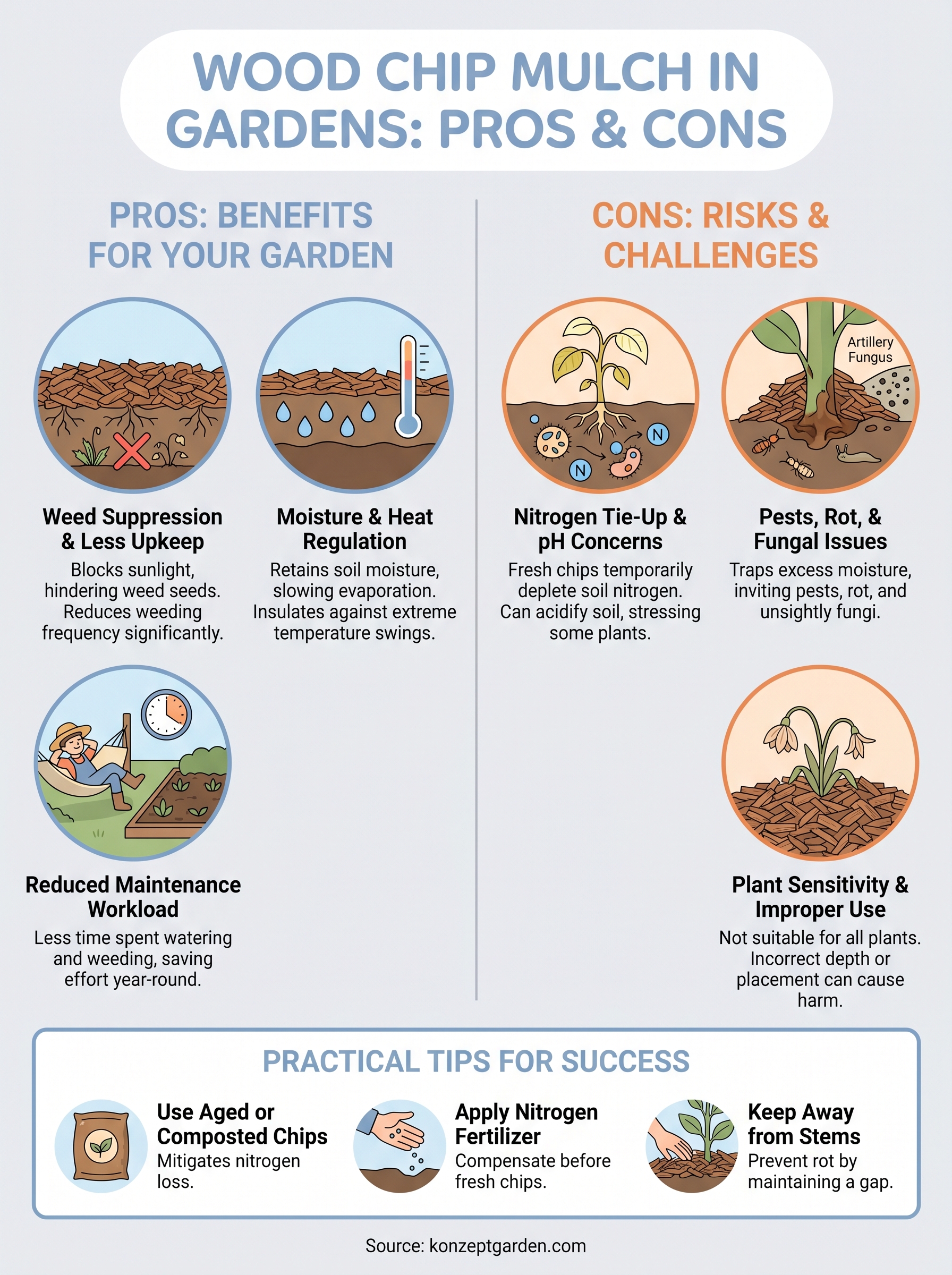
One of the most practical wood chip mulch pros and cons discussions centers on weed control, and this benefit is real. A thick layer of wood chips blocks sunlight from reaching the soil surface, making it hard for weed seeds to germinate and establish.
What it is
Wood chips create a physical barrier between weed seeds and the light they need to sprout. Applying a 3 to 4 inch layer across your garden beds cuts off that germination cycle before it starts, reducing how often you pull weeds by hand each week.
When it helps most
This benefit shows up most clearly in open garden beds with established plants that have some root depth. In Malaysia's year-round growing season, weeds can take hold fast without a barrier in place. Newly prepared soil after planting is the ideal time to lay wood chips down.
A well-mulched bed in a tropical garden can cut your weeding time by more than half compared to bare soil.
Watch-outs
Thin applications below 2 inches let light through the gaps, which defeats the purpose entirely. Avoid piling chips directly against plant stems, as this traps moisture and can cause rot at the base.
Practical tips
Refresh your wood chip layer once or twice a year as it breaks down. Top it up before the rainy season to keep weed suppression strong and give your soil a consistent protective buffer.
3. Pro: Wood chips hold moisture and buffer heat
When weighing wood chip mulch pros and cons, moisture retention stands out as a genuine advantage for Malaysian gardens. Wood chips slow water evaporation from the soil surface, meaning your plants hold onto moisture longer between watering cycles.
What it is
A layer of wood chips acts as an insulating blanket over your soil. It reduces direct sun exposure on bare earth, which cuts down evaporation rates and keeps soil temperature more stable throughout the day and night.
When it helps most
This benefit matters most during Malaysia's drier spells between monsoon seasons, when soil can dry out faster than you expect. Gardens with water-sensitive plants or newly transplanted specimens benefit the most, since consistent moisture supports root establishment and reduces transplant stress.
Reducing evaporation through mulching can cut your watering frequency by up to 25%, which adds up significantly across a large garden bed.
Watch-outs
Too much retained moisture under a thick chip layer can become a problem in shaded or low-drainage areas. If your bed already stays damp, adding wood chips can push soil conditions into waterlogged territory, which most plants won't tolerate well.
Practical tips
Check your soil moisture before watering rather than following a fixed schedule. Push a finger about 2 inches into the soil beneath the chip layer. If it feels moist, hold off watering for another day or two to avoid oversaturation.
4. Con: Nitrogen tie-up, pH fears, and plant sensitivity
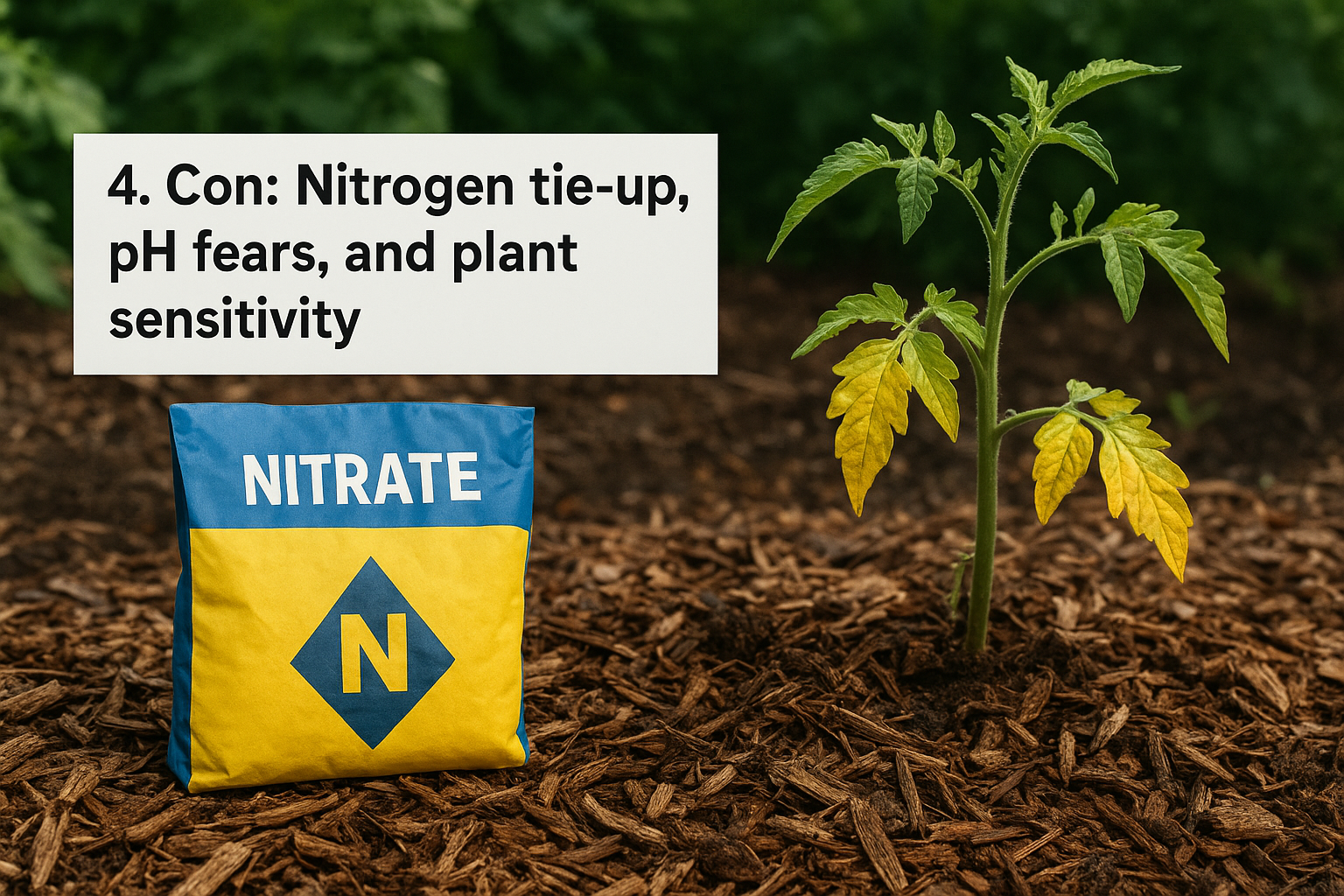
When you look at the full picture of wood chip mulch pros and cons, nitrogen depletion is the concern that catches most gardeners off guard. Fresh wood chips pull nitrogen from your soil as they break down, which can leave your plants starved of one of their most critical nutrients.
What it is
Soil microbes that decompose wood chips consume nitrogen to fuel that breakdown process. This creates a temporary deficiency at the soil surface, where your plant roots actively feed. Nitrogen-hungry plants like leafy vegetables and fast-growing annuals will show yellowing leaves quickly if you apply fresh chips without compensating.
When it helps most
This downside matters most when you apply fresh, unaged wood chips directly around edible plants or newly established ornamentals. Aged or composted chips have already passed through most of their decomposition cycle, so they cause far less nitrogen competition at the root zone.
Using composted or aged wood chips instead of fresh material significantly reduces nitrogen tie-up and lowers the risk to sensitive plants.
Watch-outs
Some wood species also affect soil pH as they break down. Pine and cedar chips can push soil toward more acidic conditions over time, which stresses plants that need neutral to alkaline soil to thrive.
Practical tips
Apply a nitrogen-rich fertilizer before laying wood chips if you're using fresh material. Check your soil pH every season using a basic test kit to catch any gradual shifts before they damage your plants.
5. Con: Pests, rot, fungus, and messy maintenance
The other side of the wood chip mulch pros and cons equation includes problems that tend to appear gradually, making them easy to miss until the damage is already done. Thick, moist wood chip layers create ideal conditions for pests, fungal growth, and rot when applied carelessly.
What it is
Wood chips hold moisture well, but that same quality makes them a harbor for termites, slugs, and fungus gnats when chips pile too deep or press against plant stems. Over time, chips in contact with structural elements like timber edging or wooden fences can also accelerate rot and decay in those materials.
Keeping wood chips at least 2 to 3 inches away from plant stems and wooden structures reduces pest and rot risk significantly.
When it helps most
This drawback becomes most visible during Malaysia's wet season, when high humidity and frequent rain push chip layers toward constant saturation. Gardens with dense shade or poor airflow are the highest-risk environments, since they stay damp for longer stretches between rain events.
Watch-outs
Artillery fungus is a specific problem with wood chip mulch. This fungus shoots spores onto nearby surfaces, including walls and parked vehicles, leaving small, sticky dark spots that are extremely difficult to remove once dried. Beds near painted surfaces or vehicles carry the most risk.
Practical tips
Rake your wood chip layer every few weeks to break up compaction and let moisture escape. Replace any chips that show visible mold or fungal growth immediately, and inspect timber edging regularly for early signs of rot before it spreads.
Next steps for your garden
Understanding the full picture of wood chip mulch pros and cons gives you a solid starting point, but the right call still depends on your specific garden conditions, plant types, and how much maintenance you're prepared to do. If your beds have good drainage, established plants, and open sun exposure, wood chips are likely a strong fit. If you're dealing with shaded areas, sensitive ornamentals, or soil that stays wet, you need to weigh those risks carefully before committing.
The most effective gardens share one thing: every material choice serves the overall design. Mulch is no different. Whether wood chips suit your space or you need an alternative, getting professional input early saves you from costly trial and error that can set your plants back by months.
Reach out to the Konzept Garden team today and book your free garden consultation to start building an outdoor space that works properly for you.