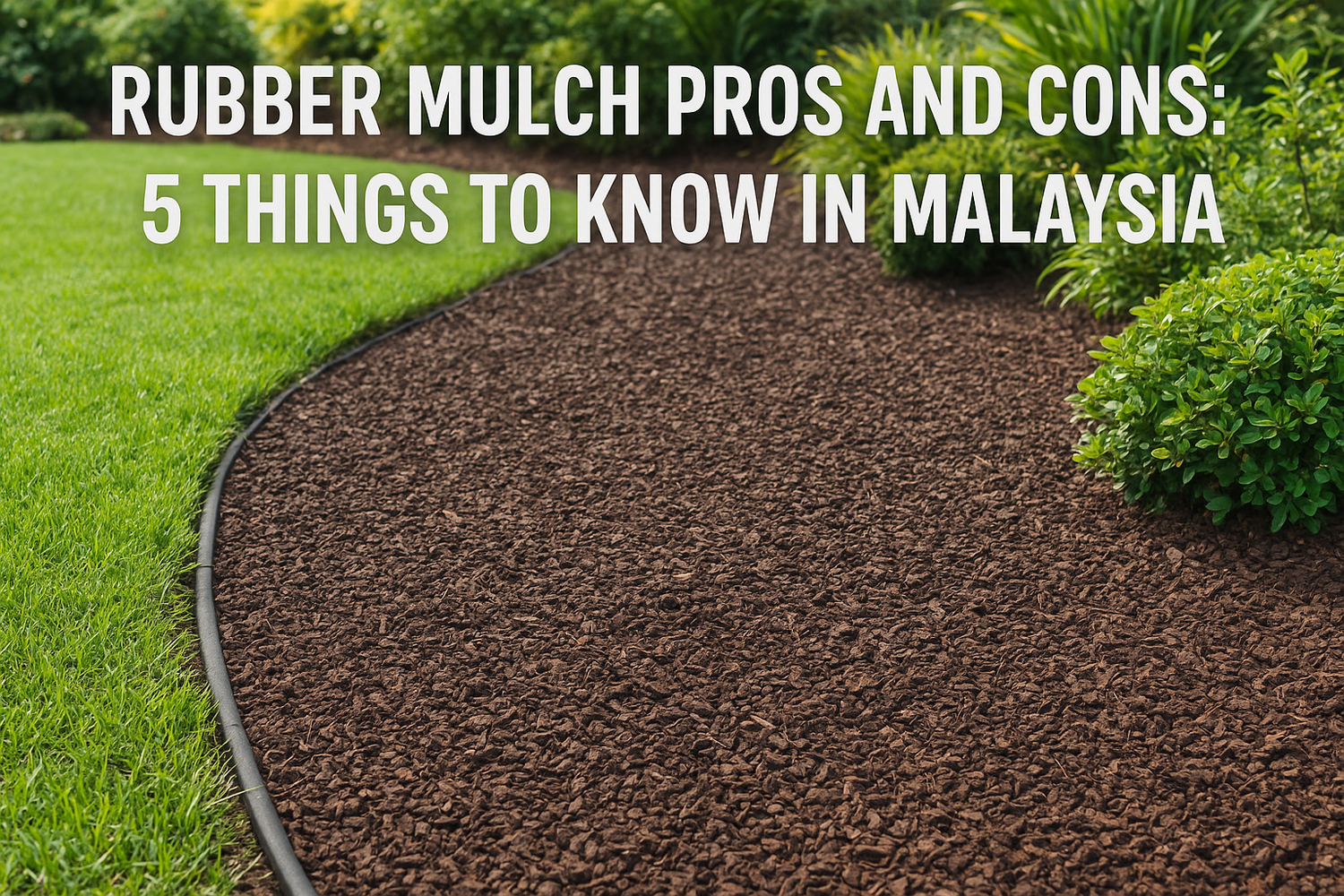
Rubber mulch has been showing up in more Malaysian gardens, playgrounds, and commercial landscapes over the past few years. It promises longer lifespan and less maintenance than traditional organic options, but is it actually worth the investment? Understanding the rubber mulch pros and cons before committing helps you avoid costly mistakes down the line.
At Konzept Garden, we've worked on enough landscape projects across Malaysia to see firsthand how material choices shape a garden's long-term success. Mulch might seem like a small detail, but it directly affects plant health, maintenance costs, and the overall look of your outdoor space. Choosing the wrong type can set a project back significantly.
This article breaks down five key things you should know about rubber mulch, covering durability, safety, cost, environmental impact, and how it stacks up against organic alternatives like wood mulch. Whether you're planning a backyard refresh or a playground installation, you'll have the information you need to make the right call.
1. Get site-specific advice before you commit
Before you buy rubber mulch in bulk, talk to a landscape professional first. Malaysia's tropical climate and variable soil types mean what works well in one garden often fails in another, and product descriptions alone won't tell you that.
What a landscape designer checks in Malaysia
A designer looks at drainage patterns, soil type, and sun exposure before recommending any mulch material. In Malaysia, waterlogged soil combined with rubber mulch can cause surface pooling, since rubber doesn't break down and improve drainage the way organic mulch does.
Key site factors a designer checks:
- Drainage and slope to predict pooling risk after heavy rain
- Plant types and whether soil enrichment from organic mulch matters
- Traffic levels to judge whether durability is the primary need
- Heat exposure and the risk of heat buildup in open or paved areas
When rubber mulch makes sense for your space
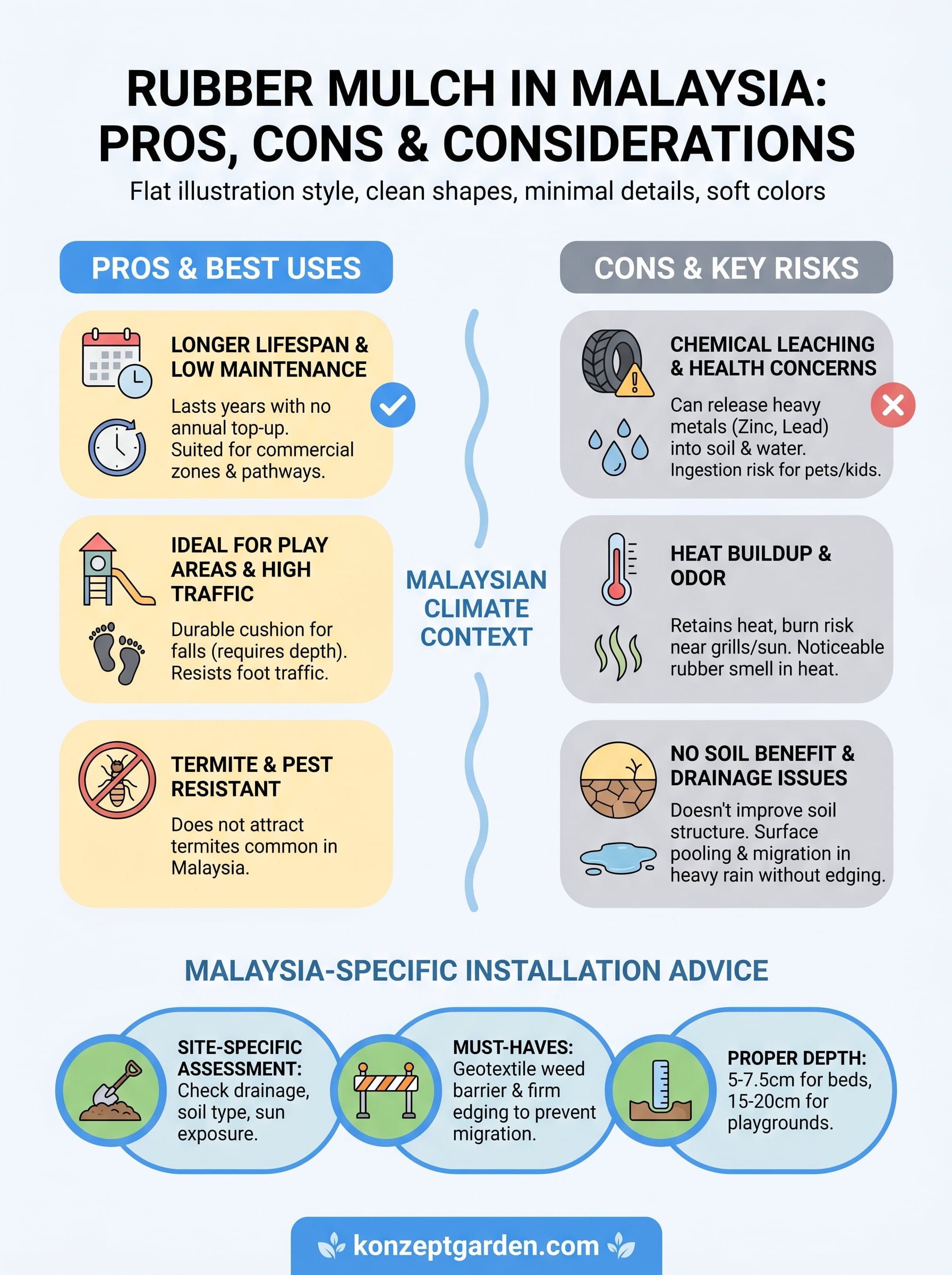
Rubber mulch works well in high-traffic play areas, pathways, and commercial zones where durability and consistent ground cover matter more than soil enrichment. If your project involves a children's playground or a commercial property that needs low annual maintenance, rubber is worth pricing seriously.
The long lifespan of rubber mulch only saves you money when your site conditions and intended use actually suit it.
When to choose other materials instead
For garden beds with flowering plants, vegetables, or pH-sensitive species, organic mulch is the better choice. Wood chip and bark mulch feed the soil as they decompose, which supports root health in a way rubber cannot replicate.
How to get a plan and quote with Konzept Garden
Konzept Garden provides free quotations and on-site consultations for landscape projects across Malaysia. Working through the rubber mulch pros and cons with a designer against your actual garden layout, drainage, and plant selection gives you a clearer answer than any product listing will.
2. Weigh safety, health, and environmental tradeoffs
Safety is one of the sharpest areas in any rubber mulch pros and cons evaluation. Most rubber mulch comes from recycled tires, which contain chemicals that can leach into surrounding soil and water, so understanding what you're placing in your garden matters.
What rubber mulch contains and what it can release
Recycled tire rubber contains carbon black, benzothiazole, and heavy metals including zinc and lead. These compounds can leach into soil, especially when mulch heats up or when heavy tropical rainfall repeatedly washes through a bed.
The older and more degraded the rubber mulch becomes, the higher the leaching risk tends to be.
Heat, odor, and burn risk near grills and smoking areas
Rubber mulch absorbs and retains significantly more heat than wood or bark mulch. Near a grill or in full sun, surface temperatures can rise high enough to cause burns on contact, and the rubber odor intensifies noticeably during hot periods.
Kids, pets, and ingestion risk in play zones
Small children and pets can ingest rubber crumb pieces accidentally. Keep rubber mulch away from areas where toddlers sit directly on the ground or where dogs and cats dig regularly, since ingestion poses a real health risk.
Soil and plant concerns, including zinc and pH sensitivity
Zinc leaching is the primary soil health concern with rubber mulch. Zinc toxicity harms pH-sensitive plants and disrupts the soil biology that supports healthy root development over several growing seasons.
3. Understand how rubber mulch performs in Malaysia's climate
Any rubber mulch pros and cons comparison needs to factor in Malaysia's tropical climate specifically. Conditions here differ significantly from temperate markets where most rubber mulch research originates.
Heavy rain, drainage, and flooding after storms
Heavy monsoon rainfall can displace rubber mulch on slopes or in beds without firm edging. Unlike organic mulch, rubber does not absorb water, so runoff moves faster across the surface. Watch for these common drainage problems:
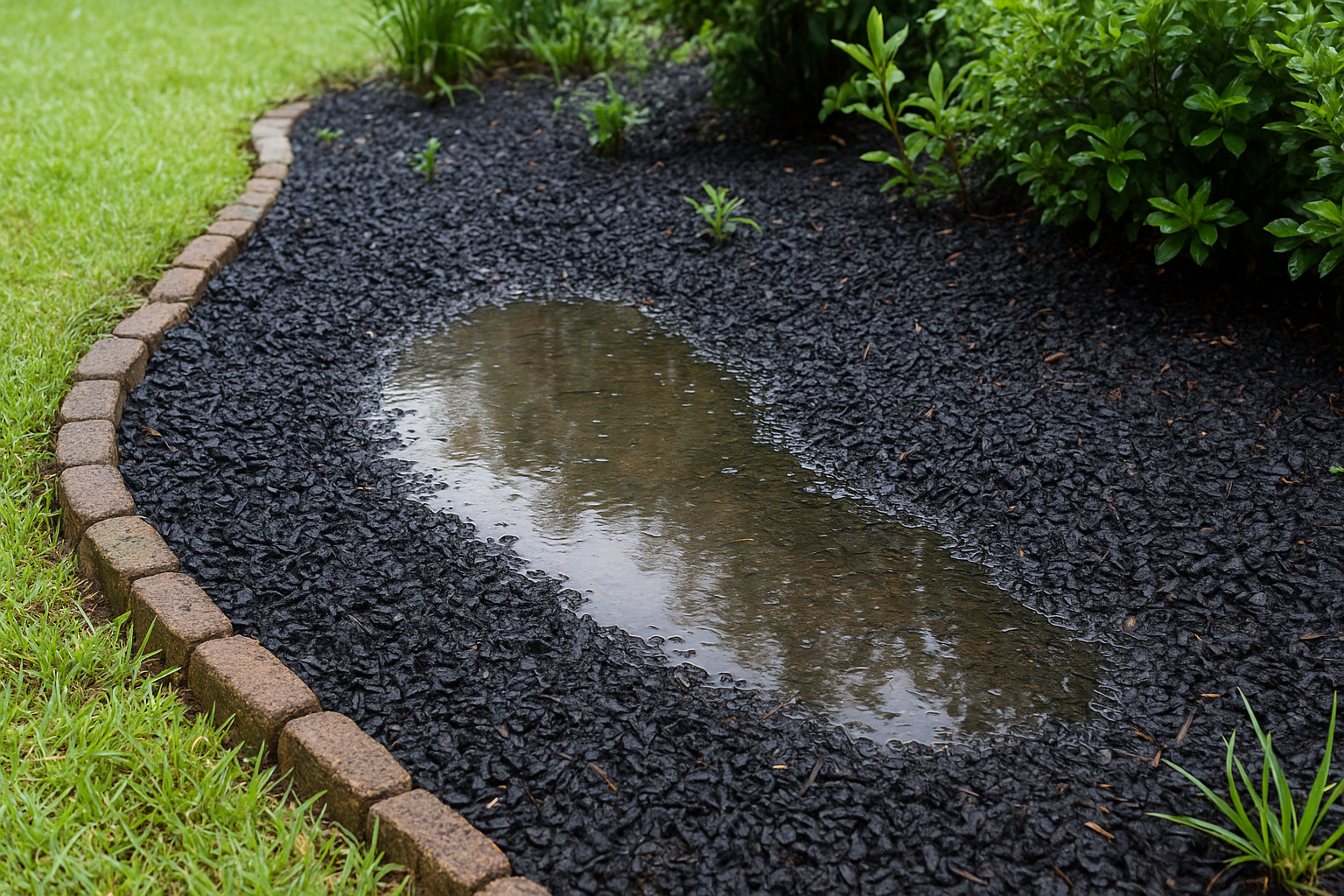
- Surface pooling near low points in the garden
- Mulch migration toward drain outlets
- Uneven coverage after major storms
Humidity, mold, algae, and what "resists mold" really means
Rubber does not decompose, but it does develop algae and surface biofilm in humid, shaded spots. You will see green or black growth on rubber mulch over time, especially in areas with limited airflow.
"Mold-resistant" describes the rubber itself, not the organic debris that accumulates on top of it.
Weeds, leaf litter, and why upkeep changes, not disappears
Windblown seeds still land on rubber mulch and germinate in any organic debris that collects between pieces. Your maintenance work shifts from pulling rooted weeds to removing surface litter before it builds up.
Termites and other pests, including where rodents can show up
Rubber mulch does not attract termites, which is a real advantage in Malaysia. However, rodents and ground insects can still shelter under thick rubber layers placed directly against walls or building foundations.
4. Compare real costs over 1, 5, and 10 years
Cost is one of the most debated factors in any rubber mulch pros and cons evaluation. Rubber mulch costs significantly more upfront, but the math shifts when you examine total spend across multiple years.
Upfront price versus top-ups for wood mulch
Rubber mulch typically runs two to four times the price of bark or wood chip mulch per square meter. Wood mulch breaks down within 12 to 18 months and needs annual topping up, adding recurring labor and material costs that accumulate quickly.
Over a 5 to 10 year horizon, rubber mulch can match or undercut the total cost of repeatedly replacing organic alternatives.
Hidden costs: edging, fabric, cleanup, and replacement
You still need quality edging and weed fabric to keep rubber mulch properly contained, and those add to your installation budget. Full removal, if you later redesign, carries higher disposal costs than simply composting or turning over organic materials.
How rubber mulch affects soil improvement compared to organics
Organic mulch builds soil structure by feeding microbial activity as it breaks down. Rubber provides none of that, so you may spend more on fertilizers and soil amendments over time to maintain healthy plant growth.
Practical alternatives in Malaysia, including bark, coco, stone, and groundcovers
Bark mulch, coco husk, gravel, and low-growing groundcovers all perform well in Malaysian conditions. Consider these points when comparing:
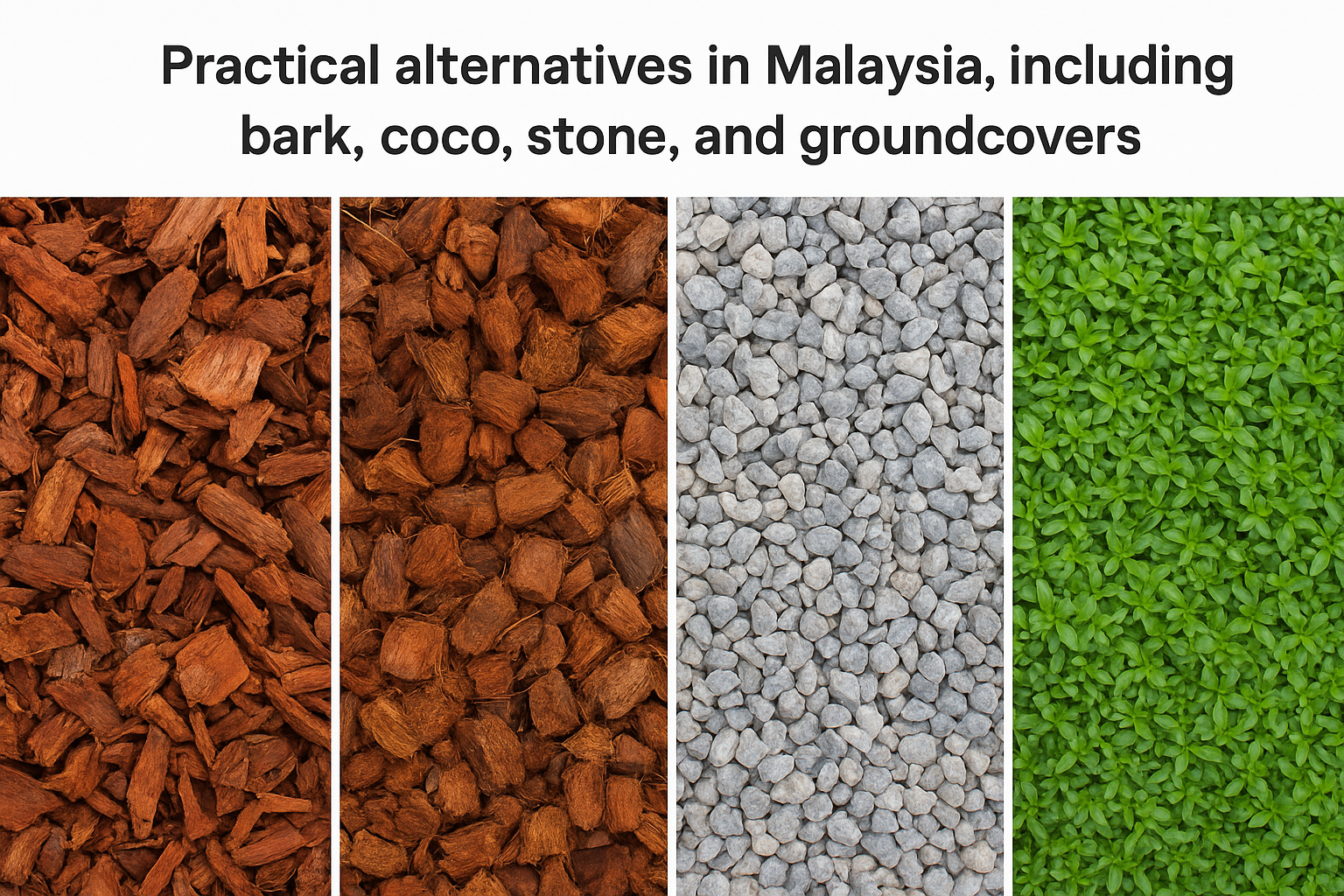
- Bark and coco husk improve soil but need annual replacement
- Gravel and stone last indefinitely but offer no soil benefit
- Groundcovers add biodiversity and reduce long-term costs considerably
5. Plan installation and long-term maintenance the right way
Good installation makes the biggest difference in how well rubber mulch actually performs over time. Cutting corners on depth, edging, or base preparation leads to the exact problems that push people toward replacing it early, which cancels out the cost savings you expected.
Depth guidelines for landscape beds versus play areas
For garden beds, lay rubber mulch at a depth of 5 to 7.5 cm. For play areas designed to cushion falls, aim for 15 to 20 cm to meet basic safety standards. Shallow installation is the most common installation mistake, and it leads to uneven coverage and faster weed breakthrough.
Base layers, weed barriers, and edging that keeps it contained
Always install a geotextile weed barrier underneath rubber mulch, and use firm edging boards or garden borders to prevent migration during heavy rain. These two steps are non-negotiable in Malaysia's wet conditions.
Skipping edging almost always results in rubber mulch spreading across paths and drains within a single monsoon season.
Cleaning and refreshing color without damaging plants
Rinse rubber mulch periodically with a garden hose to clear dust and debris. Avoid strong chemical cleaners near plant roots, as runoff carries those chemicals directly into your soil.
Removal realities if you change the design later
Removing rubber mulch is labor-intensive work. Pieces mix into topsoil over time, making full extraction difficult. Factor this into your rubber mulch pros and cons calculation before committing to a large installation area.
Next steps
Working through rubber mulch pros and cons gives you a clearer picture, but the real answer depends on your specific garden layout, plant selection, and budget. No two Malaysian gardens are identical, and a material that performs well in one space can cause drainage or soil problems in another within a single rainy season.
Your next move is to speak with a designer who understands local conditions before spending on materials. Konzept Garden offers free consultations and quotations for landscape projects across Malaysia, so you can get a concrete recommendation before committing to any material or budget figure. Whether you're planning a garden bed refresh, a children's play area, or a full outdoor redesign, professional input early in the process saves both time and money down the line.
Get a free quote from Konzept Garden and walk through your project with a designer who knows what works in Malaysia.