
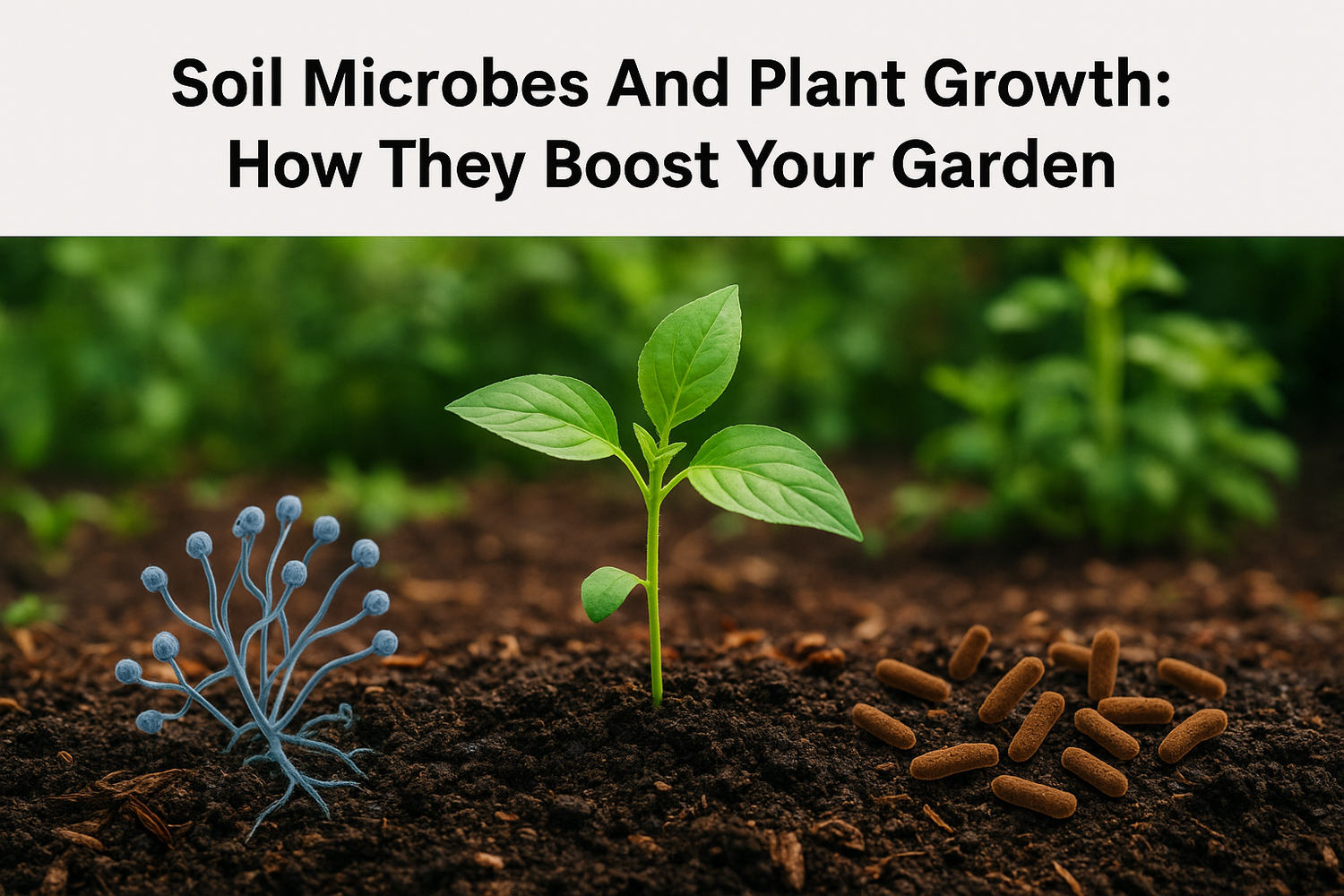
What you see above the soil, lush foliage, vibrant blooms, strong root systems, is only half the story. Beneath the surface, billions of organisms are doing the heavy lifting. The relationship between soil microbes and plant growth is one of the most important factors in a thriving garden, yet it's often the most overlooked. These microscopic workers break down organic matter, cycle nutrients, fight off pathogens, and even produce hormones that help plants grow stronger and faster.
At Konzept Garden, we design gardens that are built to last. That means going beyond aesthetics and thinking carefully about what happens underground. Whether we're planning a residential garden in Kuala Lumpur or a commercial landscape project, healthy soil biology is a non-negotiable part of the process. Sustainable gardens start with healthy soil, and healthy soil starts with microbes.
This article breaks down exactly how soil microorganisms support plant growth, from nutrient cycling to disease suppression. You'll learn which types of microbes matter most, how they interact with plant roots, and what you can do to encourage a thriving microbial ecosystem in your own garden.
Why soil microbes matter for plant growth
Most gardeners focus on sunlight, water, and fertilizer. But without a functioning microbial community in your soil, even the best inputs won't get your plants very far. Soil microbes act as the engine of nutrient availability, converting organic matter and minerals into forms that plant roots can actually absorb. Without them, nutrients sit locked in the soil, unavailable no matter how much you add from the surface.
Microbes drive nutrient availability
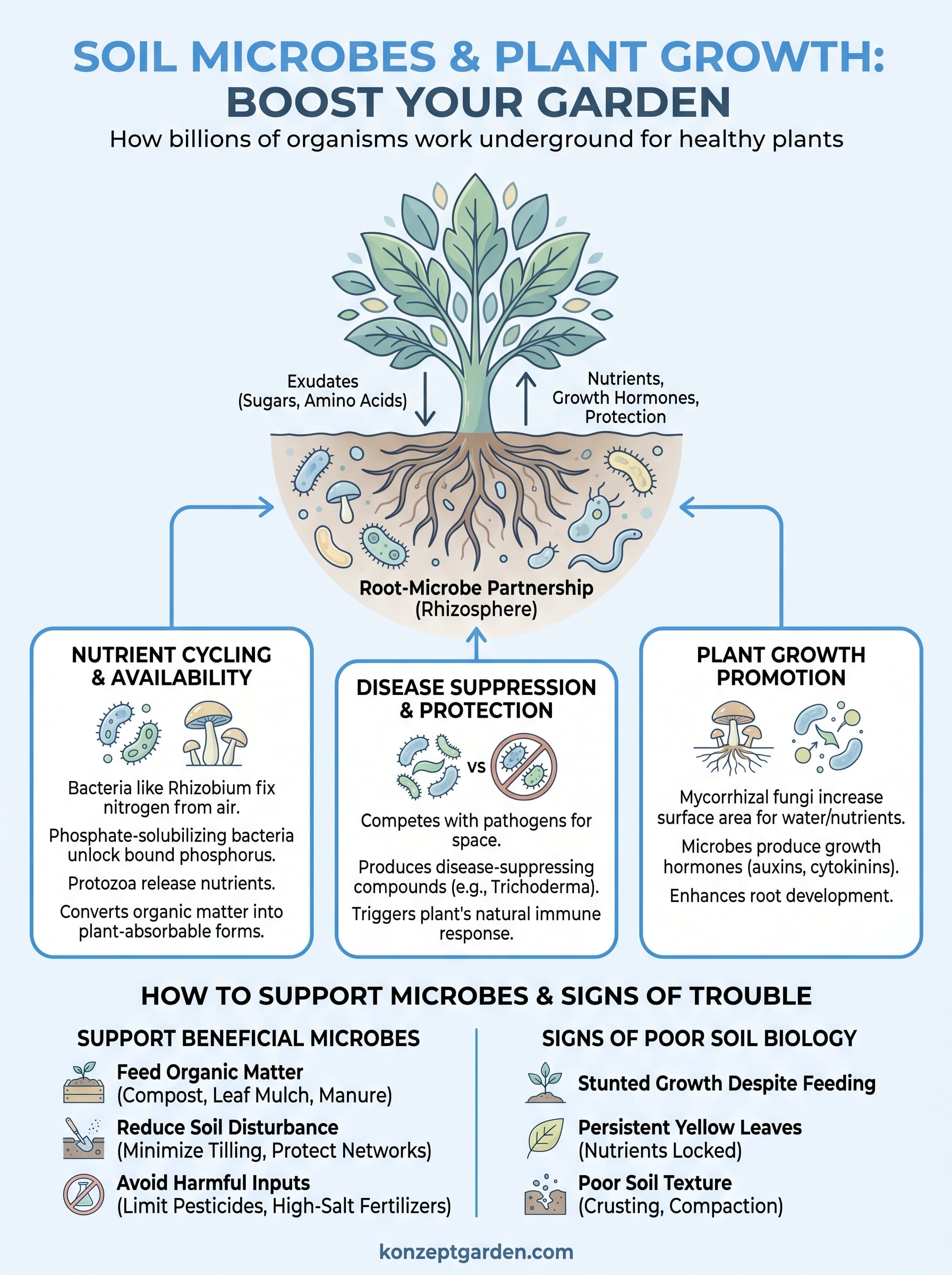
The connection between soil microbes and plant growth is most visible when you look at how nutrients move through the soil. Bacteria like Rhizobium fix atmospheric nitrogen directly into the soil, giving plants one of their most essential growth elements without any synthetic input. Phosphate-solubilizing bacteria break down phosphorus compounds that would otherwise remain bound to soil particles, making phosphorus available to roots that would otherwise struggle to access it.
A single teaspoon of healthy soil contains between 100 million and 1 billion bacteria, all actively working to keep nutrients cycling.
Your garden's nutrient cycle depends entirely on this microbial activity. When microbial populations are low or imbalanced, nutrient deficiencies show up in your plants even when the raw nutrients are technically present in the soil. That's why adding more fertilizer rarely solves the problem without also addressing the biology that drives nutrient uptake in the first place.
Microbes protect plants from disease
Beneficial microbes do more than feed your plants. They also defend them. Certain soil bacteria and fungi produce compounds that suppress harmful pathogens, competing for space and resources in ways that prevent disease from taking hold. Trichoderma fungi, for example, actively parasitize soil-borne fungal pathogens and significantly reduce root rot in garden plants.
Some species go even further by triggering a plant's own immune response, a process called induced systemic resistance. This primes the plant to react faster and more effectively when pests or pathogens appear. In Malaysian gardens, where high humidity and consistent heat create near-perfect conditions for fungal disease, this natural microbial defense layer makes a real, measurable difference to long-term plant health and garden performance.
How soil microbes and roots work together
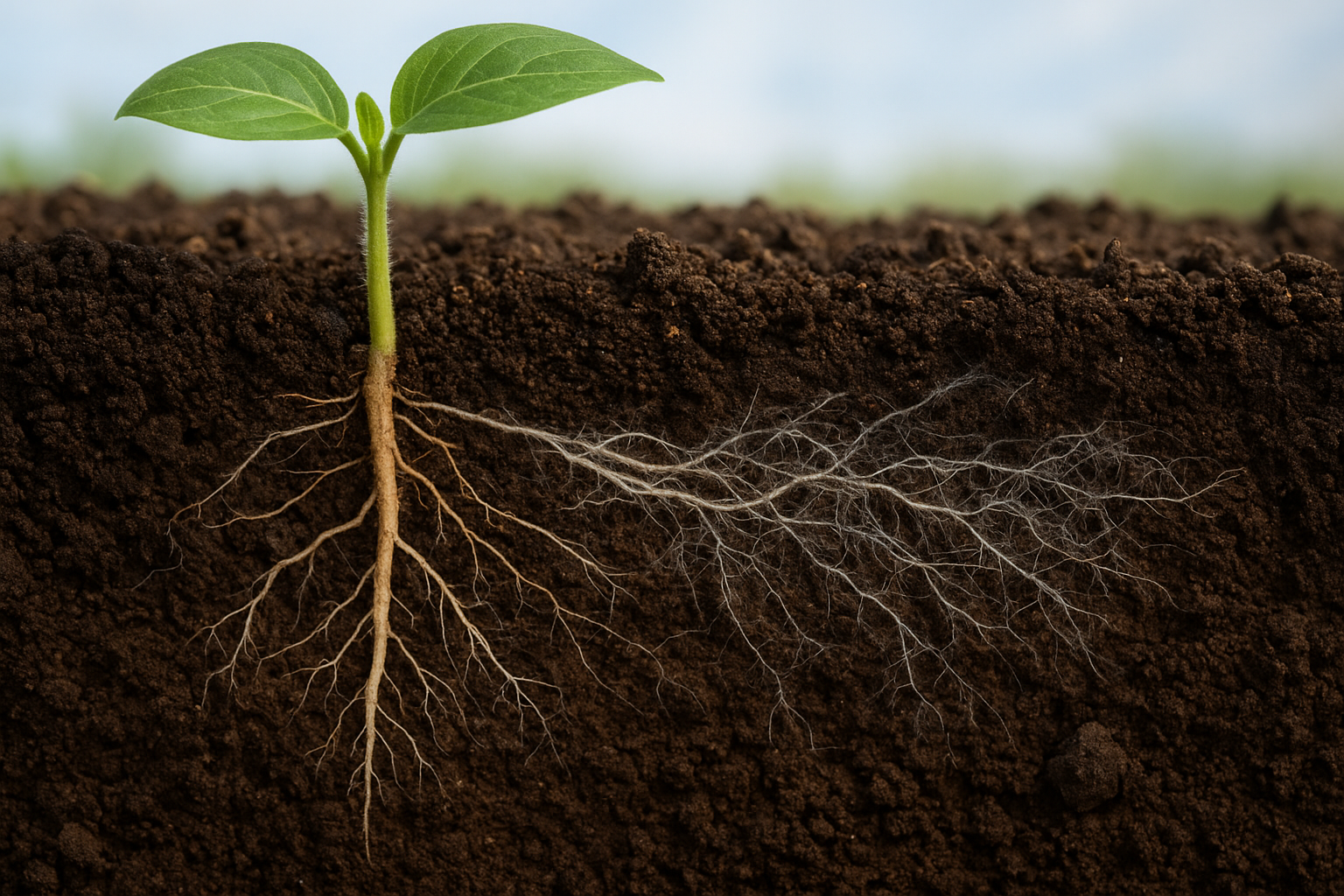
The relationship between roots and soil microbes isn't passive. Plants actively recruit the microbes they need by releasing compounds from their roots into the surrounding soil, a zone called the rhizosphere. This narrow band of soil, just a few millimeters wide, contains microbial populations up to 1,000 times denser than the surrounding soil. That density isn't accidental. Plants shape their own microbial community by controlling what they release underground.
The rhizosphere: where the action happens
Your plant's roots release sugars, amino acids, and organic acids as exudates. These compounds act as both signals and food sources, drawing specific microbes toward the root surface. In return, those microbes break down nutrients, produce growth hormones like auxins and cytokinins, and protect roots from pathogens. This is a genuine two-way exchange, not a one-sided arrangement. When one side struggles, the other feels it, and your plant's performance reflects that directly.
The rhizosphere is one of the most biologically active environments on Earth, driven entirely by this root-microbe partnership.
How mycorrhizal fungi extend your plant's reach
Mycorrhizal fungi take this connection even further by physically integrating with plant roots. Their thread-like hyphae extend well beyond where roots can reach on their own, dramatically increasing the surface area available for water and nutrient absorption. Studies from major scientific institutions confirm that over 90% of land plants form some type of mycorrhizal relationship. Understanding this is key to appreciating how deeply soil microbes and plant growth are linked at a structural, not just chemical, level.
The main types of soil microbes and what they do
Not all soil microbes do the same job. Your soil hosts bacteria, fungi, protozoa, and nematodes, each contributing differently to the relationship between soil microbes and plant growth. Understanding each group helps you make better decisions about how you manage your garden soil.
Bacteria: the nutrient specialists
Bacteria are the most numerous microbes in any garden, and different species handle nitrogen fixation, phosphorus release, and pathogen control. Some also produce growth-promoting hormones that stimulate root development directly. Key bacterial types include:
- Rhizobium: fixes atmospheric nitrogen into plant-usable forms
- Phosphate-solubilizing bacteria: release bound phosphorus locked in soil particles
- Bacillus species: suppress soil-borne pathogens and produce plant growth hormones
Research from the United States Department of Agriculture confirms that nitrogen-fixing bacteria can substantially reduce dependence on synthetic fertilizers in biologically active soils.
Fungi: the network builders
Mycorrhizal fungi physically bond with plant roots and extend their hyphae far beyond where roots can reach, pulling in water and nutrients from areas otherwise inaccessible to your plants.
Decomposer fungi tackle woody and fibrous organic matter that bacteria cannot easily process. Together, both fungal types build structure in your soil while keeping organic matter cycling at a consistent and productive rate.
Other microbes worth knowing
Protozoa feed on bacteria and release nutrients in plant-available forms as they digest their prey, making them key mediators in your soil's nutrient cycle.
Beneficial nematodes hunt harmful root-feeding pests underground. Both groups regulate population balance in the soil food web, keeping your soil biology stable and your plants growing in a supportive environment.
Signs your soil biology needs help
Your plants and soil give off clear signals when microbial populations drop below a healthy level. The tricky part is that many gardeners misread these signals as nutrient deficiencies or watering problems and reach for fertilizers or pesticides, which can make things worse. Knowing what to look for helps you address the actual cause rather than masking symptoms that keep returning season after season.
What your plants are telling you
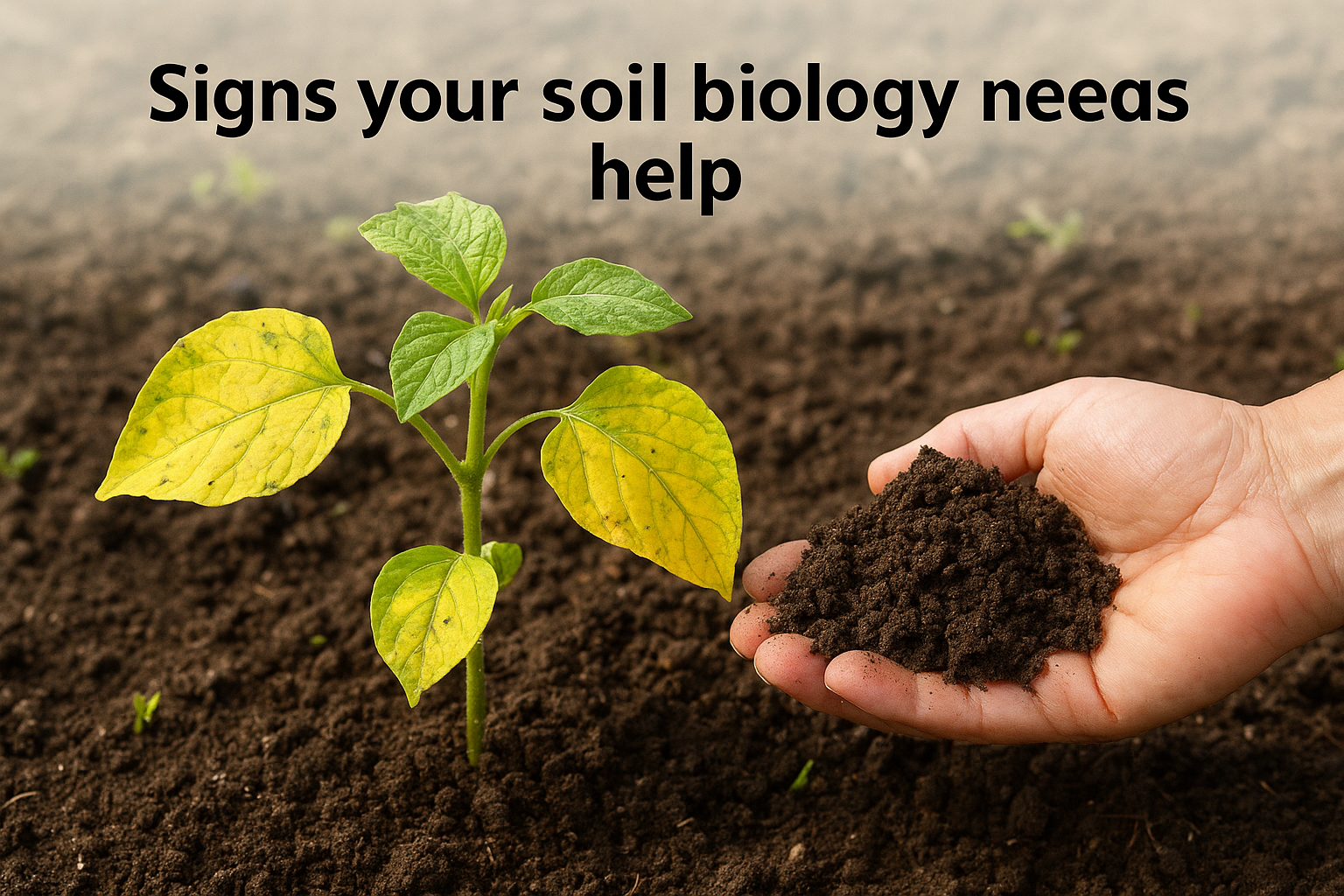
Stunted growth despite regular watering and feeding is one of the most common signs that soil microbes and plant growth are out of sync. If your plants look pale, produce fewer flowers than expected, or develop yellowing leaves even when you're fertilizing regularly, your soil biology may be the real bottleneck. Nutrients are present but unavailable when microbial activity is too low to convert and release them.
Persistent yellow leaves in well-fertilized plants often point to poor microbial activity rather than a lack of nutrients in the soil.
Watch for recurring root rot, fungal patches on the soil surface, or a sour smell from your garden beds. These point to an imbalanced microbial community where harmful organisms are dominating and beneficial ones are suppressed.
What your soil texture reveals
Healthy, biologically active soil crumbles easily and holds its structure when you squeeze a handful. If your soil compacts hard, repels water, or forms a crust on the surface, microbial breakdown of organic matter has slowed significantly. Poor soil texture and low microbial activity tend to go hand in hand, each one making the other worse over time.
How to support beneficial microbes in Malaysian gardens
Supporting soil microbes and plant growth in Malaysia's tropical climate requires working with the environment rather than against it. High heat and year-round humidity accelerate both microbial activity and the breakdown of organic matter, which means your soil needs consistent replenishment to stay biologically active. The good news is that a few practical habits make a real difference to the health of your garden over time.
Feed your soil with organic matter
Compost, leaf mulch, and well-rotted manure give the beneficial microbes in your soil the carbon-rich food they need to maintain healthy populations. Apply a 5 to 8 cm layer of organic mulch across your garden beds and refresh it regularly, especially during dry periods. Avoid high-salt synthetic fertilizers, which suppress bacterial and fungal activity even while delivering short-term nutrient results. Good organic materials to start with include:
- Finished compost from kitchen and garden scraps
- Shredded fallen leaves collected from your garden
- Aged coconut husk or rice husk, both widely available in Malaysia
Reduce soil disturbance
Regular tilling and deep digging physically break apart the fungal networks and bacterial colonies your soil has developed over time. Where possible, limit tillage to the top few centimeters and allow organic matter to decompose on the surface naturally. This approach preserves the structure that fungi and bacteria need to function effectively. Avoid overusing broad-spectrum pesticides, which eliminate beneficial microbes alongside the pests they target, leaving your soil biology weakened and your plants more exposed to disease and nutrient stress.
Keeping mulch or ground cover on your soil year-round is one of the simplest ways to stabilize microbial populations in Malaysia's climate.
Next steps for a healthier garden
The connection between soil microbes and plant growth is not abstract theory. It's the practical foundation of every garden that performs consistently, looks good year-round, and resists the pest and disease pressure that Malaysia's climate creates. Start with your soil before you invest in new plants, fertilizers, or products. Add organic matter, reduce unnecessary tillage, and pull back on broad-spectrum pesticides that eliminate the microbial communities your plants depend on.
Building a healthy garden takes more than good intentions. It takes the right design, the right plants, and a soil management approach that supports long-term performance from the start. If you're planning a new garden or want to improve an existing one, working with a professional landscape designer makes the process faster and far more effective. Talk to the Konzept Garden team to discuss your garden project and build something that works from the ground up.