
A yellowing leaf doesn't always mean you're overwatering. More often than not, your plants are trying to tell you something specific, and the clues are right there in the foliage. Plant nutrient deficiency symptoms show up as discolored leaves, stunted growth, unusual spots, or weak stems, and each pattern points to a different missing element. The tricky part is knowing which deficiency you're actually dealing with, because many symptoms overlap or mimic other problems entirely.
At Konzept Garden, we've designed and maintained gardens across Malaysia long enough to know that healthy plants start below the surface. Whether we're planning a residential garden or consulting on plant selection for a commercial project, soil nutrition is one of the first things we assess, because no amount of great design can compensate for starving plants.
This guide breaks down the most common nutrient deficiencies, shows you exactly what to look for, and walks you through practical steps to correct each one. By the end, you'll be able to read your plants like a diagnostic chart and take action before minor symptoms turn into major losses.
What plant nutrient deficiency symptoms look like
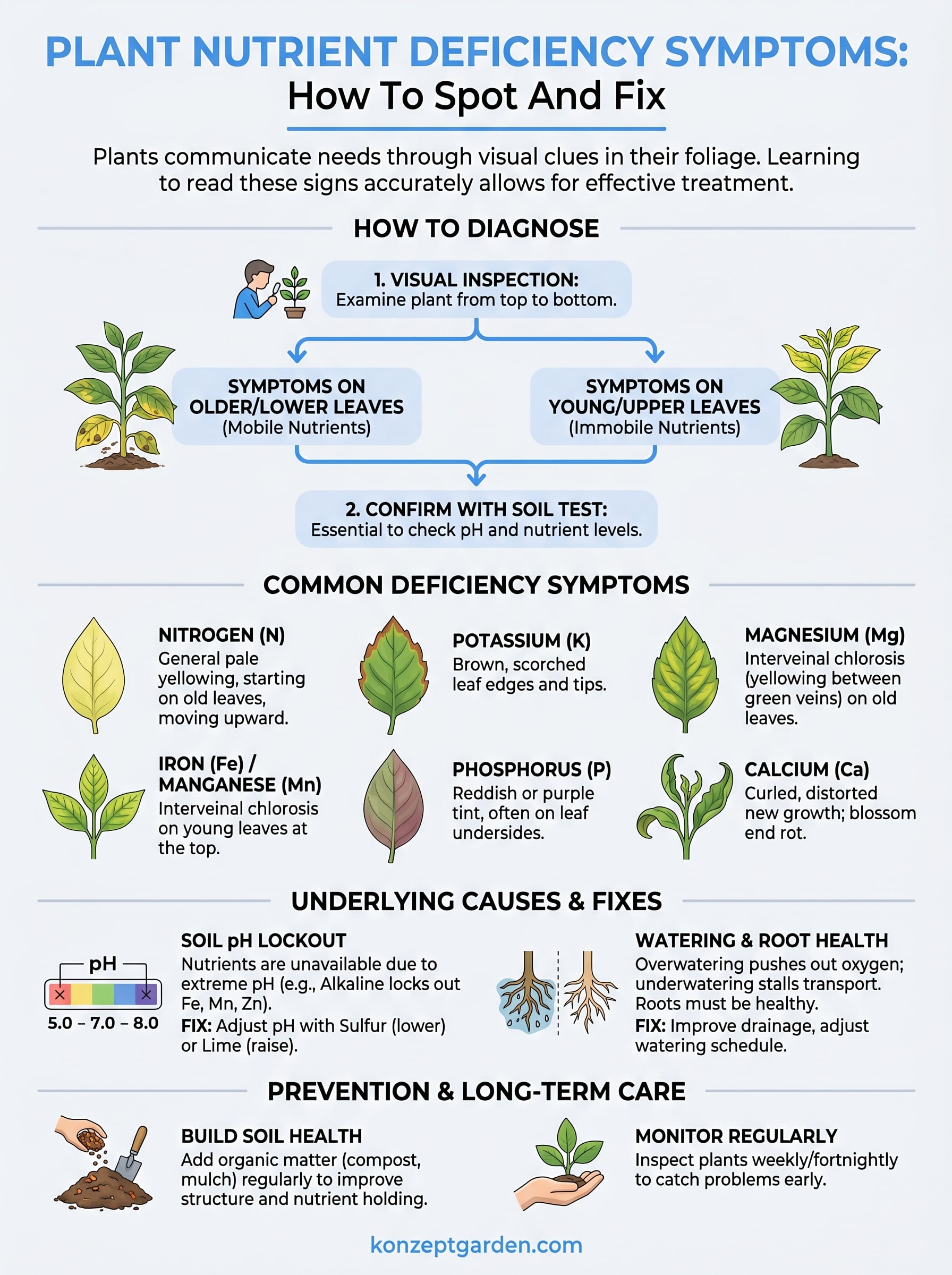
Plants communicate through visible changes, and learning to read those changes accurately saves you from guessing or applying the wrong fix. Most plant nutrient deficiency symptoms appear first on the leaves, because that's where photosynthesis happens and where plants redirect resources when something essential is missing. The exact location of the symptom on the plant, whether it shows up on older lower leaves or fresh new growth at the top, gives you one of the most important diagnostic clues you have.
Leaf discoloration patterns
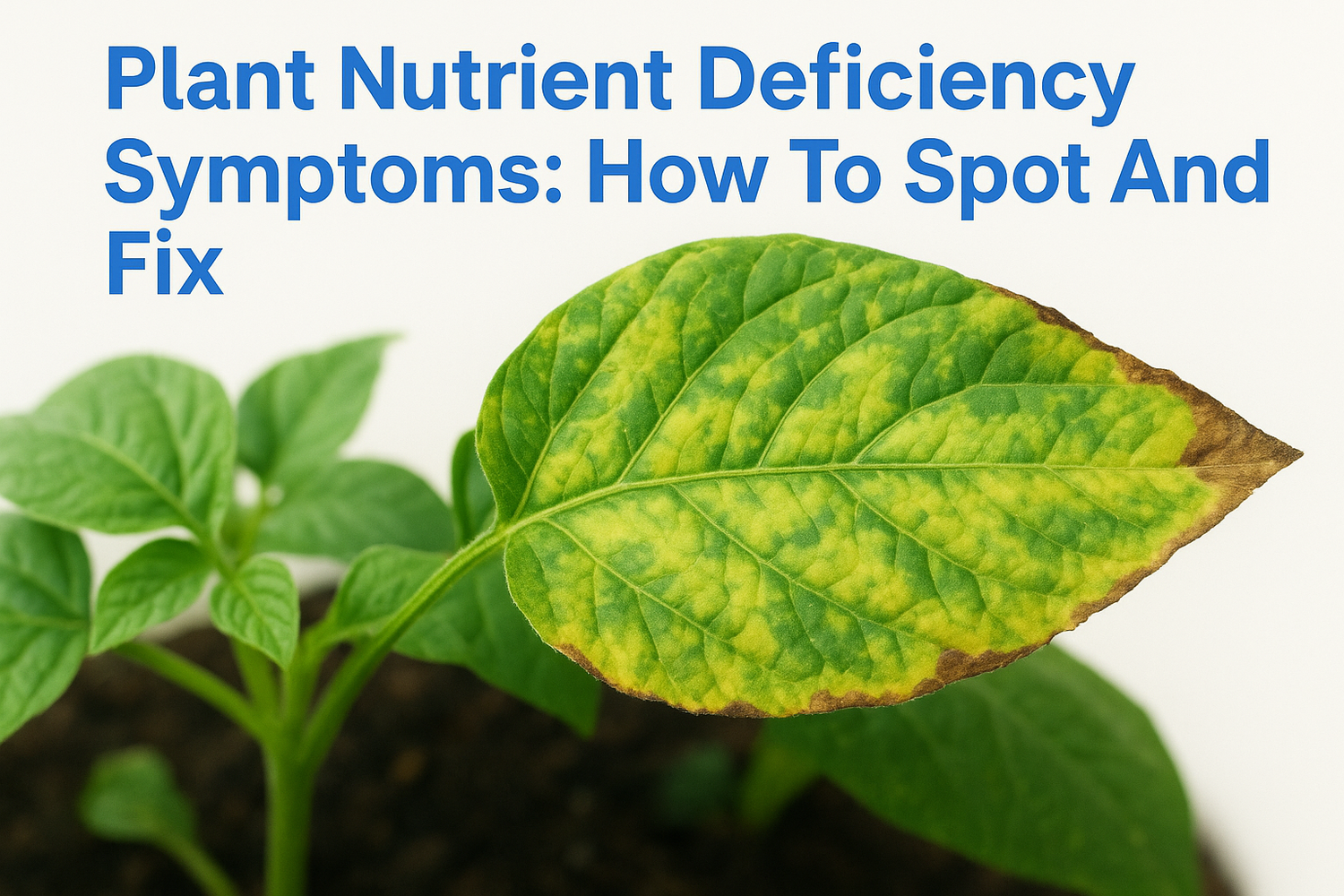
Yellowing leaves are the most common signal, but the pattern tells you which nutrient is actually missing. When leaves turn yellow starting from the older, lower leaves while the veins stay green, you're likely looking at a magnesium deficiency. If the yellowing starts on young leaves near the top of the plant, that points toward iron or manganese instead. Nitrogen deficiency causes a general pale yellowing across the whole plant, working its way upward from the base over time.
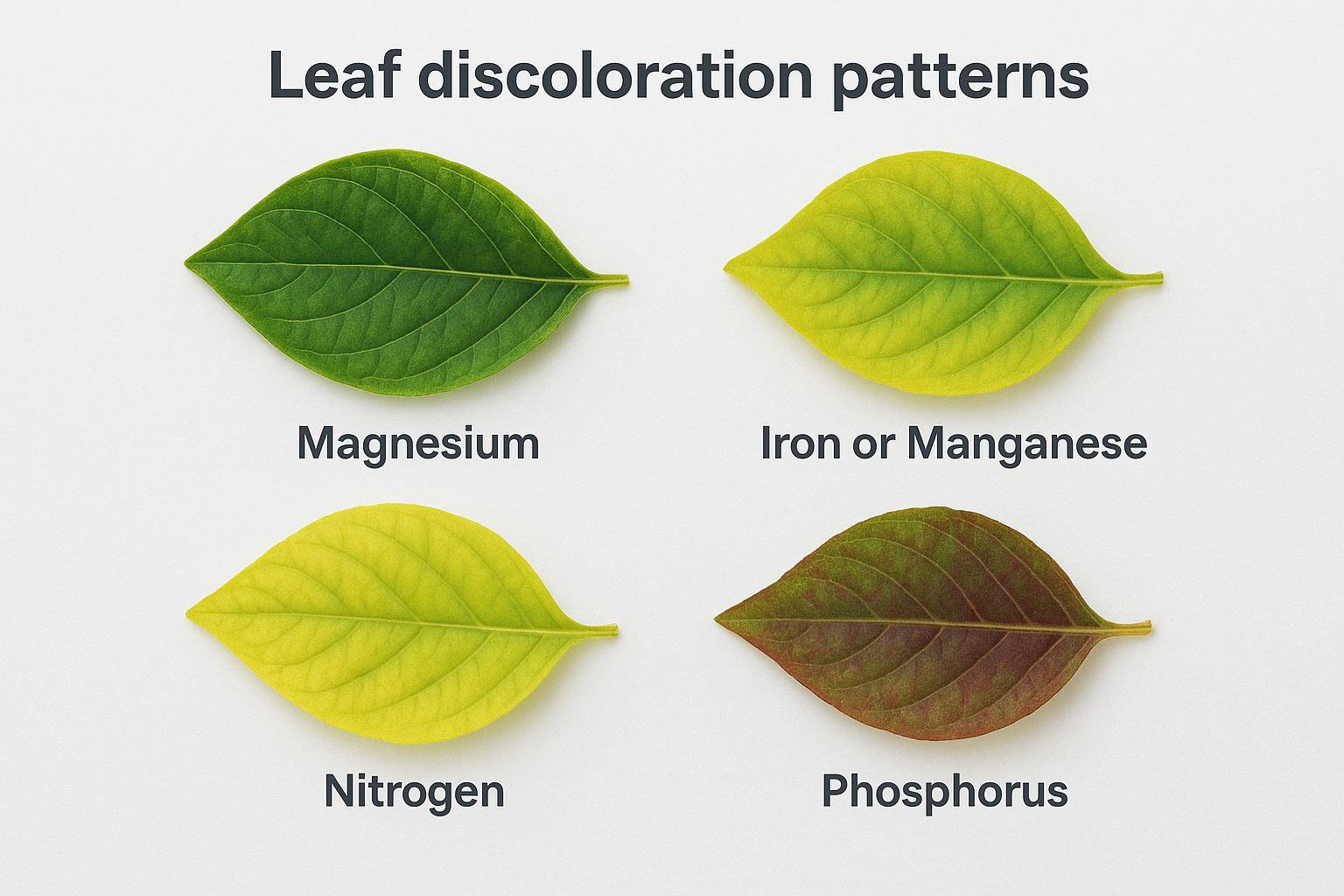
The position of the discoloration on the plant is one of the most reliable starting points for narrowing down the specific deficiency before you test or treat anything.
Brown or bronze patches, purple tints, and interveinal chlorosis (where leaf tissue turns yellow but veins stay green) each indicate different missing elements. Phosphorus deficiency often shows up as a reddish or purple underside on leaves, particularly in cooler soil temperatures. Potassium deficiency typically causes leaf edges and tips to turn brown and crispy, as though the plant has been scorched from the outside in.
Growth distortion and structural symptoms
Nutrient problems don't stop at the leaves. Calcium deficiency causes new leaves to curl, distort, or fail to fully open, because calcium builds cell walls in actively growing tissue. You'll often notice this in the tips of new shoots or in fruiting plants, where it appears as blossom end rot on tomatoes or tip burn on lettuce, both clear signs that calcium isn't reaching new growth fast enough.
Zinc and boron deficiencies both attack the growing points of a plant in distinct ways. Zinc deficiency shortens the internodes, which are the spaces between leaves on the stem, so the plant ends up looking clustered or stunted with a rosette-like appearance. Boron deficiency causes similar distortion but also disrupts flower and fruit development, meaning you might see poor fruit set or hollow stems even when the rest of the plant appears relatively healthy.
| Symptom | Likely Deficiency |
|---|---|
| Yellowing starts on old leaves, veins stay green | Magnesium |
| General pale yellowing from base upward | Nitrogen |
| Yellowing on young leaves at the top | Iron or Manganese |
| Purple or red tint on leaf undersides | Phosphorus |
| Brown, crispy leaf edges and tips | Potassium |
| Curled or distorted new growth | Calcium |
| Stunted, clustered growth with short internodes | Zinc or Boron |
Why nutrient deficiencies happen
Understanding the cause behind plant nutrient deficiency symptoms matters as much as identifying the symptom itself. In most cases, the nutrient you need is already present in the soil. The real problem is something preventing your plant from accessing it, whether that's soil chemistry, water management, or root health.
Soil pH and nutrient lockout
Soil pH controls which nutrients your plants can actually absorb. Even if you've added fertilizer, certain nutrients become chemically unavailable when the pH sits outside the right range. Iron, manganese, and zinc all become locked out in alkaline soils above pH 7.5, which is why you'll often see yellowing on new leaves in plants growing in concrete-heavy or limestone-rich environments. On the other side, very acidic soils below pH 5.5 can release aluminum and manganese at toxic levels while making phosphorus and calcium inaccessible.
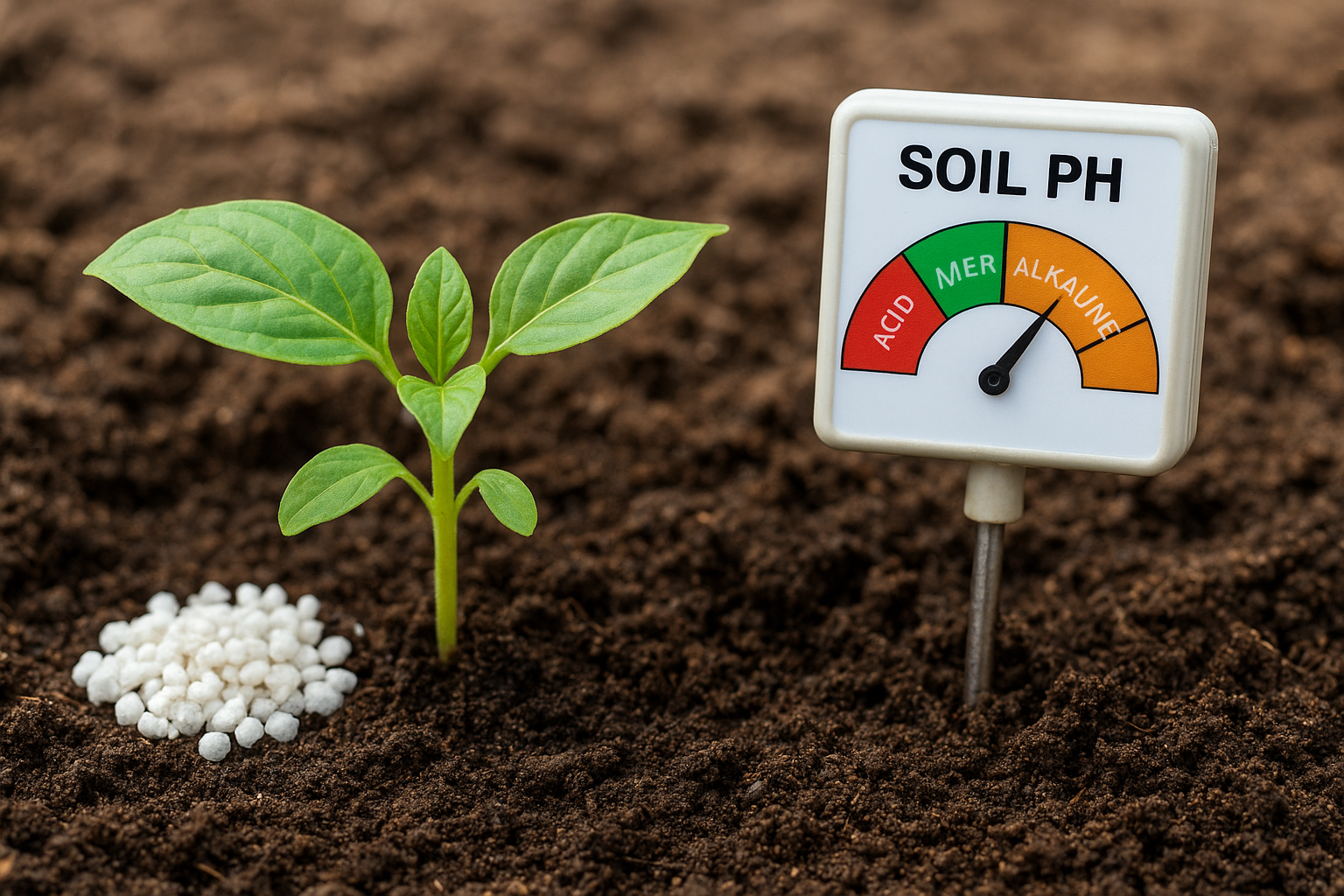
Testing your soil pH before adding any amendments is one of the most important steps you can take, because treating a lockout issue by adding more fertilizer often makes things worse.
In Malaysia's tropical climate, heavy rainfall gradually acidifies soil over time by leaching out calcium and magnesium. This means gardens in high-rainfall areas are particularly prone to magnesium and calcium deficiencies, even when the soil looks healthy on the surface.
Watering and root health issues
Overwatering is a common trigger for deficiency symptoms because waterlogged soil pushes oxygen out, which kills the fine root hairs responsible for nutrient uptake. A plant with damaged roots physically cannot absorb what it needs, regardless of how nutrient-rich the surrounding soil is. Underwatering has the opposite effect: nutrients dissolve in water and move through the soil in solution, so dry soil conditions stall nutrient transport entirely.
Compacted soil, poor drainage, and root rot all reduce the surface area your plant has available for absorption. Fixing the root environment often resolves visible deficiency symptoms faster than any fertilizer application will.
How to diagnose the exact deficiency
Pinpointing which nutrient is missing requires a systematic approach rather than guessing based on a single symptom. Many plant nutrient deficiency symptoms overlap with each other, with pest damage, or with environmental stress, so working through a clear process helps you avoid treating the wrong problem entirely.
Start with a visual inspection
Before you reach for any product or amendment, examine the plant closely from top to bottom. Check whether the symptoms appear on older leaves at the base or on fresh young growth at the tips, since that single detail immediately separates mobile nutrients from immobile ones. Mobile nutrients like nitrogen, phosphorus, potassium, and magnesium move freely within the plant, so deficiency symptoms appear first on older tissue as the plant pulls those nutrients toward new growth. Immobile nutrients like calcium, iron, and boron cannot relocate once deposited, so symptoms show up first on new leaves and growing tips.
Look at the pattern of discoloration as well. Interveinal chlorosis (yellow tissue between green veins) behaves differently depending on which leaves it appears on, which is why both location and pattern together give you the most complete picture before you test anything.
Checking whether symptoms affect old growth or new growth first is the single fastest way to narrow down which category of nutrient you're actually dealing with.
Use a soil test to confirm
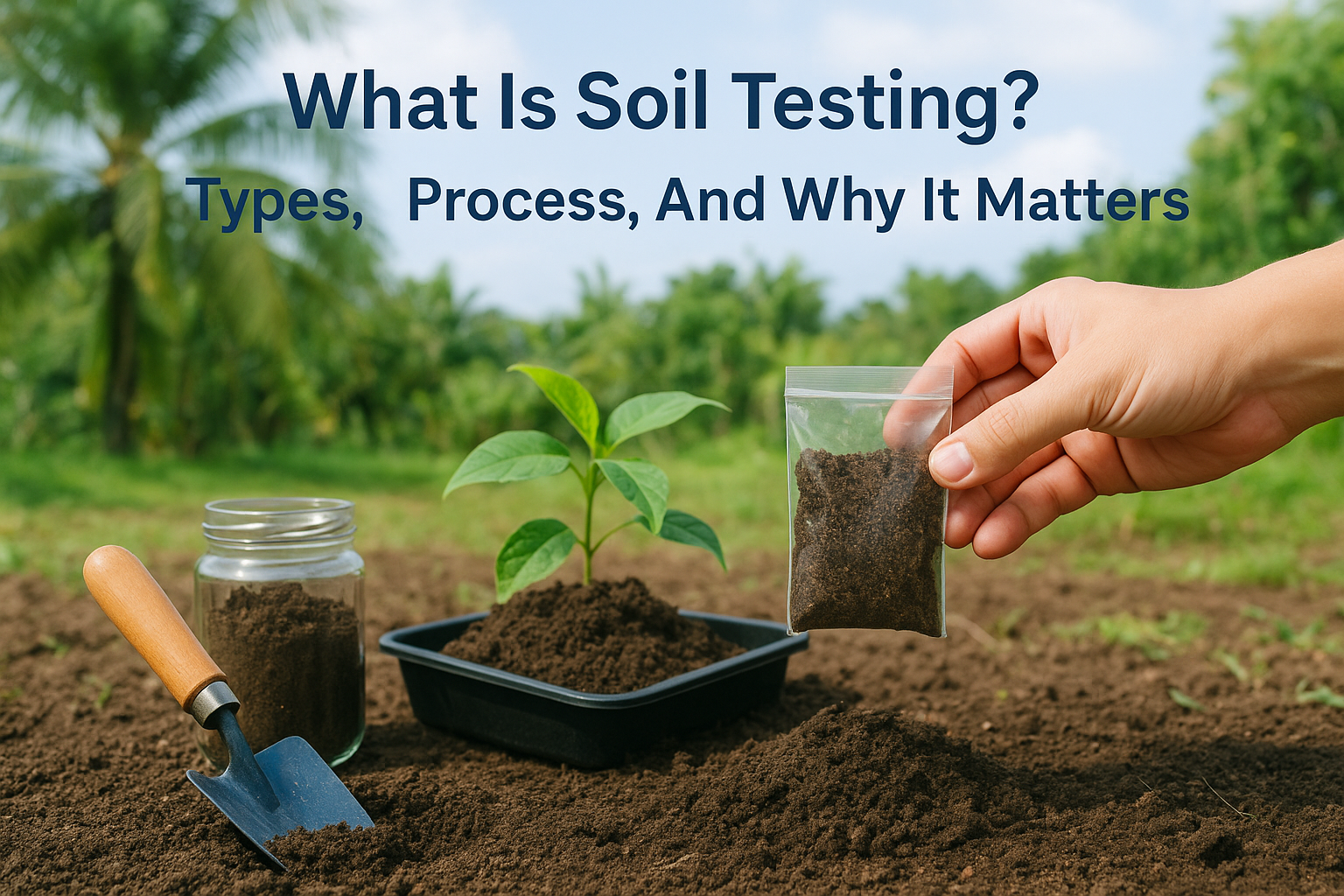
Once you've made an initial visual assessment, a soil test removes most of the remaining uncertainty. A basic test gives you pH, nitrogen, phosphorus, and potassium levels, while more detailed tests cover secondary nutrients and micronutrients. In Malaysia, many agricultural suppliers and extension offices offer affordable soil testing kits, and the results take the guesswork out of choosing the right treatment.
Water your plant adequately before collecting a soil sample, since dry soil gives skewed readings that can push you toward amendments you don't actually need.
How to fix common nutrient deficiencies
Once you've identified which plant nutrient deficiency symptoms you're dealing with, treatment becomes straightforward. The key is matching your fix to the actual cause: if the problem is a pH lockout, adding more fertilizer won't help. If the problem is a true nutrient shortage, correcting the pH first and then supplementing gives you far better results than either approach alone.
Applying the right fertilizer
The fastest way to address most deficiencies is to apply a targeted fertilizer that delivers the missing element directly. For quick results on nitrogen, potassium, and magnesium deficiencies, foliar sprays work faster than soil applications because the plant absorbs nutrients directly through the leaves. For calcium and phosphorus, soil-applied amendments are more effective since foliar absorption of these elements is limited.
Match the fertilizer form to the urgency: foliar sprays correct visible symptoms faster, while soil amendments rebuild long-term nutrient reserves.
The table below shows the most common deficiencies and their practical fixes:
| Deficiency | Fast Fix | Long-Term Fix |
|---|---|---|
| Nitrogen | Liquid nitrogen fertilizer or foliar urea spray | Compost or slow-release granular fertilizer |
| Magnesium | Epsom salt foliar spray (1 tsp per liter of water) | Dolomitic lime added to soil |
| Iron | Chelated iron foliar spray | Lower soil pH with sulfur |
| Potassium | Liquid potassium fertilizer | Greensand or potassium sulfate |
| Calcium | Calcium foliar spray | Ground limestone or gypsum |
| Phosphorus | Liquid phosphorus fertilizer | Bone meal or superphosphate worked into soil |
Adjusting soil conditions
Fertilizer alone won't resolve deficiencies caused by poor soil pH. If your soil test shows pH outside the optimal range of 6.0 to 7.0 for most garden plants, you need to correct it before adding nutrients. Sulfur lowers pH in alkaline soils, while agricultural lime raises it in overly acidic soils. Apply amendments gradually and retest after four to six weeks.
Improving drainage and soil structure matters just as much as chemistry. Mixing compost into compacted soil increases aeration and root penetration, which directly improves your plant's ability to absorb whatever nutrients are present.
How to prevent problems long term
Prevention is far more efficient than treatment, and most plant nutrient deficiency symptoms are avoidable when you build consistent habits around soil care and plant monitoring. The goal isn't to add more fertilizer every season but to create conditions where your plants can access what they already have.
Build soil health consistently
Healthy soil holds nutrients, drains well, and supports the microbial life that makes elements like nitrogen and phosphorus available to roots. Adding organic matter such as compost, well-rotted manure, or leaf mulch once or twice a year improves soil structure over time and steadily increases nutrient availability. In Malaysia's climate, where heavy rainfall and high temperatures accelerate organic matter breakdown, replenishing organic content regularly keeps your soil from depleting faster than your plants can use it.
Compost doesn't just add nutrients; it improves the soil's ability to hold and release them, which matters more long term than any single fertilizer application.
Using a slow-release balanced fertilizer at the start of each growing season gives your plants a consistent baseline. From there, supplement only when you observe symptoms or when a soil test flags a specific gap. This approach prevents the buildup of certain nutrients that can block the absorption of others.
Monitor your plants on a schedule
Catching problems early is what separates minor corrections from major recoveries. Set a regular inspection routine, whether weekly or fortnightly, where you check leaf color, growth rate, and any visible changes in texture or structure. Early-stage deficiencies are subtle, so consistent observation gives you the best chance of addressing them before they affect overall plant performance.
Keeping a simple record of what you apply and when, along with any symptoms you notice, helps you spot seasonal patterns over time. Pairing that habit with an annual soil test gives you a complete picture of what your garden actually needs, so you're making decisions based on data rather than guesswork.
Next steps for healthier plants
Reading plant nutrient deficiency symptoms accurately gives you a real advantage in keeping your garden in good shape. You now know how to identify which nutrient is missing based on where symptoms appear on the plant, what's causing the problem beneath the surface, and how to treat and prevent it going forward. The most practical next step is to apply this systematically: start with a close visual inspection, run a soil test, correct any pH issues, and then supplement with the right fertilizer for the specific deficiency you've identified.
Healthy plants don't happen by accident. Consistent observation, good soil management, and targeted treatment when problems appear are what keep a garden thriving over the long term. If you're planning a new outdoor space or want expert guidance on creating a garden built around healthy, well-supported plants, the team at Konzept Garden is ready to help. Get in touch with our landscape design team to start the conversation.