
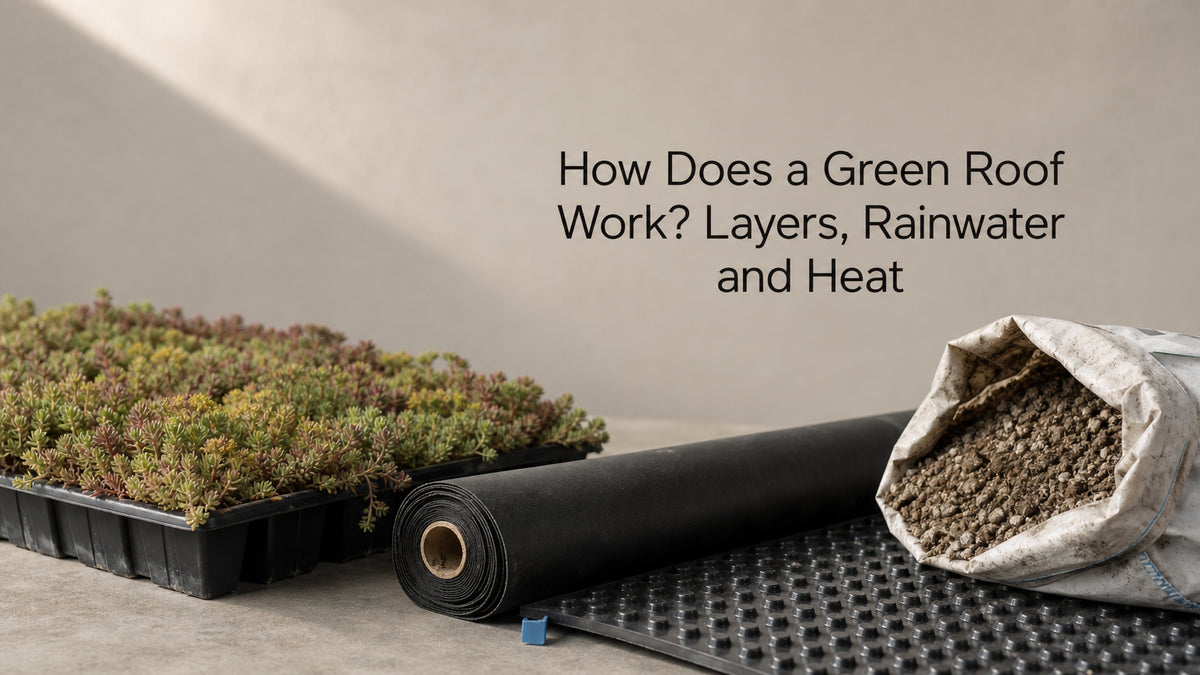
A green roof is a roof covered with living plants that grow in a lightweight soil layer, built on top of a waterproof membrane. So, how does a green roof work? Each layer has one job. The plants and substrate absorb rain and release it slowly, the filter and drainage layers carry off the surplus, and the root barrier and waterproofing keep water and roots out of the building. Together they delay stormwater, cool the roof surface and shield the membrane from the sun.
This article follows that order. You will see why the design matters in a tropical climate, what each layer does, how the system handles rainwater, how it reduces heat, and how to plan a roof that neither leaks nor overloads the structure.
At Konzept Garden, we design gardens and planting plans across Malaysia. Read this before you brief a designer or a roofer.
Why the way a green roof works matters in Malaysia
A green roof matters because it changes what your roof does with sun and rain. A bare roof absorbs heat and sheds water at once. A green roof holds, uses and releases both slowly. With intense sun and sudden downpours, that difference is practical, not decorative.
The problems a green roof solves
Dark roof surfaces soak up solar heat, pass it into the rooms below and warm the air around the building. Plants and moist substrate shade the surface and cool it as water evaporates. The US EPA notes that green roofs provide shade, remove heat from the air and lower the temperature of the roof surface and the surrounding air.
Rain is the second problem. On a conventional roof, every drop reaches the drain within minutes, which is how heavy storms overload drains in dense areas. Green Roofs for Healthy Cities reports that green roofs can retain 70-90% of summer rainfall and delay the runoff that remains. Those figures come from temperate climates, so treat them as a ceiling for Malaysian monsoon rain, not a promise.
Wear is the third problem. Ultraviolet light and constant heating and cooling age waterproofing membranes. A planted build-up keeps the membrane out of direct sun, and Sika reports that some European green roofs have lasted more than 40 years without replacement.
A green roof manages sun and rain instead of passing both straight into your building.
What a green roof does not do
It does not fix a poorly waterproofed roof, and it is not free. It adds weight, needs regular weeding and trimming, and costs more upfront than a bare roof. Green Roofs for Healthy Cities points out that the higher initial investment can be offset by a longer membrane life and lower heating and cooling costs.
Treat it as a system to specify properly, not a garden you drop on a slab. Most failures come from skipped steps in the layers below the plants.
How a green roof works, layer by layer
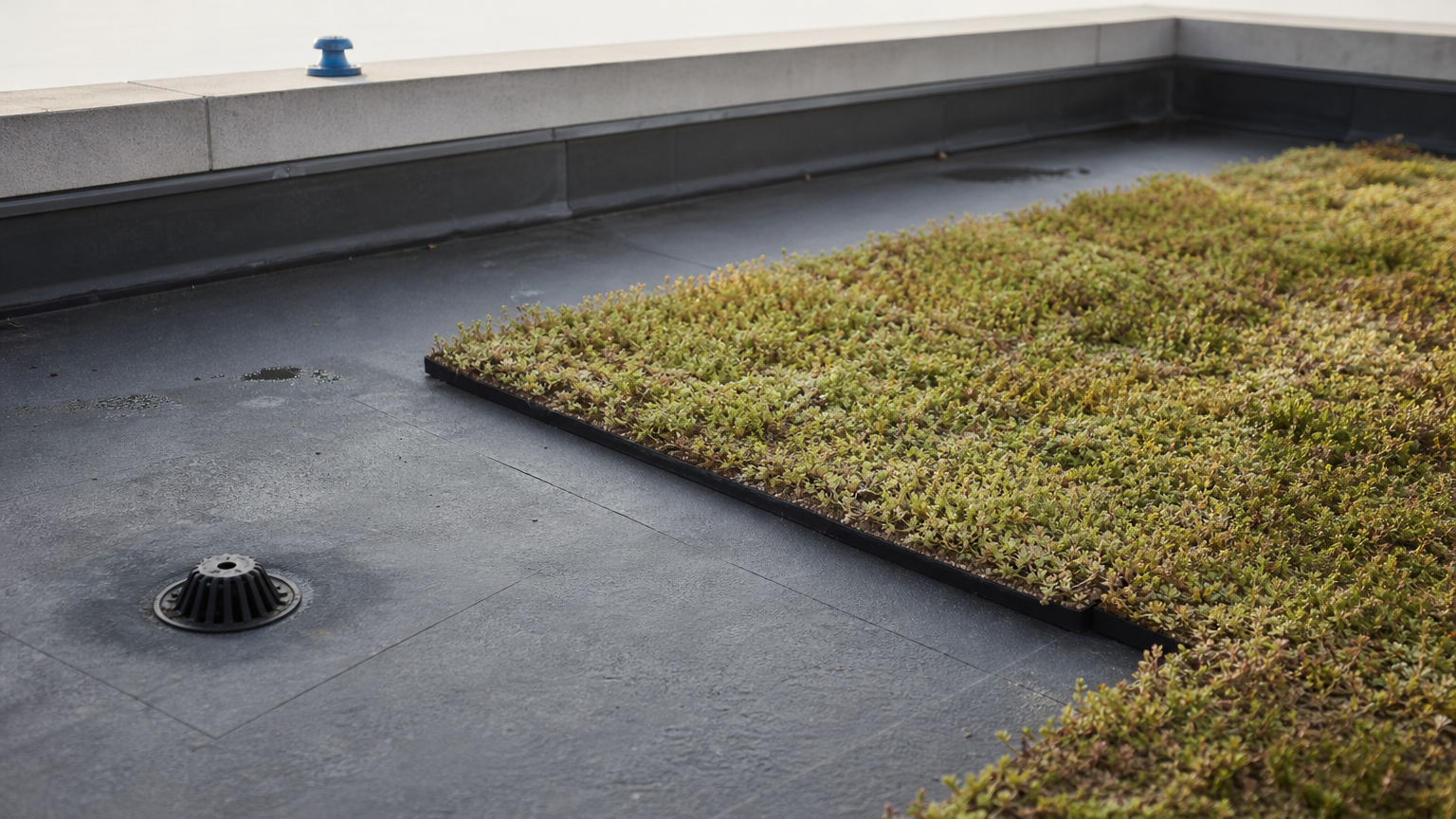
A green roof is a stack of layers, and each one has a single job. The structural deck carries the load at the bottom, the waterproofing keeps water out, and the drainage, substrate and plants manage rain and heat on top. If any layer is missing or badly installed, the whole system suffers.
The layers from top to bottom
The exact build-up varies by project, but most systems follow this order.
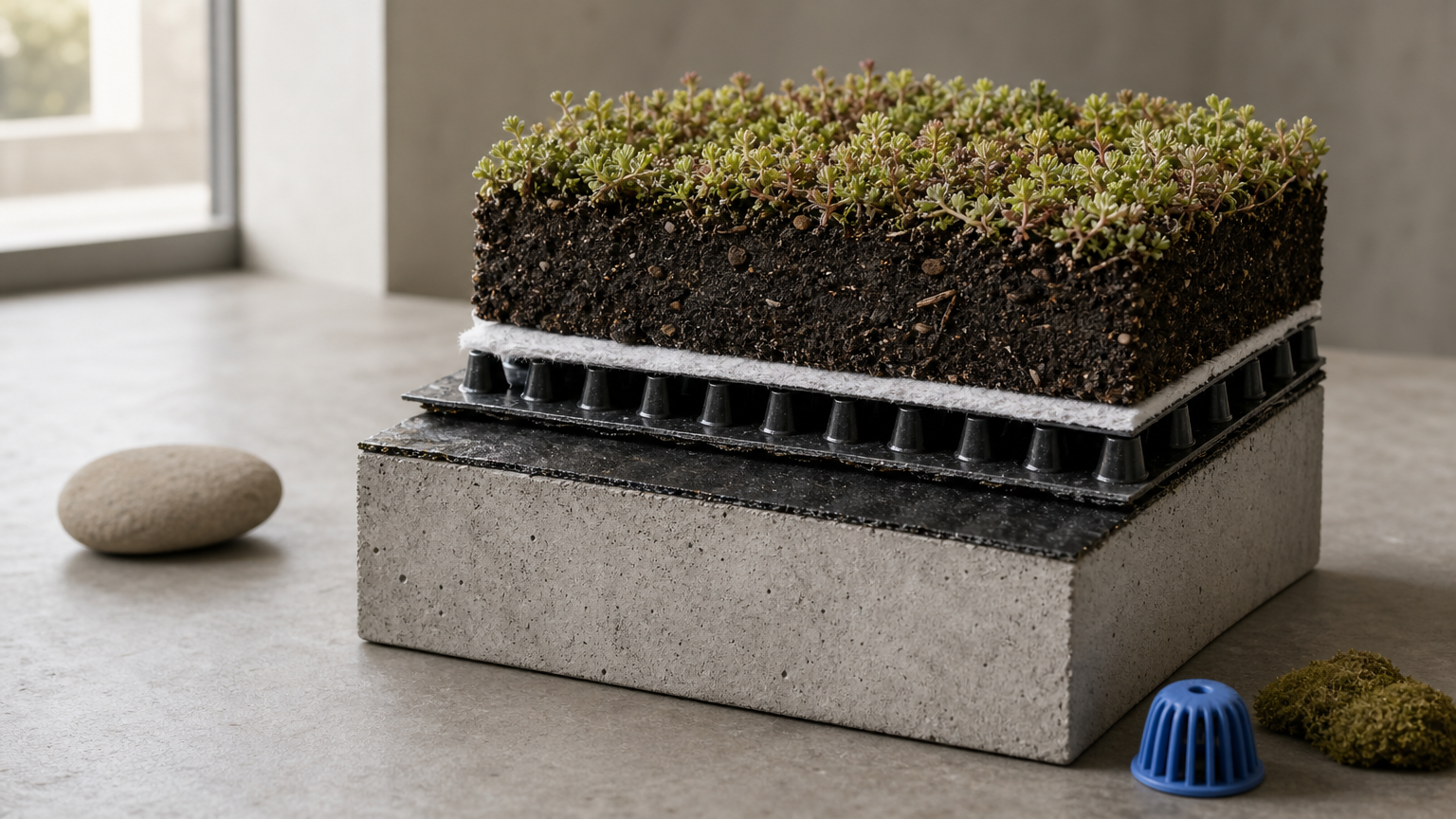
| Layer | What it does |
|---|---|
| Vegetation | Takes up water, shades the surface, releases moisture through its leaves |
| Growing medium | Lightweight substrate that holds water and nutrients for the roots |
| Filter fabric | Stops fine particles from washing into the drainage layer |
| Drainage and retention layer | Stores some water and carries the surplus to the outlets |
| Root barrier | Stops roots from penetrating the roof below, often built into the membrane |
| Waterproofing membrane | Keeps water out of the building |
| Insulation | Slows heat flow, usually under the membrane and sometimes above it |
| Vapour control and structural deck | Blocks moisture from inside and carries the whole load |
Roots follow moisture, and they will find a seam if one exists. That is why the waterproofing membrane and root barrier work as a pair. Many membranes, such as EPDM rubber sheets, resist roots themselves. Otherwise, a separate root-resistant sheet goes on top.
Extensive versus intensive roofs
The layers are the same in both types. The main difference is substrate depth, and depth drives weight, plant choice and cost. An extensive roof has a thin substrate. It carries shallow-rooted plants such as sedum or mosses, weighs less and needs little care.
An intensive roof has deeper soil. It can carry grasses, shrubs and small trees, and it can work as a real garden you walk on. It weighs much more, needs irrigation and takes more upkeep. Sika notes that intensive roofs also tend to absorb more rainfall than extensive ones.
Every layer has one job, and the roof only works when all of them do theirs.
How a green roof manages rainwater
A green roof manages rainwater by catching it in the plants and substrate, holding it, draining the surplus and releasing the rest back to the air. The roof acts like a sponge with an overflow, not a bucket.
What happens during and after a storm
The sequence is the same in every storm:
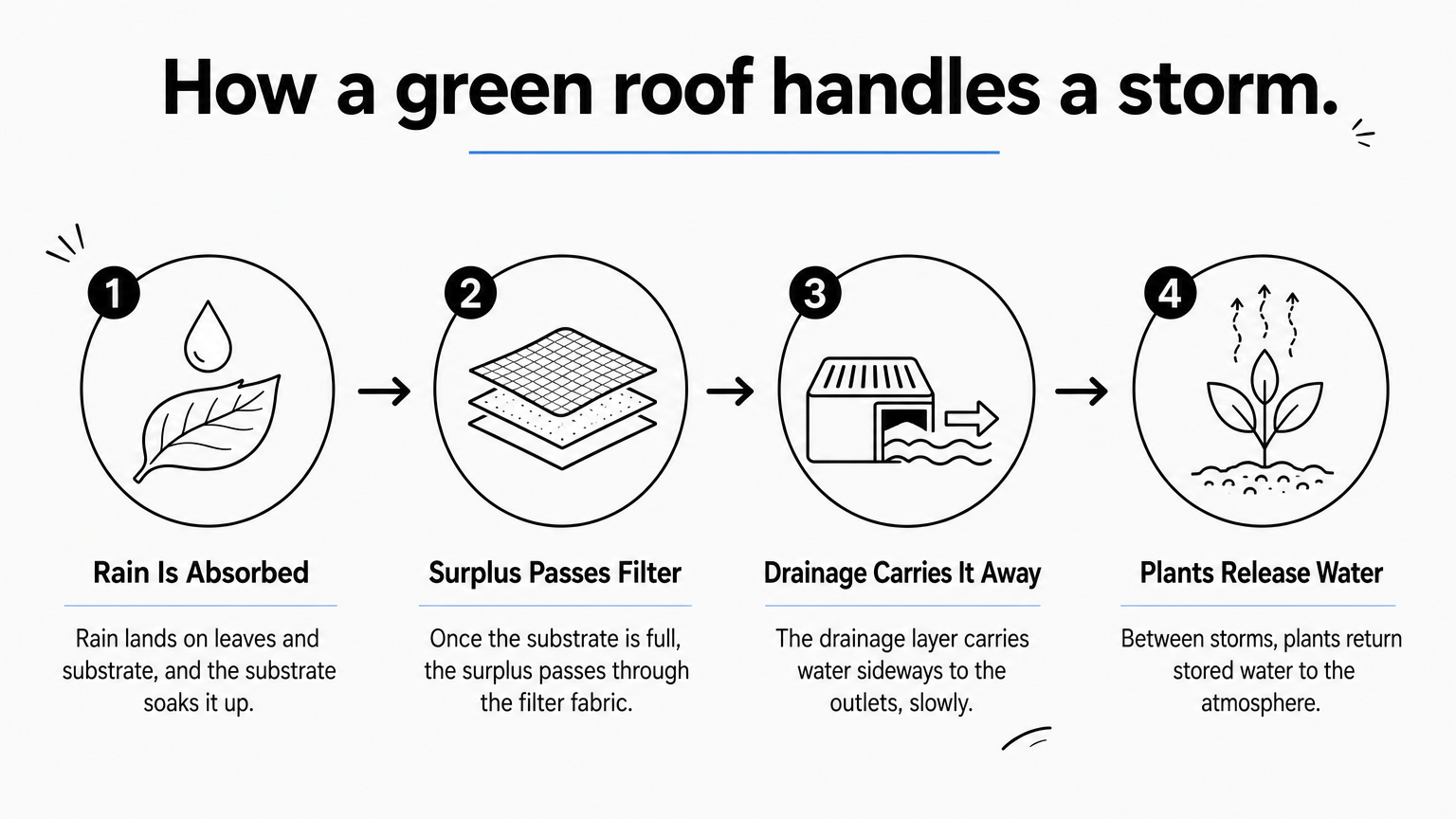
- Rain lands on the leaves and the substrate, and the substrate soaks it up.
- Once the substrate is full, the surplus passes through the filter fabric.
- The drainage layer carries that water sideways to the outlets, slower than a bare roof would.
- Between storms, the plants draw up stored water and return it to the atmosphere through transpiration and evaporation.
Step four is what makes the roof ready for the next storm. A substrate that never dries out cannot absorb anything.
A worked example
Take a 100 m² roof and a 100 mm downpour. That is 100 m² × 0.1 m = 10 m³, or 10,000 litres. A bare roof sends close to all 10,000 litres to the drains within minutes. If a green roof retains 70%, it holds 7,000 litres and sends 3,000 litres on, later and more slowly.
In Malaysia, expect lower retention when storms arrive back to back. A saturated substrate holds little more. Even then, the drainage layer still delays and flattens the peak flow into the drains, which is often the bigger benefit.
The roof absorbs the first rain, drains the rest slowly and dries out in between.
How a green roof insulates and cools a building
A green roof reduces heat in three ways: shade from the plants, cooling from evaporating water, and insulation from the substrate and any insulation layer below. Together they keep the roof surface much cooler than a bare dark roof, so less heat reaches the rooms beneath.
Three cooling mechanisms
- Shade: leaves intercept sunlight that would otherwise be absorbed by the roof and turned into heat.
- Evapotranspiration: plants release water vapour through pores in their leaves, and the evaporation draws heat from the plant and the air around it.
- Insulation: the moist substrate and the optional insulation layer slow the flow of heat through the roof. A dedicated insulation layer improves this further.
The same cooling at city scale is how green roofs reduce the urban heat island effect. Many rooftops covered in plants instead of dark membranes lower the temperature of the surrounding air.
What to expect in a tropical climate
One study cited by Green Roofs for Healthy Cities found that an extensive green roof cut summer air-conditioning demand by more than 75% (Liu 2003). That was a Canadian building, so do not expect the same number at home. A realistic expectation is a cooler roof surface and a noticeable difference in the top floor directly beneath it.
Plant coverage matters. A bare patch heats up like any other roof, so aim for full, healthy cover. Sun-hardy plants, with irrigation in dry spells, keep that cooling effect going.
The cooling comes from living leaves and damp soil, so a dry, patchy roof loses most of its benefit.
How to plan a green roof that works
Plan a green roof from the bottom up. Confirm the structure can carry it, then get the waterproofing right, then choose the drainage and the plants. Skipping straight to plants is the most common and most costly mistake.
Planning steps
- Check the structure. Ask an engineer for the load limit. Compare it with the weight of the system when the substrate is fully soaked, not dry.
- Check slope and drainage. Flat and gently sloped roofs are the easy case. Steeper pitches need a specialist system to keep the layers from sliding. Make sure the outlets are clear and accessible.
- Get the waterproofing done properly. Green Roofs for Healthy Cities advises a qualified roofing contractor with green roof experience for the non-living layers.
- Pick extensive or intensive based on your load limit, budget and how much you want to use the space.
- Match plants to the climate. Choose plants that tolerate full sun and heavy rain at your substrate depth. Species popular in cooler countries may not cope with constant humidity, so ask a botanist.
- Plan access and upkeep. You need a safe way up for weeding and trimming, and an irrigation plan for dry spells.
- Ask before you build. Check with your local authority and, in a strata building, the management body.
When your roof cannot carry it
If the structure cannot take the weight, vertical greenery is an alternative. Our EcoWall collection offers one, for example the EcoWall Mini Set, a 60 cm x 60 cm frame with 9 Smart Pots, soil, hydrostone and geotextiles for RM449.
For a bigger project, our design service covers planting plans, expert botanist consultations and 3D visualizations. We ask for photos and measurements of your site to prepare a quotation. A site visit costs RM200, which is deducted from the final quotation if you proceed.
Plan from the deck up: structure, waterproofing, drainage, then plants.
The short version
A green roof works because every layer does one job. The deck carries the load, the membrane and root barrier keep water and roots out, the drainage layer moves surplus water away, and the substrate and plants hold rain, shade the surface and cool it as water evaporates. The result is slower stormwater, a cooler roof and a longer-lasting membrane.
Get the structure and waterproofing right before you think about plants. If you want a second opinion on a courtyard or a vertical garden, talk to our team at Konzept Garden and share your site photos.