
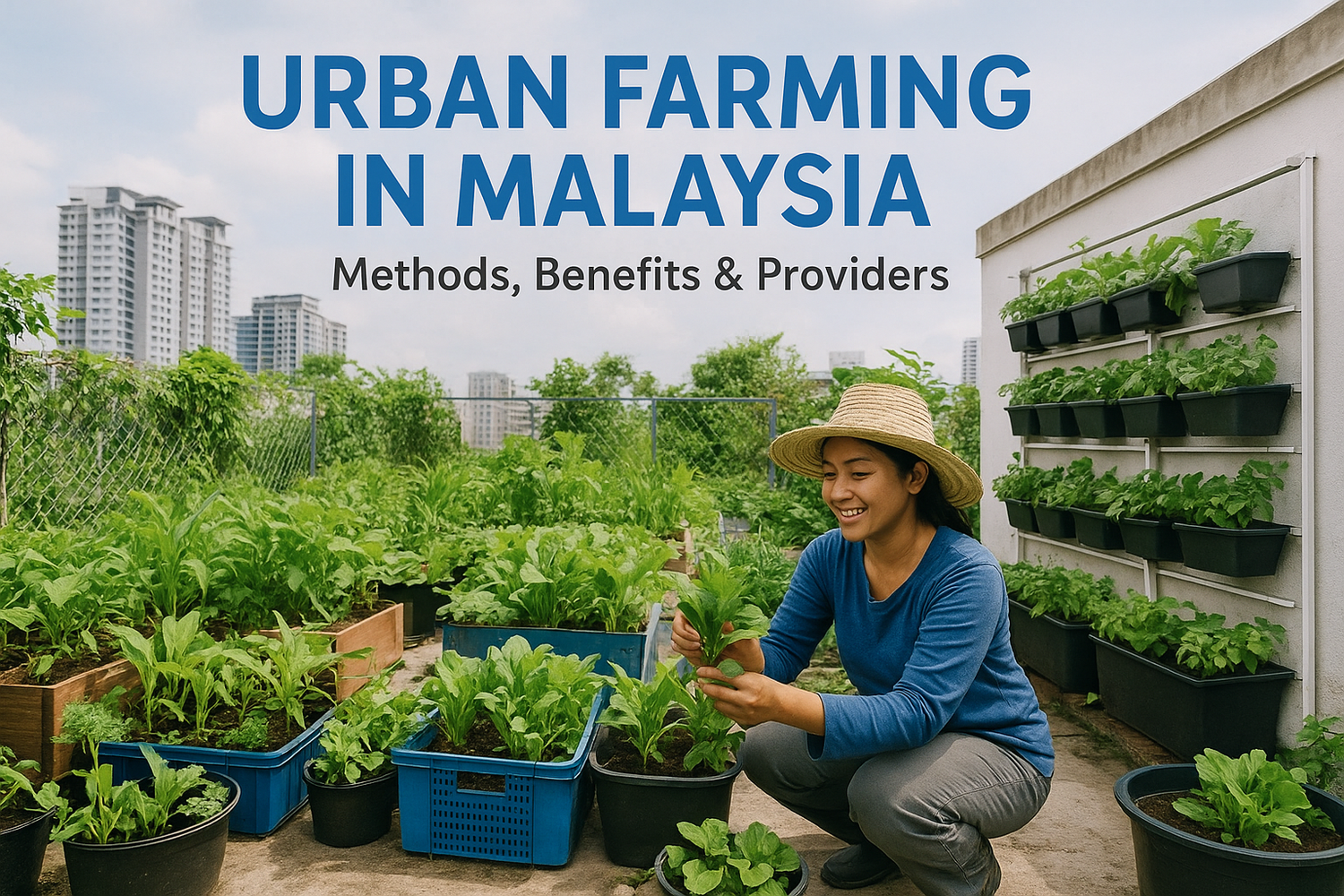
Look around any Klang Valley neighborhood and you will spot it: herbs on a condo balcony, a vertical rack of lettuce against a terrace wall, or a rooftop plot growing chilies for the family kitchen. This is urban farming in Malaysia, and it has moved well past hobby status into a practical response to rising grocery bills and shrinking outdoor space.
If you are wondering how this actually works in a Malaysian climate and property setup, the answer covers a handful of proven methods: raised bed gardening, vertical wall systems, hydroponics, and container setups suited to apartments, terrace houses, and commercial rooftops alike. Each method solves a specific space or water constraint, and the benefits go beyond fresh produce, touching on cooler microclimates, better air quality, and lower household food costs.
This article walks through the main methods used across Malaysian homes and businesses, the real benefits you can expect, and the local providers and initiatives worth knowing about. We also look at how tools like self-watering planters and vertical garden panels, the kind we design and supply at Konzept Garden, make small-space urban farms far easier to maintain long term.
Why urban farming matters for Malaysian communities
Urban farming in Malaysia isn't just a lifestyle trend, it's a direct answer to three pressures hitting city dwellers at once: rising food costs, shrinking green space, and the isolation of high-density living. When you understand what's driving the movement, it becomes clear why so many Malaysian households and local councils are backing it with real budgets and programs.
Food security and household savings
Malaysia imports a large share of its vegetables and fruit, and the Department of Statistics Malaysia has flagged food imports running into the tens of billions of ringgit annually. That dependency means grocery prices swing hard whenever shipping costs, currency rates, or regional harvests take a hit. Growing even a fraction of your own chilies, herbs, and leafy greens insulates your kitchen budget from those swings and cuts your weekly market spend in ways that add up fast over a year.
A balcony full of vegetables won't replace your grocery run, but it will make the next price hike sting a lot less.
Cooling down concrete-heavy neighborhoods
Klang Valley, Penang, and Johor Bahru all sit inside urban heat islands, areas where concrete and asphalt trap heat far longer than surrounding greenery does. Vertical gardens, rooftop plots, and even a modest row of raised beds add living material that absorbs heat instead of radiating it back at street level. NASA's research on urban heat islands confirms that vegetation cover measurably lowers surface temperatures compared to bare pavement, and that principle scales down neatly to a terrace house or a condo rooftop. Fewer hot surfaces around your home also means lower air conditioning bills, which is its own quiet financial win.
Building tighter, more resilient communities
Beyond the plants themselves, urban farming rebuilds something Malaysian cities have been losing: shared outdoor activity. Community plots in places like Kuala Lumpur's public housing estates give neighbors a reason to talk, trade seedlings, and solve problems together, from pest control to watering schedules during dry spells. Group gardening also spreads know-how quickly. Someone figures out how to keep aphids off kailan, and within a season the whole plot benefits. That kind of informal knowledge transfer is hard to replicate through workshops alone, and it's part of why so many condo management committees now set aside rooftop or ground-floor space specifically for resident gardening.
Combine the savings, the cooling effect, and the social payoff, and it's easy to see why urban farming in Malaysia has outgrown its early reputation as a niche hobby. It's now a practical layer of household resilience, one that pays off whether you're growing on a five-story rooftop or a single window ledge.
How to start urban farming in your own space
Starting urban farming in Malaysia doesn't require a backyard or a big budget. Most successful home growers begin with a single balcony rail, a window ledge, or one corner of a terrace, then expand once they see what thrives. The trick is matching your space, light, and time realistically before you buy a single pot.
Assess your light and space first
Begin by tracking how many hours of direct sun your spot gets, since most edible plants need at least four to six hours to fruit well. Malaysian balconies facing east or south usually get enough light for chilies and tomatoes, while shadier north-facing spots suit herbs like mint and pandan better. Measure your actual usable area too, including vertical wall space, since a narrow balcony can still hold a surprising amount of growing surface with the right racks.
Pick beginner-friendly crops
Start with crops that forgive mistakes and reward you quickly, since early wins keep you motivated through the learning curve.
- Kangkung (water spinach): grows fast in wet soil or hydroponic setups
- Chili padi: tolerant of heat and irregular watering
- Sawi and bayam: ready to harvest in three to four weeks
- Herbs (basil, mint, curry leaf): low maintenance, high daily use in Malaysian cooking
Pick crops that suit your light, not the ones you saw on someone else's rooftop.
Set up watering before anything else
Watering discipline breaks more first attempts than pests or soil ever do, especially during Malaysia's hot dry spells when daily watering becomes non-negotiable. Self-watering planters solve this by holding a reservoir that feeds roots gradually, which matters if you travel often or simply forget. Investing in that system early saves you from replacing dead seedlings every few weeks and sets a foundation you can scale once you're ready to add more beds or vertical panels.
Popular urban farming methods and systems in Malaysia
Malaysian urban farmers rely on a handful of proven systems, and picking the right one depends on your space, water access, and how much upkeep you can realistically commit to. Raised beds, vertical panels, and hydroponic setups each solve a different constraint, and most experienced growers eventually mix two or three once they understand what their space and schedule can support.
Raised beds and container gardening
Raised beds remain the easiest entry point for terrace houses and landed properties with even a small patch of ground. They drain better than in-ground soil, which matters during Malaysia's heavy monsoon rains, and they keep pests like snails at a manageable distance. Containers work the same way but suit balconies and rooftops where you can't dig into the ground at all.
Vertical wall systems
When floor space runs out, growing upward solves the problem without sacrificing yield. Vertical panels like the EcoWall systems we install at Konzept Garden turn a bare condo wall into growing surface for herbs, lettuce, and trailing vegetables, and they double as a cooling layer against hot exterior walls.
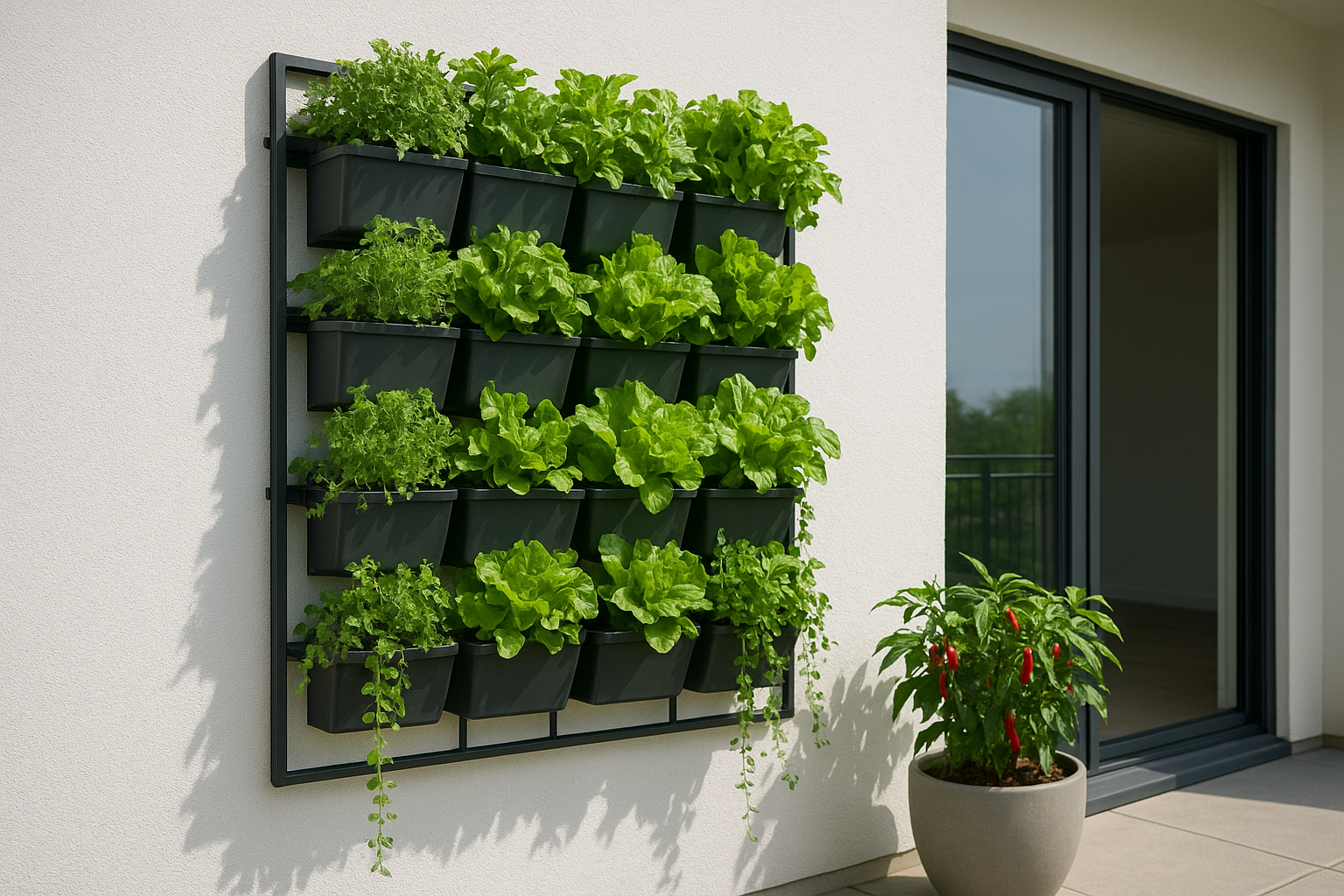
The smallest balconies often produce the most food per square foot, simply because vertical systems make every wall usable.
Hydroponics and self-watering setups
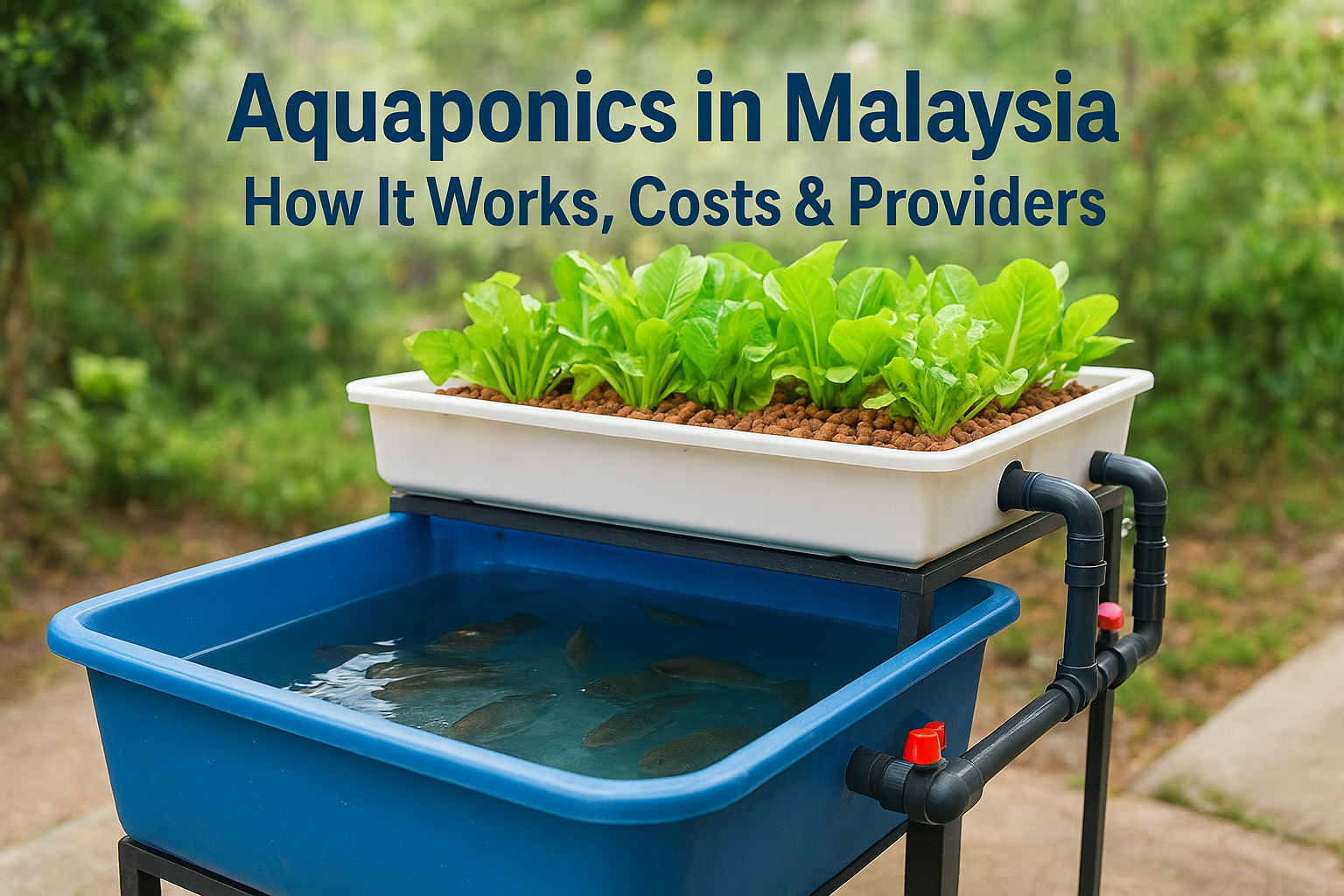
Hydroponic systems skip soil entirely, feeding roots with a nutrient solution that cuts water use and speeds up growth cycles considerably. Self-watering planters, such as the Ziant Hydro Planter, offer a lower-maintenance middle ground, holding a reservoir that feeds soil-based crops gradually without daily attention.
| Method | Best for | Water needs | Setup cost |
|---|---|---|---|
| Raised beds | Terrace houses, landed lots | Moderate | Low to moderate |
| Vertical wall panels | Condos, narrow balconies | Low to moderate | Moderate |
| Hydroponics | Leafy greens, herbs | Low, recirculated | Moderate to high |
| Self-watering containers | Busy households, travelers | Very low upkeep | Low to moderate |
Each system rewards a different lifestyle, so match yours to how often you're actually home to check on it.
Urban farming providers and communities to know
You don't have to figure out urban farming in Malaysia alone. A growing mix of government programs, community groups, and private suppliers now exists specifically to help first-time growers avoid the common early mistakes and get their plots producing faster.
Government-backed programs and community plots
Local councils across the Klang Valley, including DBKL and several MBPJ-linked initiatives, run Kebun Bandar (urban garden) schemes that lease out small plots or rooftop space to residents at low or no cost. These programs typically come with basic training on soil prep, composting, and seasonal planting, which helps new growers skip months of trial and error. Community gardens tied to public housing estates work the same way, pairing shared plots with informal mentorship from more experienced neighbors.
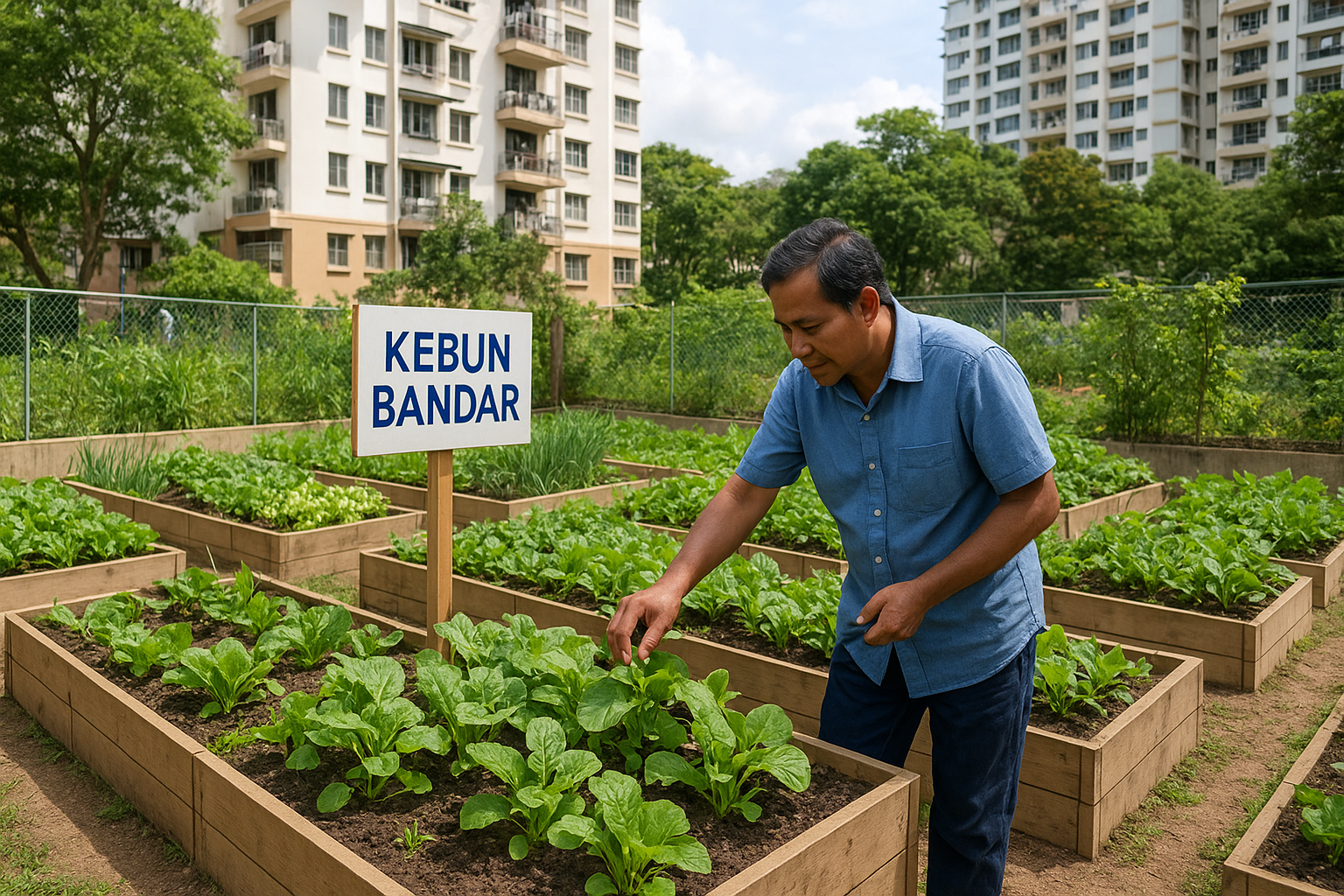
The fastest way to learn urban farming is standing next to someone who's already fixed the mistakes you're about to make.
Private suppliers and design specialists
Beyond council programs, private landscape and garden design companies fill a different gap: helping households and businesses set up systems built to last rather than experiment with trial-and-error DIY builds. This is where Konzept Garden comes in. We supply and install self-watering planters like the Ziant Hydro Planter, vertical wall systems such as EcoWall, and synthetic turf options like Noble Grass for spaces where a full soil garden isn't practical. Our botanist consultations and 3D visualizations also help clients plan layouts that actually match their light and water access, rather than copying a design that worked somewhere else entirely.
Online and social communities
Facebook groups and local gardening forums focused on Malaysian urban agriculture have become genuinely useful resources too, with members regularly trading seedlings, troubleshooting pest issues, and sharing what's thriving that season in their specific region. Joining one before you build anything gives you a realistic read on what performs well in your climate zone, whether that's Penang's coastal humidity or the drier stretches of inland Johor.
Challenges to plan for before you begin
Every urban farming setup in Malaysia runs into the same handful of obstacles, and knowing them upfront saves you from costly redos. Realistic planning now beats troubleshooting a dying garden six weeks in, so walk through these before you buy a single planter.
Structural and space limits
Condo and apartment balconies often carry weight restrictions that owners never check before loading up raised beds and soil-filled containers. Wet soil is heavy, and a fully stocked vertical wall panel adds up fast too. Check your building's load guidelines, or ask your management office directly, before committing to a full setup rather than discovering the limit the hard way.
Pests, heat, and monsoon swings
Malaysia's climate brings two extremes that stress new gardens: intense heat that dries out containers within hours, and monsoon downpours that drown roots overnight. Pest pressure stays constant year-round too, with aphids, snails, and fungal issues thriving in humidity.
- Check soil moisture daily during dry spells, not just when you remember
- Raise containers slightly to improve drainage before heavy rain hits
- Inspect leaves weekly for early pest signs rather than after damage spreads
- Rotate crops seasonally to break pest cycles naturally
The gardens that survive Malaysia's climate are the ones built for both drought and downpour, not just one or the other.
Time, cost, and maintenance realism
Honest budgeting matters just as much as plant choice. A DIY setup looks cheaper on paper, but replacing dead seedlings, patching leaky containers, and buying replacement soil adds hidden cost over a year. Self-watering systems and properly built vertical panels cost more upfront but cut ongoing labor and waste significantly, which matters if your schedule is already full. Weigh that tradeoff against how much time you'll actually spend tending plants each week, not how much time you hope to find.
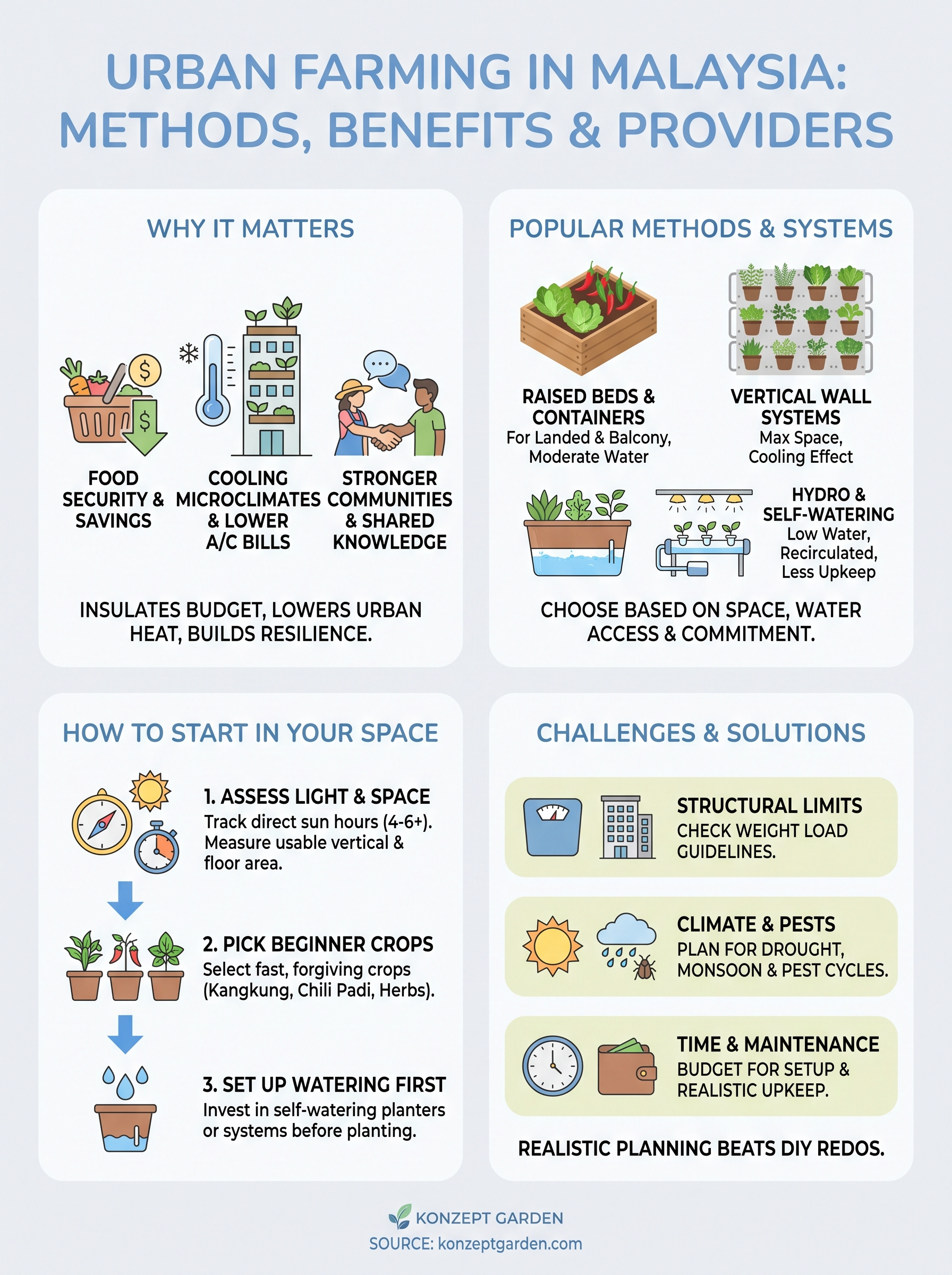
Bringing urban farming into your outdoor space
Urban farming in Malaysia works best when you match the method to your actual space and schedule, not the other way around. A raised bed suits a terrace lot, a vertical panel rescues a bare condo wall, and a self-watering planter keeps things alive when life gets busy. None of it demands a farm's worth of land, just a realistic plan and the right setup from day one.
Start small, watch what thrives, and expand once you've got a rhythm going. If you're weighing whether your balcony or rooftop can handle a proper system, or want a layout planned around your actual light and water access instead of guesswork, our team can walk you through it. Get in touch with Konzept Garden and let's figure out what actually fits your space.