
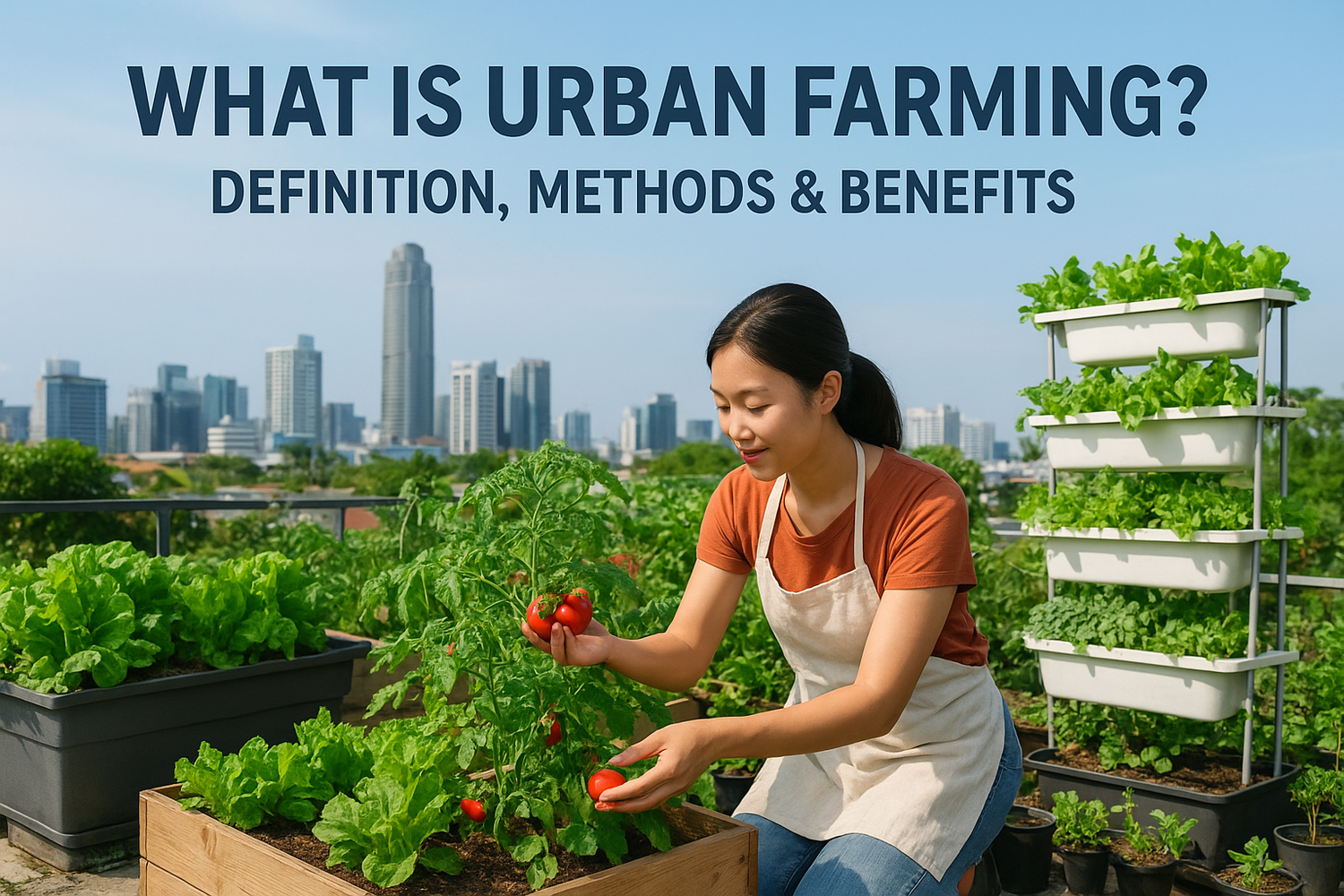
If you have ever wondered what is urban farming while looking at your own balcony or backyard in a Malaysian city, you are not alone. More homeowners in Kuala Lumpur, Penang, and Johor are asking how to grow food or greenery in spaces never meant for farming, and the term gets thrown around loosely online without a clear answer.
Urban farming simply means growing food or plants within a city or town, using whatever space is available: rooftops, balconies, vacant lots, or vertical walls. It covers small-scale food production and larger community or commercial projects, and it matters because it cuts food miles, improves air quality, and turns unused corners of a property into something productive. This article gives you a straightforward practical explanation rather than vague theory.
Below, we break down the different methods used, from container gardening to hydroponics and vertical systems, and outline the real benefits for your health, your wallet, and your surroundings. Whether you are a homeowner in a landed property or managing a commercial site, understanding this concept is the first step before you plan any garden transformation.
Why urban farming matters for cities and communities
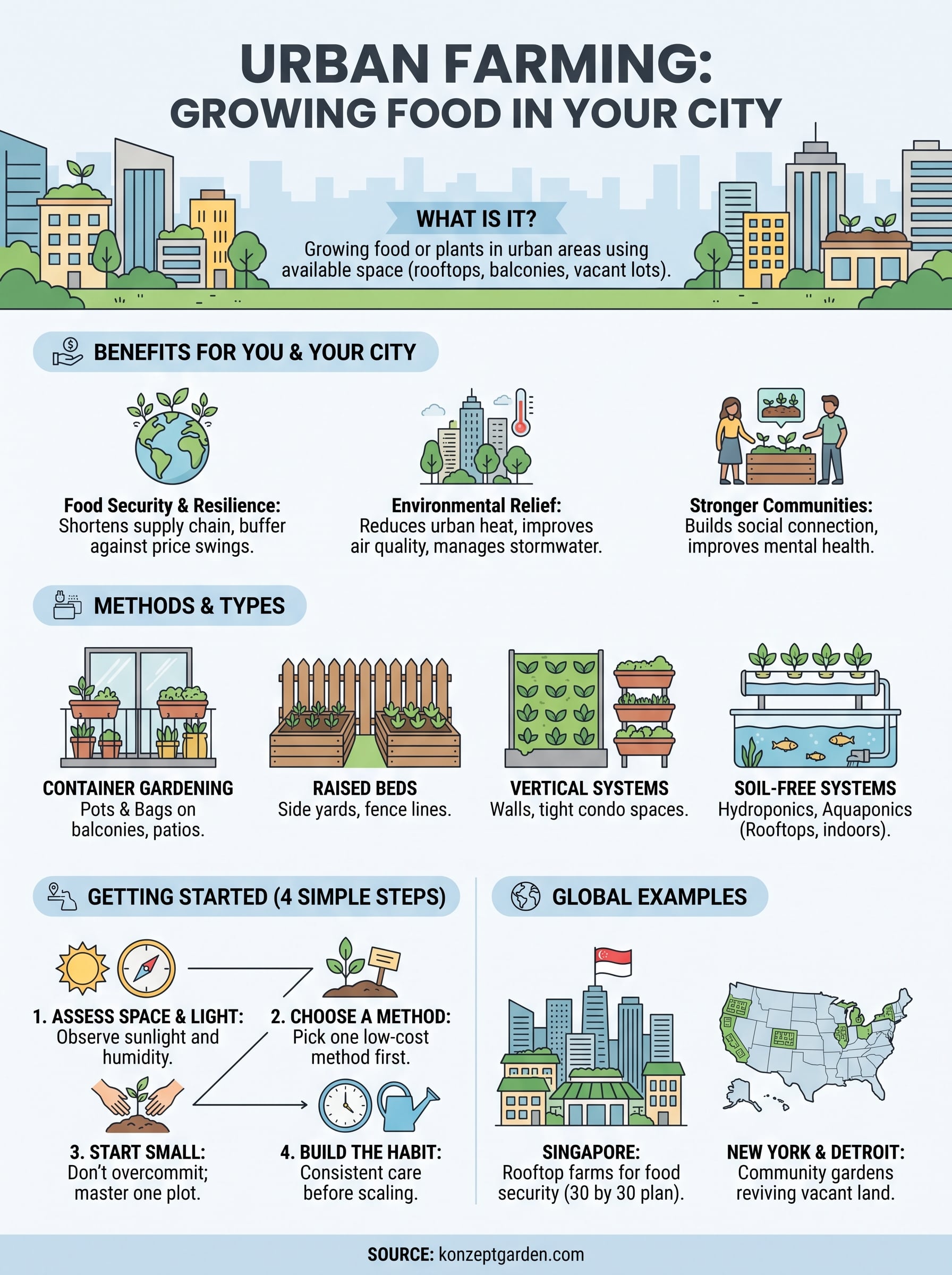
Malaysia imports a huge share of its vegetables and fruit, and every delay at the border or spike in fuel prices shows up on your grocery bill. Urban farming matters because it shortens that supply chain down to a rooftop, a balcony, or a side yard, giving households and small businesses a buffer against price swings and supply shocks. When you grow even a fraction of your own produce, you reduce your dependence on trucks, cold storage, and imports that can fail without warning.
Food security close to home
Cities like Kuala Lumpur and Johor Bahru have limited farmland within their borders, yet demand for fresh produce keeps rising as populations grow. Urban farming fills that gap by turning underused land, rooftops, and vertical walls into productive space, which means fresher food with a shorter trip from soil to plate. This isn't just about hobby gardening either; commercial buildings and condominium developments in Malaysia are increasingly setting aside space for shared vegetable plots or hydroponic setups to serve residents directly.
A city that grows even part of its own food is a city with more control over its own table.
Environmental relief in dense areas
Concrete and asphalt trap heat, and urban farming pushes back against that effect. Plants absorb carbon dioxide, release oxygen, and lower surface temperatures around buildings, which the US Environmental Protection Agency notes can meaningfully reduce the urban heat island effect (source: EPA on heat islands). Green roofs and vertical gardens also manage stormwater runoff better than bare concrete, cutting the load on drainage systems during Malaysia's heavy monsoon rains.
Stronger, healthier communities
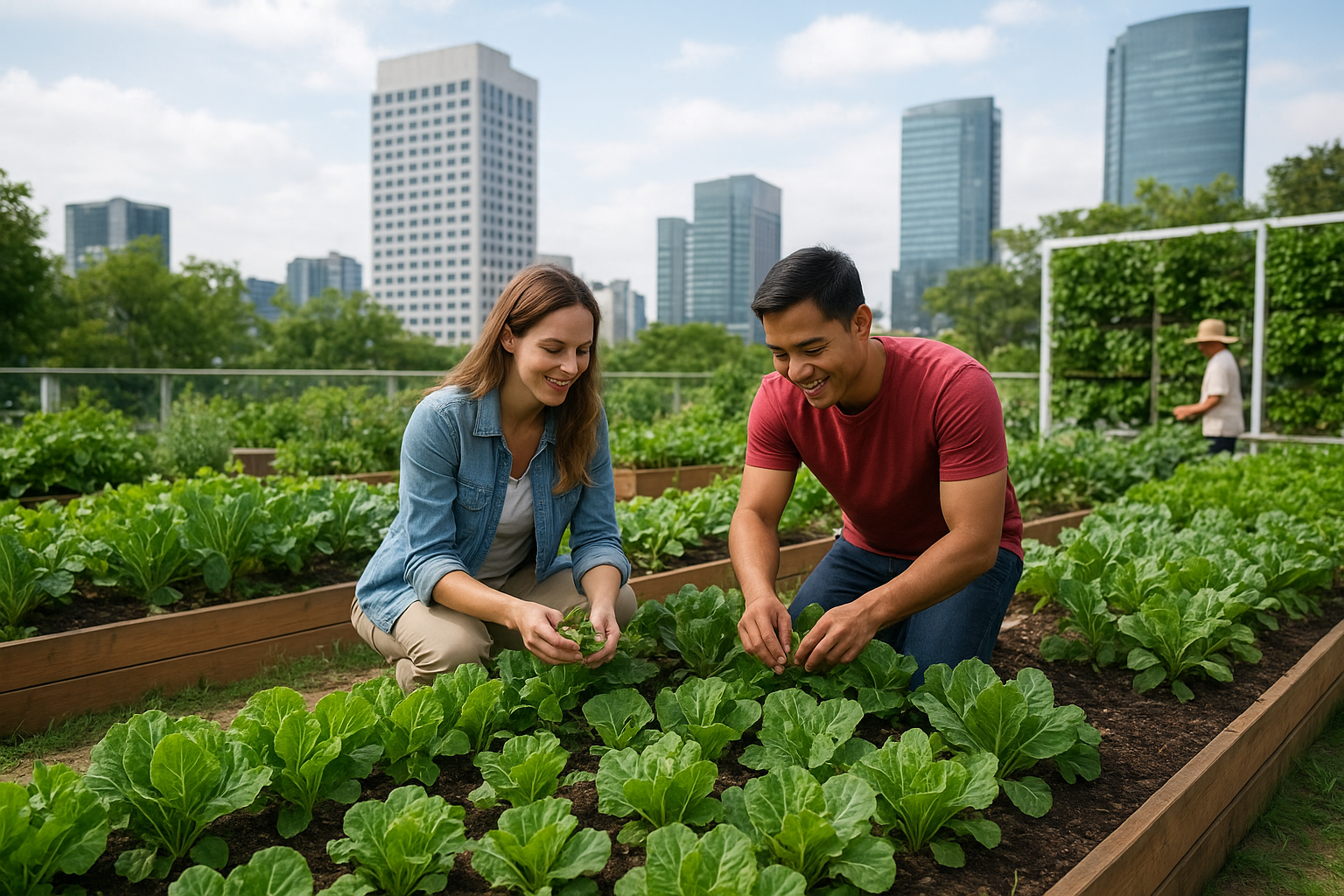
Beyond food and climate, urban farming gives neighbors a reason to work side by side. Shared garden plots in apartment complexes or community centers build social connection among residents who might otherwise never interact, and they give children a hands-on way to understand where food actually comes from. Studies referenced by the World Health Organization link access to green space and community gardening with lower stress levels and better mental health outcomes (source: WHO on urban green spaces).
For property developers and commercial site managers in Malaysia, these benefits translate into real value: tenants pay attention to green amenities, and a well-planned edible landscape can become a selling point rather than an afterthought. This is where the case for urban farming stops being theoretical and starts being a practical design decision.
How to start urban farming in your own space
Starting is simpler than most homeowners expect once you stop waiting for the perfect garden and start with what you already have. A balcony, a side wall, or even a windowsill in a Kuala Lumpur condo can support your first attempt at urban farming, and the goal at this stage is momentum, not perfection.
Assess your space and light
Before buying anything, spend a few days watching how sunlight moves across your balcony, rooftop, or yard. Most edible plants need at least four to six hours of direct light, and Malaysia's tropical humidity means drainage matters just as much as sunshine. Available space and light exposure together decide whether you start with leafy greens, herbs, or something that tolerates shade like ginger and turmeric.
Choose a starting method
Don't overcommit on day one. Pick one low-cost method, run it for a season, then expand once you know what actually survives your conditions.
- Container gardening with pots or grow bags on a balcony or patio
- A raised bed along a side yard or fence line
- A small vertical planter or trellis against a wall
- A basic self-watering planter box for herbs and vegetables
The fastest way to fail at urban farming is trying to grow everything at once instead of mastering one small plot first.
Build the habit before you scale
Every successful backyard or rooftop garden in Malaysia started with someone checking their plants daily, adjusting water and shade, and learning from what died. Give yourself three to four months with your first setup before adding hydroponics, vertical walls, or a koi pond feature. Consistent care matters more than expensive equipment, and once you understand your own space and climate, scaling up becomes a much easier decision instead of a guess.
Common types and methods of urban farming
Once you understand what is urban farming in practice, the next step is knowing which method fits your space, budget, and climate. Malaysia's heat and humidity make some methods easier than others, so picking the right one from the start saves you months of trial and error.
Soil-based methods
Container gardens, raised beds, and small plots remain the most common entry point for Malaysian homeowners because they need almost no special equipment. Raised beds work well along fence lines or side yards where drainage is decent, while pots and grow bags suit balconies and rooftops with limited floor space. These methods forgive mistakes better than soil-free systems, which makes them the safest place for a first-timer to start.
Soil-free and vertical systems
Hydroponics, aquaponics, and vertical planters skip soil entirely and rely on nutrient-rich water or stacked structures to maximize a small footprint. Vertical systems suit condo balconies and commercial buildings where floor space is scarce but wall space is not, and they typically use less water than traditional soil gardening. Aquaponics adds fish into the loop, producing both vegetables and protein from the same closed system.
The method matters less than matching it to the light, water, and space you actually have.
| Method | Best For | Water Needs |
|---|---|---|
| Container gardening | Balconies, small yards | Moderate |
| Raised beds | Side yards, fence lines | Moderate |
| Hydroponics | Rooftops, indoor setups | Low |
| Vertical planters | Walls, tight condo spaces | Low |
| Aquaponics | Commercial or large residential sites | Circulated |
Community and rooftop farms sit at the larger end of the scale, often combining several of these methods across shared spaces in apartment developments.
Urban farming in action around the world
Singapore offers the clearest proof that urban farming works even in one of the world's most land-scarce cities. The country's "30 by 30" plan aims to produce 30% of its nutritional needs locally by 2030, and rooftop hydroponic farms now sit above multi-story carparks and industrial buildings across the island (source: Singapore Food Agency).
Singapore's rooftop model
Building owners there lease unused rooftop space to farming operators, who install compact hydroponic or vertical systems that need little more than sunlight, water, and nutrient solution. This model shows Malaysian developers a working template: idle roof space on a condo or shopping complex can generate produce instead of sitting empty.
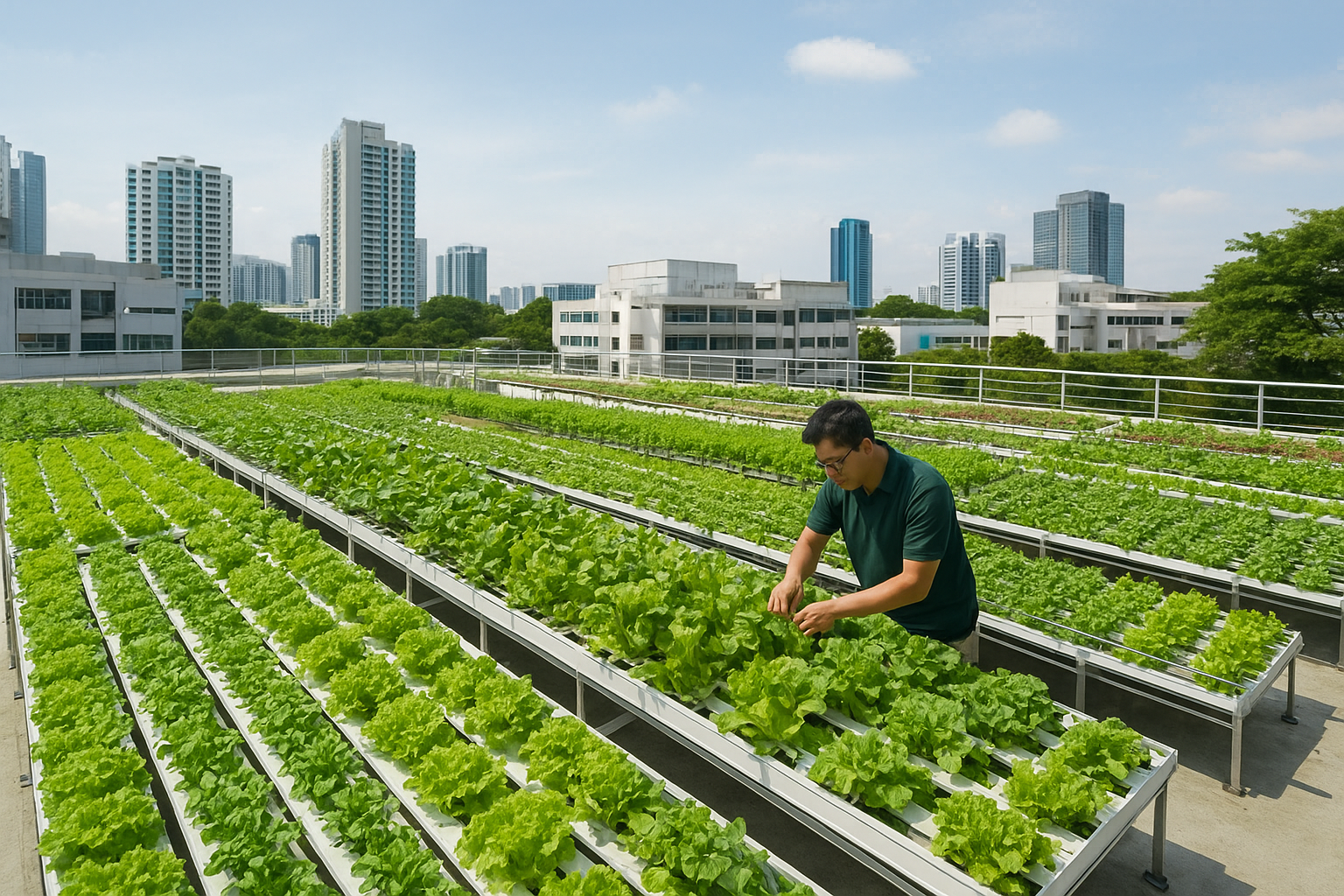
When a city runs out of ground space, the roof becomes the new farmland.
New York and Detroit's community push
New York City has turned hundreds of vacant lots into community gardens through programs backed by its parks department, while Detroit repurposed abandoned industrial land into large-scale urban farms after decades of population decline. Both cities prove that urban farming isn't only a wealthy-city trend; it also revives neglected land and gives residents a stake in their own food supply.
What Malaysia can borrow
Malaysian cities are following a similar path on a smaller scale, with initiatives like community plots in Kuala Lumpur and rooftop projects appearing in newer commercial developments. A few patterns repeat across these examples:
- Unused rooftops and vacant lots get converted first, since they cost little to repurpose
- Government incentives or land-use policy often kick-start the first wave of projects
- Community involvement keeps gardens maintained long after the initial funding fades
These global examples aren't abstract case studies; they're a preview of what your own rooftop, courtyard, or vacant plot could become with the right plan.
Growing food closer to home
So, what is urban farming when you strip away the jargon? It's simply growing food where you live, whether that's a balcony pot, a raised bed, or a rooftop hydroponic tray. You've seen why it matters for food security and community life, how to start small in your own space, which methods fit different budgets, and how cities from Singapore to Detroit are already putting it into practice.
None of this requires a farm's worth of land. Small steps like a few pots on a balcony or a raised bed along your fence line build the habit, and momentum matters more than scale at the start. Once your green space grows, many homeowners add a water feature to round out the design, since a pond brings its own calm and balance to an edible garden. If you're ready to plan that next step, talk to our team about your garden design and see what fits your space.