
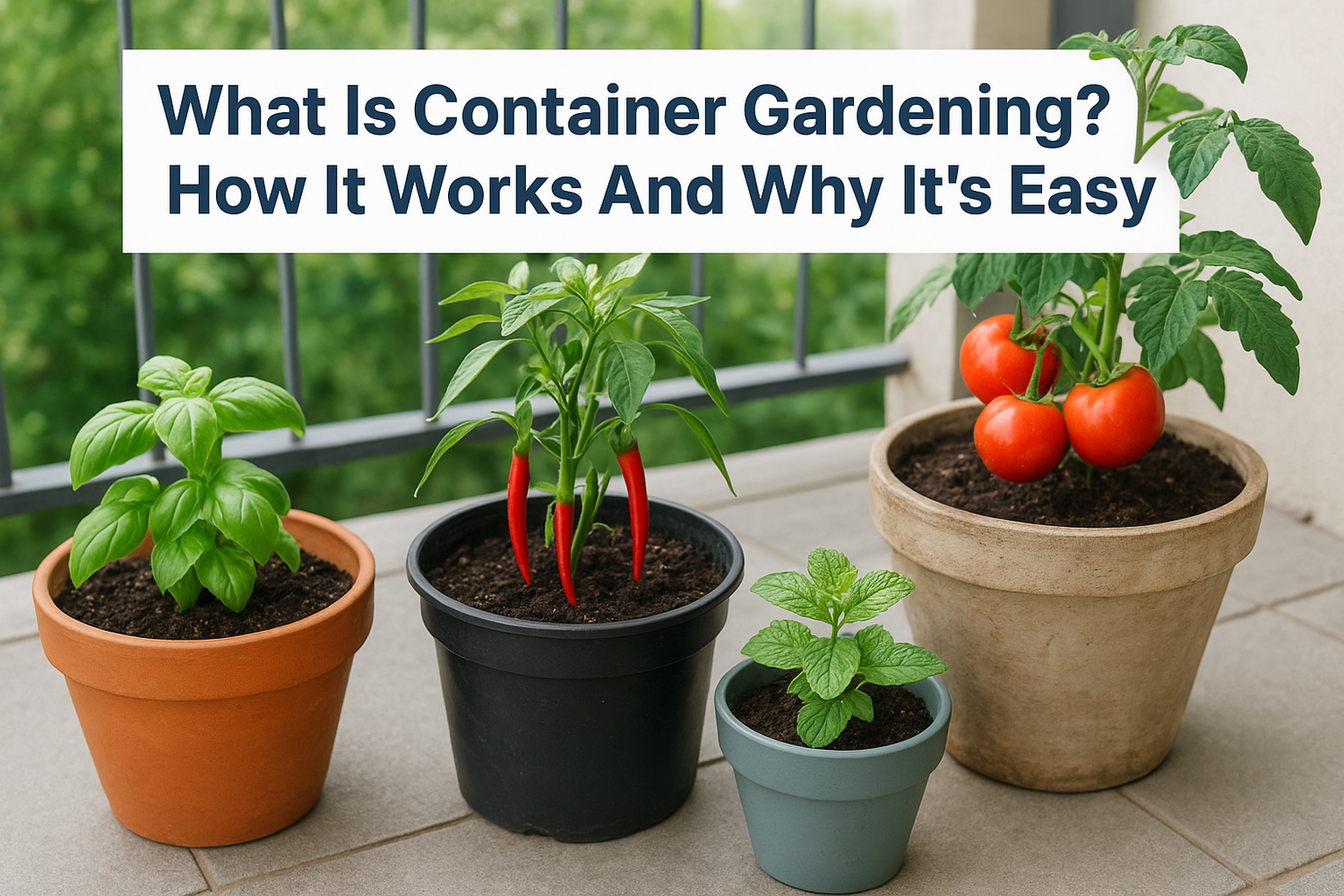
You don't need a sprawling backyard to grow your own herbs, flowers, or vegetables. So, what is container gardening? It's simply the practice of growing plants in pots, planters, and other containers instead of directly in the ground, making it one of the most accessible gardening methods for anyone, regardless of space.
Whether you have a compact balcony in Kuala Lumpur or a small patio that needs some greenery, container gardening offers flexibility that traditional in-ground gardens can't match. You can move plants to chase sunlight, rearrange them for better aesthetics, or bring them indoors when weather turns rough. At Konzept Garden, we help clients make the most of their outdoor spaces through smart design and products like our Ziant Hydro Planters, self-watering systems that take much of the guesswork out of container growing.
This guide covers how container gardening works, its practical benefits, and what you need to get started. Whether you're a complete beginner or simply curious about growing plants in pots, you'll walk away with the foundational knowledge to create your own thriving container garden.
What makes container gardening different
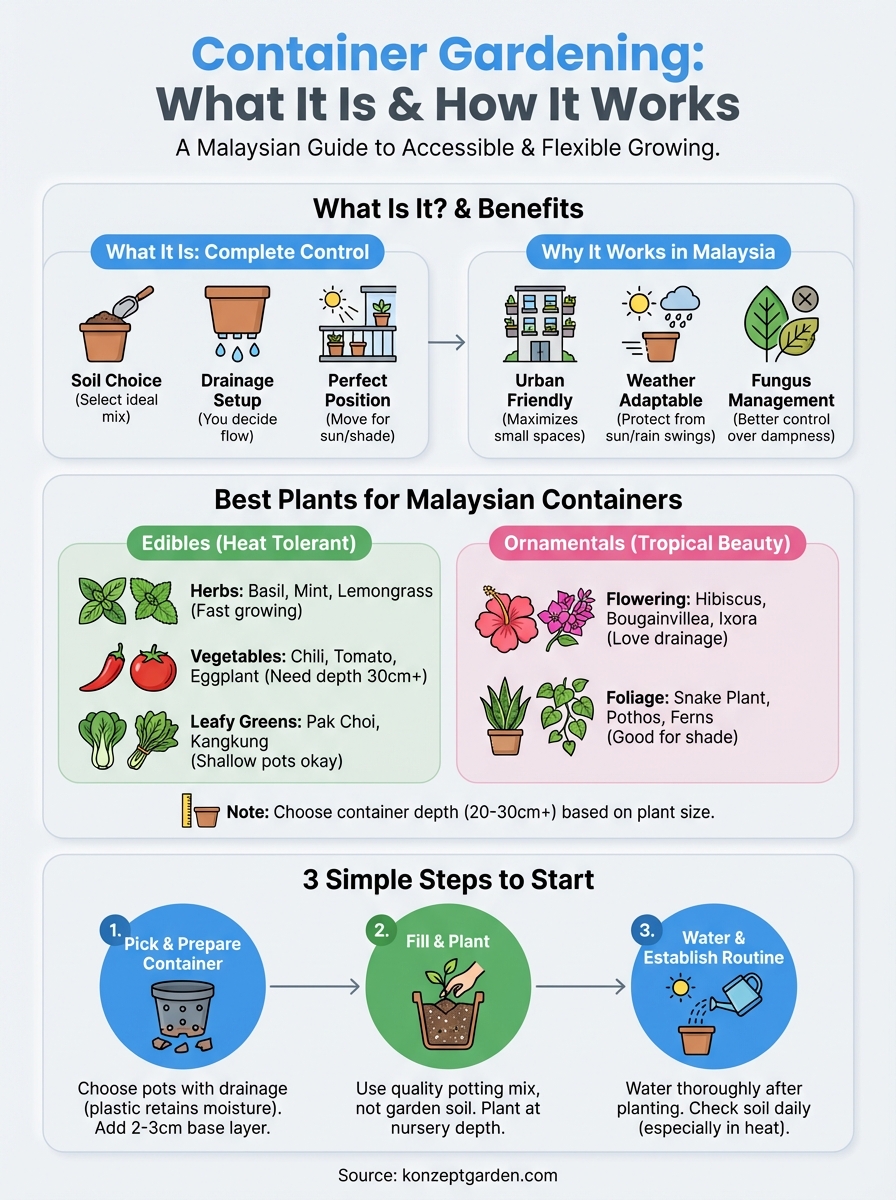
The defining characteristic of container gardening is complete control over your growing environment. When you plant directly in the ground, you're stuck with whatever soil, drainage, and sunlight conditions exist in that spot. Containers flip this script entirely. You choose the soil mix, select the perfect drainage setup, and position plants exactly where they'll thrive. This level of control makes container gardening fundamentally different from traditional gardening methods, and it's why understanding what is container gardening means recognizing this shift in how you manage your plants.
You control everything from soil to location
Your container becomes its own self-contained ecosystem. You fill it with the exact soil type your plants need, whether that's an acidic mix for blueberries or a sandy blend for succulents. Drainage is completely in your hands too. You decide how many holes to drill, what materials to layer at the bottom, and how quickly water should flow through. Traditional gardens force you to work around existing conditions or invest heavily in amending large areas of soil, while containers let you create perfect conditions in minutes.
Container gardening eliminates the guesswork by letting you build the ideal environment for each plant from scratch.
Mobility changes the game
Moving your plants sets container gardening apart more than any other feature. When afternoon shade creeps across your balcony, you simply reposition containers to capture remaining sunlight. Heavy rain forecast? Slide planters under cover. Plants not thriving in their current spot? Try a different location tomorrow. Traditional gardens root you to one place, making every planting decision permanent until you're willing to dig everything up and start over. Containers give you the freedom to experiment, adjust, and optimize without any permanent commitment.
Why container gardening works so well in Malaysia
Malaysia's unique combination of urban living and tropical climate makes container gardening not just practical but often the best choice for growing plants. Most Malaysians live in apartments, condominiums, or terrace houses with limited outdoor space, where traditional ground gardens simply aren't an option. Container gardening transforms balconies, patios, and rooftops into productive growing areas without requiring any land at all. Understanding what is container gardening means recognizing how it solves the specific challenges Malaysian gardeners face every day.
Urban space meets tropical weather
Your typical Malaysian home comes with limited outdoor square footage, but containers maximize every inch you have available. Stack them vertically, hang them from railings, or arrange them on compact stands to create layers of greenery where none existed before. The intense tropical sun and heavy monsoon rains that define Malaysia's weather patterns actually work in your favor with containers. You move plants into shade during the hottest afternoon hours or shift them under cover when storms approach.
Containers give you the flexibility to protect plants from Malaysia's extreme weather swings without building permanent structures.
High humidity levels that plague traditional gardens with fungal problems become manageable when you control soil composition and drainage in individual containers. You choose fast-draining mixes that prevent waterlogging, something nearly impossible to achieve in Malaysia's often clay-heavy ground soil without extensive amendments.
What you can grow in containers
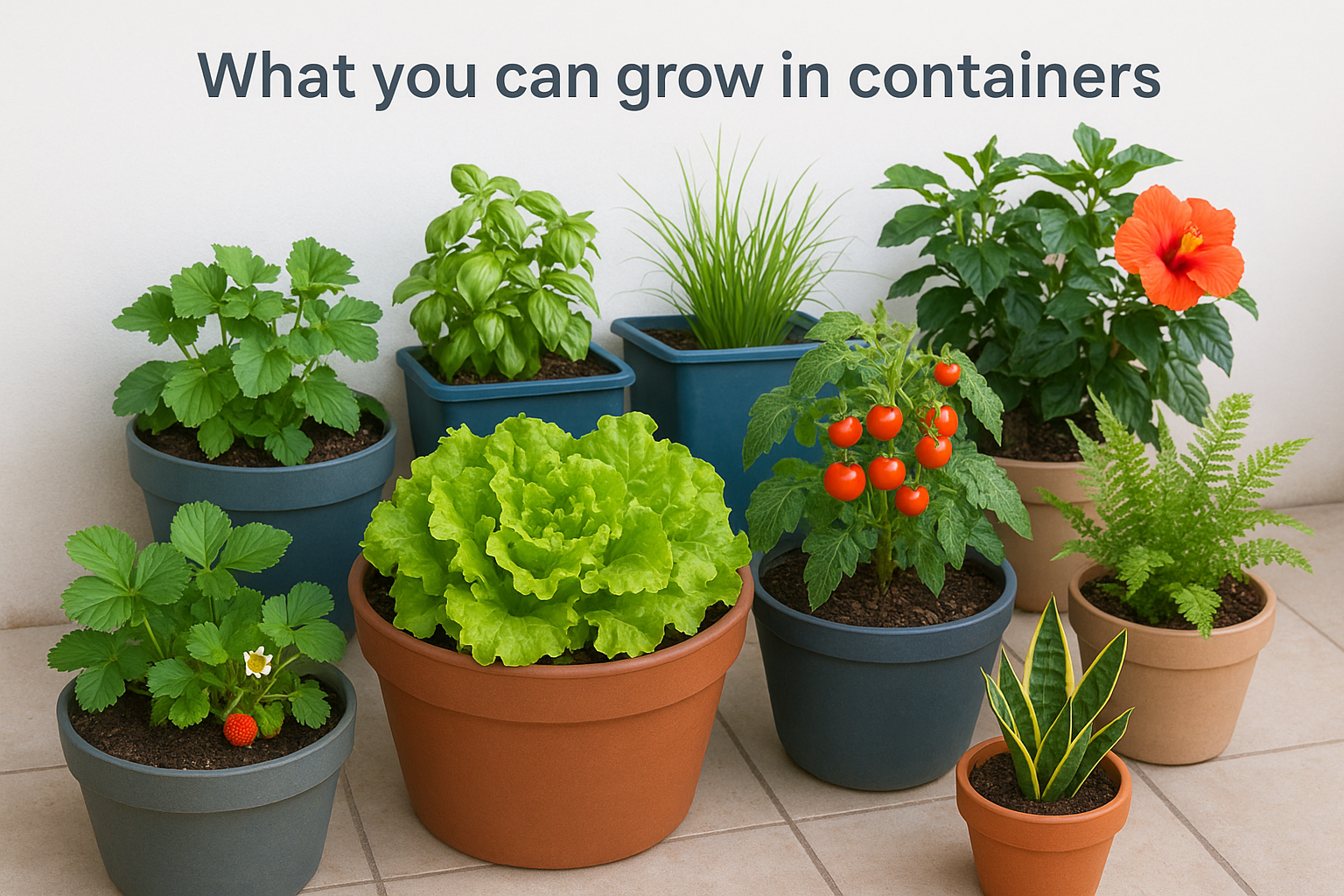
Almost any plant that grows in traditional gardens adapts to container life with the right setup. Understanding what is container gardening means recognizing that container size and depth determine your options more than the method itself. Shallow-rooted plants like lettuce, herbs, and strawberries flourish in compact containers, while deeper pots accommodate tomatoes, peppers, and even dwarf fruit trees. Malaysian gardeners have particular success with heat-tolerant varieties that handle our tropical conditions.
Edibles for Malaysian containers
Herbs lead the pack for beginner container gardeners in Malaysia because they grow fast, tolerate heat, and need minimal space. Basil, coriander, mint, and lemongrass practically grow themselves in containers with proper watering. Vegetables like chili peppers, cherry tomatoes, and eggplant produce heavily in pots when you give them enough depth (at least 30cm) and regular feeding. Leafy greens such as pak choi and kangkung work perfectly in shallow containers and mature quickly in our warm climate.
Start with herbs if you're new to container gardening, they're nearly impossible to kill and reward you with constant harvests.
Ornamentals that handle tropical heat
Flowering plants like hibiscus, bougainvillea, and ixora thrive in Malaysian containers, bringing bold colors to balconies and patios. These tropical favorites actually prefer the excellent drainage containers provide over waterlogged ground soil. Foliage plants including pothos, snake plants, and ferns create lush greenery without demanding full sun, making them ideal for shadier spots where flowering plants struggle.
How to start a container garden step by step
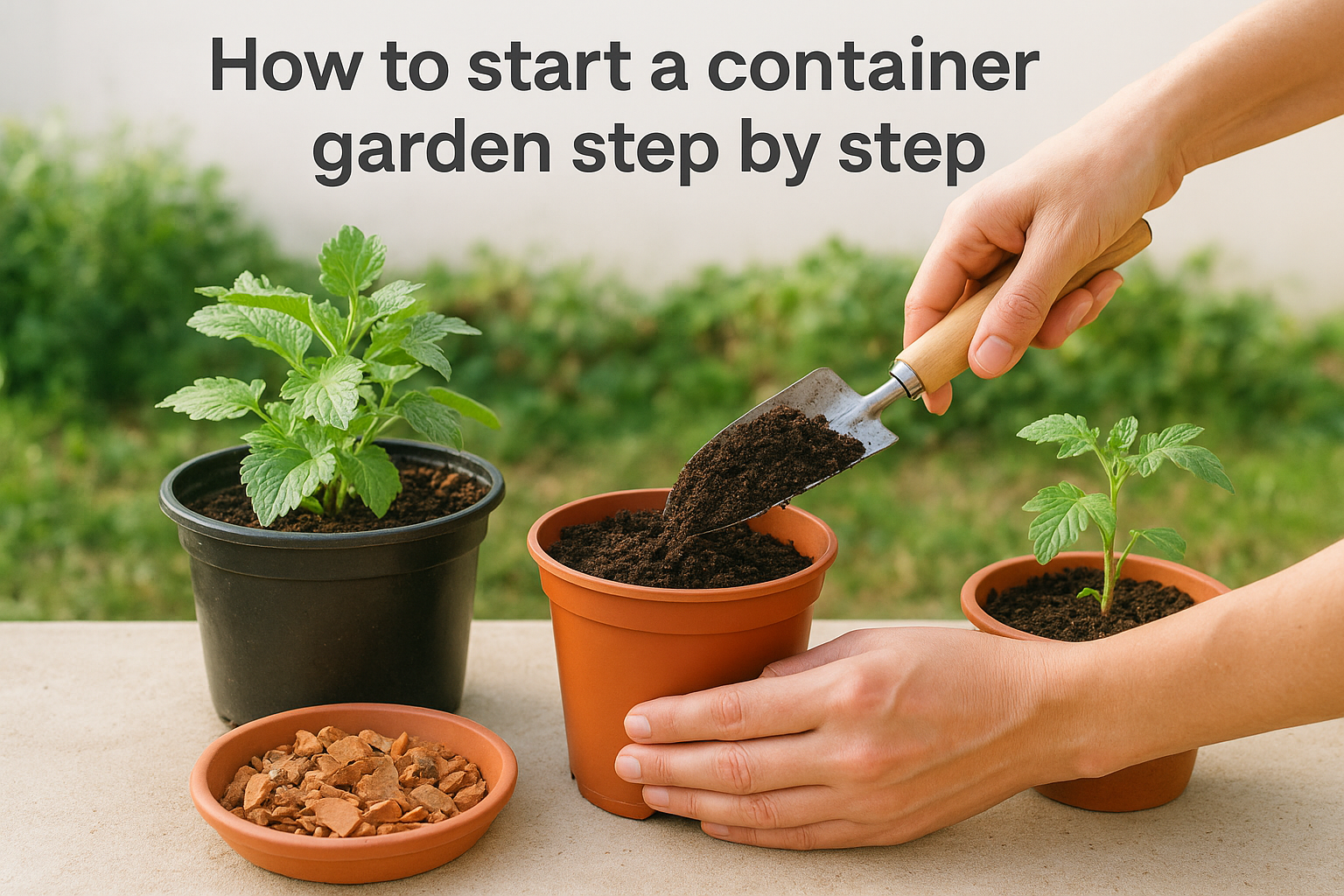
Starting your first container garden requires just three basic components and about an hour of your time. You need containers with drainage holes, quality potting mix, and plants suited to your available light. Once you grasp what is container gardening through hands-on practice, you'll realize the process is far simpler than traditional gardening because you're working with manageable quantities and individual plant environments. Follow these practical steps to get your containers producing within weeks.
Pick containers and prepare drainage
Choose pots at least 20cm deep for herbs and small vegetables, 30cm or deeper for larger plants like tomatoes. Plastic containers work well in Malaysia's heat because they retain moisture longer than terracotta, reducing your watering frequency. Drill additional holes if your containers lack sufficient drainage, you want water flowing out freely rather than pooling at the bottom. Add a 2-3cm layer of broken pottery or stones at the base before filling with potting mix to prevent soil from washing through drainage holes.
Proper drainage prevents root rot, the most common killer of container plants in Malaysia's humid climate.
Fill, plant, and establish your routine
Use commercial potting mix rather than garden soil, which compacts in containers and drains poorly. Fill containers to about 3cm below the rim, leaving space for watering. Plant at the same depth as the nursery pot and water thoroughly until liquid runs from drainage holes. Place containers in their permanent location based on each plant's light needs, then establish a consistent watering schedule, checking daily during Malaysia's hot season.
Common problems and quick fixes
Container gardens face predictable challenges, but each one has a straightforward solution once you spot the symptoms. Malaysian gardeners encounter specific issues tied to our climate, from excessive moisture during monsoons to heat stress during dry spells. Recognizing these problems early and knowing what is container gardening's most common pitfalls saves plants before damage becomes permanent. Most fixes require simple adjustments to watering, positioning, or feeding rather than complex interventions.
Wilting and water stress
Plants drooping despite wet soil signal overwatering and poor drainage, while crispy leaf edges mean you're watering too little. Check soil moisture by sticking your finger 5cm deep into the mix. If it feels soggy, hold off watering and improve drainage by adding more holes to your container. Dry soil throughout means you need to water more frequently or move to a shadier spot during Malaysia's hottest months.
Container plants in full tropical sun often need daily watering, while those in shade may go three days between drinks.
Yellow leaves and stunted growth
Yellowing lower leaves indicate nitrogen deficiency, common after a few months when container soil nutrients deplete. Apply liquid fertilizer at half strength every two weeks during growing season to maintain plant health. Stunted growth despite proper watering usually means your container is too small, with roots circling the bottom. Transplant into a pot 5-10cm larger in diameter to give roots room to expand and support healthy growth.
Next steps for your container garden
You now understand what is container gardening and have the foundational knowledge to start growing plants in pots today. Begin with two or three containers and simple plants like herbs or leafy greens to build your confidence before expanding. Your first harvest or flowering success creates momentum that makes maintaining and growing your container garden feel rewarding rather than like a chore.
Malaysian container gardens thrive when you match plants to available light and establish consistent watering habits during the first few weeks. Most beginners overwater rather than underwater, so check soil moisture before reaching for the hose. As your skills develop, you'll naturally want to add more containers and experiment with different plant varieties.
If you're ready to transform your outdoor space beyond container gardening, Konzept Garden creates comprehensive landscape designs that work with Malaysian weather and limited space. Contact our design team to discuss how we can help you build a complete outdoor environment that combines container gardens with other landscape features.