
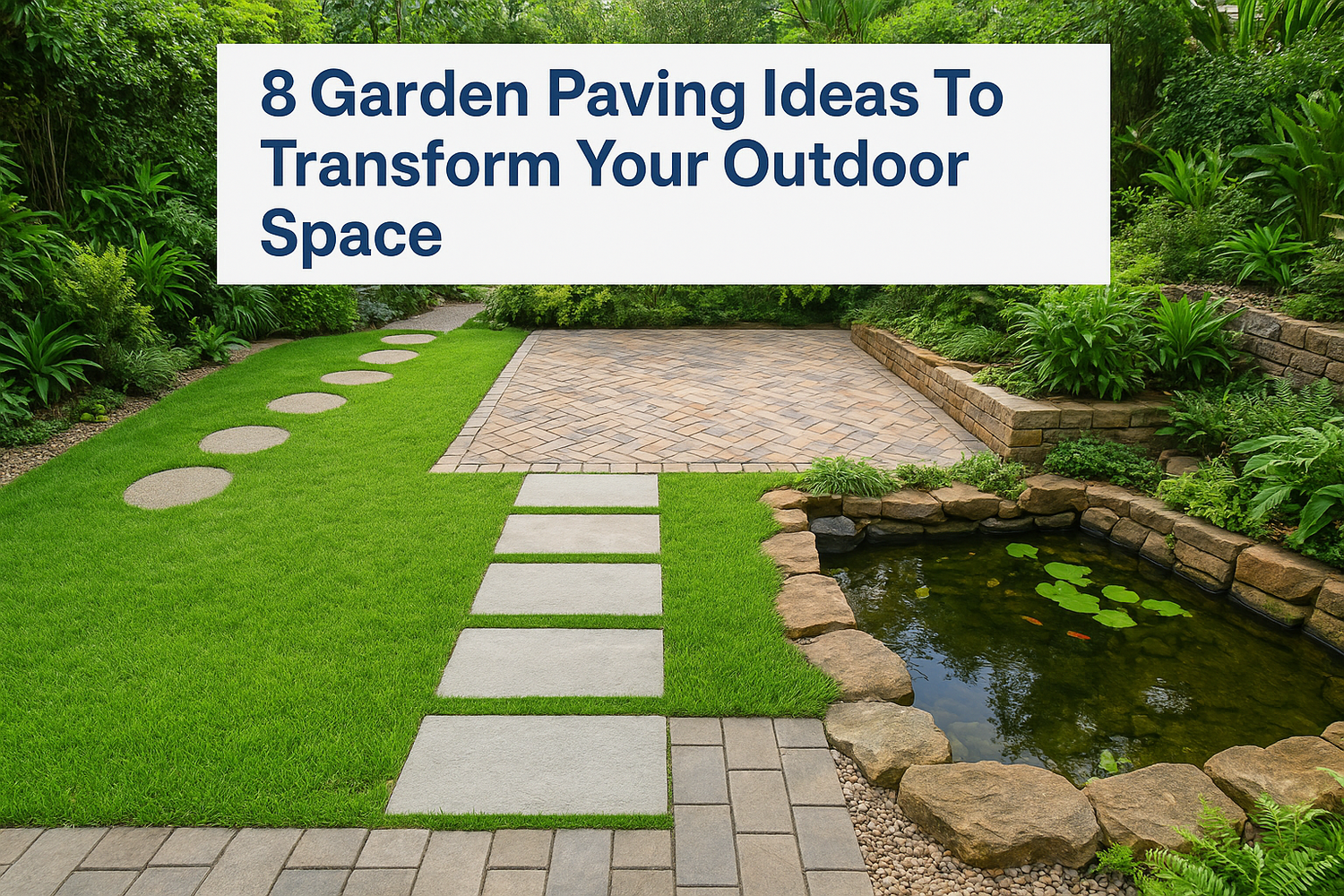
Walking into a garden with cracked, uneven, or mismatched paving tells visitors something you probably don't want them to know: this space wasn't planned with much care. If you're staring at a bare patch of soil or an old concrete path and wondering how to fix it, you've landed in the right spot. These garden paving ideas cover the styles, materials, and layouts that actually work in Malaysia's climate, whether you're dealing with a small terrace garden or a sprawling bungalow lawn.
Good paving does more than look nice. It defines walkways, ties different zones of your garden together, and holds up against monsoon rain and tropical heat without cracking or growing slippery moss. The right choice depends on your budget, garden size, and how much upkeep you're willing to do, and that's exactly what this list breaks down for you.
Below you'll find eight practical paving concepts, from natural stone and gravel paths to modern composite decking and mixed-material designs. Each idea includes what it costs to install, where it fits best, and how it holds up over time, so you can pick a direction and move straight into planning your own transformation.”
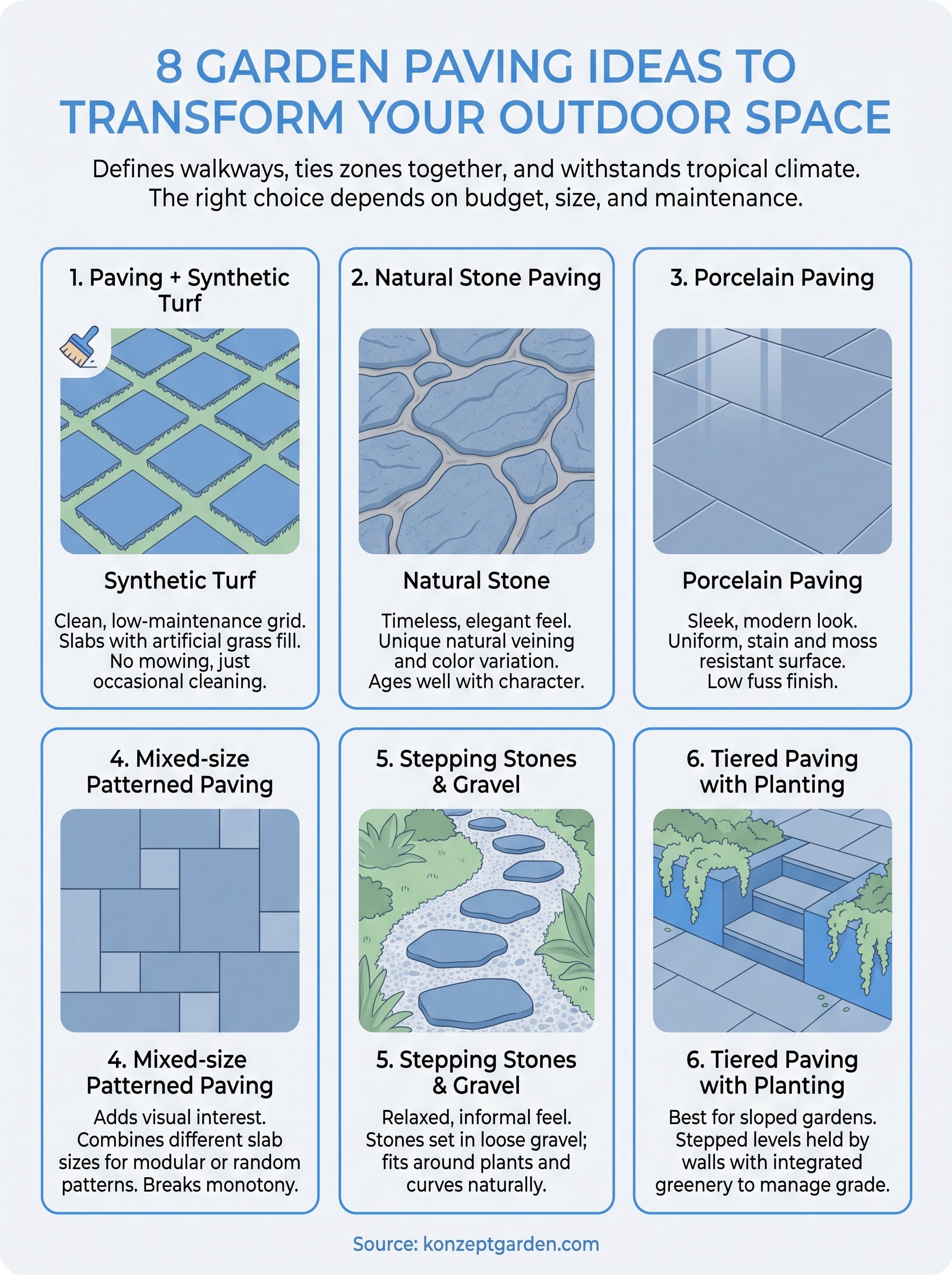
1. Combine paving with synthetic turf for a clean, low-maintenance look
Mixing hard paving with synthetic turf is one of the most requested garden paving ideas we get from homeowners who want a sharp look without spending every weekend on lawn care. You lay rectangular or square paving slabs in a grid, then fill the gaps between them with artificial grass like Noble Grass instead of grout or gravel. The result reads as intentional and tidy, not like a patchy lawn that never fully grew in.
How it works
Contractors set the paving slabs first, leveling each one on a sand or mortar base, then cut the synthetic turf to fit the remaining spaces. Some designs alternate slabs and turf strips in a checkerboard pattern, while others use turf as a border around a solid paved seating area. Either way, the drainage layer underneath matters most, since Malaysia's rain intensity means standing water will rot the turf backing if it's installed flat on soil.
Best for
This combination suits small to mid-sized terrace gardens, courtyard homes, and any space where real grass struggles under shade or heavy foot traffic. It's also a strong fit for busy households and rental properties, since there's no mowing, fertilizing, or reseeding involved.
Pairing paving with synthetic turf gives you a lawn that looks maintained every single day, with none of the weekly upkeep.
Design tips
- Keep slab sizes consistent (600mm x 600mm is common) for a clean grid.
- Use turf strips no wider than 300mm between slabs so the grass doesn't dominate the layout.
- Add a contrasting border, like a darker paving edge, to frame the whole area.
Maintenance & cost
Expect to pay more upfront for the turf than for gravel infill, but far less over five years since there's no watering or mowing labor. A light brush and occasional rinse keeps the synthetic turf looking fresh, and the paving itself just needs a pressure wash twice a year to clear algae buildup during rainy months.
2. Natural stone paving for a timeless, elegant garden
Natural stone remains the benchmark against which every other paving material gets compared, and for good reason. Granite, sandstone, and limestone each carry natural veining and color variation that manufactured materials still can't fully replicate, giving your garden a grounded, established feel from the day it's laid.
How it works
Slabs get cut from quarried stone into set dimensions, then laid on a compacted base with mortar joints or tight-fitting edges. Because no two pieces are identical, installers arrange them to balance color and grain before fixing anything permanently, which takes longer than laying uniform manufactured tiles but produces a floor with real character.
Best for
This works best for bungalow gardens, entrance driveways, and pool surrounds where you want the paving to feel like it's always belonged there. It also suits homeowners planning to stay long-term, since natural stone ages well and rarely looks dated.
Natural stone paving doesn't just survive decades of Malaysian weather, it looks better for having weathered them.
Design tips
- Stick to one stone type across zones to avoid a patchwork look.
- Choose honed or textured finishes near pools to reduce slipping.
- Let irregular edges show near planting beds for a softer transition.
Maintenance & cost
Expect the highest price point on this list, plus periodic sealing every two to three years to resist staining and moss growth in humid conditions.
3. Porcelain paving for a sleek, modern outdoor space
Porcelain has taken over a big share of the market for homeowners chasing a contemporary look without the upkeep that natural stone demands. Manufacturers fire clay at high temperatures to produce slabs that resist staining, fading, and moss growth far better than most other paving materials, which makes porcelain a favorite among these garden paving ideas for modern bungalows and condo balconies alike.
How it works
Slabs get laid on a mortar bed or raised pedestal system, with the pedestal option letting installers hide drainage pipes and cables underneath while keeping the surface perfectly level. Because porcelain slabs are manufactured to exact dimensions, installation moves faster than natural stone, and joints stay tighter with less grout visible.
Best for
This suits rooftop terraces, minimalist courtyards, and pool decks where a uniform, clean surface matters more than natural texture. It's also a strong pick for commercial clients who need a low-fuss finish that still photographs well.
Porcelain gives you the sharp, modern look of polished stone without the sealing schedule.
Design tips
- Pick large-format slabs (800mm x 800mm or bigger) to reduce visible grout lines.
- Match indoor and outdoor porcelain tones for a seamless flow from living room to garden.
- Choose anti-slip textured finishes for wet zones near ponds or pools.
Maintenance & cost
Porcelain sits mid-range in price, above concrete but usually below premium natural stone, and needs little more than routine sweeping and occasional soap-water cleaning.
4. Mixed-size and patterned paving for visual interest
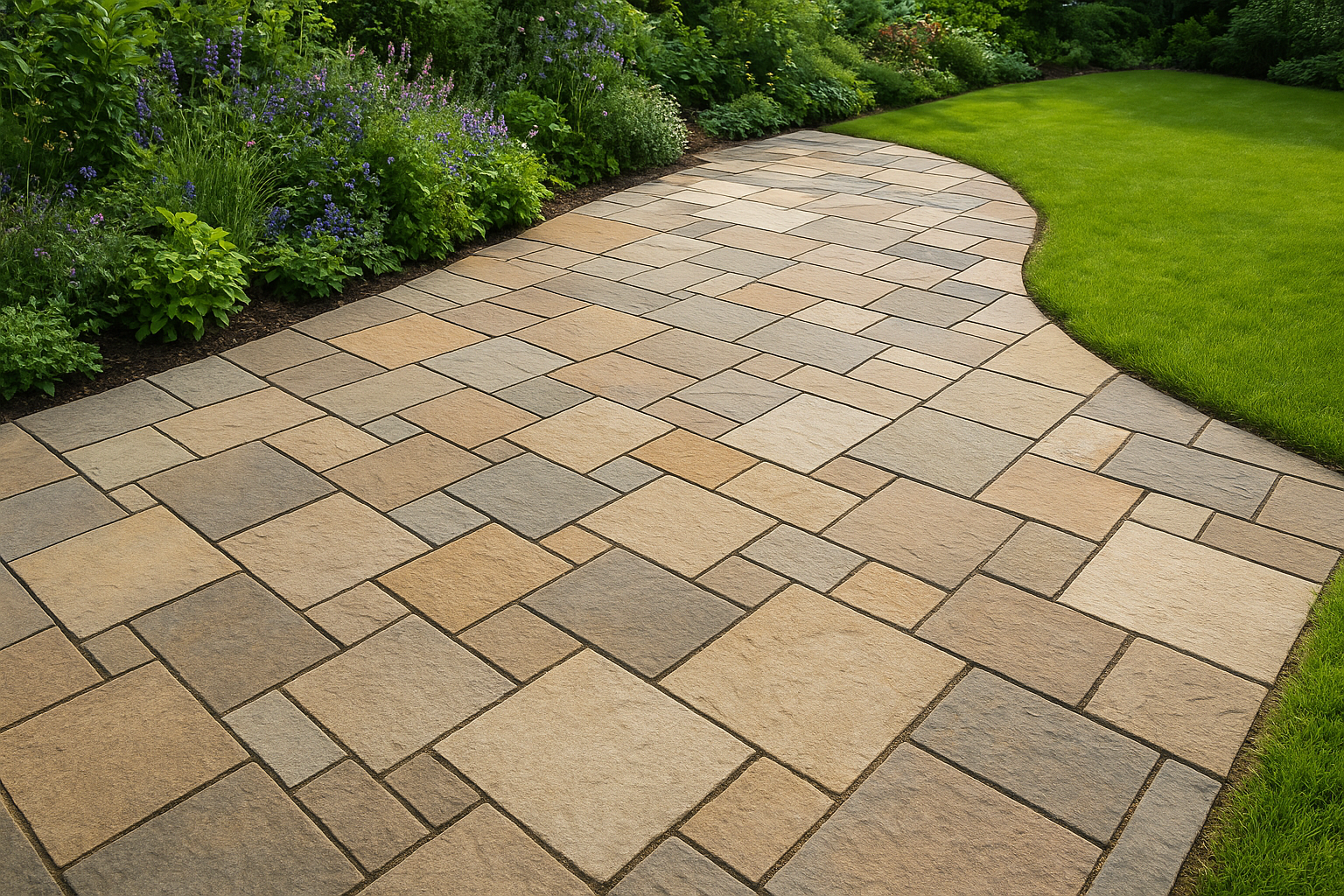
A single slab size across your whole garden can look flat after a while, and that's where mixed-size and patterned paving earns its place among garden paving ideas worth considering. Combining two or three slab sizes, often called a modular or random pattern, breaks up the monotony of a uniform grid and draws the eye across the space instead of straight to the exit.
How it works
Installers work from a set module, usually three or four slab sizes designed to interlock without needing cut pieces, then arrange them in a repeating but non-uniform sequence. Herringbone and basketweave patterns use smaller, uniform units instead, laid at angles that create visible movement across a path or patio.
Best for
This style suits larger gardens, driveways, and open-plan outdoor living areas where a plain grid would look sparse. It also works well for owners who want their paving to double as a design feature rather than just a functional surface.
Patterned paving turns a walkway into a feature, not just a surface you walk over.
Design tips
- Use no more than three slab sizes to avoid a cluttered look.
- Run herringbone patterns diagonally to make narrow paths feel wider.
- Keep color tones consistent even when sizes vary.
Maintenance & cost
Costs run slightly higher than uniform paving due to layout planning and cutting, though upkeep stays the same as any standard slab material.
5. Stepping stones and gravel paths for a relaxed feel
Stepping stones set into gravel bring a softer, more informal energy than solid slab paving, and they're one of the easiest garden paving ideas to fit around existing trees or curved borders. Instead of a continuous hard surface, individual stones sit spaced apart across a bed of loose gravel, letting the path bend naturally through planting instead of cutting a straight line across the lawn.
How it works
Installers dig a shallow trench, lay a weed-suppressant membrane, then spread compacted gravel before placing the stones at comfortable stride distance, usually 550mm to 650mm apart. The membrane matters most here, since skipping it means weeds push through the gravel within a season in Malaysia's growing conditions.
Best for
This suits tropical and cottage-style gardens, side passages, and spaces with mature trees where you don't want to disturb existing roots with a poured base.
A gravel path with stepping stones lets your garden feel wild and intentional at the same time.
Design tips
- Use irregular flagstones rather than uniform pavers for a natural feel.
- Choose gravel in a neutral tone so it doesn't compete with planting colors.
- Edge the path with steel or timber strips to stop gravel migrating onto the lawn.
Maintenance & cost
This ranks among the cheapest options here, though gravel needs topping up every year or two and occasional raking to redistribute stones after heavy rain.
6. Tiered paving with planting for depth and greenery
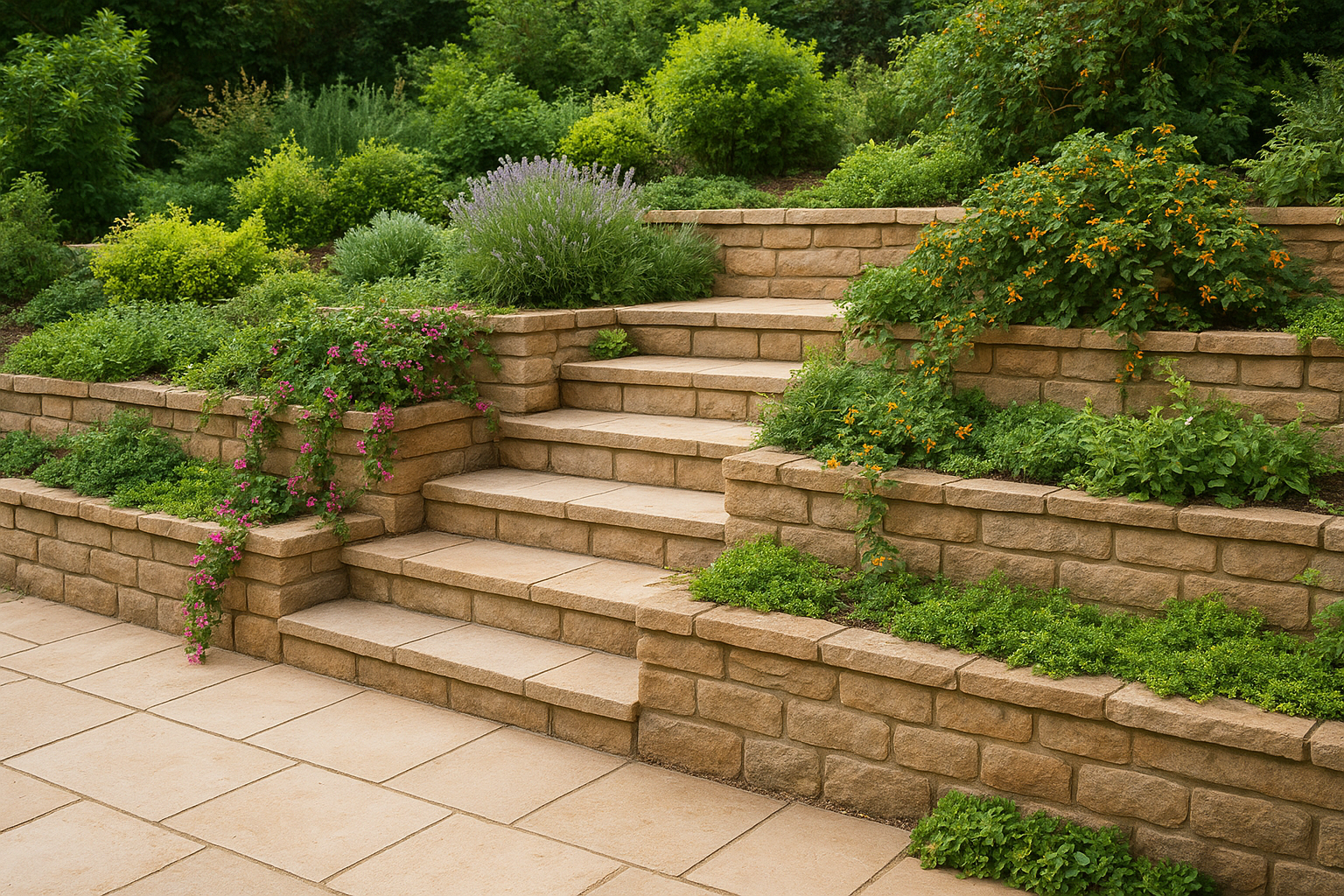
Sloped gardens and terraced lots benefit from a paving approach that most flat-garden designs skip entirely. Tiered paving breaks a garden into stepped levels, each held by a low retaining wall and planted with greenery that spills over the edge. Among garden paving ideas for uneven lots, this one turns a drainage or grading problem into the garden's best feature.
How it works
Contractors build retaining walls from brick, stone, or concrete blocks to hold each level, then pave the flat surface on top before backfilling the wall face with soil and trailing plants. Every tier needs its own drainage channel, since water running downhill from an upper level can undermine a lower wall if it's not redirected properly.
Best for
This suits sloped bungalow plots, hillside properties, and gardens with awkward level changes where flat paving alone would need expensive excavation.
Tiered paving turns a sloped garden's biggest challenge into its most photographed feature.
Design tips
- Keep individual tier heights under 450mm for a comfortable, safe step-up.
- Plant trailing species like bougainvillea or lantana along wall edges to soften hard lines.
- Add lighting at each tier edge for safety after dark.
Maintenance & cost
Expect higher upfront costs due to retaining wall construction, plus ongoing pruning to keep trailing plants from overtaking walkways below.
Choosing the right paving style for your garden
None of these eight approaches is objectively "best." The right pick depends on how much time you want to spend maintaining it, how your garden slopes, and what feeling you're going for, whether that's crisp and modern or relaxed and tropical. Paving with synthetic turf suits busy households, natural stone suits homeowners planting roots for decades, and tiered designs turn a tricky slope into a feature instead of a headache.
Whatever direction you lean toward, get the base and drainage right before worrying about slab color or pattern. That's where most paving jobs actually fail in Malaysia's climate. If you're picturing a water feature alongside your new paved area, a koi pond adds movement and sound that hard surfaces alone can't. Take a look at our Zen Bio Koi Pond designs, or reach out through our contact page and we'll help you plan the whole space properly.