


Composite decking has earned a reputation as the low-maintenance alternative to timber, and for good reason. It resists rot, doesn't need annual staining, and holds up well in Malaysia's humid climate. But it's not without trade-offs. Before you commit to a material that'll shape your outdoor space for the next decade or more, you need to understand the disadvantages of composite decking and what they actually mean for your budget, comfort, and long-term satisfaction.
At Konzept Garden, we design and build outdoor spaces across Malaysia, and we've worked with just about every decking material on the market. We've seen composite decking perform beautifully in the right conditions, and we've seen it disappoint when homeowners weren't given the full picture before installation. That experience is exactly why we put this guide together: to give you an honest breakdown before you make a decision.
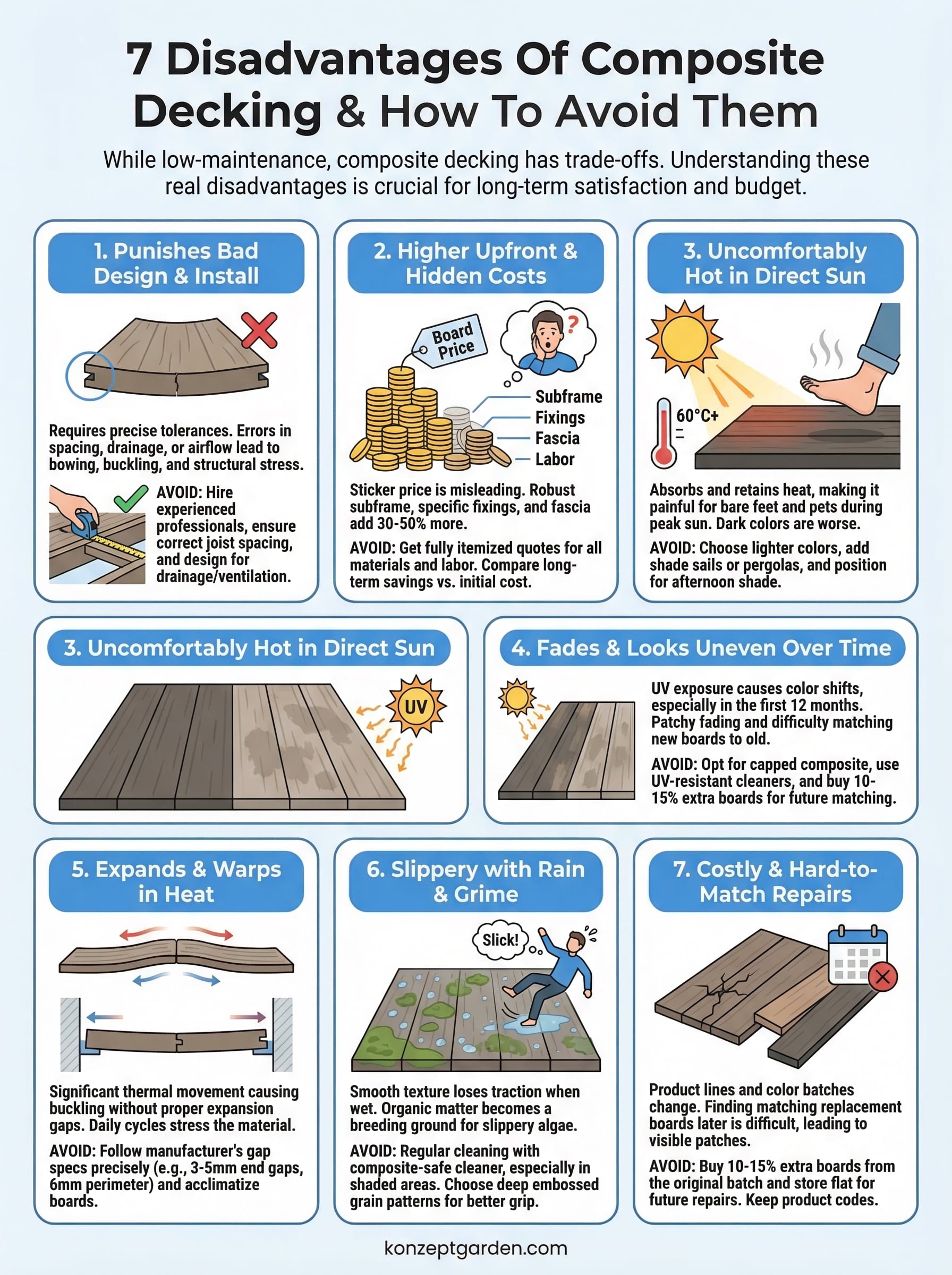
Below, we cover seven real disadvantages of composite decking, explain why each one matters, and, more importantly, show you practical ways to avoid or minimize them. Think of it as the conversation we'd have with you during a consultation, minus the coffee.
1. Composite decking punishes bad design and install
Of all the disadvantages of composite decking, this one catches the most homeowners off guard. Composite boards don't forgive sloppy work the way timber sometimes can. Every shortcut in the design phase or during installation tends to show up later, often in ways that cost more to fix than the money saved upfront.
Why it happens
Composite decking is a manufactured product with precise engineering tolerances built in. Boards need correct joist spacing, proper ventilation underneath, and accurate gap measurements between each plank. When installers skip these steps, or when the deck layout ignores drainage and airflow, moisture traps and structural stress accumulate over time. The material also responds to heat more dramatically than solid timber, which means a design that doesn't account for Malaysia's year-round sun will create problems within the first few seasons.
Getting the subframe right matters as much as choosing the right board. A well-built deck starts below the surface.
What it looks like on a real deck
You'll notice boards that bow or cup in the middle, gaps that close up and cause buckling, or fixings that push through the surface because the joist spacing was too wide. On decks without proper drainage design, standing water collects under the boards and speeds up mold growth. Some homeowners also report hollow-sounding sections underfoot, which usually points to a subframe that wasn't built to the composite manufacturer's specifications.
How to avoid it in Malaysia
Start by requesting the manufacturer's installation guidelines before any work begins, and make sure your contractor has read them. In Malaysia's climate, under-deck ventilation is not optional. You need airflow beneath the boards to handle heat buildup and moisture. Choose a joist spacing of 400mm or less for most standard composite products, and confirm that your deck design includes a fall (slope) of at least 1-2% to direct rainwater away. Hiring a landscape professional who regularly works with composite materials makes a measurable difference here.
2. It costs more upfront and can hide extra costs
The sticker price on composite decking is one of the first things that surprises homeowners. It consistently runs higher than treated timber per square meter, and that gap widens considerably once you factor in all the supporting materials required to install it correctly.
Why it happens
Composite boards require a more robust subframe than timber decking because of how they flex under load and expand with heat. That often means heavier joists, more fixings, and hidden fastener systems that cost more per board than simple surface screws. Manufacturers also design composite products in tiered ranges, with entry-level boards performing noticeably worse in Malaysia's climate than premium-grade options.
Choosing a cheaper composite board to save money upfront often leads to spending more on fixes within three to five years.
What it looks like on a real deck
You budget for the boards and then get caught short when the subframe, fixings, and fascia boards add 30-50% to your original estimate. Some homeowners also discover mid-project that their chosen board requires a specific proprietary fastener, which the supplier quotes separately and at a price that wasn't part of the original conversation.
How to avoid it in Malaysia
Ask your contractor for a fully itemized quote that covers boards, subframe materials, fixings, fascia, and labor before you approve anything. Compare at least two board grades side by side, and weigh in long-term maintenance savings rather than judging composite purely on its day-one price tag.
3. It can get uncomfortably hot in direct sun
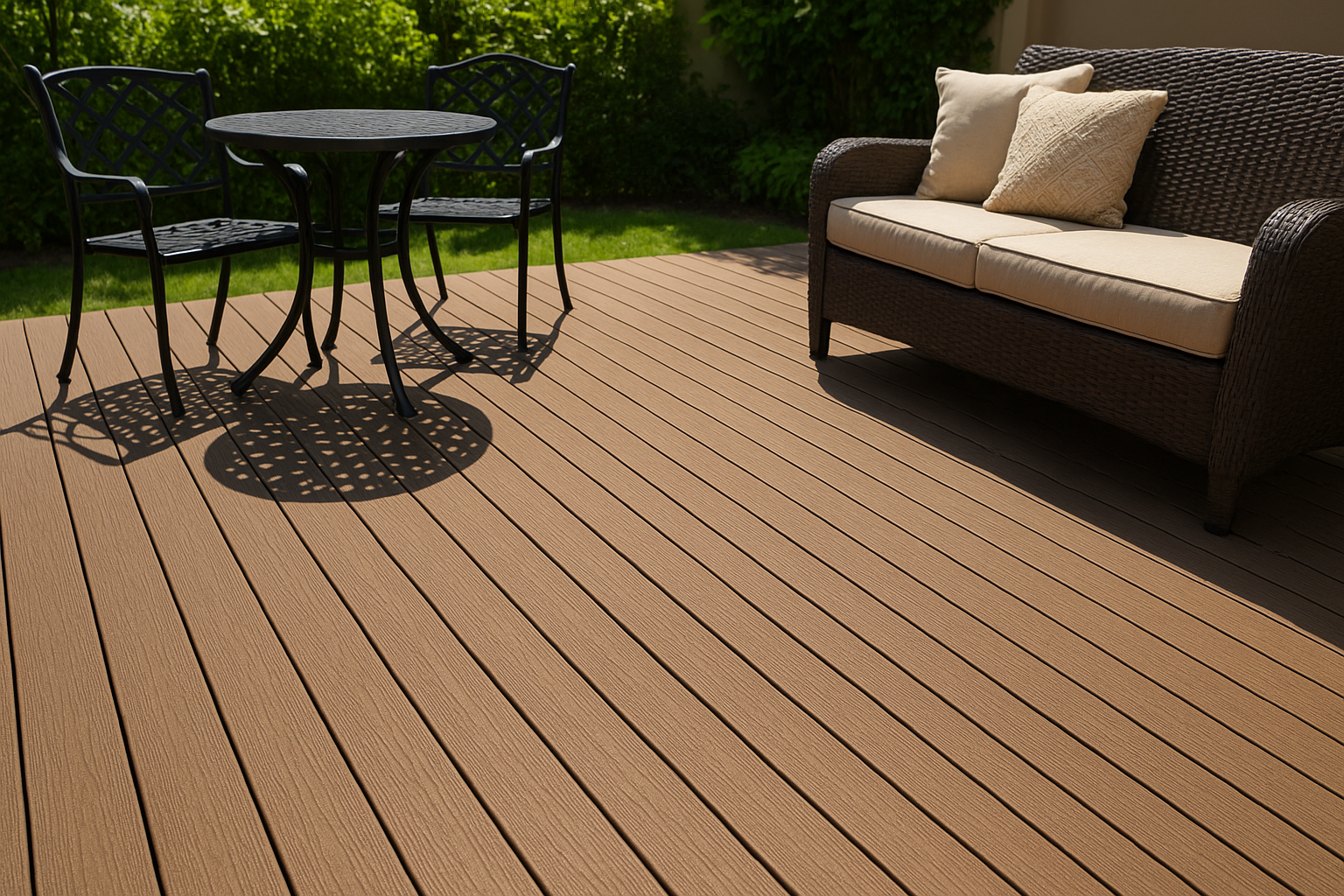
This is one of the disadvantages of composite decking that hits hardest in Malaysia, where the sun is relentless and temperatures regularly climb past 32°C. Unlike timber, which stays relatively cool underfoot, composite boards absorb and retain heat in ways that can make your deck unusable during peak afternoon hours.
Why it happens
Composite boards contain plastic polymers that absorb solar radiation and hold it far longer than natural wood. The darker the board color, the worse the effect. On a typical Malaysian afternoon, surface temperatures on dark composite decking can reach 60°C or higher, which is hot enough to cause discomfort through footwear and a real burn risk for children and pets.
Choose lighter board colors if your deck receives direct sun for more than four hours a day.
What it looks like on a real deck
You walk out after lunch and the deck surface is too hot to stand on barefoot. Furniture left on the deck absorbs that heat too, making outdoor seating uncomfortable. In severe cases, the heat buildup also accelerates surface fading and stresses the board structure over time.
How to avoid it in Malaysia
Opt for light or mid-tone board colors and consider adding a pergola or shade sail over sun-exposed sections. Positioning your deck to catch afternoon shade from a wall or established tree line also reduces surface temperatures considerably.
4. It can fade and look uneven over time
Fading is one of the disadvantages of composite decking that manufacturers tend to downplay in their marketing. Every composite board fades to some degree, and in Malaysia's intense UV environment, that process happens faster than many homeowners expect.
Why it happens
Composite boards contain wood fiber and plastic binders that both react to UV radiation over time. The wood fibers can bleach and shift in tone while the plastic surface layer breaks down gradually. Most boards go through an accelerated fade in the first 12 months, then stabilize at a lighter, more consistent color. The problem is that boards installed at different times, or boards replaced after damage, can look noticeably different from their neighbors.
What it looks like on a real deck
You'll see uneven color patches across the deck surface, especially in areas with inconsistent sun exposure. Sections under a table or pergola retain their original color while exposed areas lighten noticeably. If any boards need replacing down the line, matching the aged tone of surrounding boards becomes genuinely difficult.
Buy 10-15% extra boards from the same production batch and store them safely in case you need to replace damaged sections later.
How to avoid it in Malaysia
Choose boards with a capped composite construction, where a protective polymer shell wraps the board on all four sides. This cap significantly slows UV degradation. Applying a UV-resistant board cleaner once or twice a year also helps maintain surface integrity and keeps the weathering process more consistent across the whole deck.
5. It expands and can warp in heat and humidity
Thermal movement is one of the disadvantages of composite decking that gets underestimated until you see the results firsthand. Malaysia's combination of intense heat and high humidity creates conditions where expansion and contraction cycles repeat daily, putting real stress on boards that weren't installed with enough room to move.
Why it happens
Composite boards contain plastic polymers that expand significantly when temperatures rise. Unlike timber, which absorbs and releases moisture gradually, composite materials respond directly to surface heat. In Malaysia, where a deck can swing from a cooler shaded morning to full afternoon sun, boards can shift several millimeters in length within hours. Without adequate expansion gaps, that movement has nowhere to go.
What it looks like on a real deck
You'll notice boards that buckle or lift at the joints, particularly in sections with full sun exposure. End caps can push off, and fixings can crack the board face when there's no room for the material to breathe. In extreme cases, entire board rows ripple across the deck surface, which is both a safety hazard and expensive to correct.
Always install composite boards with the manufacturer's recommended expansion gaps, even if they look unnecessarily wide on installation day.
How to avoid it in Malaysia
Follow the manufacturer's gap specifications exactly, both between board ends and along the sides. Store boards on-site for at least 48 hours before installation so they acclimatize to local conditions before they're fixed down. Two quick rules to keep in mind:
- Leave a 3-5mm gap between board ends at each joist
- Add a minimum 6mm perimeter gap where boards meet walls or fascia
6. It can turn slippery with rain, algae, and grime
Slip resistance is one of the disadvantages of composite decking that surprises homeowners who expected better performance outdoors. Composite boards aren't naturally grippy, and Malaysia's wet season creates the exact conditions that make them slippery fast.
Why it happens
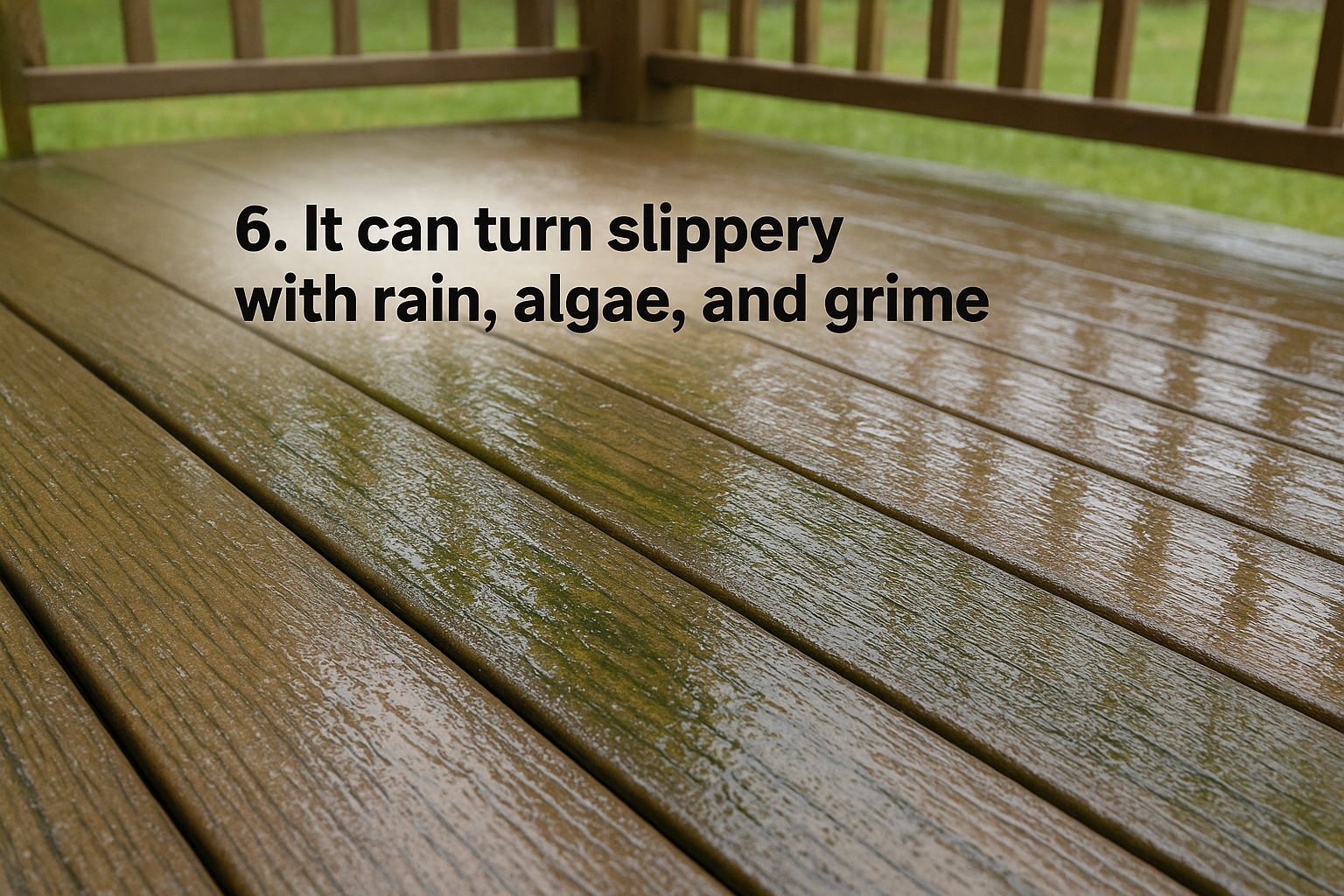
Composite boards have a smooth or lightly textured surface that works fine when dry but loses traction quickly when wet. Organic matter like leaves, pollen, and soil settle into the board's surface grain, and Malaysia's warm, humid conditions turn that debris into a breeding ground for algae and mold within weeks. The result is a thin, slick film that's barely visible but genuinely dangerous underfoot.
What it looks like on a real deck
After the first wet season, you'll notice green or black patches forming in shaded corners and between boards. The surface feels fine when dry, but becomes noticeably slippery after even light rain. Shaded sections under trees are usually the worst affected, as they stay damp longer between showers.
Regular cleaning prevents algae from bonding to the board surface and reduces slip risk significantly.
How to avoid it in Malaysia
Clean your deck with a composite-safe cleaner every three to four months, paying extra attention to shaded areas. If your deck layout includes sections with low airflow or permanent shade, choose boards with a deep embossed grain pattern, which holds traction better when wet than flat-finished alternatives.
7. Repairs can feel costly and hard to match
Repairs are one of the disadvantages of composite decking that only becomes clear after installation. Unlike timber, where you can sand back, re-stain, or replace boards with reasonably matched material from most hardware stores, composite boards are tightly tied to specific product lines that change regularly.
Why it happens
Composite manufacturers update their product ranges frequently, retiring colors and finishes as new collections replace older ones. The boards installed on your deck today may simply not be available three or five years from now when a section gets damaged. Even within the same product line, boards from a different production batch can show visible color variation against weathered originals on the same deck.
What it looks like on a real deck
A single cracked or stained board becomes a visible patch that stands out against the rest of the surface. Replacing one section with a newer batch of the same product often produces a two-tone effect that worsens over time as the new boards fade at a different rate than the surrounding established ones.
Buy extra boards from the same production batch during installation and store them flat and dry for future repairs.
How to avoid it in Malaysia
Keep your purchase receipts and product codes on file so you can source matching material quickly when needed. When budgeting for your deck, factor in a 10-15% board surplus from the original order to hold in reserve specifically for repairs.
Final checks before you commit
The disadvantages of composite decking are real, but none of them are deal-breakers if you go in prepared. What separates a deck that performs well for 20 years from one that disappoints within three is almost always decisions made before a single board gets installed: the design, the contractor, the board grade, and the budget.
Before you sign off on any project, run through these questions. Does your quote include a fully itemized subframe cost? Has your contractor installed composite decking in Malaysia's climate before? Does your design account for shade, drainage, and thermal expansion gaps? Are you buying from a brand that stocks replacement boards locally?
Getting these answers upfront costs nothing. Ignoring them can cost you significantly more to fix later. If you want a professional team to walk you through the right choices for your outdoor space, talk to the Konzept Garden team before you commit to anything.


