


Choosing the right decking material can make or break your outdoor living space. When it comes to composite decking vs wood, Malaysian homeowners face a decision that affects everything from upfront costs to years of maintenance ahead. Both options have loyal advocates, but the "best" choice depends entirely on your budget, lifestyle, and how much time you're willing to spend on upkeep.
Here's the reality: wood decking offers natural beauty and a lower initial price tag, while composite promises durability and minimal maintenance over its lifespan. But which one actually delivers better value in Malaysia's tropical climate? The answer isn't as straightforward as marketing materials might suggest.
At Konzept Garden, we've installed both materials across countless residential and commercial projects throughout Malaysia. This hands-on experience has given us clear insights into how each performs in real-world conditions. In this guide, we break down six key factors, covering the pros, cons, and true costs, so you can make a confident decision for your next outdoor project.
1. Get a deck plan from a landscape designer
Before you decide between composite or wood decking, you need a proper deck plan. Most homeowners jump straight into material selection without understanding how their choice affects the entire design. A qualified landscape designer evaluates your space, usage patterns, and structural requirements first, then recommends the material that actually works for your specific project. This approach saves you from costly redesigns and ensures your deck functions as intended for decades.
Why planning decides the right material
Your deck's purpose determines which material performs better in the long run. If you're building around a pool with constant water exposure and barefoot traffic, the material choice affects slip resistance, heat retention, and fastener corrosion. A designer identifies these constraints upfront and matches them to the right material properties. Without this assessment, you might install beautiful wood decking that warps within two years or composite boards that become unbearably hot in direct sun.
Professional planning reveals hidden structural needs that change your material budget and timeline before you commit.
How composite affects design and detailing
Composite decking comes in fixed board lengths and widths that limit your design flexibility. You'll face restrictions on custom curves, inlays, and intricate patterns because cutting composite creates exposed edges that look unfinished. Fascia boards, trim pieces, and color-matched fasteners add to your material list and installation complexity. The expansion and contraction rates of composite also require specific gap spacing that your designer must calculate based on Malaysia's temperature swings.
How wood affects design and detailing
Wood gives you more creative freedom for custom shapes and decorative elements, but it demands precise joinery and waterproofing details. Your designer needs to specify proper flashing, end-grain sealing, and drainage slopes to prevent water damage. Hardwood species like chengal or balau require pre-drilling for every screw to avoid splitting, which increases labor time and costs. The grain direction, knot placement, and board selection all affect the final appearance, so material waste runs higher than with uniform composite boards.
Cost impact and common budget traps
Many homeowners compare only the per-square-foot material costs when evaluating composite decking vs wood, but that's just the starting point. Composite requires specialized fasteners, specific substructure spacing, and matching trim components that add 20 to 30 percent to your quoted price. Wood needs immediate sealing, annual maintenance products, and potential board replacement within five to seven years depending on the species. Your designer should provide a total ownership cost projection, not just installation figures.
Questions to ask before you build
Ask your designer how each material handles joist spacing, load requirements, and local building codes in your area. Find out which fastening systems they recommend and why, since hidden fasteners cost more but deliver cleaner aesthetics. Question the maintenance schedule for both options and get specific product recommendations for cleaners and sealants. Most importantly, request photos of projects they completed three to five years ago so you can see how each material actually ages in Malaysia's climate.
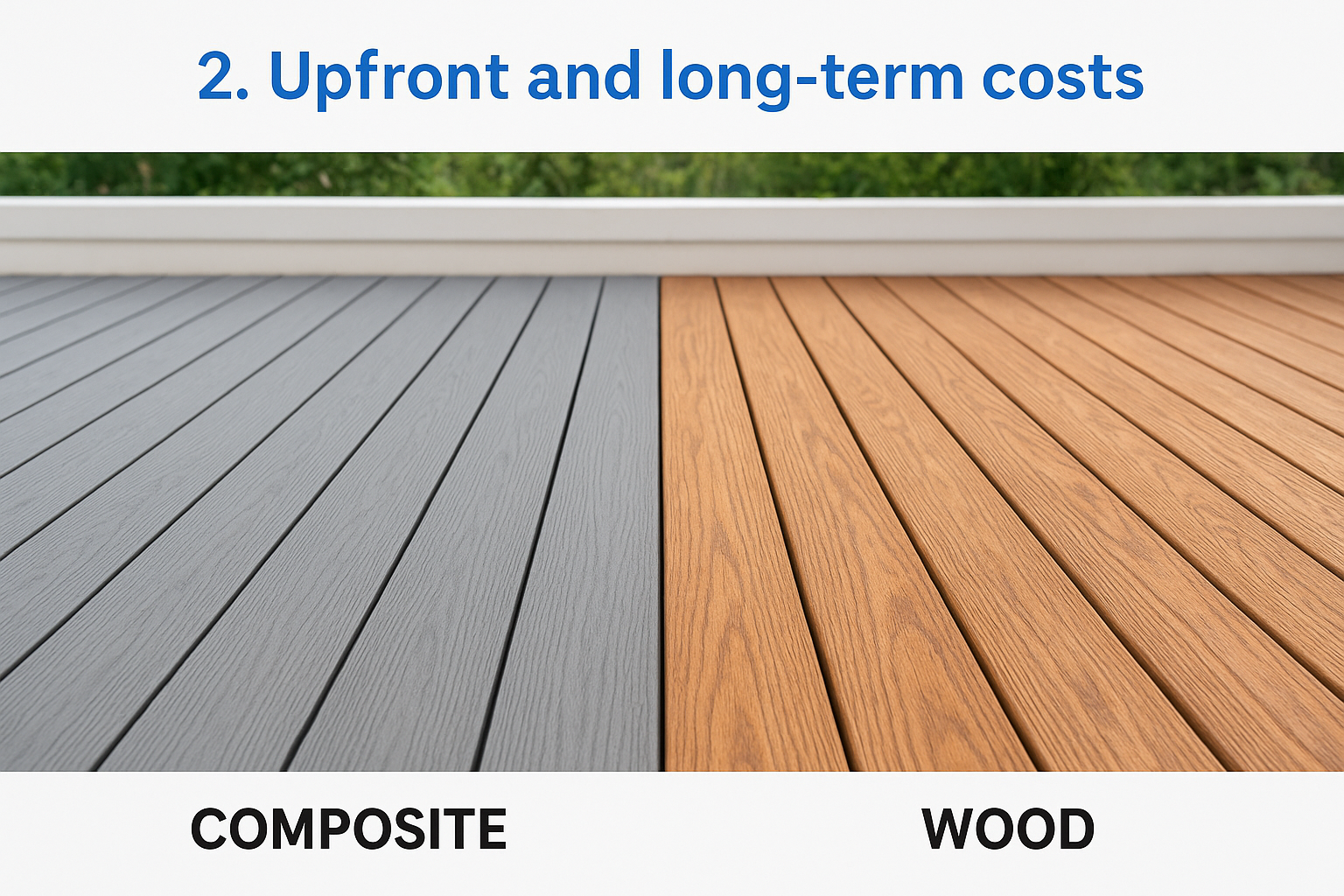
2. Upfront and long-term costs
The composite decking vs wood debate always circles back to money, but comparing only the initial material costs tells you nothing about actual value. You need to calculate the total ownership expense over your deck's expected lifespan, including installation, maintenance products, repairs, and eventual replacement. Most Malaysian homeowners discover their "cheaper" option becomes the expensive choice within five years when you factor in labor and recurring costs.
What drives price for both materials
Material costs fluctuate based on species selection, board quality, and current market availability. Composite pricing stays relatively stable because manufacturers control production, while wood prices swing wildly depending on logging regulations and import tariffs. Installation labor runs higher for composite because it requires specialized cutting tools and specific fastening techniques that take more time than traditional wood screwing.
Composite cost profile over time
You'll pay RM 80 to RM 150 per square foot for quality composite decking materials in Malaysia, plus installation costs that add another RM 40 to RM 60 per square foot. The upfront investment stings, but your annual maintenance costs drop to nearly zero after installation. You might spend RM 200 yearly on basic cleaning supplies, with no sanding, staining, or board replacement needed for 25 to 30 years.
Wood cost profile over time
Natural wood decking costs RM 30 to RM 80 per square foot for materials, depending on whether you choose treated softwood or tropical hardwood species. Installation runs RM 30 to RM 50 per square foot, giving you immediate savings. However, you'll spend RM 2,000 to RM 5,000 every two to three years on professional cleaning, sanding, and refinishing to maintain appearance and prevent rot.
Typical add-ons that change your total
Hidden costs include substructure upgrades, drainage systems, and proper waterproofing that prevent future damage. Composite demands aluminum or steel joists in high-moisture areas, while wood needs treated lumber framing. Both materials require proper flashing, ventilation gaps, and edge trim that add 15 to 25 percent to your base quote.
When each option makes financial sense
Choose composite if you plan to stay in your home beyond 10 years and value time over initial savings. Select wood when you need to minimize upfront costs or plan to renovate within five to seven years anyway.
Calculate your break-even point by dividing the price difference by annual maintenance costs to see which material wins financially.
3. Maintenance and cleaning
Understanding the real maintenance demands of composite decking vs wood separates marketing promises from daily reality. Manufacturers love the phrase "low maintenance," but what they mean varies dramatically between materials. Your actual time investment and recurring costs depend on how you use your deck, Malaysia's weather patterns, and your tolerance for natural aging versus pristine appearance.
What "low maintenance" really means
Low maintenance doesn't mean zero maintenance, regardless of which material you choose. Composite requires regular cleaning to prevent mold growth in shaded areas and periodic deep cleaning to remove embedded dirt from textured surfaces. Wood demands consistent sealing, immediate stain treatment, and proactive inspection for rot or insect damage. The difference lies in frequency and skill level, not whether you'll spend time maintaining your investment.
Composite upkeep and what can go wrong
You'll need to sweep debris weekly and wash composite boards every two to three months with soap and water to prevent mildew buildup. Scratches from furniture or heavy objects cannot be sanded out like wood, leaving permanent marks. Grease stains, rust from metal furniture, and tannin bleeding from nearby plants require specialized cleaners and immediate attention or they become permanent discoloration.
Wood upkeep and what can go wrong
Natural wood requires power washing and re-sealing every 18 to 24 months in Malaysia's climate to maintain protection against moisture and UV damage. Splinters appear as boards age, fasteners work loose from expansion cycles, and end grain checking creates entry points for water damage. Missing just one maintenance cycle accelerates deterioration that costs significantly more to repair than prevent.
Tools, products, and time you will spend
Composite maintenance needs a garden hose, soft brush, and mild detergent for regular cleaning, plus specialized composite cleaners for tough stains. Wood maintenance requires a pressure washer, orbital sander, staining equipment, and protective gear for refinishing work. Budget four to six hours yearly for composite care versus 15 to 20 hours every other year for proper wood maintenance.
Most homeowners underestimate wood maintenance time by half when calculating their actual commitment before installation.
Who should choose which based on lifestyle
Choose composite if you travel frequently, dislike manual labor, or want predictable low-level maintenance throughout the year. Select wood if you enjoy hands-on projects, have time for seasonal maintenance tasks, or prefer the natural aging process that develops character over time.
4. Durability in Malaysia's climate
Malaysia's tropical climate creates the ultimate stress test for outdoor materials. When evaluating composite decking vs wood, you need to understand how constant heat, heavy rainfall, and year-round humidity affect long-term performance. The material that looks perfect during installation might fail within three years if it cannot handle UV exposure, moisture cycling, and biological growth that thrive in our climate.
How sun, rain, and humidity affect decking
Direct sun exposure breaks down protective coatings and causes surface degradation through UV radiation that weakens material structure over time. Heavy monsoon rains saturate deck boards, then intense heat causes rapid drying that creates expansion and contraction cycles stressing every fastener point. High humidity between rain events prevents complete moisture evaporation, creating ideal conditions for mold spores and wood-boring insects to establish colonies in vulnerable areas.
Composite performance in wet and hot conditions
Composite boards resist moisture absorption better than wood, maintaining dimensional stability through wet and dry cycles without significant swelling or shrinking. Quality composite products include UV inhibitors that prevent color fading for 10 to 15 years in direct sunlight. However, lower-grade composite materials can experience surface chalking, and trapped moisture underneath boards creates mold growth if you skip proper ventilation gaps during installation.
Wood performance in wet and hot conditions
Natural wood absorbs moisture readily, causing boards to swell during rainy periods and shrink during dry spells that loosen fasteners and create gaps. Tropical hardwoods like chengal naturally resist decay and insect damage through inherent oils, while treated softwoods depend entirely on chemical preservatives that leach out over five to seven years. Sun exposure bleaches untreated wood to gray within months and breaks down surface fibers that become rough and splintered.
Hardwood species native to Southeast Asia typically outlast imported treated lumber by 10 to 15 years in Malaysian conditions.
Rot, mold, insects, and fastener concerns
Fungal rot attacks wood when moisture content exceeds 20 percent for extended periods, particularly at joist contact points and end grain cuts. Mold grows on both materials in shaded areas, but composite's textured surface traps organic debris that feeds mold colonies. Termites ignore composite completely but consume softwood framing beneath any deck surface. Fasteners corrode faster in coastal areas where salt spray accelerates metal deterioration regardless of your deck material choice.
How to extend lifespan with smarter specs
Specify aluminum or stainless steel fasteners instead of galvanized screws to eliminate rust staining and structural failure. Install your deck with minimum 6mm gaps between all boards to ensure airflow and prevent standing water. Apply end-grain sealer to every cut wood board immediately after cutting to block moisture entry points. Position your deck to maximize sun exposure and minimize shade that promotes biological growth on any surface material.
5. Comfort, heat, and safety underfoot
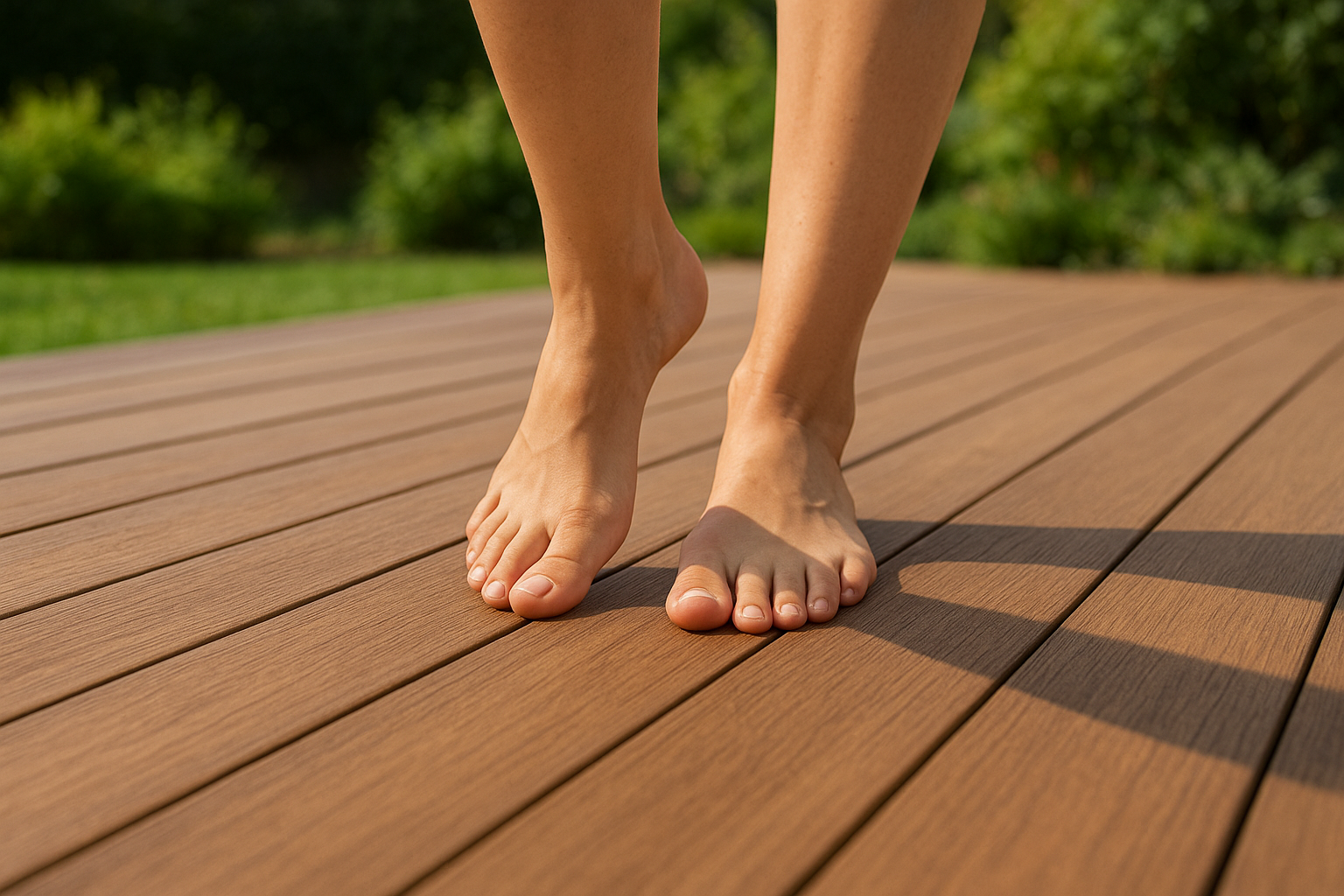
The daily experience of using your deck matters more than any specification sheet. When comparing composite decking vs wood, the way each material feels underfoot affects how often you actually use your outdoor space. Temperature extremes, surface texture, and slip resistance determine whether your family walks barefoot comfortably or avoids the deck during peak sun hours.
How each surface feels in daily use
Composite boards create a consistent, uniform surface without natural grain variations or texture changes across the deck. The synthetic material feels smooth but slightly rubbery compared to wood's organic texture. Wood delivers a natural warmth and authentic feel that many homeowners prefer, though the surface texture varies between species and ages differently as the boards weather.
Composite heat and slip considerations
Direct sun exposure makes composite surfaces dangerously hot to touch, reaching temperatures 20 to 30 degrees Celsius higher than ambient air. You cannot walk barefoot on most composite decks between 11 AM and 3 PM without discomfort or risk of burns. The textured surface provides adequate slip resistance when dry but becomes slippery when wet or covered with organic debris like leaves or moss.
Wood splinters, checking, and grip
Natural wood develops splinters and surface checking as it ages, creating hazards for bare feet that worsen without regular maintenance. However, wood surfaces stay significantly cooler than composite in direct sunlight because the natural material does not retain heat as intensely. Wet hardwood offers superior grip compared to composite, though softwoods become slippery when algae grows on shaded sections.
Wood's natural heat dissipation makes it the only practical choice for decks where barefoot traffic occurs during midday hours.
Pool decks, barefoot traffic, kids, and pets
Pool surrounds demand constant barefoot use where surface temperature and slip resistance become critical safety factors. Children running and playing need textured surfaces that prevent falls when wet, while pet claws can scratch softer composite materials. Wood handles pool splash zones better thermally but requires more frequent refinishing to prevent splinters around high-traffic entry points.
Design choices that improve comfort and safety
Install your deck in partially shaded areas or add pergolas to reduce surface temperatures on composite materials. Choose lighter composite colors that reflect rather than absorb heat if you must install in full sun. For wood decks, apply anti-slip treatments to high-traffic zones and maintain proper sealing schedules to prevent surface deterioration that creates splinter hazards.
6. Looks, sustainability, and resale value
First impressions drive home value, and your deck's appearance influences buyer decisions within seconds of stepping into your backyard. The composite decking vs wood debate extends beyond function to include aesthetic appeal, environmental impact, and how each material affects your property's market value. These factors determine whether your deck investment pays dividends when you sell or becomes a liability that buyers negotiate downward.
What homeowners notice first
Your deck's color consistency and surface condition create immediate visual impact that shapes property perception. Buyers scan for fading, staining, or visible wear patterns that signal deferred maintenance or poor material quality. Clean lines and uniform appearance suggest professional installation and proper care, while uneven boards or surface degradation raises red flags about underlying structural issues.
Composite look, color stability, and realism
Modern composite products mimic wood grain patterns convincingly, though close inspection reveals the manufactured repetition. The material maintains its original color for 10 to 15 years before gradual fading occurs, eliminating the weathered gray appearance of untreated wood. However, some homeowners find composite's plastic-like sheen less appealing than authentic wood character.
Wood character, aging, and refinishing
Natural wood develops unique patina and texture variations that many consider beautiful aging rather than deterioration. You can restore original appearance through sanding and refinishing multiple times throughout the deck's life. Tropical hardwoods gain rich color depth as they weather, though maintaining this look requires consistent sealing schedules.
Wood's ability to be refinished offers aesthetic flexibility that composite materials cannot match over decades of ownership.
Environmental trade-offs and end-of-life
Composite manufacturing consumes significant energy and creates plastic waste, though some brands incorporate recycled materials. Wood represents a renewable resource when sourced responsibly, biodegrades naturally, and stores carbon throughout its lifespan. Neither option offers perfect environmental credentials.
Which option fits your home style and goals
Match composite to modern architectural styles where clean lines and consistent color suit the overall design. Choose wood for traditional or tropical aesthetics where natural materials enhance your home's character and resale appeal to buyers seeking authentic outdoor spaces.
Next steps
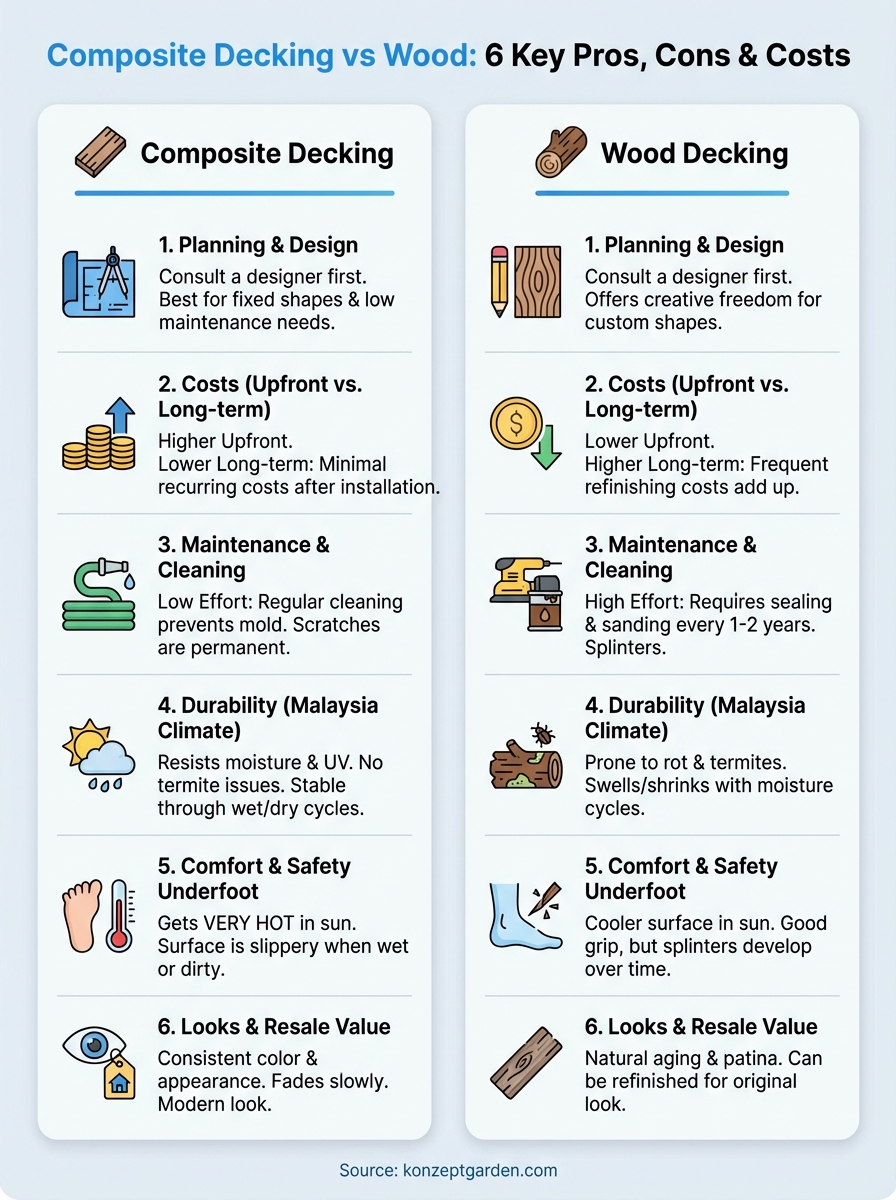
Your decision between composite decking vs wood depends on your specific priorities and how you plan to use your outdoor space. If you value minimal maintenance and long-term durability, composite justifies its higher upfront cost through decades of low-effort ownership. Choose wood when you need lower initial investment or prefer the authentic character that only natural materials deliver.
The smartest move you can make right now is getting a professional assessment of your property before committing to either material. A qualified landscape designer evaluates your space, identifies structural requirements, and recommends the material that actually works for your climate zone and usage patterns. This upfront planning prevents costly mistakes and ensures your deck performs as expected for years ahead.
Ready to start your outdoor transformation? Contact our landscape design team for a free consultation and detailed quotation tailored to your specific project needs. We'll help you make the right material choice and create a deck that enhances your home's value and lifestyle.