A healthy garden starts with healthy trees, and healthy trees need regular care. If you've ever wondered what is tree pruning, the short answer is this: it's the selective removal of specific branches to improve a tree's structure, health, and appearance. But there's much more to it than just cutting branches.
Done correctly, pruning prevents disease, encourages new growth, and keeps your property safe from falling limbs. Done wrong, it can stress or even kill a tree. That's why understanding the fundamentals matters before you pick up a saw.
At Konzept Garden, we've helped Malaysian homeowners and businesses create outdoor spaces where every element, including trees, serves a purpose. This guide covers the benefits of tree pruning, the methods professionals use, the types of cuts involved, and when to schedule your pruning for the best results.
Why tree pruning matters for health and safety
You protect more than just aesthetics when you prune your trees regularly. Proper pruning removes diseased, damaged, or dead branches before they become entry points for pests and pathogens. In Malaysia's humid climate, these wounds can quickly harbor fungal infections that spread throughout the tree. Removing problem areas early stops the damage from reaching healthy wood and keeps your tree thriving for decades.
Disease Prevention and Airflow
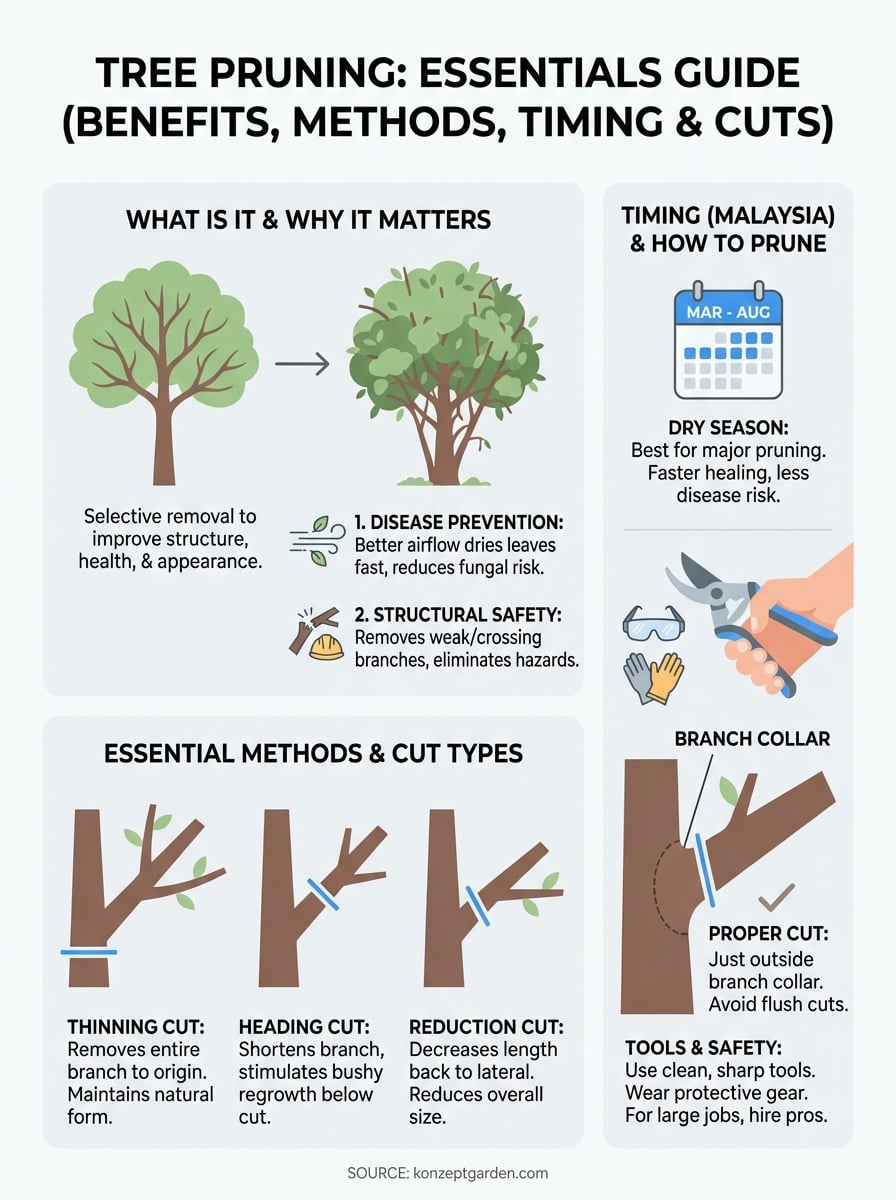
Trees need good air circulation to stay healthy, especially during our monsoon seasons. Dense, unpruned canopies trap moisture around leaves and branches, creating perfect conditions for fungal diseases like anthracnose and powdery mildew. When you thin out crowded branches, you allow air to move freely through the canopy. Better airflow dries leaves faster after rain, which dramatically reduces disease pressure.
Think of it like opening windows in a stuffy room: the movement prevents problems before they start. Pruning also improves light penetration, which strengthens the inner branches and prevents the weak, spindly growth that comes from too much shade.
Regular pruning improves air circulation by up to 40%, reducing the risk of fungal infections in tropical climates.
Structural Integrity and Safety
Weak or poorly attached branches pose serious risks to your property and family. Crossing branches rub against each other during windy conditions, wearing away bark and creating wounds. These weak points can fail without warning, especially during storms. By pruning branches with narrow attachment angles or removing deadwood, you eliminate hazards before they cause damage.
What is tree pruning if not insurance against these preventable accidents? Young trees benefit most from early structural pruning, which establishes a strong framework that lasts for life. It's a proactive step that protects both your investment in landscaping and the people who use your outdoor spaces daily.
Tree pruning vs tree trimming and common goals
Many people use "pruning" and "trimming" interchangeably, but they serve different purposes in tree care. Trimming focuses on shaping and controlling growth, typically for hedges, shrubs, or maintaining a tree's appearance. You trim for aesthetics, cutting back overgrown branches to keep things tidy. Pruning addresses health and structure, removing specific branches to improve the tree's long-term vitality and safety. When someone asks what is tree pruning versus trimming, the answer lies in intent: one is cosmetic, the other is therapeutic.
Understanding the Key Differences
The tools and timing also differ between these practices. Trimming happens more frequently, often several times per growing season, using hedge shears or light-duty equipment. Pruning requires heavier tools like loppers, pruning saws, and pole pruners because you're removing larger branches. Arborists prune strategically, considering branch angles, growth patterns, and the tree's natural form. Trimming follows simpler guidelines about shape and boundary control.
Professional arborists use pruning to solve specific problems, while trimming maintains general appearance and growth boundaries.
Common Objectives Both Practices Share
Despite their differences, both practices aim to improve your landscape. They both enhance safety by removing branches near power lines, buildings, or walkways. Both encourage plant vigor by eliminating excess growth that drains resources from productive areas. Your trees look better, grow stronger, and contribute more effectively to your property's appeal when you apply the right technique at the right time.
Pruning methods and the main cut types
Understanding what is tree pruning means recognizing that not all cuts serve the same purpose. Arborists use specific techniques based on what they want to achieve, whether that's improving structure, reducing size, or removing hazards. Each method requires precise cuts at strategic locations to promote healing and minimize stress on the tree. The approach you choose depends on the tree's age, species, and the problems you're addressing.
The Three Essential Cutting Techniques
Thinning cuts remove entire branches back to their point of origin, improving light penetration and air movement without changing the tree's natural shape. You make these cuts just outside the branch collar, the swollen area where the branch meets the trunk. Heading cuts shorten branches by cutting partway along their length, which stimulates dense growth below the cut. Reduction cuts decrease a branch's length by removing it back to a lateral branch at least one-third the diameter of the section you're removing.
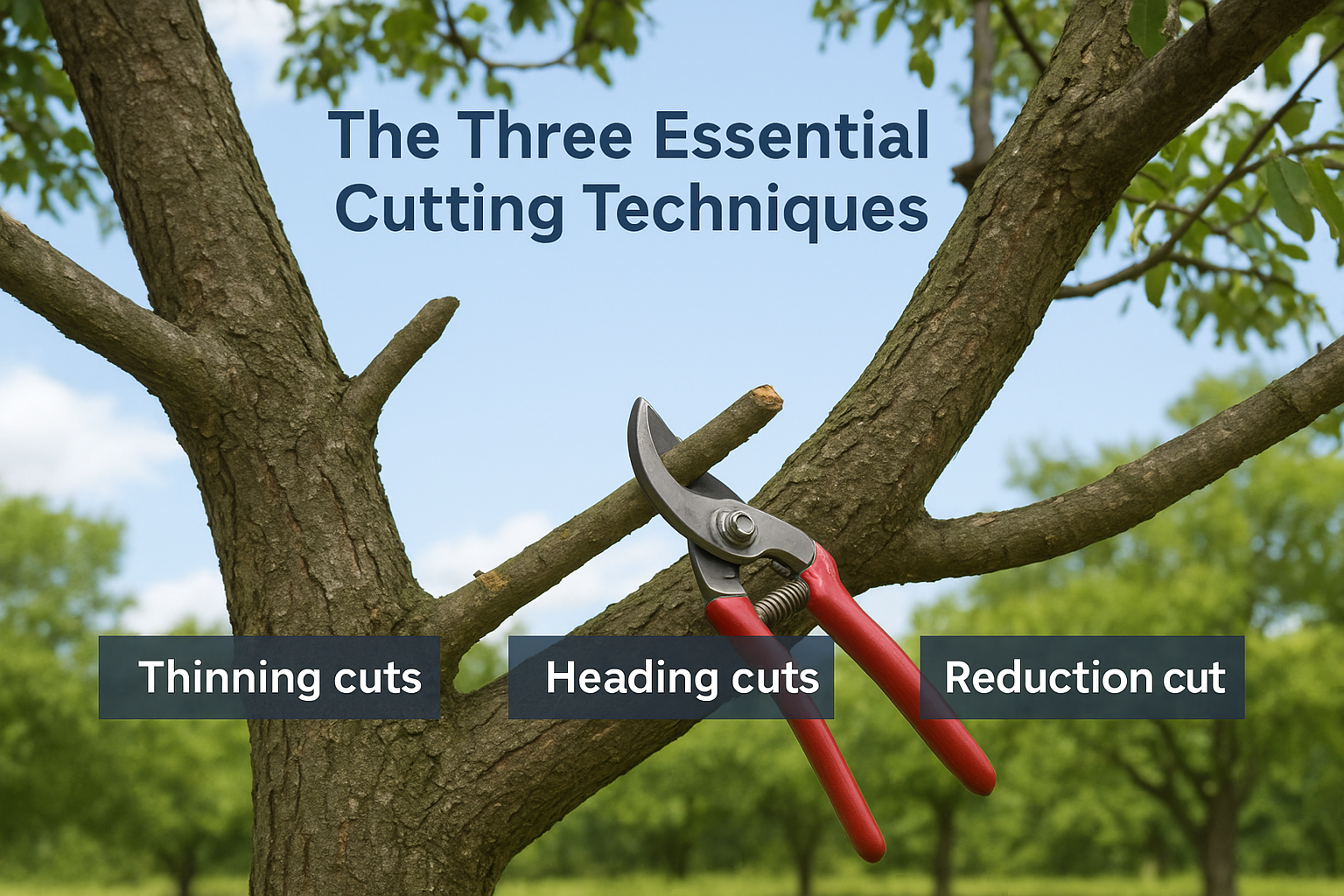
Thinning cuts maintain natural form while heading cuts trigger bushy regrowth, making technique selection critical for your desired outcome.
Crown Management Approaches
Crown cleaning removes dead, diseased, and weakly attached branches throughout the canopy. Crown raising eliminates lower branches to provide clearance for vehicles, pedestrians, or structures underneath. Crown reduction decreases the overall size by cutting back to lateral branches, useful when trees outgrow their space. Each approach serves specific landscape needs while preserving the tree's health and structural integrity.
When to prune in Malaysia for best results
Timing determines whether your pruning efforts help or harm your trees. Malaysia's tropical climate creates unique challenges that differ from temperate regions where traditional pruning calendars were developed. Understanding what is tree pruning also means knowing when to do it, because the wrong season can stress trees or invite disease into fresh cuts that won't heal properly in humid conditions.
Dry Season Advantages for Most Trees
The dry months from March to August offer the best window for major pruning work in most Malaysian regions. Trees heal faster when rainfall stays minimal because exposed cuts don't trap moisture that encourages fungal growth. You also get better access to the canopy during dry weather, and the reduced foliage makes it easier to see the tree's structure. Pruning during this period allows wounds to seal before the monsoon brings heavy rains and high humidity.
Pruning during Malaysia's dry season reduces disease risk by up to 60% compared to wet season cuts.
Species-Specific Timing Considerations
Flowering trees require different timing based on when they bloom. You prune trees that flower in spring right after their blooms fade, while those that flower in summer get pruned during late winter or early spring. Fruit trees benefit from pruning after harvest to avoid removing productive wood. Some tropical species grow year-round and tolerate pruning anytime, but even these respond better when you avoid the wettest months. Check your specific tree species before scheduling major work.
How to prune correctly and safely at home
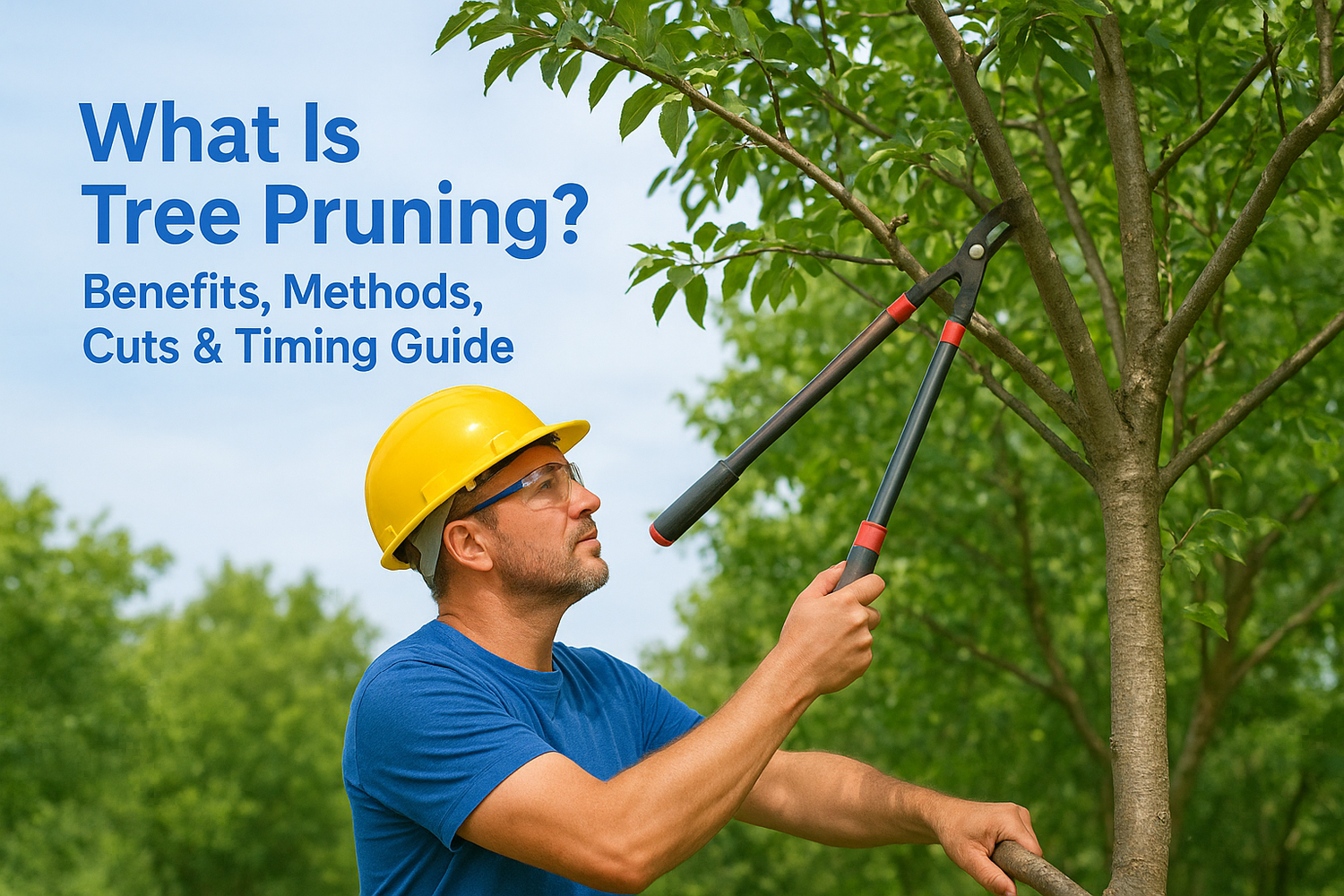
Most homeowners can handle light pruning work themselves if they follow proper techniques and safety protocols. Understanding what is tree pruning means knowing your limits: you should only tackle branches you can reach from the ground or a stable step ladder, typically those under 5 centimeters in diameter. Leave large branches, high work, and trees near power lines to certified arborists who have the training and equipment to handle dangerous situations safely.
Essential Tools and Safety Equipment
Start with clean, sharp tools that make smooth cuts rather than ragged tears that invite disease. You need bypass pruning shears for branches up to 2 centimeters, loppers for 2 to 5 centimeters, and a pruning saw for anything larger. Wear safety glasses to protect your eyes from falling debris, and use thick gloves to prevent blisters and cuts from rough bark or thorns.
Sharp, properly maintained tools reduce healing time by making clean cuts that seal faster than ragged wounds.
Basic Cutting Technique
Position your cut just outside the branch collar, the slight swelling where the branch meets the trunk or parent limb. You avoid cutting flush against the trunk because that removes protective tissue the tree needs for proper healing. Cut at a slight angle to prevent water from pooling on the wound surface. For branches over 3 centimeters, use the three-cut method: undercut first, then top cut further out, and finally remove the stub at the collar.
Next steps for your trees
Now you understand what is tree pruning and why it matters for your landscape's health and safety. You've learned the methods, timing, and basic techniques that keep trees strong and beautiful in Malaysia's tropical climate. The question becomes: what do you do with this knowledge?
Start by walking through your property and identifying trees that need attention. Look for dead branches, crossing limbs, or areas where the canopy has become too dense. Small jobs you can handle yourself, but remember that larger trees and complex situations require professional expertise.
At Konzept Garden, we approach every landscape with the same care we bring to our award-winning designs. Our team understands Malaysian trees and how proper pruning fits into creating outdoor spaces that thrive year-round. Whether you need help with a single overgrown tree or want to transform your entire garden, contact our landscape experts to discuss your project and get a free quotation.