


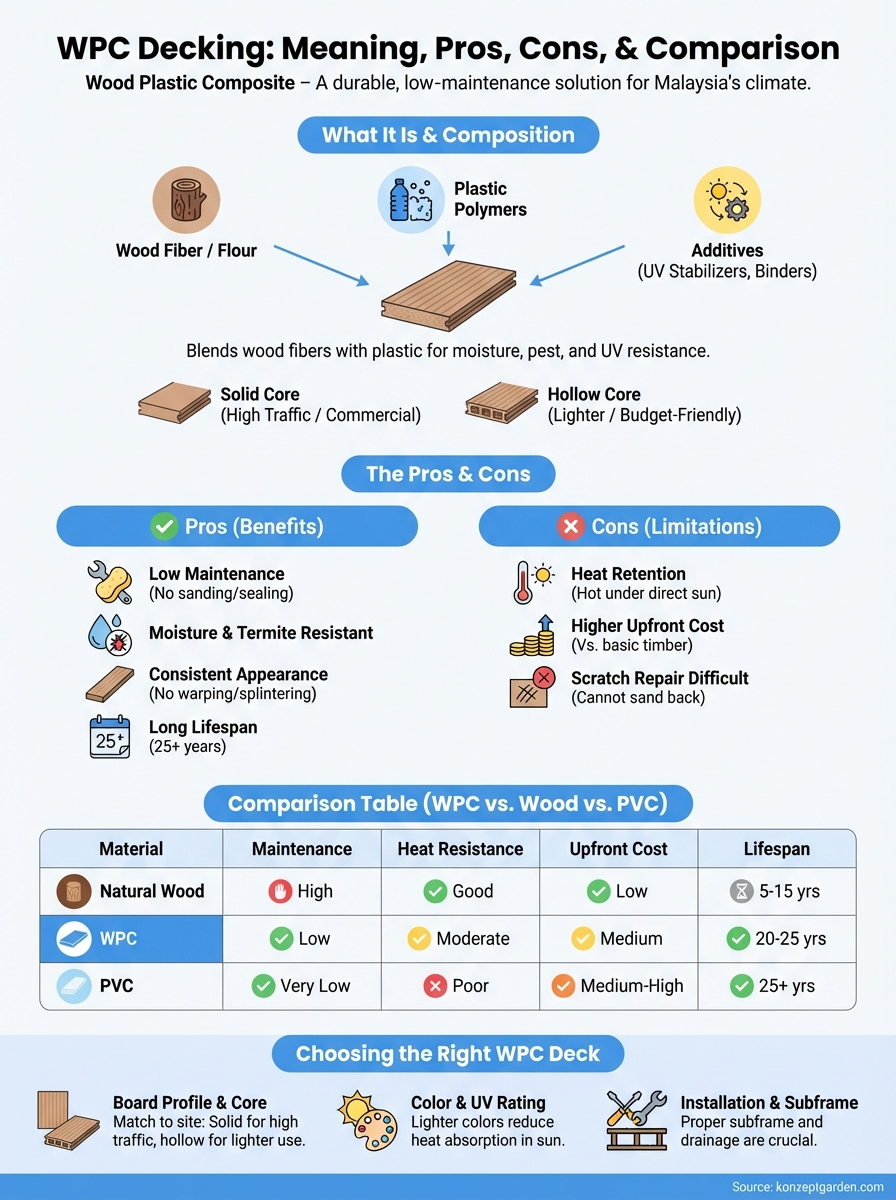
If you've been researching outdoor decking options for your home or commercial property in Malaysia, you've probably come across the term "WPC decking." But what does WPC decking meaning actually come down to? WPC stands for Wood Plastic Composite, a manufactured board that blends wood fibers with plastic polymers to create a decking material built for durability and low maintenance.
At Konzept Garden, we work with WPC decking regularly across our landscape design projects, from residential patios in KL to poolside decks for commercial properties. It's one of the materials we recommend most often in Malaysia's hot and humid climate, where traditional timber decking tends to warp, rot, or demand constant upkeep. Our hands-on experience with this material gives us a practical perspective on where it shines, and where it falls short.
This article breaks down everything you need to know: what WPC decking is made of, its pros and cons, realistic cost expectations in Malaysia, and how it stacks up against natural wood. By the end, you'll have enough clarity to decide whether WPC is the right fit for your outdoor space.
Why WPC decking matters
Decking material choice has a direct impact on how long your outdoor space lasts and how much time and money you spend maintaining it. Understanding wpc decking meaning goes beyond a simple definition. It helps you make a smarter decision when planning a garden, pool deck, or outdoor living area, especially when you're investing in a permanent structure that needs to perform for years.
Malaysia's climate puts decking to the test
Malaysia's weather is relentless. With high humidity levels year-round and heavy rainfall that can stretch for months, outdoor materials face constant stress. Traditional timber absorbs moisture, which leads to warping, splitting, and rot within a few years without regular sealing and treatment. WPC decking resists this moisture cycle because its plastic component forms a barrier against water absorption, making it significantly more stable in tropical conditions.
In Malaysia's climate, a decking material that cannot handle moisture will fail faster than you expect. The replacement cost often exceeds what you would have spent on a better material upfront.
The shift away from timber
Property owners and landscape designers across Malaysia have steadily moved toward WPC decking because maintenance costs for natural wood add up quickly. Timber decks typically need re-sealing every one to two years, plus periodic sanding and treatment to prevent insect damage. WPC boards, by contrast, need little more than occasional cleaning with water and mild soap to stay in good shape.
This shift also reflects a change in priorities among homeowners. More people now want outdoor spaces that look great without demanding constant attention. For busy households or commercial properties where scheduled maintenance downtime is not practical, WPC decking fits that expectation well. It performs without the ongoing effort that timber requires.
What WPC decking is made of
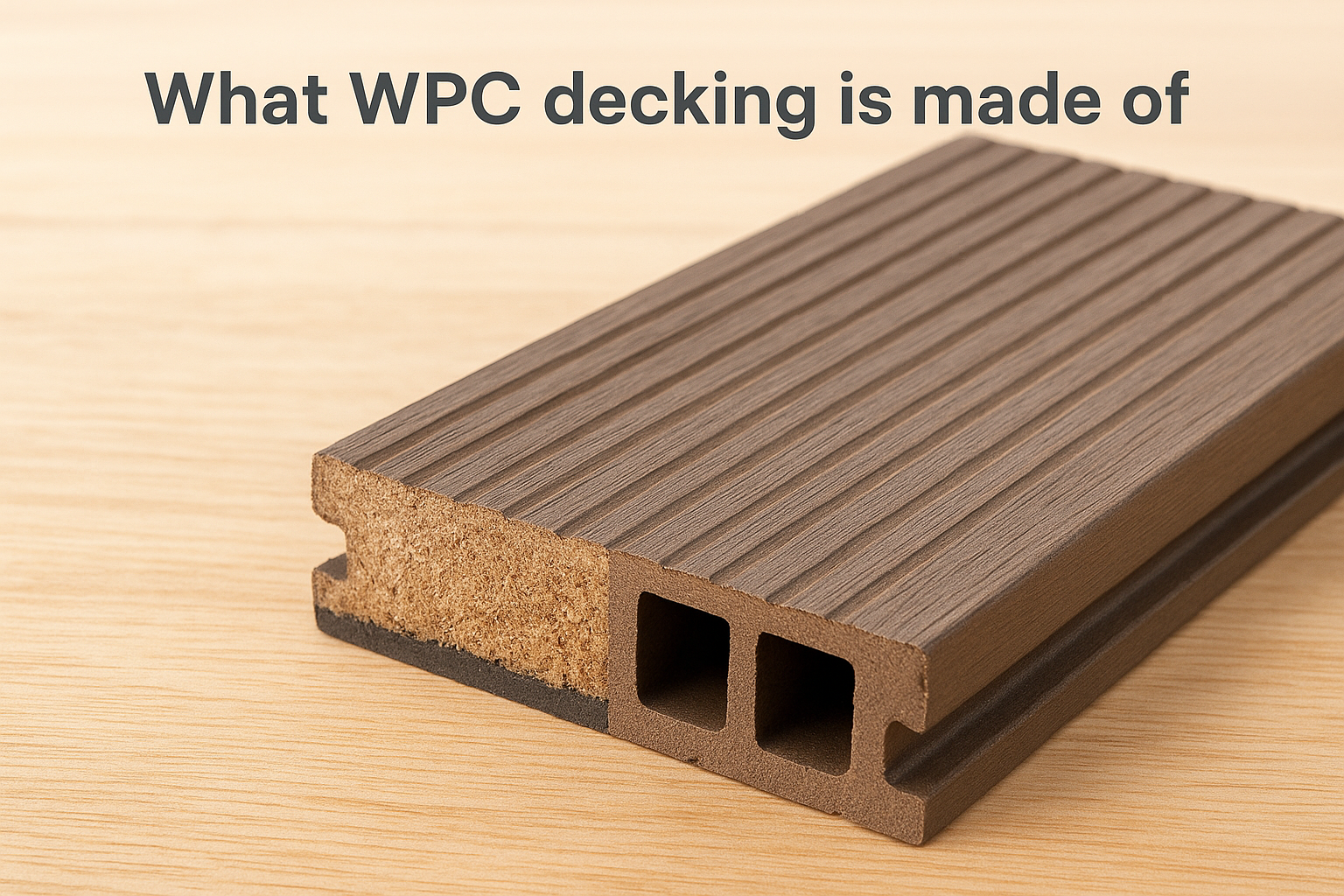
Understanding the wpc decking meaning starts with knowing what goes into each board. WPC combines wood fiber or wood flour (often sourced from sawmill offcuts or recycled wood waste) with thermoplastic polymers. Manufacturers blend these two core materials with binding agents and UV stabilizers to produce a consistent, durable board that holds up under outdoor conditions.
The ratio of wood to plastic
The wood-to-plastic ratio inside a WPC board typically falls between 50/50 and 70/30, depending on the manufacturer and intended use. A higher wood content gives the board a more natural texture and appearance, while a higher plastic content improves water resistance and reduces expansion under heat.
Common plastic types used in WPC boards include:
- Polyethylene (PE)
- Polypropylene (PP)
- Polyvinyl chloride (PVC)
The ratio matters for your specific setting. Boards with more plastic content perform better around pools or in areas with direct sun exposure in Malaysia.
Surface and core construction
Most WPC boards come in two build types: solid core and hollow core. Solid boards handle heavy foot traffic and feel denser underfoot, making them a strong choice for commercial decks or high-use residential areas. Hollow core boards are lighter and easier to install, which suits more budget-conscious or smaller residential projects.
Pros and cons of WPC decking
Understanding the full wpc decking meaning requires looking at both sides of the material. WPC performs well in many scenarios, but it has genuine limitations you need to weigh before committing to a project.
What WPC does well
WPC decking holds up against moisture, UV exposure, and termites, three of the biggest threats to outdoor materials in Malaysia. You get a surface that resists staining, needs minimal upkeep, and stays stable through seasonal weather changes without resealing or sanding every year.
A WPC deck installed and maintained correctly can last 25 years or more, making it a sound long-term investment for most properties.
Key advantages include:
- Low maintenance: no sanding, sealing, or treating required
- Consistent appearance: no warping or splintering over time
- Termite resistance: plastic content deters insects naturally
- Slip-resistant surface options available for wet areas like pool decks
Where WPC falls short
WPC has real drawbacks you should not overlook. Heat retention is a common complaint in Malaysia, since WPC boards get uncomfortably hot underfoot on sunny afternoons. The upfront material cost also runs higher than basic treated timber.
Common limitations to keep in mind:
- Surface heat: boards absorb heat quickly under direct sun
- Higher initial cost compared to basic treated timber
- Scratch repair is difficult: unlike solid wood, you cannot sand WPC back
WPC decking vs wood, composite, and PVC
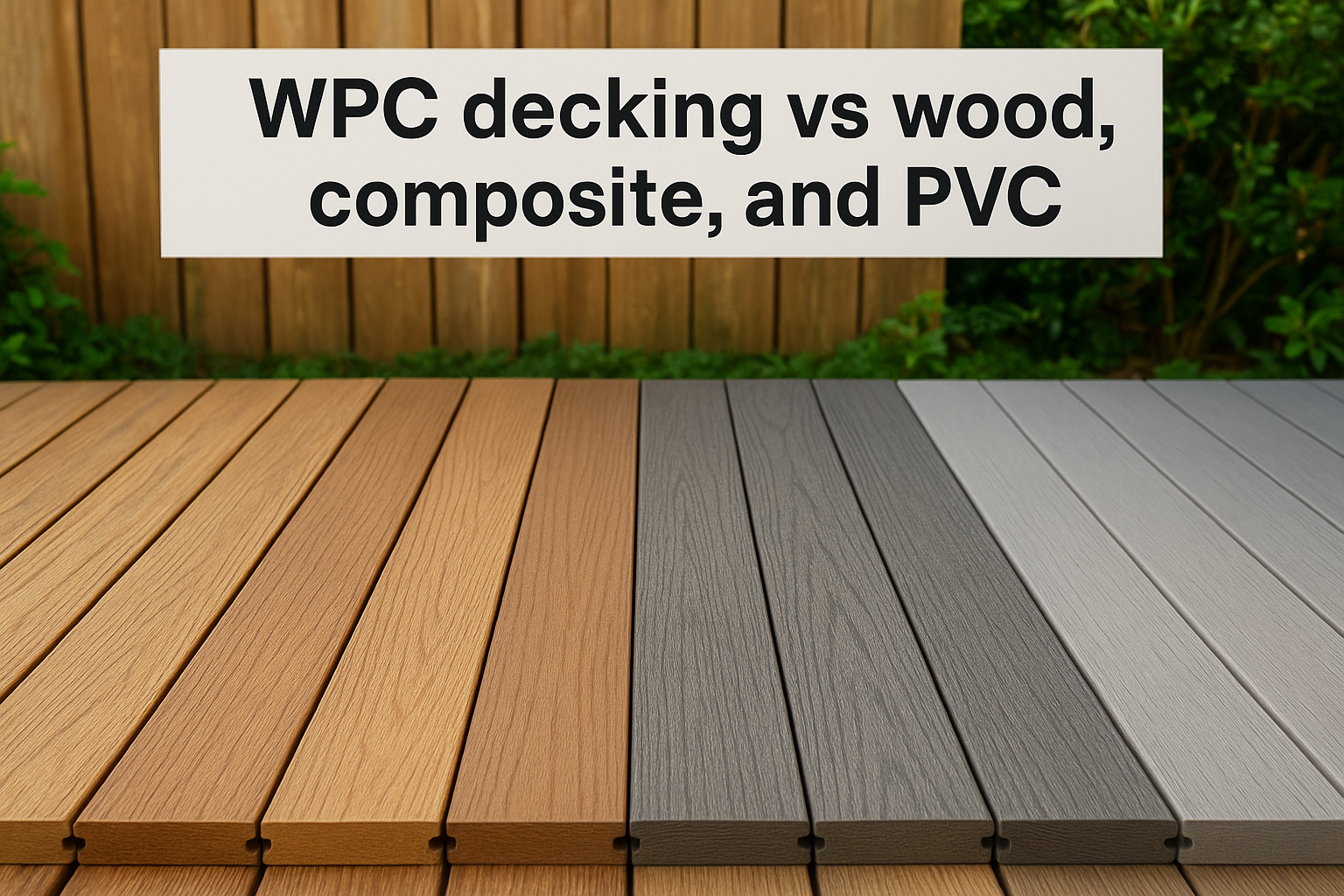
Getting the wpc decking meaning straight matters most when you're comparing it against your other options. WPC sits between natural timber and pure PVC on almost every performance measure, which makes it a reliable middle ground for most Malaysian outdoor projects. Understanding where each material wins helps you commit to the right choice for your specific site and budget.
How each material measures up
Each material has a different strength, and your project conditions should drive the final call. WPC resists moisture and pests better than timber, but PVC goes further on both fronts since it contains no wood fiber at all. Natural wood delivers better aesthetics at a lower upfront cost, but demands regular maintenance that adds up fast in Malaysia's humid climate.
If long-term cost matters more than upfront price, WPC consistently outperforms timber when you factor in maintenance and replacement cycles.
| Material | Maintenance | Heat resistance | Upfront cost | Lifespan |
|---|---|---|---|---|
| Natural wood | High | Good | Low | 5-15 years |
| WPC | Low | Moderate | Medium | 20-25 years |
| PVC | Very low | Poor | Medium-High | 25+ years |
How to choose and plan a WPC deck
Once you understand wpc decking meaning and its trade-offs, the next step is translating that knowledge into a practical plan for your specific site. Your first decision should be board profile and core type: choose solid core boards for high-traffic zones like pool decks or entertainment areas, and hollow core boards for smaller residential patios where weight and cost matter more.
Match the board spec to your site conditions
Malaysia's sun exposure varies significantly depending on whether your deck faces direct afternoon sun or sits under shade. For fully exposed areas, prioritize boards with higher UV stabilizer content and lighter color tones to reduce heat absorption. Darker boards absorb more heat, which becomes a real problem on barefoot-friendly surfaces like pool decks.
Choosing the right board color and UV rating upfront prevents surface temperature complaints after installation.
Your budget should also factor in installation hardware and subframe costs, not just the boards themselves. WPC decking requires a proper subframe, a drainage gap between boards, and the right fasteners to perform as expected. Work with a landscape professional to confirm your site drainage and structural support before any boards go down.
Key takeaways
The full wpc decking meaning comes down to one core idea: a material that trades higher upfront cost for significantly lower long-term effort. WPC boards blend wood fiber and plastic polymers to produce a surface that resists moisture, pests, and UV damage without the constant maintenance that natural timber demands in Malaysia's humid climate.
Your best results come from matching board specs to your site conditions: solid core for high-traffic areas, lighter colors for sun-exposed decks, and a proper subframe to support drainage and structural performance. WPC sits in a practical middle ground between timber and pure PVC, making it a reliable choice for most residential and commercial outdoor projects across Malaysia.
If you're planning a new deck and want professional guidance on materials, layout, and implementation, the team at Konzept Garden is ready to help. Talk to our landscape specialists and get a free quotation for your project today.


