
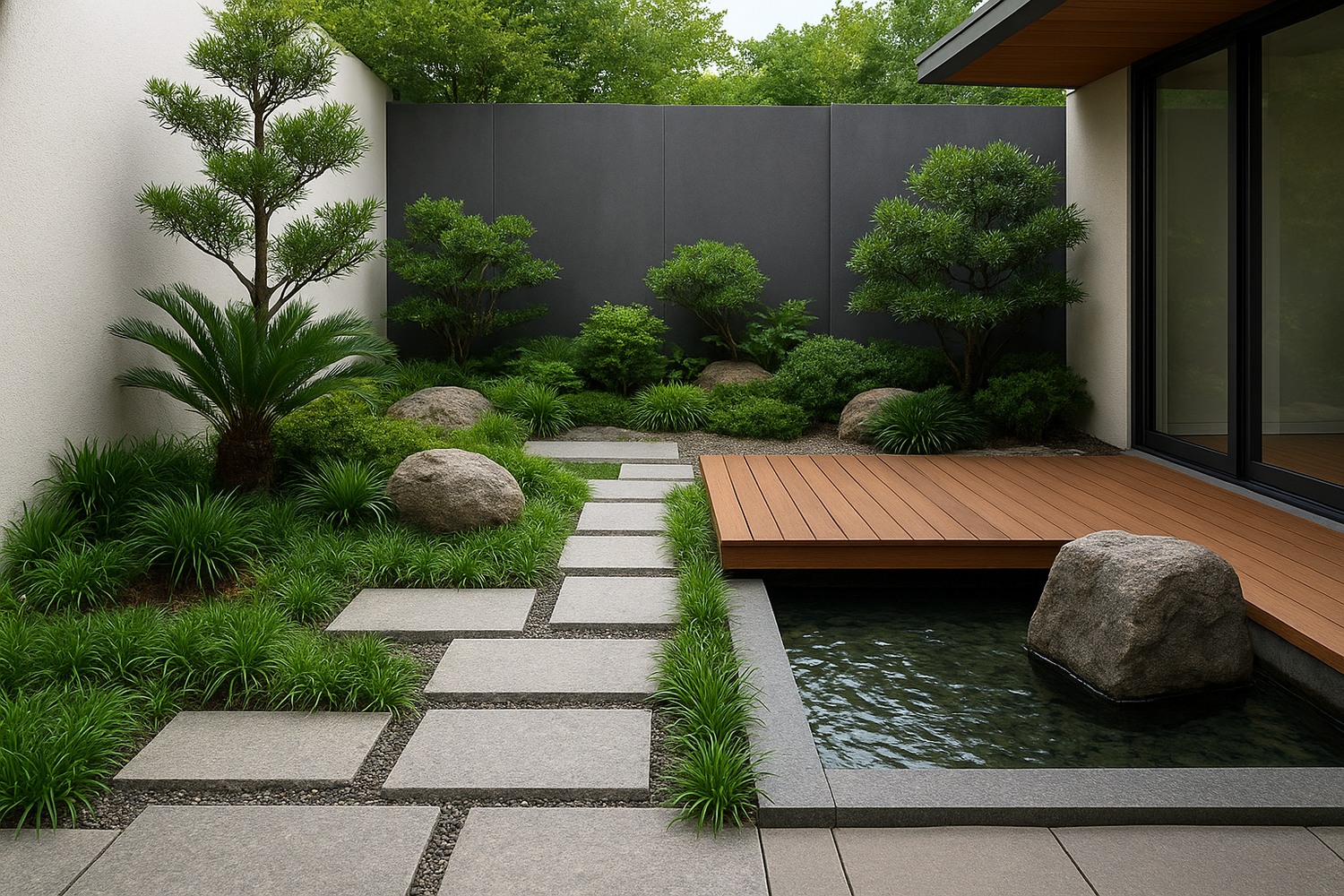
There's something deeply appealing about a garden that feels both calm and intentional, where every stone, plant, and pathway serves a purpose. That's exactly what modern Japanese garden design achieves. It takes centuries-old principles like asymmetry, natural materials, and restrained planting, then adapts them for contemporary homes and lifestyles. The result is an outdoor space that looks striking without trying too hard.
But pulling it off requires more than scattering a few rocks and planting some bamboo. A well-designed Japanese-inspired garden balances negative space with texture, clean lines with organic forms. It demands an understanding of how traditional elements, water features, moss, gravel patterns, work together in a smaller or more modern setting, which is especially relevant for properties across Malaysia where outdoor space varies widely.
At Konzept Garden, we've designed landscapes that draw on these exact principles, blending Japanese aesthetics with tropical conditions to create gardens that feel authentic and livable. In this guide, we break down the core ideas, essential elements, and layout approaches you need to plan your own modern Japanese-inspired garden, whether you're starting from scratch or rethinking an existing space.
Why modern Japanese garden design works
Japanese garden design has survived for over a thousand years because it works on a psychological level, not just a visual one. The principles behind it, controlled simplicity and deliberate composition, create spaces that feel restful rather than busy. When you apply these ideas to a modern home, you get a garden that doesn't compete with the architecture. It complements it.
It removes visual noise
Most residential gardens fail for one reason: too much going on. Homeowners add plants without a plan, furniture without scale, and features without intention. Modern Japanese garden design solves this by treating empty space as a feature, not a gap to fill. Negative space, whether it's a raked gravel bed, a blank stone surface, or an unplanted ground cover area, gives your eye somewhere to rest.
The most powerful element in a Japanese-inspired garden is often what you leave out.
That restraint is hard to achieve without guidance and planning. But once you understand that fewer, better-chosen elements create more visual impact than a packed planting scheme, the whole approach makes intuitive sense. Your garden becomes somewhere you actually want to sit in, not just something you maintain on weekends.
It adapts well to small spaces
Many Malaysian homes, whether terraced houses, condominiums, or semi-detached properties, have limited outdoor areas. Japanese garden principles were actually developed with compact spaces in mind. Traditional Japanese courtyards, called tsubo-niwa, were often just a few square meters. Designers used scale, layering, and focal points to make small areas feel considered and complete rather than cramped.
You don't need a sprawling backyard to apply these ideas. A narrow side passage, a small back garden, or even a balcony can hold a well-structured Japanese-inspired layout. The key is working with what you have rather than trying to force a design concept that doesn't fit your available footprint.
It suits Malaysia's outdoor lifestyle
Malaysian homeowners spend real time outdoors, especially in covered terrace areas, garden pavilions, or poolside spaces. Japanese garden design aligns naturally with this because it prioritizes usable, comfortable outdoor zones rather than purely decorative plantings you admire only from inside. Elements like stepping stone paths, timber decking, and structured planting beds create defined spaces for both activity and quiet relaxation.
The tropical climate does present some challenges, particularly around plant selection and material durability. However, the underlying design framework translates well. Natural materials like stone, timber, and water features perform reliably in Malaysia's heat and humidity, and many traditional Japanese plants have tropical equivalents that carry the same aesthetic weight without struggling against the conditions.
Core principles and must-have elements
Understanding a few key principles makes modern Japanese garden design far easier to execute. These ideas shape every decision you make, from where you place a rock to how you route a stepping stone path. Get them right and your garden will feel coherent; ignore them and even the best individual elements will look disconnected.
Asymmetry and the rule of odd numbers
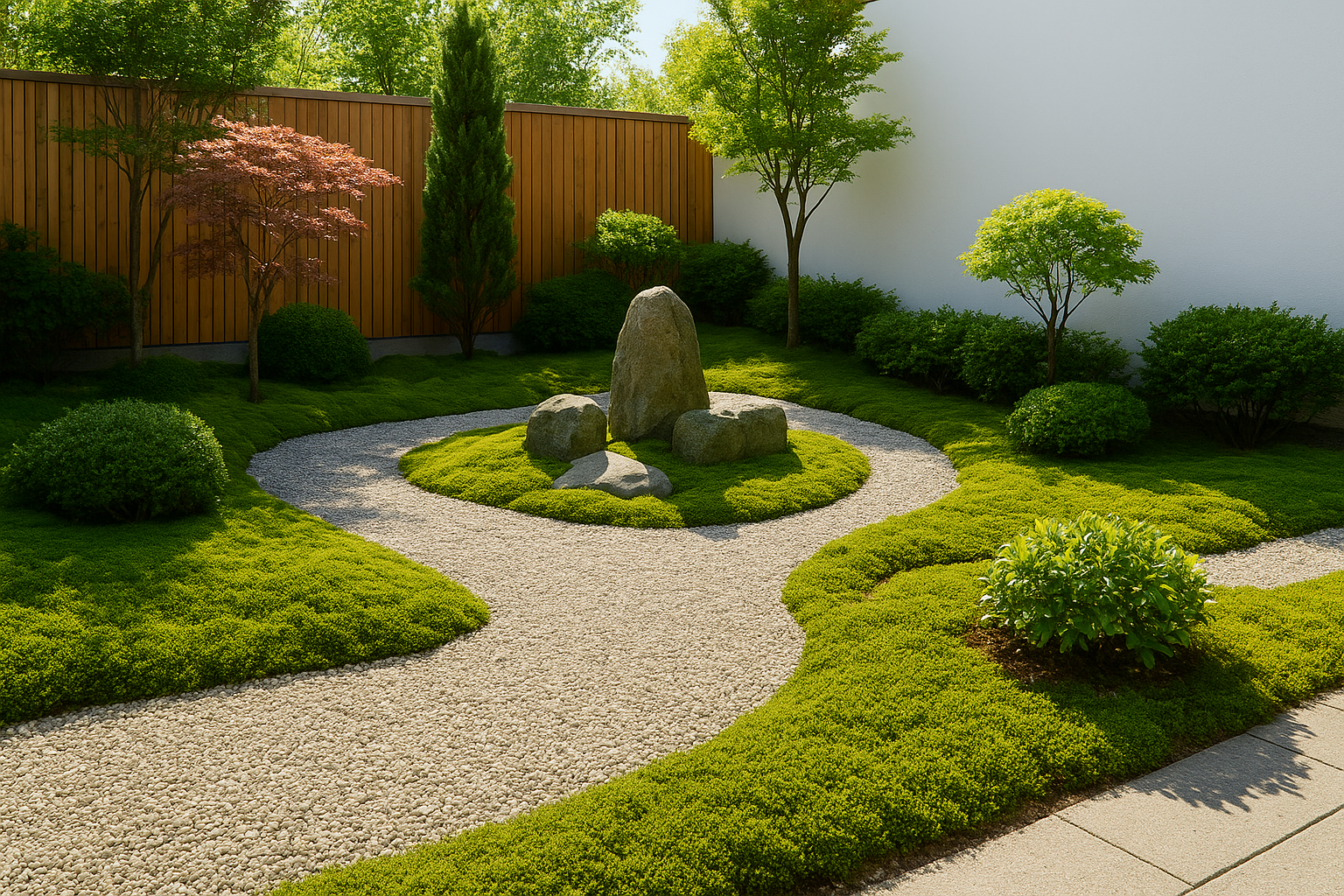
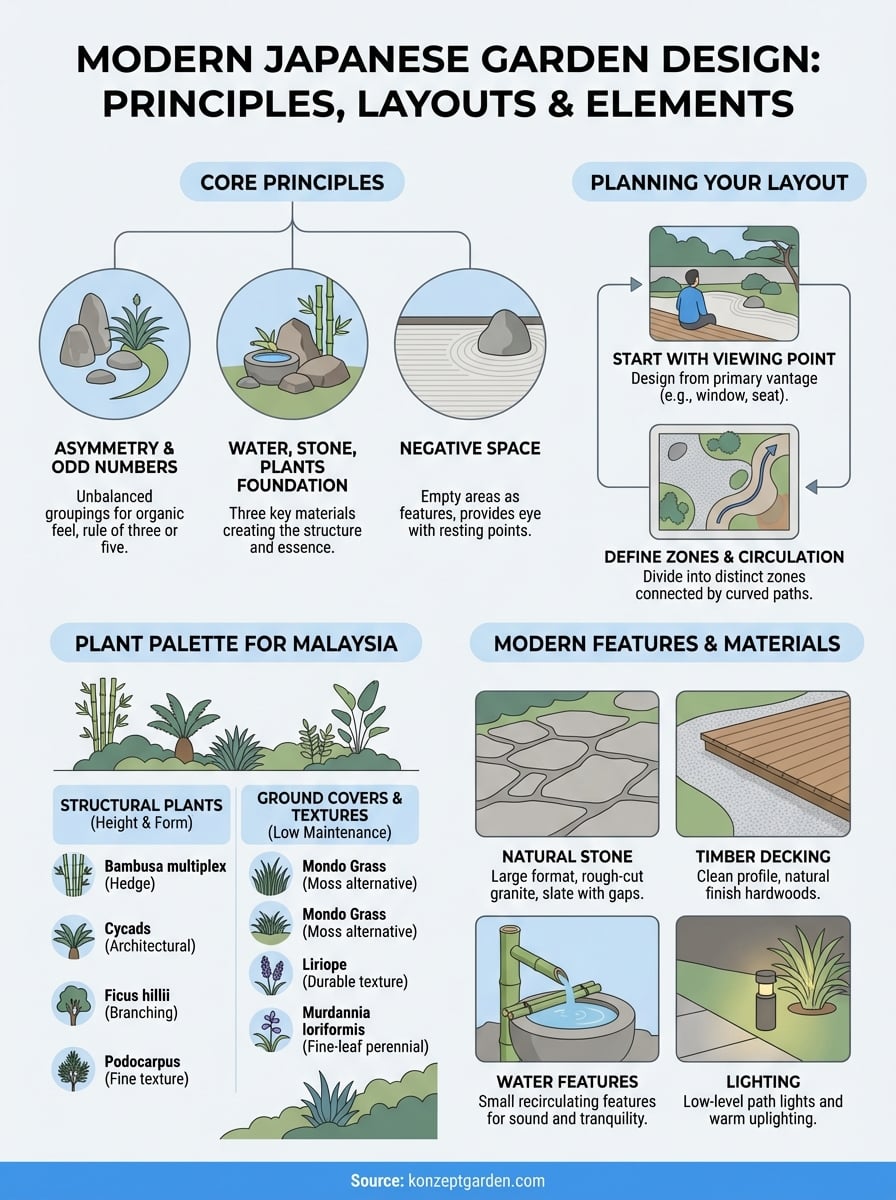
Symmetry signals formality and control, which is exactly what Japanese garden design avoids. Instead, you work with asymmetrical groupings that feel balanced without being identical. The classic approach is to arrange plants and stones in odd numbers, typically threes or fives, because the eye naturally reads these groupings as organic rather than placed. A single tall boulder flanked by two lower stones creates tension and interest. Two identical stones placed side by side create monotony.
Asymmetry is not about randomness. It's about placing elements so each one has a clear relationship with the others.
Water, stone, and plants as a foundation
Every well-structured Japanese garden is built around three core materials: water, stone, and plants. Water doesn't have to mean a large pond. A small water feature, a stone basin called a tsukubai, or even a dry gravel bed that represents water all carry the same symbolic weight. Stone provides permanence and structure, grounding the design with material that won't change with the seasons. Plants add texture, movement, and seasonal variation without overwhelming the layout.
These three elements work together as a system. Stone anchors the space, water draws the eye and creates sound, and plants soften hard edges without hiding them. When you plan your garden, think about how all three appear from your main viewing point, which is usually a window, a terrace seat, or a specific spot along a path. That sightline should capture all three in one composition.
How to plan a modern Japanese garden layout
Before you place a single stone or select a plant, you need a clear spatial plan. Planning a modern Japanese garden design starts with mapping what you already have: the size and shape of the space, existing structures like walls or fences, sun and shade patterns, and where you naturally enter and move through the garden. These fixed conditions aren't obstacles; they're your starting point.
Start with your viewing point
Every Japanese garden is designed to be read from a specific position, usually a seat, a window, or the entrance to the space. Before you plan anything else, identify your primary viewing point. From that position, you want to see a balanced composition that includes at least one focal element, such as a stone grouping, a small water feature, or a specimen plant. Everything else in the layout supports that central view.
A garden that looks good in plan view but feels flat when you stand in it hasn't been designed from the right starting point.
Draw a simple rough sketch from your viewing point and mark where the eye naturally travels. This tells you where to place your strongest design elements and where negative space should sit. It also prevents the common mistake of spacing features evenly across the garden, which produces something that looks more like a grid than a composed landscape.
Define zones and circulation
Japanese gardens work by dividing space into distinct zones connected by a deliberate path. You don't need a large area to do this. Even in a compact garden, you can separate a planted feature zone from a gravel or paved area using changes in ground material or a low border of stones. The path between these zones should never run in a straight line; gentle curves slow your movement and make the space feel larger than it is.
Your circulation route should also reveal the garden gradually rather than all at once. A path that turns slightly before reaching a focal point builds anticipation and makes a small garden feel far more considered than its footprint suggests.
Plant palette for Malaysia's climate
Plant selection is where modern Japanese garden design either succeeds or falls apart in a tropical setting. The traditional Japanese palette, including Japanese maple, pine, and moss, rarely survives Malaysia's heat and humidity with any reliability. But that doesn't mean you sacrifice the aesthetic. You need to choose plants that carry the same visual role within the composition, providing structure, texture, and seasonal variation without fighting the climate you're working in.
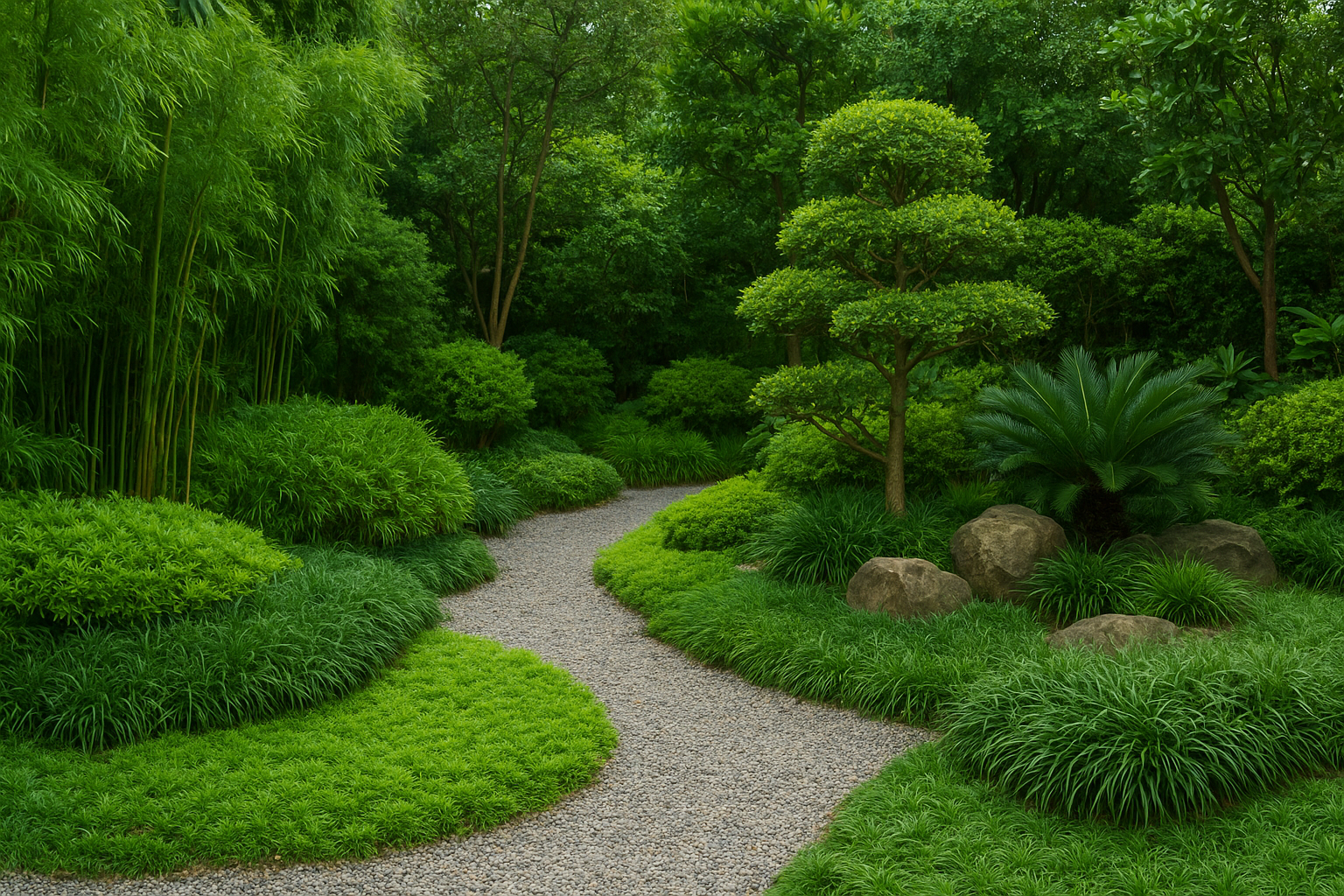
Choose plants for their shape and behavior first, then their species name.
Structural plants for height and form
Vertical and mid-height plants set the bones of your layout and should be chosen before anything else. These are the specimens your eye moves to first, so they need to hold their form year-round without constant pruning or intervention. The following options perform reliably in Malaysian conditions while reading as distinctly Japanese in character:
- Bambusa multiplex (hedge bamboo): Clumping, controlled, and well-suited for screening or vertical accent in compact spaces
- Cycads: Slow-growing, architecturally strong, and excellent when placed beside stone groupings
- Ficus hillii: Clean branching structure with a dense canopy that works well in larger garden zones
- Podocarpus: Fine-needled foliage with a texture that echoes traditional Japanese pine without the maintenance
Ground covers and low-maintenance textures
The ground plane is critical in any Japanese-influenced garden because so much of the composition depends on what fills the space between stones and paths. In Malaysia's climate, mondo grass (Ophiopogon japonicus) performs well as a low-growing cover that reads similarly to moss without the same humidity-sensitive maintenance demands. Liriope offers a comparable texture and handles both shaded and exposed positions with minimal upkeep once it establishes.
For sunnier areas in your layout, fine-leaf perennials like Murdannia loriformis add texture without becoming invasive over time. Combining two or three complementary ground covers across different zones also builds visual depth that a single uniform species simply cannot provide. Keep your overall plant count deliberate and low, so each choice carries genuine compositional weight rather than just filling a gap.
Modern features and materials to add
Modern Japanese garden design doesn't require you to replicate a traditional garden exactly. What it asks for is that you choose materials with intention, selecting finishes and features that reinforce the calm, structured character of the overall composition. The right modern additions pull the design forward without breaking its underlying logic.
Natural stone and timber surfaces
The surfaces you walk on and sit beside shape how your garden feels at ground level. Large-format natural stone pavers laid with deliberate gaps, rather than tight jointing, create the kind of unhurried rhythm that reads as genuinely Japanese in character. Rough-cut granite, slate, and lava stone all perform well in Malaysia's climate and age with a natural patina that only improves over time.
The material you put underfoot sets the tone for everything above it.
Timber decking in a tight, clean profile works well as a transition between an indoor space and the planted garden zones beyond it. Choose hardwoods that handle moisture reliably, such as Chengal or treated Merbau, and keep the finish natural rather than stained. Paired with gravel beds or stepping stones, timber anchors seating areas without competing visually with the planting.
Water features and lighting
A small recirculating water feature adds far more to a Japanese-inspired garden than its size suggests. The sound of moving water changes how the entire space feels, making it quieter in the way that matters. A stone basin with a simple bamboo spout, or a low-profile pond with a clean stone edge, both work without demanding significant maintenance once installed correctly.
Low-level path lighting and uplighting on specimen plants extend the usability of your garden into the evening hours, which is when most Malaysian homeowners actually spend time outdoors. Keep the fixtures minimal and the light warm. Concealed LED strips along timber edges or small spike lights beside stone groupings deliver impact without cluttering the visual field you've worked hard to keep clean.
Next steps
Modern Japanese garden design gives you a clear framework to work from: start with your viewing point, build around stone, water, and plants, and let negative space do the heavy lifting. Every decision you make, from the ground material you choose to how you route your path, should serve the overall composition rather than fill space. That discipline is what separates a garden that feels intentional from one that simply accumulates features over time.
If you're ready to move from ideas to an actual plan, the most productive next step is talking to a designer who understands both Japanese design principles and Malaysian growing conditions. Konzept Garden has built gardens that bring this aesthetic to life across a range of property types and budgets. Whether you want a full landscape design or just want to explore what's possible, get in touch with our team and we'll work through the details with you.