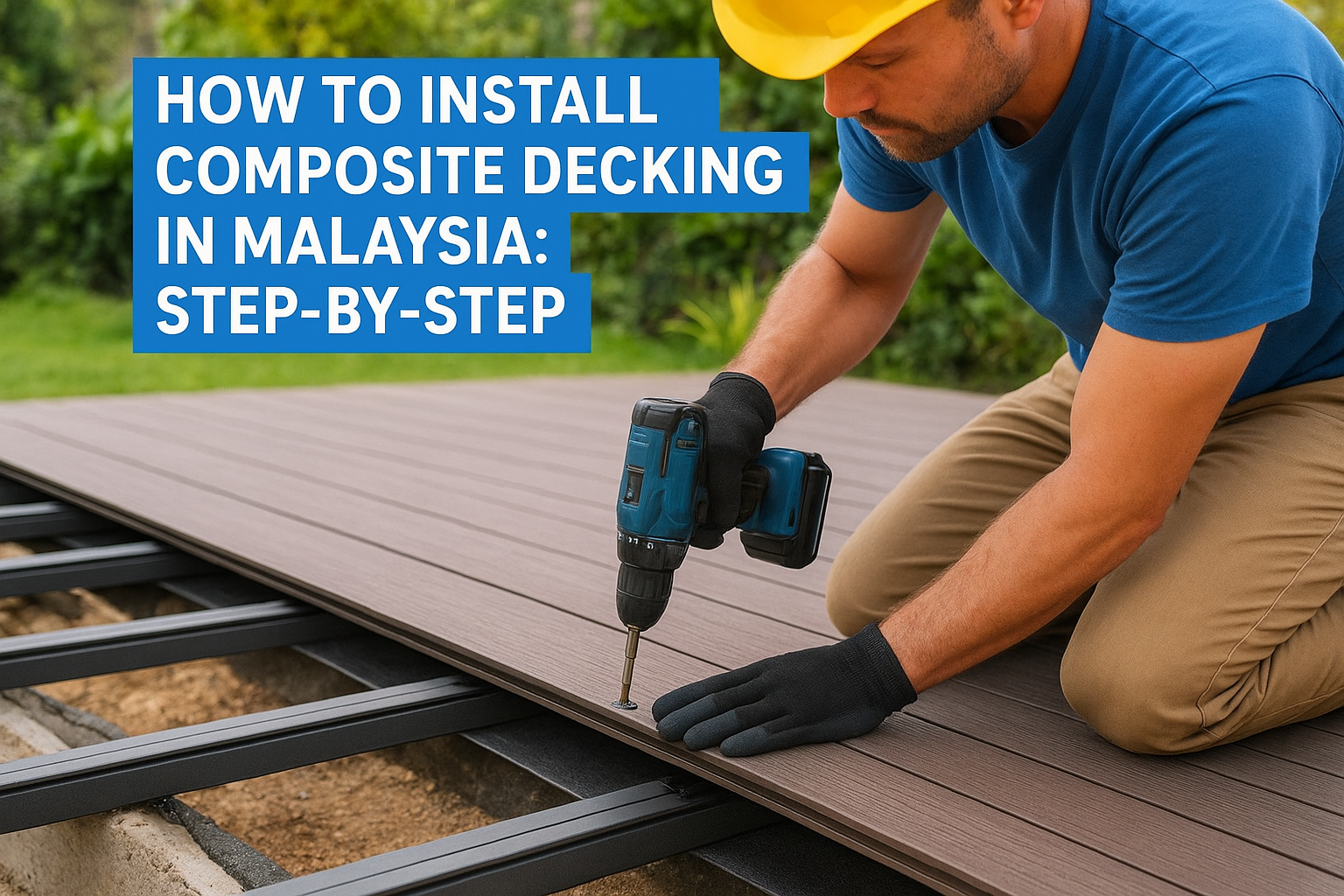

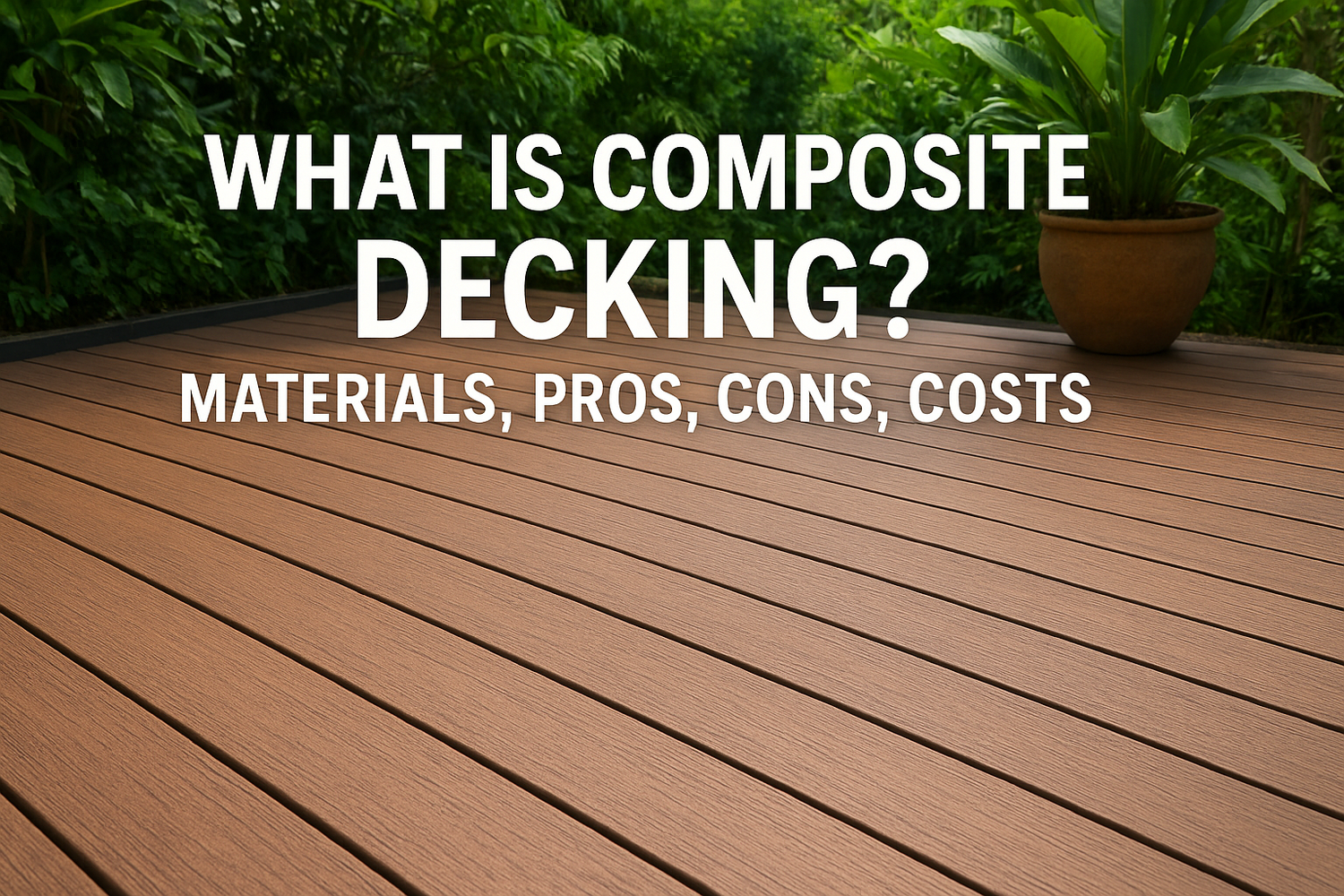
If you're planning an outdoor deck for your home in Malaysia, you've probably come across the term and wondered, what is composite decking, exactly? It's a question worth answering before you commit to any material, especially given our tropical climate where heat, humidity, and heavy rain take a serious toll on outdoor surfaces.
Composite decking is an engineered alternative to traditional timber that's been gaining ground across residential and commercial projects alike. At Konzept Garden, we regularly recommend and install composite decking as part of our landscape design projects because it holds up where natural wood often struggles. Our experience designing and building outdoor spaces across Malaysia gives us a practical perspective on how this material actually performs, not just on paper, but under real conditions.
This article breaks down what composite decking is made of, how it stacks up against wood, the pros and cons you should know, and what it typically costs. Whether you're renovating a backyard patio or adding a poolside deck, this guide will help you make an informed decision before your next project.
Why composite decking matters in Malaysia
Malaysia sits close to the equator, which means your outdoor deck faces intense UV radiation, heavy monsoon rainfall, and humidity levels that rarely drop below 70%. These conditions are not just uncomfortable for people but actively destructive to outdoor building materials. Wood swells, cracks, and rots faster here than in temperate climates, and even treated timber can degrade noticeably within a few years of installation.
Malaysia's Climate Challenges Outdoor Surfaces
When you think about what is composite decking designed to address, moisture resistance and UV stability are at the top of the list. In Malaysia, outdoor structures spend months being pelted by rain and then baked by the sun. That cycle of wet and dry is exactly what causes traditional timber to warp and split. Composite boards are engineered to resist both moisture absorption and color fading, which makes them a more practical choice in our local climate.
Malaysia's combination of high humidity, heavy rainfall, and strong UV exposure makes material selection for outdoor decks more critical than in most other countries.
Why Standard Timber Struggles Here
Timber is still widely used in Malaysian landscaping, but it comes with real maintenance demands. Hardwoods like Chengal and Merbau are naturally durable and popular locally, but they still require regular oiling or sealing to prevent surface cracking and color loss. If you skip maintenance for even one season, moisture and mold can penetrate the surface and shorten the deck's lifespan considerably.
Composite decking removes much of that burden. You don't need to sand, seal, or stain it on a yearly maintenance schedule. For homeowners and commercial property managers who want an attractive outdoor space without the ongoing work, that difference matters a lot when the local climate works against you throughout the entire year.
What composite decking is made of
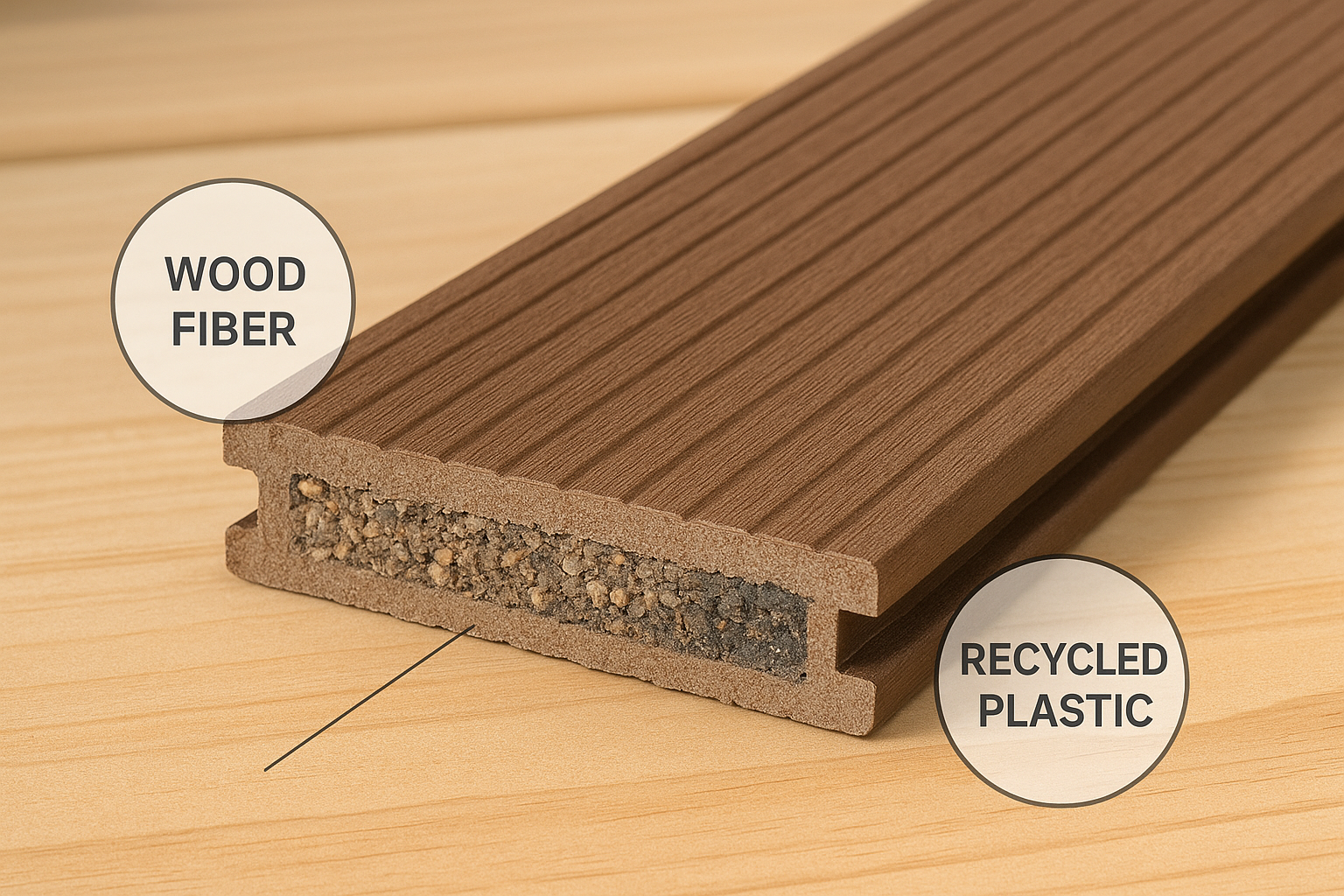
Understanding what is composite decking starts with its ingredients. Most boards combine wood fiber with recycled plastic, typically polyethylene or polypropylene. Manufacturers bind these together with heat and pressure, then add pigments and UV stabilizers to produce a board that looks like timber but behaves very differently outdoors.
The core materials
The wood fiber component gives composite boards their natural appearance and warmth, while the plastic component provides resistance to moisture, rot, and insects. The ratio of wood to plastic varies by product, but most boards fall somewhere between 50% and 70% wood fiber by weight.
The plastic content in composite decking is what makes it fundamentally more resistant to Malaysia's humidity than untreated or even treated timber.
How the layers work together
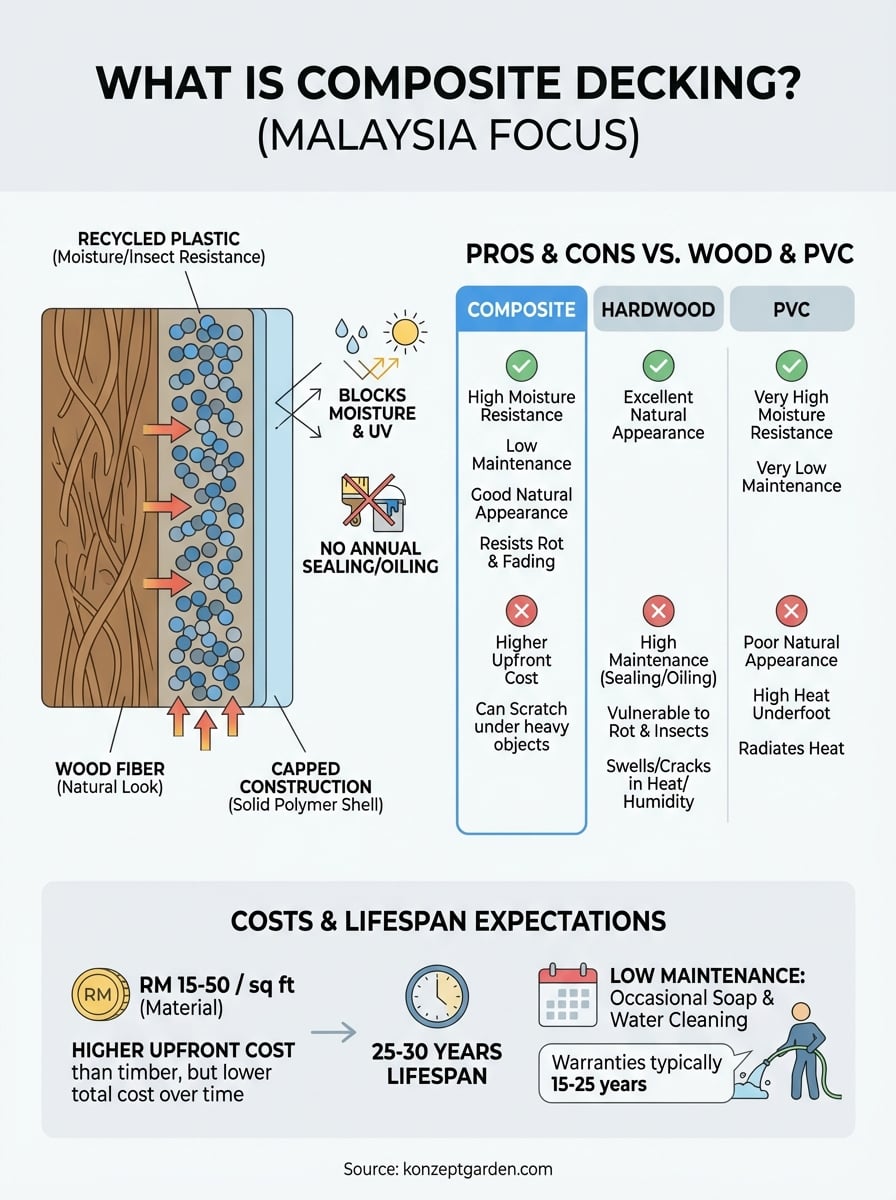
Many composite boards use a capped construction, where a solid polymer shell wraps the core on three or four sides. This cap blocks moisture and staining agents from reaching the wood fiber inside.
Uncapped boards still outperform raw timber in wet conditions, but they absorb more moisture over time. If you're installing a deck in a shaded or low-airflow area, capped boards are the stronger choice because they stop the wood fiber from becoming a long-term moisture trap.
Types of composite decking boards
Not all composite boards are the same, and choosing the right type for your project can significantly affect how your deck looks and holds up over time. Understanding what is composite decking in its different forms helps you match the right product to your specific site conditions and budget.
Solid core vs hollow core
Solid core boards are denser and heavier, which gives them better resistance to denting and surface damage under heavy foot traffic or outdoor furniture. Hollow core boards use internal channels to reduce weight and material costs, making them a practical option for larger deck areas where budget is a factor.
If your deck will carry significant load, such as a pergola structure or heavy planters, solid core boards offer more reliable structural support.
Hollow core boards perform well for standard residential use, but you need to check the manufacturer's span ratings before installation to avoid sagging between joists over time.
Grooved edge vs square edge
Grooved edge boards use hidden fasteners that clip into the board's side channels, giving you a clean surface with no visible screws. Square edge boards are face-fastened with screws, which makes them easier to replace individual boards later if localized damage occurs.
For most Malaysian residential projects, grooved edge profiles produce a cleaner finish, but square edge boards work well where budget or ease of future repair matters more to you.
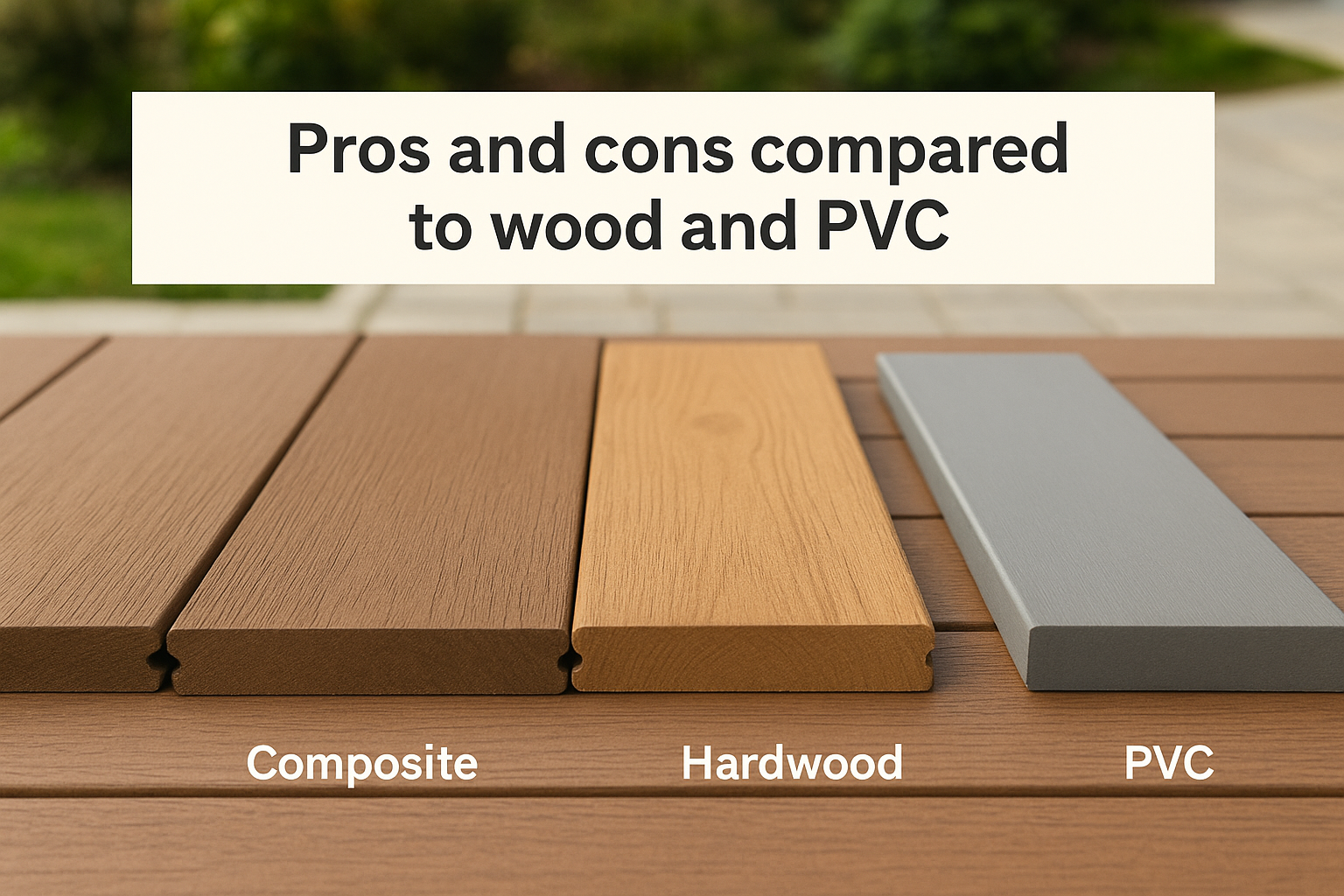
Pros and cons compared to wood and PVC
When you're comparing materials for an outdoor deck, understanding what is composite decking's strengths and weaknesses against wood and PVC helps you make a confident choice. Each material has real trade-offs, and climate, budget, and long-term maintenance tolerance all shape which option works best for your specific project.
Where composite pulls ahead
Composite outperforms natural timber on moisture resistance, rot prevention, and insect protection without requiring annual sealing or oiling. For Malaysian homeowners dealing with year-round humidity, that difference in long-term maintenance commitment is significant.
Composite decking sits between wood's natural look and PVC's waterproofing, making it a practical option for demanding outdoor conditions.
Against PVC, composite holds a clear advantage in surface comfort and appearance. PVC boards absorb and radiate heat under direct sun, while composite boards feel cooler underfoot and look much closer to natural timber grain.
Where composite falls short
Composite boards cost more upfront than most timber options, and lower-quality uncapped boards can still absorb moisture and develop mold in poorly ventilated spaces. PVC edges out composite on pure waterproofing since it contains no organic material. You also need to watch for surface scratching under heavy furniture, which shows more visibly on composite than on PVC. Here's how the three materials compare across key factors:
| Feature | Composite | Hardwood | PVC |
|---|---|---|---|
| Moisture resistance | High | Moderate | Very high |
| Maintenance needs | Low | High | Very low |
| Natural appearance | Good | Excellent | Poor |
| Heat underfoot | Moderate | Moderate | High |
Costs, lifespan, and maintenance expectations
Part of understanding what is composite decking means knowing what it actually costs and what you get in return over time. Composite boards typically run higher upfront than timber but lower in total cost once you factor in reduced maintenance over the years.
What you'll pay upfront
In Malaysia, composite decking materials generally range from RM 15 to RM 50 per square foot depending on the brand, capping quality, and profile type. Capped boards with thicker polymer shells sit at the higher end, while basic uncapped products are more affordable but need better ventilation and airflow to perform well long-term. Installation labor adds to this, so factor that into your total budget from the start.
Premium capped composite boards cost more upfront but typically save you money over five to ten years by eliminating the cost of regular sealing, sanding, and timber replacement.
How long it lasts and what upkeep looks like
A well-installed composite deck in Malaysia typically lasts 25 to 30 years with basic care. Most reputable brands back their products with warranties in the 15 to 25 year range. Your regular maintenance involves occasional cleaning with soap and water to remove mold or algae buildup, which can develop in shaded areas during the wet season. You won't need to sand, oil, or restain the surface at any point during the deck's lifespan.
Final thoughts
Now that you understand what is composite decking and how it performs against timber and PVC, you're in a better position to decide whether it fits your project. For most homeowners and commercial clients in Malaysia, composite offers a practical balance between natural appearance, long-term durability, and reduced maintenance. The upfront cost is higher than basic timber, but the savings in time, labor, and replacement costs over 25 or more years make it a sound investment for outdoor spaces that need to hold up against our climate.
Your deck is part of a larger outdoor space, and getting the material selection right is just one piece of a well-designed garden. If you want professional guidance on composite decking as part of a complete landscape design, the team at Konzept Garden is ready to help you plan it properly. Get in touch with us to discuss your project and request a free quotation.