


Choosing the right decking material can make or break your outdoor space, both in how it looks and how it holds up over time. If you've narrowed your options down to composite decking vs PVC, you're already looking at two of the most popular alternatives to traditional timber. But while they might seem similar at first glance, their differences in composition, pricing, and performance are significant enough to steer your decision one way or the other.
At Konzept Garden, we work with homeowners and commercial clients across Malaysia to design and build outdoor spaces that last. Through years of hands-on landscape projects, we've seen firsthand how material choices affect long-term satisfaction, especially in Malaysia's heat and humidity. That experience is exactly what shapes the practical comparisons in this guide.
This article breaks down everything you need to know: what each material is made of, how they compare on cost and durability, maintenance demands, and which applications suit each one best. By the end, you'll have a clear picture of which decking type fits your project, your climate, and your budget.
What composite and PVC decking are made of
Understanding what goes into each material helps you predict how it performs over time. Composite decking combines wood fiber or bamboo with a plastic binder, typically polyethylene or polypropylene, pressed together under heat. PVC decking, by contrast, contains no wood content at all. It's made entirely from polyvinyl chloride, a fully synthetic polymer. This core difference in composition is what drives most of the performance distinctions you'll encounter when evaluating composite decking vs PVC for an actual project.
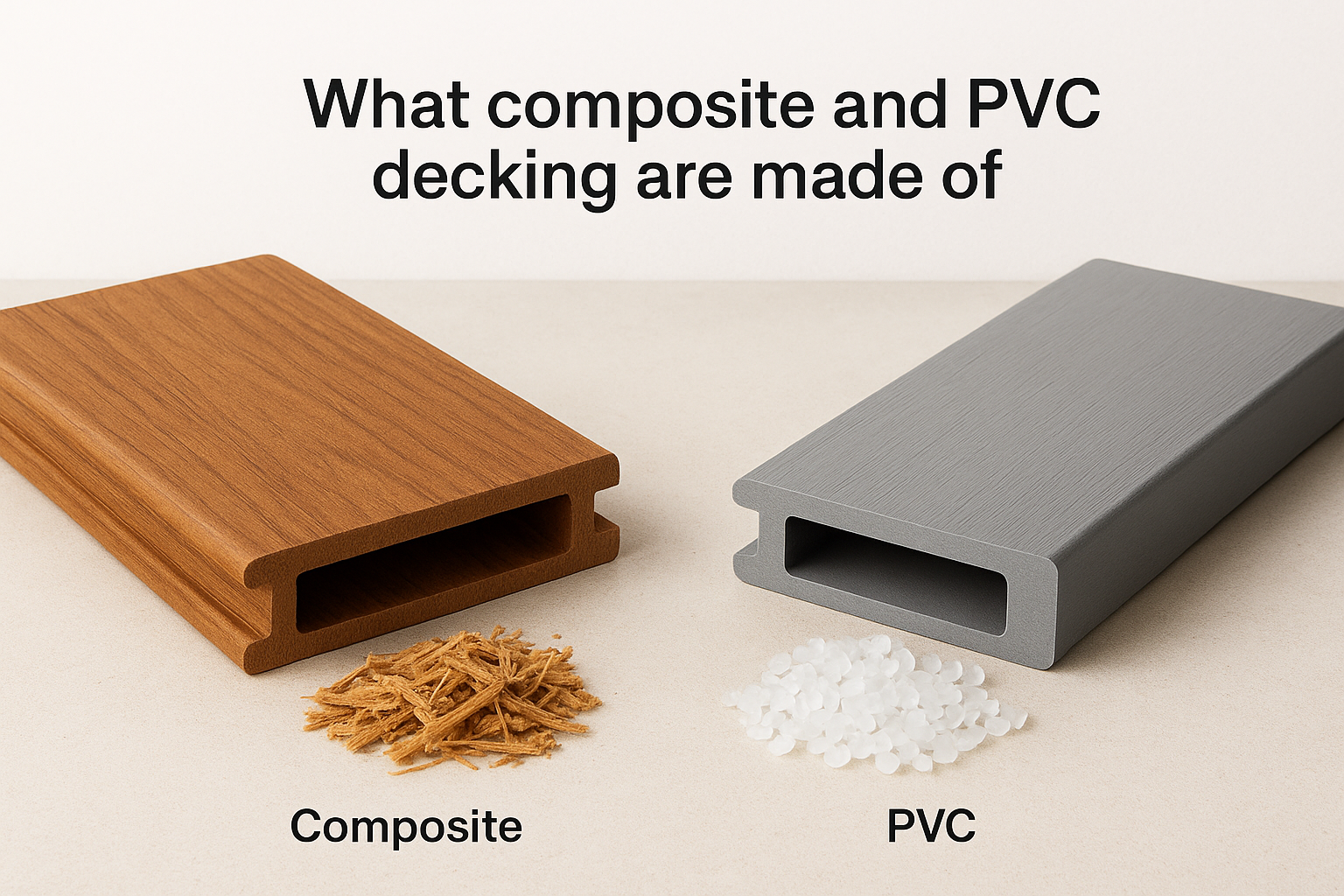
Composite decking: wood fiber and plastic combined
Composite boards typically contain 50-70% wood or organic fiber blended with a plastic component. Many manufacturers add a protective polymer cap layer over the surface to resist moisture penetration and surface staining. That cap layer matters a great deal in humid climates like Malaysia's because uncapped composite boards are far more vulnerable to swelling and mold growth when exposed to persistent moisture. The wood fiber content also gives the board a more natural texture and visual warmth, which many homeowners prefer for residential garden and patio settings.
Capped composite decking significantly outperforms uncapped versions in moisture resistance, making the cap layer one of the most important specs to check before purchasing.
PVC decking: fully synthetic from the start
PVC boards are manufactured without any organic material, which removes one major structural weakness from the equation: moisture absorption. Because there's no wood content, PVC doesn't swell, rot, or support mold growth the way composite can under prolonged wet conditions. The tradeoff is that PVC expands and contracts more noticeably with temperature changes. In Malaysia's intense outdoor sun exposure, that thermal movement affects both how boards feel underfoot and how they need to be installed, requiring precise fastener spacing to accommodate the expansion without warping or buckling over time.
Key differences that matter for real-world use
When you compare composite decking vs PVC in real conditions, four factors consistently separate the two: surface heat, appearance, scratch resistance, and structural flexibility. These distinctions directly affect daily comfort and long-term performance in Malaysia's outdoor environment.
Heat retention and surface feel
Composite boards tend to feel cooler and more natural underfoot because the wood fiber content moderates heat absorption slightly. PVC boards can get noticeably hot under direct sun exposure, which matters if you're building a poolside deck or open terrace without overhead shade. Composite surfaces also replicate wood grain more convincingly, giving residential spaces a softer visual character that many homeowners prefer.
If your deck will receive full sun for most of the day, test both materials' heat retention before committing to either option.
Scratch resistance and structural performance
PVC holds up better against surface scratches and scuffs because it contains no organic fiber that compresses under impact. Composite boards, particularly uncapped versions, are more vulnerable to surface damage from heavy furniture or sharp objects. Capped composite narrows this gap considerably, but PVC still leads on scratch resistance in high-traffic commercial settings. That said, composite boards typically offer greater rigidity and less flex underfoot, which many people find more structurally reassuring on larger deck spans.
Costs and value over time in Malaysia
Pricing in the composite decking vs PVC comparison varies in Malaysia based on board quality, brand origin, and whether you source locally or import. Composite decking typically costs less upfront, while PVC boards carry a higher initial price due to their fully synthetic manufacturing process.
Upfront material and installation costs
Composite boards in Malaysia generally range from RM15 to RM45 per square foot installed. PVC decking sits higher, usually between RM35 and RM60 per square foot depending on the product line and supplier. Both materials carry broadly comparable labor costs, though PVC requires more precise fastener spacing to handle thermal expansion, which can add slightly to your overall installation time.
- Composite: lower entry cost, wider local availability
- PVC: higher upfront cost, fewer local stockists
Long-term value and maintenance savings
Over a 10 to 15 year lifespan, both materials outperform timber on maintenance costs because neither needs sanding, staining, or sealing on a regular cycle. PVC holds a slight edge in persistently wet conditions since its fully synthetic composition carries no organic material to degrade. Composite, however, often delivers stronger resale appeal for residential properties because its wood-like surface reads more naturally in garden and lifestyle settings.
Factor in the full lifecycle cost, not just the purchase price, when budgeting your decking project.
Best uses by climate, location, and lifestyle
Malaysia's heat, humidity, and heavy rainfall make material suitability more critical here than in temperate climates. Understanding where each material performs best in the composite decking vs pvc comparison helps you avoid expensive mistakes on your next outdoor project.
High-humidity and poolside settings
PVC is the stronger choice for continuously wet environments like pool surrounds, outdoor bathrooms, or covered wet terraces. Its fully synthetic composition means water never penetrates the board structure, keeping warping and mold out of the picture. Composite works well in shaded garden spaces and covered patios where direct water exposure is limited and the natural look matters more than extreme moisture resistance.
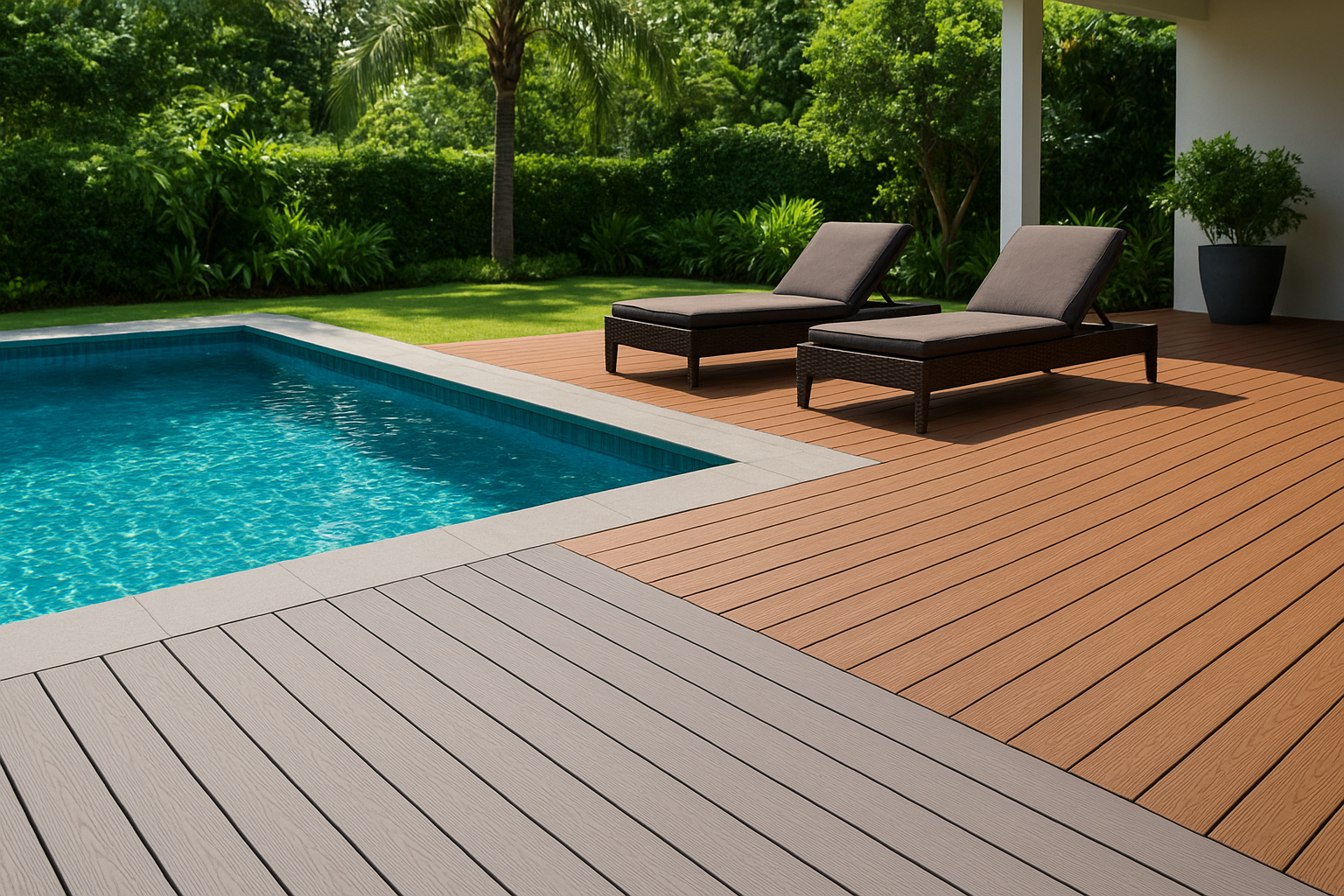
For pool decks in Malaysia's climate, PVC's zero organic content gives it a clear advantage over composite in long-term moisture performance.
Residential gardens and lifestyle settings
Composite suits residential garden decks, outdoor dining areas, and rooftop terraces where visual warmth and a wood-like finish improve the overall atmosphere. Its natural texture adds character that PVC cannot replicate as convincingly.
PVC fits better in commercial settings and rental properties, or any location where durability and minimal maintenance matter more than aesthetics. Your budget and how much foot traffic the space receives should guide you toward one or the other.
How to choose the right decking for your project
Narrowing down the composite decking vs PVC decision comes down to three practical filters: your site conditions, your budget, and how much maintenance you're willing to handle over the life of the deck. Knowing which of these factors matters most to you makes the choice much more straightforward.
Match the material to your site conditions
If your deck sits in full sun with direct water exposure, such as a pool surround or open terrace, PVC's zero organic content removes the risk of swelling and mold entirely. Covered garden areas or shaded residential patios are where composite's natural texture genuinely shines, giving you the wood-like warmth without the upkeep of real timber.
Choose PVC for wet, sun-exposed sites and composite for shaded, lifestyle-focused spaces where appearance carries more weight.
Factor in your budget and long-term goals
Start with your total project budget, not just the material price per square foot. Composite boards typically cost less upfront, making them the more accessible option for larger deck areas. If your space sees heavy foot traffic or commercial use, PVC's superior scratch resistance often justifies the higher entry price over time. Both materials deliver strong long-term value compared to maintaining timber year after year.
- Prioritize aesthetics and budget: choose composite
- Prioritize durability and moisture resistance: choose PVC
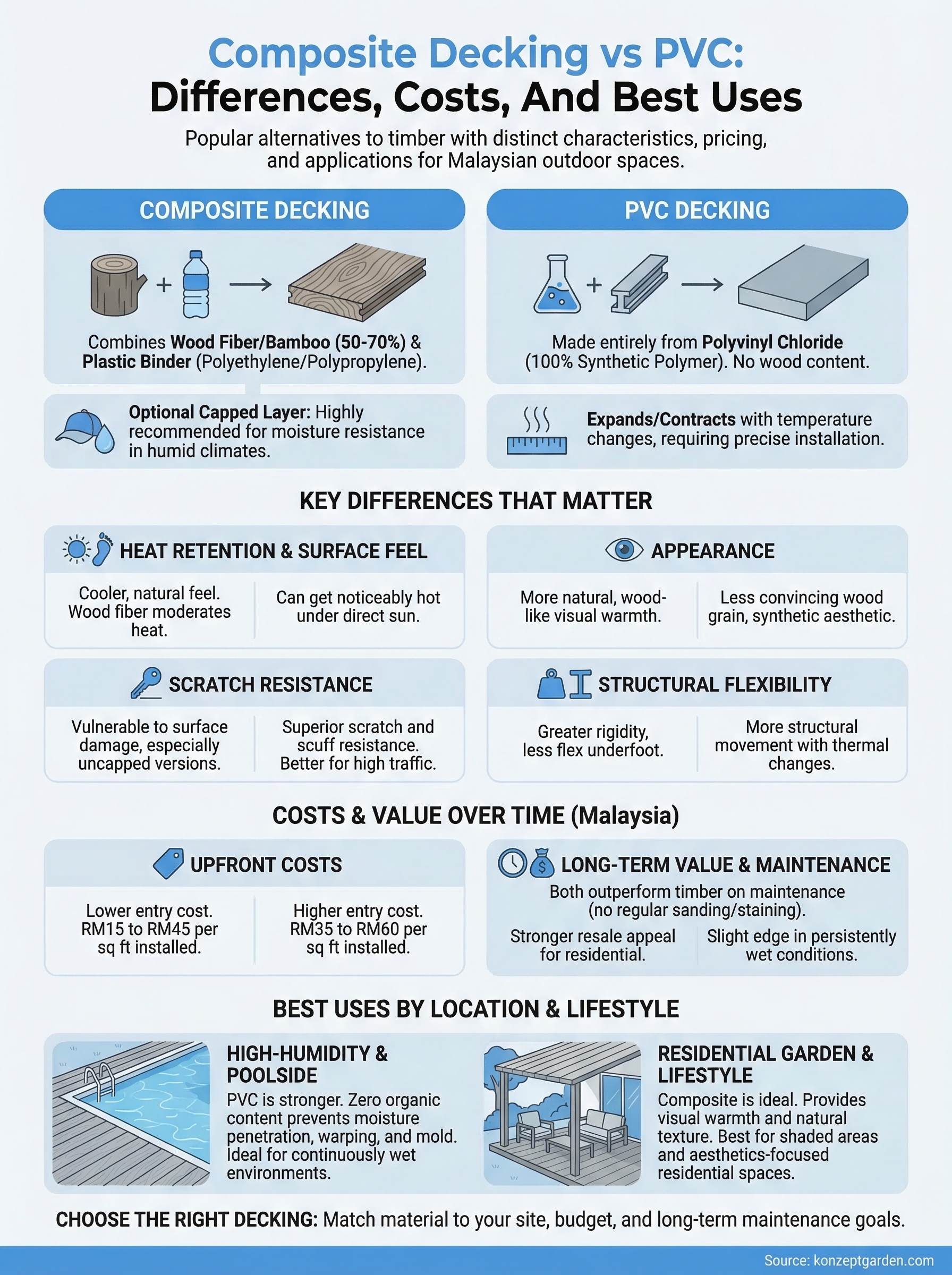
Final takeaways
The composite decking vs PVC decision comes down to matching the right material to your specific site, budget, and long-term priorities. Composite gives you a natural wood-like appearance at a lower upfront cost, making it the better fit for shaded residential gardens and lifestyle spaces. PVC delivers superior moisture resistance and scratch durability, putting it ahead in poolside, wet-zone, and commercial applications. Neither material is universally better; your decision should reflect where the deck sits, how much direct sun and water exposure it faces, and what you value most over a 10 to 15 year lifespan. Both materials outperform timber on maintenance, so you're already choosing well by shortlisting either one.
Ready to plan your outdoor space with the right materials from the start? The team at Konzept Garden can help you design and build a deck that works for Malaysia's climate and your lifestyle. Get in touch with us today to start your project.


