
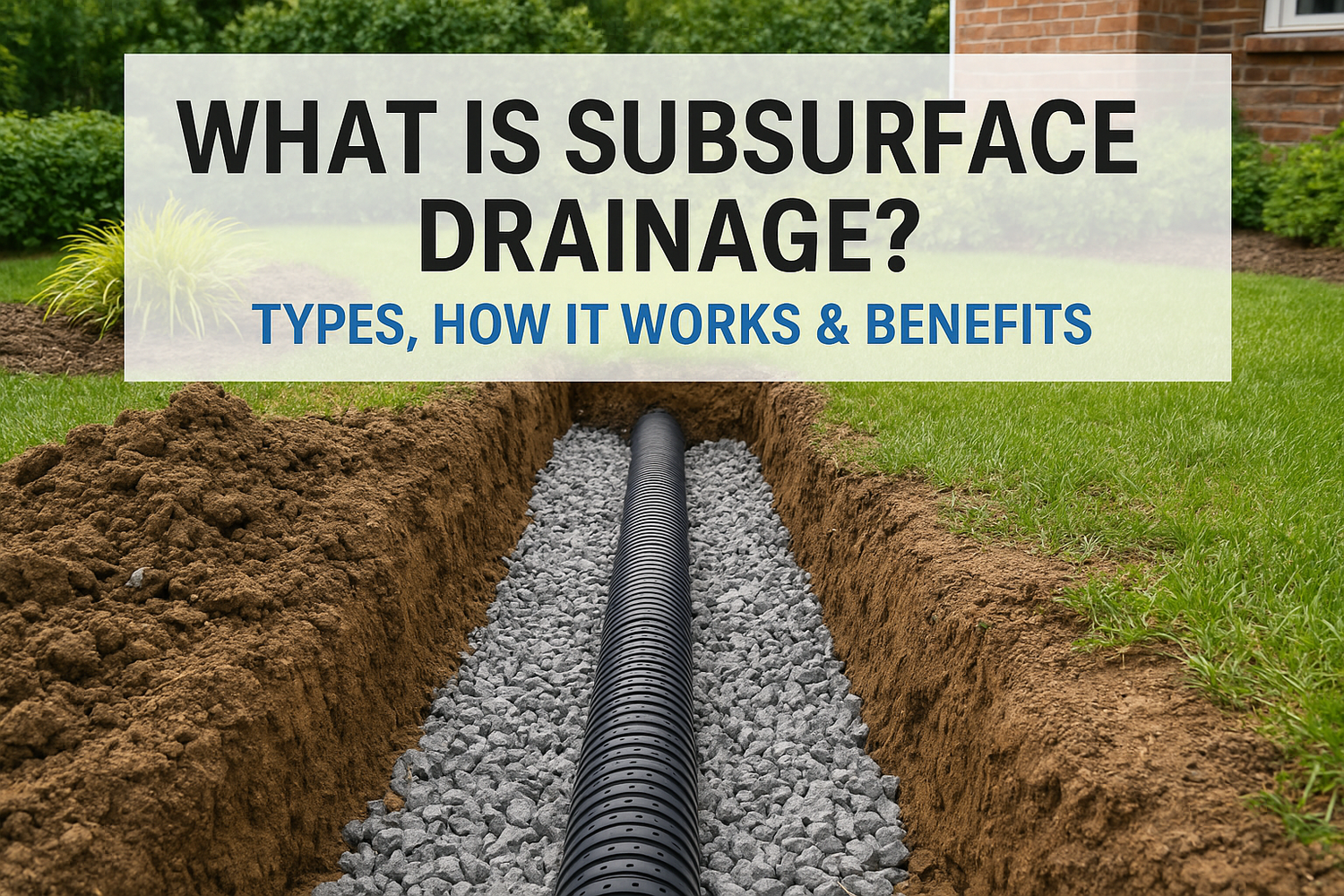
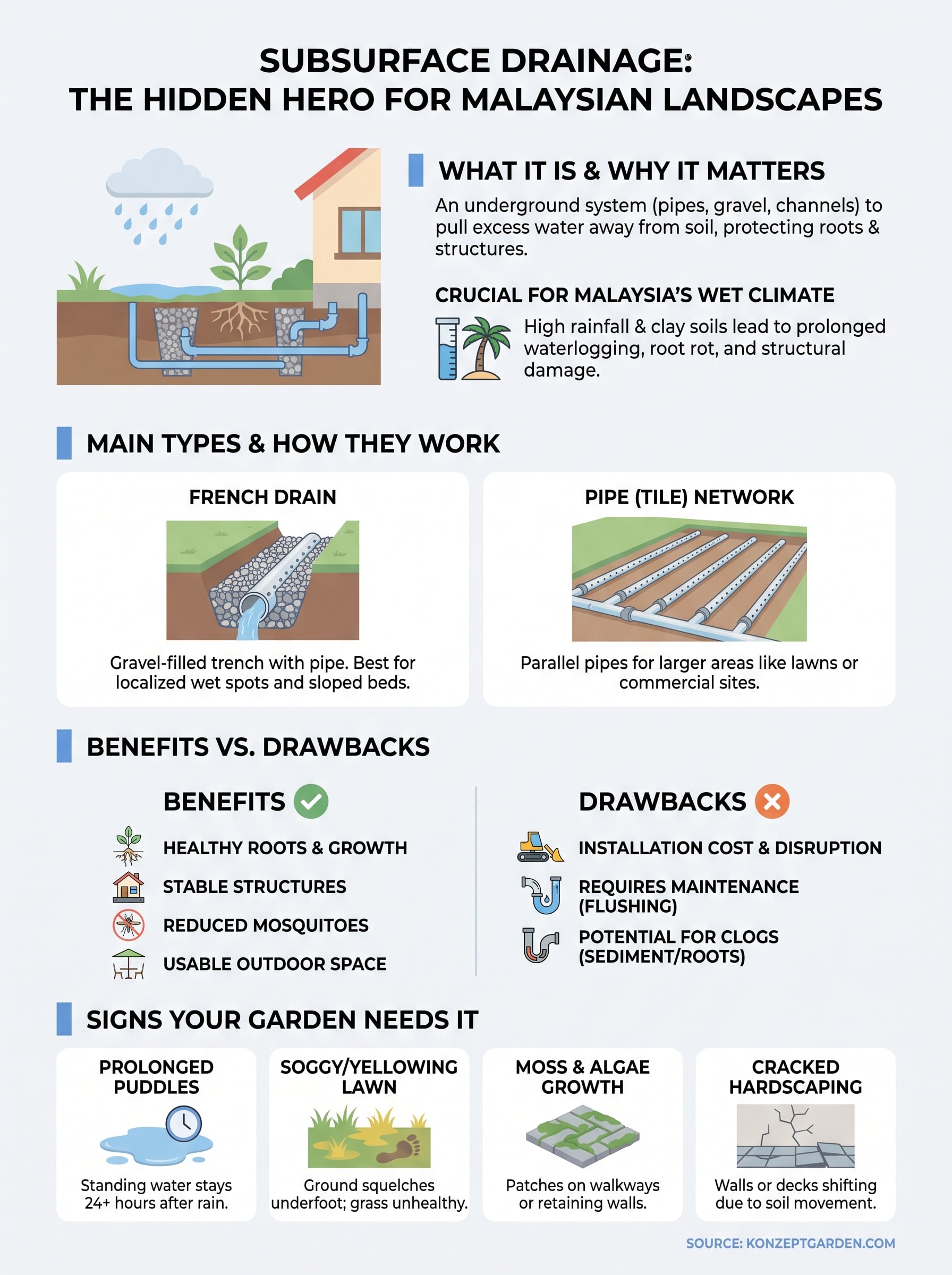
If your garden turns into a swamp every time it rains in Malaysia, the problem usually sits below the surface, not above it. Subsurface drainage is a system of pipes, gravel, or perforated channels installed underground to pull excess water away from soil before it drowns your lawn, plants, or foundation. Unlike surface drains that catch water pooling on top, this method works quietly beneath your feet, protecting root zones and structural bases from constant saturation.
In plain terms, subsurface drainage moves water through buried pipe networks or gravel-filled trenches, redirecting it to a discharge point away from your property. It matters most in Malaysia's humid, rain-heavy climate, where poor drainage quickly leads to root rot, mosquito breeding, and soggy patios that never fully dry out.
This article breaks down the main types of subsurface drainage systems, how each one actually functions underground, and where they get used across farming fields, construction sites, and residential landscapes. We'll also weigh the real benefits against the drawbacks, so you can judge whether your garden or project needs one before water damage forces the decision for you.
Why subsurface drainage matters for your landscape
Malaysia gets rain almost year-round, and that changes how you need to think about garden design. Tropical downpours dump water fast, and if your soil can't absorb it quickly enough, that water sits on the surface or, worse, saturates the ground just below your plants' roots. Understanding what is subsurface drainage and why it matters starts with recognizing that most garden failures in this climate aren't caused by too little water, they're caused by water that never leaves.
Malaysia's climate makes drainage non-negotiable
Average annual rainfall in many parts of Malaysia exceeds 2,000mm, and during monsoon months it can arrive in short, intense bursts rather than steady drizzle. Clay-heavy soils, common in developed residential areas, drain slowly on their own, so water lingers in the root zone long after the rain stops. Without a way to move that excess water underground, your garden effectively stays wet for days, which sets off a chain of problems most homeowners don't connect back to drainage until it's too late.
A garden that stays wet for days after rain isn't thriving, it's slowly drowning from below.
What happens when water has nowhere to go
Waterlogged soil pushes oxygen out of the ground, and plant roots need that oxygen to function. Once roots sit in saturated soil, they stop absorbing nutrients properly and become vulnerable to fungal infections like root rot, which can kill mature trees and shrubs within a season. Standing water also becomes a breeding ground for mosquitoes, a serious concern given Malaysia's ongoing dengue risk, and it invites mold and algae growth on patios, walkways, and retaining walls.
Beyond plant health, poor underground drainage puts pressure on hardscaping and structures you've already paid for. Saturated soil expands and shifts, which can crack pool decks, tilt garden walls, and undermine the foundations of pergolas or outdoor kitchens. If your property sits on a slope, waterlogged subsoil also raises the risk of erosion and small-scale landslides, something landscape architects in hilly Malaysian suburbs deal with regularly.
A quick comparison: drained vs. undrained soil
The difference between a garden with proper subsurface drainage and one without becomes obvious within a single rainy season. Here's how the two scenarios typically play out:
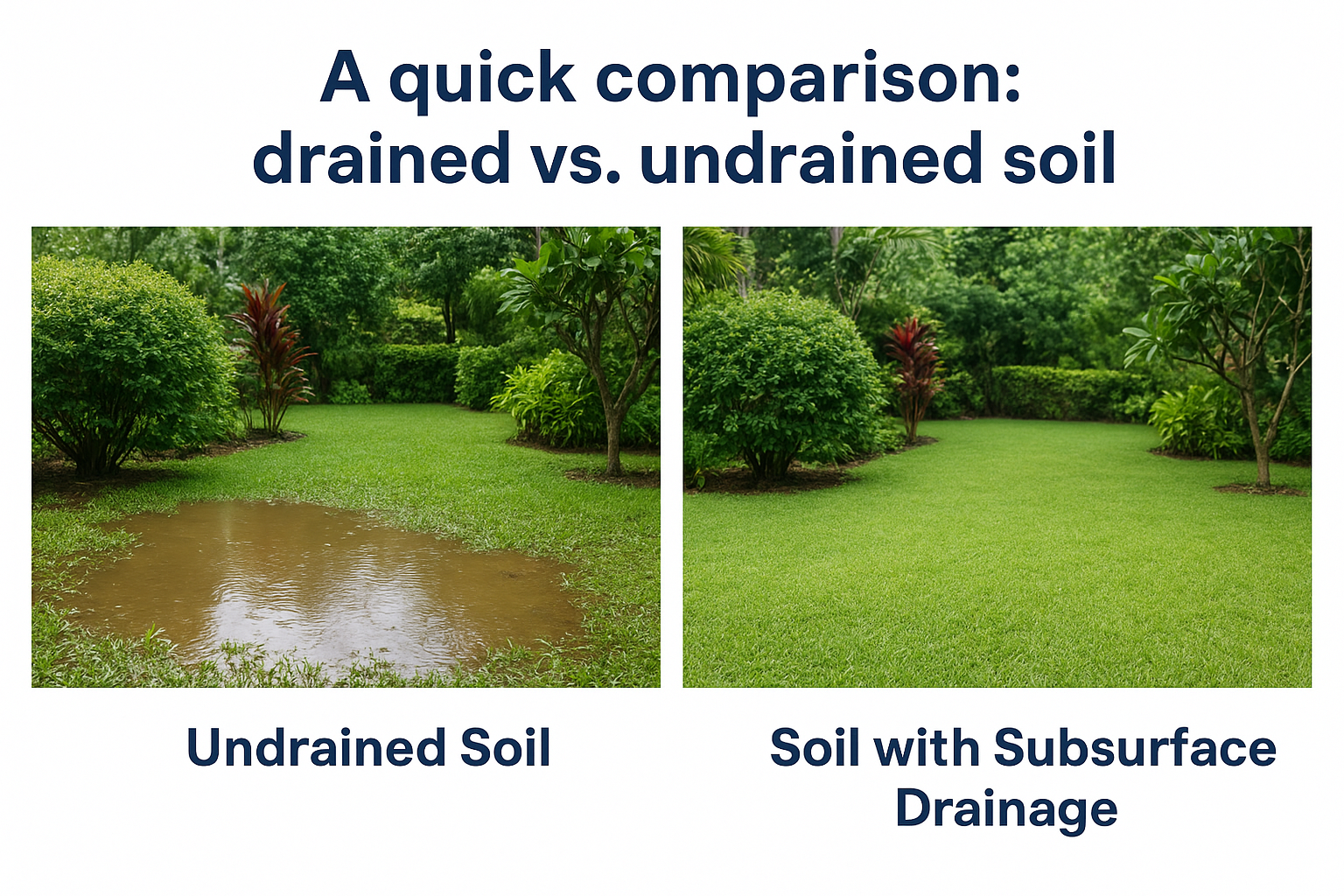
| Condition | Undrained Soil | Soil with Subsurface Drainage |
|---|---|---|
| Water pooling after rain | Lasts 2-5 days | Clears within hours |
| Root health | Prone to rot, fungal disease | Stable oxygen levels, healthy growth |
| Mosquito breeding risk | High | Low |
| Hardscape stability | Cracking, shifting over time | Minimal movement |
| Lawn appearance | Patchy, yellowing, muddy | Even, consistently green |
Why this matters beyond aesthetics
Good drainage isn't just about keeping your lawn green for Instagram photos. Structural integrity and long-term property value both depend on managing water before it becomes a hidden liability. A garden that looks fine on a dry day can still be sitting on saturated, unstable subsoil that will eventually cost far more to fix than a drainage system would have cost to install upfront.
Eventually, every outdoor space in a wet climate faces this choice: manage water proactively underground, or deal with the visible damage it causes above ground later. Landscape professionals who've worked across Malaysian residential and commercial sites will tell you the same thing, the gardens that hold up best over ten or twenty years are almost always the ones where drainage was planned before a single plant went into the ground.
How subsurface drainage systems work
Underneath every functioning drainage system sits a simple principle: water moves toward the path of least resistance, and gravity does most of the heavy lifting. Engineers and landscapers design perforated pipes or gravel-filled trenches that sit below the root zone, giving excess groundwater somewhere easier to travel than through dense, saturated soil. Once water enters these channels, it flows along a gentle slope toward a discharge point, whether that's a municipal drain, a retention pond, or a lower section of the property.
The journey water takes underground
Getting water from your soil to a safe exit point involves a few distinct stages, and each one has to work correctly for the whole system to function. Skip a step, or install it poorly, and you end up with a drainage system that looks right on paper but fails the first time it rains hard.
- Infiltration – water percolates down through topsoil and subsoil after rainfall.
- Collection – perforated pipe or gravel trenches intercept water before it pools around roots or foundations.
- Conveyance – collected water travels through the pipe network along a calculated slope, usually a minimum gradient of 1:200 to keep flow moving without silt buildup.
- Discharge – water exits into a stormwater drain, swale, or catchment area away from the protected zone.
If any single link in this chain fails, water backs up and the whole system loses its purpose.
Why pipe depth and slope decide success or failure
Depth matters more than most homeowners assume. Pipe placement typically sits between 45cm and 100cm below the surface, deep enough to intercept water before it reaches plant roots or building footings, but shallow enough that gravity still pulls water toward it rather than around it. Too shallow, and the system misses the saturation zone entirely. Too deep, and installation costs climb without added benefit.
Slope works alongside depth to keep everything moving. Landscape contractors in Malaysia generally build in a fall of at least 1% along the pipe run, since flatter grades invite sediment to settle and clog the perforations over time. Gravel or coarse aggregate usually wraps the pipe, acting as a filter that lets water through while keeping soil particles from washing into the system and blocking it.
Together, these elements form a network that behaves less like a single drain and more like a coordinated water management layer beneath your garden. When designed correctly for the site's soil type and rainfall pattern, subsurface drainage keeps root zones stable and hardscaping dry even during Malaysia's heaviest monsoon weeks.
Types of subsurface drainage systems
Not every property needs the same underground solution, and the right choice depends on soil type, budget, and how much water you're actually managing. Landscape contractors in Malaysia typically choose between a handful of proven designs, each suited to different terrain and drainage loads. Knowing the differences helps you avoid overpaying for a system built for farmland when your garden only needs a simple pipe run.
French drains
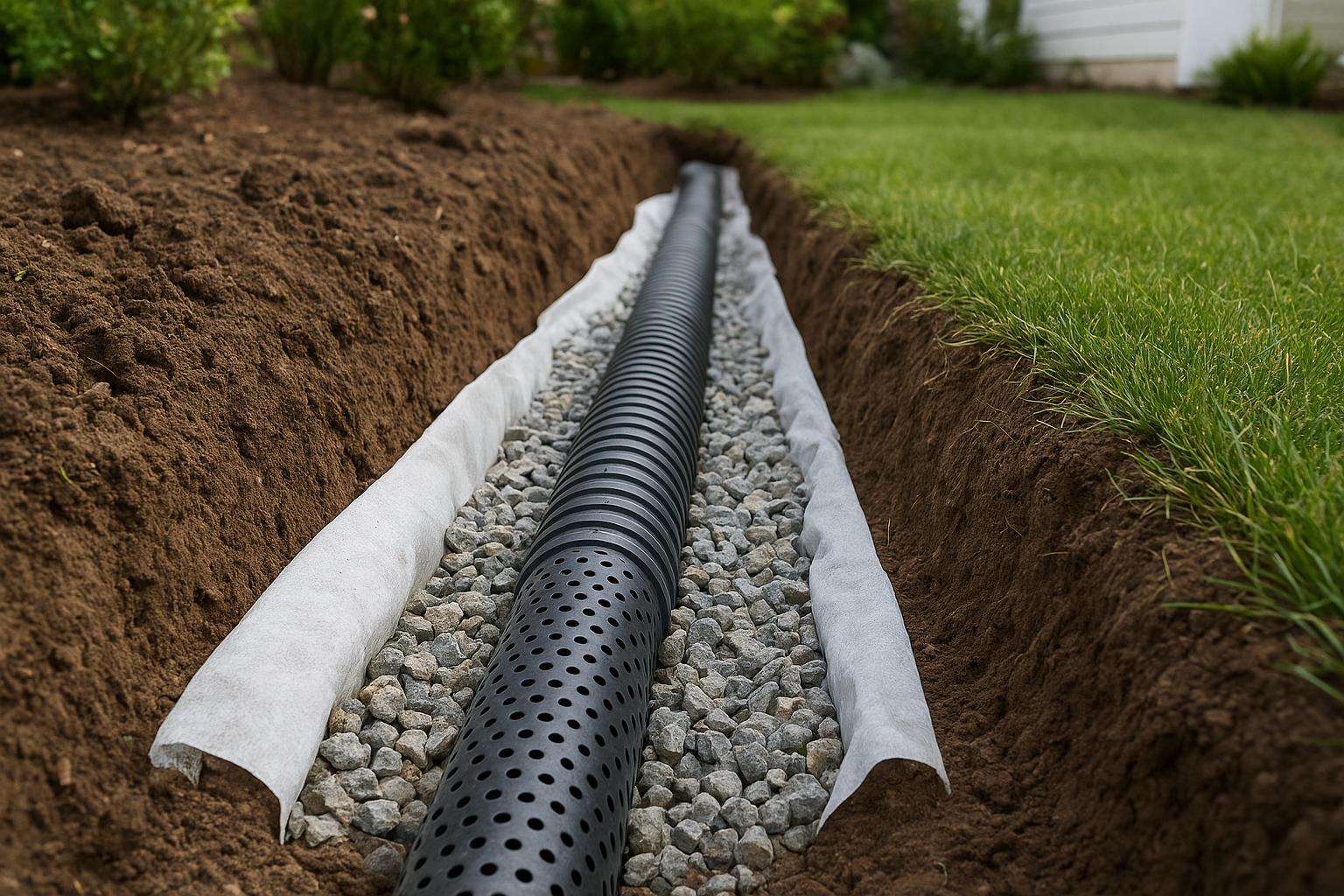
A French drain is the most common residential option: a trench filled with gravel around a perforated pipe, wrapped in geotextile fabric to keep soil from clogging the aggregate. Water seeps in from the sides and bottom, then travels along the pipe to a discharge point. These work well for gardens with localized wet spots, sloped beds, or areas near retaining walls where water tends to collect.
Pipe (tile) drainage systems
Pipe drainage, sometimes called tile drainage, relies on a network of connected perforated pipes laid in parallel lines across a larger area, rather than a single trench. This layout suits bigger residential lots, commercial landscapes, and sports fields where water needs to be pulled evenly across the whole site instead of just one problem zone.
Mole and sand slit drains
Mole drains and sand slit drains show up mostly in agricultural contexts, though larger rural properties in Malaysia sometimes use similar principles. A mole plow forms an unlined channel underground without pipe or gravel, while sand slit drains fill a narrow trench with coarse sand to create a fast-draining path. Both are cheaper than pipe systems but wear out faster in clay-heavy soil.
The best drainage type isn't the most advanced one, it's the one matched to your soil and water load.
Comparing the main types
| Type | Best Use | Typical Lifespan | Relative Cost |
|---|---|---|---|
| French drain | Residential gardens, wet spots | 15-25 years | Moderate |
| Pipe (tile) drainage | Large lots, commercial sites | 20-30 years | Higher |
| Mole drain | Agricultural fields | 5-10 years | Low |
| Sand slit drain | Rural or farm properties | 8-15 years | Low |
Ultimately, the type you install shapes how long it lasts and how much water it can realistically handle. Residential landscaping in Malaysia leans heavily on French drains and pipe networks because both hold up better against clay soil and heavy monsoon rainfall than the agricultural alternatives.
Benefits and drawbacks of subsurface drainage
Every drainage system involves trade-offs, and subsurface drainage is no exception. Before you commit to digging up part of your garden, it helps to weigh what you gain against what you'll spend, both in money and ongoing upkeep. Homeowners and developers in Malaysia who skip this step often end up either overpaying for a system bigger than their property needs, or underinvesting and dealing with the same waterlogging problem two years later.
What you actually gain
The clearest benefit is root health. Once excess water has somewhere to go, roots get consistent access to oxygen, which translates into stronger growth and fewer fungal problems across your lawn and planting beds. Beyond plants, a working system protects hardscaping, patios, retaining walls, and pool decks stay stable instead of cracking from soil that keeps swelling and shrinking with every rain cycle.
- Reduces standing water and mosquito breeding sites
- Extends the lifespan of hardscape features like decking and walls
- Prevents erosion on sloped or hillside properties
- Improves usability of outdoor space year-round, even during monsoon months
- Protects property value by avoiding hidden soil damage
A well-installed system pays for itself the first time it saves a retaining wall or a mature tree.
Where subsurface drainage falls short
No system runs forever without attention. Sediment buildup inside pipes and gravel trenches is the most common failure point, especially in Malaysia's clay-heavy soils, where fine particles work their way through geotextile fabric over time and slowly choke the perforations. Once that happens, water stops moving and the system needs excavation to fix, which costs far more than routine maintenance would have.
Installation itself carries real costs too, both financial and disruptive. Digging trenches across an established garden means tearing up existing planting, and larger properties may need heavier machinery that limits access for days. Root intrusion from nearby trees can also crack pipes or block flow, which is why contractors usually recommend keeping drainage lines a reasonable distance from mature root systems.
Weighing the two sides
| Aspect | Benefit | Drawback |
|---|---|---|
| Plant health | Stronger roots, less rot | None significant |
| Structural protection | Prevents cracking, shifting | Installation disrupts existing landscaping |
| Long-term cost | Avoids expensive water damage repairs | Requires periodic maintenance and flushing |
| Lifespan | Lasts 15-30 years with care | Sediment or root intrusion shortens lifespan without upkeep |
Weighed together, the benefits outweigh the drawbacks for most properties dealing with recurring waterlogging, but only if the system gets designed properly for the site's soil and slope from the start.
Signs your garden or property needs subsurface drainage
Many homeowners only start researching what is subsurface drainage after noticing the same wet patch keeps reappearing near the same tree or wall. Recognizing the early warning signs saves you from a bigger repair bill later, and most of these signs are easy to spot if you know where to look during and after a heavy rain.
Watch for these above-ground clues
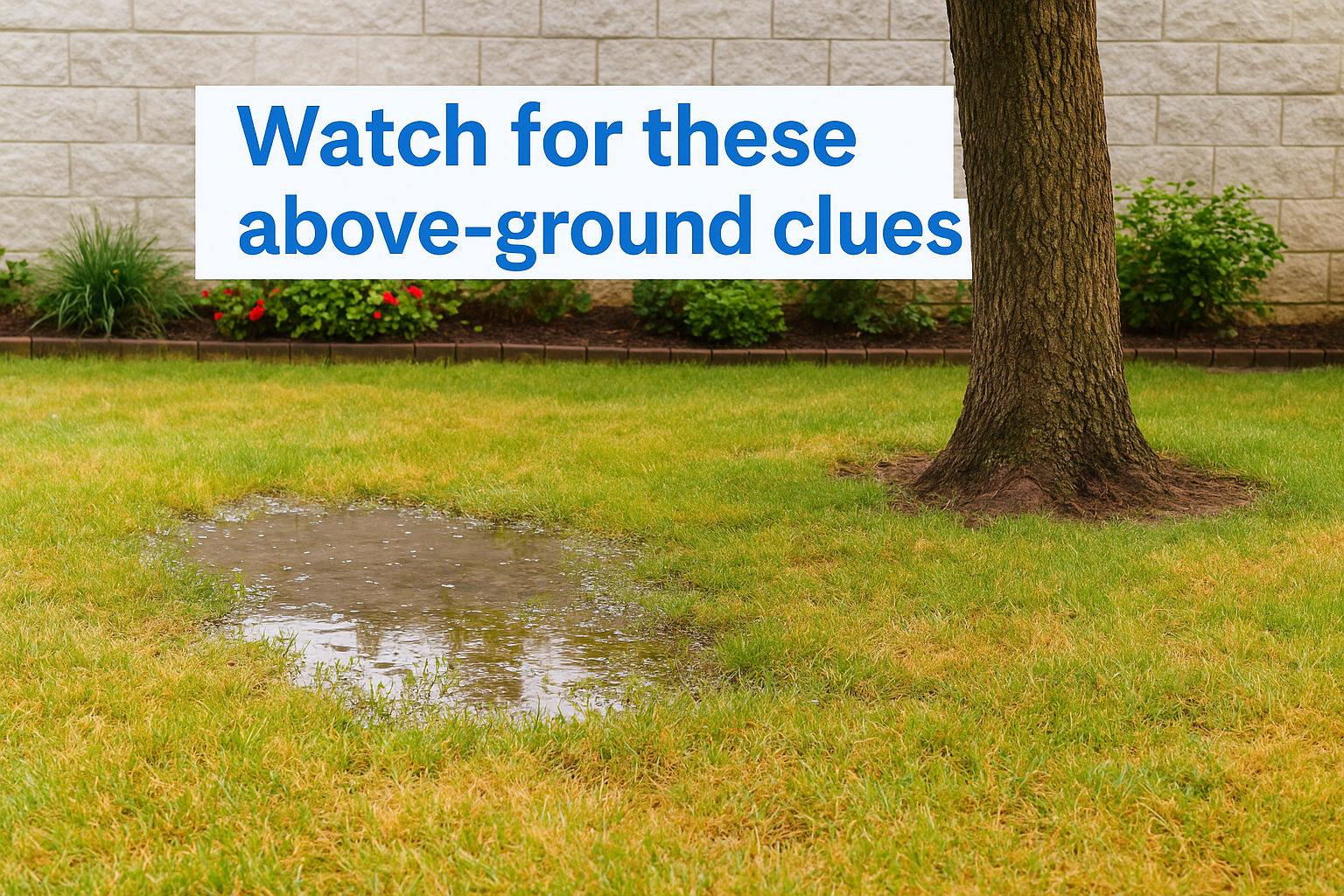
Standing water that lingers for more than a day after rain is the clearest signal something underground isn't working. Soggy lawn patches that squelch underfoot, even on dry mornings, usually mean the soil beneath has stayed saturated far longer than it should. Yellowing or thinning grass in specific zones, rather than across the whole yard, often traces back to a localized drainage gap rather than a fertilizing problem.
- Puddles that take more than 24 hours to disappear
- Mossy or algae-covered patches on lawns and paths
- Musty smells near flower beds or foundations
- Cracking or shifting pavers, patios, or retaining walls
- Mosquitoes breeding in the same spots repeatedly
If the same corner of your garden floods after every rain, the soil beneath it has already told you what it needs.
Underground clues that don't show up right away
Sometimes the damage stays hidden until it's already serious. Root rot in mature trees or shrubs, where healthy-looking plants suddenly decline for no obvious reason, often points to waterlogged roots suffocating below the surface. Foundation cracks that appear months after a particularly wet season are another sign, since saturated soil expands and contracts around footings in ways that slowly stress concrete.
Sloped properties carry an extra risk worth checking regularly. Erosion channels forming after storms, or soil that feels unusually soft and shifts underfoot on a slope, suggests subsoil is holding more water than it can handle. Left unaddressed, this combination of saturated ground and gravity can lead to small slips or slumping, particularly common on hillside developments across Malaysia.
Taken together, these signs rarely appear in isolation. If you're seeing two or more from the lists above, especially after multiple rainy seasons, it's worth having a landscape professional assess the site before investing in new plants, hardscaping, or structures that saturated soil could damage down the line.
Cost and maintenance considerations in Malaysia
Budgeting for subsurface drainage in Malaysia depends heavily on soil type, property size, and how far water needs to travel to a discharge point. A small residential French drain along one flower bed might cost a fraction of what a full pipe network across a bungalow lot requires, so getting quotes based on your actual site conditions matters more than relying on generic price ranges you find online. Labor costs also shift depending on access, since tight terraced housing lots often need manual digging rather than machinery, which adds time and money to the job.
Installation costs by system type
Contractors across Klang Valley and other developed regions typically price jobs using a mix of material grade, trench length, and site accessibility. The table below gives a rough sense of what Malaysian homeowners can expect, though final quotes always vary by contractor and terrain.
| System Type | Typical Scope | Relative Cost Range |
|---|---|---|
| French drain (single zone) | One wet spot, small garden bed | Low |
| French drain (multi-zone) | Several problem areas, larger yard | Moderate |
| Pipe network | Full lot or commercial landscape | High |
| Sand slit or mole drain | Rural or agricultural land | Low to moderate |
Cheaper isn't always better, an undersized system installed today often means a full excavation and reinstall within five years.
Ongoing maintenance you should budget for
Every system needs periodic attention, and skipping it is how a working drain turns into a clogged one. Sediment flushing should happen at least once a year in clay-heavy soil, since fine particles settle inside pipes faster than in sandy ground. Beyond flushing, a few other tasks keep the system running properly:
- Inspect outlets and discharge points before each monsoon season
- Clear geotextile fabric of buildup every two to three years
- Trim tree roots near pipe runs to prevent intrusion
- Check pipe joints for shifting after heavy ground movement
Factoring maintenance into your original budget, rather than treating it as an afterthought, keeps repair costs predictable instead of surprising you after the next big storm. Long-term savings almost always favor property owners who schedule regular checks over those who wait until visible flooding forces an emergency dig.
Keeping your outdoor space healthy and dry
Subsurface drainage isn't a luxury add-on, it's the difference between a garden that thrives through monsoon season and one that quietly rots from the roots up. You now know what is subsurface drainage, how it moves water underground, and which system fits your soil and budget. The signs of trouble are easy to spot once you know what to look for, and the cost of ignoring them almost always exceeds the cost of fixing them early.
Getting this right takes more than a weekend project and a bag of gravel. Proper installation depends on reading your site's slope, soil, and rainfall patterns correctly, something Konzept Garden's design team handles as part of every landscape project across Malaysia. If your garden keeps flooding after every downpour, don't wait for a cracked wall to force the issue. Reach out to our team for a proper assessment and quote before the next rainy season arrives.